Europe
Estonia’s marriage equality law takes effect
Statute is ‘a very important message from the government’
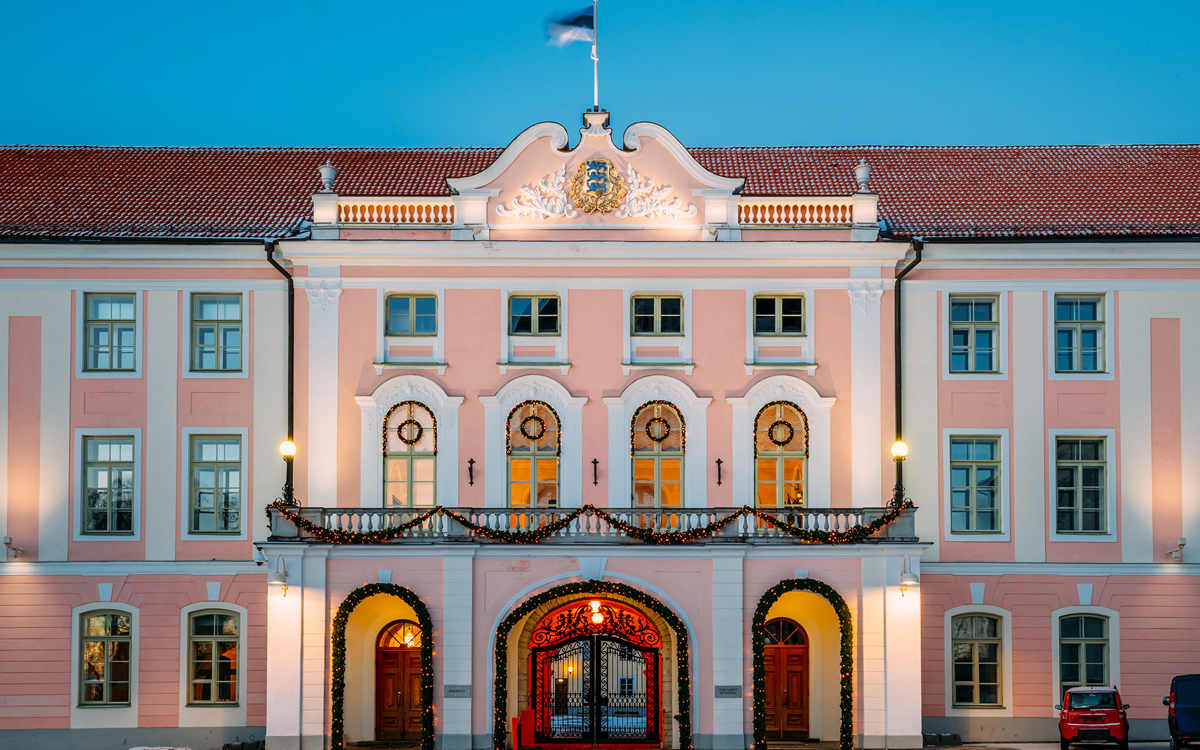
A law that extends marriage and adoption rights to same-sex couples in Estonia took effect on Monday.
Lawmakers last July approved the marriage equality bill by a 55-34 vote margin. Estonia is the first Baltic country and the first former Soviet republic to allow same-sex couples to legally marry.
“It’s an important moment that shows Estonia is a part of northern Europe,” Baltic Pride Project Manager Keio Soomelt told the Guardian newspaper. “For the LGBT+ community, it is a very important message from the government that says, finally, we are as equal as other couples; that we are valuable and entitled to the same services and have the same options.”
The country’s civil partnership law has been in place since 2013.
The Guardian reported same-sex couples could begin to apply for marriage licenses on Monday. Authorities are expected to process the first applications by Feb. 2.






Hungary
Charges against Budapest mayor for organizing Pride march dropped
Country’s new government took office last month

Hungarian authorities on Thursday dropped charges against Budapest Mayor Gergely Karácsony over his role in organizing the city’s 2025 Pride march.
Karácsony spoke at the event, even though then-Prime Minister Viktor Orbán’s government banned it.
More than 100,000 people defied the ban and participated in the march that took place on June 28, 2025. The Associated Press notes the Budapest Chief Prosecutor’s Office in January charged Karácsony with “organizing the unlawful assembly despite a prohibition order.”
Karácsony, who has been Budapest’s mayor since 2019, described himself as a “proud defendant” after his indictment.
“It seems that in this country, this is the price you pay if you stand up for your own freedom and the freedom of others,” he said in a statement, according to the AP. “If anyone thinks they can ban me, deter me, or prevent me and my city from doing so, they are gravely mistaken.”
Budapest is Hungary’s capital and largest city.
Prime Minister Péter Magyar took office last month after his center-right Tisza party ousted Orbán’s Fidesz-KDNP coalition in elections that took place on April 12.
Hungarian police on May 29 announced they will allow the Budapest Pride march to take place this year.
The European Union’s top court, the EU Court of Justice, days after Orbán’s ouster struck down Hungary’s anti-LGBTQ propaganda law that MPs approved in 2021. The BBC notes Hungarian authorities cited the decision in their decision to drop the charges against Karácsony.
Authorities in Pécs, a city near Hungary’s border with Croatia, have also dropped charges against Géza Buzás-Hábel, who organized a 2025 Pride event.
Hungary
Hungarian authorities lift Budapest Pride ban
Country’s new government took office last month
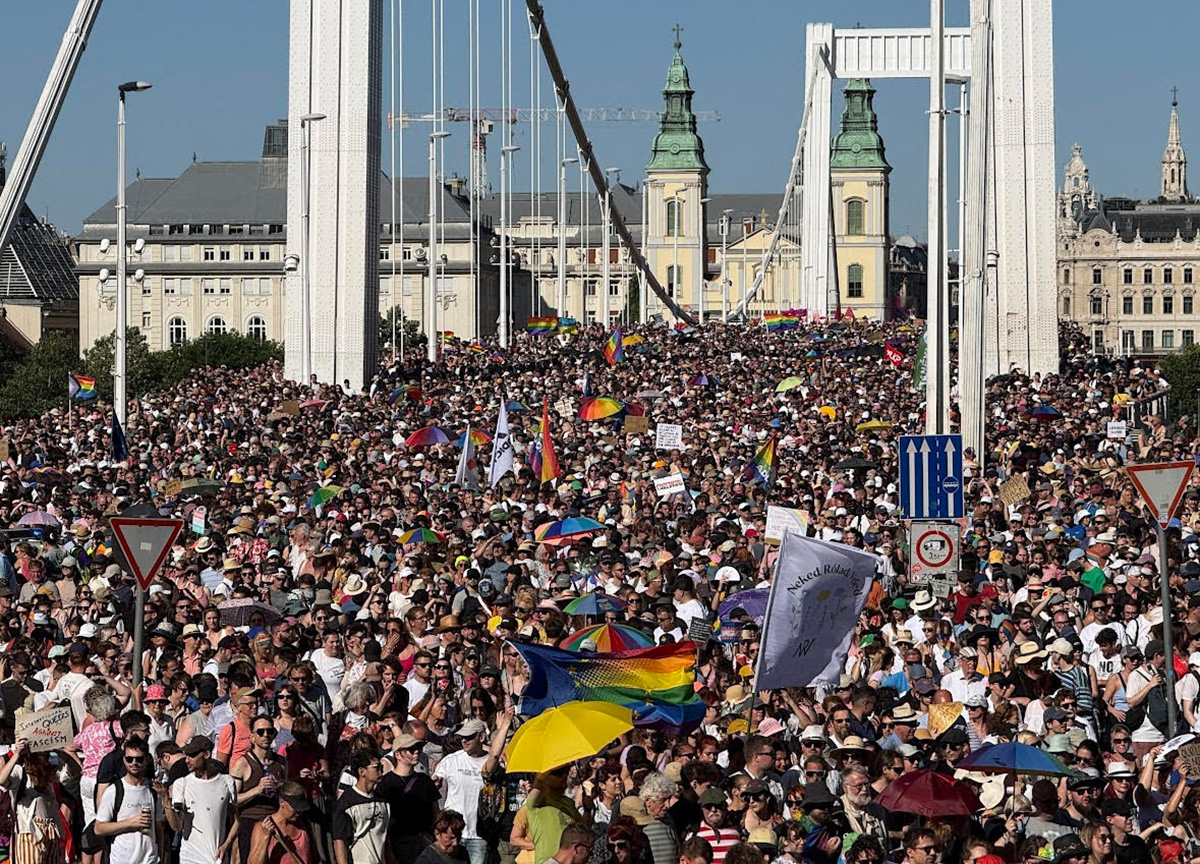
Hungarian police on May 29 announced they will allow the annual Budapest Pride march to take place.
“The Budapest Metropolitan Police has approved the 2026 Budapest Pride Parade and also has issued restrictive orders in relation to three counter-demonstrations,” a Budapest Metropolitan Police spokesperson told Politico.
Budapest is Hungary’s capital and largest city.
Hungarian lawmakers last year passed a bill that banned Pride events and allowed authorities to use facial recognition technology to identify participants. MPs later amended the Hungarian constitution to ban public LGBTQ events.
More than 100,000 people defied the ban and participated in last year’s Budapest Pride parade. The event became one of the largest protests against then-Prime Minister Viktor Orbán and his government since he took office in 2010.
Prime Minister Péter Magyar took office last month after his center-right Tisza party ousted Orbán’s Fidesz-KDNP coalition in elections that took place on April 12. The European Union’s top court, the EU Court of Justice, days after Orbán’s ouster struck down Hungary’s anti-LGBTQ propaganda law that MPs approved in 2021.
The EU on May 29 announced it will release more than €16 billion ($18.59 billion) in funds to Hungary that it withheld while Orbán was in office.
The Budapest Pride march will take place on June 27.
“We will march freely in fresh air for our rights, for the democratic Hungary,” said Budapest Pride on its Facebook page.
Russia
Nine Russian LGBTQ groups deemed ‘extremist’ banned
Human Rights Watch: authorities ‘intensifying their criminalization’ of queer people
Nine LGBTQ groups in Russia have been banned so far this year after authorities deemed them as “extremist.”
Human Rights Watch on Thursday noted courts in seven regions between March and May banned Coming Out, the LGBT Resource Center, Parni Plus, the Moscow Community Center for LGBT+ Initiatives, Irida, the Russian LGBT Network, the Kallisto movement, T9 NSK, and Center T. Human Rights Watch also pointed out a lawsuit has been filed against the Alliance of Straights and LGBT for Equality.
Parni Plus is an LGBTQ media outlet.
“Russian authorities are intensifying their criminalization of those who provide critical support to the very LGBT people they have systematically persecuted,” said Human Rights Watch Europe and Central Asia Director Hugh Williamson in a press release. “Authorities should vacate all court decisions and criminal convictions based on these spurious ‘extremism’ charges.”
The Kremlin over the last decade has faced global criticism over its crackdown on LGBTQ rights.
The Russian Supreme Court in 2023 ruled the “international LGBT movement” is an extremist organization and banned it.
The country in January designated ILGA World, a global LGBTQ and intersex rights group, as an “undesirable” organization. ILGA World in response to the designation noted Russians who are found guilty of engaging with “undesirable” groups face up to six years in prison.

Rehoboth’s Pride on the Bay set for June 27

Blade editor inducted into D.C. Society of Professional Journalists Hall of Fame

Pride in a new world order

McDuffie on LGBTQ support and standing up to Trump

PHOTOS: Fairfax City Pride

Controversial ‘Blue Film’ pushes past taboos for gripping drama

Timothy Nelson on the premiere of his opera ‘Song of Sakuntala’

PHOTOS: ‘Soul Divas’

‘Mighty Real’ explores history of LGBTQ music