Federal Government
Court blocks Trump’s anti-LGBTQ restrictions on grants in health and housing
Funding suspended under Trump orders targeting DEI, trans rights
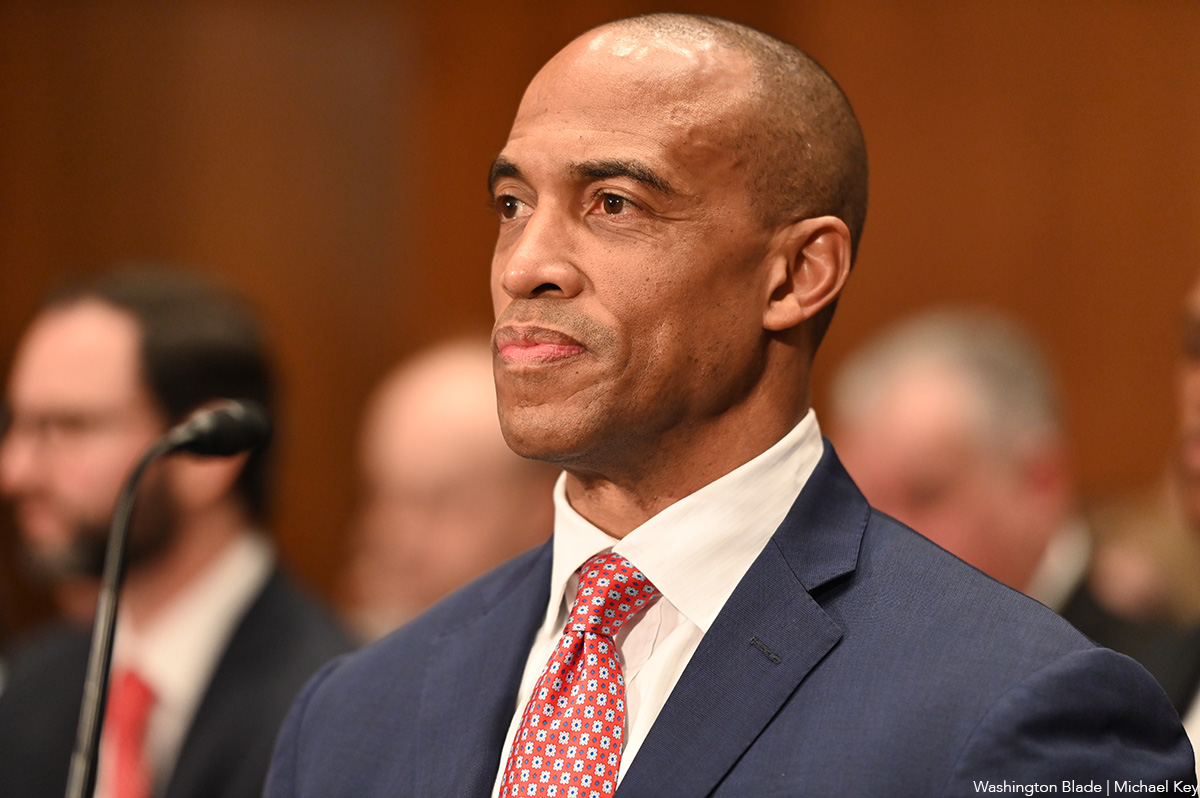
A federal court on Friday granted a temporary restraining order to plaintiffs challenging the Trump-Vance administration’s restrictions on grant funding for organizations serving survivors of domestic and sexual violence, LGBTQ youth, and unhoused populations.
Pursuant to President Donald Trump’s issuance of executive orders prohibiting the use of federal dollars to support diversity, equity, and inclusion along with transgender rights, the U.S. Departments of Housing and Urban Development and Health and Human Services each moved to suspend several of their grant programs.
Democracy Forward, one of the groups representing plaintiffs in the case, characterized the restrictions as an attempt to “impose ideological and political limits” on funding that was authorized by Congress through the Violence Against Women Act, the Family Violence Prevention and Services Act, and the McKinney-Vento Homeless Assistance Act.
The loss of federal grants posed an existential threat to many of these organizations, which would have been forced to either abandon their work or risk legal liability simply for running inclusive programs and acknowledging the existence and needs of trans people.
In March, U.S. Sen. Adam Schiff (D-Calif.) led Senate Democrats in two letters to HUD Secretary Scott Turner urging him to continue the disbursement of grants through the agency’s Continuum of Care program, which supports homelessness-related initiatives and provider organizations.
The senators in their second letter called on the department to “ensure all individuals experiencing homelessness receive protection and support, regardless of gender identity, location, or other characteristics.”
Democracy Forward President Skye Perryman also addressed how the Trump administration’s funding restrictions will harm LGBTQ populations served by the organizations and providers impacted by the policy.
“This administration continues to target people in vulnerable communities; and we continue to meet them in court,” she said. “Organizations serving survivors of domestic violence and sexual assault, LGBTQ+ youth, and people experiencing homelessness should not be forced to abandon their work, erase the identities of those they serve, or compromise their values just to keep their doors open.”
“This unlawful and harmful policy puts extreme schemes ahead of people’s dignity and safety by restricting essential federal support,” Perryman said. “At Democracy Forward, we are proud to be alongside this nationwide coalition and our partners to hold the administration accountable for undermining people’s safety.”
In a statement that was shared along with Perryman’s in Democracy Forward’s press release on Friday about the TRO, the plaintiffs said:
“We welcome the court’s decision to grant our motion to halt the Trump-Vance administration’s unlawful and dangerous funding restrictions. These conditions threaten to undermine decades of progress in supporting survivors of violence, LGBTQI+ youth, and unhoused individuals.
“Our organizations exist to serve everyone with compassion and equity, and we will not be forced to choose between our values and mission and the communities we serve. The court’s order is a critical step in protecting life-saving programs and ensuring that the providers across the country can continue their work without political interference.
“We brought this case because we have seen firsthand the harm these restrictions would cause. This ruling affirms what we have long known, that the law does not permit any government to use its funding power to force service providers to abandon their core principles.”






Federal Government
Bessent says Trump chose him for his qualifications, not his sexuality
Treasury Secretary Scott Bessent talked with Axios about his sexuality — and how it played no role in his nomination for the position.
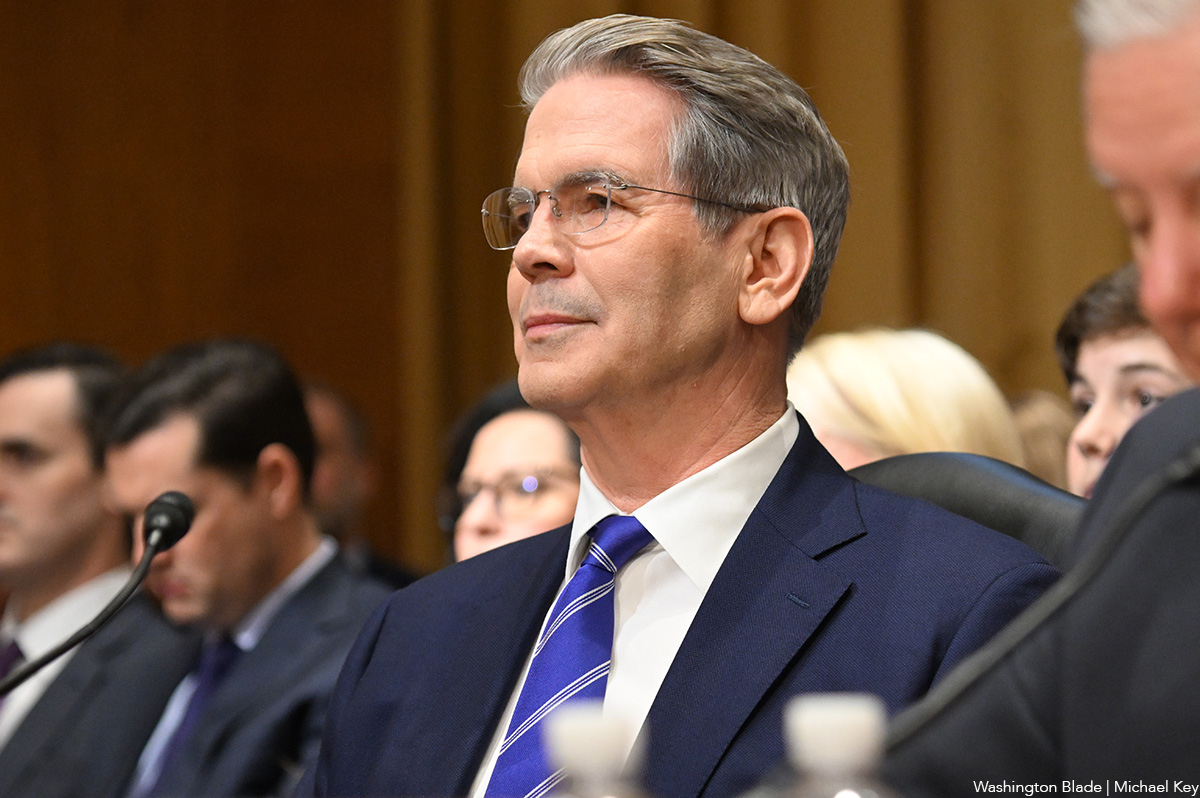
Treasury Secretary Scott Bessent participated in an interview in which he said his sexuality had no impact on the president’s selection of him.
On Sunday, Axios co-founder Mike Allen interviewed Secretary Bessent, the 79th person to lead the Treasury Department, in the “Cash Room” in the Treasury building. The two talked for more than 40 minutes about issues related to the current administration’s efforts for Axios’s YouTube channel.
Bessent has been something of an anomaly during this administration, breaking what many consider the “gay glass ceiling.” He is the first openly gay person to lead the U.S. Treasury Department, the first openly gay Senate-confirmed Cabinet member in a Republican administration, and the highest-ranking LGBTQ government official in U.S. history.
The two covered various ground — about the state of the U.S. economy, the various AI approaches by the Trump administration, and the war in Iran. All things that have made President Trump’s constant appraisal of the U.S. economy difficult to sell to the American people as the affordability crisis has worsened.
Toward the end of the interview, Allen asked Bessent about deciding not to attend the U.S. Naval Academy, knowing his sexuality would be a hindrance, and instead attending Yale University. Allen asked if his choice to attend the Ivy League school held him back in life.
“I don’t think it did at all, and it’s very difficult to talk about the counterfactual… but I don’t think going to Yale held me back,” Bessent said. “Maybe some people at other schools would think it might. But I think it makes you aware, and I’ve openly spoken about it before, too. I think maybe some of my career choices were influenced by it.”
The U.S. Naval Academy only began allowing openly LGBTQ students to apply — and be open about their sexuality — following the 2011 repeal of “Don’t Ask, Don’t Tell.” Prior to the policy’s removal, students could be removed from the school for violating the rules, including rules related to their sexuality.
“You said President Trump chose me because he believes I’m the best candidate, not because of my sexual preference or your green eyes…,” Allen said.
“Exactly,” Bessent replied. “And I think that’s one of the reasons we have such a great team. The president makes his decisions all the time. You know, he’ll occasionally tell me, ‘You’re breaking my friends’ hearts.’ They see you on TV and they want an intro, and we have to break the news to them.”
Bessent has been married to former New York prosecutor John Freeman since 2011, and they have lived together in South Carolina. There, they had two children through surrogacy.
Despite being a member of the LGBTQ community, Bessent has publicly supported Trump’s policies, including some that have drawn criticism from LGBTQ advocates and organizations. These include reductions to PEPFAR funding, policies removing transgender service members from the military, recognizing only two sexes, removing LGBTQ protections from Title IX, and other policies that LGBTQ advocates argue come at the cost of LGBTQ safety and protections.
The Washington Blade has reached out to the Treasury Department and Secretary Bessent’s team for comment and responses to these questions, including questions about how he views his identity and sexuality in relation to — and potentially at odds with — the policies and mission of the current administration. The Blade did not receive a response by publication time.
Federal Government
988 restores crisis services for LGBTQ youth

The lifesaving 988 call-in number to help people experiencing mental health crises or suicidal thoughts has once again restored its specialized services for LGBTQ youth.
The lifeline, which used to have the option to “press 3” to be directly sent to specialized services for LGBTQ youth facing mental health crises or suicidal thoughts, was returned on Wednesday following an over-year-long battle with the Trump-Vance administration, which removed the service in May 2025.
The Press 3 option rolled out as a pilot program in 2022 through a government contract with the Trevor Project, a suicide prevention and crisis intervention organization for LGBTQ people.
Then, in June 2025, the federal government announced that the lifeline would be eliminated within a month. By July 2025, 988 Lifeline’s “Press 3” services were terminated.
Openly gay U.S. Sen. Tammy Baldwin (D-Wis.) helped lead Congress in reversing the removal of the lifesaving resource from American phones. As a member of the Senatw Labor-HHS Appropriations Subcommittee, she started the process of securing $535 million for 988 — a $15 million increase — as well as dedicated funding for LGBTQ youth specialized services.
Then, in September 2025, Baldwin, along with U.S. Sen. Lisa Murkowski (R-Alaska), introduced bipartisan legislation in the Senate, the 988 LGBTQ+ Youth Access Act, to codify the 988 Lifeline’s specialized services for LGBTQ young people.
At the same time, U.S. Rep Raja Krishnamoorthi (D-Ill.) introduced the legislation in the House of Representatives alongside U.S. Reps. Michael Lawler (R-N.Y.) Sharice Davids (D-Kan.) Brian Fitzpatrick (R-Pa.) and Seth Moulton (D-Mass.)
The Senate passed Baldwin’s bipartisan funding bill in January 2026, funding the Department of Health and Human Services with explicit language mandating the return of 988’s LGBTQ youth specialized services.
In February 2026, Congress passed legislation mandating that the previously eliminated “Press 3” specialized services be restored and funded with $33,100,000 — but it was unclear if the Press 3 option would still be allowed under current executive orders, namely Executive Order 14168, or “Defending Women From Gender Ideology Extremism and Restoring Biological Truth to the Federal Government.”
Despite the securing of federal funding for the Press 3 resource, the battle to get the 988 LGBTQ+ Youth Access Act through Congress is ongoing — and would provide codafied protection from this removal ever happening again.
According to data on the Trevor Project’s website, LGBTQ young people are more than four times as likely to attempt suicide than their peers.
Baldwin’s office touts the immense help the lifeline provides to LGBTQ people in their moments of greatest need. The press release on the reinstatement of Press 3 highlighted the continued demand for the service:
“The volume of calls, texts, and chats 15 percent higher than a year earlier and nearly 50 percent higher than two years ago. Since the lifeline launched, it has received over 27 million contacts, including over 18 million calls, 4 million texts, and 3 million chats.”
Advocates for LGBTQ rights and mental health awareness have agreed with the increasing numbers and hailed the return as a win for everyone.
“Suicide and mental health struggles touch every community across our state, and that’s why creating the 988 crisis lifeline to make sure help is there for everyone is one of my proudest accomplishments,” said Baldwin said in a statement. “But, last year, the Trump administration decided to make these real struggles a political football and ripped away the specialized line that helped LGBTQ children. This was a deliberate choice. The Trump administration chose to put children’s lives on the line to score some political points.
“I’ve fought tooth and nail to restore this lifesaving resource. When I realized the Trump administration was not going to do it on their own, I wrote it into federal law to require them to restore the Press 3 option,” the Wisconsin senator said. “This lifesaving resource never should have gone away in the first place, but I am glad the lifesaving support Press 3 provides is once again there for people who need it.”
“I’m proud that we secured the funding to restore this lifesaving LGBTQ+ crisis line and successfully pressured the Trump administration to bring the program back,” Krishnamoorthi said. “When an LGBTQ+ young person reaches out for help in a moment of crisis, they deserve to reach a counselor trained to understand and support them. This program should never have been taken away, and now we need to make sure it stays available for every young person who needs it. I’m grateful to the Trevor Project, NAMI Chicago, Equality Illinois, the American Foundation for Suicide Prevention, and all the advocates and young people who worked alongside us to bring these services back.”
Jaymes Black, CEO of The Trevor Project who works with the SAMHSA, in their press three operations celebrated the return of the resource.
“We are grateful to see that the 988 Suicide & Crisis Lifeline’s ‘Press 3’ specialized services for LGBTQ+ youth have been restored. Resuming this national resource will be critical in addressing the public health crisis of suicide among LGBTQ+ young people, and supporting the estimated more than 1.8 million LGBTQ+ youth who seriously consider attempting suicide in the U.S. each year,” Black said via a statement. “We are thankful for the large coalition of bipartisan lawmakers, mental health advocates, allies, and supporters who fought tirelessly for this restoration. We will monitor the launch and usage of these important services to ensure all LGBTQ+ youth are supported with clinically best standards.”
If you or someone you know needs mental health resources and support, please call, text, or chat with the 988 Suicide & Crisis Lifeline or visit 988lifeline.org for 24/7 access to free and confidential services. Trans Lifeline, designed for transgender or gender-nonconforming people, can be reached at (877) 565-8860. The lifeline also provides resources to help with other crises, such as domestic violence situations. The Trevor Project Lifeline, for LGBTQ+ youth (ages 24 and younger), can be reached at (866) 488-7386. Users can also access chat services at TheTrevorProject.org/Help or text START to 678678.
Federal Government
Education Department rolls back protections for LGBTQ students under Title IX
The DoE policy rescinds Biden-era protections
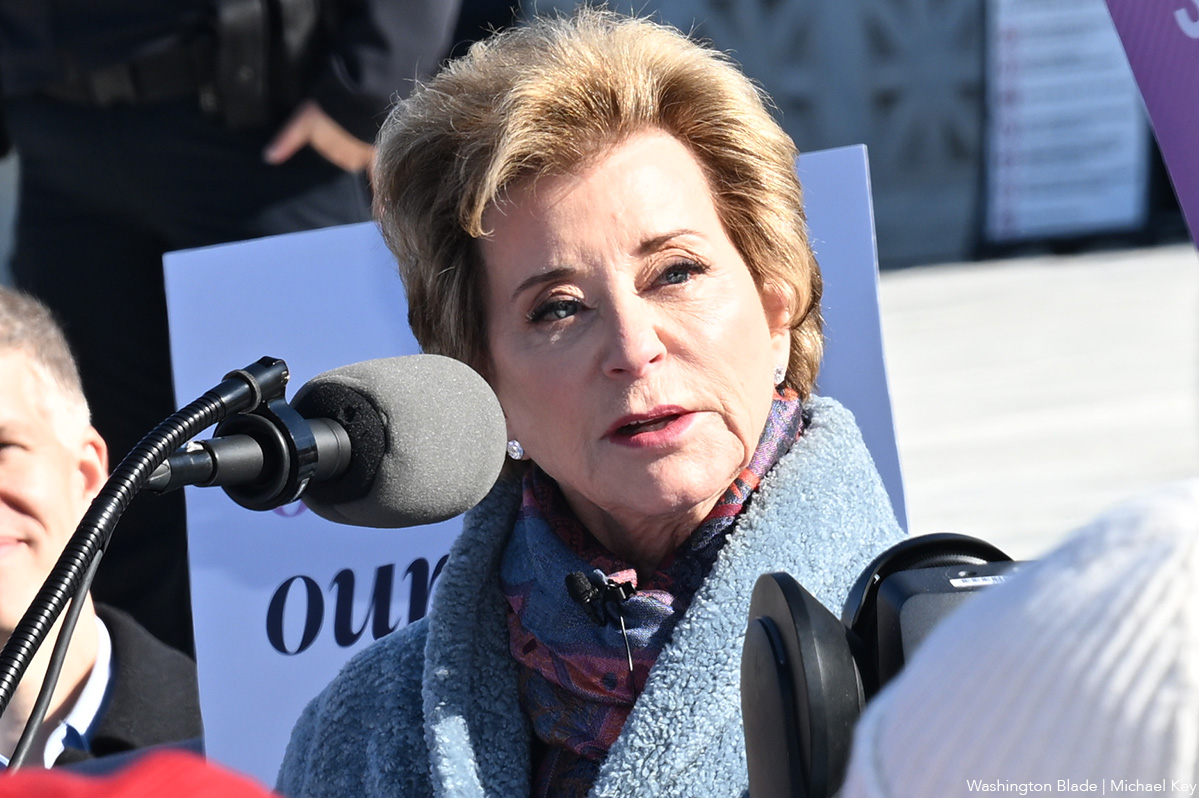
The Department of Education rolled back a Biden-era Title IX interpretation on Monday that secured sex-based discrimination protections for students on the basis of sexual orientation and gender identity.
Title IX was established in 1972 as landmark civil rights law. It prohibits sex-based discrimination in any school or any other education program that receives funding from the federal government.
Education Secretary Linda McMahon spoke about the revision of the policy, claiming the decision would explicitly help “women and girls.”
“Thanks to today’s action, the published Title IX regulations faithfully reflect court orders and congressional intent — reducing confusion for parents, students, and educational institutions. We will continue to relentlessly champion equal opportunity for all Americans and hold accountable any school or college that violates the rights, privacy, or athletic opportunities of our women and girls,” McMahon said via press release.
Prior to her work under the Trump-Vance administration, McMahon was a World Wrestling Federation/World Wrestling Entertainment executive before resigning to pursue a career in politics. She was appointed to the Connecticut State Board of Education by then-Gov. Jodi Rell in January 2009, but resigned from her role shortly afterward to run what ultimately became two failed campaigns for Connecticut’s U.S. Senate seat in 2010 and 2012.
A “fact sheet” provided by the Department of Education also called the inclusive sexual assault and gender identity protections expanded under the Biden-Harris unlawful, saying, “This change is necessary to provide clarity in the Code of Federal Regulations so that institutions, administrations, students, and families can see the rules that are actually in force and to help eliminate public confusion about the Biden administration’s unlawful attempt to stretch Title IX’s legal protections to cover ‘sexual orientation’ and ‘gender identity.’”
This is not the first time this policy has faced judicial hurdles. While Biden was still in office, the plan was struck down in multiple courts in Republican states.
Opponents of the move say it will harm transgender athletes and weaken protections for sexual assault victims.
“Sexual harassment and assault continue to be pervasive in schools and, to the fullest extent possible, we should be working to enforce the laws that protect student survivors of sexual violence. Yet, Education Secretary Linda McMahon and the Trump administration have decided to ignore what survivors need, instead weaponizing Title IX to attack trans students,” said Shiwali Patel, senior director of education justice at the National Women’s Law Center.
This is a return to a first Trump term policy after Biden issued an executive order to attempt to curb discrimination for all — especially those with different sexual orientations and gender identities — that had been given a pass during Trump’s first term. Much of Title IX’s policy has a narrow vision of what sex protections look like that often and enthusiastically leave gender-diverse and non-heterosexual people out.
In March 2021, President Joe Biden signed Executive Order 14021, “Guaranteeing an Educational Environment Free From Discrimination on the Basis of Sex, Including Sexual Orientation or Gender Identity,” to attempt to undo some of the flagrantly anti-LGBTQ policy the Trump-Pence administration had set forth relating to Title IX protections for LGBTQ students and sexual assault survivors.
The secretary focused this “win” for the administration as one more step toward restricting transgender students from competing in women’s sports, but the 2020 rule, completed under former Education Secretary Betsy DeVos, didn’t explicitly ban trans students from participating on sports teams consistent with their gender identity. It did limit the types of sexual harassment and assault complaints that schools had to investigate and required live hearings so male students could respond to accusations.
McMahon didn’t discuss those aspects in her statement or in requests for comment. The 2020 rule drew praise from conservatives and intense opposition from advocates who said it downplayed sexual abuse and left victims unprotected.
In a statement, U.S. Rep. Tim Walberg (R-Mich.), who chairs the House Education Committee, said, “Returning to the 2020 regulations restores longstanding protections for women and girls that the Biden-Harris administration attempted to dismantle and realigns Title IX policy with court precedents.”
LGBTQ activists have called this decision a direct attack on LGBTQ safety — particularly for trans students who continue to face a barrage of legislative, executive, and judicial attacks in recent years from the Trump-Vance administration.
Kelley Robinson, president of the Human Rights Campaign, the largest LGBTQ advocacy group in the world, released a statement following the DoE’s announcement.
“Title IX is, quite simply, about protecting students and ensuring that they are safe from abuse, harassment, and discrimination while they pursue their education. But Donald Trump and his cronies aren’t interested in any of that,” Robinson said. “Donald Trump’s Department of Education has completely lost sight of that mission. Instead of enforcing protections for students, they’re rescinding them. They don’t care if sexual harassment and assault go unaddressed. And they’re happy to strip funding away from school districts and states that are actually trying to keep students safe.
“We know who will be hurt: women, girls, and others who are vulnerable to sexual harassment, assault and abuse — including LGBTQ+ students. The fact that they’re dropping this rule into place abruptly, without a comment period, denying families, educators, loved ones, and the students themselves a say in how they should be treated, shows how little they care about the safety of our students.
“This is a monstrous injustice, and it drives home how essential it is that we take action at the polls this November to start bringing some accountability to an administration that has turned its back on the very students Title IX was written to protect,” she added.
The Washington Blade reached out to the DoE for comment and questions on whether Title IX protections still included LGBTQ students, and received this email response from Education Spokesman Sabin Sidney:
“Your questions indicate you are clearly missing the entire point of this Final Rule. The Biden Administration illegally rewrote Title IX to include ‘sexual orientation’ and ‘gender identification’ in the definition of sex-based discrimination. The Trump Administration is rescinding this rule—only after every federal court that heard legal challenges rejected it as unlawful.
“Since January 2025, the Department has been enforcing Title IX consistent with the President’s Executive Order grounded in biological truth that there are only two sexes. The Trump Administration is restoring the original promise of Title IX and providing clarity to students, parents, and educational institutions. We will vigorously defend equal opportunity consistent with the law’s intended purpose.”

Center for Black Equity honors leaders, activists at BE. Gala

In ‘The Lost Brontë,’ a complicated lie can lead to danger

CAMP Rehoboth Block Party returns Oct. 18

Essential queer horror classics for Halloween

Solidarity beyond the parade: the actual cost of Pride

10 years later, we still can’t shake Barry Jenkins’s ‘Moonlight’

‘Some Like It Hot’ a wild ride at renovated Bernard Family Theatre

D.C.’s LGBTQ homeless facilities face possible hit from Trump funding cuts

Trump uses anti-trans slur against Democratic Senate candidate

U.S. int’l trade negotiator, consultant James Bedore dies at 82
-

 Movies5 days ago
10 years later, we still can’t shake Barry Jenkins’s ‘Moonlight’
-
Theater5 days ago
‘Some Like It Hot’ a wild ride at renovated Bernard Family Theatre
-
District of Columbia5 days ago
D.C.’s LGBTQ homeless facilities face possible hit from Trump funding cuts
-
2026 Midterm Elections5 days ago
Trump uses anti-trans slur against Democratic Senate candidate