Arts & Entertainment
Trans filmmaker claims Marsha P. Johnson doc director stole her work
Janet Mock defends Reina Gossett who says her idea was stolen
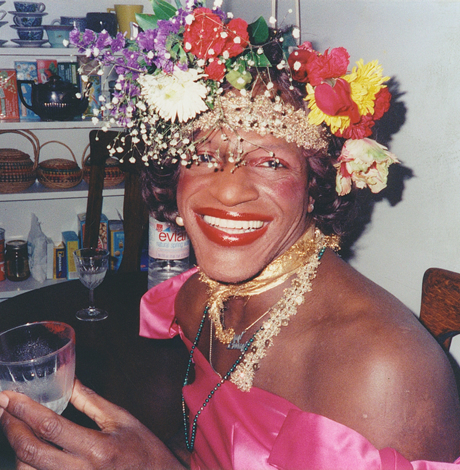
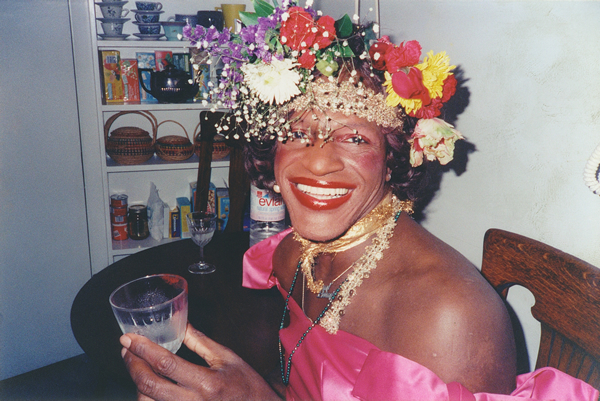
Marsha P. Johnson (Photo courtesy of Netflix)
Transgender filmmaker and researcher Reina Gossett has accused “The Death and Life of Marsha P. Johnson” director David France of stealing her idea for the documentary.
The film, which is streaming on Netflix, examines Johnson’s involvement in the Stonewall riots, her transgender activism and mysterious death. Gossett, who is an activist-in-residence at the Barnard College Center for Research on Women’s Social Justice Institute, worked on the short film “Happy Birthday, Marsha!” with Sasha Wortzel.
In an Instagram post, Gossett explains that France stole her film idea and research to make the Netflix documentary.
“This week while I’m borrowing money to pay rent, David France is releasing his multimillion-dollar netflix deal on Marsha P. Johnson. This kind of extraction/excavation of black life, disabled life, poor life, trans life is so old and so deeply connected to the violence Marsha had to deal with throughout her life,” Gossett writes.
Gossett says that she and Wortzel sent a grant application video to the Kalamazoo/Arcus Foundation while France was visiting.
“He told the people who worked there — I shit you not — that he should be the one to do this film,” Gossett writes. [He] got a grant from Sundance/Arcus using my language and research about STAR, got Vimeo to remove my video of Sylvia’s critical ‘y’all better quiet down’ speech, ripped off decades of my archival research that I experienced so much violence to get, had his staff call Sasha up at work to get our contacts, then hired my and Sasha’s ADVISOR to our Marsha film Kimberly Reed to be his producer.”
Janet Mock posted Gossett’s statement on Twitter and slammed France for taking the opportunity away from a transgender woman.
Filmmaker David France released a Netflix doc Friday about Marsha P. Johnson. It is based on Reina Gossett’s work (her statement below). pic.twitter.com/YtQiVMuOjm
— Janet Mock (@janetmock) October 7, 2017
Reina Gossett is a black trans woman who reintroduced our gen to ourselves by uncovering/recentering trans women of color revolutionaries.
— Janet Mock (@janetmock) October 7, 2017
Her digital archives of movement foremothers Marsha P. Johnson & Sylvia Rivera are integral to current understanding of their contributions.
— Janet Mock (@janetmock) October 7, 2017
She researched/archived/digitized content inaccessible for decades. She interviewed Marsha & Sylvia’s peers. She did this work without pay.
— Janet Mock (@janetmock) October 7, 2017
A black trans woman’s work about a black trans woman was used to make a film by a credentialed white cis man aided by Netflix’s millions.
— Janet Mock (@janetmock) October 7, 2017
Meanwhile Reina is borrowing money to pay rent as viewers around the world watch a film based on her unpaid & uncredited work. Not OK.
— Janet Mock (@janetmock) October 7, 2017
Support Reina Gossett — she made @hbdmarsha w/ @sashawortzel! Book her as a speaker! Let others know about her work! https://t.co/CM86S8ckYF
— Janet Mock (@janetmock) October 7, 2017
France defended himself by posting his own statement saying that he was friends with Johnson and had been considering the project for a long time.
“Reina Gossett has suggested that I’ve stolen both the concept and footage for ‘The Death and Life of Marsha P. Johnson’ from her work, the experimental short narrative, ‘Happy Birthday, Marsha!,’” France writes. “Nothing in the film’s concept, research or execution came from anyone outside of this process.”
Hi Janet. Please see below. pic.twitter.com/sHjz9CvU7T
— David France (@ByDavidFrance) October 7, 2017
Mock took issue with France’s phrasing that he “fully” supports Gossett and Wortzell’s film. She fired back that France should have given the project to a transgender woman of color.
“Fully support” is an action, not an intention/thought. Support looks like stepping aside, using your access/priv to produce Reina’s work. https://t.co/urZx6YkTtW
— Janet Mock (@janetmock) October 7, 2017






Arts & Entertainment
Nominate your favorites for the Blade’s 25th annual Best Of LGBTQ DC Awards
Submit your picks now; top 5 vote getters move to the finals

Nominate your favorites in our Best of LGBTQ DC categories through Sept. 24. The top 5 nominees from each category will become finalists with voting starting Sept. 28. Our 2026 Best of LGBTQ DC winners will be announced at the Best of LGBTQ DC Awards Party on Thursday, Oct. 22 and our special issue will come out on Friday, Oct. 23. One vote per email address per day. Good luck!
CLICK HERE TO NOMINATE OR USE THE FORM BELOW!
Out & About
Blade Foundation to host fundraiser in Rehoboth on Sept. 12
Mayor-elect Stewart, state Rep. Snyder-Hall to give remarks

The Washington Blade Foundation will host a fundraiser on Saturday, Sept. 12 in Rehoboth Beach featuring remarks from Rehoboth’s Mayor-elect Susan Stewart and Delaware state Rep. Claire Snyder-Hall.
The Foundation funds fellowships for aspiring queer journalists and enterprise journalism projects.
The event will be held at a private home in Rehoboth. Tickets are $100 and include open bar from Diego’s, catered appetizers from the Blue Moon, entertainment, guest speakers, and an auction. Tickets are available here.
Books
New book examines fashionista Audrey Smaltz’s fabulous life
‘Every Inch a Lady’ reveals finding true love with another woman

‘Every Inch a Lady’
By Audrey Smaltz with Alina Mitchell
c.2026, Amistad
$27.99/256 pages
Snaps, zippers, buttons, ties.
Toss that garment on, pull it up, wrap it around, you know what you like and how to wear it. The color is perfect for your skin tone, the fabric enhances your form. Yep, you always look your best and, as in the new book “Every Inch a Lady” by Audrey Smaltz (with Alina Mitchell), that best is fabulous.

”Born, bred, toasted, buttered, jellied, and honeyed in Harlem” in 1937, Audrey Smaltz was a force to be reckoned with almost from the time she could walk. Her parents imbued confidence in her, they nurtured her creativity and sent her to charm school, but they never allowed her to create a stir.
“That,” says Smaltz, “is not what ladies did.”
By the time she was a teenager, Smaltz was modeling for New York City designers. Shortly thereafter, she started working for a married man with whom she had an affair, and whom she loved very much. She broke up with him, attended college, worked a series of jobs that taught her about fashion and jobs that didn’t seem to fit her. An ill-fated marriage took her to Chicago where she ultimately landed a position that sent her to work in Ebony magazine’s New York office.
Working at Ebony was a career-changer, in a way. Smaltz was able to travel the world and learn more about fashion, but she didn’t exactly get along with her boss.
Finally, seizing an opportunity, Smaltz decided to launch her own company, Audrey Smaltz, Inc., a “fashion production business,” but she couldn’t get any designers to take a chance on her. Undaunted, she reorganized, re-branded, hit the streets, and knocked on doors until she finally found one client, which led to many others.
Through it all, her personal life was a whirlwind. She dated “more men than you can shake a book at,” settling down occasionally, briefly. Fashion had always been her first love, but she accidentally found real love, “the love of a woman,” at a leadership course.
There’s an old saying that writers need to add lots of “color” into their stories. Read a little of “Every Inch a Lady,” and you’ll notice immediately that author Audrey Smaltz (with Alina Mitchell) quite literally takes that to heart by mentioning nearly every color of the spectrum here. Hmm.
That oddity aside, Smaltz is a wonderfully lively storyteller, speaking with the energy of a woman much younger to the heart of anyone who loves fashion. That glee extends to collectors of vintage clothing, who will be delighted to read about the industry long ago and the way things worked then. Smaltz says she experienced racism, which is not unusual for pre-Civil Rights America, but doors were surprisingly closed for other reasons that will astound anyone who’s savvy about the fashion industry, even today.
There’s quite a bit of name-dropping in this book but most of it belongs in the anecdotes, so you likely won’t mind. If you’re a fashionista, too, find “Every Inch a Lady,” and snap it up.
The Blade may receive commissions from qualifying purchases made via this post.

Gloria Steinem’s life of substance and consequence

Nominate your favorites for the Blade’s 25th annual Best Of LGBTQ DC Awards

Grindr settles UK lawsuit over claims it shared users’ personal information

Md. groups receive state grants to fight hate crimes

Chris Pappas wins NH Democratic Senate primary

‘Here the Whole Time’ delivers queer coming-of-age comedy

Blade Foundation to host fundraiser in Rehoboth on Sept. 12

Actress takes on bisexual ‘Ma’ Rainey in new Round House production

New book examines fashionista Audrey Smaltz’s fabulous life

Everton Blair makes history as first openly gay congressman from Ga.
-

 Movies3 days ago
‘Here the Whole Time’ delivers queer coming-of-age comedy
-
Out & About2 days ago
Blade Foundation to host fundraiser in Rehoboth on Sept. 12
-
Theater2 days ago
Actress takes on bisexual ‘Ma’ Rainey in new Round House production
-
Books2 days ago
New book examines fashionista Audrey Smaltz’s fabulous life