
District of Columbia
Where things stand with WorldPride just 10 weeks until kickoff
Amid some criticism, D.C. retains event management company to assist

In a little-noticed development, the office of D.C. Mayor Muriel Bowser in November arranged for a prominent local event planning company to help organize WorldPride D.C. 2025, which is expected to be the city’s and possibly the nation’s largest LGBTQ Pride celebration.
Dozens of WorldPride 2025 events, including an International LGBTQ March on Washington and Rally, an LGBTQ Human Rights Conference, a Music Festival and Global Dance Party, and multiple sporting events, are scheduled to take place in D.C. May 17-June 8.
Capital Pride Alliance, the organization that plans most of D.C.’s Pride celebrations, was awarded the WorldPride contract in 2022 by the international LGBTQ organization InterPride after an LGBTQ organization in Taiwan dropped out after winning the initial competition to host WorldPride 2025.
Mayor Bowser has since earmarked — and the D.C. Council has approved — $5 million in city funds to support the WorldPride celebration and events. Capital Pride Alliance Executive Director Ryan Bos told a D.C. Council hearing earlier this year that the WorldPride budget was set at $20 million, with most of the funding coming from private corporate donors.
At least two knowledgeable sources, who spoke on condition of not being identified, said the mayor’s office began looking for another entity to help organize WorldPride last fall when questions arose over Capital Pride Alliance’s ability to manage the budget, funding, and events associated with WorldPride. Another source said lower than expected yields from fundraising had prompted Capital Pride Alliance to cut the budget in half, a claim that Bos disputes and said was not credible.
“The budget, like any budget, is a guide,” Bos told the Blade. “And we budgeted between $15 million and $20 million, which included a lot of in-kind support as well,” he said. “And like we do every year for an organization like ours, which is event based, we do our best every year to come under budget.”
Bos added, “So, we are doing our best to save whenever we can and to ensure that we have a safe and successful WorldPride.”
It was around that time when Linder Global Events, a prominent minority and woman-owned D.C. event management company, was awarded a city contract to assume responsibility for several aspects of the WorldPride planning and organizing.
In a Nov. 21 statement sent to the D.C. Council, Bowser outlined the specific roles that Linder Global Events and Capital Pride Alliance would have under the city’s $5 million funding allocation for WorldPride.
The mayor’s statement says the Linder company would receive $1.4 million for “strategic partnership development, fundraising coordination, sponsorship fulfillment, financial oversight reporting, and management.” It says Capital Pride Alliance would receive $3.1 million for “event execution and community engagement” and an additional $500,000 for the issuance of “competitive grants for community supported events.”
Both Bowser and Nina Albert, the D.C. Deputy Mayor for Planning and Economic Development, told the Washington Blade at a Feb. 12 press conference on an unrelated subject that the decision to retain the Linder company to help organize WorldPride is something the city often does for this type of event. Albert said it was not brought about due to any problem with Capital Pride Alliance.
“Look, this is a big event. It requires coordination across a lot of different organizations,” she said. “Capital Pride is kind of the point for that event. It is very typical that we would bring on consultants to help,” she told the Blade. “So, this is very typical, and we’re very excited to host hopefully two million people to the District of Columbia.”
Anthony Hesselius, a spokesperson for Capital Pride Alliance, said it was the Mayor’s Office of LGBTQ Affairs that selected the Linder company, which he said would oversee the city’s $5 million funding allocation for WorldPride.
“In addition, Linder is one of the many collaborators working with Capital Pride Alliance to make WorldPride a success,” Hesselius told the Blade.
Despite those assurances, others have expressed concern over Capital Pride Alliance’s management of WorldPride.
Zar, the founder and former creative director of Team Rayceen Productions, a local LGBTQ events group that is currently on hiatus, wrote an op-ed in the Blade critical of his interactions with Capital Pride during the planning of WorldPride. Among other things, he said Capital Pride was reluctant to share information and listen to suggestions for proposed WorldPride events.
“I know countless bits of miscellaneous information that cause me trepidation,” he wrote. “I have had contact with numerous people, including performers, leaders of organizations, and subcommittee members, and not once has anyone said anything that assuaged my concerns,” he added.
Another source who spoke on condition of anonymity said they met with Capital Pride officials several times in 2024 to propose WorldPride events, but Capital Pride failed to respond to subsequent calls and emails.
“My organization was prepared to work with Capital Pride on a series of events, but they stopped communicating with us months ago,” the source said. “This is something I have heard from multiple community leaders, activists, and bar owners, that Capital Pride is not engaged with the local community.”
Hope Giselle, a prominent D.C. trans activist, posted a highly critical video commentary on Instagram last month denouncing the WorldPride Music Festival lineup of Jennifer Lopez, Troye Sivan, and RuPaul for the lack of Black inclusion.
“Jennifer Lopez? That was the best y’all could do,” Giselle said in her video, asserting that Lopez can’t sing live and has limited appeal to LGBTQ audiences.
She also assailed the inclusion in the WorldPride Music Festival of the singer Grimes, who is the mother of three children of Elon Musk, the billionaire conservative Republican activist who President Trump appointed to head the newly created office to fire thousands of federal government workers.
“Grimes literally has children with Elon fucking Muskrat, the person that is making us all feel this fucking small, or at least attempted to make us feel this fucking small,” Giselle said in her video. “It is essential that Pride remains a protest for inclusivity, not an exclusionary event that upholds the status quo for a select few,” she wrote in a comment accompanying her video.
Bos, the Capital Pride Alliance executive director, points out that the WorldPride Music Festival, which will take place outdoors on the city’s RFK stadium grounds June 6-7, is being produced by an entertainment event promoter in partnership with Capital Pride Alliance. Bos notes that the promoter, who is identified on the WorldPride website as Jake Resnicow, is the one who selected the performers, including Grimes.
“Some events for WorldPride, like the free two-day Street Festival and Concert, are organized and curated by the Capital Pride Alliance and other events like the [WorldPride Music Festival and] Global Dance Party, the Anthem’s Grace Jones and Janelle Monáe show, the Lincoln Theater’s show with Bob The Drag Queen and Monet X Change, and others, are independently curated by partner producers,” Bos told the Blade in a statement.
“The Capital Pride Alliance remains committed to listening to the community and fostering inclusive and celebratory spaces for all,” he said. “WorldPride’s mission is to unite and uplift the LGBTQ+ community through music, art, and advocacy. We value our community’s diverse voices and look forward to an incredible celebration of Pride and resilience,” he said.
Yet another source familiar with WorldPride 2025 organizing, who spoke on condition of anonymity, did not dispute Bos’s claims that WorldPride organizers were doing all they could to ensure a full diversity of events, including participation of African-American, Latino, transgender, and other members of the LGBTQ community.
However, the source indicated that WorldPride organizers, possibly due to the extensive work required to organize an event of WorldPride’s scale, initially fell short in robustly soliciting community collaboration. For example, community activists like Hope Giselle were not informed in advance that outside promoters hosting partner events (like the Music Festival at RFK) were responsible for selecting their performers. However, community members are beginning to feel more reassured due to new funding opportunities, programming announcements, and direct stakeholder engagement efforts, the source said.
According to the source, WorldPride organizers could have done more to inform the community that, overall, highly acclaimed African-American performers, including Janelle Monáe, were among those scheduled to perform at WorldPride marquee and partner events.
Bos also said in his statement to the Blade that Capital Pride Alliance was pleased to bring back the WorldPride Closing Ceremony and Concert to Pennsylvania Avenue, which is the site for the two-day WorldPride Street Festival and Concert.
The Closing Ceremony and Concert had initially been slated to take place on the National Mall. Bos told the Blade a higher cost for holding that event on the National Mall played a role in the decision to move it to Pennsylvania Avenue.
But Bos did not say whether the possibility that the Capital Pride application for a permit to hold that and several other events on the National Mall or in federal parks would be turned down was a factor in moving the closing event to Pennsylvania Avenue.
In response to a request from the Blade, a spokesperson for the U.S. National Park Service, which has jurisdiction over the National Mall and other federal parks in D.C., provided the Blade with a list of eight separate permit applications submitted by Capital Pride Alliance for use of federal parklands for WorldPride events.
Among the parks or spaces included in the applications in addition to the National Mall are Dupont Circle park, Thomas Circle, Franklin Park, Freedom Plaza, the Lincoln Memorial Parkway Beach volleyball courts, the Rock Creek Park Tennis Center and Stadium, West Potomac Park, and Anacostia Park.
The National Park Service spokesperson, Mike Litterst, didn’t respond to a question from the Blade about whether any of the multiple executive orders targeting LGBTQ issues and DEI by President Donald Trump might result in denial of the WorldPride permit applications.
“We continue to work with the organizers of WorldPride on the details of the event required to allow for issuing the final permits,” Litterst said in an email message. “We do not anticipate conflicts or overlap with any other proposed events,” he said.
Capital Pride Alliance on Feb. 17 issued a five-page press release announcing the launch of a new WorldPride 2025 website that it says includes, among other things, a list of all the WorldPride events, all of which are moving ahead as planned.
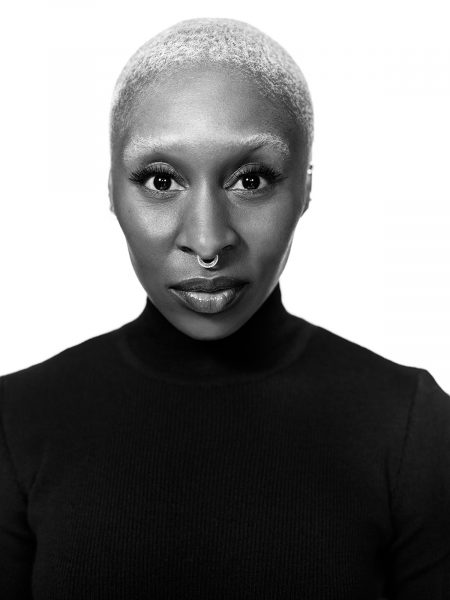
The updated website includes information about hotel availability for out-of-town visitors and announces that Cynthia Erivo will be one of the lead performers at the street festival and concert on Pennsylvania Avenue on June 7.
“With the full support of the mayor’s office, its office of LGBTQ Affairs, and additional financial backing from legacy sponsors, alongside a growing list of committed corporations, community businesses and individuals, WorldPride 2025 is expected to be the largest international event in Washington, D.C. this year,” the press release says.
“Three million attendees (inclusive of two million visitors and one million regional participants) are expected from May 17 through June 8, 2025, during which the Welcoming Concert featuring Shakira, the Capital Cup Sports Festival, D.C. Black Pride, an International March and Rally on Washington, and much more will take place,” it says. Visit worldpridedc.org for more information.


District of Columbia
Hands Off the Arts to form ‘human chain’ around Kennedy Center
Drag performer Tara Hoot among event organizers
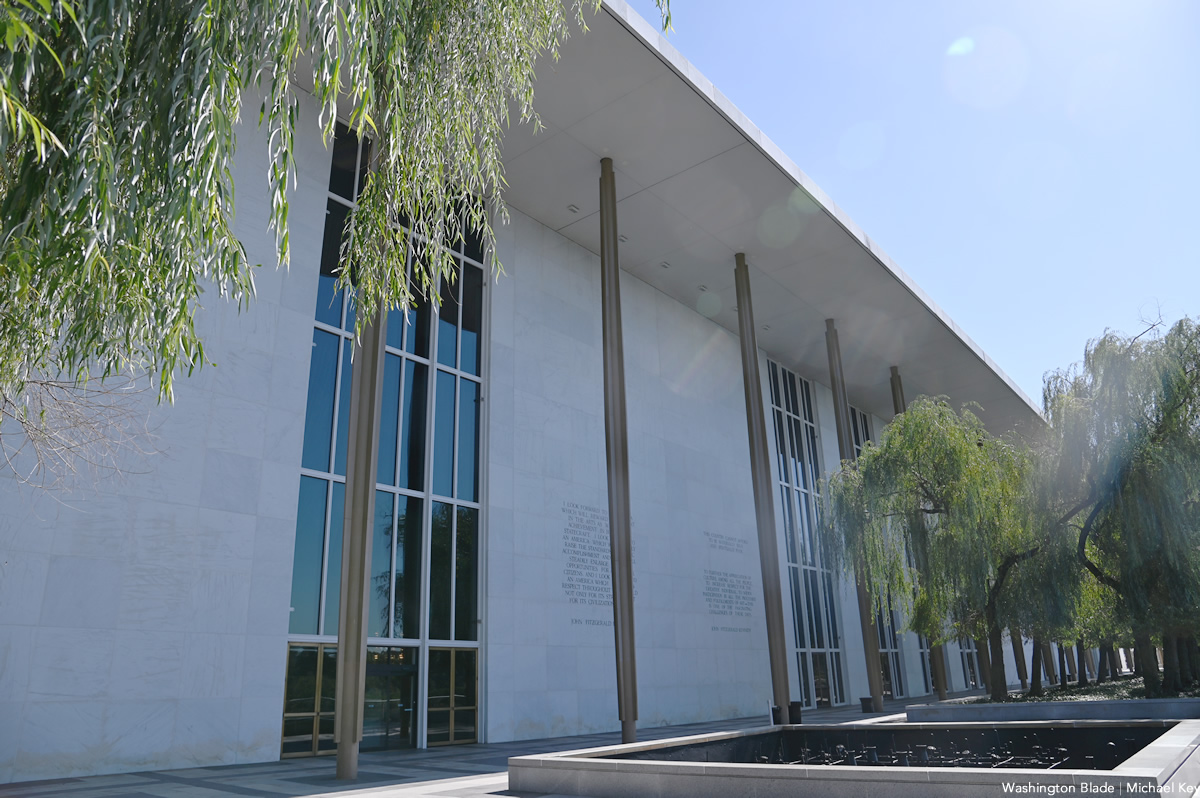
An organization called Hands Off the Arts has announced it is holding a protest on Friday, Sept. 18, in which between 400 and 800 participants are expected to create a “human chain” around the Kennedy Center to voice their strong objection to President Donald Trump’s call for possibly demolishing the Kennedy Center.
“Hands Off the Arts is organizing a rally Sept. 18 against the president’s defacing of JFK’s memorial, his removal and censorship of art, and the threat to demolish the center if he can’t remake the site in his image,” a statement released by the group says.
The statement says the event will start with a rally at 6:30 p.m. on the Kennedy Center steps and culminate with a “human chain” around the building. “There will be musical performances, testimonials from current and former employees, along with other special guest speakers,” it says
A separate announcement by the group says longtime D.C. drag performer Tara Hoot, who has performed at the Kennedy Center in past years, was among the organizers of the Sept. 18 protest.
The planned protest follows Trump’s decision last year to use his authority to replace the existing members of the Kennedy Center’s board of directors with new members loyal to him. Over the objection of longtime Kennedy Center supporters, the Trump-appointed board changed the name of the center, at Trump’s request, from the John F. Kennedy Memorial Center for the Performing Arts to the Donald J. Trump and the John F. Kennedy Center for the Performing Arts.
But following the threat of legal action by opponents who pointed out that the name change could not be legally made unless approved by Congress, the name change was cancelled, with Trump saying he would take steps to restore it later.
The Washington Post, meanwhile, reports in a Sept. 13 news story that because of negative publicity related to Trump’s actions, the Kennedy Center was facing “fiscal collapse” and possible bankruptcy and could be forced to shut down as early as this week.
According to the Post report, a 57-page document presented to the Kennedy Center’s board of trustees says the center was facing a financial and structural building crisis, with the recent collapse of part of the building’s inside ceiling, indicating the building was unsafe for employees and the public. Among other things, the document says the Kennedy Center may not be able to make payroll or pay for routine maintenance “within a matter of weeks,” the Post reports.
Some LGBTQ advocates were among those who joined others in boycotting the Kennedy Center to express their objections to Trump’s actions, including a statement by Trump that he objected to the Kennedy Center’s practice of hosting drag performances.
The Gay Men’s Chorus of Washington has been among the LGBTQ performing arts groups and artists that have performed at the Kennedy Center.
“With the future still very much uncertain, now more than ever, the Center needs you to stand up for freedom of expression and against authoritarian overreach into arts and culture institutions,” the Hands Off the Arts group says in its announcement of the Hands Around the Kennedy Center protest.
“You have the opportunity to make a difference — show up with Hands Off the Arts and show your power as part of Hands Around the Kennedy Center,” it says.
A spokesperson for the Kennedy Center couldn’t immediately be reached for comment.
District of Columbia
Blade welcomes fall intern
Alexis McLean is student at University of North Florida
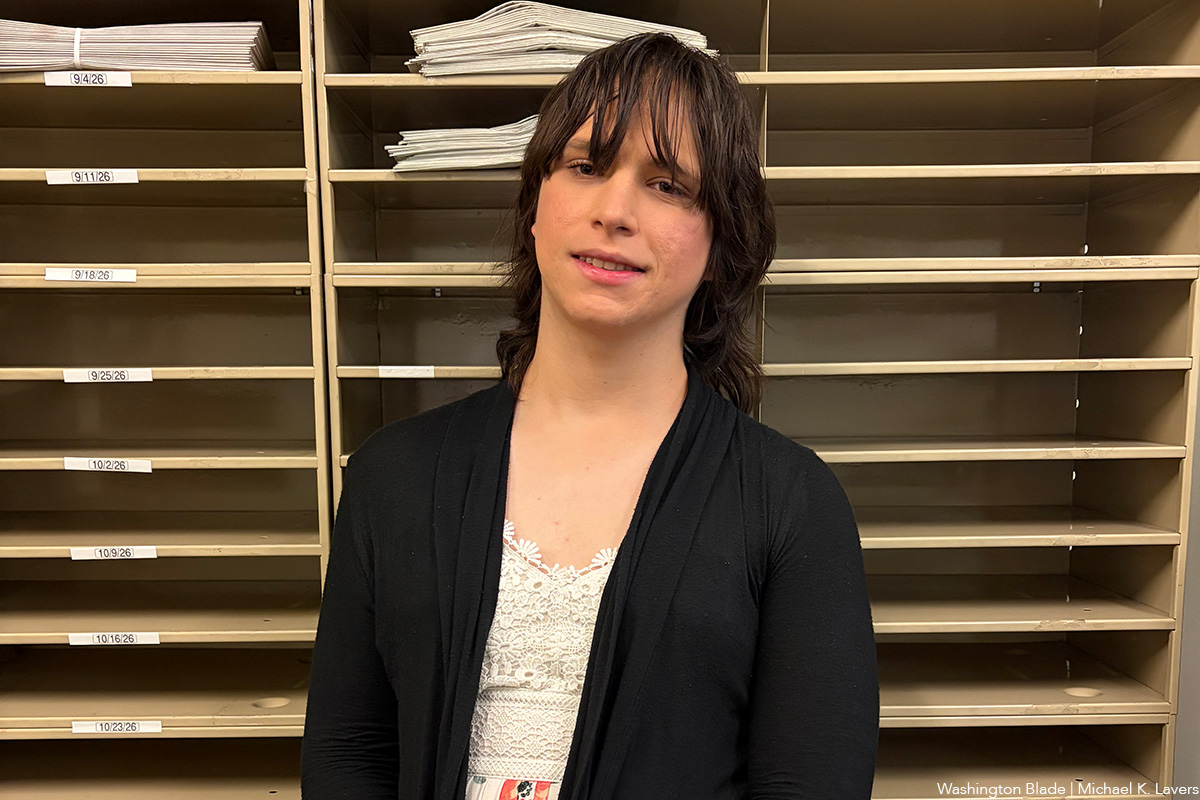
The Washington Blade this week welcomed Alexis McLean as its fall intern.
Alexis is studying political science at the University of North Florida in Jacksonville, Fla. She is interning with the Blade as part of a continued partnership with the Washington Center.
“I am looking forward to spending my time in the fall with the Washington Blade, as this is a new experience for me,” said Alexis. “I have not experienced any journalist jobs in the past so this would be my first time, and I am excited to better my writing and communications skills with this internship.”
Alexis’s internship with the Blade ends in early December.
District of Columbia
‘People don’t see me. They see a trend’
New popularity of all things Asian warps view of multiple cultures
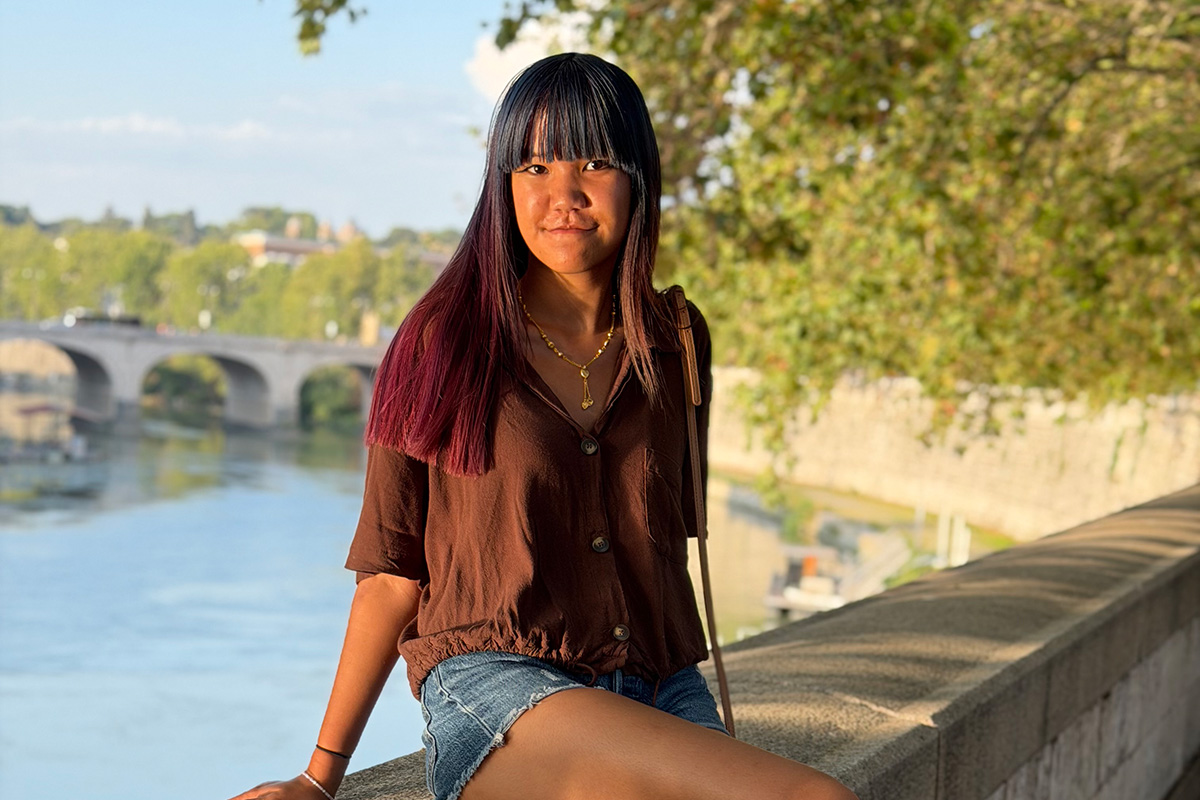
As I was growing up, my parents often shared stories about how they were bullied when they were my age, just for being Asian. My mom is Cambodian and my dad is “Wasian,” Chinese and white. Students teased them for their looks, their homemade lunches, and treated their traditional holidays as jokes.
I once asked my mom when I was little if she could pack me dumpling leftovers for lunch. “Yes,” she said with a surprised look, adding, “I would have never wanted to bring dumplings to school when I was your age because I would always get bullied for them. I’m glad times have changed.”
At the time, I was confused. Whenever I brought a homemade Asian dish to school for lunch, I was happy to hear intriguing and curious questions from the other kids. It felt good to have my meal be popular and different from the Lunchables everyone else had.
Though times have changed, racism still continues. It just has a new face. Today, social media pretends to flatter our cultures in an insincere way trying to gain popularity just for clicks. Think anything from K-pop to Japan’s surge in international tourism. Even Starbucks has added drinks with the flavor of ube yam, native to the Philippines, onto its menu.
I feel that now when people see me, they don’t see me, they see a trend.
For years, Asian people have been portrayed as foreign or exotic. The new embrace of foods and fashion at first felt good. Asians have never been represented as much as they’ve deserved.
But this new popularity warps what non-Asians see. Instead of the blunt and direct racism my parents faced, everything now is a gray area, more discreetly hidden behind some TikTok video. It actually normalizes racism and stereotypes.
Whitewashing my culture
As a 15-year-old Asian American who lives in D.C., I’ve always been one of the few Asian kids in school; my high school today counts less than 2 percent of students as being of Asian descent. I remember always being called “that one Asian girl” or some slur a kid learned from their parents. Every time I search for something related to Asian culture, such as a recipe or maybe a holiday, it’s always the same thing: some white person whitewashing my culture.
Social media is the main culprit, of course. I realized this when I entered high school and got a phone and was introduced to the internet. That is when I realized how messed up the new stereotypes around Asians are.
One pattern I started to notice was people wanting to be Asian just because it was popular. It was hurtful, patronizing, and annoying. They made assumptions about our race and then only found us “cool” because we were trending. How can people go from hating us or finding us weird, to then only liking us because we’re popular?
There was a trend going around on TikTok called “race change to another” or RCTA. It is this trend of people manifesting certain physical traits to change their appearance in order to change races. According to journalist Emi Tran, writing then as an intern for NBC Digital, the trend started when a white woman wanted to be Japanese. The woman began posting TikTok videos of herself wishing for different features such as monolids. Tran wrote in that 2023 article that “the overwhelming majority of the RCTA community wants to be East Asian.”
People also look up to K-pop culture, idolizing the pop groups pulled together by big entertainment companies. Most people expect all Koreans to be K-pop fans. Korean friends are asked about K-pop all the time even though they are not into the South Korean music genre.
Although I am not South Korean — I am half Cambodian and Chinese — I still get asked, almost like I’m expected, “You’re really into this group, right?” or “Can you tell me how to pronounce this member’s name?”
I was asked even worse questions during COVID-19. Suddenly, discrimination and violence were increasing specifically toward Asians everywhere. Suddenly, almost everyone was blaming Chinese people for spreading and causing COVID-19.
I remember going to school for one of the last times before quarantine had started and hearing kids whisper, “Oh, she’s going to give us the Coronavirus.” President Donald Trump had publicly posted his opinions about the situation on social media, blaming China for the pandemic, even calling it the “Chinese Virus” or the “Wuhan Virus.” According to NPR, anti-Asian hate crimes in U.S. cities surged 149 percent that year.
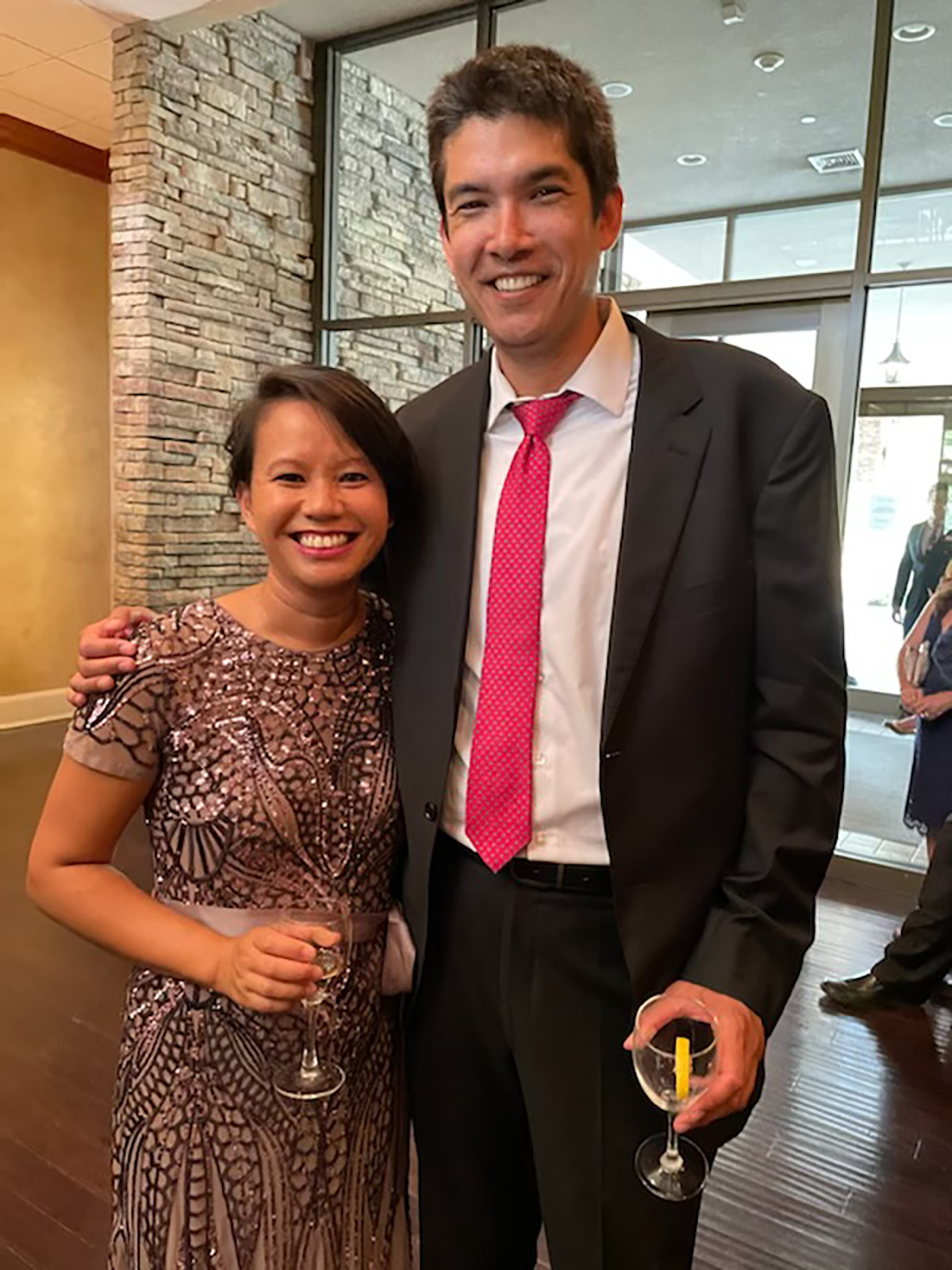
The topic of Asians in the media has always been complicated. One moment people can hate us for being weird and different and the next we’re suddenly popular and cool for the same reasons.
I feel conflicted on whether I should feel happy that we’re being represented or angry that it’s all for the wrong reason and has the wrong effects.
Lily Brugman is a sophomore at Benjamin Banneker Academic High School, one of Youthcast Media Group’s journalism class partners. She worked with YMG volunteer and Professor Emerita in journalism at American University Amy Eisman on this piece.

Advocate, Out parent company adds Trump supporter to board, prompting outrage

78th annual Emmy Awards recapped

Indonesia’s top Muslim clerical body proposes criminalizing LGBTQ people, advocacy

Hands Off the Arts to form ‘human chain’ around Kennedy Center

LGBTQ issues, attacks on Democrats dominate unusual RNC midterm convention

Multi-billion-dollar 9/11 Victim Compensation Fund to continue until 2090

LGBTQ Military Happy Hour set for Sept. 15

Calendar: September 11-17

Comings & Goings


