Local
Fenty vs. Gray presents tough choice for LGBT voters
Both seen as gay allies; race triggers shakeup in Council contests
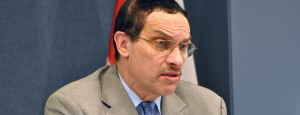
D.C. City Council Chairman Vincent Gray announced this week he will challenge Mayor Adrian Fenty this fall. A third candidate, millionaire developer R. Donahue Peebles, is expected to join the race. (DC Agenda photo by Michael Key)
D.C. City Council Chairman Vincent Gray’s announcement this week that he will challenge Mayor Adrian Fenty in the mayoral race will force many LGBT activists to choose between two strong allies, local activists said.
But as of this week, many of the city’s top gay Democratic activists said they were not ready to take sides in the race, a development that some viewed as a sign that activists have concerns about Fenty.
Gray’s entry in the mayoral contest also opens the way for at least three gay-supportive Council members, whose names have surfaced as possible candidates for Council chair, to enter that race, creating another difficult choice for LGBT voters.
“One way to look at this is it’s a good thing,” said Rick Rosendall, vice president of the Gay & Lesbian Activists Alliance. “It’s a luxury to be able to choose among friends.”
Rosendall and other activists have noted that in many parts of the country, the LGBT community still faces elections where most candidates capable of winning are hostile to their interests.
Some City Hall observers are predicting that Gray’s entry into the mayoral race will also prove to be a major benefit to gay Council candidate Clark Ray, who is challenging Council member Phil Mendelson (D-At Large) in the September Democratic primary.
Mendelson reportedly is seriously considering running for the Council chairman post now that Gray is vacating the seat. Should Mendelson run for that position rather than for re-election to his current at-large seat, Ray would be in a far stronger position to win that contest.
Ray has been campaigning for the seat for nearly a year and has lined up support among many LGBT activists. But Mendelson’s strong record on LGBT rights and his leading role in pushing the city’s same-sex marriage bill to a successful 11-2 vote in December prompted large numbers of LGBT activists and rank and file gay voters to remain loyal to him, according to Mendelson supporters.
Ray told DC Agenda earlier this week that he’s heard rumors that Mendelson might be considering running for the Council chairman position now being vacated by Gray.
“I am focused on my race and running my campaign on the issues that I talked about all along — like education reform and reducing crime,” he said. “So that’s where my focus is.”
Ray said he doesn’t plan to make an immediate endorsement in the mayor’s race.
“I think it’s great for the residents of the District of Columbia to have choices,” he said. “It makes for a better process. So I will be just like the rest of the Washingtonians. I will sit back and watch whomever is in the mayor’s race and I will make my decision on whom I think is the best to lead the city in the next four years.”
A Ray-Mendelson race was expected to divide the gay vote, with many political pundits predicting that Mendelson would win the election due to his strong, citywide support.
Mendelson spokesperson Jason Shedlock said Tuesday that Mendelson would have no immediate comment on speculation that he was considering running for Council chairman.
Council member Jack Evans (D-Ward 2), another longtime supporter of LGBT rights, is also strongly considering entering the Council chairman race, according to Ward 2 political insiders. Others have said that Council member Kwame Brown (D-At Large), an LGBT rights supporter who, like Evans and Mendelson, voted for the same-sex marriage bill, is yet another possible candidate for the Council chairman seat.
Gay Democratic activist Kurt Vondran, a former president of the Gertrude Stein Democratic Club, the city’s largest gay political group, said political insiders are predicting Fenty and Evans would run as a team for mayor and Council chairman. The two have been longtime political allies.
Lining up against them in a rival slate would most likely be Gray and Mendelson, who are not only allies on the Council but longtime Fenty adversaries.
With this as a backdrop, the Stein Club and other LGBT organizations will be forced to walk a fine line to avoid alienating longtime political friends in the city government, who likely would be needed for future LGBT-related initiatives.
Stein Club President Jeffrey Richardson said the club and its officers won’t take sides in the mayoral race until it holds a mayoral candidates forum scheduled for June 14. He said the club will vote on an endorsement at the conclusion of the forum.
Ashley Smith, vice president of the D.C. Coalition of Black Lesbian, Gay, Bisexual & Transgender Men & Women, said his group has no immediate plans to endorse a mayoral candidate and would assess whether to make an endorsement at a later date.
“At this point in time, it’s an open bag,” he said. “People will need to look at the candidates, including other candidates who may enter the race.”
Rosendall noted that his non-partisan group rates candidates rather than endorses them. He said the GLAA will carefully rate all mayoral and Council candidates based on their known records on LGBT issues and their responses to a questionnaire asking their positions on the issues.
But some LGBT activists point to what they perceive to be a strong feeling of dissatisfaction with Fenty — just as public opinion polls have shown is the case among residents in many parts of the city. A Washington Post poll released in late January showed Fenty’s popularity dropping in all parts of the city over the previous two years.
Blacks changed from a 68 percent approval for Fenty in his first year in office to a 65 percent disapproval in the Post’s January 2010 poll. Overall, the Post poll showed 42 percent of D.C. residents approved of the job Fenty was doing compared to 49 percent who expressed disapproval.
The Post poll did not break down its sample to show the sentiment of LGBT voters.
But gay Democratic activist Phil Pannell, a member of the executive committee of the Ward 8 Democratic Committee, said gay and straight residents east of the Anacostia River, which includes wards 7 and 8, appear to be in agreement in their dissatisfaction with Fenty.
“People east of the river are almost 100 percent against Fenty,” he said. “And I don’t see much of a difference between LGBT people and the community as a whole. It’s mostly because of his personality, but also because folks don’t see any real change in their community.”
Pannell said he won’t back a candidate in the race until the Ward 8 Democratic Committee votes on an endorsement later this spring.
Gay Democratic activist Lane Hudson said this week he is supporting Gray for mayor, becoming one of the few LGBT activists so far to take sides in the race.
“My impression is that the LGBT community is very frustrated with Adrian Fenty for never showing up [at community events] except for the high-heel race, never doing anything to really get down to addressing the problems that our community has to deal with,” he said.
Hudson was referring to a concern raised by some LGBT activists that Fenty has declined to attend most LGBT community events, including meetings of LGBT groups. The mayor has attended an annual Halloween high-heel race on 17th Street, N.W., each year since he took office and has also marched in the Capital Pride Parade each year since becoming mayor. The parade, which draws tens of thousands of participants, is part of the city’s annual LGBT Pride events.
While acknowledging that Fenty takes strong pro-LGBT positions on virtually all issues of importance to the community, many activists have complained that he has declined to take a more visible role in speaking out on issues, especially anti-LGBT violence and hate crimes.
The local group Gays & Lesbians Opposing Violence has complained that Fenty has ignored their longstanding calls for him to deliver a speech addressing the high number of anti-LGBT hate crimes in the city or appear in a public service announcement addressing the hate crimes issues.
‘A very tough call’
Gay D.C. Council members Jim Graham (D-Ward 1) and David Catania (I-At Large), like many activists, haven’t taken sides yet on the mayoral race. Both are running for re-election this year, with political observers saying each appears to have a good shot at winning.
Brian DeBose, Graham’s press spokesperson, said Graham is “going to make a formal announcement about [the mayor’s race] in the near future but he’s not prepared right now to make a statement.”
Graham has been a long-time political ally of Fenty, and some City Hall insiders believe he’s leaning toward Fenty.
Catania this week had praise for both Fenty and Gray in their respective roles in advancing the same-sex marriage bill that Catania wrote and introduced last year.
Asked how he feels about having to choose between Fenty and Gray, Catania said, “That’s a predicament I’m facing as a person and as a voter myself because I happen to like both of them as individuals and as public officials.”
“So it’s going to be a very tough call,” he said. “Both have excellent scores as far as I’m concerned on LGBT issues. Both were very early and strong supporters of marriage equality. Both support me in the work we’re trying to do to overhaul the HIV/AIDS Administration.”
While praising Fenty’s actions, both on LGBT and other issues, such as overhauling the city’s public school system, Catania acknowledged that the mayor has “injured himself” on how people perceive him in connection with his personality.
“He’s picked some fights that people don’t understand and they’re hard to explain at times,” Catania told DC Agenda. “I think that’s hurt him in the eyes of some voters, who want in a chief executive, who want in a mayor a different demeanor at times than what we’ve seen demonstrated by Adrian.”
Gay activist and attorney Edward Grandis, executive director of the local business association Dupont Circle Merchants & Professionals, said he does not perceive strong dissatisfaction toward Fenty from Dupont Circle area residents and businesses, where large numbers of gays live.
“In my business circles, I don’t see a large anti-Fenty sentiment,” he said. “And in Ward 2 in general, I don’t feel people are down on Fenty.”
Grandis said he agrees with activists who feel Fenty should have been more outspoken on LGBT issues such as hate crimes, “but I don’t feel most rank and file gays are dissatisfied with Fenty.”
In a related development, the Washington Post reported that millionaire developer R. Donahue Peebles said Monday that he is “planning to run” for mayor, adding a third candidate with the resources to compete with Fenty and Gray.
A Peebles spokesperson told DC Agenda two weeks ago that Peebles supports the city’s same-sex marriage law. But the spokesperson could not confirm whether Peebles supports or opposes a voter initiative, which, if approved, would repeal the gay marriage law. Peebles’ business office did not respond to a DC Agenda request for an interview.
Catania, however, said Peebles expressed to him a commitment to LGBT equality when the two spoke earlier this year.
“We didn’t talk about a referendum or an initiative. That subject didn’t come up,” Catania said. “But unprompted, he did tell me how delighted he was about marriage equality and how much he supported it, how he finds that all of our rights are interconnected. And he doesn’t feel it’s appropriate to deny one group of rights because that same strategy was used against the community that he belongs to.”
Peebles, who is black, has sometimes referred to his admiration of the black civil rights movement.





The Comings & Goings column is about sharing the professional successes of our community. We want to recognize those landing new jobs, new clients for their business, joining boards of organizations and other achievements. Please share your successes with us at [email protected].
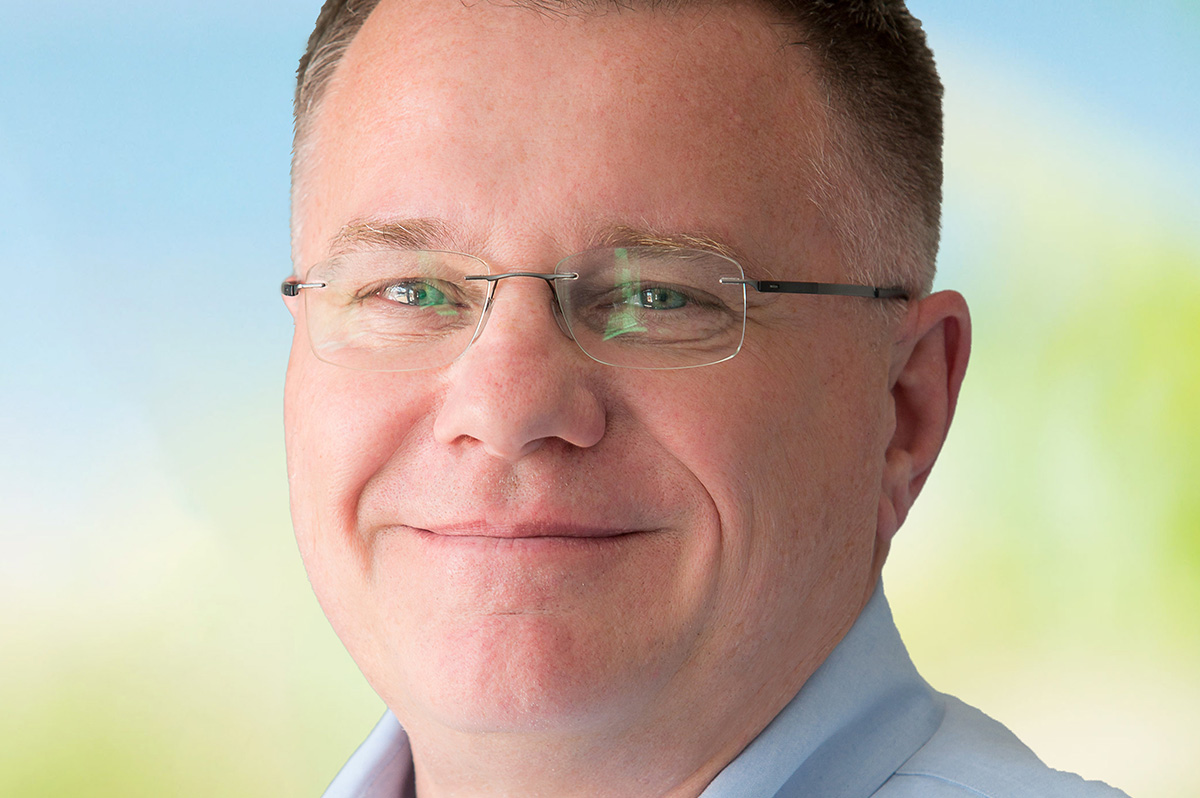
Congratulations to Richard Garrett on being honored by Delaware Gov. Matt Meyer with the Order of the First State. Garrett is executive director of the Children’s Beach House, in Lewes, Del. Upon accepting the honor he said, “I am deeply honored to be recognized by Governor Meyer with the Order of the First State, but I hope this occasion also shines a light on children who are struggling in some of the same ways I struggled as a child and teenager. Perseverance, connection, patience, and the presence of caring adults made all the difference in my life. For 24 years, my greatest privilege has been helping Children’s Beach House create that same sense of belonging and possibility for children and families across Delaware. They are strong, smart, resilient, and resourceful—and they deserve every opportunity to discover just how much they are capable of becoming.”
He told the Blade, “In many ways, my own childhood helps explain why this work has been so deeply personal to me. I grew up in a family that struggled financially, and I had a speech impediment so severe that, as a young child, I often could not be understood without one of my siblings acting as an interpreter. Thankfully, I had strong parents and a mother who was an educator. She spent countless hours helping me practice consonant blends and trying to master the “R” and “S” sounds. Just as importantly, she understood that being around other children my own age would teach me things that no adult could. What made a difference in my life were competent, caring adults who built relationships with me and gave me the sense of safety and belonging I needed. People like Sister Kathleen Swan, OSF; Father Gerald M. Dunne, OSFS, Dr. Susan Cassidy and her husband, John Bronson, to name a few! In many respects, my story mirrors the work we do every day at Children’s Beach House. The children and families we serve are strong, smart, resilient, and resourceful. Sometimes what they need most is for someone to recognize those strengths, stand beside them, and give them the relationships and opportunities they need to flourish.”
Over the years Garrett has grown the Children’s Beach House’s annual budget from approximately $650,000 in 2003 to $4.5 million while strengthening impact, visibility, and organizational infrastructure. He raised $2.5 million in Delaware foundation capital grants, and established a $7 million endowment for the Margaret H. Rollins Center, a $1 million capital endowment, and increased the general operating endowment to $6 million.
In addition to all that Garrett is the founder and owner of Midway Motion and Fitness. He is also looking forward to the groundbreaking of Midway Pickleball in 2027. He is treasurer of the Community Foundation Board of Kiwanis Club of Coastal Delaware. He began his career as executive director of the Delaware County Children’s CAMP, Media, Pa.; and was director of Student Affairs for the Williamson Free School of Mechanical Trades, Media, Pa.
Garrett earned his bachelor’s degree in psychology from Neumann University, Aston, Pa.; and did his graduate studies in vocational education, Temple University.
District of Columbia
Physician: addiction doesn’t always look the way you think it does
Yngvild Olsen headed HHS’s Center for Substance Abuse Treatment during Biden-Harris administration
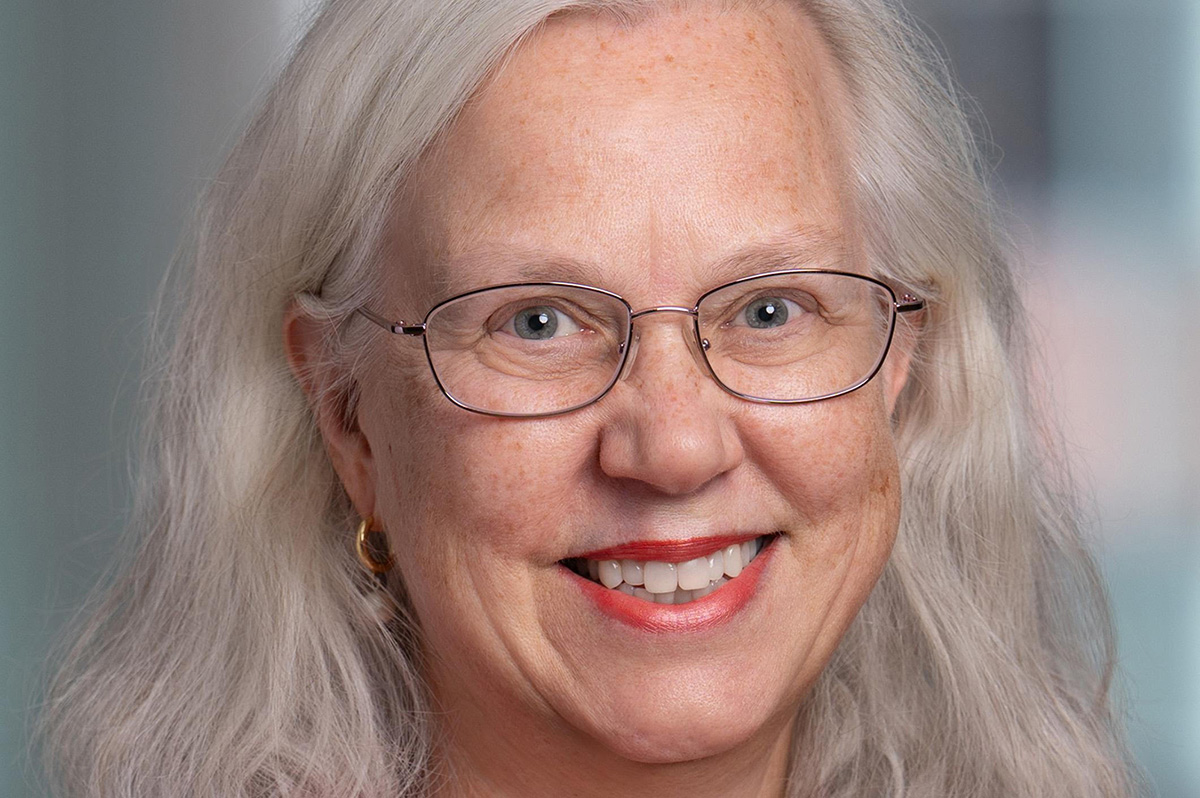
Many people think the telltale signs of drug addiction include sweating and vomiting. But a prominent addiction medicine physician says the best signals aren’t always so visible.
Dr. Yngvild Olsen says more accurate signs come from the brain, specifically the compulsion to keep using drugs, including opioids, despite damage to education, career and relationships.
While it may be harder to understand the true nature of drug addiction, it’s never been more important because of the increased fatality risk of even microscopic amounts of fentanyl, which can be found in many illegal drugs.
Olsen, who headed the Center for Substance Abuse Treatment at the Department of Health and Human Services in the Biden-Harris administration, has worked in addiction treatment for more than two decades. She is now a healthcare advisor with the law and professional consulting firm Manatt, Phelps & Phillips and a physician at the Institute for Behavior Resources/Reach Health Services in Baltimore.
Olsen met with Youthcast Media Group to discuss her career, the opioid epidemic and what to know about fentanyl. The physician, a graduate of Harvard Medical School and the John Hopkins Bloomberg School of Public Health, cited her field experiences as key in shaping her perspective on addiction treatment and recovery. This interview is edited for clarity and length.
What made you believe this work in addiction treatment is important?
I had a couple of experiences really early on in my career that very significantly shaped my interest in addiction and addiction medicine, and my belief that I had a role, and that I could really help people get better from that disease. So the first was during the summer between my first and second year in medical school. I spent the summer on the Eagle Butte and Pine Ridge reservations in South Dakota and really saw firsthand just the devastating impact that substance use — in that case, alcohol — had on not only individuals, but their families and whole communities, and just how profound that impact had been for people who had lost their lives, who had lost family members, who had physically, emotionally and spiritually negative impacts of just feeling very hopeless and and trying to find solace in their substance use, particularly their alcohol use, and doing that without really finding it. I think that was really the lesson that experience taught me.
What did you learn about treatment practices during your medical education? How was that helpful to your career?
When I was a resident in general primary care at Boston Medical Center, I was really fortunate to have a group of mentors who also were general internists, like I was training to be, who were very interested and focused on medical education and research in substance use. And so they modeled for me many of the interactions that we had with patients. I got to do a research study with one of them looking at smoking cessation among people with opiate use disorder, taking methadone. And really importantly, I got to spend a month with one of them at the Boston City Public Health Department’s Opioid Treatment Program, or what some people call a methadone clinic, because he was their medical director. I got to see people recover, and who had recovered, who had gotten their lives back together, gotten their families back together, had new families (or) businesses. It was unbelievably helpful to see that people could recover, that they did recover, and that I, as a physician, could be part of their treatment. I saw people get better, and recover, with medications like methadone and buprenorphine, and other services designed individually for them. That was really helpful and kind of a big eye-opening moment for me.
What factors contribute to addiction and why is it considered a complex disease?
People come into treatment for their addiction — or when they’re not in treatment, but are in an emergency department or on the street — with a lot of shame. They have a lot of shame about this disease that they have, that for so long, they were told, ‘Well, you know, you should just stop. Why can’t you just stop?’ Well, we know that addiction is a disease. It’s a complex disease that has lots of different factors related to it. So there’s a big genetic component that combines with environmental factors and other risk factors. For example, people have what’s called adverse childhood experiences. Some of these are if they grow up with lots of physical or sexual abuse or emotional abuse or have parents who are in jail. That’s really traumatic and so all those childhood experiences that increase stress are a big risk factor.
What is the easiest opioid to get addicted to?
It used to be heroin. That was a big problem, particularly in the Northeast and other parts of the country. That shifted to prescription opioids, beginning around the year 2000. So for about 10 years, it was really prescription opioids that were a big problem — people misusing them. And then it switched back to heroin. And then in about 2015, fentanyl came on the scene, and that really changed the game, given just how unbelievably potent fentanyl is, so it doesn’t take a lot to cause an overdose. Now there are all those other synthetic opioids, like the orphines and nitazenes and all those combinations of other substances, but fentanyl is really what’s still kind of driving a really big part of the overdose crisis.
Do LGBTQ individuals face heightened challenges when battling addictions? How do addiction specialists like you account for those challenges?
We certainly know that the prevalence of overdose and the challenges of substances is higher in the LGBTQ+ community. Where I see patients, we did a big LGBTQ+ training and had a grant to specifically provide services to that population. Where we were located, in Baltimore City, there is a big transgender community not that far from us. Particularly in the LGBTQ+ population, they have multiple stigmas. So it just compounds multiple stressors. And stress is a risk factor for substance use, and particularly a risk factor for recurrence of a substance use disorder. And so when you have all these negative factors building up in people, that can make it that much more challenging for people to find the services that they find meaningful and that are welcoming and supportive of them. So we tried very hard — and we still do — to make sure that we are a welcoming and safe space, because I think it is that safety that is really paramount.
What advice would you give someone worried about a friend or family member’s substance use?
There are two things. One is: I would talk to that person about your concerns and how that person’s personality changes or their behavior changes when they’re using or in withdrawal, and how that might be impacting their health and how they’re feeling. And then second: you can let them know that there are actual treatments that are really helpful, that can make them feel better and that can help them get back to who they were before they started using. It’s important not to be accusatory because … [people] have a lot of shame already, and so when somebody starts accusing them, that shame just gets worse. And a lot of times, people who have a substance use disorder or are using opioids won’t necessarily agree that they have a problem when you first start to talk to them. But talk to them again every time something happens and say, ‘I’m really worried about you because this now has happened and I see it as being tied to your substance use.’ And let them know that there are people who can help and that they could actually feel a lot better.
This work is part of a partnership between the Washington Blade Foundation and Youthcast Media Group, funded in part through a FY26 Community Development Grant from the Office of D.C. Mayor Muriel Bowser. Adrian Malone is a senior at Bard High School Early College DC, one of Youthcast Media Group’s journalism class partners. Shreya Jyotishi, YMG assistant manager of content and programming, is a former Washington Blade intern and 2026 graduate of American University.
District of Columbia
Bet Mishpachah participates in D.C. Oct. 7 commemoration ceremony
Wednesday marked three years since Hamas attacked Israel
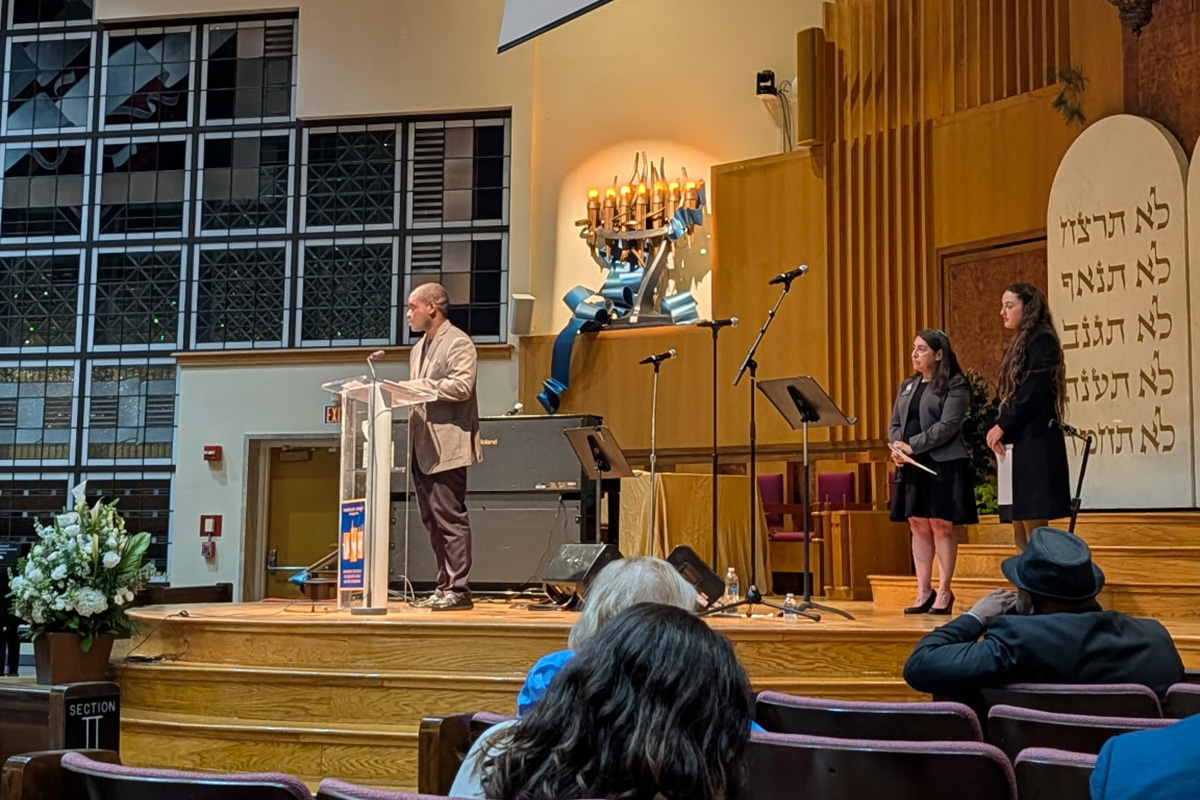
Bet Mishpachah Executive Director Joshua Maxey on Wednesday was among those who spoke at a ceremony in D.C. that marked the third anniversary of the Oct. 7 attack in Israel.
The Jewish Federation of Greater Washington hosted the ceremony that took place at the Washington Hebrew Congregation in Northwest D.C. Bet Mishpachah is the city’s LGBTQ synagogue.
“It was a deeply moving evening, especially hearing the stories of people who knew those who were murdered and those who survived and experiencing music that gave a voice to grief and hope,” Maxey told the Washington Blade.
Hamas militants on Oct. 7, 2023, killed roughly 1,200 people, including upwards of 360 partygoers at the Nova Music Festival near Re’im, a kibbutz that is a couple miles from the Gaza Strip, when it launched its surprise attack on Israel. The militants also kidnapped more than 200 people.
The Hamas-controlled Gaza Health Ministry says Israeli forces have killed more than 74,000 people in the enclave since Oct. 7.
The International Criminal Court in 2024 issued arrest warrants for Israeli Prime Minister Benjamin Netanyahu; former Israeli Defense Minister Yoav Gallant; former Hamas leader Yahya Sinwar; Mohamed Diab Ibrahim al-Masri, the head of Hamas’s military wing known as the Qassam Brigades; and Ismail Haniyeh, chair of the Hamas Political Bureau, after it accused them of committing war crimes and crimes against humanity in Gaza and Israel.
The Israeli government has strongly denied it has committed genocide in Gaza.
An Israeli airstrike on a compound in Khan Younis, a city in southern Gaza, on July 13, 2024, killed killed Deif, one of the alleged Oct. 7 masterminds. Israel less than three weeks later assassinated Haniyah in Tehran, the Iranian capital. Israel Defense Forces soldiers on Oct. 16, 2024, killed Sinwar in Rafah, a city in southern Gaza.
Hamas last October released the remaining hostages in Gaza as part of a ceasefire agreement that President Donald Trump helped broker. Israel has continued to conduct airstrikes and other military operations in Gaza since the official suspension of hostilities took effect.
“For Bet Mishpachah, it was especially meaningful to lift up the names of LGBTQ+ people, those whose identities we know and those whose stories may never be fully known, who were murdered, and to honor the LGBTQ+ survivors whose resilience continues to inspire us,” said Maxey, referring to his participation in Wednesday’s ceremony. “Emily Damari’s story is particularly poignant: while held hostage, she had to hide the fact that she was gay because she feared that revealing her identity to her captors could put her life at even more risk. Yet, she survived.”
“Her story, like so many others, reminds us of the extraordinary courage it takes simply to remain human in the face of hatred,” he added. “May we continue to remember and to mourn, to honor, and to work toward a future rooted in peace and hope.”

Comings & Goings

‘Hidden in Plain Sight:’ The story of Odessa Madre

‘Governments that attack LGBTQ+ rights learn from each other’

Horror genre has evolved into space to explore queer identity

Annie Andrews denounces trans athletes after Trump targets her

Bet Mishpachah participates in D.C. Oct. 7 commemoration ceremony

ICC unseals arrest warrants for Taliban officials accused of persecuting LGBTQ people, women

Physician: addiction doesn’t always look the way you think it does

Calendar: October 9-15

Solidarity beyond the parade: the actual cost of Pride
-

 District of Columbia5 days ago
Bet Mishpachah participates in D.C. Oct. 7 commemoration ceremony
-
Afghanistan4 days ago
ICC unseals arrest warrants for Taliban officials accused of persecuting LGBTQ people, women
-
District of Columbia4 days ago
Physician: addiction doesn’t always look the way you think it does
-
Calendar4 days ago
Calendar: October 9-15