National
Atlanta Council approves settlement over Eagle raid
Patrons, employees win $1 million settlement from city
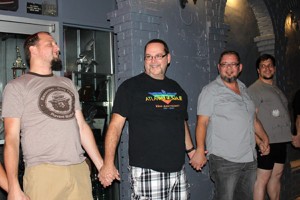
Staff and patrons of the Atlanta Eagle mark the one-year anniversary of a botched police raid on the bar. (Photo courtesy of Georgia Voice)
Editor’s note: Laura Douglas-Brown contributed to this report.
ATLANTA — The City Council voted unanimously this week to approve a $1.025 million settlement in a federal lawsuit over the Atlanta Police Department’s 2009 raid on the Atlanta Eagle, a gay bar on Ponce de Leon Avenue.
The settlement must now go back to the federal judge for final approval. All parties in the case are under a gag order until the settlement is finalized.
Before the vote, the council met in closed executive session to discuss the proposed settlement, which was reached Friday between city attorneys and attorneys for patrons and employees of the Eagle.
The settlement resolution includes $1.025 million to go into an escrow account with Lambda Legal, one of two nonprofit legal groups that joined attorney Dan Grossman in representing the Eagle plaintiffs. The Southern Center for Human Rights also joined the case.
Patrons and employees of the Atlanta Eagle filed the federal lawsuit against the city and dozens of Atlanta Police Department officers in November 2009 following the botched raid of the gay bar on the night of Sept. 10, 2009.
The suit alleged the Atlanta Police Department and its Red Dog unit violated the employees’ and patrons’ federal and state constitutional rights by illegally detaining them, searching them without warrants and using anti-gay slurs during the raid.
Atlanta Eagle patrons alleged they were forced to lie face down on the bar’s floor the night of the raid as members of the APD’s Red Dog Unit searched them for drugs and ran background checks on them using their ID cards. Eight people were arrested and charged with operating an adult establishment without proper city permits. The raid occurred on the bar’s once popular “Underwear Night” in which dancers clad in underwear entertained patrons.
Police stated the raid came after a months-long investigation following complaints to former Mayor Shirley Franklin’s office of illegal sex taking place at the bar. No one was arrested that night for illegal sex or possession of drugs.
A trial of the “Eagle Eight” occurred in Municipal Court in March. Charges against several of those arrested were dismissed during the trial while three others were found not guilty.
The settlement resolution also notes that the Atlanta Police Department “has agreed to take certain actions in regard to their standard operating procedures” in the wake of the raid and lawsuit.
Richard Ramey, co-owner of the Eagle, denied a recent Atlanta media report that the bar is going to close by year’s end.
“Business is bad for everyone — there’s not a bar in Atlanta that’s not having a tough year,” Ramey said. But he added that he is not planning to close the bar.
National
Queen Jean is Tony’s first transgender winner
Designer/activist wins for work on ‘Cats: The Jellicle Ball’
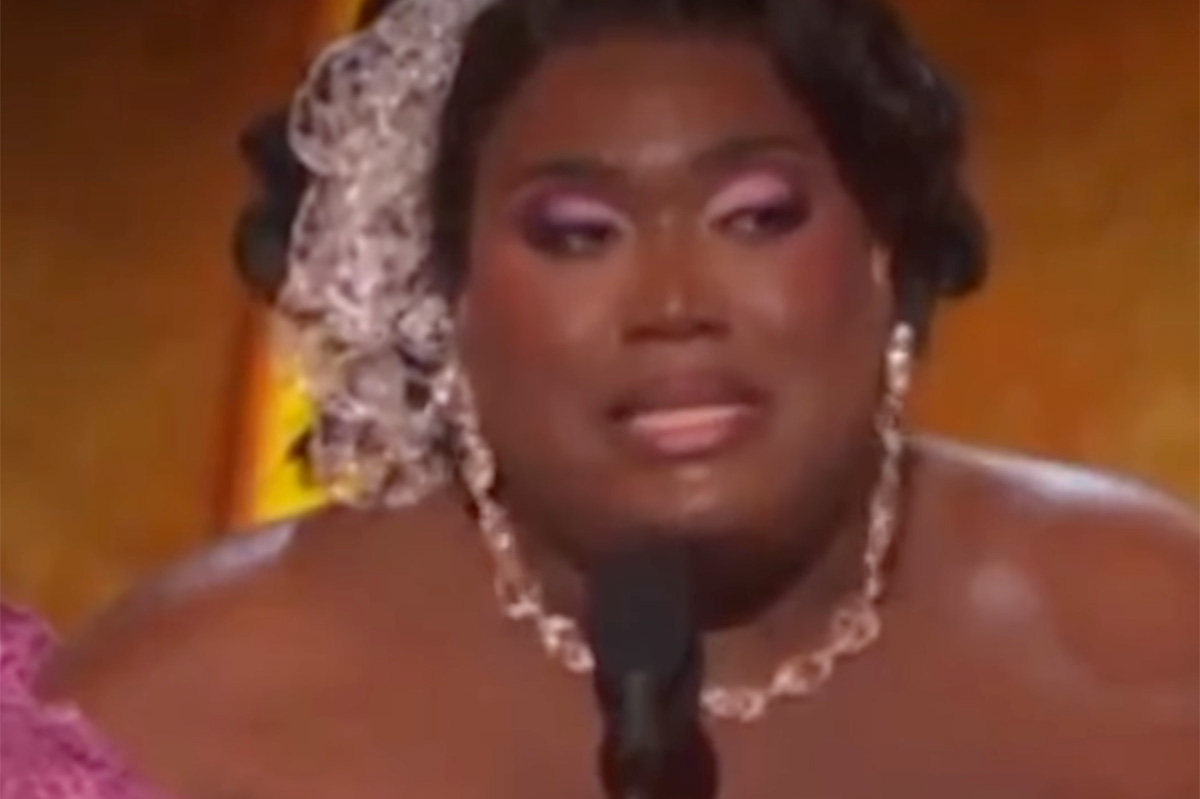
It was a historic night at the 79th annual Tony Awards on Sunday as Queen Jean won the award for Best Costume Design of a Musical, making her the first out transgender person to win a Tony.
“This experience has been monumental. We are here for the legacy of queer people, trans people,” she said. “We are taking up space in ways we have to take up space. We have to shift the paradigm. So I just want to say, thank you all so much for this incredible honor. The world right now is deeply, deeply combating so many ailments, and we know as a society that when we come together, we can make real, permanent change.”
She won the award for her work on “Cats: The Jellicle Ball” and was also nominated for best costume design of a play for “Liberation.”
In addition to her stage work, Queen Jean is the founder of Black Trans Liberation, an organization that supports trans and gender-nonconforming people in New York City.
National
Madonna turns Times Square into massive dance floor
Pop icon celebrates Pride month with surprise performance
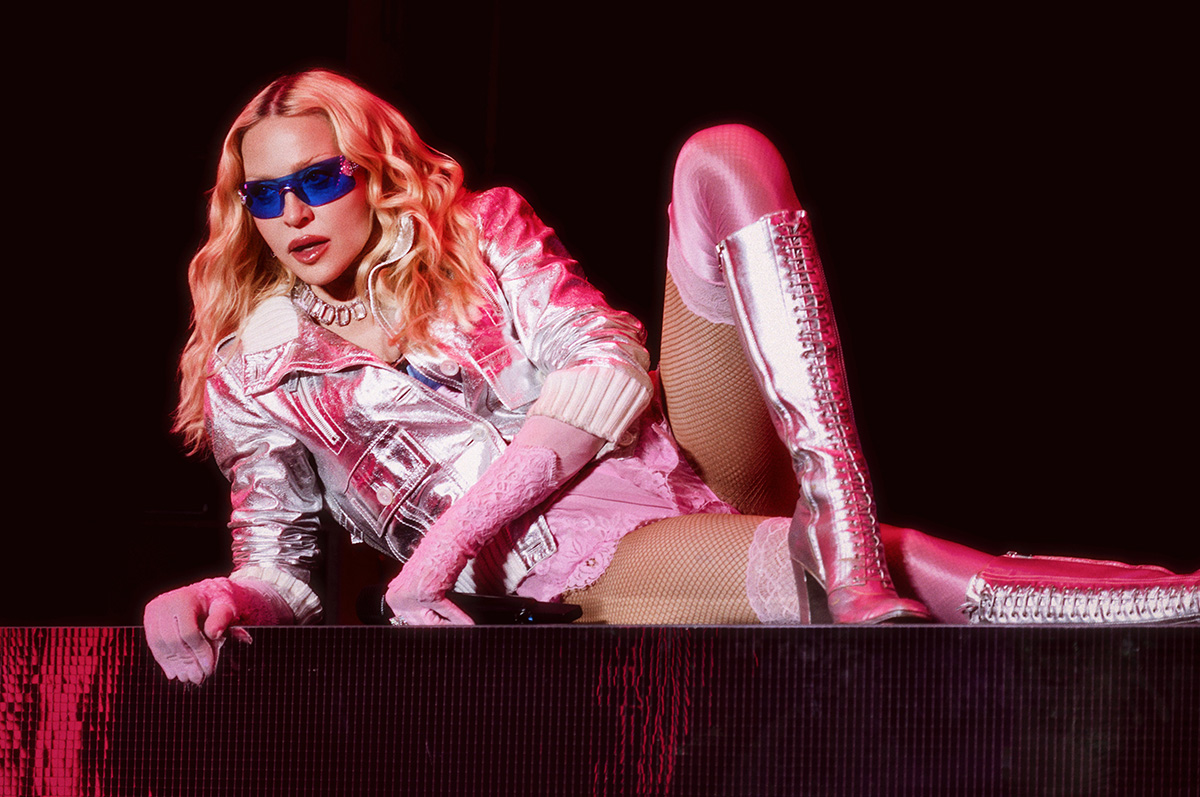
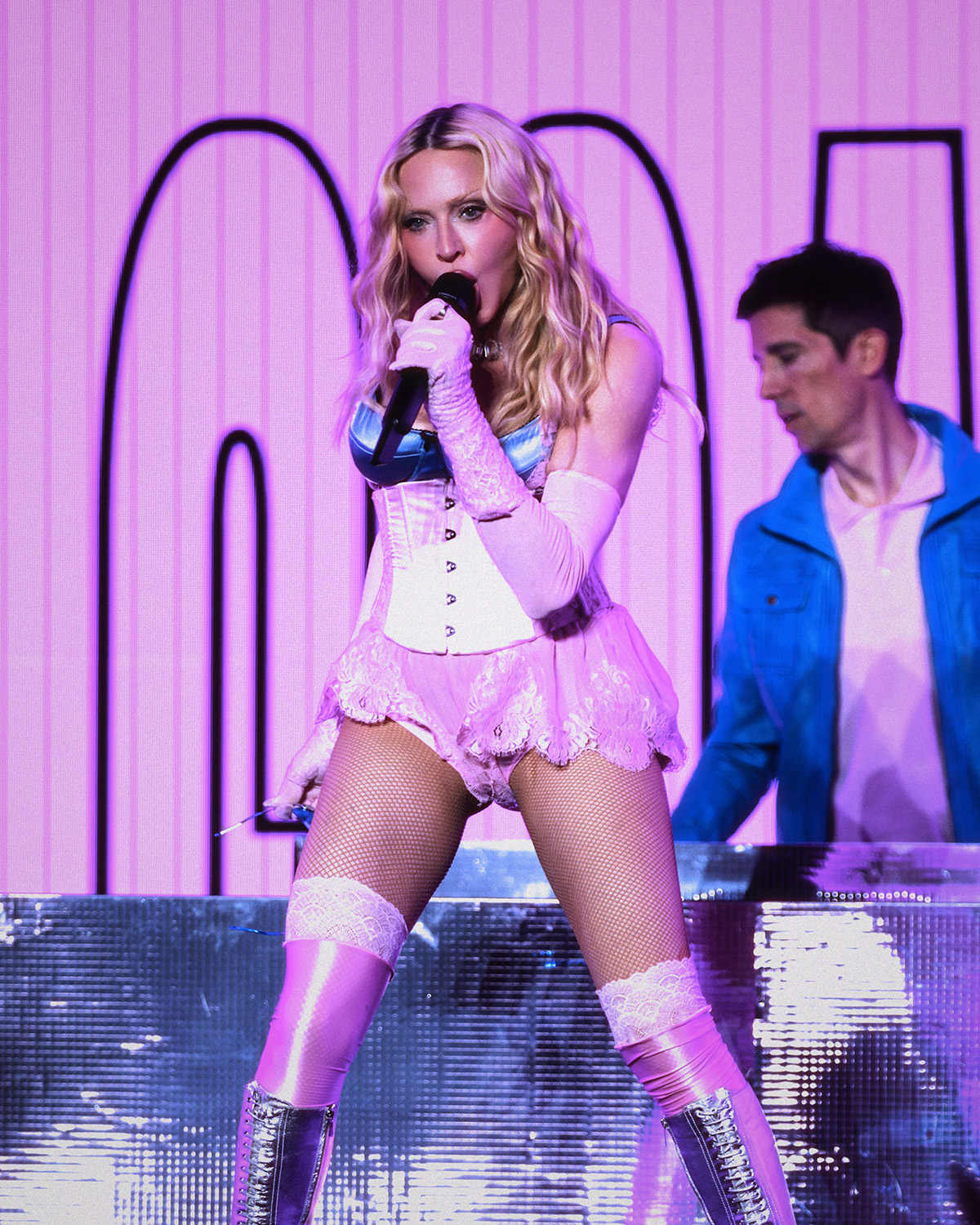
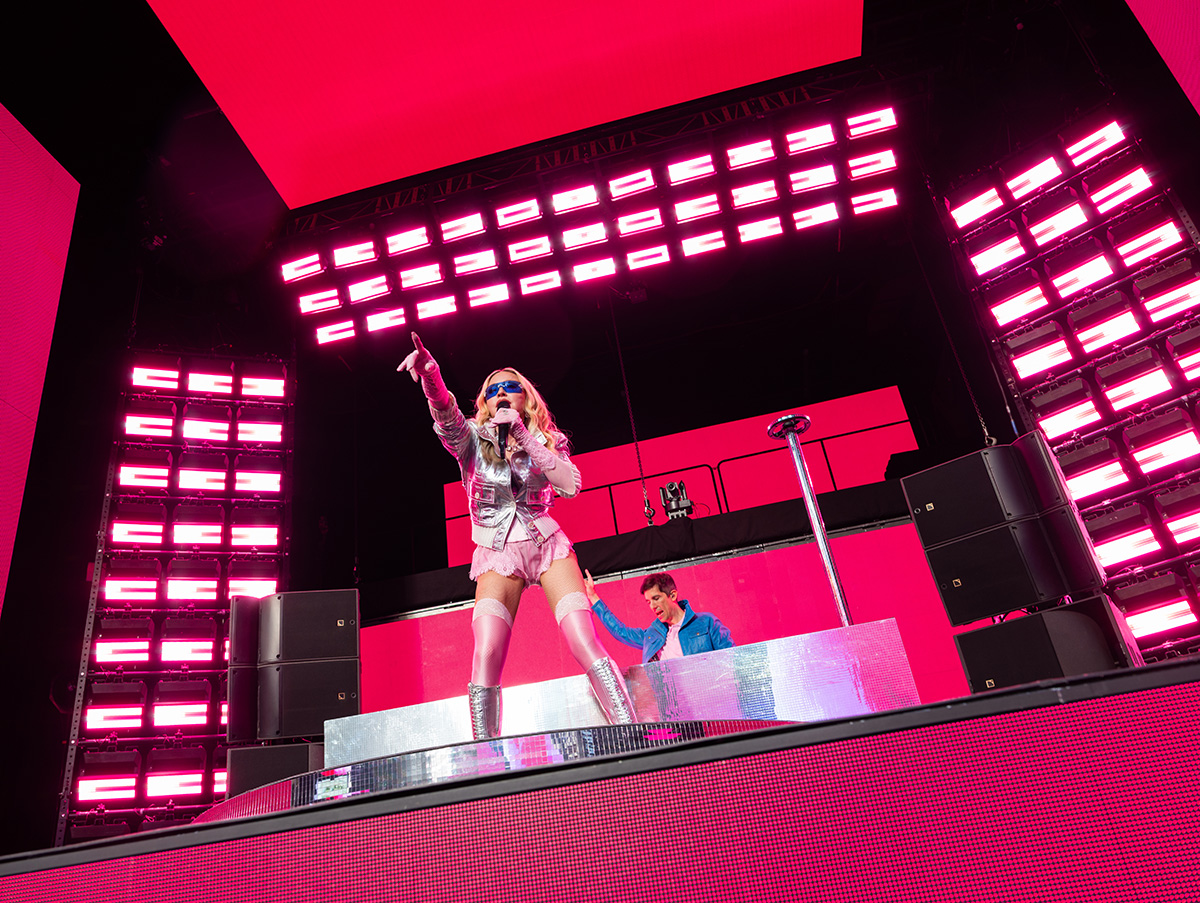
Pop icon Madonna celebrated Pride month with a pop-up performance in New York City’s Times Square on Thursday to the delight of 50,000 fans.
She performed for about 15 minutes high above street level, including several songs from her new album “Confessions II” due on July 3, along with a trio of songs from the first “Confessions on a Dance Floor.”
In addition to the brand new “Love Sensation,” she performed “I Feel So Free” and “Bring Your Love,” plus “Hung Up,” “Get Together” and “I Love New York.” She wished the crowd a happy Pride season; the event was shared with audiences through Grindr’s first-ever livestream.
National
Gallup finds LGBTQ support among Americans is dropping
Marriage equality support lowest since 2016
Gallup, one of the leading organizations in public opinion polling, has found that LGBTQ support among Americans is dropping.
The poll, whose data was collected using Gallup’s annual Values and Beliefs survey, was conducted in May and was published on Wednesday. The data was collected through telephone interviews from a sample of more than 1,000 adults living in all 50 states and D.C. using random digit dialing.
It highlights declining attitudes surrounding LGBTQ issues in multiple areas — from support for same-sex marriage to views on gender identity and the morality of one’s sexuality.
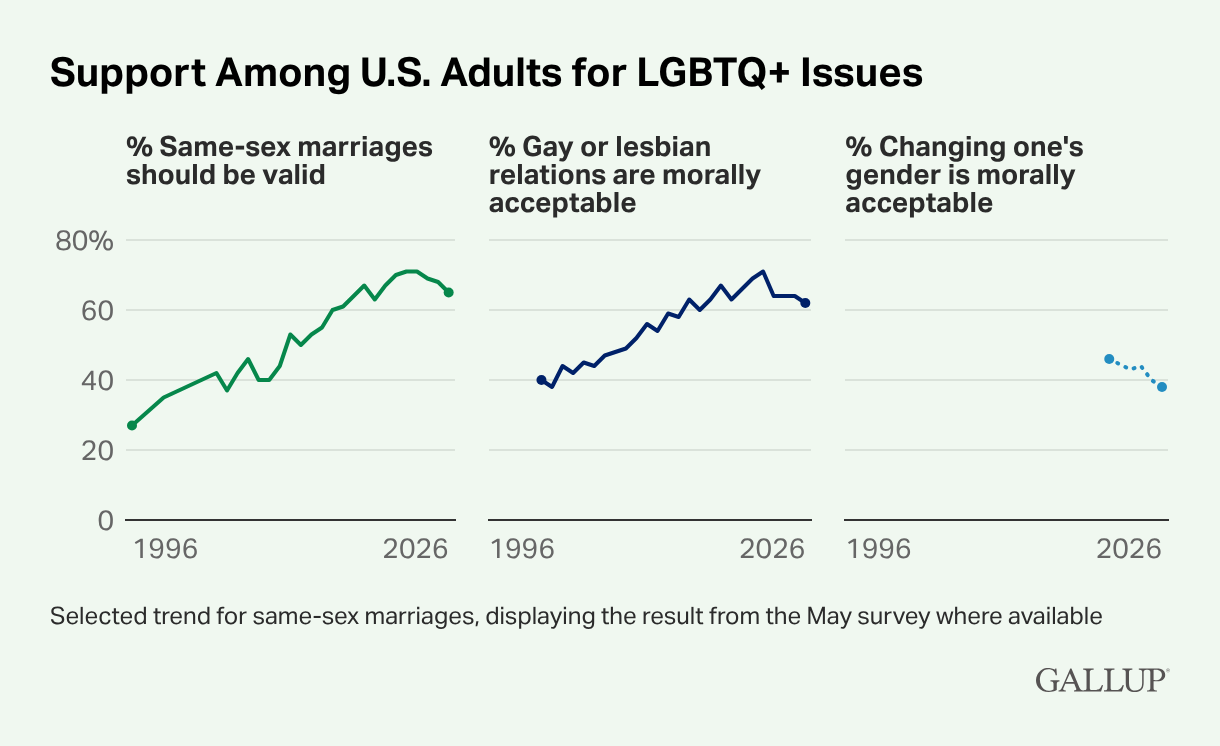
One of the most striking findings was that support for marriage equality fell six points from its 2022-2023 high.
The survey also found that 62 percent of Americans view gay and lesbian relations as morally acceptable, the lowest level since 2016 just after same-sex marriage was legalized nationwide by the U.S. Supreme Court.
One newer question on the poll found that the perceived morality of changing one’s gender has dropped eight points since 2021, indicating the American public is less supportive of transgender people.
The data attributes much of the decline to shifting Republican views alongside the party itself. Conservative leaders have pushed back against diversity, equity, and inclusion programs that were intended to foster greater acceptance of LGBTQ people and other historically disadvantaged groups.
President Donald Trump has been a guiding force behind waves of anti-LGBTQ sentiment, particularly when it comes to trans rights. The president has enacted multiple executive orders, including Executive Order 14168, “Defending Women from Gender Ideology Extremism and Restoring Biological Truth to the Federal Government,” which mandates that gender be defined by one’s sex assigned at birth. He also signed Executive Order 14183, “Prioritizing Military Excellence and Readiness,” which barred qualified trans applicants from joining the military and led to the removal of trans service members already serving in the armed forces.
Additionally, he signed Executive Order 14201, “Keeping Men Out of Women’s Sports,” which prohibits trans female athletes from participating on women’s and girls’ sports teams.
In February, Gallup found that an estimated 9 percent of Americans identified as part of the LGBTQ community in some form.
The organization also found that 23 percent of adults under age 30 identify as LGBTQ, compared with 10 percent of those ages 30 to 49 and 3 percent or less among those ages 50 and older.

PHOTOS: Fairfax City Pride

EXCLUSIVE: Pelosi reflects on four decades of LGBTQ advocacy

D.C. prepares to party as Pride celebrations kick off Saturday

David Archuleta, Monroe Alise named D.C. Pride parade marshals