National
White House objects to ‘Don’t Ask’ amendment in defense bill
Hunter spokesperson calls on Obama to back provision

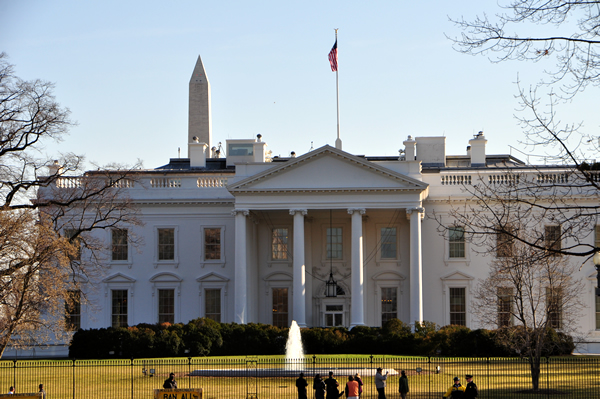
The White House issued a statement objecting to legislation interfering with 'Don't Ask' repeal (Blade file photo by Michael Key)
The White House has issued a statement saying it has “serious objections” to any legislative attempt to alter the “Don’t Ask, Don’t Tell” repeal process following the advancement of a measure that could disrupt the established path for bringing the military’s gay ban to an end.
Shin Inouye, a White House spokesperson, issued the statement in response to the House version of defense budget legislation, which has a provision that would mandate input from the four military service chiefs to enact “Don’t Ask, Don’t Tell” repeal.
The House bill would alter the repeal law signed into law in December allowing for “Don’t Ask, Don’t Tell” repeal. The law allows for open service after 60 days pass following certification from the president, the defense secretary and the chair of the Joint Chiefs of Staff.
“The president has been clear repeal of ‘Don’t Ask, Don’t Tell’ will occur as soon as possible, consistent with the standards set forth in the repeal bill,” Inouye said. “The president is working with the secretary of defense and the chairman of the Joint Chiefs to certify, pursuant to the repeal bill, that implementation of the new policies and regulations written by the department is consistent with the standards of military readiness, military effectiveness, unit cohesion, and recruiting and retention of the armed forces.”
But the provision in the House version of the fiscal year 2012 defense authorization bill would expand the certification requirement to include input from the uniform chiefs of the Army, Navy, Air Force and Marine Corps. The House Armed Services Committee adopted the provision after Rep. Duncan Hunter (R-Calif.) introduced the measure as an amendment.
Inouye said the White House doesn’t support any provision that would interfere with the repeal process set up by the law President Obama signed late last year.
“We have serious objections to any amendment that would unnecessarily delay this process,” Inouye said.
The Republican-controlled House will likely pass the defense authorization bill as a whole along the provision when the larger measure reaches the floor. A vote on the legislation could happen as soon as the week of May 23.
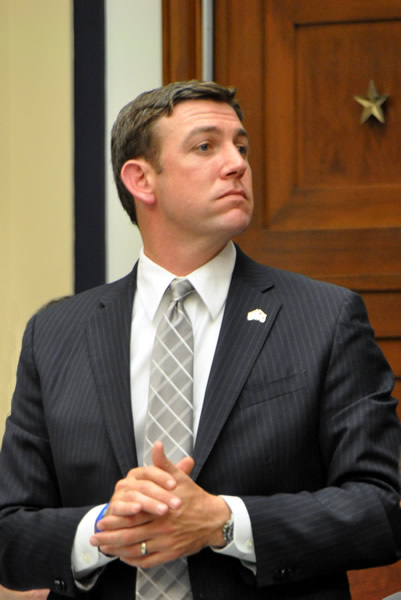
A spokesperson for Rep. Duncan Hunter said the White House objection to the 'Don't Ask' is not surprising (Blade file photo by Michael Key)
Joe Kasper, a Hunter spokesperson, said the White House statement is “not much of a surprise” and called on the Obama administration to drop its objection to expanding the certification requirement for “Don’t Ask, Don’t Tell” repeal.
“If the White House is so sure that the military leadership is behind the repeal, then there’s nothing to worry about,” Kasper said. “The White House’s statement just shows how unsure the administration really is with all this. And there’s always lots of talk about transparency and efficiency. So perhaps the administration will rethink it’s position and support the Hunter amendment.”
Although the committee adopted the amendment as part of defense authorization, passing such a provision into law would be challenging because the Democratic-controlled Senate would have to agree to it during conference negotiations before the measure would even reach President Obama’s desk.
Further, defense officials have testified that certification could happen mid-summer, and the final version of the defense authorization will likely not reach the president’s desk until after that time, rendering Hunter’s provision useless.




National
Madonna roundup: Reviews, sales, and love for ‘Danceteria’
Pop legend’s new album ‘Confessions II’ earning raves
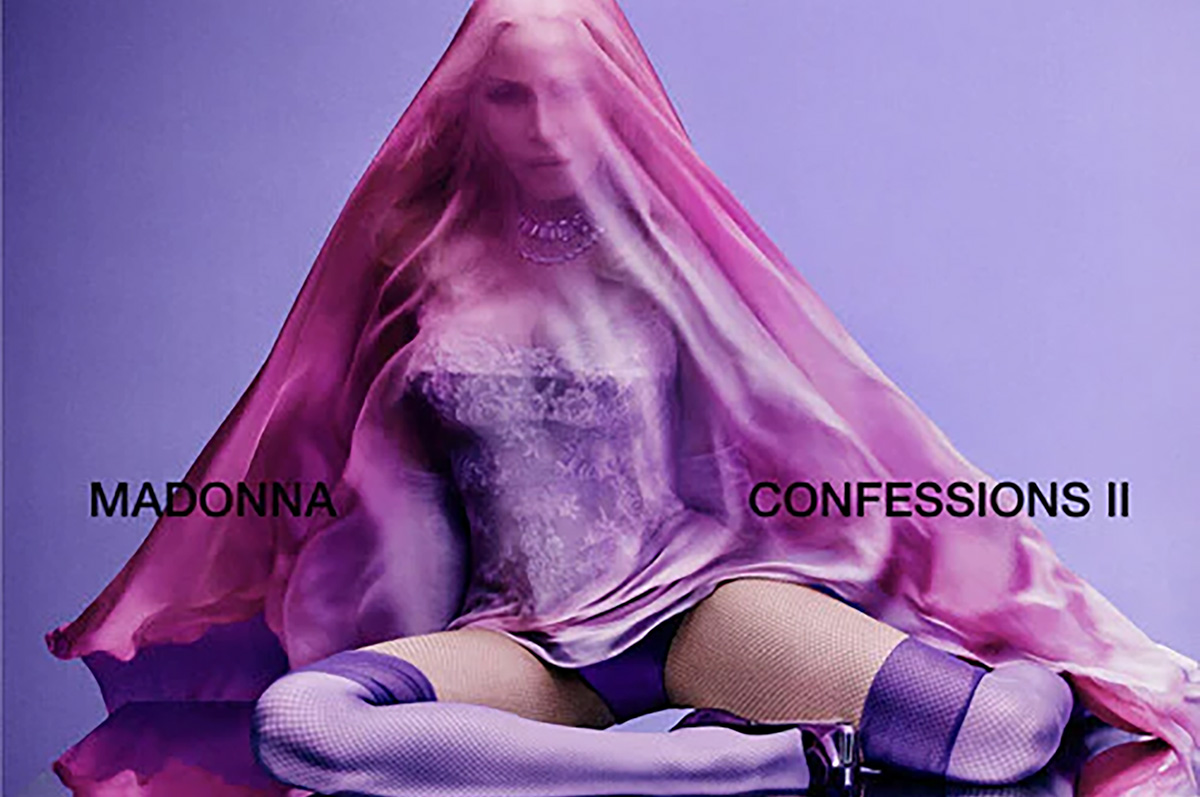
Madonna isn’t just back, she’s ubiquitous.
From a Times Square takeover to Graham Norton’s couch, the pop legend is busy promoting her new album, “Confessions II,” a sequel to 2005’s “Confessions on a Dance Floor,” that is earning rave reviews.
“Madonna’s back in peak form with a fresh and honest dance record that’s not only her best in 20 years, but a genuinely vital addition to her canon,” says Pitchfork.
“Facing grief and loss has made Madonna’s music deeper than it’s been in 20 years, but also more alive,” the Guardian proclaims.
“If everyone in the club is a work of art, as ‘Danceteria’ says, then to live loudly is to make an indelible mark,” according to Vulture.
The album features upbeat dance productions along with some melancholic views on death and loss. On the song “Betrayal,” she reflects on the recent death of her stepmother Joan, singing, “You’ll never take my mother’s place … you betrayed me, you enslaved me.”
On “L.E.S. Girl,” she revisits her early days living on the Lower East Side and struggling to pay the rent. “Bizarre” seems to reference her failed 1980s marriage to actor Sean Penn. “Test” is a duet with daughter Lola Leon, in which she sings, “I wish I knew / The pain I’ve caused / My butterfly / Was always being watched.”
But the emotional high point of the album comes on “Fragile,” which she wrote about the death of her brother Christopher. The two were close early in Madonna’s career and he designed sets for early tours, including “Blonde Ambition.” But they had a falling out after her marriage to Guy Ritchie and he wrote a scathing tell-all book about his sister that led to years of estrangement. The two reconciled after Christopher’s cancer diagnosis and shortly before he died in 2024 at age 63. She sings, “Late last night I was fast asleep/You came to me in a dream/You said, ‘Don’t forget about me/Don’t forget to be happy.’”
Death emerges again but in a much more upbeat context in “Danceteria,” an ode to the iconic New York nightclub that has emerged as a gay favorite single and seems destined to be the song of the summer in queer nightlife. She recounts her pre-fame days trying to convince a DJ to play her first single “Everybody” at the club and name checks Jean-Michel Basquiat, Keith Haring, best friend Debi Mazar, and DJ Mark Kamins on the track.
Streaming numbers and sales are strong for the new album with projected first week sales of 100,000 ensuring a No.1 debut in the U.S.
U.S. Federal Courts
Three overlooked court rulings limited White House anti-trans policies
Supreme Court narrowed trans rights, advocates saw victories in other decisions

While the U.S. Supreme Court’s decision in West Virginia v. B.P.J. continues to dominate headlines about transgender rights, three recent federal court cases produced significant rulings that limited or temporarily blocked Trump-Vance administration policies attacking trans Americans.
Talbott v. USA
Trump issued Executive Order 14183, “Prioritizing Military Excellence and Readiness,” on Jan. 27, 2025, banning trans people from serving in the military. The following day, GLAD Law and the National Center for LGBTQ Rights filed a federal lawsuit in the U.S. District Court for the District of Columbia challenging the ban on behalf of six active-duty service members and two individuals seeking to enlist. The organizations argue the policy violates the Fifth Amendment’s guarantee of equal protection under the law.
The plaintiffs sought a nationwide preliminary injunction — a temporary block on enforcement of the executive order while the litigation continued. The district court granted that injunction and later rejected the Trump-Vance administration’s request to dissolve it, temporarily protecting trans service members from being discharged solely because of their gender identity.
That protection, however, was short-lived. In Shilling v. Trump, the Supreme Court stayed the lower court’s injunction, allowing the military to begin enforcing the trans service ban while litigation continued. The U.S. Air Force subsequently required trans service members facing involuntary separation proceedings to appear in uniforms and grooming standards corresponding to their sex assigned at birth and, in some cases, used their deadnames during those proceedings.
Despite that setback, the plaintiffs secured two significant legal victories during Pride month.
On June 1, a federal appeals court blocked the discharge of the trans service members involved in Talbott. Then, on June 30, a federal district court certified the case as a class action on behalf of all currently serving trans service members. That means future rulings in the case will apply not only to the original six plaintiffs but to all active-duty trans military personnel covered by the class.
The case remains ongoing, but class certification significantly strengthens the ability to protect trans service members as the litigation continues. Currently, there are 28 plaintiffs in total, including the two still attempting to enlist.
Z.A. v. Blanche
In Z.A. v. Blanche (formerly Z.A. v. Lucile Salter Packard Children’s Hospital at Stanford), the U.S. District Court for the Northern District of California issued an emergency order one day before a federal grand jury subpoena was set to be enforced on July 2. The order blocked the Department of Justice from obtaining confidential medical records belonging to California families whose children receive gender-affirming care.
The ruling relied in part on protections established under the Health Insurance Portability and Accountability Act (HIPAA), the 1996 federal law governing the privacy and security of medical records.
The decision represented a significant check on the administration’s efforts to obtain sensitive patient information, protecting the privacy of trans patients and their families while the legal challenge proceeds.
Doe v. Blanche
Doe v. Blanche, which remains ongoing, challenges Trump’s executive order, Defending Women From Gender Ideology Extremism and Restoring Biological Truth to the Federal Government. Under policies implementing that order, many trans women in federal custody would be housed in men’s prisons.
A federal district court in D.C. granted a preliminary injunction blocking enforcement of a Bureau of Prisons policy that would require incarcerated trans women to be housed in men’s facilities regardless of individualized safety assessments or the risk of sexual assault.
The Bureau of Prisons policy also conflicts with the goals of the Prison Rape Elimination Act (PREA), enacted by Congress in 2003 to address sexual abuse in correctional facilities through standards, research, funding, and prevention measures. Federal data has consistently shown that trans people in custody experience sexual assault at dramatically higher rates than the general prison population.
Commentary
When a church fears the rainbow
Puerto Rico pastor objected to Pride symbols outside congregation
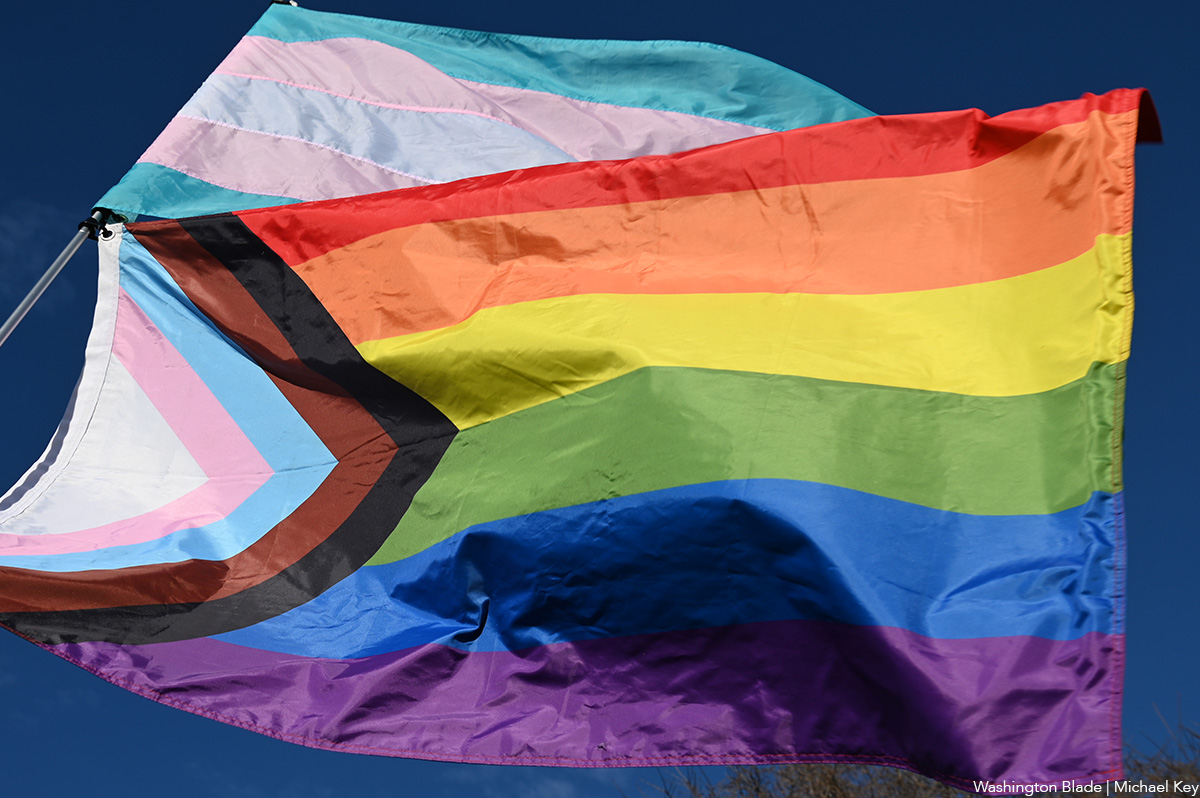
There are moments when an incident stops being merely a local story and begins to reveal something much deeper. What happened on June 28 outside One Church, in Comerío, Puerto Rico, belongs in that category.
I do not know who painted the rainbow colors on the asphalt and on a roadside guardrail. I do not know what motivated them, and it is not my place to justify their actions. If someone believes a law was broken, there are authorities and legal mechanisms to address that. That is not the point of this reflection.
The point is the words that followed.
Hours after those colors appeared, Pastor Jorge J. Santiago Reyes went live on social media. He said he felt threatened. He described what happened as a physical attack against his church. He appeared angry and disappointed. He called those who painted the rainbow “cowards” and “charlatans.” He expressed frustration with the support that, according to him, the municipal government of Comerío has shown toward the LGBTQ community, and with those who support posts related to that community. He repeated several times that the people responsible had “crossed the line.” He ended his message by saying, “These charlatans have to be stopped.”
As I listened to his words, I stopped thinking about the paint.
I began thinking about fear.
There is one phrase the pastor repeated again and again: “They crossed the line.” Yet he never explained what that line was. If he was referring to a possible violation of the law, that is for the authorities to determine. If he meant respect for property, there are also procedures to deal with that. But when that line remains undefined and the message begins to associate a rainbow with a threat, the question changes. It is no longer only about a guardrail or a road. It becomes a question about what boundary, in the pastor’s view, was actually crossed.
Paint can be erased.
A brush can cover the asphalt and return a guardrail to its original color.
What does not disappear so easily is the meaning of those colors.
And perhaps that is where the real conflict begins.
It is significant that this happened precisely on June 28, the day when the LGBTQ community remembers a history marked by exclusion, violence, and the struggle for dignity. What represents memory, hope, and the possibility of living without hiding for millions of people was presented by others as a threat.
I do not know why someone painted that rainbow. I do not need to know in order to ask whether those were the words society should expect from a pastor.
A religious leader may feel hurt, frustrated, or angry. What he cannot forget is the responsibility that comes with every public expression. His words do not end when a livestream ends. They move beyond the space of his church, reach people who may never share his faith, and help shape the way others see those who think differently. When a pastor calls other people “charlatans” and “cowards,” says they “have to be stopped,” and turns a rainbow into evidence of an attack, he is no longer speaking only from frustration. He begins to build a discourse that can feed rejection toward a community far larger than the people responsible for that act.
There was another moment in the livestream that caught my attention. The pastor reminded viewers how much he has served Comerío, how much he has accompanied his community, and how much he has worked for it. I have no reason to question that service. I am sure many people can testify to the good he has done.
That is precisely why it was difficult to hear.
Pastoral vocation is not about reminding a town of everything one has done for it when conflict appears. Service does not lose its value when it goes unrecognized; it loses something when it becomes an argument to claim a moral position from which to speak down to others. A person who serves does so because that is the nature of the calling, not because that service grants authority to discredit those who think differently.
As a pastor, that part of the message left me deeply uneasy. Not because I expect ministers of God to be perfect. We are not. But because our words carry weight, we are called to speak with greater responsibility. Some expressions build bridges. Others raise walls. Some words invite encounter. Others end up justifying rejection.
The paint will disappear. A brush will be enough to cover the asphalt and return the guardrail to its original color.
The words will not disappear as easily.
They will remain recorded in a video, shared again and again on social media, and remembered by those who heard them. They will remain long after the last trace of paint has been erased.
When this episode is remembered, it probably will not be because of the rainbow that appeared outside One Church, in Comerío, Puerto Rico.
It will be because of the words a pastor chose to use when speaking about it.
And that difference changes everything.

As Washington shifts right, Democratic Socialists gain ground

Susan Stewart could make history as Rehoboth’s first openly gay mayor

Silky Nutmeg Ganache talks sex and dating, gender, politics, weight loss journey

Madonna roundup: Reviews, sales, and love for ‘Danceteria’

Three overlooked court rulings limited White House anti-trans policies

‘Transcendent’ a tough but important read

‘My Favorite Sociopath’ debuts at Shepherdstown’s CATF

Under-the-radar Delaware beach towns smart buyers are targeting

In Trump’s divided America, Michael Weinstein’s AHF responds