Local
5 lesbians attacked; police refuse to take report
Suspect released as cops threatened to arrest victims
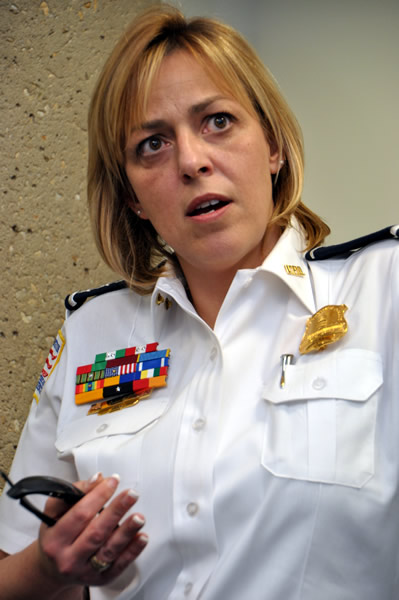
UPDATE: Police Chief Lanier has responded to this incident and announced there could be terminations; read more here.
A man who shouted the words “dyke” and “bitches” as he and another man assaulted five lesbians outside the Columbia Heights Metro station at 3 a.m. on July 30 was released by D.C. police officers after they apprehended him on the scene, according to two of the victims.
A third man who accompanied the two attackers used his cell phone to make a video recording of the attack and continued to record the unfolding drama after the police arrived, said Yazzmen Morse, 21, who suffered a black eye and a swollen face from the assault.
According to Morse and the other victim, six or seven officers arrived on the scene in four police cars after responding to an apparent 911 call from a bystander. The two women said the officers, who are assigned to the Third District police station, refused to take a report of the incident, ignoring the women’s repeated requests to make a report.
“The police grabbed one of the attackers and restrained him,” Morse told the Blade. “Then they let him go. And then they said they didn’t want to hear our stories.”
An officer assigned to the D.C. police Gay & Lesbian Liaison Unit did make a report of the incident three days later, on Aug. 2. Morse said the GLLU became involved after her mother called police to complain about the refusal of the officers on the scene to report the attack.
The GLLU report lists the incident as an anti-gay hate crime.
Morse and the victim, who spoke on condition that she not be identified, said all five women are pleased with the thoroughness of GLLU Officer Joseph Morquecho, who interviewed Morse at her place of work and the other four by phone.
But the two said they are outraged that the officers on the scene refused to take a report and declined to arrest one of the two suspects. They said the second suspect fled as police arrived.
Morse and the other victim said they do not know the identities of any of the officers on the scene.
The two also said the man who recorded the incident on video with his cell phone appeared to be enjoying the spectacle and continued to record after police arrived.
“We’re all wondering if this is going to be on YouTube,” said the woman who asked not to be identified. She said the officers on the scene made no effort to stop the man from recording the incident or to take his cell phone to observe the recording as possible evidence in the case.
Although the GLLU filed the police report, Third District officers and detectives are responsible for investigating the incident since the crime took place within that district.
D.C. Police Chief Cathy Lanier released a statement on Friday saying she learned about the incident Thursday night.
“I was appalled when I heard about the incident and the conduct of the officers,” Lanier said. “Obviously, this is not the kind of service that the Metropolitan Police Department provides. I have spoken with victims in this case and I want to assure them and the public that the incident and the conduct of the officers are being investigated thoroughly,” she said.
“I have received an update on this case and I am confident that we will be making arrests,” she said.
A.J. Singletary, chair of the D.C. group Gays and Lesbians Opposing Violence, said GLOV would urge police officials to investigate the conduct of the officers on the scene and take disciplinary action if the account of the incident by the victims is confirmed.
“This is just unacceptable,” he said.
Singletary said GLOV members were scheduled to meet with Lanier on Friday over the group’s ongoing concern that the GLLU wasn’t getting sufficient support from police officials, including Lanier. He said he and other GLOV members would raise the issue of the police handling of the July 30 attack on the five lesbians.
The victim, who asked that her name be withheld, said she, Morse and the other three women targeted by the two men were horrified when the man that police released began to laugh and taunt the women as he walked away.
“He walked across the street laughing,” she said. “And I will never forget his face – he was just smiling. And we are five people who are in tears and he is just laughing at us.”
The police report made by the GLLU says the incident began when the two male suspects approached the five women as they were walking along the 3100 block of 14th Street, N.W. The block is in the heart of the shopping and entertainment area of the city’s Columbia Heights neighborhood.
The report says the two suspects began to “flirt” with two of the women. It says one of the women responded by telling the men she wasn’t interested and she was with her girlfriend.
“Suspect 1 became enraged and stated, “You fucking dyke bitches, I will kick that bitch’s ass,” the report says. “I will take that dyke bitch into the alley and kick her ass,” the report quotes suspect 1 as saying.
According to the two women who spoke to the Blade, the suspect was referring to Morse, who is the girlfriend of one of the two women that the two suspects approached. Morse said she walked over to the men to find out what was going on.
The police report, which lists Morse as Complainant 1, says suspect 1 punched her in the left eye. “Complainant 1 staggered back and Suspect 1 punched C-1 twice more with a closed fist. It says that when the other women tried to assist C-1, they were hit by both suspects.
The suspects punched each of the women in the head and face, the report says.
The report describes suspect 1 as a black male between the ages of 20 and 25; 5-feet-seven inches to 5-feet-eight-inches tall, weighing between 150-160 pounds, with a dark complexion and athletic build.
It describes suspect 2 as a black male, between 20 and 25 years old, between 5-feet-eight and five-feet-nine inches tall, weighing between 150 and 160 pounds, having a medium brown complexion and medium or average build. It says suspect 2 had a mustache and both suspects wore blue pants and a white shirt.
The report lists all five victims as black females.
The victim who asked not to be identified said the officers on the scene gave no explanation for refusing to take a report. But she said some of the officers told them they were too agitated.
“They were telling us if you guys don’t calm down we’re going to lock you guys up,” the woman said. “One officer said I’m not talking to you because you guys don’t know how to act,” she said.
“And yes, we were panicking. Yes, we were crying. Yes, we were going off,” she said. “But the fact is these men had just hit us.”
The attack on the five lesbians comes less than two weeks after a D.C. transgender woman was shot to death in Northeast D.C. and one day after a second transgender woman was targeted by a suspect who fired a gun at her but missed hitting her just one block from where the first victim was killed.
GLOV joined transgender activists in criticizing police for not adequately releasing information to the LGBT community and public about the July 20 shooting near the 6100 block of Dix Street, N.E., that left transgender woman Lashai Mclean dead. Both cases remain open, with police looking into anti-transgender hatred as a possible motive.



Baltimore
Popular Mount Vernon gay bar Leon’s to temporarily close after owner’s death
Ron Singer passed away on July 7
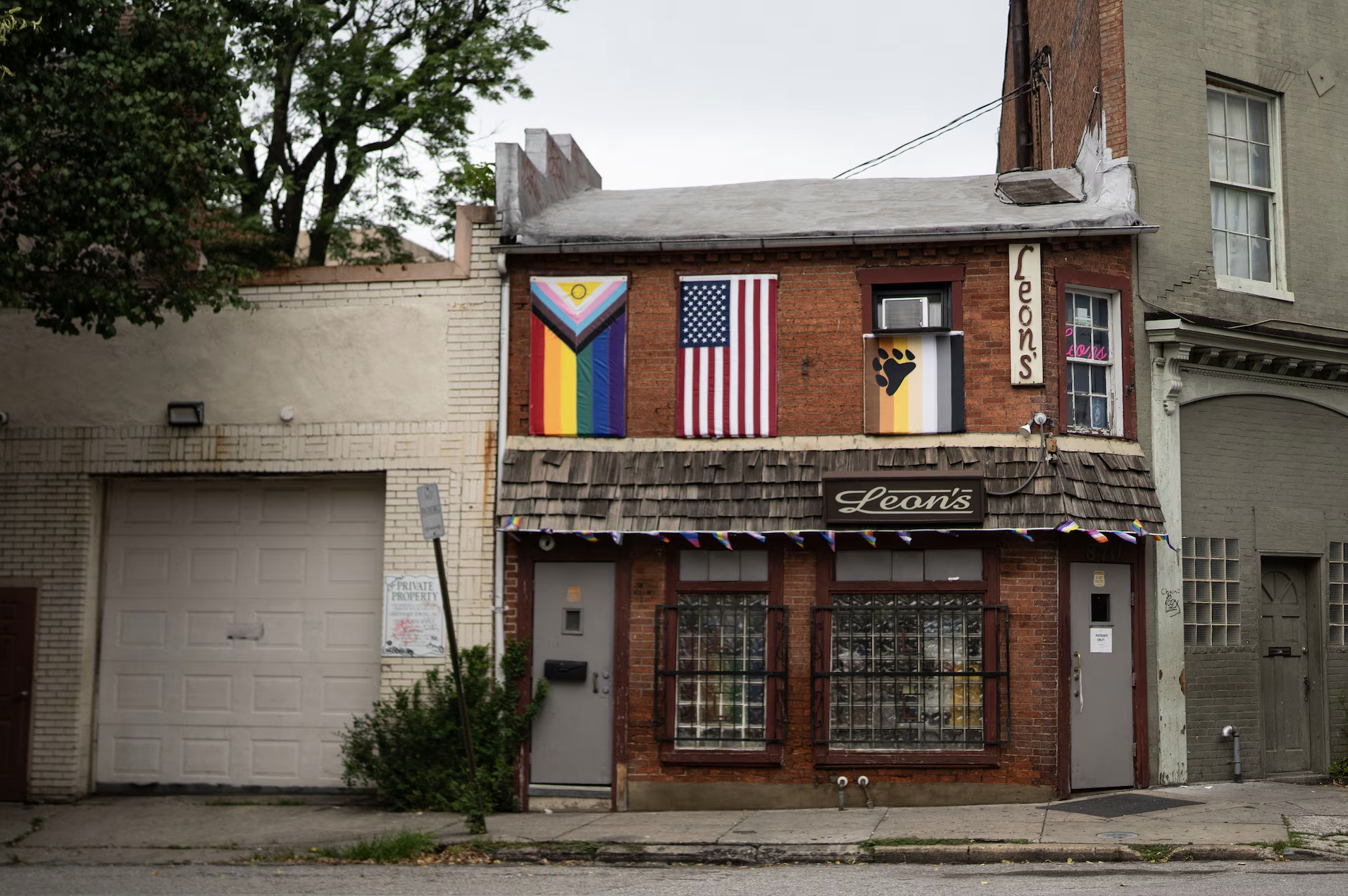
By WESLEY CASE | Leon’s Backroom, Baltimore’s oldest gay bar, temporarily shut down after service on Wednesday night, according to a post on the business’s Instagram page.
The announcement comes a little more than a week after the death of the Mount Vernon bar’s owner, Ron Singer, who died at 66 on July 7.
The rest of this article can be found on the Baltimore Banner’s website.
The Comings & Goings column is about sharing the professional successes of our community. We want to recognize those landing new jobs, new clients for their business, joining boards of organizations and other achievements. Please share your successes with us at [email protected].
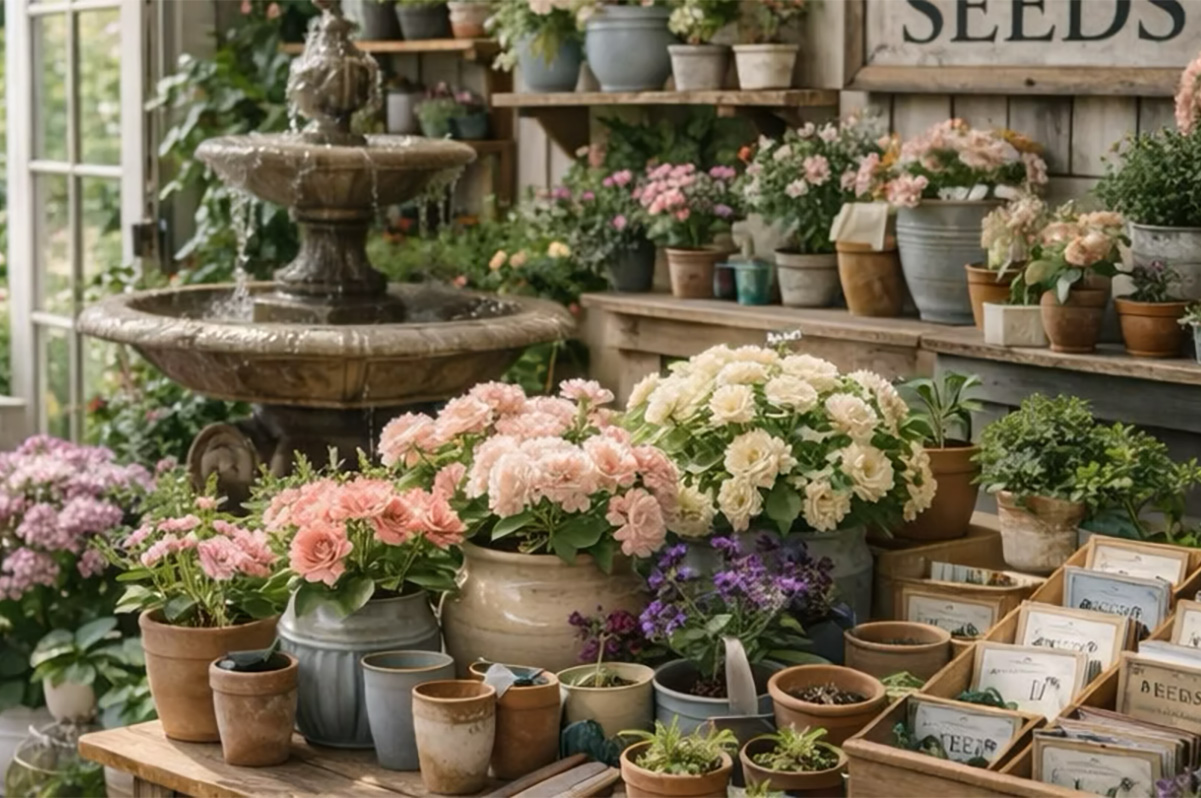
Congratulations to Stuart Ortel and Scott Marker, and Dave Lyons and Rick Hardy, on the recent opening of their garden center on Route 1 in Rehoboth Beach, in the former Farmer Girl site. It is called Bay Laurel Home and Garden and debuted earlier this year. The four owners are all well known to the denizens of Rehoboth Beach.
Stuart and Scott have been active members of the Rehoboth Beach community since 1999. Stuart is a landscape architect, and has established relationships with many local folks in the building and landscape industry. When this opportunity for Bay Laurel Home & Garden presented itself, and they had the perfect team of people in place, he and Scott were committed to making it a reality. So, when Scott and Stuart introduced this opportunity to create a new garden center to Dave and Rick, they embraced the chance to cultivate a business where beautiful plants, inspiring home and garden products, and outstanding customer service come together. Dave and Rick knew about owning a business in Rehoboth as they previously owned Coho’s Market, where they discovered firsthand the value of serving their community, and the rewards of running a locally owned business.
The garden center launched with a refreshed brand identity, updated merchandising, and expanded product lines, all designed to create an inspiring and welcoming environment for your home. Bay Laurel Home & Garden offers a beautifully appointed garden center and curated home and gift shop.
The new center features a full nursery with annuals, perennials, shrubs, trees, and seasonal selections; a garden center offering pottery, fountains, and garden ornamentation, and essential tools and garden supplies. It has a garden shop featuring unique indoor/outdoor furnishings and accessories, and a gift shop featuring botanical and coastal style items for home and entertaining.
Rehoboth Beach
Celebrate Pride in Rehoboth Beach this weekend
‘A vital space for community, healing, and connection’
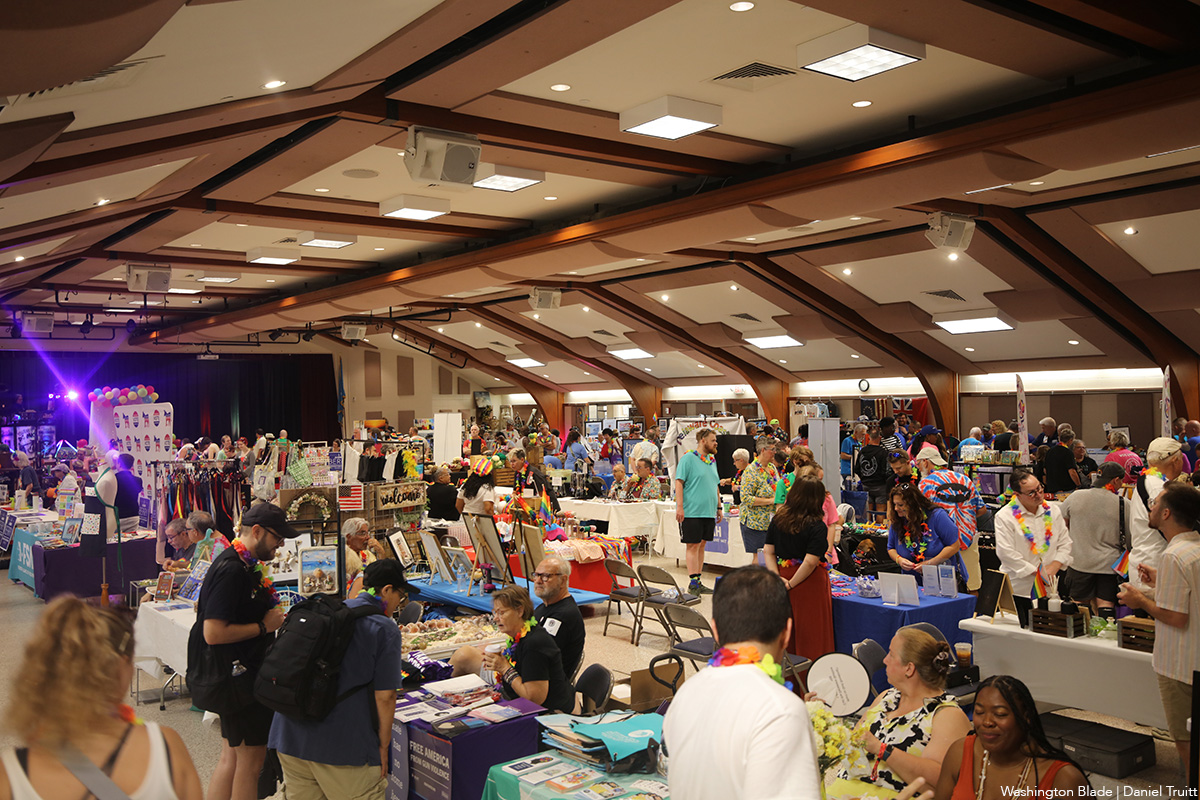
Pride in Rehoboth Beach is kicking off this week on Friday, July 17, with events happening throughout the weekend.
“Rehoboth Beach Pride is more than a festival — it is a vital space for community, healing, and connection,” said David Mariner, director of Sussex Pride, which organizes many of the events.
The weekend will begin with the Grand Opening & Community Preview from 1-4 p.m. on Friday, July 17, celebrating the opening of Novus Medical Services and the new Sussex Pride Community Center.
This will be followed by an Interfaith Pride Service at 6 p.m. at the Metropolitan Community Church Rehoboth to gather for healing and the affirmation of queer spirituality with Rev. Carla Christopher, chair of Sussex Pride Faith.
Members of the community are then invited to head over to join the Rehoboth Beach Bears at the Pines to have dinner, mingle, and give back to local initiatives.
End the first night of Pride in Rehoboth at Diego’s Bar & Nightclub with music by DJ Joey P from 9 p.m.-1 a.m.
Rehoboth Beach Pride Festival will take place on Saturday, July 18, 2026, from 9 a.m.- 3 p.m. inside the Rehoboth Beach Convention Center. A full list of events is available at rehobothbeachpride.org.
Roxy Overbrooke will host on the main stage as live performances take place throughout the day, featuring music from DJ MK and Tribe 9 Entertainment.
The festival will include educational workshops, community meetups, and a raffle dedicated to raising funds for unhoused LGBTQ+ youth across Delaware.
Feature workshops include panels discussing topics such as unhoused LGBTQ+ youth in Delaware, the needs of trans and non-binary youth, as well as the increase in HIV and syphilis diagnoses amid federal budget cuts, in a panel moderated by Blade Editor Kevin Naff.
Saturday night will also feature an evening comedy and entertainment show at the Convention Center presented by the Gay Women of Rehoboth. Performers will include comedians Suzanne Westenhoefer and Karen Mills as well as musician Kristen Merlin. Tickets are available at gaywomenofrehoboth.org.
The Rehoboth Beach Pride Ride will take place at 10 a.m. on Sunday, July 19, hosted by the Dykes on Bikes Rehoboth Beach Women’s Motorcycle Club, starting at Lefty’s.
Goolee’s Drag Brunch will also take place on Sunday from 12-2 p.m at Goolee’s Grille. This is a family-friendly event hosted by Regina Cox and Ruby, featuring Aurora Sterling, Michelle Leigh Sterling, Scarlet St. Cartier, and Joanna Blue. Tickets can be purchased online.
Pride in Rehoboth will conclude at 2 p.m. with the official Rehoboth Beach Pride Closing Party at Aqua Bar & Grill, celebrating the venue’s landmark 20th anniversary with DJ Biff until 7 p.m.
Due to an influx of visitors for the summer season, those coming from out-of-town are encouraged to use the Park & Ride.

PHOTOS: Rehoboth Beach Pride Festival

Liza’s book a tale that’s better than most celebrity memoirs

Hot hatchbacks: Honda Civic, Subaru Impreza

When buying a home, it’s decisions, decisions, decisions

Authorities investigate officer-involved shooting outside Asheville gay bar

Expected India Supreme Court ruling could shape future LGBTQ rights cases

Celebrate Pride in Rehoboth Beach this weekend

Christa Tichy hopes to preserve LGBTQ representation in Md. House of Delegates

Advocacy groups join Venezuela earthquake relief efforts

Rehoboth’s Aqua to celebrate 20th anniversary Sunday
-

 India4 days ago
Expected India Supreme Court ruling could shape future LGBTQ rights cases
-
Rehoboth Beach4 days ago
Celebrate Pride in Rehoboth Beach this weekend
-
Maryland4 days ago
Christa Tichy hopes to preserve LGBTQ representation in Md. House of Delegates
-
Venezuela4 days ago
Advocacy groups join Venezuela earthquake relief efforts