National
Sarvis to leave SLDN, national search begins
Group played key role in ‘Don’t Ask’ repeal fight

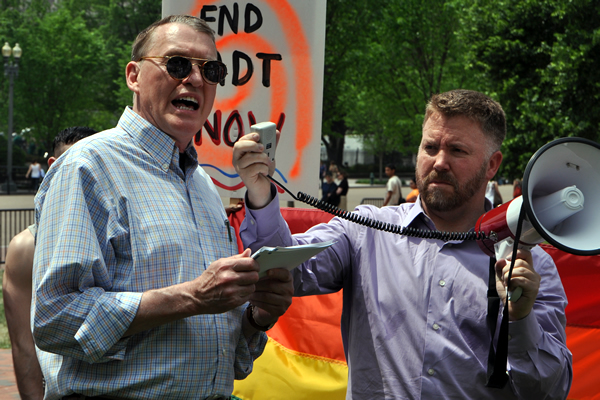
Aubrey Sarvis will step down from SLDN after four years. (Washington Blade file photo by Michael Key)
Five months after the end of “Don’t Ask, Don’t Tell,” Servicemembers Legal Defense Network executive director Aubrey Sarvis will leave the organization after four years in what the group called a “planned departure.”
“It’s not easy to leave SLDN,” Sarvis told The Advocate on Wednesday. “But there comes a time to move on, and this feels right. I think the next phase of the battle can be reinvigorated with new blood, new energy. For me, it was certainly a historic time to be here. I was honored to have been here during the fight.”
The organization announced that in order to fill the top position, it has retained the services of executive search firm McCormack and Associates of Palm Springs Calif. McCormack was the firm that led the search for a new executive at MassEquality in 2010.
SLDN was unable to disclose to the Blade the financial details of the search or what the organization plans to pay the new executive director, but tax returns from 2009 indicate that Sarvis was compensated $153,623 in salary and benefits for the year prior to the repeal of “Don’t Ask Don’t Tell.”
According to Zeke Stokes, SLDN’s communications director, the organization retains 12 employees, and at the moment there are “no other departures to report.”
Sarvis and SLDN played a crucial role in the successful 2010 effort to repeal the “Don’t Ask Don’t Tell” law that prevented open service by gay and lesbian service members in the military.
“The search for a new Executive Director comes at a critical moment in the fight for full LGBT equality in our armed forces,” SLDN Board Co-Chair April Heinze, who chairs the national search committee, said in a statement on Wednesday. “Repeal of the discriminatory ‘Don’t Ask, Don’t Tell’ law, alone, is not enough. The fight for full equality marches forward – especially for those legally married gay and lesbian service members who today do not receive the same recognition, support or benefits for their families as their straight, married peers. The board and staff at SLDN will not rest until we overcome these and the remaining inequalities for LGBT service members.”
“Aubrey Sarvis was a hero in the DADT movement,” Josh Seefried, co-director of the active duty group OutServe, told the Blade Wednesday. “He dedicated his life to improving the lives of thousands of gay service members. He led SLDN at the most difficult time and I am sad to see him go. We are excited to work with his replacement.”
“Aubrey has been one of the prime movers of our community when it comes to LGBT military rights,” Monica Helms, president of Transgender American Veterans Association, told the Blade. “He will be a very hard person to replace. And hopefully the next person will be just as enthusiastic about helping trans military people to serve openly.”
The SLDN statement references the ongoing push for equal benefits for same-sex couples in the military.
“The new Executive Director will manage SLDN’s ongoing legal and legislative efforts to change the definition of ‘spouse’ in three titles of U.S. Code that pertain to benefits for married LGB service members and veterans and dismantle the Defense of Marriage Act (DOMA),” the statement reads. “He or she will oversee SLDN’s pro bono legal services for LGBT service members, work with the Department of Defense and congressional leaders for effective implementation of open service, and deal with any harassment or discrimination related to sexual orientation or gender identity that may occur.”
“In general, we all work together all the groups,” said Denny Meyer, media and public affairs director for Transgender American Veterans Association. “There’s little tensions and competitions, because every group has their own focus. But as of late SLDN has picked up on the trans issue, and has been helping trans veterans with issues, which wasn’t the main focus of the repeal of ‘Don’t Ask Don’t Tell,’ because the original 1993 law didn’t include trans people.”
“Its still sort of taboo on having trans service members serve openly,” Meyer continued. “Politics is politics unfortunately. In other countries England Canada and even Israel, transgender people were included [when they made their inclusive policies], but America is what it is, you know, we’re more backward. It just wasn’t on the table. The movement had to work with what they had. because in this country, if advocates said ‘its all or nothing,’ it would still be nothing.”
The open SLDN executive director position is currently posted at http://www.sldn.org/pages/careers.




Commentary
‘Live Your Pride’ is much more than a slogan
Waves Ahead forced to cancel May 17 event in Puerto Rico

On May 5, I spoke by phone with Wilfred Labiosa, executive director of Waves Ahead, a Puerto Rico-based LGBTQ community organization that for years has provided mental health services, support programs, and safe spaces for vulnerable communities across the island. During our conversation, Labiosa confirmed every concern described in the organization’s public statement announcing the cancellation of “Live Your Pride,” an event scheduled for Sunday in the northwestern municipality of Isabela. But beyond the financial struggles and organizational challenges, what stayed with me most was the emotional weight behind his words. There was pain in his voice while describing what it means to watch spaces like these slowly disappear.
This was not simply the cancellation of a community event.
“Live Your Pride” had been envisioned as a celebration and affirming gathering for LGBTQ older adults and their allies in Puerto Rico. In a society where many LGBTQ elders spent decades hiding parts of themselves in order to survive, spaces like this carry enormous emotional and social significance. They become places where people can finally exist openly, without fear, apology, or shame.
That is why this cancellation matters far beyond Isabela.
What is happening in Puerto Rico cannot be separated from the broader political climate unfolding across the U.S. and its territories, where programs connected to diversity, inclusion, education, mental health, and LGBTQ visibility increasingly find themselves under political attack. These changes do not always arrive through dramatic announcements. More often, they happen quietly. Funding disappears. Community organizations weaken. Safe spaces become harder to sustain. Eventually, the absence itself begins to feel normal.
That normalization is dangerous.
For years, organizations like Waves Ahead have stepped into gaps left behind by institutions and governments, particularly in communities where LGBTQ people continue facing discrimination, social isolation, economic instability, and mental health struggles. Their work has never been limited to organizing events. It has involved accompanying people through loneliness, trauma, rejection, depression, aging, and survival itself.
“Live Your Pride” represented much more than entertainment. It represented visibility for LGBTQ older adults, many of whom survived decades of family rejection, religious exclusion, workplace discrimination, violence, and silence. These are individuals who came of age during years when living openly could cost someone employment, housing, relationships, or personal safety. Many learned to survive by making themselves invisible.
When spaces like this disappear, something deeply human is lost.
A gathering is canceled, yes, but so is an opportunity for healing, connection, recognition, and dignity. For many LGBTQ older adults, especially in smaller municipalities across Puerto Rico, these events are not secondary luxuries. They are reminders that their lives still matter in a society that too often treats aging and queer existence as disposable.
There are still political and religious sectors that portray the rainbow as some kind of ideological threat. But the rainbow does not erase anyone. It illuminates people and stories that society has often tried to ignore. It reflects the lives of young people forced out of their homes, transgender individuals targeted by violence, older adults aging in silence, and families that spent years defending their right to exist openly.
Perhaps that is precisely why the rainbow unsettles some people so deeply.
Its colors expose abandonment, hypocrisy, inequality, and fear. They force societies to confront realities that are easier to ignore than to address honestly. They reveal how fragile human dignity becomes when political agendas decide that certain communities are no longer worthy of protection, funding, or visibility.
The greatest concern here is not solely the cancellation of one event in one Puerto Rican town. The deeper concern is the message quietly taking shape behind decisions like these — the idea that some communities can wait, that some lives deserve fewer resources, and that safe spaces for vulnerable people are expendable during moments of political tension.
History has shown repeatedly how social regression begins. Rarely with one dramatic act. More often through exhaustion, silence, budget cuts, and the slow dismantling of organizations doing essential community work.
Even so, Waves Ahead made one thing clear in its statement. Although “Live Your Pride” has been canceled, the organization will continue providing mental health and community support services through its centers across Puerto Rico. That commitment matters because people do not survive on slogans alone. They survive because somewhere there are still open doors, trained professionals, supportive communities, and people willing to remain present when the world becomes colder and more hostile.
Puerto Rico should pay close attention to what this moment represents. No healthy society is built by weakening the organizations that care for vulnerable people. No government should feel comfortable watching community groups struggle to survive while attempting to provide services and compassion that public institutions themselves often fail to offer.
The rainbow has never been the problem.
The real problem is the discomfort created when its colors force society to confront the wounds, inequalities, and human realities that too many people would rather keep hidden.
Federal Government
Bureau of Prisons declines to reconsider transgender inmate policy
Democratic lawmakers raised concerns this week, lawsuit filed

Following a letter sent Monday by several Democratic senators raising concerns about the Federal Bureau of Prisons’ updated transgender inmate policy, the BOP responded to a request for comment from the Washington Blade, saying it does not plan to reverse the changes implemented earlier this year.
The policy was revised in 2025 to comply with President Donald Trump’s Executive Order 14168, titled “Defending Women from Gender Ideology Extremism and Restoring Biological Truth to the Federal Government.”
In a statement to the Blade, BOP spokesperson Donald Murphy said the updated policy is rooted in medical guidance and data-driven decision making.
“The BOP implemented the February 2025 policy to ensure that inmates with gender dysphoria are properly diagnosed and treated consistent with best medical practices,” he said. “Unlike the prior administration’s one-size-fits-all approach, the BOP’s new policy ensures individualized assessments and treatments. And while the previous administration’s policies on treating inmates with gender dysphoria was driven by radical ideology, the BOP’s current policy is based on medical studies, medical expert opinions, state correctional policies, caselaw, and penological concerns. Absent court order, there are no plans to reconsider or revisit the policy.”
U.S. Sens. Ed Markey (D-Mass.), Jeff Merkley (D-Ore.), and Mazie Hirono (D-Hawaii) signed the letter, arguing that the policy change fails to adequately prioritize the safety of trans inmates — protections they say are guaranteed under the Constitution.
This inquiry comes days after a federal lawsuit was filed against the Justice Department specifically on the concern that trans inmates are not receiving adequate care.
Earlier this month, the National Center for LGBTQ Rights, a legal organization focused on LGBTQ rights since 1977, filed a lawsuit in District Court of the District of Columbia against the Trump-Vance administration in collaboration with GLAD Law, Lowenstein Sandler LLP, and Wardenski P.C.
The suit, filed on May 6, alleges the administration is “ignoring federal protections” designed to prevent sexual abuse of incarcerated trans people.
“Transgender people in prison are sexually abused or assaulted at nearly 10x the rate of the general prison population,” the press release announcing the lawsuit states, adding that federal legislation was enacted to address those risks.
The plaintiff in the lawsuit, Paulina Poe, is a trans woman currently incarcerated in a men’s facility. According to the complaint, she has been “propositioned, groped, sexually harassed, and assaulted” by male inmates and subjected to strip searches by male officers — circumstances the Prison Rape Elimination Act regulations were intended to prevent.
The lawsuit also argues that the policy changes violate constitutional protections and deny trans inmates medically necessary care.
“The Eighth Amendment requires prisons and jails to provide ‘adequate medical care’ to incarcerated people which includes adequate treatment for people diagnosed with gender dysphoria,” says the Transgender Law Center. “‘Adequate medical care’ should be delivered according to accepted medical standards, such as WPATH’s Standards of Care. Some courts have said that in some circumstances ‘adequate medical care’ for gender dysphoria includes providing gender-appropriate clothing and grooming supplies, and the ability to present yourself consistent with your gender identity.”
GLAD Law Staff Attorney Sarah Austin also issued a statement when the lawsuit was announced, saying those responsible for the policy changes — and the rollback of protections under the Prison Rape Elimination Act — will be “held accountable for this egregious and lawless action.”
“The federal government’s unlawful attempt to roll back binding Prison Rape Elimination Act regulations is an especially dangerous step in its ongoing campaign to strip transgender people of legal protections,” Austin said. “The targeting of transgender incarcerated people is a deliberate choice to put vulnerable people in harm’s way simply because of who they are.”
The Justice Department has not responded to the Blade’s request for comment.
National
America’s broken pipeline of mental healthcare for trans youth
Despite strong demand, 44 percent of LGBTQ youth have no access to it

Uncloseted Media published this article on May 12.
Editor’s note: This article includes mention of suicide and contains details about those who have attempted to take their own lives. If you are having thoughts of suicide or are concerned that someone you know may be, resources are available here.
By SAM DONNDELINGER and ANASTASSIA GLIADKOVSKAYA | The first panic attack Quinn Pulsipher remembers having was at 8 years old. They describe it as “a pitch-black ghost that hugs them all over and tries to control their mind.” At the beach on vacation with their family, the wind suddenly picked up, and Quinn began hyperventilating, screaming and crying uncontrollably. Nothing could calm them down.
After that first episode, the panic attacks occurred whenever there was a storm, sometimes even when there was just a light breeze.
By the time Quinn was 14, they were “spiraling down.”
They began failing most of their classes. They rarely left their room, even avoiding going to the store with their mom.
Quinn, who is nonbinary, says the deterioration of their mental health was related to the rejection they received for their identity. At school, teachers continued to misgender them even after their records were updated. They endured cyberbullying, transphobic slurs from classmates and lawmakers across the country restricting their rights.
For those six years, Quinn cycled through five therapists who, according to their mom, Hilary, did not understand the challenges Quinn faced as a queer kid.
Hilary spent hundreds of hours searching for help — filling out intake forms, sending emails and calling therapists across Utah — only to get to the scheduling stage and repeatedly hear that providers “weren’t willing to treat a trans kid.”
The therapists who agreed to work with Quinn often failed to understand how being transgender intersected with their anxiety and depression. Some confused gender identity with sexuality. Others dismissed the idea that Quinn’s gender identity could be connected to their worsening mental health.
One night, after a teacher refused to use their pronouns, Quinn reached a breaking point. They came home and cried for hours.
“The feelings were too much,” they told their mother. “I shouldn’t have to fight for my pronouns and name to be used.”
“They kept repeating, ‘I just can’t do it anymore,’” Hilary told Uncloseted Media and Fierce Healthcare. “So I flat-out asked if they were suicidal, and they said ‘yes.’ I was terrified. I prepared myself for the possibility that my child might not be alive when I checked on them.”
Hilary scheduled an emergency appointment with a nonbinary therapist Quinn has now started seeing after getting off a six-month waitlist.
“It didn’t fix everything,” says Quinn. “But what helped was talking to somebody who got it. [My therapist] is just so kind, respectful, calm and accepting. I don’t know any other way to describe just how amazing it is to have someone like this.”
“I feel so lucky we found [their therapist] when we did because I could have lost my kid,” Hilary says.
As almost 1 in 4 American teens identify as LGBTQ, affirming therapy can be life-saving. Yet availability is shrinking. Access to mental healthcare for LGBTQ youth dropped from 80 percent to 60 percent from late 2023 to late 2024, according to the Trevor Project. And in 2025, though 84 percent of LGBTQ youth wanted mental healthcare, 44 percent of them could not get it.
Over four dozen interviews with transgender teens, their families, clinicians and researchers reveal a fragmented health system plagued by long waitlists, prohibitive costs, parental consent complications and a shortage of affirming providers. Clinicians receive little to no formal education on LGBTQ health, often leaving young patients to repeatedly explain their identities in spaces intended to support them. Many LGBTQ youth say they have encountered provider homophobia and transphobia. These barriers are compounded by political hostility and school environments where bullying is pervasive.
“It’s really a wall of barriers and there’s these layers and layers of obstacles that, taken together, make accessing care feel impossible,” says Lana Lipe, a licensed clinical social worker and private practice therapist serving queer patients in Indiana.
“Not only is the need growing, but there’s not enough resources,” adds Jenna Glover, chief clinical officer at Headspace.
The journey to affirming providers
On every major mental health and suicide risk indicator, queer youth struggle more than their heterosexual peers. Analysis of 2023 national data found that queer youth are more likely to experience persistent feelings of sadness or hopelessness (66 percent versus 31 percent), poor mental health (54 percent versus 22 percent) and suicidal ideation (41 percent versus 13 percent). They were also more likely to attempt suicide (20 percent versus 6 percent).
Experts stress that the mental health struggles of queer youth are not inherent to their identities. Rather, they exist because of the minority stress they experience. Six in 10 LGBTQ teens experienced bullying in the past year. And those who did reported significantly higher rates of attempted suicide.
“They’re struggling because of what’s being done to them, and what isn’t happening for them,” Lipe says.
Finding affirming providers is difficult in part because there is no mandated LGBTQ cultural sensitivity training for mental health professionals in the U.S. And when training is offered, experts interviewed for this story agree that it’s not sufficient.
“We know that affirming care saves lives,” Lipe says. “The question isn’t whether we can do better; it’s if we’re willing to.”
From 2009 to 2010, medical school curricula included an average of only five hours of LGBTQ-related content, one study found. By 2022, that average had increased to 11 hours, which some maintain is still inadequate. Dustin Nowaskie, a psychiatrist and founder of OutCare Health, a nonprofit offering LGBTQ health resources and provider training, has argued that med schools should require 35 hours of LGBTQ training.
“This leaves the burden of educating providers to patients,” Ellesse-Roselee Akré, assistant professor at Johns Hopkins Bloomberg School of Public Health, told Uncloseted Media and Fierce Healthcare. “It has an impact on people’s willingness to receive care, people’s willingness to continue getting care and contributes to a lot of people finding alternative ways to self-medicate and treat their health themselves.”
Daniel Trujillo, a trans teen from Arizona, was lucky enough to find an affirming therapist.
As early as 3 years old, Daniel expressed his gender identity in drawings. His parents were paying attention and helped Daniel socially transition at 8 years old, which included a haircut and new clothes. Soon after, they found Daniel an affirming care team, including a psychologist for whom they paid out of pocket.
“They had had years of experience navigating how to support transgender youth and how to talk us through things we didn’t know, and help us better understand the needs of our child,” says Daniel’s mother, Lizette Trujillo.
Daniel, now 18, saw his therapist for about eight years. “During my tween and early teen years, it felt really important to have someone to help identify things I was going through,” Daniel says. “As I got older … it was more just someone to debrief with.”
The Trujillos, who have long advocated for trans rights in legislative sessions, moved to Spain in 2025 to keep their family safe due to the current political attacks on trans rights in the U.S. The move meant Daniel could no longer see his therapist.
“The political climate has made it harder and scarier for parents to say that they support their children,” Lizette says.
One way that LGBTQ patients can find providers is through online directories. GLMA, the national association of LGBTQ and allied health professionals, maintains a public list of over 5,000 queer-affirming providers, which it says is the largest online directory of its kind.
To be approved, providers must attest to their approach to LGBTQ care, thereby signaling their commitment to an affirming practice. GLMA reviews each provider’s online presence for anti-LGBTQ activity or affiliations, including social media posts and ties to Southern Poverty Law Center-designated hate groups. In cases where a provider has a limited or no online footprint, GLMA may request professional references. Providers are also asked questions to test their competency in LGBTQ topics and training.
“To be an affirming provider means that you are meeting patients exactly where they are,” Alex Sheldon, GLMA’s executive director, told Uncloseted Media and Fierce Healthcare. “It’s more than just checking a box that says, ‘I’m not going to outright discriminate against you.’ We ask for folks to go a little bit further in their exploration of their own educational ability. … Did you receive LGBTQ-specific training in medical school [or while you pursued your doctorate]? Have you published any LGBTQ related materials? Do you do research in the space?”
In a survey of 375 providers, the findings of which have not yet been published and were shared with Uncloseted Media and Fierce Healthcare, OutCare Health found nearly half of providers stated that the current political climate has made them feel more cautious about being publicly visible as an LGBTQ-affirming provider. “We have witnessed … a shrinkage of LGBTQ+ providers and practices,” Nowaskie wrote in an email.
There are many ways to deepen knowledge. Providers can voluntarily engage with medical association-accredited trainings from organizations like OutCare Health or Violet, which offer provider training on marginalized populations. Companies can either mandate these trainings or offer bonuses to clinicians for completing them.
Violet’s training revolves around a few key questions including whether providers feel confident in their knowledge of a given identity and whether they know what therapies are appropriate. Violet can then track if the training led to changes in provider behavior and patient outcomes.
Violet has seen steady interest in its LGBTQ health training: across 2024-2026, over seven hours of education per provider were completed each year, suggesting sustained engagement. And the number of providers who completed LGBTQ education grew 51 percent on the platform, from over 7,600 to nearly 11,600.
Headspace’s Glover says LGBTQ education should not be a specialization: “It should be a general part of education that any provider should be able to provide this level of care.”
Schools can be a source of pain or support
The lack of affirming providers has real-world effects. It took Ella Sutton, a 15-year-old trans girl from Fredericksburg, Va., years to find an affirming therapist to help with her anxiety and depression and to deal with the daily bullying she experienced. Ella’s mom, Angela Sutton, says that many therapists who use the tag “trans-accepting” themselves still lack expertise.
“They say LGBTQ-affirming and LGBTQ-welcoming, but … do you know how to deal specifically with gender dysphoria, body dysmorphia, all of the unique and complex things that go along with being trans? Ella is still having to explain who she is over and over again. They don’t even have that concept or grasp of it because, where’s the training?” Angela says.
In 2024, Ella and her family left Florida, where she had been bullied for being trans to the point of fearing riding her bike outside. After researching Bloomington, Ill., Angela felt it would be a safe home for her daughter, joking that half of the 1.6 percent of the population who identify as trans in the U.S. live in Bloomington.
But a few months into seventh grade, Ella was beaten unconscious in a school hallway.
In footage of the attack as described in a lawsuit, another student — who had been overheard saying she would “bully this girl until [she] transfers” — approaches her from behind, pulls her hair and forcefully and repeatedly slams her head to the ground until Ella loses consciousness. She then punches her in the face until someone pulls her off.
“She has officially lived the purest form of hate,” Angela says. “She was only four feet tall and 50 pounds at the time. She is a kid.”
After the attack, Ella was diagnosed with a concussion, a potential traumatic brain injury and post-traumatic stress disorder, according to the family’s lawsuit against the school. She says the trauma left her feeling unsafe and severely disrupted her education and well-being.
“I was just really depressed and I was always in bed. … I couldn’t eat more than a few crackers a day. All I did was sleep,” Ella told Uncloseted Media and Fierce Healthcare. “[The hate and bullying] just kind of makes you feel like a burden and like you shouldn’t be like the person that you are, even if that’s who you should actually be.”
When done right, schools can offer crucial opportunities for community, resources and support, but they are increasingly a breeding ground for bullying and political threats. Queer students reported their school climate felt more hostile during the 2024-25 school year due to an anti-LGBTQ political climate, a Glisten survey found, and over two-thirds of respondents faced harassment or assault because of their gender identity or expression.
Some states have instituted explicit policies to repress LGBTQ identities. In Florida, schools must abide by so-called “Don’t Say Gay” laws that restrict K-3 classroom instruction on sexual orientation or gender identity and prohibit all employees in K-12 public schools from using students’ preferred pronouns. Teachers must also report changes to a student’s name, pronoun use or restroom use to parents, which effectively outs children who haven’t told their parents about their identity. In Ohio, teachers are required to notify the parents if a student requests to identify as a gender that doesn’t align with their biological sex.
And even in Massachusetts, a blue state with the country’s only Commission on LGBTQ Youth, schools have become tight-lipped in their support, whether out of fear of losing funding or retaliation from parents. “Almost all districts [have] some anti-LGBTQ activity,” the commission’s executive director, Shaplaie Brooks, says. Examples include parents opting students out of LGBTQ-inclusive education; rejection of parent advisory councils meant to ensure LGBTQ inclusivity; bullying from students and rejection from educators; and administrators requesting flag removal or other material signaling affirmation.
Not ‘the next Nex Benedict’
Angela didn’t want Ella to be “the next Nex Benedict,” referring to the nonbinary 16-year-old who was beaten unconscious by kids in a school bathroom and later died from the injuries.
Even before the bullying started, she created an extensive integration plan with Ella’s junior high school. All was going smoothly until a teacher accidentally deadnamed Ella while taking attendance, even though the records were updated. From there, bullying “spread like wildfire,” according to Angela. And once it began, Angela exchanged over 60 emails with school administrators to ensure that the bullying would stop, but to no avail.
The school did not respond to Uncloseted Media and Fierce Healthcare’s request for comment.
Beyond attacks on queer rights, some lawmakers are deprioritizing mental health in general. In 2025, just a month after President Donald Trump ordered the closure of the Department of Education, the agency ended $1 billion in grants meant to train and support mental health professionals who work in schools. And in Indiana, Republican legislators removed teacher training requirements related to social-emotional learning and cultural competency.
Schools are the most common institutional entry point into mental healthcare for youth. But staffing models vary wildly. Some districts have well-staffed health centers, while others share a single provider across multiple schools. Half of all U.S. schools cite inadequate access to a licensed mental health professional as a top factor limiting their ability to provide mental health services to students, according to KFF, a nonprofit research organization.
The share of schools reporting inadequate funding for mental health services has grown since 2021 and resources vary by state. In California, public school students on private or government insurance qualify for free therapy and counseling. Meanwhile, Alabama ranks last nationally in mental health access, with many rural districts struggling with staffing shortages and inconsistent funding. Last June, 16 states successfully sued the DOE over terminated grants, with funding restored for those states by a federal judge in October.
Even organizations trying to support schools are hitting roadblocks. Bring Change to Mind, co-founded in 2010 by actress Glenn Close, operates a national student-led high school club program focused on mental health. In 2025, the organization found that 92 percent of registered club participants said they take better care of their mental health as a result.
Bring Change to Mind had spent seven years building out its high school program in Indiana with the support of the state education department. The organization also launched a middle school pilot at the agency’s request. But in 2025, its DOE funding was not renewed. “I have to find money elsewhere, until things change,” says Pamela Harrington, the organization’s executive director.
And last month in Minnesota, administrators shut down student attempts at Benilde-St. Margaret’s to start a mental health club, despite Bring Change to Mind offering seed funding. The school is near where a shooting took place last year, and the club was intended to support students struggling with the tragedy.
Harrington has also noticed that many students have stopped self-identifying as LGBTQ over the past several years. Registration for the organization’s annual student summit is down, even though participation is up. “Some students don’t feel safe registering,” she says.
Crisis care is another first entry point for many
All of these barriers may be contributing to a surge in youth going to the hospital in a mental health crisis. From 2011 to 2020, despite an overall decrease in pediatric emergency department visits, the portion of mental health-related ED visits by kids and teens soared, with the sharpest increase for suicide-related visits.
In New York state, Northwell’s Cohen Children’s Medical Center sees a disproportionate number of kids who are queer. Whether it’s bullying, depression, anxiety, trauma or suicidality, “all the rates are much higher for these kids, they’re much more vulnerable,” says Vera Feuer, the former vice president for child and adolescent psychiatry at Northwell, who left the organization in April. “Because community access is so difficult, we are often the first mental health providers that these families ever see,” says Feuer, who is now the chief clinical officer of the Child Mind Institute.
She says the main reasons kids end up in the ED for mental health are suicidality and self-harm, or behavioral problems like aggression. Conflicts involving sexuality or gender identity are often part of the trigger, and can get worse in a hospital environment if staff are not properly trained. “Feeling like you add value to the people around you versus feeling like you’re a burden, are really important components of suicidal crises,” Feuer says.
Many patients in the ED deal with trauma. And while evidence suggests that trauma-informed care has a positive impact on patients, the approach isn’t always used in EDs. The psychiatry team at Northwell is trained to be trauma-informed and affirming, which could look like wearing a Pride badge, asking a patient their pronouns or determining if they want to disclose their identity to their parents.
Feuer says even in cases of significant self-harm, some parents are “in utter denial” about their child’s identity. They might see the behavior as attention-seeking and be more concerned about their school test the next day. “The parent is also in crisis, and their brains don’t work particularly well when they’re with us,” she says.
When Ella was admitted to Carle Foundation Hospital in Illinois after the attack at school, Angela says she was offered “zero resources.”
Speaking generally about the hospital’s policies, Holly Cook, director of the Carle Foundation Hospital ED, wrote in an email that the ED has multiple protocols in place for patients experiencing mental health crises, including referrals to the outpatient psychiatric team and community mental health resources. “The top priority … is keeping the patient safe, treating the patient with dignity and helping to explain the processes as they occur,” Cook wrote.
But Angela says none of those supports were offered to Ella after her hospitalization. She says they were left without referrals for counseling, trauma services or clear guidance about where Ella could receive ongoing emotional support.
“The hospital ER doc was aware of the situation,” Angela says. “They didn’t even give me the proper ‘victim information’ paperwork that includes those types of resources. … We got nothing regarding mental health resources from the hospital. … I ended up finding resources on my own for crisis counseling because I just really needed somebody to help my kid.”
A Carle Health spokesperson declined to comment on Ella’s case, citing HIPAA, and reiterated the hospital’s priority of patient safety and dignity.
In other parts of mental healthcare, resources are strained. Last year, the Trump administration cut the LGBTQ-specific option on the 988 suicide hotline, even though suicide rates dropped 11 percent below projections since its rollout. And the 10 states with the largest 988 service uptake saw rates drop 18 percent below projections.
All of this is occurring when research demonstrates that LGBTQ youth who are able to access affirming mental healthcare report lower rates of suicide attempts.
Angela, aware that her daughter needed urgent support after she was attacked, found Project Oz, an Illinois nonprofit that provides survival aid to youth. They provided crisis care weekly to Ella, which helped her process the trauma of the attack. But the care was limited to six weeks due to their care model.
“She really listened and included my [trans identity] in the care,” Ella says. “I wish I had a little bit more time because I got to a point of recovery but it wasn’t complete. I get it could only be six weeks, but it takes time to process this stuff.”
“My biggest barrier to mental healthcare has honestly been people not understanding,” she says. After searching for years, Ella has found a trans therapist that Angela says “sees all the trans youth in [their] town.”
After working with him, Ella’s self-harm has reduced from an average of once a month to only once in the past six months.
“I’m happier. I’ve worked through my struggles a lot more and [don’t] keep it in the back of my mind because that’s what I used to always do. I would just avoid my problems.”
Parental consent Is a significant barrier to care
Ella was fortunate to have her mom in her corner. For many LGBTQ youth who need mental healthcare, getting their parents on board can be a barrier. Family rejection has among the strongest associations with suicidality and poor mental health in LGBTQ youth.
Jessica Schleider, an associate professor at Northwestern University, came across this in her research as director of the school’s Lab for Scalable Mental Health.
When she initially required parental consent for teen participation in youth mental health research, it led to homogenous samples. But when the researchers secured university approval to waive parental consent for future studies, “samples suddenly became about 80-85 percent LGBTQ, from 5-10 percent,” Schleider says. Through follow-up studies, it became clear that fearing parents was often the reason teens avoided care.
This revelation prompted Schleider to lead a study analyzing parental consent laws for mental healthcare around the country. In 2024, she found that a third of states have laws prohibiting teens from independently consenting to therapy. In these states, the study found teens with depression were significantly less likely to get treatment. Things have likely gotten more restrictive since then, per Schleider.
“Parental rights movements have really been sweeping recently, and a lot of these laws are getting more stringent,” says Schleider. The movement hinges on a “push for parents to be involved in every facet of their children’s lives to their detriment,” Schleider adds.
Trans youth are much more likely to experience homelessness than their peers and are overrepresented in foster care. Getting kicked out of their home for identifying as LGBTQ further complicates access. Will they have an ID? Will they know their Social Security number? What about transportation? “We have a healthcare system that’s built on forms and insurance cards,” says Lipe, the private practice therapist in Indiana. “When you don’t have those things, getting access to long-term care or even just routine care becomes impossible.”
Schleider says states, both red and blue, don’t realize the extent to which parental consent laws create barriers to accessing care. “It reflects how these structures and systems are all built, which is without youth input,” she says.
Astrid, a 17-year-old in central Florida who didn’t want her last name included for safety concerns, says that her mental health struggles are fueled by her parents’ rejection of her trans identity. She says these struggles are compounded by the fact that it’s been difficult getting her parents on board with seeking consistent care.
Astrid has experienced depression and anxiety and has self-harmed since she was 10. As therapy helped lessen her gender dysmorphia and body dysphoria as she transitioned, it was a blow when her family had to change insurance and their provider was no longer in network.
“I just can’t have this fight with my parents again,” she told Uncloseted Media and Fierce Healthcare. “It took so long to convince [them] to let me try therapy. … They just think I should occupy myself more, and it will distract me.”
As a result, Astrid has not been in therapy for the last two years.
LGBTQ youth who report living in very accepting communities attempted suicide at less than a third of the rate of those who live in very unaccepting communities, per the Trevor Project. “That’s why chosen family, chosen community is so important,” says Glover. “That’s the basic safety net that we need.”
With his family’s and care team’s support, Daniel Trujillo never experienced suicidality, his mother says. “He’s proof of what happens when you affirm and you love someone,” Lizette says.
Freedom of speech makes it harder to police harm
Once parents are on board, navigating the network of providers and discerning who may be affirming or rejecting still remains a challenge. To demonstrate this, Avery, an 18-year-old from Mississippi, opened up his laptop to Psychology Today, a therapy provider directory, to find a therapist. Avery, who is questioning his gender and has been in and out of therapy for six years to help with his anxiety, depression and suicidal ideation, filters for “transgender” therapists, and only a handful in his area appear. When he adds another filter looking for therapists who work with trans people with autism, zero results turn up.
“There’s a big difference between mental healthcare and good mental healthcare,” says Avery, who asked to use only his first name for safety reasons. “A lot of queer people are dealing with complex cases. I have autism and I want to be able to work with someone who understands that as well as my gender.”
Avery describes a long history of therapy providers who were unequipped or dismissive of his gay identity. Several therapists avoided engaging with his gender questioning altogether, leaving him feeling ignored.
There were more extreme scenarios. He says one therapist used a form of Eye Movement Desensitization and Reprocessing, a type of psychotherapy often used for PTSD, suggesting that his sexuality was something he could change.
“He said, ‘Have you considered that identity is culturally constructed and that you could just construct an identity that’s not gay?’” Avery says. “It made it hard to trust therapists for me.”
With Colorado’s ban on conversion therapy being overturned by the Supreme Court on free speech grounds last month, therapists now have more legal protections to use nonaffirming language with clients. Beyond that, the ability for LGBTQ-affirming therapists to practice freely in certain states is being challenged. In March, Texas’s attorney general issued a legal opinion declaring that the prohibitions outlined in a law that makes it illegal for healthcare providers to “transition” kids also apply to certain mental health providers. This limits what they can say in sessions.
“They want to make any mental healthcare for trans kids that is affirming punishable but they are saying free speech protects conversion therapy, so that is hypocritical in our minds,” GLMA’s Sheldon says. “It is going to be a very challenging landscape for mental health providers.”
If you find it, can you afford it?
Even when you identify an affirming provider, finding one that takes insurance is another battle. According to the Trevor Project, affordability was the top reason queer youth couldn’t access care in 2025, with 46 percent reporting they could not afford it.
Many therapists don’t accept insurance, citing difficulties in becoming in-network with payers and low reimbursement rates.
“We’re quite literally pricing kids out of survival,” Lipe, the therapist in Indiana, says.
Aaron Martin, a licensed marriage and family therapist with a virtual private practice in San Francisco, accepts several commercial insurance plans. And his reimbursement rates are not only low but also sometimes delayed. For over a month, Martin was owed over $1,000 by a major insurer. Chasing them down by phone meant wasted time that could’ve been spent seeing patients. “It becomes this really awful game,” Martin says. “It makes a lot of sense why providers are just opting out [of insurance] altogether.”
The Savannah Pride Center offers therapy for free or as low as $5, regardless of insurance status. But getting in is challenging. Parental consent is required, and there is a waiting list. “We definitely saw an uptick in clients right after the election,” Michael Bell, the center’s executive director, says.
The path forward
To combat the shortage of providers, especially in more rural areas, experts interviewed for this story agree that telehealth has emerged as a powerful medium to support queer patients. Use of telehealth for mental healthcare has increased in schools, though some schools are parting ways with virtual providers as federal COVID-19 relief funds expire.
“Technology is here,” says Ashwin Vasan, a physician and epidemiologist and the former commissioner of the New York City Department of Health and Mental Hygiene. “Let’s make it better. … When you do that, you can actually steer it towards meeting the needs of the most vulnerable.”
Virtual providers like Charlie Health are seeing the positive impact. In 2025, 34 percent of Charlie Health’s patients identified as LGBTQ, many of whom struggle with suicidal ideation. “Virtual care can really meaningfully change access and safety equations,” says Caroline Fenkel, co-founder and chief clinical officer at Charlie Health. For example, for trans youth who have not had top surgery, being able to log on virtually where they only have to show their face can feel more comfortable.
Though telehealth can help in some cases, policy change is needed. Akré, of Johns Hopkins Bloomberg School of Public Health, says the barriers trans youth face are systemic, not individual. “Our mental healthcare system as it’s designed, is not really meant to accommodate individuals with diverse identities,” she says.
Echoing Akré, Lipe notes chronic stressors like poverty and disability don’t have an easy fix: “We don’t currently have solutions that match the complexity of that problem.” Some social needs are addressable, like transportation to care. “Anything we can do to help reduce those barriers, so that they can access those types of services, is critical for upstream prevention,” Lipe says.
While expanding LGBTQ-specific training for providers is often cited as a solution, Akré argues that education alone won’t fix the problem. “It doesn’t change behavior at scale — policy does.”
In addition to mandating training requirements, Akré recommends stronger accountability for discrimination in care and clearer reporting systems so patients aren’t left “reporting into a black hole.” Without those structural changes, she says, trans youth will continue to navigate a system that too often requires them to fight for care at the very moment they need it most.
When it comes to schools, Glisten, a national nonprofit advocating for LGBTQ students, says queer kids feel safest when reports of bullying are taken seriously. Glisten recommends that bullies should be held accountable, with parent involvement, and schools should support students in organizing gender and sexuality alliances.
In the absence of sweeping policy changes, non-therapy tools remain a key access point. Schleider’s lab runs Project YES, a free online mental health support tool that offers referrals to local or crisis resources. Within the tool, users can access Project RISE, designed for LGBTQ youth, which teaches skills to overcome internalized stigma.
“I definitely believe that’s our best bet, particularly for these historically stigmatized groups, where changing laws and policies is going to take too long,” Schleider says.
For Quinn, things are still hard, but their affirming therapist has changed how they move through tough moments.
After years of shutting down when things felt overwhelming, Quinn’s biggest change, according to their mom, is their ability to express what they want and need.
“[Their therapist] was kind of the catalyst for us to find a gender clinic and start on estrogen and puberty blockers,” Hilary says.
Quinn says they feel more themselves and feel more engaged with life. Their mom has noticed.
“I went to Costco the other day, and they wanted to come with me,” Hilary says. “That didn’t used to happen. I get to see my kid again.”
Neither the Society for Adolescent Health and Medicine nor the American Academy of Child and Adolescent Psychiatry, which publish clinical guidelines for providers, responded to multiple requests for comment.

‘The Inheritance’ is most-nominated at this year’s Helen Hayes Awards

HIV Vaccine Awareness Day set for May 18

DC Black Pride is around the corner

United Night Out set for Saturday

Calendar: May 15-21

America’s broken pipeline of mental healthcare for trans youth

Blade finalist for D.C. Society of Professional Journalists awards

He is 16 and sitting in a Cuban prison

From the Capitol to the coast: Rep. Sarah McBride shares Rehoboth favorites

Jason Collins dies at 47
-

 National4 days ago
America’s broken pipeline of mental healthcare for trans youth
-
News4 days ago
Blade finalist for D.C. Society of Professional Journalists awards
-
Commentary4 days ago
He is 16 and sitting in a Cuban prison
-
Rehoboth Beach4 days ago
From the Capitol to the coast: Rep. Sarah McBride shares Rehoboth favorites