Theater
Page-to-Stage continues developing new theater
Some of the theaters involved include the African-American Collective Theatre, Pinky Swear Productions and the Washington Improv Theater

The Kennedy Center premieres its Page-to-Stage Festival on Friday. (Photo by Steve via Wikimedia Commons)
The Kennedy Center (2700 F St., N.W.) premieres its 12th annual Page-to-Stage Festival at 2 p.m. Friday.
About 40 theaters in the D.C. area will offer free readings and open rehearsals of plays being developed by local, regional and national playwrights, librettists and composers.
The mission of the festival is to produce new work. Some of the theaters involved include the African-American Collective Theatre, Pinky Swear Productions and the Washington Improv Theater. Various performances by Catholic University will kickoff the festival on Saturday at 2.
The festival continues through Monday. Admission is free and tickets are not required. Seating is on a first-come first-served basis. For more information, visit kennedy-center.org.





Theater
Cedric Neal on his juicy narrator role in ‘Pippin’
A rash of terrific reviews for a part he’s longed to play
‘Pippin’
Through July 26
Signature Theatre
4200 Campbell Ave.
Arlington, Va.
$47-$153
Sigtheatre.org
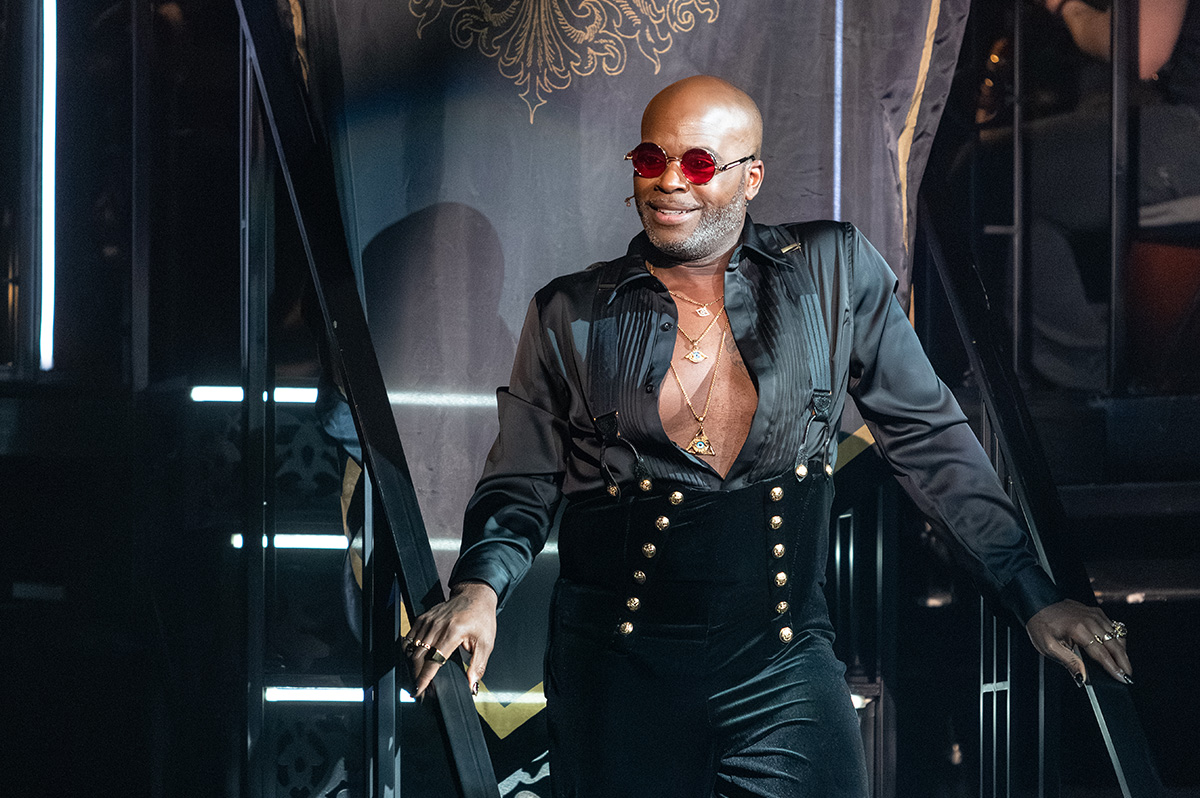
As Leading Player in Signature Theatre’s revival of “Pippin,” Cedric Neal portrays the manipulative narrator who guides the title character, a young medieval prince, on a quest for meaning. Neal is also receiving a rash of terrific reviews for a part he’s longed to play for some time.
Recently, after the first “Pippin” preview performance, Neal shared his thoughts. “Last night was exciting, mystic and exotic. It was magical. Words are overused, but it was all those things.”
With a powerful, rich tenor voice, Neal is best known as a charismatic West End and Broadway star (“Back to the Future,” “Hadestown,” “Guys & Dolls”) as well as for his memorable semifinalist win on the “The Voice UK” in 2019.
And now Stephen Shwartz’s “Pippin” marks Neal’s second show at Signature Theatre, a place he dearly loves. His first was as Jimmy Early in “Dreamgirls” in 2012, a raucous role that won him a Helen Hayes Award. During that production, Neal forged deep friendships with actor Nova Y. Payton and director Matthew Gardiner. What’s more, while rehearsing the show, he met his husband.
“He likes to say we met on Match.com but I remember it differently,” says Neal. “It was something called Adam4Adam. It might have been a hookup, but instead we met for coffee in Shirlington Village where we talked and talked for hours. Two years later we married.”
BLADE: Your triumphant return to town sounds pretty great.
NEAL: I’m having the time of my life. Takes me a half hour to come down after the show ends. It’s explosive.
BLADE: Is Leading Player a part you’ve wanted to do?
NEAL: Very much, and just this way. Rather than leaning on its circus troupe aspect, our director Matthew [Gardiner] explores the darkness of the story and the risk of falling prey to cultish ideology.
BLADE: Just how nefarious is Leading Player?
NEAL: I’m not judging my character. I believe at some point that Leading Player has good intentions. Somewhere along the line, ego becomes involved. The promise becomes warped.
BLADE: When doing “Pippin,” is it possible to separate the iconic Bob Fosse choreography and Ben Vereens’s sexy portrayal of Leading Player from the original production?
NEAL: Not entirely, but in our production Matthew [Gardiner] and Rachel Leigh Dolan have meticulously honored the choreography and storytelling of Fosse’s work without it being a carbon copy. I think it’s amazing.
BLADE: Was your participation in the “The Voice UK” a strategic career move?
NEAL: It was. At the time, I had just gotten a BIG NO on a West End show where the casting director told me the part should have been mine but using a then-unknown American would have created an uproar.
Then when “Voice UK” scouted me, my agent said this would be the perfect opportunity to boost my profile. Ultimately, I was given a global scale opportunity to go onstage and sing as Cedric.
BLADE: Your thrilling, original rendition of Stevie Wonder’s “Higher Ground” made the audience and judges like Jennifer Holliday and Sir Tom Jones just go crazy (in a good way). In musical theater, do you make beloved, well-known songs like “Join Us” and “Glory” in “Pippin,” your own in that same way?
NEAL: I couldn’t always, but I can now. When I talk to younger performers, I tell them about the song in “Gypsy” where the experienced strippers talk about getting a gimmick if you want to be a star.
I come from a gospel, R&B, and serious classical background and have always retained my gospel, soulful flair on things. When I entered the world of musical theater, I’d put my twist on a song and the musical director would ask that I tone it down.
Ten years into my career, I became known for putting my flair on musicals, and that became my gimmick. To “Cedricfy” a song is a legitimate term in musical theater. And you’ll see me bring that to “Pippin.”
BLADE: Reading about you, it seems you’ve made bold choices and surround yourself with supportive friends and family, blood and chosen.
NEAL: Yes, and it’s not an accident. I come from a bloodline of revolutionaries and pioneers whose shoulders I stand on. My ancestors are all fighters and refuse to let their fight be in vain. Also, I will always step up to the plate and represent all the marginalized communities that I’m a part of: Black, gay, biracial relationships, liberals.
BLADE: Are you and your husband still living in the windmill?
NEAL: We left the windmill but we’re still in the U.K. Try to imagine our story: A Black boy from the hood in Dallas, Texas, meets a fifth-generation cattle rancher from Alberta, Canada, and they move to the UK, adopt a labradoodle, and live in an actual windmill. Isn’t that the gayest shit you’ve ever heard?
BLADE: It’s like a fairytale.
NEAL: It was. It still is.
Theater
‘The Inheritance’ is most-nominated at this year’s Helen Hayes Awards
42nd annual celebration of excellence in local theater set for May 18
Helen Hayes Awards 2026
May 18, 2026
For tickets go to theatrewashington.org
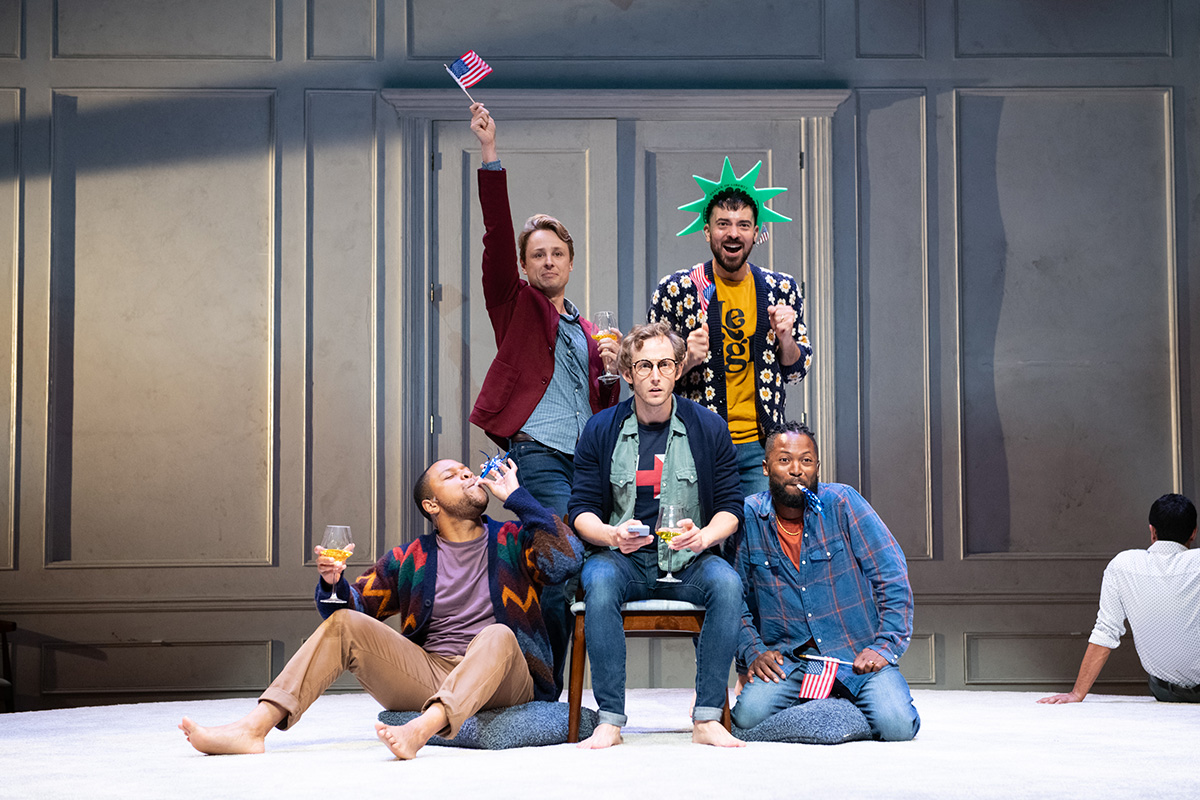
Last year, when out director Tom Story took on the daunting task of directing Round House Theatre’s production of “The Inheritance, Parts One and Two,” he knew that casting would be important, maybe even paramount, to the endeavor’s success. So, Story didn’t mess around.
Penned by queer playwright Matthew López, “The Inheritance” (inspired by E.M. Forster’s 1910 novel “Howards End”) is based on gay culture in the wake of the AIDS crisis.
Story looked at actors he knew, and some he didn’t. He wanted low drama and maybe players who could relate to the LGBTQ experience. In the end, the production’s 13-person cast was entirely queer except for brilliant local favorite Nancy Robinette as Margaret, the wise housekeeper.
Clearly, Story’s vision resonated with audiences. Round House’s production of “The Inheritance” is the most-nominated work of this year’s Helen Hayes Awards, earning 14 nominations. It’s also one of Round House’s highest grossing popular successes ever.
The queer cast members whose ages ranged from about 22 to 60, worked hard and enjoyed the process, and along the way garnered an Outstanding Ensemble in a Play (Hayes) nomination for their efforts.
The ensemble included Jamar Jones as Tristan, a brilliant doctor who leaves New York for Canada after deciding there’s no place for a gay, HIV-positive Black man in America. For the experienced actor, being part of “The Inheritance” was profound: “I think it was a divinely orchestrated production.”
He adds “I really feel that it’s so rare that you get to work on a show of that magnitude…size, time, where virtual strangers genuinely fell into rhythm. We became a cohort. I never felt a sense of unease, or reluctance to try things. I could be as big or bold as I wanted to be; or I could be small. Fail, mess up, try again. I didn’t feel judged.”
Jones considers Richmond his home, but says “I’m based where the work is.” Currently, he’s back at Round House rehearsing “Sally & Tom” (May 27-June28), a play within a play/meta exploration of the relationship between Thomas Jefferson and Sally Hemings by Suzan-Lori Parks.
Jones plays both a contemporary violinist and an enslaved fiddler, parts that have required him to learn to “air fiddle.” He’s all over it: “I want to represent the art and to be as precise as possible. Taught by an instructor, I’ve made strides with movement of the bow; next up is finger placement.”
Will he leave the play a violinist? “I’ll report back on closing night. Maybe I will have added something to the special skills list on my resume.”
For about a decade, Jones worked in living history, interpreting, performing, and writing pieces about the enslaved people of Colonial Virginia. Among the many historical characters he portrayed was Jupiter (Thomas Jefferson’s longtime enslaved manservant), an experience that’s proved a connection and preparation for his current role.
The 42nd Helen Hayes Awards celebration recognizing excellence in professional theater in the DMV will be held on Monday, May 18, 2026 at The Anthem on the District Wharf in Washington, D.C. Named for Helen Hayes, the legendary first lady of Broadway, the program consists of the awards presentation hosted by Felicia Curry, Awa Sal Secka, and Derrick Truby, followed by an after-party at nearby Whitlow’s.
With works selected from 149 eligible productions presented in the 2025 calendar year, nominations were made in 41 categories and grouped as either “Helen” (non-Equity/small Equity presence) or “Hayes” (Equity-heavy).
The many nominations are the result of 49 vetted judges considering 1,997 pieces of work, such as design, direction, choreography, performances, and more. The productions under consideration included 42 musicals, 107 plays, and 33 world premieres.
The following are more of this year’s queer nominees.
A past Helen Hayes Award recipient and nominee, Fran Tapia is competing against herself this year in the Outstanding Lead Performer in a Musical (Helen) category. Nominated for her memorable turn as the diva barkeep in GALA Theatre’s “Columbia Heights Bolero Bar,” an immersive musical centered on songs of longing and immigration set in a diverse neighborhood on the eve of a divisive presidential election
“It was a challenging time, because a lot of what was happening in the show was happening in the neighborhood,” says Tapia who lives in Columbia Heights just eight minutes from GALA.
Based in D.C. since 2019, Tapia says “Being recognized in a country that is not my homeland but where I’m building my artistic home, is deeply meaningful. And the variety of roles I have been able to play speaks to the richness of DC theater and the collaborators who trusted me with these roles.”
Her other individual nomination is for the title role in Spooky Action Theater’s “Professor Woland’s Black Magic Rock Show,” a passionately comedic political satire. She approached the mysterious central character as nonbinary.
Tapia (“Chilean, Latina, queer and proud immigrant”) says while very different, both performances involved particularly strong characters. She’s grateful audiences responded positively to her work.
Stanley Bahorek, who moved to D.C. with his husband four years ago, is best known as an accomplished actor with a long list of Broadway and regional credits (including playing Carl, the gay son in Studio Theatre’s recent production of “The Mother Play”). Now, he is nominated for Outstanding Music Direction (Helen) for his work on “A Strange Loop,” a production of D.C.’s Visionaries of the Creative Arts (VOCA) in collaboration with Deaf Austin Theatre. He shares this nomination with Walter “Bobby” McCoy.
Michael R. Jackson’s Tony and Pulitzer wining play “A Strange Loop,” is the story of Usher, a Black, queer theater usher trying to write a musical. VOCA’s take on the work is seen through a deaf BIPOC lens with a deaf Usher played by a deaf actor (out actor Gabriel Silva). Invited by director and longtime friend Alexandria Wailes (who is deaf), Bahorek (who is hearing) joined the creative team as a sort of hybrid associate director/ music supervisor.
“I’m fluent in conversational American Sign Language (ASL),” he says. “I sort of functioned as a sherpa between the hearing and deaf and hard-of-hearing creatives. It’s been a great thrill to be a part of VOCA’s biggest production to date.”
If he and McCoy take home the prize, who makes the acceptance speech? Bahorek takes a beat before replying “That’s something we still need to talk about. And soon.”
A full list of award recipients will be available at theatrewashington.org on Tuesday, May 19, 2026.
Theater
National tour of ‘Gatsby’ comes to National Theatre
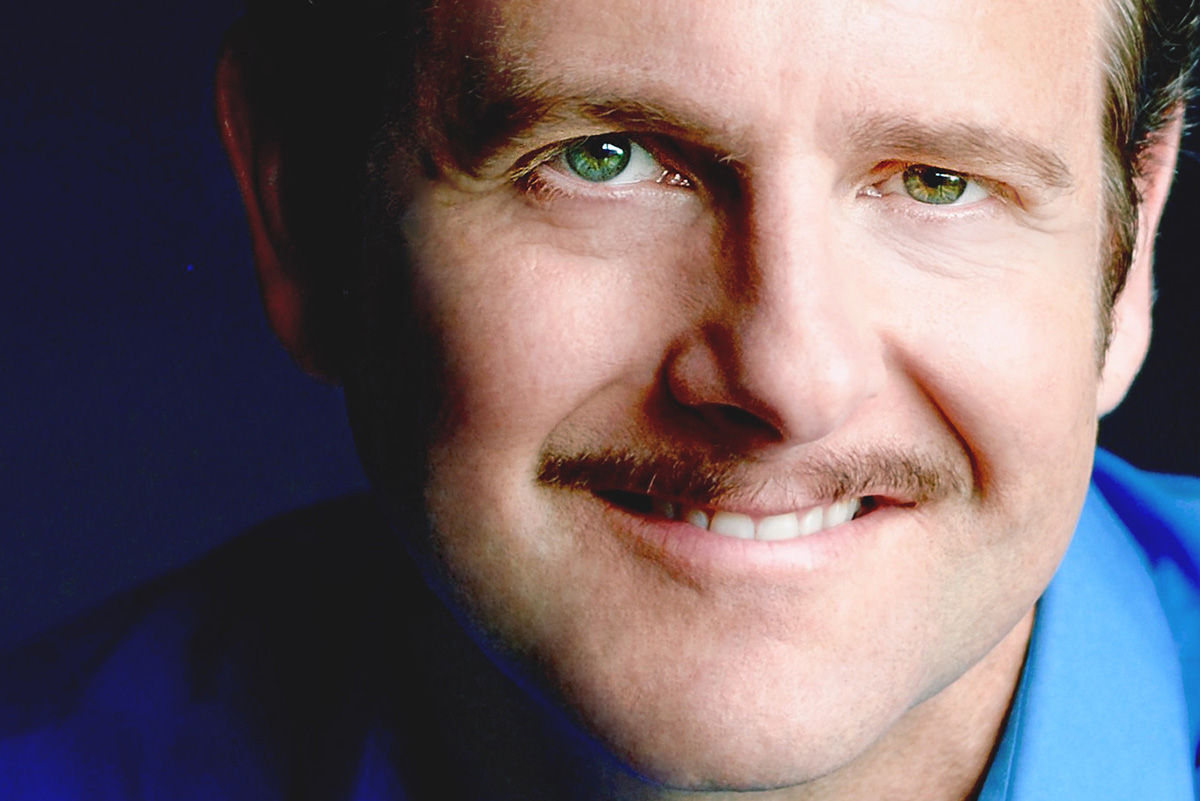
Out actor Edward Staudenmayer talks playing the show’s gangster
‘The Great Gatsby’
May 12-24
The National Theatre
1321 Pennsylvania Ave., N.W.
$59-$196
Thenationaldc.com
Often dubbed “The Great American Novel” for its depiction of ambition and self-invention alongside the reversals of success, F. Scott Fitzgerald’s “The Great Gatsby” says it all in a fast read.
Set against the excesses and energy of the Roaring Twenties, “The Great Gatsby,” novel and now the same-titled hit Broadway musical with a jazz/pop original score by Jason Howland and Nathan Tysen, tells the story of Nick Carraway and his friendship with Jay Gatsby, an enigmatic millionaire intent on reuniting with ex-lover, Daisy Buchanan.
It was during a four-month 2025 run in Seoul, South Korea, that out actor Edward Staudenmayer first played the show’s heavy, Meyer Wolfsheim, a gangster who helped Gatsby make his murkily acquired fortune. As Meyer, Staudenmayer opens the second act with, appropriately enough, “Shady.”
Now three months into a year-long North American tour, the show is poised to enjoy a brief run at Washington’s National Theatre (5/12-5/24).
While putting on his eyeliner prior to a recent Wednesday matinee at Chicago’s Cadillac Palace Theatre, the upstate New York-based actor shared about Gatsby and a life in theater.
WASHINGTON BLADE: Despite your good looks and terrific voice, you’re rarely the leading the man. How is that?
EDWARD STAUDENMAYER: I’m definitely a character man. I’ve been painting lines on my face to play old men since I was in high school. I was the youngest freshman in college playing old Uncle Sorin [in Chekhov’s “The Seagull”].
There have been many villains. Some darker than others. Meyer Wolfsheim is a very bad guy, but he doesn’t haunt me once I’m offstage. I play a lot of pickleball.
BLADE: Is it true that like so many of Fitzgerald’s characters, Wolfsheim is famously based on someone the writer encountered in life.
STAUDENMEYER: That’s true, Wolfsheim is pretty much a direct portrayal of real-life mobster and 1919 World Series fixer [Arnold Rothstein].
BLADE: When did the 1925 novel first surface on your radar?
STAUDENMAYER: Like many of us, I was assigned “The Great Gatsby” in high school. It was short, and filled with sex and illicit activities. I thought it was great. Definitely wasn’t a Judy Blume novel.
Interestingly, the book wasn’t originally a huge a success for Fitzgerald, but because it was about war and having the girl at home, they gave it to GIs leaving for WWII. After returning, a lot of those guys went on the GI Bill and became English teachers. They assigned the book to their students.
BLADE The idea that the book’s first-person narrator, Nick Carraway, is gay and enamored with Jay Gatsby is long discussed among readers and scholars. Does the musical touch on that?
STAUDENMAYER: Yes, there’s conjecture about Jay and Nick, and it’s implied in our show. It’s also implied about Jordan Baker, Jay’s fleeting romantic interest. Ultimately, she’s a confirmed bachelor, and a professional golfer who only wears pants.
Our performers are really good. Josh Grasso who plays Nick is fantastic. I’ve had to stop watching him in his last scene; it’s not good for Meyer Wolfsheim to take his curtain call crying. Our Gatsby, Jake David Smith, is good too. He’s gorgeous like Superman and sings like an angel.
BLADE: Do you ever imagine backstory for your characters whose sexuality is undefined?
STAUDENMAYER: I do, but not with Wolfsheim. I don’t see it. I’m trying to be as butch as possible with this ruthless killer.
BLADE: Have you had to do that in your career?
STAUDENMAYER: For a long time, I wore a mask to hide my gayness. I worked hard on being believable, that I was into the girl or that I was a tough guy.
It’s a different world now, and it’s so refreshing to be around the younger actors today; they’re remarkably open and comfortable.
BLADE: What was your coming of age like?
STAUDENMAYER: I played high school football in Palm Springs [he chuckles, alluding to the arid gay mecca], and I was pretty good too. But much to the chagrin of my parents and coaches, I quit the team to act in our senior year play. My super butch dad played semi-pro football and he was an ex-cop. I’m named after him. While I didn’t become my dad, I’ve played him often on stage. He was a true Gaston [the bumptious rival in “Beauty and the Beast”]. And like Gaston, he used antlers in all his interior decorating.
BLADE: Did he live to see your success in theater?
STAUDENMAYER: He did. Life was challenging growing up but the last 10 years of his life we couldn’t get off the phone with each other [his voice catches with emotion]. He accepted me entirely, and we became very close.
BLADE: Looking ahead, is there a part you’d especially like to play?
STAUDENMAYER: Like all baritones I’d love to play Sondheim’s “Sweeney Todd.” I’ve come close but it hasn’t happened yet. There’s still time.

D.C. Pride flag raising ceremony set for June 1

Still marching: Rev. Troy Perry and the ongoing fight for liberation

Introducing Next-Generation Assisted Living & Memory Support.

Cedric Neal on his juicy narrator role in ‘Pippin’

Dual endorsement for Independent Council-at-large: Patterson or Crawford

PHOTOS: Black Pride Pageant and Unity Ball

PHOTOS: Black Pride Opening Reception

From Media Matters to massive queer ragers: the rise of Tara Dikhof

Peppermint made her mark on ‘Drag Race.’ Now, her advocacy is front and center

Bree Fram’s congressional campaign ends but her fight continues
-

 Photos5 days ago
PHOTOS: Black Pride Pageant and Unity Ball
-
Photos4 days ago
PHOTOS: Black Pride Opening Reception
-
Celebrity News2 days ago
Peppermint made her mark on ‘Drag Race.’ Now, her advocacy is front and center
-
2026 Midterm Elections2 days ago
Bree Fram’s congressional campaign ends but her fight continues