News
Conservative struggle over gay rights emerges at CPAC
Santorum says he doesn’t ‘want to talk about redefining marriage’
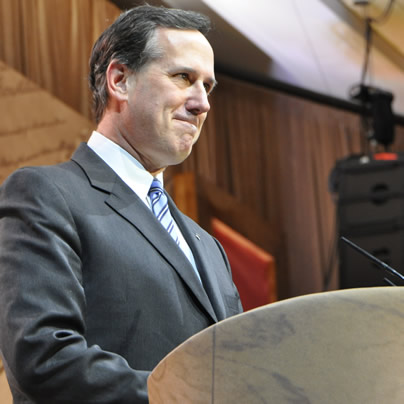
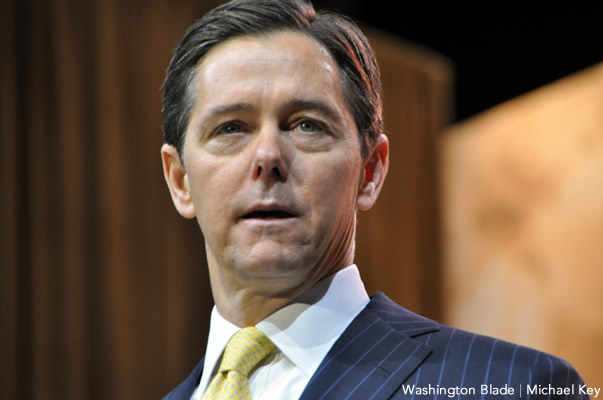
Ralph Reed speaking at the 2014 Conservative Political Action Conference. (Washington Blade photo by Michael Key)
NATIONAL HARBOR, Md. — To witness the conservative movement’s struggle with the widely held perception that nationwide marriage equality is imminent, you need not look further than the stage of the 2014 Conservative Political Action Conference.
After remaining silent on the first day of the conference, voices against same-sex marriage emerged on Friday, although they were restricted to certain conservative activists as others expressed conflict over the issue and elected Republican officials ignored LGBT rights altogether in their speeches.
Ralph Reed, founder of the Faith and Freedom Coalition, was among the most vociferous in his opposition to same-sex marriage as he accused U.S. Attorney General Eric Holder of committing a “brazen act of lawlessness” by counseling state attorneys general not to defend marriage laws against litigation.
It should be noted that during his speech to the National Association of Attorneys General, Holder said he believes it’s OK for state attorneys general not to defend a ban on same-sex marriage if they believe they’re unconstitutional, but he never instructed them to take that course of action.
“From now on, we’re going to accept — in 2014, 2016 and beyond — nothing beyond unapologetic, unalloyed ‘conservative’ that defends the principles upon which this nation was founded, including the biblical principles of freedom of religion, the sanctity of life and the sacred institution of marriage,” Reed continued.
Also injecting anti-gay sentiment before the estimated 8,500 attendees at CPAC was Oliver North, a Fox News commentator known for his role in the Iran-Contra scandal during the Reagan administration in the 1980s.
Ending his speech, North equated the conservative struggle to stop the advancement of marriage equality to abolitionists’ efforts in 19th century America to end slavery.
“Some say that we must ignore social issues, like the definition of marriage, the sanctity of life, religious freedoms,” North said. “I say those are not social issues, they are deeply moral and spiritual issues and should be part of America’s elections.”
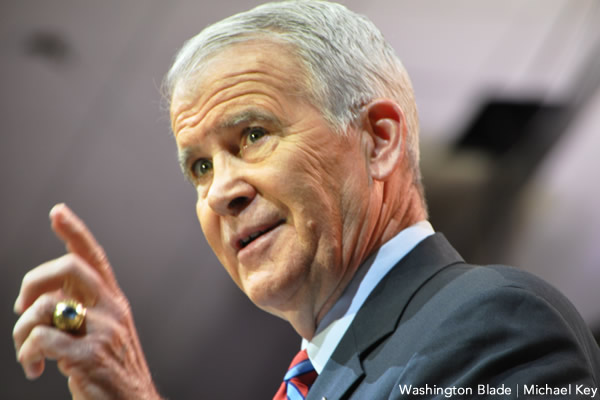
Oliver North speaking at the 2014 Conservative Political Action Conference. (Washington Blade photo by Michael Key)
North also made a veiled criticism of “Don’t Ask, Don’t Tell” repeal, saying the administration is treating U.S. troops like “laboratory rats” as part of a “social experiment.”
These conservative activists are pushing back against the advancement of marriage equality as numerous federal courts — most recently in Texas, Virginia, Kentucky, Utah and Oklahoma — have struck down state constitutional bans on same-sex marriage amid expectations the U.S. Supreme Court will deliver a final ruling on the issue in 2015.
The anticipated resolution of the marriage issue in the courts invoked the ire on stage of Eric Metaxas, a conservative pundit who insisted voters must decide the issue of marriage equality instead of judges.
“The idea of same-sex marriage, the idea of paying for contraceptions, we should let the voters decide,” Metexas said. “This is the United States of America. We don’t need the ‘Mandarins of Justice’ to make these decisions; we’re supposed to trust the voters to make those decisions, and let the voters decide.”
But those considered possible 2016 presidential candidates shied away from the issue of marriage equality.
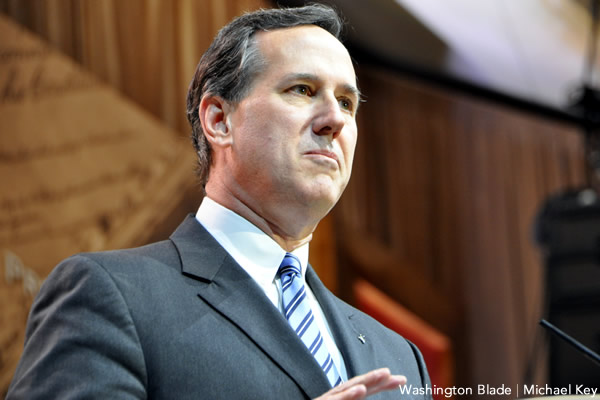
Former Sen. Rick Santorum (R-Pa.) speaking at the 2014 Conservative Political Action Conference. (Washington Blade photo by Michael Key)
Rick Santorum, known for his opposition to same-sex marriage and support for a U.S. constitutional amendment banning same-sex marriage, expressed regret on stage that he became known for that viewpoint over the course of his 2012 presidential bid.
“I don’t want to talk about redefining marriage; I want to talk about reclaiming marriage as a good for society and celebrating how important it is for our economy,” Santorum said to applause.
Santorum continued to discuss the importance of the institution of marriage itself, saying businesses could advance it by offering marriage counseling as a benefit.
Amid the (often disputed) perception that Pope Francis is more lenient on gay rights, particularly after his recent suggestion he could support civil unions, Santorum, who’s Catholic, commended the pontiff for saying the Catholic Church should steer away from social issues.
“He’s going out there and not talking about what the Christian faith is against, he’s going out there and talking about what we’re for,” Santorum said. “He hasn’t changed a single policy. He won’t change a single policy. But what he’ll do is he’ll go out there and talk about the good news to a hurting world because he believes that that’s what the world needs.”
One event at CPAC that demonstrated the tension within the conservative movement on marriage equality, although the discussion wasn’t completely dedicated to the issue, was a panel titled, “Can Libertarians and Social Conservatives Ever Get Along?”
One question debated was protecting religious liberties of individuals as marriage equality advances. The issue for panelists wasn’t so much whether there should be marriage equality, but whether it should be imposed by judicial fiat.
Michael Medved, a conservative pundit and host of “The Michael Medved Show,” said the issue has come down to religious liberty and insisted social conservatives and libertarians should agree that states should be able to decide for themselves the marriage issue without interference from the federal government.
“The idea that New York and California may have legitimated, or recognized, decided that those states should sponsor gay marriage doesn’t mean that Texas should be compelled by overreaching courts, or anyone else, to sponsor and legitimate gay marriage,” Medved said.
Alexander McCorbin, executive director of Students for Liberty, represented the opposite end of the conservative spectrum and said on the panel that marriage equality is “the civil rights issue of the 21st century.”
“There’s state-sponsored discrimination against various associations between individuals,” McCorbin said. “We’re talking about the denial of basic rights and privileges of individuals in committed relationships — the only difference being their sexual orientation.”
But McCorbin was rebuked on stage by Medved, who said believing a fundamental right to same-sex marriage is inconsistent with libertarianism.
“You are saying that nine unelected judges should impose their will and their judgement on the sovereign states, all 50 sovereign states and the citizens therein, in terms of something as fundamental to society as the definition of family and the definition of marriage,” Medved said.
Making a point that was derided by gay bloggers and the watchdog group Media Matters, Medved also said the idea that any state had prohibited same-sex marriage is “a liberal lie” — possibly because same-sex weddings have been allowed, even though 33 states don’t recognize them as valid.
But Medved also signaled he nonetheless supports adoption by same-sex parents, which triggered applause in the audience (although one observer could be heard booing).
Matthew Spaulding, associate vice president of Allen P. Kirby Jr. Center for Constitutional Studies & Citizenship, insisted that religious liberties for objectors must be upheld and denied any link between same-sex marriage and interracial marriage.
“The fact of one’s color of one’s skin is a coincidence,” Spaulding said. “It has nothing to do with your character, right? The difference between a male and a female is something that is self-evident and obvious that we need to deal, and we can’t shut aside and turn it over to judges to tell us what to do.”
No one who is gay, nor any LGBT political group, had a voice on the panel despite its attention to the marriage issue. In an op-ed penned earlier this week in the Daily Caller, Log Cabin Republicans executive director Gregory Angelo asserted he had sought participation on a CPAC panel this year, but was rebuffed because the American Conservative Union, which runs the event, never responded to the request.
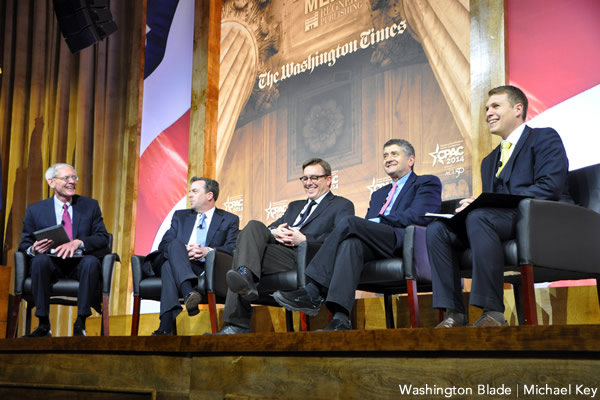
Members of the CPAC panel, ‘Can Libertarians and Social Conservatives Ever Get Along?’ discussed same-sex marriage. From left, Tom Minnery of CitizenLink, Matt Spaulding of the Allen P. Kirby Jr. Center for Constitutional Studies & Citizenship, Matt Welch of Reason Magazine, Michael Medved of the ‘Michael Medved Show’ and Alexander McCorbin of Students for Liberty. (Washington Blade photo by Michael Key)
Ignoring the issue of marriage, prominent Republicans speaking before the panel chose to tackle other issues, although they weren’t afraid to take Obama to task.
Texas Gov. Rick Perry, a known opponent of LGBT rights including allowing openly gay people in the Boy Scouts, turned his attention to deriding the advancement of welfare states under the Obama administration.
“The vision that wins out — either this big-government, protectionist nanny state version offered by liberal leaders or the limited-government, unsubsidized, freedom state offered by conservative leaders — will determine the future of our nation,” Perry said.
Sen. Rand Paul (R-Ky.), who has a reputation as a libertarian, delivered a speech criticizing the exposed data collection by the National Security Agency as he urged adherence to the U.S. Constitution.
“There is a great battle going on, it’s for the heart and soul of America,” Paul said. “The Fourth Amendment is equally as important as the Second Amendment, and conservatives cannot forget this.”
Even 2008 Republican presidential candidate turned Fox News commentator Mike Huckabee, known for championing social issues, was silent on stage about the issue of marriage equality, although he spoke more generally about upholding religious liberties in the country.
This struggle over gay rights emerges at CPAC following the publication this week of a Washington Post-ABC News poll showing a record-high 59 percent of Americans support same-sex marriage, while only one-in-three Americans oppose it.
That support is even higher among young voters, which make up the preponderance of attendees at CPAC. The poll found three-quarters of Americans younger than 30 support same-sex marriage.
Following the speeches on Friday, Log Cabin’s Angelo said there’s only one way for the debate to end if the conservative movement wants to thrive.
“The conservative movement can keep its head in the sand at its own peril — with the potential to lose more votes — or it can acknowledge us as here to stay, and grow the base, especially among millennial voters,” Angelo said. “That’s where we’re at in this movement. We want conservatives to win, but they need to acknowledge us as part of that winning coalition.”
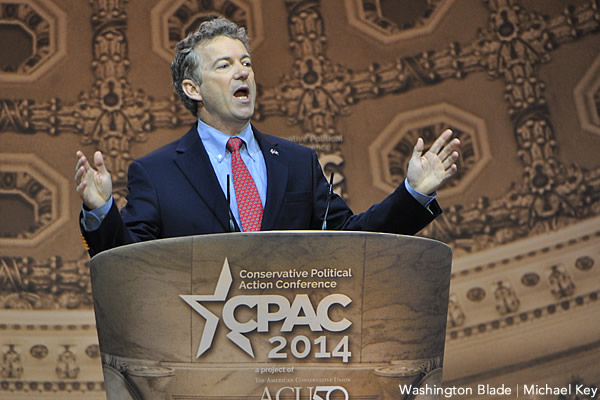
Sen. Rand Paul (R-Ky.) speaking at the 2014 Conservative Political Action Conference. (Washington Blade photo by Michael Key)


South Carolina
Who might replace Lindsey Graham? The contenders and their LGBTQ records
Long-time SC senator died suddenly on Saturday.
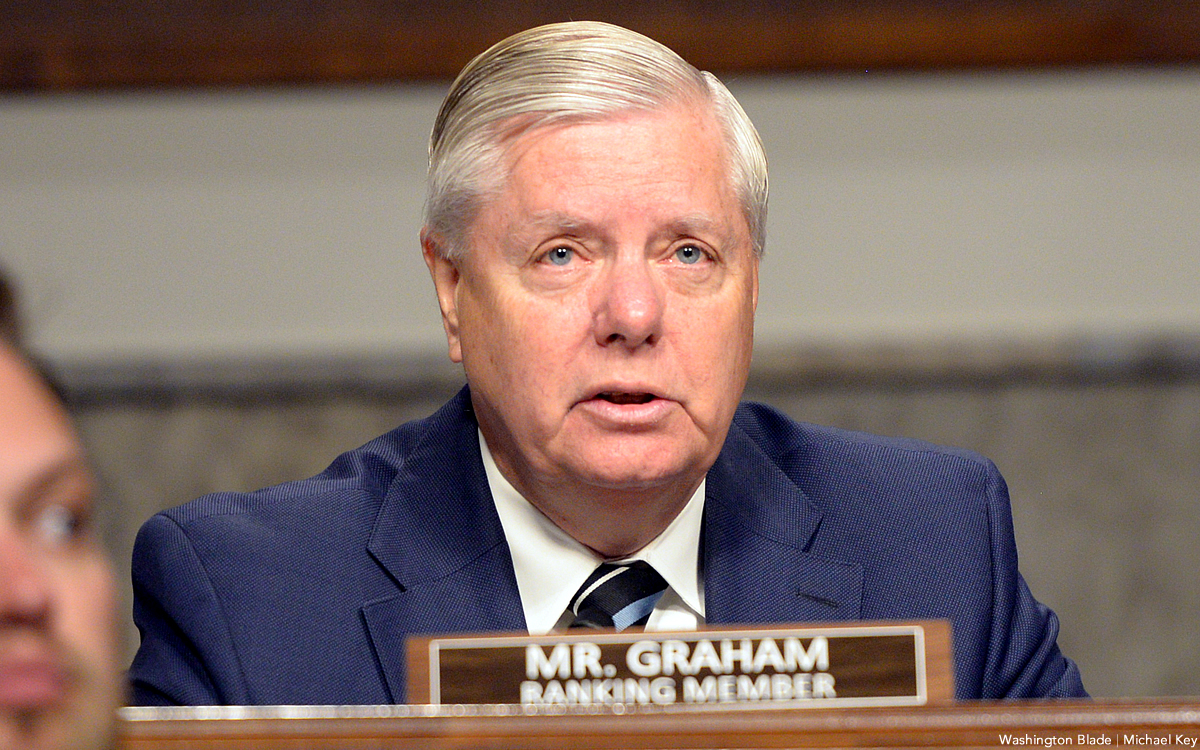
Republican U.S. Sen. Lindsey Graham (R-S.C.) has died, and what he has left behind is a power vacuum for his U.S. Senate seat — and within the Republican Party.
The South Carolina senator had been a major part of Republican politics up until his Saturday death at his home in Washington, reportedly of an aortic dissection related to arteriosclerotic cardiovascular disease.
Graham has been a fixture in government at both the state and federal level. He began his political career in the South Carolina House of Representatives in 1992, representing the Palmetto State’s 2nd District before eventually moving to the federal government.
He moved up to Capitol Hill after his 1994 run for the U.S. House of Representatives. In 2003 he stepped across the rotunda to the Senate in 2003 following the retirement of longtime U.S. Sen. Strom Thurmond.
He consistently opposed LGBTQ rights while alive.
He voted against the 2022 Respect for Marriage Act, saying the decision should be left up to state governments, and the 2013 Employment Non-Discrimination Act, and opposed the repeal of Don’t Ask, Don’t Tell.
With Graham’s sudden passing, the Republican Party is scrambling to find a replacement who can advance both its goals and those of the president as Republicans’ supermajority in the federal government begins to shrink.
Among those reportedly in the running is Treasury Secretary Scott Bessent, the highest-ranking openly LGBTQ federal official in American history and fifth in the presidential line of succession.
Bessent, a South Carolina native, was formerly a supporter of the Democratic Party and donated to several Democratic presidential candidates before switching parties in 2017 following Trump’s election in 2016. He later donated $1 million to Trump’s 2017 presidential inaugural committee.
On Sunday, Bessent was also fielding calls from people asking him to run, according to a person familiar with the communications. A person close to Bessent told Politico that he is not interested in the seat, saying he is happy in his role as Treasury secretary, a position he has long wanted.
The Washington Blade reached out to the Treasury Department for comment, but did not receive a response by publication time.
One of the most anticipated and widely discussed names for the vacant Senate seat is Lt. Gov. Pamela Evette.
Evette is a staunch supporter of President Donald Trump and has gone as far as criticizing Republicans for not supporting the conspiracy theory that the 2020 presidential election was stolen. Trump also endorsed her gubernatorial campaign, though she ultimately lost to her now-boss, Gov. Henry McMaster.
McMaster has a long history of opposing LGBTQ rights.
During an October 2022 gubernatorial debate, McMaster said that if the U.S. Supreme Court overturned Obergefell v. Hodges, he would enforce South Carolina’s preexisting law banning same-sex marriage. In 2022, he also signed legislation requiring student athletes from elementary school through college to compete on teams corresponding to the sex listed on their birth certificates.
Other names reportedly being considered include U.S. Rep. Nancy Mace (R-S.C.), who has had a contentious relationship with LGBTQ issues during her time in Congress. She began as a supporter of LGBTQ rights, becoming one of the few Republicans to publicly support the Respect for Marriage Act, before making a complete about-face as transgender issues became a central part of the Republican Party’s political strategy.
As part of that strategy, Mace introduced a resolution to ban trans women from using female restrooms in the U.S. Capitol, a move she acknowledged was in direct response to the election of U.S. Rep. Sarah McBride (D-Del.), the first out trans person elected to Congress.
In a November 2024 post on X, Mace wrote: “We support gay marriage, and voted for the Respect for Marriage Act twice. However, if you think protecting women is discrimination, you are the problem. We don’t care if you’re trans, if you have balls we don’t want you in the women’s bathroom.”
Two other names being floated are U.S. Rep. Russell Fry, who represents South Carolina’s 7th Congressional District, and U.S. Rep. Ralph Norman, who represents the state’s 5th Congressional District.
Trump recommended Graham’s sister, Darline Graham, should serve as the state’s temporary senator in a post on Truth Social on Monday.
“This would be a fabulous tribute to Lindsey, who loved her dearly!” Trump wrote on his social network.
The scramble comes as Republicans hold increasingly narrow majorities over Democrats in both the Senate and House, potentially complicating efforts to advance Trump’s agenda. That agenda includes continuing the war in Iran, securing Todd Blanche’s confirmation as attorney general, and adding $350 billion in defense spending to the SAVE America Act — a controversial proposal deemed a “Jim Crow 2.0” among voting rights advocates.
McMaster is expected to announce Graham’s interim replacement on Monday at 4 p.m.
Noticias en Español
Un terremoto también se vive desde el exilio
Yonatan Matheus se nació en La Guaira, la zona venezolana más afectada por los sismos
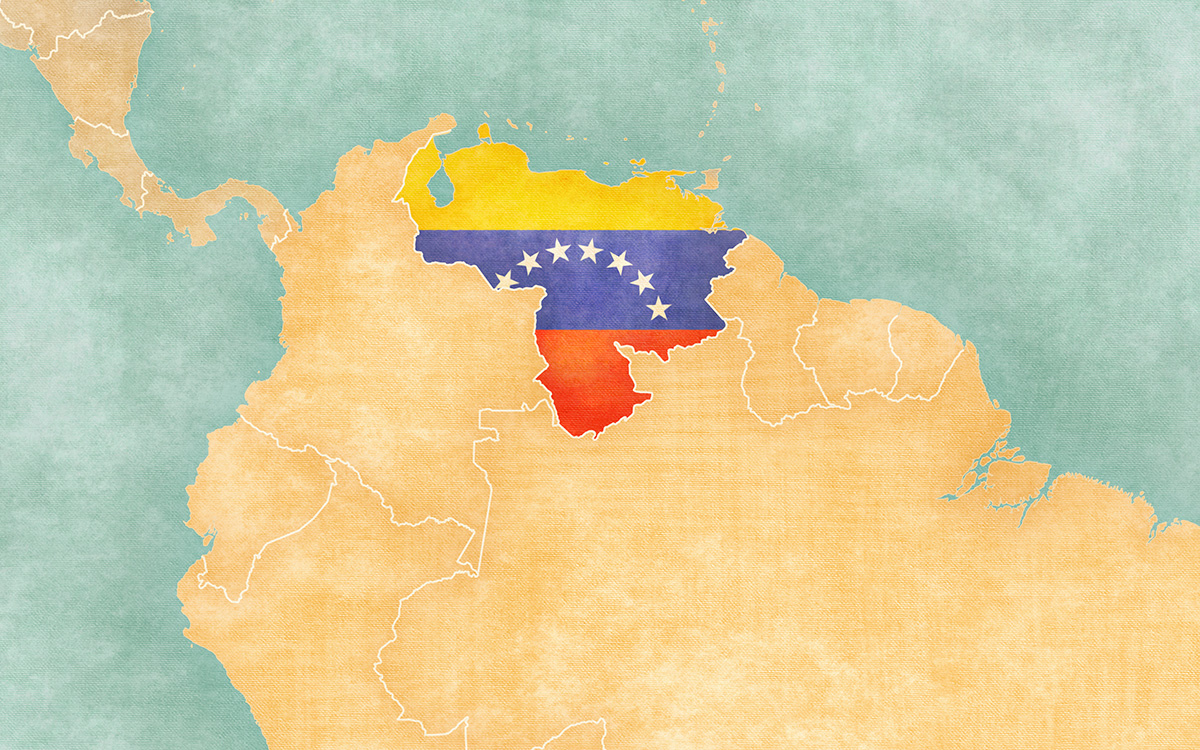
El 24 de junio de 2026, dos terremotos sacudieron Venezuela y alteraron la vida de miles de personas en cuestión de segundos. Para gran parte del mundo fue una noticia que ocupó titulares durante algunos días. Para quienes nacimos allí, el tiempo pareció detenerse. Antes de pensar en la magnitud del sismo o en el número de viviendas afectadas, hubo una pregunta que desplazó cualquier otra: ¿estarán bien quienes amo?
Los desastres naturales no solo transforman los territorios; también modifican la manera en que quienes vivimos en el exilio nos relacionamos con el lugar al que seguimos llamando hogar. La distancia no reduce el dolor ni la preocupación por quienes permanecen allí. Cada llamada sin responder, cada fotografía y cada mensaje recuerdan que existen vínculos que sobreviven a las fronteras, al tiempo y a la propia migración.
Lo primero que hice fue llamar a mi familia en La Guaira. Durante esos minutos comprendí, una vez más, que también existen terremotos que se sienten desde el exilio. La incertidumbre crece con cada llamada que no entra y con cada mensaje que permanece sin respuesta.
Cuando finalmente logré comunicarme, confirmé que familiares y personas cercanas habían perdido sus hogares, que distintas zonas de La Guaira enfrentaban graves afectaciones y que comunidades como Carayaca, El Junko y otros sectores del oeste del estado también sufrían las consecuencias de los terremotos. Aunque algunas de estas localidades registraron daños estructurales de menor magnitud que las zonas más devastadas, sus habitantes también vieron alterada su vida cotidiana por la interrupción de servicios, las dificultades de acceso y la profunda interdependencia social, económica y comunitaria que caracteriza a La Guaira.
Algunos miembros de mi comunidad también habían fallecido. Entre ellos estaban dos hombres gays a quienes conocía. Sus nombres me recordaron que detrás de cada cifra existen historias, afectos y proyectos de vida. También me hicieron pensar en todas aquellas personas cuyas vidas y muertes difícilmente ocuparán un titular, especialmente quienes durante años vivieron en los márgenes, con escasa visibilidad y sin el pleno reconocimiento de su dignidad. Me recordaron, además, que las emergencias nunca afectan a todas las personas por igual y que quienes ya enfrentaban mayores condiciones de vulnerabilidad suelen soportar una carga aún más pesada durante la recuperación.
El país del que uno sale nunca desaparece
Nací y crecí en La Guaira. Allí permanecen buena parte de mi historia, mi familia, mis amistades y una comunidad que sigue formando parte de quien soy. Hace diez años tuve que salir de Venezuela y solicitar asilo en Estados Unidos como consecuencia de la persecución que enfrenté por ser un hombre gay y defensor de derechos humanos. Con el tiempo comprendí que el exilio no consiste únicamente en cambiar de país. También significa aprender a vivir con la certeza de que una parte de nosotros permanecerá siempre en el lugar del que tuvimos que partir.
Cada celebración familiar, cada crisis y cada tragedia confirman que seguimos perteneciendo a ese territorio. Las personas refugiadas y migrantes no dejamos de vivir las emergencias de nuestros países de origen; simplemente las vivimos de otra manera. Mientras otras personas pueden desplazarse para abrazar a sus familias o participar directamente en las labores de ayuda, quienes estamos lejos intentamos acompañar desde la incertidumbre, con la impotencia de saber que el corazón permanece donde el cuerpo ya no puede estar.
Quizá esa sea una de las dimensiones menos visibles del desplazamiento forzado. Vivimos las tragedias de nuestro país a la distancia, con menos posibilidades de actuar físicamente, pero con el mismo dolor y con un profundo sentido de responsabilidad hacia las personas y los lugares que siguen formando parte de nuestra historia.
Cuando una casa representa toda una vida
Después de una emergencia suele repetirse una frase bien intencionada: “Lo importante es que todos están vivos; lo material se recupera.” Aunque busca transmitir esperanza, también puede invisibilizar una realidad profundamente humana. En Venezuela, una vivienda rara vez representa únicamente una construcción. Es el resultado de años de trabajo, sacrificios compartidos y sueños familiares. En sus paredes también habitan recuerdos, fotografías, documentos y la memoria de quienes la construyeron.
Cuando un terremoto destruye un hogar, también altera el proyecto de vida de una familia. Por eso no basta con volver a levantar edificios. Es necesario crear las condiciones para que las personas recuperen estabilidad, seguridad y la posibilidad de imaginar nuevamente un futuro. Como trabajador social, estoy convencido de que los territorios no vuelven a ponerse de pie únicamente con cemento. También necesitan confianza, organización, apoyo mutuo y espacios donde las personas puedan elaborar el duelo y fortalecer nuevamente sus redes de apoyo.
Ese proceso tampoco ocurre en igualdad de condiciones para todas las personas. Los desastres suelen profundizar desigualdades que ya existían antes de la emergencia. Las personas adultas mayores, la niñez, las personas con discapacidad, quienes viven con enfermedades crónicas o con VIH y muchas personas LGBTQ, especialmente aquellas que enfrentan pobreza, discriminación o redes de apoyo limitadas, suelen encontrar mayores obstáculos para acceder a servicios, restablecer sus medios de vida o volver a sentirse seguras. Una respuesta verdaderamente humanitaria no consiste únicamente en llegar primero; consiste en asegurar que nadie quede atrás cuando comienza el largo camino para reconstruir su vida.
Cuando la emergencia deja de ser noticia
Las primeras horas después de un desastre suelen despertar lo mejor de una sociedad. Vecinas y vecinos organizan rescates, personas voluntarias distribuyen alimentos, equipos de salud trabajan sin descanso y miles de ciudadanos, dentro y fuera del país, buscan la manera de ayudar. Esa movilización espontánea representa uno de los recursos más valiosos frente a cualquier crisis y demuestra que, incluso en contextos de profunda polarización, la vida humana sigue siendo capaz de convocar encuentros.
Sin embargo, para quienes sobrevivieron, el verdadero desafío apenas comienza cuando la emergencia deja de ocupar los titulares. Mientras los medios dirigen su atención hacia otras noticias y las donaciones disminuyen, miles de familias siguen intentando recuperar sus hogares, restablecer sus medios de vida y reorganizar una cotidianidad profundamente alterada. La crisis termina mucho antes para la opinión pública que para quienes continúan enfrentando sus consecuencias.
En la acción humanitaria suele describirse un fenómeno conocido como fatiga de la compasión. En términos generales, hace referencia a la disminución progresiva de la atención pública y de parte de la movilización solidaria conforme una crisis deja de ocupar el centro de la conversación. No significa que desaparezca la voluntad de ayudar, sino que nuevas urgencias desplazan rápidamente a las anteriores. El riesgo es que los territorios afectados queden solos precisamente cuando enfrentan la etapa más compleja de volver a levantarse.
Las principales organizaciones humanitarias recuerdan que reparar edificios constituye sólo una parte del proceso. También es indispensable fortalecer la salud mental, ofrecer apoyo psicosocial, recuperar el tejido comunitario y garantizar que la población participe activamente en las decisiones sobre su propio futuro. Una vivienda puede reconstruirse en algunos meses; recuperar la sensación de seguridad, la confianza o el sentido de pertenencia suele requerir mucho más tiempo.
Esta realidad resulta especialmente importante para quienes ya enfrentan condiciones de vulnerabilidad antes del terremoto. Las personas adultas mayores, la niñez, las personas con discapacidad, quienes viven con VIH y muchas personas LGBTQ suelen encontrar mayores barreras para acceder a servicios, mantener sus tratamientos, recuperar sus ingresos o reconstruir sus redes de apoyo. Las emergencias no crean esas desigualdades, pero con frecuencia las hacen más visibles y profundas. Por eso, una recuperación verdaderamente sostenible no consiste únicamente en volver al punto donde estábamos antes del desastre, sino en aprovechar ese proceso para reducir brechas históricas y fortalecer la inclusión.
Como trabajador social, prefiero hablar de una resiliencia consciente. No de una resiliencia que exige fortaleza permanente o invita a ocultar el dolor bajo la idea de que “hay que seguir adelante”, sino de aquella que reconoce las pérdidas, entiende que el duelo necesita tiempo y acepta que pedir ayuda también forma parte del camino. Ninguna comunidad debería sentirse obligada a reconstruirse sola, ni ninguna persona a demostrar que ya superó una tragedia antes de estar preparada para hacerlo.
Permanecer también es una forma de ayudar
El exilio me impidió estar físicamente en La Guaira durante los días posteriores a los terremotos, pero no me impidió asumir la responsabilidad de acompañar desde donde hoy me encuentro. Durante esas semanas utilicé mis plataformas para verificar información antes de compartirla, visibilizar localidades que históricamente han recibido menor atención —como Carayaca, El Junko y otros sectores del oeste del estado— y promover mensajes centrados en las necesidades de la población afectada.
Ese compromiso también dio origen a la serie documental La Guaira: Antes y Después, un esfuerzo por documentar cómo cambiaron distintos espacios y contribuir a que no desaparezcan de la memoria colectiva cuando termine la cobertura periodística. Más que registrar la destrucción, busca recordar que detrás de cada fotografía existen familias que seguirán necesitando apoyo mucho después de que las cámaras se hayan ido.
Creo profundamente que comunicar con responsabilidad también es una forma de acción humanitaria. Verificar antes de publicar, evitar la desinformación y mantener visibles a los territorios históricamente olvidados constituye una manera concreta de acompañar el proceso de recuperación y fortalecer el compromiso colectivo desde la distancia.
La solidaridad que decide quedarse
Los terremotos del 24 de junio de 2026 dejarán cicatrices visibles en edificios, carreteras y viviendas. Otras permanecerán en silencio, acompañando a familias que deberán reconstruir no solo sus hogares, sino también su sensación de seguridad, sus proyectos de vida y la confianza en el futuro.
Como venezolano, guaireño, refugiado y defensor de derechos humanos, esta experiencia reforzó una convicción que ha guiado buena parte de mi trabajo: las personas deben permanecer en el centro de cualquier respuesta humanitaria. Ninguna diferencia política, institucional o ideológica debería ser más importante que proteger la vida, aliviar el sufrimiento y garantizar que quienes enfrentan mayores condiciones de vulnerabilidad reciban el acompañamiento que necesitan para volver a empezar con dignidad.
Los terremotos dejan de sentirse cuando la tierra deja de temblar. El olvido comienza cuando dejamos de mirar. Entre una cosa y otra existe un largo camino que exige memoria, compromiso sostenido y la decisión colectiva de no abandonar a quienes siguen intentando levantarse cuando el resto del mundo ya ha seguido adelante. Porque una sociedad no termina de recuperarse cuando reconstruye sus edificios; lo hace cuando todas las personas tienen la oportunidad de volver a vivir con seguridad, esperanza y la certeza de que nadie quedó atrás.
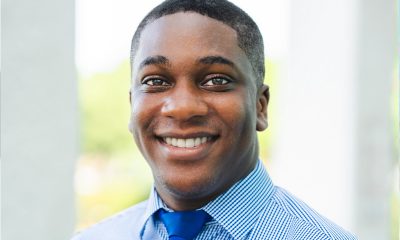
Yonatan Matheus (He/Him/Él) es defensor de derechos humanos LGBTQ y trabajador social y activista. Trabaja en la intersección entre Migración, Justicia Social y respuesta al VIH.
Este comentario salió en el sitio web de Yonatan el 6 de julio.
Maryland
Parents sue Anne Arundel schools, allege officials hid child’s gender transition
America First legal Foundation filed lawsuit on July 8
By CODY BOTELER | Two parents, backed by a conservative nonprofit group, are suing Anne Arundel County Public Schools over the school system’s policies related to transgender children.
The suit, filed Wednesday in Maryland’s U.S. District Court, accuses staff at an unidentified county high school of lying to the parents, identified as John Doe and Jane Doe, about their child, identified as Mary Doe.
The Does allege the school “socially transitioned” their child without notice or their consent by using a masculine name and masculine pronouns for Mary Doe.
The rest of this article can be found on the Baltimore Banner’s website.

New book reveals what we can learn from animal sex

Who might replace Lindsey Graham? The contenders and their LGBTQ records

PHOTOS: Westminster Pride

Un terremoto también se vive desde el exilio

PHOTOS: Emerald City Pride

Mr. Henry’s celebrates 60 years of proud inclusivity

It’s good to see some justices standing up to Trump

Egyptian authorities refuse to allow gay cruise to dock in country

Queer media dominates 2026 Emmy nominations