Local
Anti-gay graffiti spray painted on home of Rehoboth couple
State Police fail to list incident as hate crime
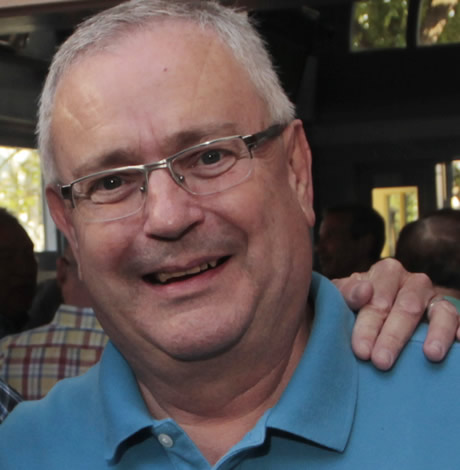
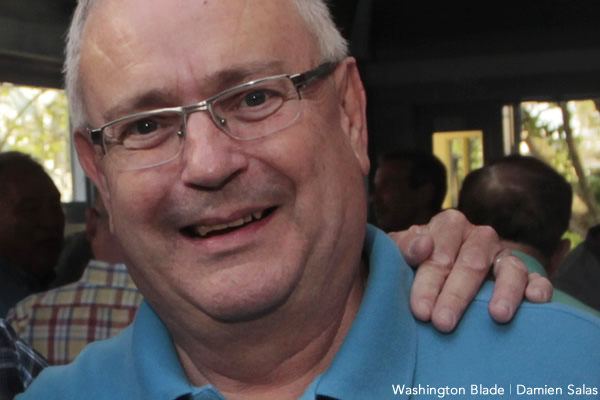
CAMP Rehoboth’s Steve Elkins described the graffiti as containing ‘vile homophobic slurs.’ (Washington Blade file photo by Damien Salas)
An LGBT rights advocate in Rehoboth Beach, Del., has expressed concern that Delaware State Police chose not to designate as a hate crime a Sept. 23 incident in which anti-gay messages were spray painted on the house of a gay couple.
Steve Elkins, executive director of CAMP Rehoboth, an LGBT community center, told the Washington Blade that he saw photos of the graffiti spray painted in several places on the couple’s rented house. He said the messages were definitely “crude and homophobic.”
Master Corp. Gary Fournier of the State Police told the Blade in an email that an unidentified suspect or suspects spray painted “obscene gestures and words” on the house and a vehicle parked in the driveway on the 19000 block of John J. Williams Highway, which is near Delaware Coastal Highway 1 outside the Rehoboth Beach City limits.
Fournier said State Police have designated the incident as a case of criminal mischief and trespass.
“The investigation into this incident is on-going and is not being investigated as a hate crime,” he said.
He declined to disclose what the spray painted messages said or what the “obscene gestures” depicted. He also declined to say why police don’t believe the incident is a hate crime.
Gene Harris, one of the two men who live in the house, told WRDE TV News that he and his partner woke up about 8 a.m. on Sept. 24 and discovered what he called hate fueled messages scrawled on their home.
The Cape Gazette, a Rehoboth-area newspaper, published two photos showing graffiti painted in several places on the exterior walls, the roof, and the garage door of the house. The photos were not taken close enough to show what the graffiti depicted.
“It took us back 20 or 30 years to a feeling of shame and humiliation and somehow embarrassment – yes embarrassment,” Harris told the TV news station.
Elkins, who also spoke to the TV news station, told the reporter in an on-camera interview that he viewed the incident as a hate crime.
“It’s pretty scary to see what was painted not only on the front of the home but all around the house,” he said. “And even on…a car that belonged to a friend of theirs was sprayed with some vile homophobic slurs,” Elkins said in the TV interview.
“It made me sick to my stomach to see it,” he said.
Elkins told the Blade that among the words sprayed on the house was “cock sucker.”
Jason Miller, a spokesperson for the Delaware Attorney General’s Office, said the office was aware of the incident and was monitoring the police investigation. He said that if an arrest is made the Attorney General’s office would make an independent decision on what charge should be filed against the person or persons arrested.
“Through our own review of the case, we can upgrade the charges,” he said, adding that his office would list the incident as a hate crime if it determines such a charge is warranted.
The Delaware News Journal reported that the house in which the two gay men live is owned by Sussex County Council member Joan Deaver, who lives in a nearby house.



District of Columbia
HIV Vaccine Awareness Day set for May 18
Whitman-Walker joins nationwide recognition of efforts to develop vaccine
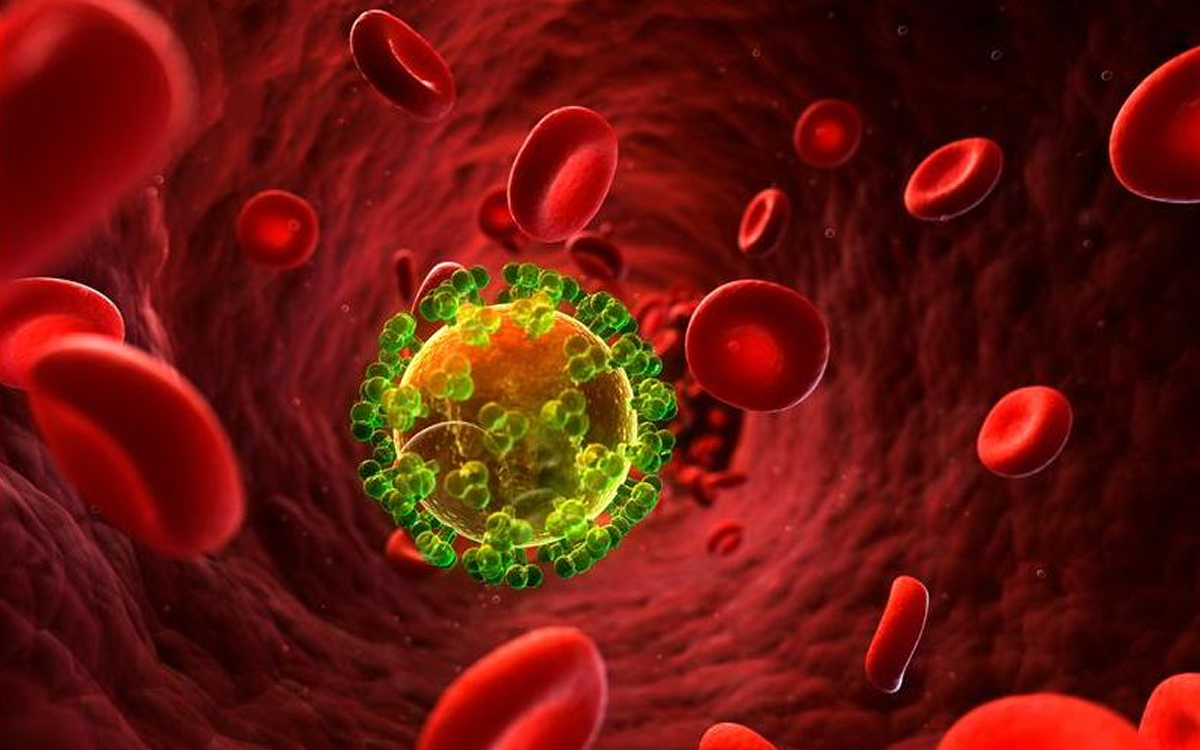
Whitman-Walker Health, the D.C.-based community healthcare center that specializes in HIV/AIDS and LGBTQ-related health services, will join health care advocates from across the country to support efforts to develop an HIV vaccine on HIV Vaccine Awareness Day on May 18.
“HIV Awareness Day, observed annually on May 18, was established to recognize and thank the volunteers, scientists, health professionals, and community members working toward a safe and effective prevention HIV vaccine,” Whitman-Walker said in a statement.
“Led by the National Institutes of Health’s National Institute of Allergy and Infectious Diseases (NIAID), the day is also an opportunity to educate communities about the critical importance of preventive HIV vaccine research,” the statement says.
It adds, “The reality is that any new vaccine discovery must be built community by community, institution by institution, and then it must reach everyone – especially the communities who have carried the heaviest burden of this epidemic.”
On its own website, the National Institutes of Health says HIV Vaccine Awareness Day also highlights its longstanding efforts, coordinated by its Office of AIDS Research, to support researchers’ efforts to develop an HIV vaccine.
“Researchers are making promising headway in efforts to develop a safe, effective HIV vaccine,” it says in a statement on its website.
A Whitman-Walker spokesperson said Whitman-Walker was not holding a specific event to observe HIV Vaccine Awareness Day, but it will recognize the day as a way of encouragement for its ongoing work to address the AIDS epidemic and support for vaccine research.
“Today, no one has to die from HIV,” said Whitman-Walker’s Health System division’s CEO, Dr. Heather Aaron in the Whitman-Walker statement. “We have the treatments, the technology, and the research to change outcomes, and yet people in our community are still dying from HIV//AIDS,” she said in the statement.
“That is unacceptable, and it is exactly why our work continues,” she added. “Here in D.C. with more focus on Southeast D.C., the Whitman-Walker Health System remains committed to making a difference through cutting-edge research, policy advocacy, and philanthropy, because fair access to life-saving treatment is not a privilege. It is a right.”
District of Columbia
Capital Stonewall Democrats endorses Janeese Lewis George for D.C. mayor
Group also backed D.C. Council, Congressional delegate, AG candidates

The Capital Stonewall Democrats, D.C.’s largest local LGBTQ political organization, announced on May 14 that it has endorsed D.C. Councilmember Janeese Lewis George (D-Ward 4) for mayor in the city’s June 16 Democratic primary.
Lewis George along with former D.C. Councilmember Kenyan McDuffie (D-At-Large) are considered by political observers to be the two leading candidates among the seven candidates competing in the Democratic primary election for mayor.
Both have strong, long-standing records of support on LGBTQ issues, indicating Capital Stonewall Democrats members, like LGBTQ voters across the city, are likely choosing a candidate based on non-LGBTQ related issues.
In a May 14 statement, the group announced its endorsements in seven other Democratic primary races, including D.C. Council Chair Phil Mendelson, who is running unopposed in the primary. Also endorsed is D.C. Councilmember Robert White (D-At-Large), who is one of five Democratic candidates competing for the position of D.C. delegate to the U.S. House of Representatives.
D.C. Councilmember Brooke Pinto (D-Ward 2) is among the four candidates competing with White for that post, and who like White has a strong record of support on LGBTQ issues.
In the At-Large D.C. Council race for which incumbent Anita Bonds is not running for re-election, Capital Stonewall Democrats has endorsed community activist and LGBTQ ally Oye Owolewa in a nine candidate race.
For the Ward 1 D.C. Council election, in which five LGBTQ supportive candidates are competing, the group did not make an endorsement because none of the candidate received a required 60 percent of the endorsement vote cast by Capital Stonewall Democrats members, according to the group’s former president, Howard Garrett.
The statement announcing its endorsements shows that it decided to list its “Preferred Ranking” of each of the Ward 1 Democratic candidates as part of the city’s newly implemented ranked choice voting system. It lists gay candidate Miguel Trindade Deramo as first, bisexual candidate Aparna Raj second, Jackie Reyes Yanes third, Rashida Brown fourth, and Terry Lynch fifth.
In the remaining ward Council races, Capital Stonewall Democrats endorsed Councilmember Matt Fruman (D-Ward 3), who is running unopposed for re-election; Councilmember Zachary Parker (D-Ward 5), the Council’s only gay member who is being challenged by two opponents; and Councilmember Charles Allen (D-Ward 6), who is running unopposed for re-election.
The group also chose not to make an endorsement in the special election for another At-Large D.C. Council seat that became vacant when then-Independent Councilmember McDuffie resigned to enable him to run for mayor as a Democrat. Under the city’s Home Rule Charter adopted by Congress, that at large sweat is restricted to a “non-majority party” candidate, meaning a non-Democrat.
The three candidates running for the seat, all Independents, include incumbent Doni Crawford, who was appointed to the seat earlier this year; former D.C. Councilmember Elissa Silverman; and Jacque Patterson. All three have expressed support on LGBTQ related issues.
“The organization’s endorsement process included candidate questionnaires, public forums, and direct voting by active CSD members,” the statement announcing its endorsements says. “Each endorsement reflects the collective voice of 173 LGBTQ+ Democrats who voted in the process and are committed to building lasting political power in the District,” according to the statement. “Candidates that reached 60 percent support received the endorsement.”
Garrett, the group’s former president, acknowledged that with nearly all candidates running in D.C. elections expressing strong support for the LGBTQ community, many if not most of the group’s members most likely chose a candidate based on issues other than LGBTQ related issues.
He said he believes Lewis George, who he is supporting and is viewed as a progressive candidate who self-identifies as a Democratic Socialist, compared to McDuffie, who is viewed as a moderate Democrat, captured the group’s endorsement based on the view that she is the best person to lead the city going forward.
“I believe that Capital Stonewall members voted for Janeese Lewis George because we’re tired of the status quo and we need a new, bold leader to not only move our city forward but also to stand up to Donald Trump and his administration,” Garrett told the Washington Blade.
McDuffie’s LGBTQ supporters, including former Capital Stonewall Democrats presidents David Meadows and Kurt Vorndran, have argued that McDuffie’s positions on a wide range of issues, including LGBTQ issues, show him to be the best candidates to lead the city at this time and In future years.
The group’s endorsement of Lewis George comes one week after GLAA DC, a nonpartisan LGBTQ advocacy group, awarded her its highest candidate rating of +10.
Rehoboth Beach
What’s new in Rehoboth Beach for summer 2026
Moon changes ownership, Market 59 debuts, and much more
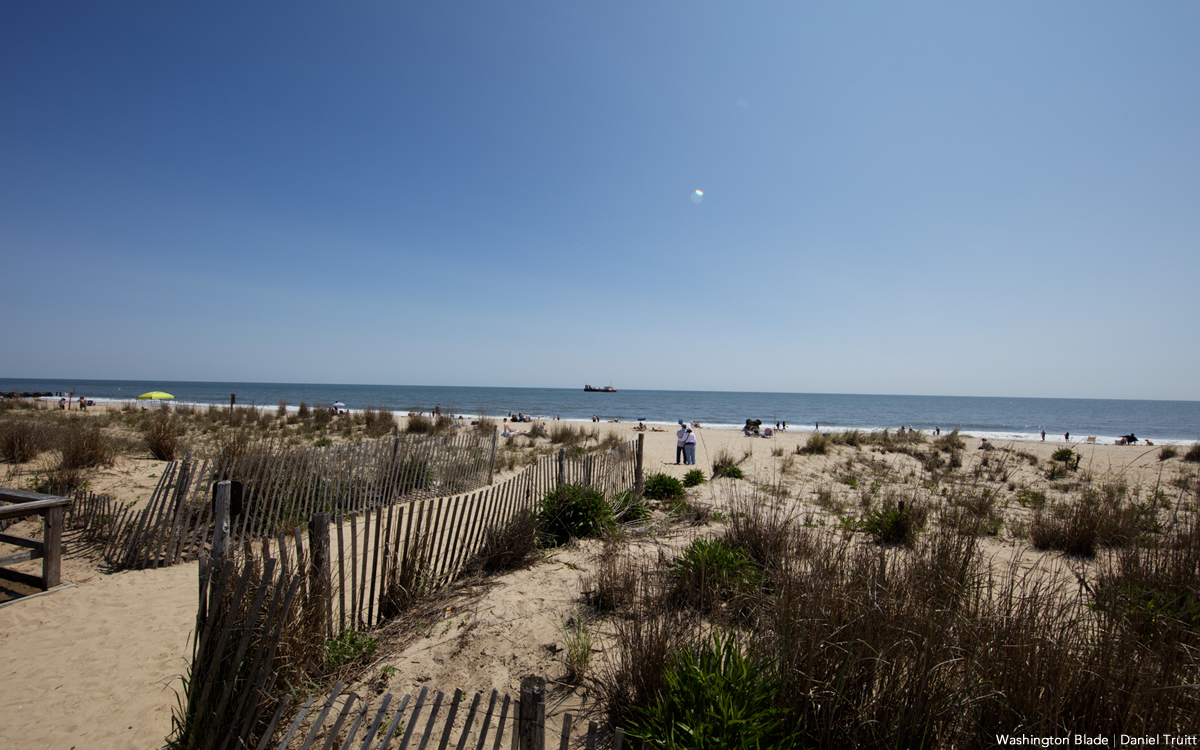
Another year and Rehoboth Beach, Del., is ready for the new summer season. The crowds will come for sun, sand, surf, and the boardwalk. It will cost a little more to get to the beach this year, as gas prices are way up. But once you are in Rehoboth, you know it’s worth it.
One aesthetic change you’ll notice at the boardwalk is the installation of a security gate and bollards near the bandstand, intended to enhance security during large events. The town plans an expanded fireworks show for July 4 to honor the nation’s 250th birthday.
Most of the commercial establishments in Rehoboth are along and between three blocks: Baltimore Avenue, Rehoboth Avenue, and Wilmington Avenue. This column will seem like I am walking back and forth because I am, and you will too. One thing to remember: Parking in Rehoboth is difficult and expensive and free parking is over as of May 15. There are parking permits available for either a day or longer at the non-metered spots.
During more than 40 years that I have been going to Rehoboth, including more than 30 owning a place in Sussex County, I have witnessed the town transform from a summer vacation spot to a vibrant, year-round community. This was hastened by the COVID pandemic, when lots of people moved to the beach when they could work virtually. Others, reaching retirement age, decided the beach was the place to be. This influx of residents has given many businesses a reason to stay open year round.
Over the years, Rehoboth has become a real foodie town, with many more restaurants, many of them high-end, opening. There are local gay-led restaurant groups like the award-winning Second Block Hospitality Group, which operates The Pines, Bodhi Kitchen, and Drift. Another group, JAM Holdings, owns Eden, which relocated to Route 1 in January after 20 years on Baltimore Avenue; and Jam, which is expected to reopen on Rehoboth Avenue later this year after leaving its Wilmington Avenue location that was demolished over the winter. That building was home to several beloved restaurants over the decades, including Chez la Mer and Azzurro.
Among the new businesses this year, be sure to stop at the gay-owned Bay Laurel Home and Garden, located at the old Farmer Girl site on Route 1 for your gardening needs. The Waypoint Hotel opened in December on Rehoboth Avenue, site of the former gay-owned Shore Inn.
Another of the newbies is the upscale Market 59 on Baltimore Avenue. The owners plan to add a restaurant and bar before July 4 called Fifty-Nine. The market offers grab-and-go options for the beach plus homemade breads and pastries, produce, and seafood. Then there is the renamed Frankie and Louie’s across the street, now called Pazzo Italiano. Still the same great takeout and now hooked up with The Pines leading to some new menu items. Then I hear there will also be a new Champagne Bar opening soon on Baltimore Avenue.
Then there are the established and stellar standbys, including the Back Porch, on Rehoboth Avenue; Megan Kee’s restaurants La Fable, Houston White, and Dalmata; and the restaurants on Wilmington Avenue, including Mariachi, Salt Air, and Henlopen Oyster House, where you can sample the Rehoboth Rose oysters from the gay-owned Nancy James Oysters. Then on 1st Street there is Goolee’s Grill for a comforting breakfast and Bloody. Walk up the second block of Rehoboth Avenue and you reach the Purple Parrot and its ever-popular Biergarten.
The iconic Blue Moon restaurant and bar was recently sold to new owners who have pledged to keep it an LGBTQ-affirming space, according to longtime owner Tim Ragan. Ragan and his partner Randy Haney sold the Blue Moon to Dale Lomas and Mike Subrick, owners of Atlantic Liquors on Route 1. “They don’t want to change a thing,” Ragan told the Blade. Happy hour continues all summer long from 4-6 p.m.
For morning coffee nothing beats The Coffee Mill, in the mews between Rehoboth and Baltimore Avenue, where I can be found every morning I am at the beach. The owners, Mel and Bob, also own the Mill Creamery ice cream shop, and another Coffee Mill in Dewey Beach. Mel is proud of his clothing store BRASHhh on 1st Street. On the Rehoboth Avenue side of the mews is the beloved Browseabout Books where you can find a beach read, grab a coffee, and shop for everything from toys to home decor. A few doors away on Rehoboth Avenue is the fun Gidget’s Gadgets.
My favorite place for happy hour is Aqua Bar & Grill for good drinks, food, and service. Say hi to Katie Lyell behind the bar at Aqua, winner of the Blade’s Best Of Award for Best Rehoboth Bartender. Aqua, which is celebrating its 20th anniversary this year, hosts Taco Tuesdays and half-price burgers on Thursdays, all on the spacious outdoor deck. While you are on Baltimore Avenue make sure to stop by CAMP Rehoboth, the LGBTQ community center. Pick up your copy of Letters and take a peek at the art exhibit in their offices. Maybe even say hello to the new executive director, Robin Brennan, Ph.D. I had the chance to stop in and meet her and my congratulations to the board. I think they made a great choice for executive director and the organization is clearly in good hands. Then stop in the CAMP Courtyard, and get something to eat at Lori’s Oy Vey café, celebrating her 30th season, and still the best chicken salad at the beach. Visit the newly relocated Gallery 50 on Baltimore Avenue, which moved from Wilmington Avenue. Then stop in at Elegant Slumming, also on Baltimore Avenue, say hi to Philip, and shop his exquisite jewelry, and some great artwork. If you have a pet and want to treat them to something nice, stop by Critter Beach on Rehoboth Avenue.
After a day in the sand, and a good dinner, there is the nightlife. Diego’s on Rehoboth Avenue Extended hosts regular entertainment, including drag shows and internationally renowned DJs. A new partially enclosed patio offers an expanded space to hang out. Don’t miss their Sundays with local icon Pamala Stanley, now in her 21st season at the beach; in addition to her Sunday dance party, she performs her “Piano Pam” show on Monday evenings. Then there is always fun at Freddie’s Beach Bar, on 1st Street with its video bar and regular entertainment. Clear Space Theatre on the first block of Baltimore Avenue has a busy summer of shows including “The Cher Show”(June 23-Aug. 27), “Mean Girls” (June 26-Aug. 29), and “Pretty Woman” (July 1-Aug. 25). Clear Space always hosts talented casts including many college students who are getting their first chance to shine. Some come back when they are a little more established. This year that includes Caetano de Sá who first performed at the beach in “Jersey Boys” when he was a student at the Boston Conservatory at Berklee, where he earned his BFA in musical theater. He will be back as of May 25 for the summer rep to play Sonny in the production of “The Cher Show,” Martin/Coach Carr in “Mean Girls,” and Mr. Hollister in “Pretty Woman,” along with some cabarets. The incredibly talented Ashley Williams is also back in town and will host a cabaret show on Aug. 2. Tickets for all the shows are available online and they sell out fast.
So, make your plans now to head to the beach. Stay a day, or a week, or more, in a hotel, or a rental house. But make those plans quickly, as things sell out fast in Rehoboth. Look forward to seeing you at the beach!

‘The Inheritance’ is most-nominated at this year’s Helen Hayes Awards

HIV Vaccine Awareness Day set for May 18

DC Black Pride is around the corner

United Night Out set for Saturday

Calendar: May 15-21

America’s broken pipeline of mental healthcare for trans youth

PHOTOS: ‘Studio 69’

White House counterterrorism strategy targets ‘anti-American, radically pro-transgender’ groups

Blade finalist for D.C. Society of Professional Journalists awards

He is 16 and sitting in a Cuban prison
-

 National4 days ago
America’s broken pipeline of mental healthcare for trans youth
-
Photos5 days ago
PHOTOS: ‘Studio 69’
-
The White House5 days ago
White House counterterrorism strategy targets ‘anti-American, radically pro-transgender’ groups
-
News4 days ago
Blade finalist for D.C. Society of Professional Journalists awards