Opinions
There’s never been more to celebrate at Pride
A time to reflect on victories, rededicate for fights ahead


(Washington Blade file photo by Michael Key)
Two years after the Supreme Court struck down the Defense of Marriage Act as unconstitutional in United States v. Windsor, there has never been more to celebrate during Lesbian, Gay, Bisexual and Transgender Pride Month.
Marriage equality now exists in D.C. and 37 states, including my home state of Florida. I was honored to be joined at the president’s State of the Union Address by one of the extraordinary newlywed couples, my constituents, who helped lead the fight to secure same-sex marriage in the Sunshine State. Later this month, it will be my distinct privilege to officiate my first wedding, and I am overjoyed to know that this same-sex couple can finally enjoy having their union recognized in the eyes of the law. To see the happiness of many more couples, or the beautiful children they’ve brought into the world or adopted, is a poignant reminder that love is love and that these fights make a real difference in people’s lives.
Under President Obama, we have put an end to the discriminatory “Don’t Ask, Don’t Tell” policy that prevented gay and lesbian Americans from freely and openly serving their country. Congressional Democrats have added LGBT protections to the Violence Against Women Act. And President Obama has signed an executive order to ban discrimination on the basis of sexual orientation or identity for federal contractors, extended key benefits to same-sex partners of federal employees and banned discrimination in federal workplaces based on gender identity.
The American public’s support for same-sex marriage now reaches 60 percent for the first time in history. And the referendum legalizing gay marriage in Ireland is a historic victory that should be celebrated all over the world.
Unfortunately, these fights are far from over. Recently, it was only after a strong national response that Indiana Gov. Mike Pence was forced to backtrack on his state’s law that would have allowed businesses to discriminate against the LGBT community. Many of the Republicans seeking their party’s presidential nomination sided with Gov. Pence instead of the LGBT community and the American people.
These Republican candidates want to take us backwards, undoing the progress we’ve fought so hard to secure. Jeb Bush has said that, “the institution of marriage is under attack in our society.” Marco Rubio said one would need to have a “ridiculous and absurd reading of the U.S. Constitution” to think same-sex couples have the right to marry. Rand Paul, the candidate who supposedly wants to broaden the GOP’s appeal and outreach to young voters, said that same-sex marriage “offends” him. Others, including Scott Walker, Chris Christie, Mike Huckabee, Rick Santorum and Bobby Jindal, all oppose marriage equality.
There are many places around the world where people are still subjected to violence and discrimination based on who they are or who they love, particularly for the transgender community. Even here at home, we’ve failed to enact protections like the Employment Non-Discrimination Act. In just a few weeks, the Supreme Court will issue a decision on whether same-sex couples have the right to marry nationwide.
This June, as we celebrate LGBT Pride Month, the LGBT community and its allies are proud to look back on the victories we’ve achieved, and rededicate ourselves to the fights still ahead.
Debbie Wasserman Schultz is a member of Congress from South Florida and the chair of the Democratic National Committee.





Opinions
Dual endorsement for Independent Council-at-large: Patterson or Crawford
Let’s move the District forward

(Editor’s note: This column reflects the writer’s opinion and does not constitute a Washington Blade endorsement of any candidate.)
The race for Independent Council-at-Large is interesting. There are three main candidates and I suggest making your choice easier by first eliminating Elissa Silverman from consideration. She is a retread, and it is time to move forward, not backward.
There are two candidates whom I have taken the time to talk with in some depth. They are both impressive, and either will make a great addition to the D.C. Council. I have some minor issues with both, but then have never found a candidate who I would agree with 100%, and never expect to.
Jacque Patterson has held public office, and served the community well, as president of the D.C. State Board of Education. Just recently a study was released, and while we know there are many outstanding issues in our schools, this new Education Scorecard report from Harvard, Stanford, and Dartmouth, ranks District of Columbia students first in the nation for academic growth in both math and reading between 2022 and 2025. While they are still not doing as well as we want all our students to do, progress is important, and this scorecard shows how the District is working to help its students. Take a look at Jacque’s website to see what he will focus on. You will find it impressive. He understands among other issues what small businesses mean to D.C., what we need to do for safer communities, and to provide more opportunities for all our youth.
Then take a look at Doni Crawford who has now been serving on the Council for about four months, having been chosen to replace Kenyan McDuffie until the election, when he resigned to run for mayor. She previously worked in his office as committee director for the Council’s Committee on Business and Economic Development. Prior to that she worked at the D.C. Fiscal Policy Institute. Her focus is also on safer communities, economic development, housing, and youth. You can look at Doni’s website to get a more detailed understanding of where she intends to focus her time.
Both candidates have talked about how they will work to fight for D.C. statehood, and to ensure the 700,000 residents of the District can set their own budget priorities, and make their own legislative decisions, without oversight from Congress.
When looking at who you choose to vote for as a Council member in D.C., it is important to understand the person you select will be working closely with 12 other members. They have to understand the art of compromise to get their initiatives passed. They must have the personality that will demand respect of the other members, and a style that will make them stand out on the Council. I think Jacque and Doni are the two choices in this Independent Council-at-large race who will be able to do that. Also, remember in an at-large seat on the Council the focus is a little different than when you are selecting a Council member for your own ward. These members need to have a little broader view, and be able to balance all constituents in every ward of the city. That is a little more difficult.
I know from talking with them that both Jacque and Doni are committed to equality, and just as important, economic equality. They understand for the District to do well; everyone needs a fair playing field. I have gotten the strong feeling they both understand what is happening around the nation is impacting the people of D.C. That includes the resurgence of antisemitism, as well as racism, Islamophobia, homophobia, and sexism. They understand we are faced with a White House, and Republican-controlled Congress, who instead of doing anything to combat these issues, are making them worse. And because home rule still gives Congress and the felon in the White House much-too-much control over D.C., this impacts us directly. I have confidence in both Patterson and Crawford, that they will fight this, and do it intelligently, and successfully, to the benefit of all the people they are looking to serve.
So, my recommendation is you look at both their websites and decide who your first choice will be. Then rank that person #1 on your ballot for Independent Council-at-large. Then because you can with ranked choice voting, rank the other one #2. Then stop! You don’t need to rank any more.
Again, I think either Jacque Patterson or Doni Crawford will serve us well on the Council. They are both smart, experienced, and both will bring something new to the Council. Elissa Silverman had her chance before, and there were reasons the voters turned her out. Let’s not go backwards, but rather let’s move the District forward, with either Jacque Patterson or Doni Crawford.
Peter Rosenstein is a longtime LGBTQ rights and Democratic Party activist.
Opinions
What I learned from Barney Frank and a bit of queer history
Gay former Mass. congressman died May 19
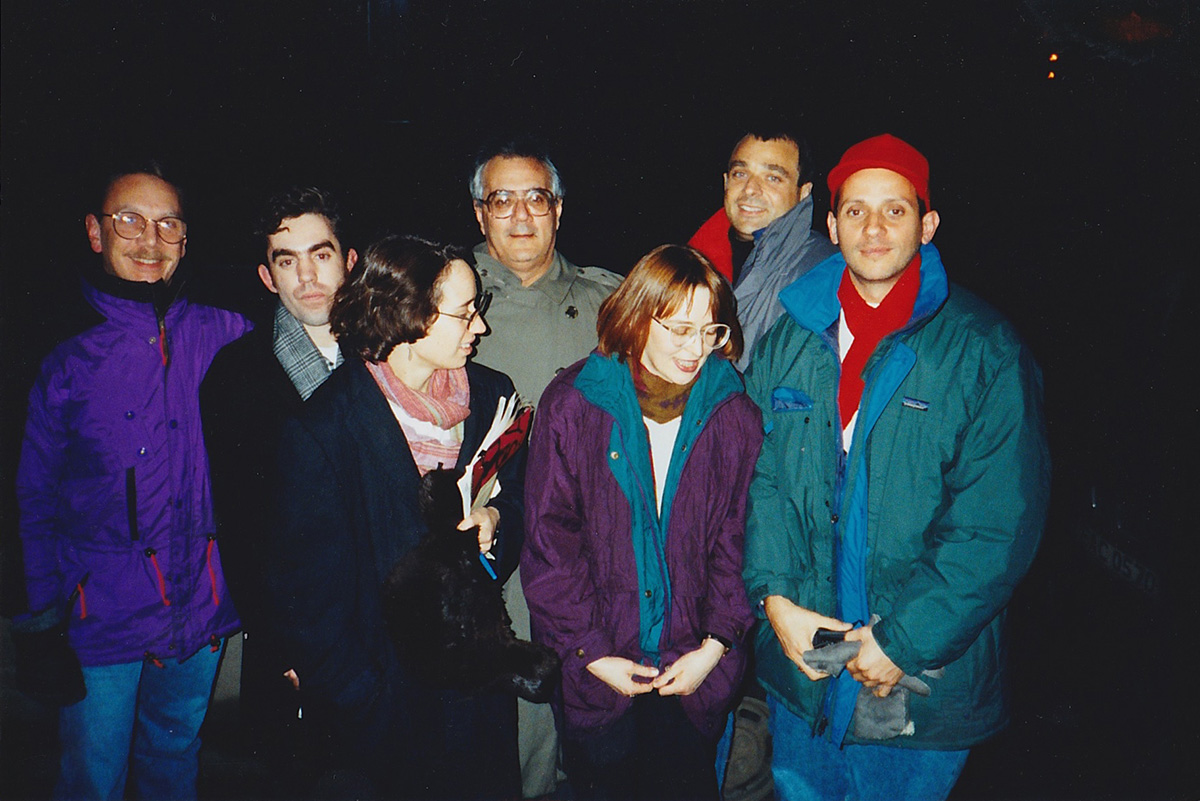
Since I started my activist career at the early age of 25, I feel incredibly blessed to have learned so much from many of the legends of our movement, including from Congressman Barney Frank. When I was just beginning OutRight International (then the International Gay and Lesbian Human Rights Commission), Herb Moses, Barney Frank’s long-term partner prior to his husband Jim Ready, was on our initial board of directors in the early 1990s. Through Herb, I became friends with Barney, and would regularly stay in their guest bedroom on Corcoran Street when I came to Washington for work. We would go out to dinner at their favorite chinese restaurants and Barney would give me advocacy advice, in his tough-love style, which as a similarly argumentative Jew, signified love and respect to me.
Together, we organized a trip to Russia in 1992 for a group of individual donors that included Fred Hochberg (years prior to becoming our nation’s president of the Export-Import Bank), Andy Tobias (before his DNC Treasurer years), Terry Watanabe (one of few major donors to the queer movement at the time), and Vic Basile (who then ran the Victory Fund). Barney was able to get high level meetings with Russian officials that we could never have gotten without him, including conversations with their Ministry of Justice about the infamous Article 121 of their penal code at the time, which actively penalized private gay sex acts. A year later, that law was removed, and consequently most of the copy-cat versions in the other former Soviet countries were written out as well. While Barney organized a reception for our group at the U.S. ambassador’s residence in Moscow, I organized visits to the local prisons to meet with gay prisoners. It was a crazy time and made for some incredible stories, as well as some important lessons from Barney Frank.
Lesson #1: be precise and have proof
Barney was always following up with hard questions of the activists I would bring into his office, exacting concrete proof of the claims of persecution we were trying to expose. His precision sometimes felt like a challenge to the truth of the matter, but it made me a much better human rights activist in those early days. He pushed me to work with more rigor, that helped me to articulate better why the experiences of LGBTQ people around the world are important to share with policy makers and with our own community.
Lesson #2: read more
On the plane to Russia, Barney showed up with a duffle bag full of newspapers and periodicals that he hadn’t finished reading. He hated small talk, and spent the entire flight catching up on his reading. Even though we now have internet access on planes, my take-away was to always stay current and read!
Barney cared a lot about U.S. immigration issues, and together, we opened up the U.S. asylum system to LGBTQ individuals who have a credible fear of persecution on the basis of their “membership in the particular social group” (although at the time, we only called it sexual orientation). This category is one of five legal reasons the United States is obligated to provide asylum. We focused on then-Attorney General Janet Reno and asked her to elevate the case of Marcelo Tenorio from Brazil, who was persecuted for being gay, and whose case IGLHRC had helped to document and win a year earlier, as part of an asylum project that supported immigration attorneys with documentation from around the world (remember, pre-internet!). In June of 1994, Attorney General Reno issued a binding memo elevating that case to a precedent-setting one, and from that moment on “membership in a particular social group” for asylum seekers included queer people in the United States. That milestone paved the way for tens of thousands of LGBTQ asylum seekers to flee persecution and begin safer lives in the U.S. A legal milestone that is now under attack.
Lesson #3: thank your champions
A week after Reno issued her official Attorney General Order, I was on the phone with Barney and he asked me if I had sent my thank you letter to her yet. I had to admit that I hadn’t. An unforgettable cringe moment for me. I was quick to write my protest letters out in those pre-internet days. But didn’t yet understand the importance of writing thank-you notes to our political targets (or allies), when they actually do the things we ask them to do!
Barney served on our International Advisory Board, together with over 30 other amazing leaders from around the world, including Harry Hay, the founder of the Radical Faeries. They couldn’t have been two more different types of gay men. But I took them both to Russia and earned their respect. In a complicated moment in our movement’s history, I was a spokesperson for the International Lesbian and Gay Association (ILGA), an international membership group for queer organizations around the world, and the only other major organization at the time that was working around the world. ILGA had submitted a controversial application to become an official observer to the UN as a non-governmental organization. The truth was, that ILGA — as a broad membership organization had actual pedophile organizations in the membership at the time. Since OutRight (then IGLHRC) was the “action secretariat” for ILGA, I spearheaded the campaign to create membership criteria that would eliminate NAMBLA and the other two similar Dutch groups that refused to distinguish between a two-year old and a 16-year old. Together with our then board members Judith Butler and Alex Chasin, we carefully crafted a nuanced position for OutRight that affirmed the rights of children to explore their sexuality, while opposing abuse of power and sexual exploitation by adults. We lost both Barney and Harry over that statement, and I had to take those difficult calls.
Lesson #4: don’t get defeated by rejection
While Barney explained to me that he could not be associated with any position or organization that was in any way connected to the issue of pedophelia, he didn’t reject me personally or the work of the organization. He just needed to have his name removed from our advisory board. I was still crushed, but didn’t let it stop me from pursuing a more nuanced distinction between consensual sex and exploitation (such as elevating the Dutch model of allowing for consent within two years of each partner within those complicated years around emancipation, rather than an unfair system that can charge rape to an 18-year-old who is in a sexual relationship with a 17-year-old, for example.
Lesson #5: pragmatism with principle
I started OutRight at the age of 25. I remember Barney saying to me over dinner one night in 1992 that I could do well in DC if I wanted to come and work on the Hill. He was complementing my willingness to find concrete, incremental steps towards equality, while understanding my deep passion for justice and full equality. I, on the other hand, was passionate about building the organization and making LGBTQ and HIV issues part of the larger human rights movement. But I held onto that complement for a long time, and it guided my work for many years.
As much as I appreciated his compliment at the time, and have had an amazing career making incremental change, today, I fear that the age of “incrementalism” is over in the United States. Despite Barney’s last book and his final effort to hold onto a liberal institutionalist hope for our democracy, this moment calls on progressives to radically remake this unfair system. It’s not our time to retreat or rally behind Democrats who will not stand for much, much better. It’s our time to boldly envision, name, and work for the better country and world we so urgently need. We can argue over whether or not Barney was politically pragmatic or sold out the trans community back in 2007, when he removed gender identity in the draft legislation in order to get it passed the House. It caused a major split in the community’s support for the bill and he put it back in the legislation two years later, when it didn’t pass. Congress to this very day has never passed basic non-discrimination protections based on sexual orientation or gender identity. As Congressman Frank departs this world, I believe it is time for Urvashi Vaid’s vision of the world, another monumental advocate who we lost last year. Her vision was one of a more interconnected emancipation of all of our country’s citizens, not one identity group at a time. As we regress this quickly into authoritarianism, what do we have to lose by demanding the whole vision of liberation?
The last time I saw Barney, it was a few years back and he was signing books at a local LGBT event in San Francisco. He seemed so genuinely happy to see me and greeted me with a big hug. As we reflect and pay tribute upon his passing, I feel so grateful to have had my early leadership years mentored by the incomparable Congressman Barney Frank.
Julie Dorf is the co-chair of the Council for Global Equality.
Opinions
Why this Black Pride, I ranked Janeese Lewis George #1 for D.C. mayor
Compliance is not a strategy for defending D.C.

Washington, D.C. is at a crossroads. In uncertain moments, voters are encouraged to lower expectations, choose familiarity over vision, and look for leaders who seem most willing to accommodate hostile federal power. That approach misunderstands this moment and what leadership requires.
I ranked Janeese Lewis George #1 for mayor.
As a Black gay man whose career has moved through law, policy, media, and movement work and has called D.C. home for 15 years, I have seen the difference between performative allyship and meaningful action. Too often, politicians treat LGBTQ communities as symbolic talking points. They show up for Pride, issue polished statements, and expect support without taking risks that improve our lives. Our vote should be earned through policy, consistency, relationships, and accountability.
That is one of the many reasons I trust Janeese.
A recent Blade column tried to define Janeese through guilt-by-association politics, treating a passing association with someone else’s comments as proof of her values. I wholly reject that framing.
Coalition-building in a city as politically diverse and socially complex as D.C. will never be perfect. Anyone who has organized, legislated, or advocated understands that progress requires engaging people whose views or approaches may not align at every moment. The fair standard is a candidate’s values, priorities, judgment, and record.
Janeese’s record clears that standard. GLAA gave her a 10 out of 10, its highest possible rating. Capital Stonewall Democrats, the largest LGBTQ political organization in D.C., endorsed her by an overwhelming margin. Her platform shows a candidate who understands that LGBTQ safety depends on the ability to stay housed, access healthcare, protect bodily autonomy, and defend D.C.’s power to govern itself.
For a Black trans woman fighting eviction, safety starts with a lease she can keep. For a family with two dads choosing between medicine and a utility bill, freedom starts with a city willing to lower costs and stand up to greedy utility companies like Pepco and Washington Gas. For residents bounced between agencies, dignity starts with a government that can get help to people before crisis deepens.
Janeese’s campaign speaks to those conditions. She is running on tenant protections, affordable homes, lower utility costs, and a public safety plan that recognizes a problem residents already understand: D.C. has resources, yet too many people still get passed from agency to agency while their situation gets worse. She has also committed to rescinding the MPD order allowing local police to work with ICE.
The above-mentioned Blade column spends little time on those stakes. Its energy goes toward attacking Janeese’s endorsers and casting suspicion on her people-first politics. The writer has previously said he becomes wary when the Working Families Party endorses a candidate because he sees the party as anti-business. That critique reveals anxiety about a candidate challenging the corporation-friendly consensus that has made D.C. harder for working people to survive in. Yet it doesn’t speak to the many workers of those businesses who support a mayoral candidate like Janeese.
This election is also about how D.C. responds to Trump and federal overreach. Trump is not our mayor. The people of Washington, D.C. are. The argument that D.C. needs someone who can comfortably work with Trump sounds like preemptive surrender. There is little evidence that electing a more cautious Democrat would produce a respectful relationship with a president who has repeatedly treated D.C. residents as politically expendable.
D.C. needs a mayor willing to advocate for residents, defend the city’s interests, and resist attempts to bully or diminish the people who live here. Effective leadership requires negotiation. Negotiation from fear gives away power before the fight begins. Compliance is not a strategy for defending D.C.
Further, an ethics complaint against Janeese came with its own political baggage. City Paper reported that the nonprofit behind the complaint and investigation has a board member connected to a research firm her opponent’s campaign paid $20,000. Voters should weigh that connection against Janeese’s record and the LGBTQ organizations that have already vetted her.
This election will decide which communities are prioritized in D.C.’s future: working-class residents trying to stay in the city, or out-of-state elites treating D.C. like an investment portfolio. Black LGBTQ leadership carries responsibility here. Our communities know what it means to be praised in public and abandoned in budgets. We know the difference between symbolic allyship and policy that changes conditions.
I am ranking Janeese Lewis George #1 because, in this critical moment where inspiration is needed, Janeese is offering the kind of mayoral leadership D.C. needs. Black LGBTQ Washingtonians deserve a city we can afford, a government that works for people’s best interests, and leaders who will defend us.
Preston D. Mitchum is a D.C.-based policy consultant, attorney-activist, and television personality whose work focuses on the intersections of racial justice, democracy reform, health and gender equity, and LGBTQ+ rights.

D.C. Pride flag raising ceremony set for June 1

Still marching: Rev. Troy Perry and the ongoing fight for liberation

Introducing Next-Generation Assisted Living & Memory Support.

Cedric Neal on his juicy narrator role in ‘Pippin’

Dual endorsement for Independent Council-at-large: Patterson or Crawford

PHOTOS: Black Pride Opening Reception

Bree Fram’s congressional campaign ends but her fight continues

Why this Black Pride, I ranked Janeese Lewis George #1 for D.C. mayor

From Media Matters to massive queer ragers: the rise of Tara Dikhof

Peppermint made her mark on ‘Drag Race.’ Now, her advocacy is front and center
-

 Photos5 days ago
PHOTOS: Black Pride Opening Reception
-
2026 Midterm Elections3 days ago
Bree Fram’s congressional campaign ends but her fight continues
-
Opinions3 days ago
Why this Black Pride, I ranked Janeese Lewis George #1 for D.C. mayor
-
a&e features3 days ago
From Media Matters to massive queer ragers: the rise of Tara Dikhof