Local
Baltimore Black Pride kicks off Oct. 4
Art show, festival and more planned
The Sunday festival for this year’s Baltimore Black Pride will take place in Baltimore’s St. Mary’s Park.
As part of Baltimore Black Pride’s annual celebration from October 4-11, several workshops have been scheduled. They include: Sexual Safety, The Trans Identity, LGBT Relationships Today, and Knowing Your Rights/Legal Law Lab.
The workshops will take place on Oct. 10 from 10 a.m. to 1 p.m. at the Hotel Indigo, 24 West Franklin St. in Baltimore.
“We have some great topics this year and great speakers,” Letoi Robinson, who leads the Baltimore Black Pride Planning Committee, told the Blade. “We really tried hard this year to give our community a good variety of activities and events.”
The Grown and Sexy Annual Cultural Affair will take place later that evening from 7 p.m. to midnight. Recording artist Gwendolyn Collins will be the guest vocalist.
The event will be held at the Eubie Blake National Jazz Institute and Cultural Center, 847 N. Howard St. There will be a light buffet, refreshments, live entertainment, a guest speaker and dancing. The organizers say the attire is “fashion forward, dress to impress.”
The Sunday festival will take place in Baltimore’s St. Mary’s Park (Paca Street and Druid Hill Avenue) from 11 a.m. to 6 p.m. Other events include a drag brunch (Oct. 4), a professional mixer (Oct. 5), a pop-up art show (Oct. 6), speed dating (Oct. 7), the Pride kick-off reception and improv comedy show (Oct. 8), Black Out Party (Oct. 9), a Daylight White Party (Oct. 10), and worship services (Oct. 11).
The theme for this year’s celebration is “Bridging The Gap, Embracing our Uniqueness.” For more information, contact [email protected] or visit Baltimoreblackpride.org.



District of Columbia
David Archuleta, Monroe Alise named D.C. Pride parade marshals
Honorees ‘live authentically’ and ‘power of sharing your story’

The Capital Pride Alliance has announced that David Archuleta and Monroe Alise will be the grand marshals for the Pride parade on June 20.
Ryan Bos, the Capital Pride Alliance’s president, said the two were chosen for the way that they exemplify the theme “Exist. Resist. Have the Audacity!”
Archuleta is the “American Idol” season 7 runner-up and a strong supporter of the LGBTQ community.
He grew up religious and has been clear about his struggle to reconcile his faith, identity, and self-expression. In 2021, he publicly came out and has since been a major voice for LGBTQ visibility and acceptance. This year, Archuleta published the memoir “Devout,” which details his lived experience as a closeted Mormon teenager.
Alise is a transgender advocate and a D.C. native.
She has appeared in the shows “P-Valley” and “The Chi.” She also grew a major online following through her social media series “I’m CLOCKABLE,” where she discusses topics such as dating, culture, and self-discovery from the perspective of a queer person.
“Together, they represent to live authentically and the power of sharing your story to create change,” Bos said in a statement.
As grand marshals, the two will kick off celebrations leading up to the parade and participate in it. Alise will join the Crack of Noon Parade Brunch from 12-3 p.m. at Viceroy Washington, alongside honorees such as D.C. Mayor Muriel Bowser.
The parade will kick off at 3 p.m. at the intersection of 14th and T Streets, N.W., before moving straight down 14th Street and ending at Pennsylvania Avenue at 7 p.m. The parade is free for anyone to watch at designated viewing areas.
More information about celebrations throughout Pride and the parade can be found at www.capitalpride.org.
District of Columbia
Hundreds of thousands expected to attend D.C. Pride events
Parade to take place on June 20
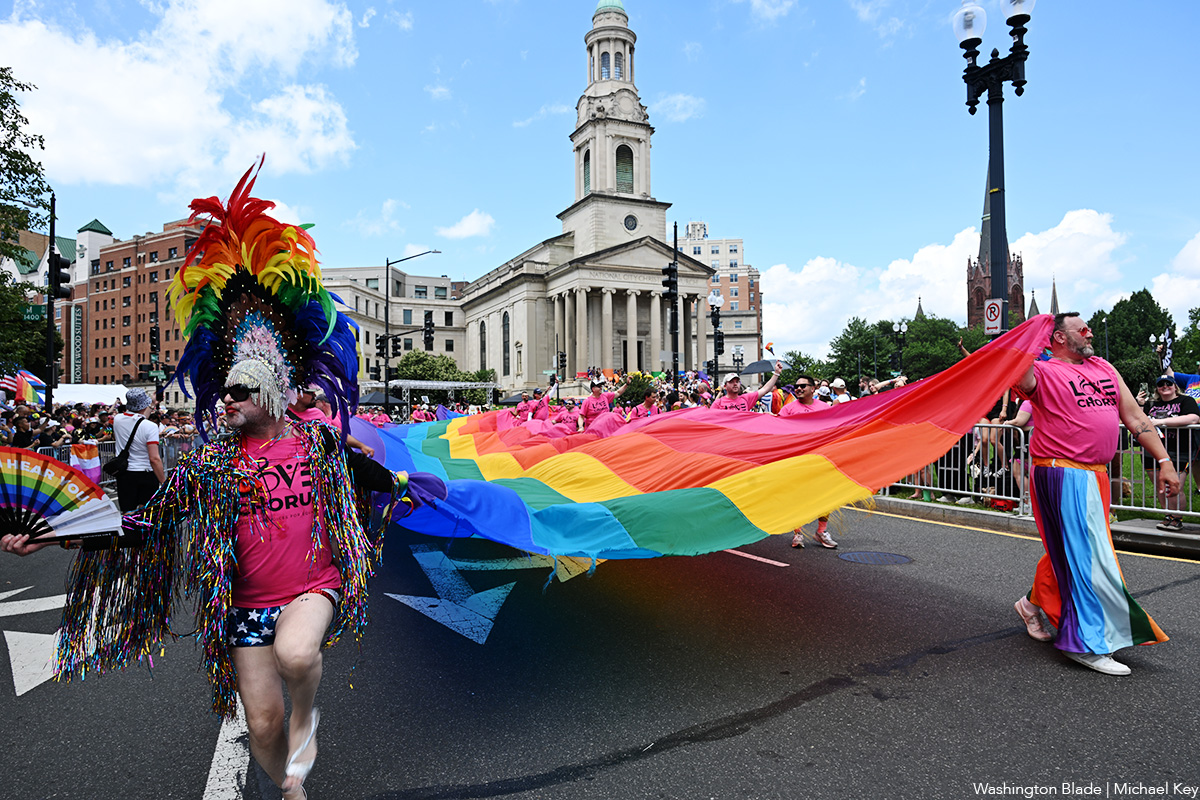
Hundreds of thousands of people are expected to attend Pride events in D.C. this month.
The Capital Pride Alliance is marking its 51st year with a full slate of events, including a parade, festival, concert, parties, and community events across the city. This year’s theme is “EXIST. RESIST. Have the Audacity!”
“Our audacity is our collective strength. Against the forces that try to diminish us, we must remain bold, courageous, visible and heard, in a world that questions our humanity and challenges our rights. Together, let’s have the audacity to live, thrive, be joyful, and proud!” Capital Pride Alliance said in a statement.
Capital Pride’s signature weekend events will center on the June 20 parade and June 21 festival and concert.
The parade and concert will not take place on the second weekend of June, as they have in the past, to avoid conflicts with America’s 250th anniversary celebration.
The parade route is expected to begin at 14th and T Streets, N.W., and end at Pennsylvania Avenue and 9th Street, N.W. Free viewing areas will be available, though reservations are required for seating at designated locations across the route.
Leading up to the parade, a family event will be hosted from 11 a.m. to 3 p.m. at Stead Park in Dupont Circle. Activities will include crafts, glitter tattoos, hair tinsel, photo ops, and an inflatable obstacle course. The event is free, but a prior reservation is required.
Crack of Noon Parade Brunch, a 21+ event featuring an all-you-can-eat buffet, will also take place earlier on June 20 at the Viceroy Washington at 1430 Rhode Island Ave., N.W.
The 17th Street Block Party, presented by Absolut, will also take place from noon to 10 p.m. on 17th Street in Dupont Circle. It will feature local food, an adult beverage garden, and other events.
On June 21, the Capital Pride Festival will run from noon to 10 p.m. on Pennsylvania Avenue The festival includes the Capital Pride Concert at Capitol Stage. The lineup of artists for the festival concert includes Maren Morris, queer rapper Leikeli47, Lisa Lisa, “Heated Rivalry” DJ Harrison, Tracy Young, and Myki Meeks.
“In a moment when LGBTQ+ people are being challenged across the country, the Capital Pride Concert is a space where our community is fully seen and heard,” said Capital Pride Alliance President Ryan Bos in a news release regarding the concert lineup.
Tickets to the concert are free, with exclusive pit and VIP experiences available for purchase.
The night will end with a “Capitol” Sunset Dance Party from 8-10 p.m., directly following the concert. It is available to all ages.
Other stages for concerts include the Monument and Dupont Dance Stage, with the artist lineup yet to be announced.
Three main parties will be available leading up to and during the parade: Riot!: The Official Pride Opening Party on June 19, featuring Bob the Drag Queen with a DJ set and headliner Myki Meeks. ELIX-Her on June 20 is a women-centered event at Decades and is 21+. On the same night, KINETIC: Toyland will feature headliner Alaska, “RuPaul’s Drag Race All Stars 2” winner.
Before the parade and festival weekend, community events, and celebrations will take place throughout the city.
The Washington Blade will host Pride on the Pier on June 13 from 4-9 p.m. at The Wharf. The free event will feature Pride365 Radio, a drag show with Venetian, DJ Chord, and dancing.
Capital Pride will have Night of Expression on June 10 at 7 p.m. at Busboys and Poets (14th and V streets). The event will feature an open mic and other performances.
Capital Pride Honors
Beyond its public celebrations, the Capital Pride Alliance will also recognize community leaders through its annual Capital Pride Honors program. This year’s honorees were selected based on how their work reflected the 2026 theme of Pride.
The winners were awarded at the Audacity Brunch: In Full Fuchsia, which is part of a fundraiser with Pride365, on Sunday.
Honorees included D.C. Del. Eleanor Holmes Norton, who received the Paving the Way Award; D.C. Mayor Muriel Bowser, who received the Key to Capital Pride Award; and the Heroes Award recipients Benjamin Coy, Charity Blackwell, Darryl Hamilton, Thea Kano, Kendall Martinez-Wright, and Lee Levingston Perine.
Dylan Drobish and Tyler Hack received the SaVanna Wanzer Visibility Award, while Patrick Magee and Judy Schloss were honored with the Bill Miles Award for Outstanding Volunteer Service.
Darrell Wood and Tyler Cargill received the Breaking Barriers: Community Impact Award, and Dai Nguyen received the Bernie Delia Award.
Maryland
‘Girlfriends’ wanted for murder in Silver Spring, Md.
Montgomery County police say two charged with killing mother of one of them
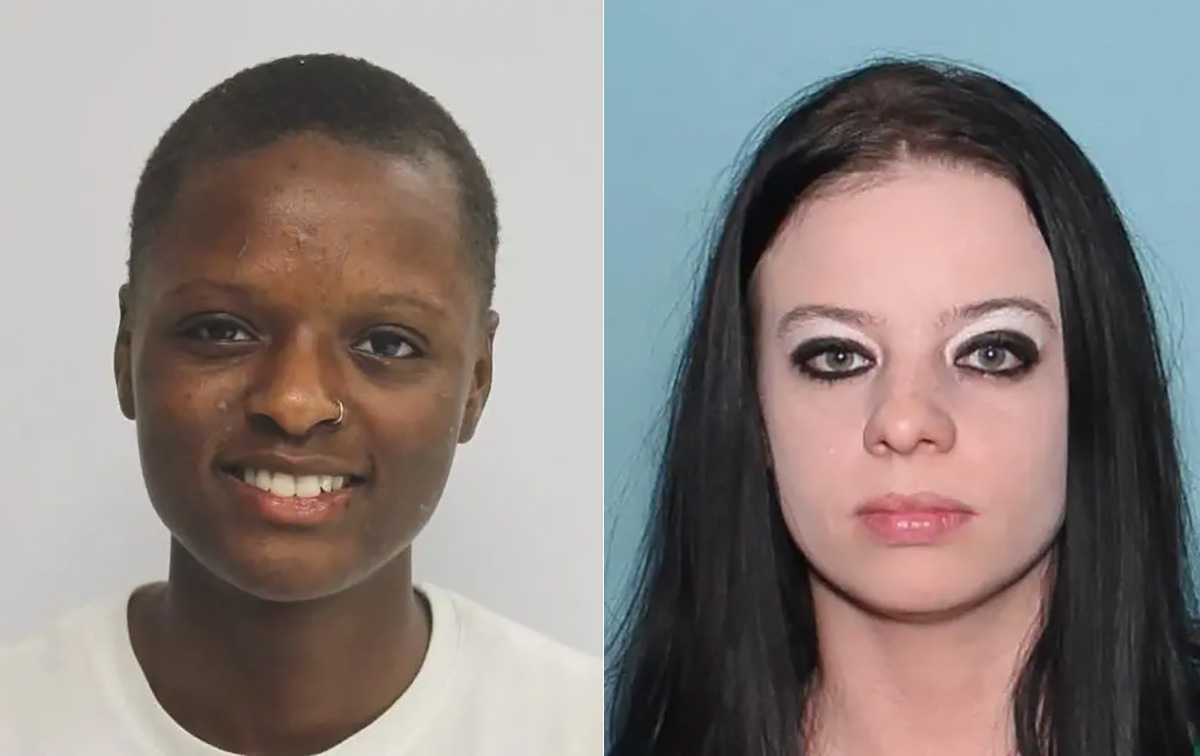
The Montgomery County, Md., Department of Police announced on June 4 that it is seeking the public’s help in locating two women, who they identify as a couple, who are charged with first-degree murder for allegedly killing the mother of one of them.
In a statement police identified the two women as Vanessa Tjongarero-Henderson of Clarksburg, Md., and her girlfriend Samantha Raebel of Phoenix, Ariz. The statement says the two are charged with the murder of Hilde Henderson, 67, the mother of Vanessa.
According to the statement, officers with the department’s 3rd District found Hilde Henderson deceased on Tuesday, May 26, 2026, at her home at the Charter House apartments in the 1300 block of Fenwick Lane in Silver Spring after being called to check on the resident’s welfare.
“Henderson was transported to the Office of the Chief Medical Examiner, where an autopsy was conducted,” the statement says. “The cause of death was ruled a homicide.”
It adds, “Through the course of the investigation, detectives identified Henderson’s daughter, Vanessa Tjongarero-Henderson and Vanessa’s girlfriend, Raeble, as the suspects.” It says detectives obtained an arrest warrant against the two women, charging both with first-degree murder.
“Anyone with information regarding the location of these suspects or this crime is asked to call 911 or to visit the Crime Solvers of Montgomery County, Md. website at crimesolversmcmd.org,” the statement says, or to call the tip line at 1-866-411-8477.
“Tips with information leading to an arrest may be eligible for a reward from $250 up to $10,000,” it says, adding that tips may remain anonymous.
A spokesperson for Montgomery County police didn’t immediately respond to a request from the Washington Blade for information not disclosed in the police statement, including the physical-medical cause of death for Hilde Henderson and whether detectives have determined a motive for the murder.

PHOTOS: Fairfax City Pride

EXCLUSIVE: Pelosi reflects on four decades of LGBTQ advocacy

D.C. prepares to party as Pride celebrations kick off Saturday

David Archuleta, Monroe Alise named D.C. Pride parade marshals