Arts & Entertainment
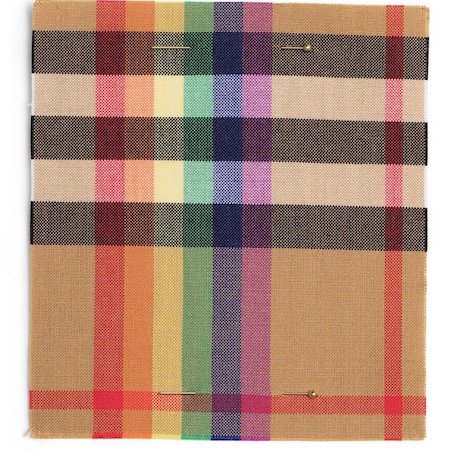
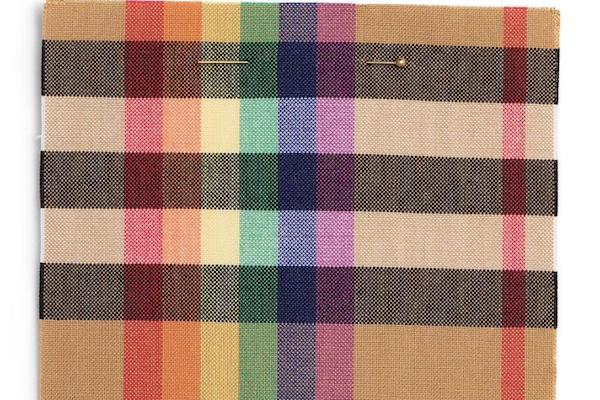
Burberry recreates classic plaid print with rainbow colors for LGBT community
the printed items will be available on Feb. 17
(Photo courtesy of Instagram)
Burberry has recreated its iconic plaid print into rainbow check pieces as part of its fall/winter 2018 collection in support of the LGBT community.
The rainbow check pieces will be displayed in Burberry’s London show on Feb. 17. The items will immediately be available for purchase after the show.
Burberry also announced it will be donating an undisclosed sum to three LGBT charities: the Albert Kennedy Trust, which assists homeless LGBT people in the U.K., the LGBT suicide prevention organization the Trevor Project and the International Lesbian, Gay, Bisexual, Trans and Intersex Association (ILGA), which brings together more than 750 LGBT groups across the globe.
“Today we reveal #TheRainbowCheck and announce that @Burberry is supporting LGBTQ+ charities @AlbertKennedyTr, @ILGAWorld and @TrevorProject. The rainbow, a symbol of inclusiveness and joy, is celebrated throughout the February 2018 collection #BurberryShow #LFW,” Burberry posted on Instagram.
This will be Christopher Bailey’s, who heads the British fashion house, final collection with the brand.
“My final collection here at Burberry is dedicated to — and in support of — some of the best and brightest organizations supporting LGBTQ youth around the world. There has never been a more important time to say that in our diversity lies our strength, and our creativity,” Bailey said in a statement.



Theater
Cedric Neal on his juicy narrator role in ‘Pippin’
A rash of terrific reviews for a part he’s longed to play
‘Pippin’
Through July 26
Signature Theatre
4200 Campbell Ave.
Arlington, Va.
$47-$153
Sigtheatre.org
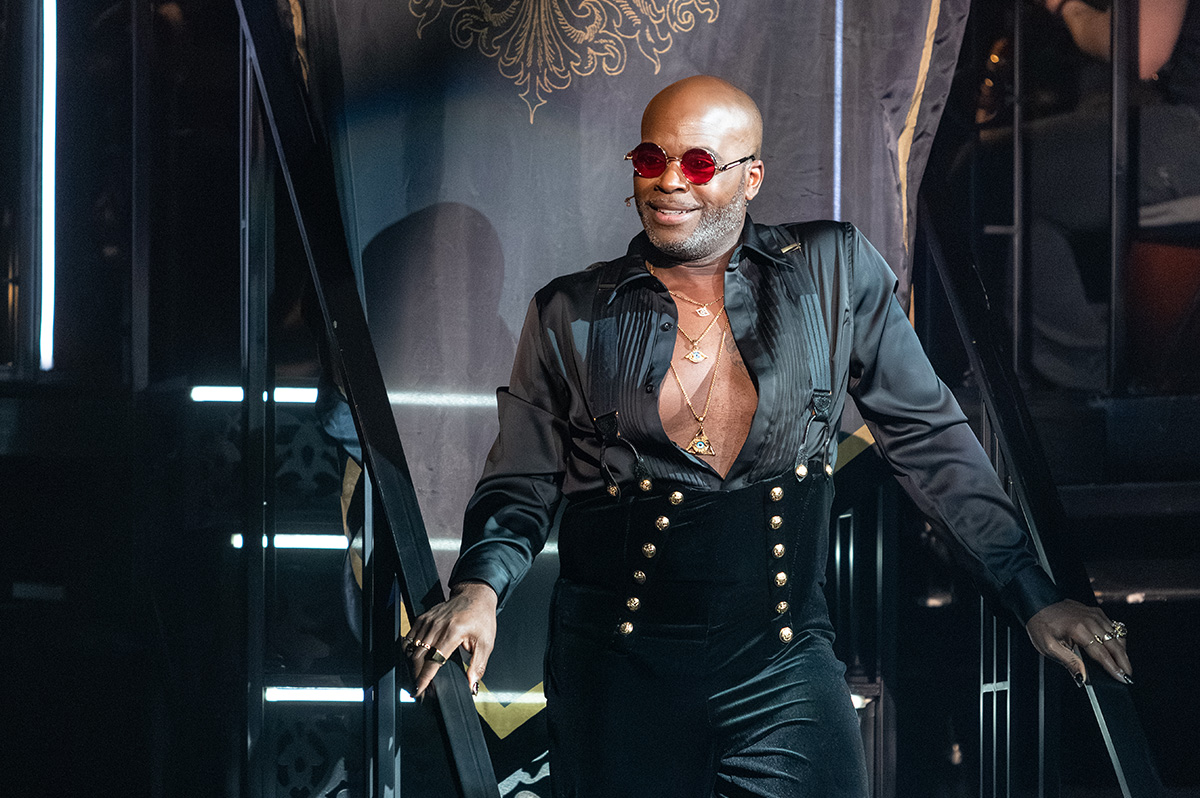
As Leading Player in Signature Theatre’s revival of “Pippin,” Cedric Neal portrays the manipulative narrator who guides the title character, a young medieval prince, on a quest for meaning. Neal is also receiving a rash of terrific reviews for a part he’s longed to play for some time.
Recently, after the first “Pippin” preview performance, Neal shared his thoughts. “Last night was exciting, mystic and exotic. It was magical. Words are overused, but it was all those things.”
With a powerful, rich tenor voice, Neal is best known as a charismatic West End and Broadway star (“Back to the Future,” “Hadestown,” “Guys & Dolls”) as well as for his memorable semifinalist win on the “The Voice UK” in 2019.
And now Stephen Shwartz’s “Pippin” marks Neal’s second show at Signature Theatre, a place he dearly loves. His first was as Jimmy Early in “Dreamgirls” in 2012, a raucous role that won him a Helen Hayes Award. During that production, Neal forged deep friendships with actor Nova Y. Payton and director Matthew Gardiner. What’s more, while rehearsing the show, he met his husband.
“He likes to say we met on Match.com but I remember it differently,” says Neal. “It was something called Adam4Adam. It might have been a hookup, but instead we met for coffee in Shirlington Village where we talked and talked for hours. Two years later we married.”
BLADE: Your triumphant return to town sounds pretty great.
NEAL: I’m having the time of my life. Takes me a half hour to come down after the show ends. It’s explosive.
BLADE: Is Leading Player a part you’ve wanted to do?
NEAL: Very much, and just this way. Rather than leaning on its circus troupe aspect, our director Matthew [Gardiner] explores the darkness of the story and the risk of falling prey to cultish ideology.
BLADE: Just how nefarious is Leading Player?
NEAL: I’m not judging my character. I believe at some point that Leading Player has good intentions. Somewhere along the line, ego becomes involved. The promise becomes warped.
BLADE: When doing “Pippin,” is it possible to separate the iconic Bob Fosse choreography and Ben Vereens’s sexy portrayal of Leading Player from the original production?
NEAL: Not entirely, but in our production Matthew [Gardiner] and Rachel Leigh Dolan have meticulously honored the choreography and storytelling of Fosse’s work without it being a carbon copy. I think it’s amazing.
BLADE: Was your participation in the “The Voice UK” a strategic career move?
NEAL: It was. At the time, I had just gotten a BIG NO on a West End show where the casting director told me the part should have been mine but using a then-unknown American would have created an uproar.
Then when “Voice UK” scouted me, my agent said this would be the perfect opportunity to boost my profile. Ultimately, I was given a global scale opportunity to go onstage and sing as Cedric.
BLADE: Your thrilling, original rendition of Stevie Wonder’s “Higher Ground” made the audience and judges like Jennifer Holliday and Sir Tom Jones just go crazy (in a good way). In musical theater, do you make beloved, well-known songs like “Join Us” and “Glory” in “Pippin,” your own in that same way?
NEAL: I couldn’t always, but I can now. When I talk to younger performers, I tell them about the song in “Gypsy” where the experienced strippers talk about getting a gimmick if you want to be a star.
I come from a gospel, R&B, and serious classical background and have always retained my gospel, soulful flair on things. When I entered the world of musical theater, I’d put my twist on a song and the musical director would ask that I tone it down.
Ten years into my career, I became known for putting my flair on musicals, and that became my gimmick. To “Cedricfy” a song is a legitimate term in musical theater. And you’ll see me bring that to “Pippin.”
BLADE: Reading about you, it seems you’ve made bold choices and surround yourself with supportive friends and family, blood and chosen.
NEAL: Yes, and it’s not an accident. I come from a bloodline of revolutionaries and pioneers whose shoulders I stand on. My ancestors are all fighters and refuse to let their fight be in vain. Also, I will always step up to the plate and represent all the marginalized communities that I’m a part of: Black, gay, biracial relationships, liberals.
BLADE: Are you and your husband still living in the windmill?
NEAL: We left the windmill but we’re still in the U.K. Try to imagine our story: A Black boy from the hood in Dallas, Texas, meets a fifth-generation cattle rancher from Alberta, Canada, and they move to the UK, adopt a labradoodle, and live in an actual windmill. Isn’t that the gayest shit you’ve ever heard?
BLADE: It’s like a fairytale.
NEAL: It was. It still is.
Out & About
‘How to Survive a Plague’ screens June 5
Commemorating 45th anniversary of first report of AIDS
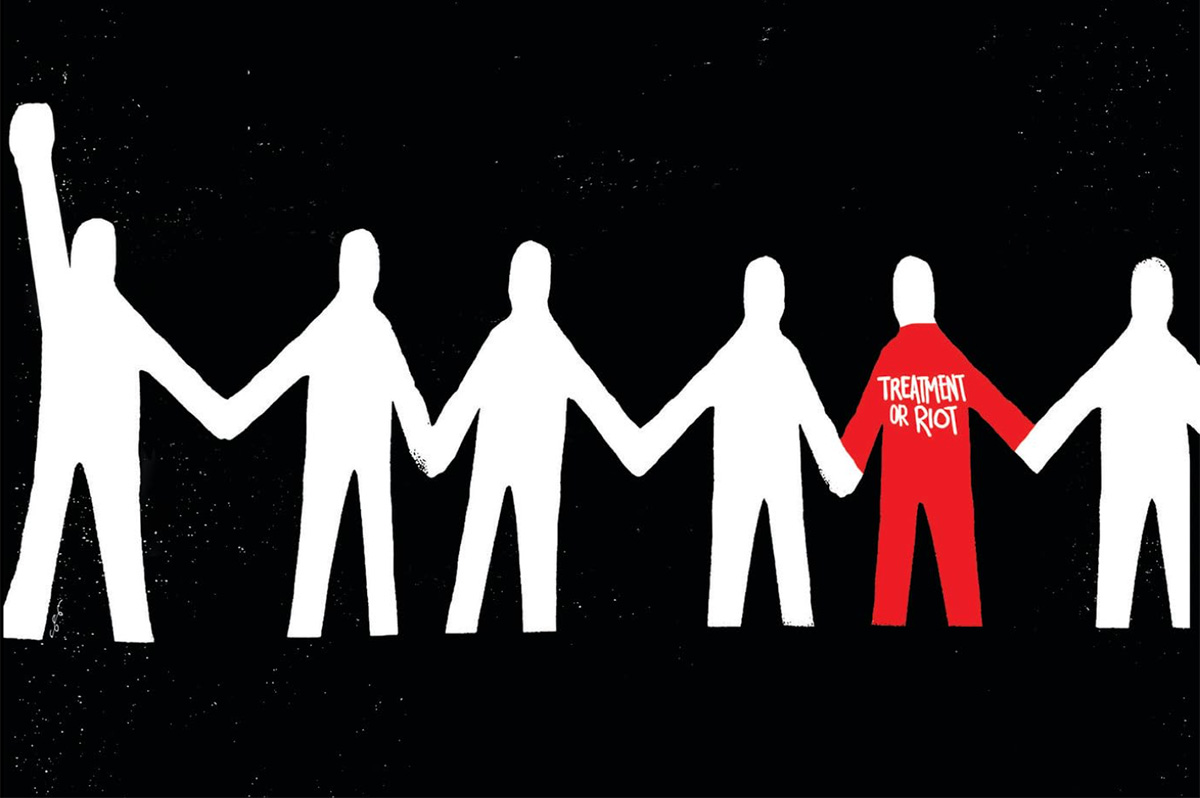
June 5 marks the 45th anniversary of the first report of AIDS. To commemorate the occasion, Whitman-Walker Health is sponsoring a screening of the film “How to Survive a Plague” on June 5 at 5:30 p.m. at GWU Lisner Auditorium (730 21st St., N.W.).
The screening is free and you can register on Eventbrite. Other partners involved in the screening are the Center for Black Equity, Food & Friends, HIPS, and Us Helping Us.
After the film, attendees will head to Dupont Circle for a candlelight vigil at sunset.
The film reflects on lessons from the community-led response to the plague while honoring those lost to HIV and AIDS. It tells the story of activism and innovation about AIDS survival. Culled from a trove of archival footage, the film is epic and intimate, tracking a small group of people, most of them HIV-positive, in their nine-year-long battle to save their own lives, according to a statement from Whitman-Walker.
Celebrity News
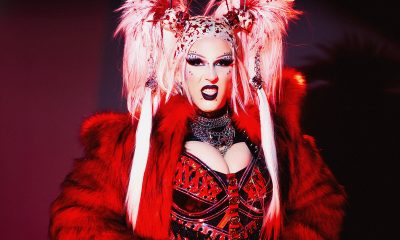
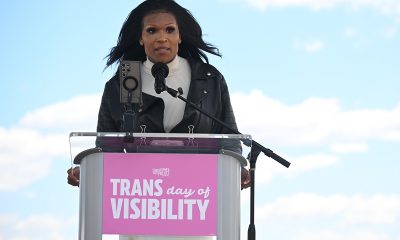
Peppermint made her mark on ‘Drag Race.’ Now, her advocacy is front and center
LGBTQ activist is this year’s NYC Pride grand marshal
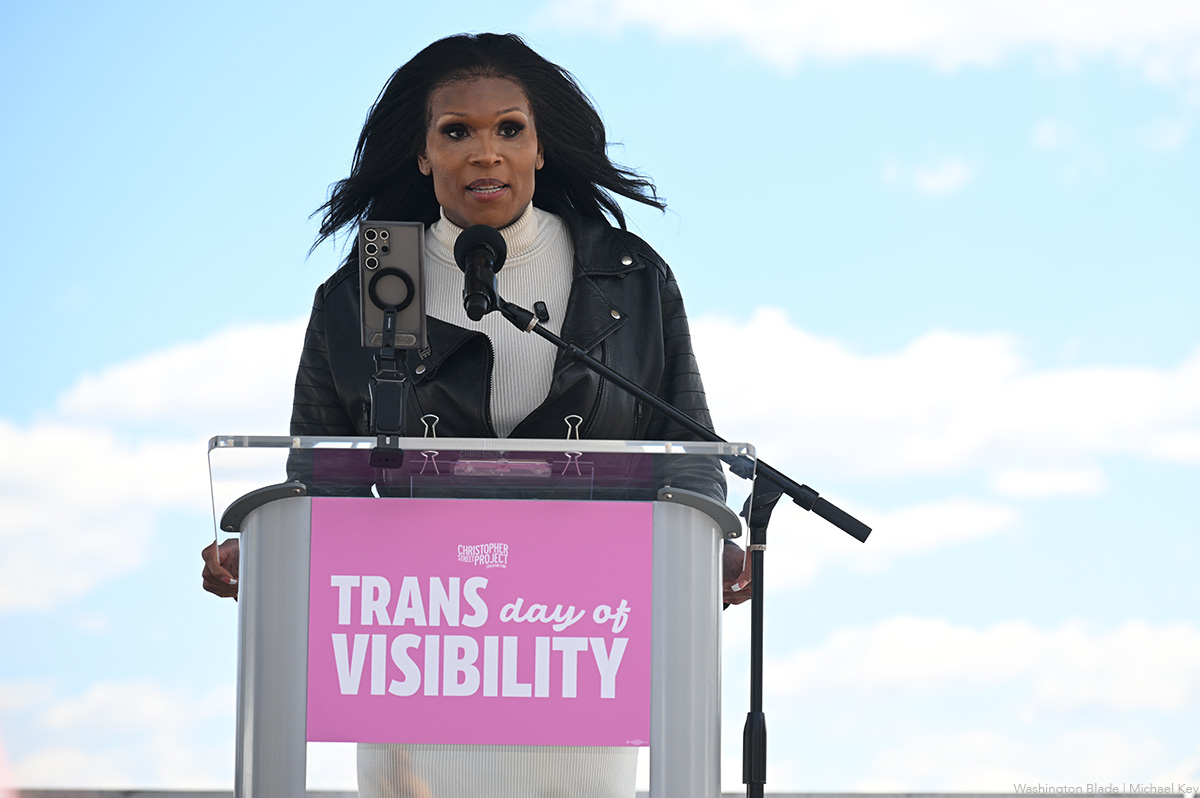
Uncloseted Media originally published this article on May 26.
By SPENCER MACNAUGHTON, BELLA SAYEGH, and LAURY PEYSSONNERIE | You may know Peppermint as a runner-up on season 9 of “RuPaul’s Drag Race.” Or for her stint as the first trans competitor on the runaway hit “The Traitors.” Or for her relentless activism at a time when the Trump administration is waging an unprecedented attack on the LGBTQ community.
Now, Peppermint is getting set to be one of New York City Pride’s official grand marshals. And she’s doing that while upholding the legacy of the trans women of color who were at the Stonewall Uprising in 1969.
In this episode of “UNCLOSETED, with Spencer Macnaughton,” Spencer sits down with Peppermint to hear about what it means to be a Black trans woman at the forefront of the LGBTQ movement during the second Trump administration.
(Uncloseted Media video)
SPENCER MACNAUGHTON: Hi everyone, welcome back to UNCLOSETED with me, Spencer Macnaughton. Today, I have the great pleasure of speaking with Miss Peppermint. She was a runner-up on “RuPaul’s Drag Race,” she was the first trans contestant on the runaway hit, “The Traitors,” and now she is the grand marshal for this year’s New York City Pride. Peppermint, thanks so much for speaking with me and Uncloseted Media today.
PEPPERMINT: Hello, I’m so happy to finally be with you. This is great! Hello, Uncloseted!
SM: Yes, we’ve done many collabs and you’ve definitely amplified our work, and you’re just such a huge advocate in the community so we’re thrilled to connect with you formally in this way. So, you were recently named the grand marshal for New York City Pride. How did that come about and what does that exactly mean? What is your duty if you’re grand marshal?
P: You know, I’m still trying to figure it out, but don’t tell them. Obviously, most parades and marches, and probably all of them traditionally, have a grand marshal who’s somebody that they honor who’s like one of the people at the very front of the parade as it goes through. And so I’ll be joined by some other fabulous grand marshals as well. I’m sharing the spotlight with Dominique Jackson, with Bernie Wagenblast, who New Yorkers will know as one of the voices of the subway system, and also Bowen Yang. And Gays Against Guns was just announced, and I’m so excited to share the spotlight with them.
SM: Yes, and you wrote, or you mentioned in a recent interview that you said, “Being named a grand marshal for New York City Pride is deeply meaningful, not just as an artist, but as a Black trans woman standing in the legacy of those who fought for us to be here.” That’s Marsha P. Johnson, that’s Sylvia Rivera. And through history, those voices, the voices of trans women of color have, for many parts since 1969, been erased from that conversation, right? So how meaningful is that to you as a Black trans woman to be in this space now in 2026, especially given the political climate we’re experiencing?
P: I am continuously dedicated to using whatever platform I have, whether it’s before I was on TV, since I’ve been on TV, still using my platform to advocate for the LGBT community, including, obviously, trans folks. As someone who is trans, it does feel good to know that they are, “they” meaning the New York City Pride, they hold some reverence for the legacy of trans women of color, of trans people in general and their contribution and to the legacy of Pride. The march is a sort of recreation of the very first time that the community marched to commemorate what happened in 1969 at the Stonewall Uprising, where, you know, the police came to raid the bar, Stonewall, the legendary gay bar Stonewall in the Village, and the community fighting back.
But, I think what a lot of people didn’t realize is that, yes, trans people, trans women were there on the forefront, but it wasn’t just an attack on the bar. This was an attack on sex workers, people who were homeless and on the street, many of which were femme presenting people, drag queens, trans women. These were the street kids who were working, who were sometimes cast out of their apartment, or kicked out of their homes from their families, and the only places that they could gather were, besides the bar, were also down at the pier and on the street, wherever, and they were, some of them were engaging in survival sex work. And the police, the NYPD, were attacking, constantly harassing, and throwing in jail, and just like targeting trans sex workers, essentially. These were the people who were, and are often, the most vulnerable when it comes to interactions with the police, and those were the people who said, “We are done, we are tired of it.” That story has been whitewashed over time in many ways. One of the very first movies, one of the mainstream movies about Stonewall that we’ve seen, is a bunch of blonde kids from Iowa as the ones fighting back when we know that it wasn’t. Again, it was the street kids, it was the people who were vulnerable. And so their legacy had been erased. And so while we’re hearing voices like Marsha P. Johnson and Sylvia Rivera being mentioned so much, especially in recent years, is because it hadn’t been included so much in the past. And it had been essentially erased. And It’s been restored, and then since then, this administration has tried to erase trans folks from that legacy, taking down the mention of trans from the official website for the Stonewall National Monument, removing trans women, you know, biology, gender, whatever, all these words from all federal government documents and websites. So, I know that was a long answer, but I think it was important for people to know that that’s why it’s important for me and that’s so important to be included in Pride, because it feels like this year in 2026, the same year that the flag came down and went back up, thank goodness, it feels it’s a good time to remind people that trans folks are a very important part of the community.
SM: A hundred percent. And when I hear you speak all that, you are at the end of the day a very brave person, a very courageous person. You have Trump erasing all references to gender identity from all government documents, taking down the pride flag for what reason? And then his administration unveiled a new counterterrorism strategy that maybe you’ve seen that talks about the biggest concern, which is not at all reflected in the evidence, is left-wing extremists and pro-radical transgender people, whatever that means. I just interviewed two extremism experts for a different episode, who talked about there’s not even one mention of white supremacy, even though all of the evidence points to that being the biggest threat. So I wanna know, you’re an advocate, but you’re also a Black trans woman, triple, quadruple jeopardy as it relates to who this administration’s attacking. How does that make you feel going into this Pride month as grand marshal?
P: It really just kind of solidified what I already knew, the absence of white supremacist groups and organizations, and white supremacy as a notion in terms of being a threat, domestic terrorism threat. It’s like the weakest part of that evidence because the biggest part of it was when they removed the proof that the federal government stated in multiple reports that white supremacy was the largest domestic terrorism threat in the United States since the ‘80s.
SM: And just so the listeners know, the Department of Homeland Security quietly removed that threat from documents so the public would not be privy to it.
P: So the absence is just an echo of that, right? Their action of removing that is what really was like, what? I clutched my pearls. So, this latest sort of act is just sort of confirmation of that, and it is terrifying. I want to leave the country.
SM: You want to leave the country? You do?
P: Yeah, part of me wants — of course. I want to continue to use my platform to advocate for what I feel is right. And part me wants to leave, part of me wants to stay and fight. You know, and I, I think like, what am I, what is this country that I want to fight for? I envision like, am I going to stay and fight and want to risk my life for like a bunch of other people that are just like, “Oh well, that’s what happened to the trans people.” Or are we all going to fight? Like, I can’t just fight by myself. We have to fight for each other. Sometimes when we see not only the government putting out documents, official documents on government letterhead that say, “We’re going to name trans people as terrorists.” But then at the end it’s saying, “We will find you and we will kill you.” That’s the part that’s like, well, do I need to wait for them to kill me?
SM: And just to be clear to the people who haven’t read this document, that is a verbatim quote. They essentially list the terror threats, which include, quote, “pro-transgender radicals,” and then they say, make no mistake, quote, “We will find you and we will kill you.” I mean, that’s insane.
P: That’s in the document.
SM: That’s in the document. You mentioned you can’t do this alone. If people are listening to this and they aren’t trans but are concerned and are seeing the stats, what can they do? What can we do to really be there for our trans siblings?
P: When I say, “I don’t want to do it alone,” it’s not so much, I need you to defend me, which would be nice; it’s more that I need you to defend yourself by defending me, is what I want people to know. Like the cis community, people who are cisgender, people who’re not trans, and also people who are outside of the queer community, need to know that if rights are what we have, if equal rights are what a democracy gives you and what you have, an attack on those and removal of those rights for who someone is, who they love or their political beliefs, then it is an attack on that very democracy and an attack on the people of that democracy and the people who value those rights. And so, going after people for who they are and removing their passports, naming them as terrorists, threatening to kill them, banning them from all types of government buildings and bathrooms and holding a job and da-da-da, and healthcare, all these things. The only way they can do that to me is if they change the rules to make it possible to do. Now we have a government that can remove people from all these things. So now that means all they have to do is include, you know, let’s include Mormons as terrorists. You know what? I mean, it took them how long to put out this document. Vegans, whatever, I don’t know. Like they can target anyone. It sounds absurd and preposterous because it is, but it won’t take long for them to widen that group to who they want to focus on next.
SM: And I know you’ve been outspoken in all different places, including mainstream media. You’ve gone on CNN a few times. I’ve seen you on there. And I worked in mainstream media, “60 Minutes,” the Wall Street Journal. And a big reason I left was because I didn’t feel like the coverage was rigorous enough, was fair enough, was frequent enough. How do you think the mainstream media is doing characterizing the issues plaguing the trans and LGBTQ community right now?
P: What is this question? They get an F, for fuck off. They get a terrible F because —
SM: Tell me why.
P: It’s so wild. Yeah, hello. We know that they’re interested because they talk about it on the daily. Every other day, there is mentions of trans people in some way, shape or form, and queer people in general. And so they’re constantly evoking us, talking about us, blaming us, bringing us up, attaching us, associating us, constantly. It is wild that they have so much to say about us and they don’t want to talk to us in general, the mainstream media. They don’t wanna include us. They don’t wanna hear. And I wonder why that is because with many other situations, they would want to go to, sort of like, the subject and speak with them about what it is, or the people who are involved in the story. You want to get their side of the story, except when it’s a situation like this, when it’s the political scapegoat. When it’s the political scapegoat, it actually is imperative that you don’t hear from them, that you just hear about them, because then you can create who they are for other people to sign off on.
SM: I have a friend, Alaina Kupec, and she’s a trans military veteran and she went on Abby Phillip’s CNN “NewsNight,” the 10 p.m. slot, after Trump passed the trans military ban. She was the only trans person on the panel. Other panelists include Scott Jennings, who is a Trump loyalist who has zero expertise in trans issues, but it created this false equivalency debate between Alaina, who was a military person and is trans, and Scott Jennings, as though both of those opinions should be considered equal from a journalistic perspective. How damaging are those kinds of conversations that are airing on shows like Abby Phillip’s that are, you know, sure we say “Americans don’t talk but they talk here,” but the majority of Americans perceive that as news still.
P: Yeah, it’s not news. It’s obviously just entertainment. And, you know, I really was upset with, I mean, I was really grateful to be on the show and have appeared there with another trans person, particularly, I got a chance to go on there.
SM: On Abby’s show?
P: On Abby’s show, pardon me, yes. But I do think that CNN has always served to launder the reputation, to launder the impact, and soften the perception of the very, very, real impact that sort of centrist politics that CNN holds. It really just exists to protect, sort of like capital and protect big business and sort of corporate, the corporate flow of politics that controls policy. And so I’m not surprised, but I think you’re 100 percent right. There is an epidemic, a habit, a vibe that this country has to just, like, take somebody off the street who has no knowledge about anything at all, other than their own opinion when they hear something, and that opinion when they hear, like, “What do you think of this concept that you’ve never heard of but we’re going to give it you and tell us what you think. And then here’s an expert in that, go!” And suddenly, you know, Scott Jennings gets to have an opinion on what I’m doing with my body or what rights I have and you know that thinks it’s harmful, it’s damaging and harmful.
SM: And I don’t want to single out, you know, Abby’s show too much because this happens on many different shows across network news, but to hosts like Abby or to producers on these shows — and I’ve worked in these newsrooms — who really care and really want to do it right, but might hit blocks. What’s your advice as a trans woman who’s experiencing this? What’s your advice to them? The people who are actually shaping the news packages we’re watching and actually do have some agency in deciding what gets to air.
P: My ask is, bring trans people on, at least to talk about the trans issues that you mentioned every day. But besides that, bring trans people on to talk about what’s going on with Medicare. Bring trans people on to talk about what’s going on with the war. Whatever. Bring trans people on to talk about more because those things impact us as well. The simplest thing is gender-affirming care. Gender-affirming care and issues of gender-affirming care, the government telling people what decisions they can make medically with their own body, ties directly with reproductive justice and access to abortion, and making your own medical decisions for your own body. That’s something that we can all talk about. That is an intersection that you could bring a trans person on to talk about.
So I would ask of those other creators, bring trans people on to talk about everything that you wanna talk about, Honey. We got lots to say, and we can add something to the conversation because we have a very unique perspective.
And then beyond that, my advice to CNN is you would want to follow what the other podcasters will be doing and having them on because you will be sealing your own demise and become a lot less relevant than you already are if you don’t.
SM: The least surprising thing from this interview is that you’re very interesting. I want to stick on media though for a second because right now you must know that the Ellisons, billionaires, own Paramount, right? And they, who are MAGA loyalists and they have really reshaped the narrative at CBS News, bringing in Bari Weiss, who is an opinion columnist, but Paramount also owns MTV, which airs “RuPaul’s Drag Race,” which you were a finalist on. Ru and the show have been a groundbreaking TV series as the most successful Emmy award-winning reality TV series of all time. They have been progressive trailblazers for many different reasons for LGBTQ rights. There’s been no messaging on the fact that Paramount’s owned by the Ellisons. Should there be? Should they stay with Paramount? What are your thoughts on that?
P: It would be wonderful to see anyone on that show speak out against sort of what is happening in our country with regards to the control over politics and policy and the intersection again of money with politics, especially as related to the Ellisons and the purchase of Paramount. We’ll know when the takeover is complete, when RuPaul is like, “I love Larry Ellison,” cause that’s probably happening. They’re gonna get a script. So let’s just wait for them to get a script and start talking about how great President Trump is, whatever, I don’t know. That’s what I envision happening is they will try to either cut “Drag Race” or use it as a tool to parrot what they want to say. I hope that doesn’t happen, but it’s either one or the other. They’re either gonna get rid of the show, but it’s such a ratings juggernaut that I imagine they’ll probably try to reshape “Drag Race” and take out any political messaging.
SM: That’s what I think about though. Ru has so much money, she doesn’t need any more money, right? And the show is such a ratings juggernaut [that] they could go somewhere else. They have enough power from a ratings perspective that they don’t have to be with Paramount. They’re enough of a product there that they could dip out. Do you think they should dip out given the political climate?
P: I don’t know, I guess I have mixed feelings on it. I certainly see a world where Paramount, CNN, anything under this new umbrella is going to have to follow what their owner and boss wants. Every show, every network that’s been sort of sucked into the umbrella is gonna have to fall in line. That’s what fascism is about. You follow directions. And so I think that’s in the future for the show if they don’t leave. If they don’t leave, then it’s probably going to, just they’ll either be disbanded or we’ll wake up one day and there’s gonna be this weird messaging coming out of drag or something like, where’s the lip sync? Suddenly they’re like forcing us to say the Pledge of Allegiance, but with Donald Trump’s name in it. Like that’s what’s gonna happen. That’s what happens in fascism. Do I think they should? I don’t wanna see a “RuPaul’s Drag Race” that’s teaching us how to march in a certain way. So I don’t know, because by that point, it won’t even matter. But I think if they could just go online and start doing it on YouTube or whatever, I think they could do that. But I think ultimately no linear, traditional television is safe. They own most of it.
SM: It’s so interesting. You know this from being on camera. I know this from being behind the scenes that there are always little things that the viewer might not realize happen. And I wonder over at Paramount, while they’re putting together “All Stars” or the next season, whatever it is, the little decisions that could be being made in the final script. And I think that there might be a lot of silent things to the next season that we don’t realize have been edited out to appease the big bosses who are MAGA loyalists. And those are just the things we’ll never know.
P: We’ll never know. And I would be so surprised if they, it would be smart of them to just leave Drag Race alone. Drag Race is a wonderful thing because it’s, because it features wonderful drag entertainers. That’s what’s so great about “Drag Race,” in my opinion. But I don’t rely on Drag Race to get my political anything.
SM: I hear you. Fascinating conversation about media, I could talk about it forever, but we’re going into Pride 2026, right? And we are now six years after the explosion of the Black Lives Matter movement after George Floyd’s murder that spawned into a submovement, the Black Trans Lives Matter Movement. And I’m curious, a lot of that has faded, at least from national international conversations, right? Where do you think we are now in 2026?
P: I think we are in a state of emergency, for sure. I think this administration has been successful. That’s where I think we are. It’s like a wild sort of, a wild, wild west. Do I think we need another moment? I mean, hopefully not, considering that what galvanized people was the death of an unarmed Black man. No, I don’t want that to happen, but it continues to happen on the daily and that we’re not marching in the street about it means that the sort of news cycle focus isn’t on it. And I’m grateful to see that people were able to become temporarily activated. And so I think we benefited from that, but I do think that it allowed people to sort of revert or to sort of jump to this automatic sort of social media style performative advocacy or reaction, which I think is a natural human response maybe in this situation. So by that matter, people posting a black square and thinking that they’ve done their part, fine, obviously it wasn’t enough. What I would like to see is instead of another sort of mainstream BLM moment is an awareness that yes, racism exists. Yes, transphobia exists. Yes, we have to fight those things, but also organizing and at the community level, connecting in sort of a mutual aid way so that we can’t say, “Oh my god girl, I can’t go out and protest because I’ll lose my job and I won’t be able to pay my rent.” Well, if we can make a way for your rent to be paid, you can go out in protest whether you lose your job or not, and then you don’t care and you’re more likely to challenge the system. And so that is where I want people’s minds to go because it’s gonna be necessary to withstand whatever’s coming.
SM: I want to be respectful of your time. That was great, that was an important answer so thank you.
I think out of all the people we collaborate with, there’s a lot of people who want to amplify our work, but you really are at the top of the list for people who are like I don’t care if this post hasn’t popped or isn’t going to get me more followers or I just want to do this and I can tell your advocacy is absolutely authentic and selfless. How did you get here?
P: That’s a good question. I wonder, I sit around asking myself, why am I doing this, like what in the world, but I’m just like driven to it, you know? And it’s something that I would be doing whether I’m alone, whether I am with people, whether there’s a benefit of it or not, it’s not something that I’ve seen that people can do to make money or things like that, most of what I do now is advocacy and all of it is unpaid. And I do it because I care about it and I will continue to do it. But it also means that I’m extremely vulnerable to not being able to survive because I’m not spending my time doing the things that it’s necessary to do to survive. I just want to make sure that we’re able to live and have basic rights, which means, you know, advocacy. And I think it started along, I mean, it definitely started a long time ago and it evolves over time. You know, I think I got it from my grandmother. She was heavily involved in civil rights and so that’s probably where it came from. I don’t know if it’s genetic or if it was just instilled as I was watching, but it’s here now.
SM: And when you got celebrity from “RuPaul’s Drag Race” and other things like that, how did that affect it? Because the celebrity status would have made you in a whole different ballgame with it, I would imagine.
P: Yeah, I remember thinking when I got on “RuPaul’s Drag Race,” I was basically, yes, my platform sort of multiplied and sort of exploded tenfold, which I’m grateful for. And I remember thinking, well, I’m basically doing exactly what I’ve always been doing the entire time, just on a larger scale. I believe I’m quite the family-friendly entertainer and personality. But I’m sure that there’s people that have been like, “Let’s not hire her because she might say the wrong thing.” I’m sure that I’ve suffered that, but it doesn’t change that if I lose every follower I have, I’m still gonna be doing the same thing. I’ll just be back to where I was before I started this stuff. And so, you know, that’s kind of my thought on it.
SM: I love it, and I feel like that is a beautiful place to stop. I could talk to you for a long time, but Peppermint, so grateful that you’ve given us your time. Thank you so much for speaking with me and Uncloseted Media today. This has been a really rich conversation.
P: Absolutely. I do want to remind people to tune in to the last job I held, which was “Survival of the Thickest” on July 2, right after New York City Pride.
SM: Absolutely, we can plug that also in the show notes. So yes, thank you again, Peppermint. This was fantastic.
P: Awesome, thank you.
Season 3 of “Survival of the Thickest” featuring Peppermint launches July 2 on Netflix.

D.C. Pride flag raising ceremony set for June 1

Still marching: Rev. Troy Perry and the ongoing fight for liberation

Introducing Next-Generation Assisted Living & Memory Support.

Cedric Neal on his juicy narrator role in ‘Pippin’

Dual endorsement for Independent Council-at-large: Patterson or Crawford

PHOTOS: Black Pride Pageant and Unity Ball

PHOTOS: Black Pride Opening Reception

From Media Matters to massive queer ragers: the rise of Tara Dikhof

Peppermint made her mark on ‘Drag Race.’ Now, her advocacy is front and center

Bree Fram’s congressional campaign ends but her fight continues
-

 Photos5 days ago
PHOTOS: Black Pride Pageant and Unity Ball
-
Photos4 days ago
PHOTOS: Black Pride Opening Reception
-
a&e features2 days ago
From Media Matters to massive queer ragers: the rise of Tara Dikhof
-
Celebrity News2 days ago
Peppermint made her mark on ‘Drag Race.’ Now, her advocacy is front and center