Arts & Entertainment
‘Queer Eye’ star Bobby Berk feuds with Meghan McCain over Green New Deal
The interior designer called out ‘The View’ panelist for ‘spreading lies’
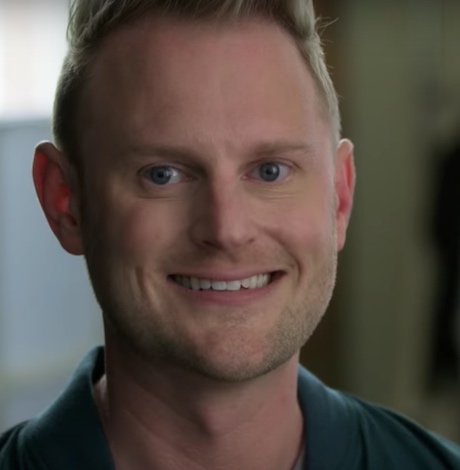
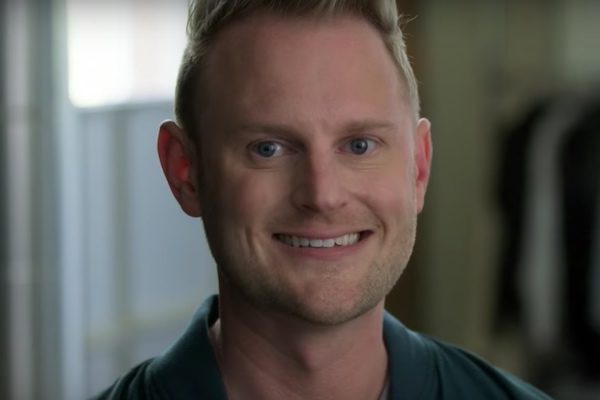
“Queer Eye” star Bobby Berk went head to head with “The View” panelist Meghan McCain on Twitter over the Green New Deal, the progressive proposed legislation from Sen. Ed Markey (D-Mass.) and Rep. Alexandria Ocasio-Cortez (D-N.Y.) which aims to tackle climate change and economic inequality.
On a recent episode of “The View,” McCain brought up Republican concerns with the Green New Deal to guest Washington governor and 2020 presidential candidate Jay Inslee (D).
McCain claimed that the Green New Deal
“We’re talking about $51 trillion, the elimination of planes, the elimination of cows, a railway, no planes. I guess nobody can go to Hawaii anymore,” she added.
Inslee responded that McCain’s information is incorrect and cited President Donald Trump as the source for the incorrect information.
“Let’s get this straight: That is not what’s proposed in the Green New Deal,” Inslee told McCain.
Berk noticed the exchange and called out McCain for being “everything wrong with journalism.”
Here is the clip. Thanks for setting her straight @JayInslee. Hopefully she’ll think before spreading more @realDonaldTrump lieshttps://t.co/GItRbvz0JN
— Bobby Berk (@bobbyberk) March 4, 2019
McCain responded: “I am NOT a journalist, it makes me sad and scared so many people confuse this. I am a conservative political commentator – I represent the most conservative point of view in the country, which is my job every day on The View.”
Hey Bobby –
— Meghan McCain (@MeghanMcCain) March 6, 2019
1. I am NOT a journalist, it makes me sad and scared so many people confuse this. I am a conservative political commentator – I represent the most conservative point of view in the country, which is my job every day on The View…. https://t.co/2q1SKK9qO1
“Blatant lies are not a point of view honey! There
Blatant lies are not a point of view honey! There are just a way to rile the base just like Trump does. I used to have a lot of respect for you and not lump you on with the likes of him, but you were literally repeating his lies and are becoming no better
— Bobby Berk (@bobbyberk) March 6, 2019
McCain replied that she was “pointing out the financial implications” of the deal. She signed off by saying she won’t be watching “Queer Eye” anymore.
That is not what I was doing, I was pointing out the financial implications an average American would feel if the green new deal were enacted – but clearly I won't be changing your mind. I also guess I won't be watching queer eye anymore. :( Have a nice day. https://t.co/VYXNmguMQu
— Meghan McCain (@MeghanMcCain) March 6, 2019




The 2026 World Pride March was held on Saturday, Aug. 8 in Amsterdam. Tens of thousands of participants marched from Martin Luther Kingpark to the grounds of the Pride Village at Museumplein.
(Washington Blade photos by Michael Key)


View on Threads


View on Threads


View on Threads



The weekly drag show “Daddy Issues” was held at Kiki on Wednesday, Aug. 5. Performers included Evry Pleasure, Indiana Bones and Tiara Missou-Sidora.
(Washington Blade photos by Landon Shackelford)


Books
Something’s off about Dad. When is it time to step in?
‘When Memory Fades’ can help when families face dementia

‘When Memory Fades’
By Nathaniel Chin, MD
c.2026, St. Martin’s Essentials
$30/422 pages
Mom called you in a panic the other day.
She’d lost her keys and by the time you arrived to help, she’d found them. In the refrigerator.
These kinds of things keep happening, not often but often enough, and you don’t know quite what to worry about. But in the new book “When Memory Fades” by Nathaniel Chin, MD, you’ll learn about the journey ahead, for both of you.
You can’t remember why you walked into a room. You got lost last week, going to the bank. Popular wisdom says that things like that are normal as we age, but Chin says that’s not true – although the answer may not be a worst-case scenario, either. Yes, memory problems could just be signs of stress, dehydration, or lack of sleep – or is it time to see a doctor?
Chin says maybe, yes.
He was working his way through medical residency when his father, a geriatrician in Madison, Wisc., was diagnosed with Alzheimer’s. Chin, now a geriatrician, was blindsided, but that diagnosis also changed his life.
Here, he writes about the brain, and how Alzheimer’s and dementia are diagnosed, explaining that dementia has many faces and, depending on a doctor’s evaluation, memory problems might be slowed or improved. He shares his father’s illness with readers, but he also writes about his mother, a steadfast, steady caretaker.
Her story reminds reader-guardians to care for themselves, too.
Know how to talk the talk, so that you can have “a more productive” conversation with your doctor. Understand that there’s nothing “normal” about dementia or Alzheimer’s. Know the statistics – African Americans are affected with dementia twice as much as whites – and know how to lower your risks. Learn here what questions to ask, how to break the news to everyone, and any legal matters that will be important soon. And know how to tend to you.
Says Chin, “The best action you can take is to educate yourself… The more you understand, the better equipped you are to make sound judgments.”
Something’s off about Dad, just a lot of little things that don’t add up. When is it time to step in? “When Memory Fades” can help you decide.
Wise, wide-spread, comprehensive, and compassionately helpful, this is a book you can read and then take it to the doctor with your loved one. It’s a book that makes sense when nothing else does, and its biggest feature is that it smoothly transitions from easy-to-grasp science and charts, to gentle coaching for caregivers. Author Nathaniel Chin, MD writes with storytelling, humility, grace, and experience from both sides of the Alzheimer’s/dementia issue, and his words are reassuring but also urgent. Learn, but don’t wait, he says. Know how to safeguard yourself. See your doctor, and don’t fear testing. Watch for signs of depression. And never, ever stop asking for help.
Read those last seven words, and find “When Memory Fades” now. It’s a book to have on your shelf, whether you’re 45 or 95 because, as you’ll see, dementia happens and knowledge is key.

PHOTOS: World Pride March

Tens of thousands take part in World Pride March

PHOTOS: Daddy Issues at Kiki

Something’s off about Dad. When is it time to step in?

New book chronicles gay man’s life in hippie commune

Continue to engage in community after Pride month

D.C.’s Mary’s House For Older Adults names new executive director

Suzanne Goode is not good for Rehoboth Beach

Calendar: August 7-13