Theater
Sharing poignant memories in ‘A Boy and His Soul’
Round House’s one-man play features sweet coming out story
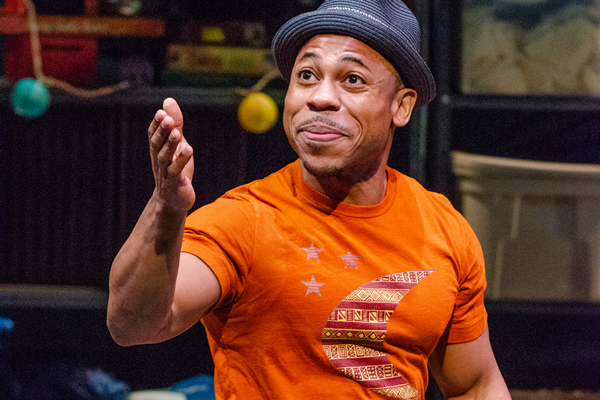
‘A Boy and His Soul’
Round House Theatre
Streaming through April 18
Digital access is $32.50
Roundhousetheatre.org
In Colman Domingo’s autobiographical one-man play “A Boy and His Soul,” JJ’s mother Edie urges her young son to go far away from the neighborhood but never forget where he comes from. It’s a message the gay playwright has taken to heart.
Ably directed by Craig Wallace (best known as an accomplished, busy local actor), the Round House Theatre production is streaming through April 18 as part of the company’s virtual spring season.
We meet JJ (Ro Boddie) as he returns to clear out the rowhouse where he grew up in West Philadelphia. His parents have moved south to Virginia, leaving behind the mostly Black once safe working-class neighborhood for a quieter life in retirement. For JJ, a young and struggling artist living in New York, the prospect of forever losing the family home, isn’t easy.
In the house’s unfinished basement, he looks over the remnants from decades of family life – an old gold easy chair; a tired white artificial Christmas tree; the huge console stereo with both turntable and eight-track player; and most importantly, crates of albums, the disco, R&B, and classic soul music that served as the soundtrack of his youth.
He explains how the tunes instantly take him back to cookouts, family reunions, corn rows and penny candy. All the things he associates with coming-of-age in the late 70s and early ‘80s in Philly. His was a house filled with music. It set the tone for his genteel mother and gruff stepfather’s fortitude and long-lasting love affair, and his relationships with his two older siblings. Their house was immersed in music.
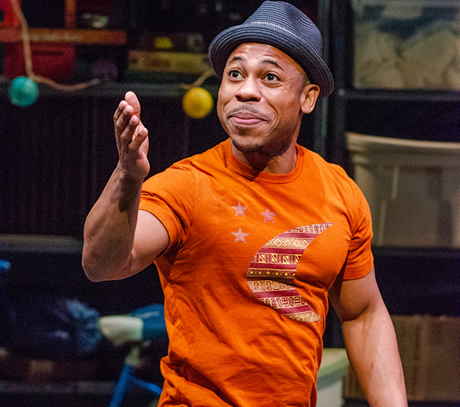
D.C.-based Boddie, a compact muscular actor with a sonorous voice, nimbly plays six roles – JJ and his family members including an enormous jovial aunt.
Clearly, young JJ is a little out of place in his house and hood. As a kid he plays classical violin, dabbles in ballet, and listens to the Carpenters. Like his TV role models — “Dynasty’s” Crystal and Blake Carrington — he can’t fathom doing the tootsie roll to a Millie Jackson record. But when his older sister Avery takes him to an Earth, Wind & Fire concert everything changes – the iconic group’s showmanship and sound win him over.
His coming out story is short and rather sweet. After an unsuccessful lap dance at a seedy straight strip club, JJ blurts out to his bother Rick that he’s gay. The news quickly makes it around the immediate family. His parents are mainly concerned that JJ might wear flamboyant scarves like his scandalous queer cousin, but otherwise they’re not too bothered. The playwright credits the soothing sounds of soul with giving the family a balm of understanding.
At 80 minutes, it’s a quick-paced, one-man show. And Boddie’s morphing into various characters keeps things lively and far from mind-numbing. Skillfully filmed over two days at Round House in early March. The only audience present was the crew (due to COVID-19 regulations). It’s the first of Round House’s three one-person performances this spring: other upcoming productions include Lucy Alibar’s “Throw Me on the Burnpile and Light Me Up,” and Young Jean Lee’s “We’re Gonna Die.”
In addition to penning plays, Domingo is an actor and producer. While his writing credits include the Tony Award-nominated Broadway musical “Summer: The Donna Summer Musical,” he’s acted in Barry Jenkins’ “If Beale Street Could Talk,” Steven Spielberg’s “Lincoln,” and Lee Daniels’ “The Butler.”
In “A Boy and His Soul,” Domingo shares funny and poignant memories, vividly transporting his audience to nightclubs, Amtrak trains, and a crowded family house filled with loud music. His characters are rich and dimensional. For instance, JJ’s stepfather reveals an understanding and poetic spirit beneath a rough exterior. It’s a heartwarming piece, lovingly played by Boddie.
And while a familiarity with the memory-stirring sampled music enhances the experience, it’s not mandatory to enjoy the show.



Theater
‘My Favorite Sociopath’ debuts at Shepherdstown’s CATF
Gay playwright Aurin Squire’s take on D.C. journalism in the ‘90s
‘My Favorite Sociopath’
Contemporary American Theater Festival
July 10-Aug. 2
Shepherdstown, W.Va.
Catf.org
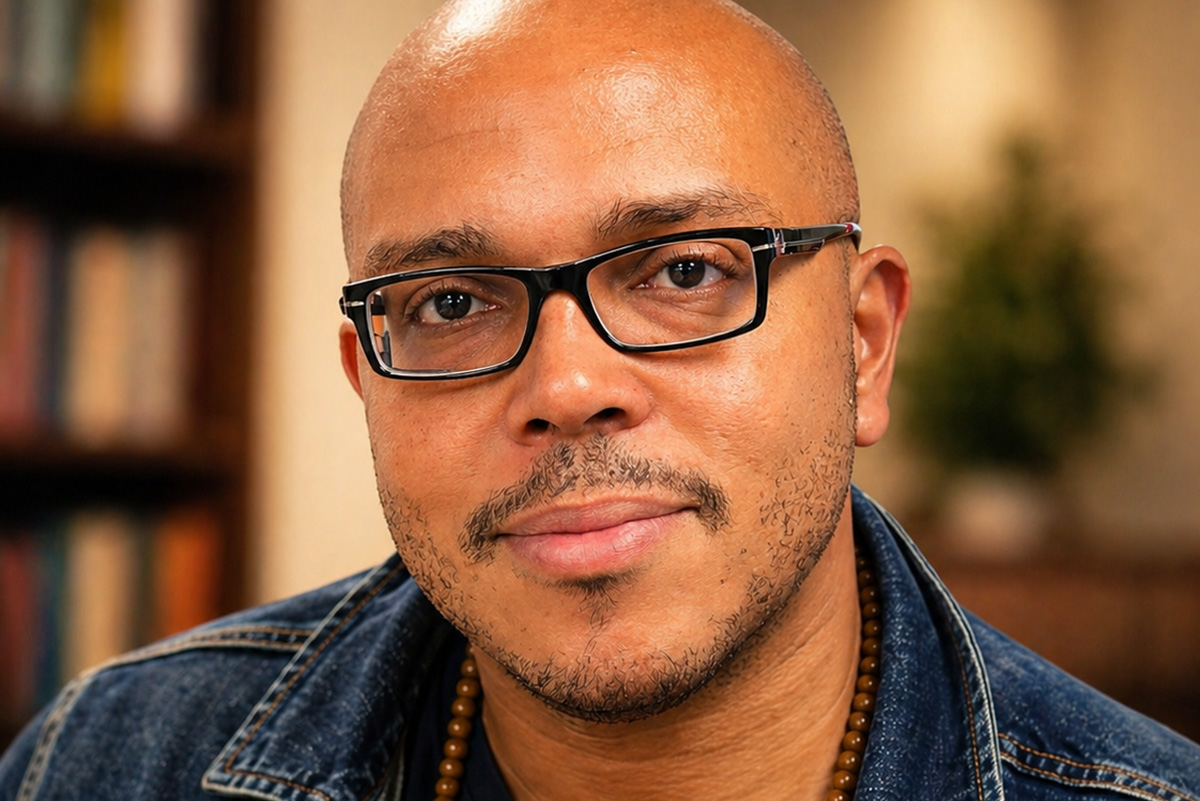
Discernment. It’s a thing some people have, explains playwright Aurin Squire, especially when you’re gay or Black in America (Squire is both).
“You instinctively know when the mob is teaming up for the best interests of the powers that be. You can feel it in the air.”
In his sharp new satire “My Favorite Sociopath,” Squire writes about life experiences but set in a different time and place: It’s the 1990s, early days of the 24-hour news cycle, and three ambitious journalism students are pursuing success in D.C.
And now, Squire’s play, along with other new works, are making their world premieres at the annual Contemporary American Theater Festival (CATF) at Shepherd University in historic, queer-friendly Shepherdstown, W.Va. (just a 90-minute drive from D.C.).
“All of my plays are queer in some way,” says Squire, 46. “This one touches on harmless and dangerous lies. The characters are on the spectrum sexually, and it’s interesting how all that falls out.”
And he’s given it a lot of thought.
“Already as a kid, it seemed to me that the rage against rap music and sex was coming from closeted people resisting their own urges and temptations. For me, it was interesting to see a witch hunt led by witches. Queer people can always call out a lie.”
Since September, Squire has also been working with a TV show about the tech industry set in Silicon Valley. He says, “It seems the general flow of the tech industry is that humanity and civilization is finished and it’s just about accumulating as many goods as possible before everything collapses. In fact, those who are profiting actually agree. But for those who disagree, they believe the solution is to build bigger gates, but activists believe we can stop this”
Yet, he’s learned from folks associated with the show. “Many say the quickest way to divorce yourself from any responsibility or regulations — smash and grab. Otherwise, you have to stop and think and regulate your desires for greed and power”
Squire possesses a penchant for pithy titles. He laughs, explaining the first thing he wrote as a student at Juilliard was “Obama-ology,” the comedy with contemporary message. While a lot of people liked the name, it didn’t necessarily vibe with the author. He concedes that he chooses names based on “easy to remember” and titles that won’t be easy to lose as a file.
Another is “Defacing Michael Jackson,” a coming-of-age dramedy set in rural Florida in 1984, specifically Squire’s native town Opa-locka, Miami, a fantastical place famed for its fanciful Moorish revival architecture.
Living in the shadow of exotic structures, he wasn’t particularly fazed. Squire says “It wasn’t until returning to visit after my freshman year at Northwestern University in Chicago that I realized how weird it was: When you grow up in a place, you take surroundings for granted no matter how over the top.”
Now based in New York (where for two happy years, 2017-2019, he shared digs with drag king Murry Hill), Squire returns frequently to Miami to be with family, but this summer has been filled with both work and travel.
Currently, he’s in Shepherdstown with CATF shaping up “My Favorite Sociopath.” Later this summer he will travel to South Africa for research, followed by a silent writing retreat in Santa Fe, N.M.
Much of Squire’s work reflects the Latino, African, Caribbean, African-American, and Jewish cultures he grew up around in South Florida.
When asked if today’s winds of anti-multiculturalism worry him, he replies, “No, because that’s going to pass. Most people don’t like, people are seeing the negative results of it, and the young people coming up despise it. White male gamers were tricked momentarily through the algorithms into voting against their own interests and they’re now seeing how it’s not working out for them.
“Conservatives always try to stop progress and eventually they always lose. It’s just a question of where we’ll be in the middle of the end of civilization before that happens. I’d like to hope we can turn the ship around before then.”
In addition to “My Favorite Sociopath,” CATF summer season features three other world premieres (Lisa D’Amour’s comedy “The Smoker,” “Refugee Rhapsody” by Yussef El Guindi, “Best Line Wins: A Play Inspired by the Improvised Lives of Elaine May & Mike Nichols” by Beth Kander) and “¡VOS!” by Christina Pumariega.
CATF runs from July 10-Aug. 2 in three venues on the Shepherd University campus: Frank Center, Marinoff Theater, and Studio 112.
Theater
Carla Hall goes from ‘Top Chef’ to the stage
Solo show ‘Please Underestimate Me’ premieres at Olney
‘Please Underestimate Me’
Through July 12
Olney Theatre Center
at Mulitz-Gudelsky Theatre Lab
2001 Olney-Sandy Spring Rd.
Olney, Md.
$47-$101
Olneytheatre.org
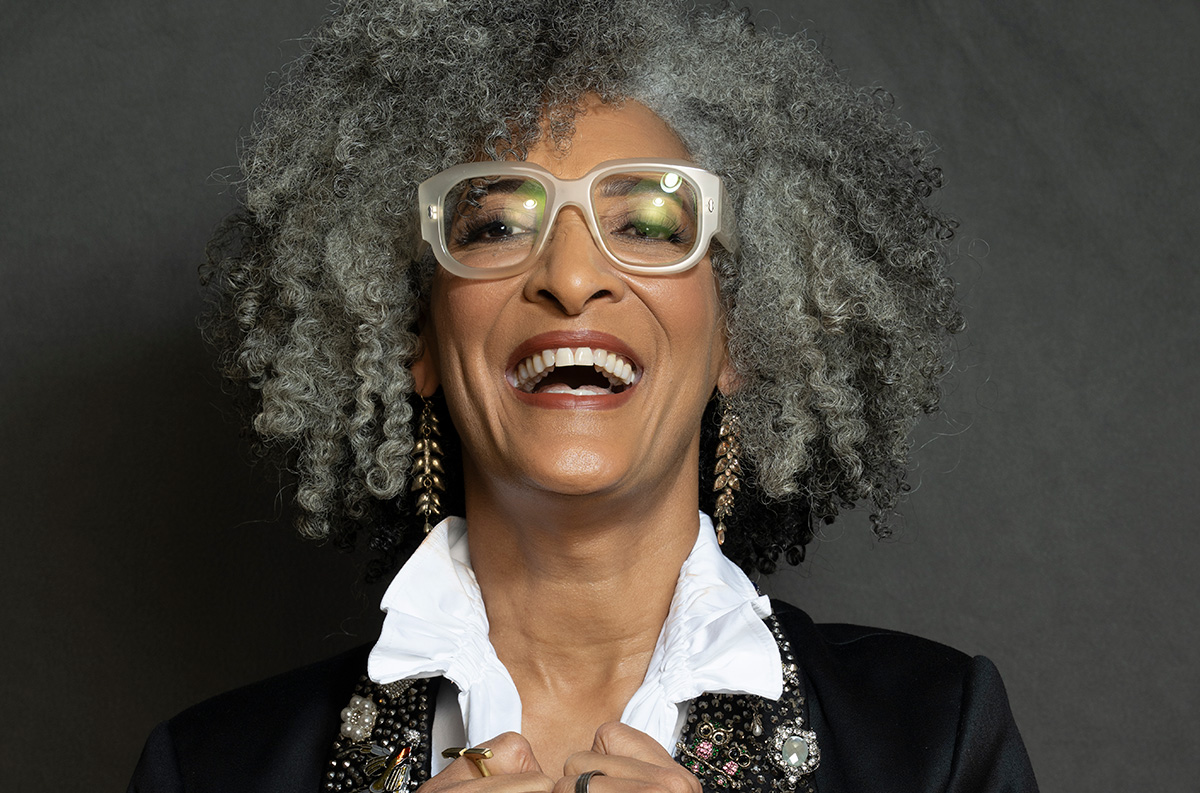
Carla Hall gained celebrity status from Bravo TV’s “Top Chef.” She was funny and fun, and with her kooky signature catch phrase “Hooty hoo” and the southern-inspired recipes she lovingly cooked, Hall stood out in a kitchen crammed with contestants.
Now the D.C.-based Hall is taking revisiting her earliest love with the world premiere of her solo show “Please Underestimate Me,” currently running at Olney Theatre Center’s intimate and revamped Mulitz-Gudelsky Theatre Lab.
In the 90-minute piece (written by Hall, Lori Kaye, and Kaye’s partner Leslie Thomas; and directed by Lili-Anne Brown), Hall leads with food but quickly swerves into her personal and other aspects of her professional life. Built around an immersive fictional TV cooking show, her new play draws on experiences from her seven seasons (2011-2019) co-hosting cooking/chat show “The Chew”an ABC daytime proving ground, and her heady years on “Top Chef.” (2008, 2010).
Born and raised in Nashville, Hall wanted to attend Boston University to major in theater, but was rejected. Instead, she went to Howard University at her mother’s urging, where she ultimately majored in accounting. After graduating in 1986, she donned a bespoke business suit and briefly worked as a CPA for Price Waterhouse.
Business wasn’t for Hall. Tall and slender, she walked the runways in Paris for a while before ultimately finding her niche as a chef. Cooking seemed to come from her heart, something she learned from her grandmother who not incidentally bankrolled Hall’s way through culinary school.
Now she’s bringing the vibrancy and good humor that made her a “Top Chef” fan favorite and a popular TV host to the stage with “Please Underestimate Me.”
WASHINGTON BLADE: You seem a natural live performer. Were at all you nervous about doing this?
CARLA HALL: Anytime you step outside of what you’re known for you have to take a risk and make it happen. I’d been working on this the idea for seven years. I decided that I really wanted to do a variety show and really wanted to step back into my original love of theater.
I didn’t know what that looked like so I was asking a lot of people, actors and friends, about how to break into it. Can they see me as more than a chef? So, I told my agency to book me for voice overs, cameo roles. I got an acting coach and I was seeing a lot of single person shows. I literally embodied the thing that I wanted.
BLADE: Have you always been a vocal and public ally of the queer community?
HALL: For me, it’s natural. I came from the theater and dance world. I have a lot of gay and queer friends.
There’s something about people being gay and queer that goes with a need to be authentic to yourself. I think that’s why you find a lot of queer people in the arts. Dare to be you. Dare to be different, right? I like that.
BLADE: Long ago, I remember stopping by a Safeway in Wheaton to grab a sheet cake for a party. Your second or first episode of “Top Chef” had just aired. I wanted to yell “Hooty hoo” across the aisles, but was too shy.
CARLA HALL: My catering kitchen was near that Safeway.You should have yelled. I’d have given you a hug. I’ll hug almost anyone.
BLADE: Thanks. I think. You hear actors saying there’s nothing quite like TV fame because you’re invited into people’s living rooms. What were those days like when you started being recognized?
HALL: I like people. I tell Matthew [Matthew Lyons, Hall’s husband of 20 years], when fans say hello it’s my chance to get to learn about them. I owe them a lot; without them I wouldn’t be working.
BLADE: At Olney, Lauren M. Nichols’ surprise-filled set and Kelly Colburn’s projections of your personal snapshots from over the years are really wonderful.
HALL: It becomes really emotional. At the end of the show, I see 12-year-old me. I’m looking at that girl, and they did a put a little crown on my head, and I’m living her dream 50 years later.
BLADE: Is the pace hard?
HALL: Seven shows a week isn’t easy. I used to say “Top Chef” was my most grueling experience…well, that was before I did this.
BLADE: And is it gratifying?
HALL: At the end of the day, yes. Look, this play is filled with personal highs and lows and emotionally it’s exhausting. It’s also rewarding. Two weeks before the show started, I wasn’t sure I could do this.
BLADE: But of course, you are doing it. And you’re doing it so well.
HALL: A while back, I reached out to the executive producer of “The Chew” and thanked him for being the messenger of my lessons. Without those experiences I wouldn’t be here now doing “Please Underestimate Me.” My confidence has definitely grown. I’m a firm believer that everything that happens to you is for you.
Theater
‘Feeling Afraid’ explores life of a neurotic stand-up comic
Navigating sex, work, and possibly love in London
‘Feeling Afraid As If Something Terrible Is Going to Happen’
Through July 12
Studio Theatre
1501 14th St., N.W.
$55-$102
Studiotheatre.org
Wordily yet rightly titled, solo show “Feeling Afraid As If Something Terrible Is Going To Happen” dives deeply into the world of a neurotic stand-up comic as he navigates sex, work, and possibly love in London.
Busy arranging hookups and dates on “The App,” the 36-year-old gay funnyman juggles a full dance card; still he’s never been in a romantic relationship. While he’s willing to give love a shot, he’s not pressed about it. As he says, he harbors no fear of dying alone.
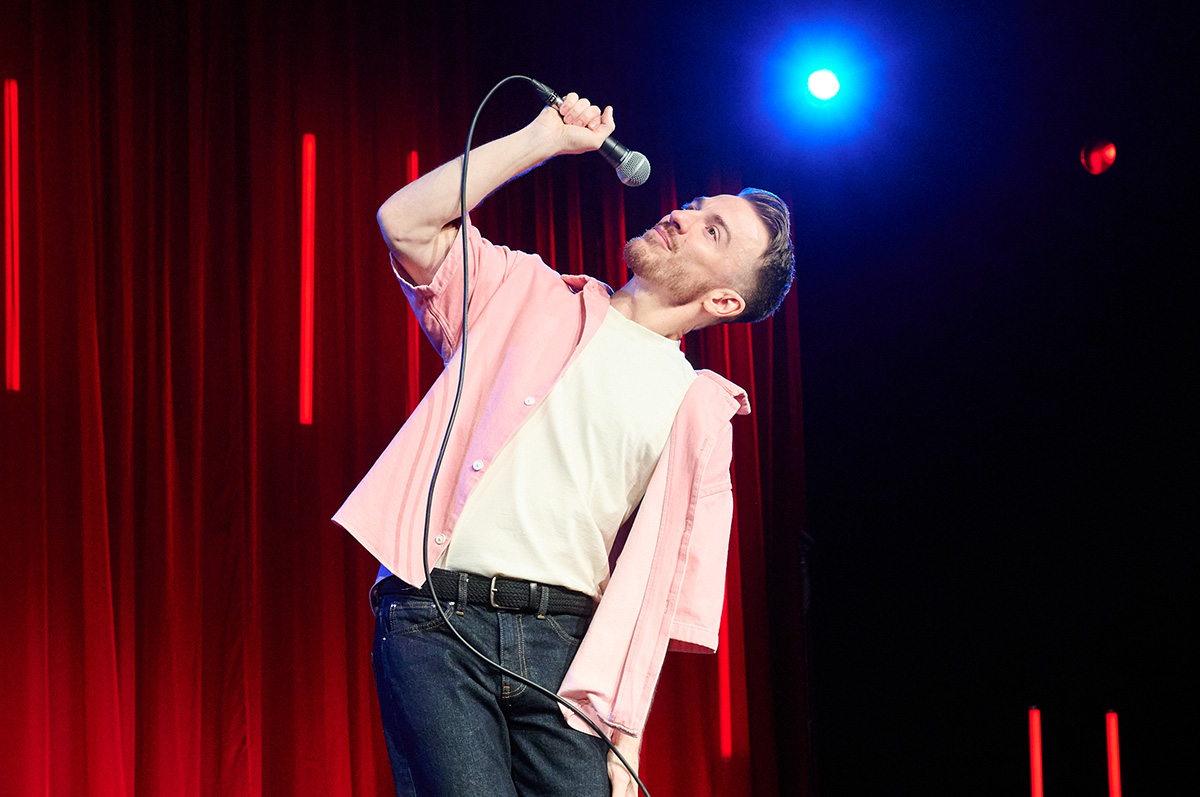
Currently making its American premiere at Studio Theatre, this darkly humorous Edinburgh Fringe import features terrific out English actor Steven Webb as The Comedian who’s about to explore what it means to spend all his time with one man.
At Studio’s intimate Mead Theatre, Kat Heath’s minimal set says standard comedy club (fluorescent tube lighting, the mic with a long cord, a single stool backed by a rose-colored curtain), but gay playwright Marcelo Dos Santos has conjured something much more than a live comedy set.
Yes, The Comedian bounces onstage in his red Converse high tops, jeans, and pink shirt with a huge mouth emblazoned on the back, but he delivers more than jokes. At times hilariously self-deprecating, then dark, and occasionally a lesson on what makes standup work, this is a layered, well-acted piece.
With Webb (a keen caricaturist of types and voices) playing all the parts while conducting The Comedian’s hilariously frenetic interior monologue, “Feeling Afraid” takes us through a summer of love. It seems after six chaste dates with The American, our nervous hero has found Mr. Right. The American is earnest, smart, hesitant to initiate sex. He’s also well built with a beautiful smile. And strangely, he’s been medically advised not to laugh aloud.
The Comedian delights in the joys of new love: dates, first kisses, sex, and then suddenly spending all of his time with the adored. Visits to art galleries become fun. Eating home cooked meals followed by grim documentaries is a thing. The Comedian is beguiled as his own boyish figure fills out, but something isn’t right. He can’t entirely relax.
Along the way we meet the Aussie doctor, our protagonist’s longtime hookup; a young runner with some exceptional body parts; the random third in a failed threesome; grumpy working comics, male and female; and an ineffectual counselor.
Webb gives a lightning-fast performance that boggles the mind (in terms velocity and virtuosity). He can be impish, very impish. He’s nervous energy incarnate, flashing jazz hands, grimacing but handsome when still. He’s likeable, a necessity when delivering a hilariously rude joke just feet away from two stone-faced audience members. (Perhaps they were laughing on the inside? At any rate, they stayed through the end the show.)
Produced by the team behind Fringe hits “Fleabag” and “Baby Reindeer,” small stage works that were developed into major TV screen successes, “Feeling Afraid” is funny for sure, and it’s also highly confessional, sexually explicit, and raw.
Written by Dos Santos during COVID lockdown, the piece was a smash hit in the 2022 Edinburgh Fringe before finding further success in London. Its depiction of a youngish queer guy navigating the big city rings entirely true. Like so much Fringe stuff, the one-man show is delightfully lewd and standup inspired.
One little moan: the show closes cleverly but too abruptly with its star dashing offstage without sufficiently basking in the admiration and applause of his thoroughly chuffed audience.
They say third time’s a charm, and regarding “Feeling Afraid,” I’d agree. After two performance cancellations (first for laryngitis and the second involving faulty air conditioning on an especially muggy June evening), I made my third trek to Studio where I found both the actor and AC in very fine fettle. And truly, Webb’s work was more than worth the wait.

1 dead, 15 injured when van drives into crowd at Berlin Pride

‘Into the Grey’ unites Cavill, Gyllenhaal for thrills and gay love

Winsome Earle-Sears launches campaign against Va. marriage equality amendment

Calendar: July 24-30

Pentagon says hormones make trans troops unfit but gives them to men

Tickets on sale for chef Patrick O’Connell’s book launch event

Remembering Victoria Cruz, Stonewall veteran and beloved trans activist

In the middle of the Bible Belt, a summer camp lets trans kids exhale

Polish president vetoes same-sex relationship recognition bills

LGBTQ ‘human rights crisis is unfolding in Puerto Rico’
-

 a&e features5 days ago
Tickets on sale for chef Patrick O’Connell’s book launch event
-
National5 days ago
Remembering Victoria Cruz, Stonewall veteran and beloved trans activist
-
North Carolina5 days ago
In the middle of the Bible Belt, a summer camp lets trans kids exhale
-
Poland5 days ago
Polish president vetoes same-sex relationship recognition bills