World
White House names Jessica Stern as next US envoy for global LGBTQ rights
Council for Global Equality praises appointment
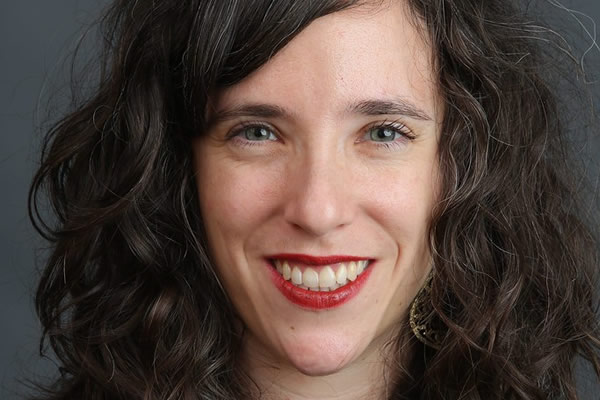
The White House on Friday announced it has named Jessica Stern as the next special U.S. envoy for the promotion of LGBTQ rights abroad.
Stern for the past 11 years has been the executive director of OutRight Action International, a global LGBTQ advocacy group. The White House in its announcement notes Stern is also an adjunct associate professor at Columbia University’s School of International and Public Affairs.
“Serving as OutRight’s executive director has been the honor of a lifetime,” said Stern in an OutRight Action press release that announced her appointment and departure from the organization. “I can think of no organization that works with more integrity, more skillful staff, more motivated board members, more valued partners or greater impact. After 11 years with OutRight, leaving will be bittersweet, but I know that the organization could not be stronger.”
Then-Secretary of State John Kerry in 2015 announced the position within the State Department’s Bureau of Democracy, Human Rights and Labor. It had remained vacant since 2017.
President Biden in February signed a memorandum that committed the U.S. to promoting LGBTQ rights abroad. Secretary of State Antony Blinken during his confirmation hearing pledged to make the envoy an ambassador level post, but the White House’s announcement about Stern’s appointment does not refer to her as such.
Stern was also a vocal critic of the previous administration over its LGBTQ rights record, among other issues.
“Another Trump administration would mean more funding for U.S.-based right-wing organizations to spread homophobia and transphobia globally,” Stern told the Washington Blade last October in a statement ahead of the presidential election. “It would mean more opposition to life-saving global institutions that serve LGBTIQ people, like the World Health Organization. It would mean more examples of the U.S. forging coalitions to oppose social justice movements and equal recognition of the family with some of the most conservative countries in the world.”
The Council for Global Equality in a statement congratulated Stern over her appointment.
“The special envoy is a key leadership position at the State Department and Jessica Stern is a respected leader in the global movement for LGBTQI equality,” it said on its blog. “We could not imagine a better choice to lead President Biden’s vision for equality and human rights abroad.”




Netherlands
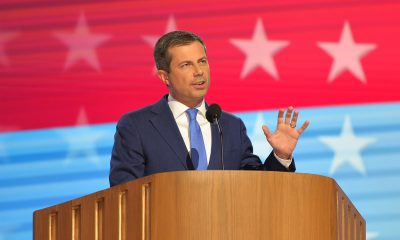
Dutch prime minister opens World Pride Human Rights Conference
Rob Jetten is country’s first openly gay head of government

Editor’s note: International News Editor Michael K. Lavers and Photo Editor Michael Key are on assignment in Amsterdam through Aug. 10.
AMSTERDAM — Dutch Prime Minister Rob Jetten on Wednesday opened the World Pride Human Rights Conference in Amsterdam.
Jetten — who in February became the country’s first openly gay prime minister — began his remarks with an acknowledgment that the July 25 terrorist attack at Berlin’s Christopher Street Day that left one person dead and more than two dozen others injured “filled me with anger and sorrow.”
He started to speak after a group of activists began to shout at him over his government’s position on Palestine — the International Criminal Court, which is based in The Hague, has issued arrest warrants for Israeli Prime Minister Benjamin Netanyahu and Hamas leaders in connection with crimes against humanity it says they committed in the Gaza Strip and Israel after Oct. 7.
Jetten stood silently and allowed them to protest before security personnel removed them from the room.
View on Threads
Jetten in his speech acknowledged this year marks 25 years since the Netherlands became the first country to extend marriage rights to same-sex couples. He also pointed out 2025 marks Amsterdam Pride’s Canal Parade‘s 30th year.
“More and more in recent years, we’ve seen hard won progress being eroded,” conceded Jetten. “We’ve seen countries backsliding in equal rights legislation. We’ve seen homophobic hate speech becoming more overt and aggressive, and not only out in the real world, but online as well.”
Jetten pointed out “online hatred is one of the biggest threats facing the LGBTQIA+ people today.”
“All around the world … misinformation and disinformation can be spread in the blink of an eye with a single mouse click, reaching much further and much faster than NGOs, youth workers and health organizations can,” he said. “This is always how hatred takes hold. First in the shadows, outside the spotlight of society, underestimated by everyone, until, having grown into a many headed monster, it crawls out of the darkness.”
Jetten said his government this fall will launch “a social dialog on online discrimination and offering specific guidance on action to take.” This will include “training courses for municipalities and civil society organizations to help them deal with online hate speech.”
His government over the next three years will invest €7.5 million each year “in improving the safety of the queer community in our cities with an alliance of organizations committed to safety, both in the public space and in the workspace for LGBTQI+ people, and with a public information campaign to combat discrimination and disinformation.” Jetten also said the government will promote a campaign in Dutch schools that encourages students and teachers to wear purple as a way to show their support for the LGBTQ community.
’Equal rights are not a Western agenda’
Jetten in his speech also singled out “conservative forces” in Uganda, Senegal, and in other countries who are framing LGBTQ rights “developments as a neocolonial Western agenda.”
“Under the pretense of resisting so-called Western moral decadence, horrendous laws are enacted and promoted, laws that put the rights of free people under severe pressure,” he said. “But in reality, many communities in these countries have a long history of diversity and freedom, and the laws that impose the restrictions were in fact put in place by the colonial powers.”
“No matter how hard those conservative forces try to pull the wool over people’s eyes, queer communities around the world know that equal rights are not a Western agenda,” added Jetten. “They are first and foremost a human agenda.”
Amsterdam Mayor Femke Halsema and Nayyab Ali, co-chair of the Ending Violence Against Women and Girls Alliance Pakistan, are among those who also spoke on Wednesday. Lady Phyll, co-founder of UK Black Pride, and Camiel Welling, supervisor of the Amsterdam Trans Clinic, are co-hosting the conference that ends Friday.

Celebrity News
My evening with Madonna
Gay icon headlined the World Pride Music Festival in Amsterdam

Editor’s note: International News Editor Michael K. Lavers and Photo Editor Michael Key will be on assignment in the Netherlands through Aug. 10. They will be covering World Pride in Amsterdam.
AMSTERDAM — Madonna and 6,000 of her closest friends celebrated World Pride at Amsterdam’s AFAS Live concert hall early Sunday morning. I was fortunate enough to be one of them.
Madonna last Wednesday nearly broke the internet when she said on social media in Dutch that “I got somethin’ I wanna talk about,” referring to an opening line in “Danceteria,” one of the tracks on her “Confessions II” album that has received rave reviews since its July 2 release. The track has been on near constant replay on my playlist since I first heard it.
— Madonna (@Madonna) July 28, 2026
MISTR — a telehealth platform that offers free access to PrEP, Doxy PEP, STI testing, and long-term care that has organized Madonna’s Club Confessions shows in the U.S. and the U.K. — later confirmed the rampant speculation. I woke up on July 30 to an email in my inbox from MISTR and the World Pride Music Festival PR team that said I was on the press list.
Madonna was indeed going to headline the World Pride Music Festival that Jake Resnicow and Insomniac produced, and I was going to be there. OMFG!!!!
The gay icon had one more surprise in store.
The Dutch internet on Saturday once again broke over speculation that Kylie Minogue was going to appear alongside Madonna. I was getting ready to leave our hotel in Amsterdam on Saturday night when I saw a video of the two of them together.
“Madonna is now teasing Kylie Minogue on her social media … she may be one of her ‘special guests’ tonight,” I wrote in a text to Washington Blade Editor Kevin Naff at 8:46 p.m.
“Have fun! This is turning into the gayest concert ever,” he responded.
I arrived at AFAS Live shortly before 11 p.m. My press contact walked me and two other Dutch journalists into the venue’s cavernous main room known as the Black Box. We made small talk for a few minutes before I started to walk around and listen to Josh Harrison who was on the decks.
Madonna was scheduled to take the stage at 1:30 a.m., but she is known for being late — she is Madonna and she does what she wants. Hayla, a British singer, and Bebe Rexha are among those who performed ahead of Madonna. Thousands of sweaty men — including a group of Australians next to me who were eagerly awaiting Kylie’s anticipated appearance — packed the Black Box and were dancing, anticipating what was to come.

MISTR CEO Tristan Schukraft at one point came on stage and declared Madonna was indeed in the building. The moment for which we were all eagerly waiting finally came shortly before 2:30 a.m.
“Mother is here and this is gay heaven,” said Madonna when she took the stage.
Stuart Price, who produced her “Confessions on a Dance Floor” album in 2005, manned the decks during Madonna’s set.
She opened it with “I Feel So Free” from “Confessions II.” Madonna then sang “Bring Your Love” and “Danceteria” to which this reporter — and everyone else — sang along.
Madonna then teased a surprise before she began to perform “Love Sensation.” Kylie soon appeared on stage. It was nearly too much for my fellow partygoers from Australia. It was indeed the gayest concert ever!
Madonna and Kylie performed “Love Sensation” together. They then sang “Hung Up” and “Sorry” from “Confessions on a Dance Floor” to round out the set that ended shortly after 3 a.m.
Madonna and I share the same birthday — Aug. 16 — and I would like to think she and Kylie gave me an early birthday present. In all seriousness though, it was an amazing night for me and for everyone else who was fortunate enough to be there.
“On the dance floor I feel so free,” says Madonna in the opening of “I Feel So Free.”
For those few precious hours at AFAS Live I did not think about the Trump-Vance administration and the myriad ways it is destroying the U.S. I did not think about the National Guard troops deployed to D.C. I did not think about the pointless wars that continue to ravage Ukraine and other countries around the world. I simply lost myself on the dance floor and celebrated an icon who has always stood with my community.
Thank you, Madonna.
Netherlands
Amsterdam Pride Canal Parade draws hundreds of thousands
Gay Dutch Prime Minister Rob Jetten among participants

Editor’s note: International News Editor Michael K. Lavers and Photo Editor Michael Key are on assignment in the Netherlands through Aug. 10.
AMSTERDAM — Hundreds of thousands of people lined Amsterdam’s canals on Saturday for the city’s annual Amsterdam Pride Canal Parade.
Dutch Prime Minister Rob Jetten, who is openly gay, is among those who participated in the parade that featured more than 80 boats. Participants held signs and posters that, among other things, read “proud to be intersex” and “lesbians love you and a free Palestine.”
The Washington Blade saw at least two attendees holding fans that read “fuck Trump.” One of the boats also compared President Donald Trump and Russian President Vladimir Putin as “the kissing couple.”

(Washington Blade video by Michael K. Lavers)
(Washington Blade video by Michael K. Lavers)
The parade took place a week after a terrorist attack at Berlin’s Christopher Street Day left one person dead and more than two dozen others injured.
It passed the Homomonument, a memorial to gays and lesbians who have suffered persecution. The Homomonument has been transformed into a makeshift memorial to the victims of the July 25 terrorist attack in the German capital.
View on Threads
The Canal Parade took place during World Pride, which will end in Amsterdam on Aug. 9.

D.C.’s Mary’s House For Older Adults names new executive director

Suzanne Goode is not good for Rehoboth Beach

Continue to engage in community after Pride month

Doug Ollivant to face Eugene Vindman in Va. 7th Congressional District

LGBTQ advocates optimistic about D.C.’s expected new mayor

Reggie White relishing first season as artistic director of Woolly Mammoth

Madonna headlines World Pride Music Festival in Amsterdam

PHOTOS: Petal Release Party

My evening with Madonna