District of Columbia
Casa Ruby board members deny responsibility for org’s collapse
Civil complaints filed against officials to be discussed at March 17 hearing

At least five of the eight former members of the Casa Ruby board of directors who are named in a civil complaint charging them with failing to adequately oversee the organization’s finances and practices by its former director Ruby Corado have filed court papers disputing the allegations against them.
Details of their response to a third-party civil complaint filed against them by the Wanda Alston Foundation in its role as the court-appointed receiver of the now-defunct Casa Ruby LGBTQ community services center were expected to surface at a March 17 D.C. Superior Court virtual hearing on the Casa Ruby case.
The Alston Foundation’s complaint was filed on Dec. 23, several months after the Office of the D.C. Attorney General filed its own civil complaint against Casa Ruby and Ruby Corado. The Attorney General’s complaint, among other things, alleges that Corado and the organization violated the city’s Nonprofit Corporations Act in connection with its financial dealings. An amended version of the original complaint charges that Corado withdrew more than $400,000 of Casa Ruby’s funds for unauthorized use in El Salvador, where Corado currently lives.
The Alston Foundation complaint, which also names Corado as a defendant, identifies each of the eight former board members as defendants and “respectfully requests restitution, compensatory damages, punitive damages, receivership fees and expenses, court costs, attorneys fees and expenses, and any other relief the court deems necessary and proper.”
According to the complaint, each of the board members failed to exercise their legally required oversight of Casa Ruby’s operations and of practices by Corado that allegedly resulted in the financial collapse of Casa Ruby, forcing it to close its operations.
Miguel Rivera, one of the former board members who is an attorney, states in his response to the complaint that it “fails and/or may be barred, in whole or in part, because a bona fide fiduciary relationship did not exist between Third-Party Plaintiff [Alston Foundation on behalf of Casa Ruby] and Third-Party Defendant Miguel Rivera.”
Rivera’s response adds that the complaint should be dismissed on a wide range of grounds, including his assertion that he as a board member “has not engaged in (a) willful misconduct; (b) crimes; (c) transactions that resulted in improper personal benefits of money, property, or service; and (d) acts or omissions that are not in good faith and are beyond the scope of authority of the corporation.”
The responses filed by the former board members are not included in the current online D.C. Superior Court case docket for the Casa Ruby case. At the request of the Washington Blade, Douglas Buchanan, the court’s public information officer, provided the Blade with the responses by Rivera and former board members Meredith Zoltick and Carlos Gonzales.
Similar to Rivera’s response, the response filed by Zoltick and Gonzales also disputes the validity of the complaint and asks the judge to dismiss the case against them.
Nick Harrison, the attorney representing the Alston Foundation in its role as Casa Ruby Receiver, said he has learned that another two former Casa Ruby board members have filed some form of a response to the complaint against them.
In a separate motion filed in court on Jan. 21, Harrison states on behalf of the Alston Foundation that it has taken the legally required steps needed to properly serve each of the eight former board members with court papers informing them they have been named as defendants in the complaint. He said he expects Superior Court Judge Danya Dayson, who is presiding over the Casa Ruby case, to rule that the legally required efforts to serve each of the defendants have been met.
Court records show that Corado, who has appeared in previous virtual court hearings through a phone hookup, has yet to retain an attorney to represent her.
Corado has denied engaging in any improper financial actions and has insisted the Casa Ruby board approved her actions, including her decision to open a Casa Ruby operation in El Salvador. In a December interview with the Blade’s El Salvador correspondent, Corado said the allegations that D.C. officials have made against her amount to “persecution.”
At a Jan. 6 court hearing held virtually, Corado reiterated her earlier claims that the D.C. government was responsible for Casa Ruby’s closing in July 2022 by withholding hundreds of thousands of dollars that Corado says the city owed Casa Ruby for services it provided under city grants.
City officials have disputed those claims, saying the funds were withheld or discontinued because Casa Ruby did not provide the required documentation or reports showing that it performed the work associated with the city grants.
The March 17 court hearing is scheduled to begin at 12 p.m. and will be broadcast through the court’s Webex system.


District of Columbia
Wanda Alston Foundation announces passing of founding executive director Brian Watson
D.C. activist praised as “passionate advocate” for homeless LGBTQ youth
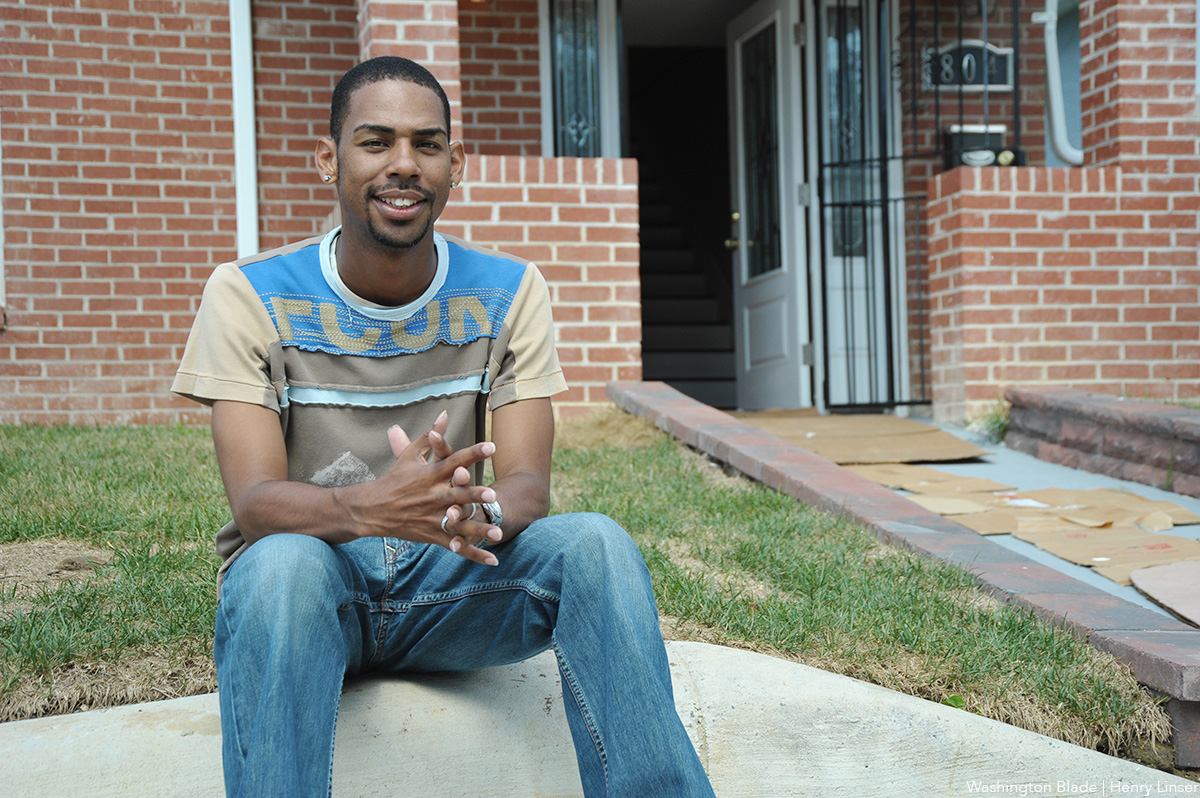
The Wanda Alston Foundation, which provides housing and support services for homeless LGBTQ youth in the D.C. metro area, announced on July 20 that its founding executive director, Brian Watson, has passed away.
In a statement the Alston Foundation called Watson “one of Washington, D.C.,’s most passionate advocates for LGBTQ+ youth experiencing homelessness.”
Neither the statement nor others who knew Watson have disclosed the cause of death or his age. Longtime LGBTQ community activist Rayceen Pendarvis said she heard only that Watson’s passing followed “a long time illness.”
“The origins of the Wanda Alston Foundation can be traced to a meeting convened by then-Mayor Anthony Williams at the request of Wanda Alston, the Mayor’s Director of LGBTQ Affairs,” the statement says.
“During that meeting, Brian spoke powerfully about the growing crisis of homelessness among LGBTQ+ youth in the District of Columbia and the urgent need for dedicated housing and support services,” it says. “His advocacy helped crystalize a vision that every young person deserves a safe place to call home.”
The statement points out that following Alston’s untimely death, Watson joined other community leaders “to transform that vision into reality by establishing the Wanda Alston Foundation in her memory.”
It says that today the Alston Foundation “proudly carries forward the mission Brian helped create by providing emergency and transitional housing, counseling, workforce development, life-skills training, and other supportive services that empower LGBTQ+ youth to achieve stability, independence, and hope for the future.”
Watson’s LinkedIn page says he served as executive director of the Alston Foundation from July 2013 to March 2014. The Washington Blade reported in April 2014 that the Alston Foundation announced in a March 11, 2014, statement that Watson had resigned to “pursue other opportunities.”
His LinkedIn page shows he worked for or with in a supporting role three local nonprofit organizations since leaving the Alston Foundation, including serving from February 2019 to November 2019 as a Methamphetamine Services Specialist for the D.C. group HIPS, which provides services for drug users and sex workers.
According to his LinkedIn page, from October 2014 to “present,” he also served as Chief Innovation Officer for the Propel Foundation, Inc., which he described as a “501c3 nonprofit organization founded in D.C. that works to strengthen nonprofit organizations through fiscal sponsorship and capacity building.”
A Facebook posting by his brother, Vidale Watson, says his family will be making arrangements for a memorial service and will share the date, time, and location once the details have been finalized.
“There are no words to describe the heartbreak our family is feeling,” Vidale Watson wrote. “While we are grateful for every prayer, kind word, and act of support we’ve received over the past week, this loss is still incredibly fresh.”
District of Columbia
Aparna Raj expected to become second LGBTQ member of D.C. Council
Winner of primary would also be first Asian American to serve on body

Ward 1 D.C. Council candidate Aparna Raj, who describes herself on her campaign website as a “renter, union member and queer woman of color,” emerged as the winner in the city’s June 16 Democratic primary.
She won in a five-candidate race with 52 percent of the vote in the fourth round of the vote count under the city’s newly implemented ranked choice voting system.
In a ward with an overwhelming majority of voters registered as Democrats, Raj, who identifies as bisexual, is expected to win in the November general election to become the Council’s second LGBTQ member.
She is running against two lesser-known candidates – Republican Jett James Jasper and Statehood Green Party candidate Jude Crannitch.
Her victory would mark the first time since 2015 that the Council has had two LGBTQ members. At 32, she would also become the Council’s youngest member and its first Asian-American member. She was born and raised in West Chester, Pa., in a family that came to the U.S. from India.
The current gay D.C. Council member, Zachary Parker (D-Ward 5), won the June 16 Democratic primary against two lesser-known opponents with 77.5 percent of the vote and is expected to easily win re-election in the November general election.
Gay healthcare leader Jim Graham, who for many years served as executive director of D.C.’s Whitman-Walker Clinic, served as the Ward 1 Council member from 1999 to January 2015. Graham lost his re-election bid in 2014 to incumbent D.C. Council member Brianne Nadeau (D-Ward 1), who chose not to run for re-election this year. Graham passed away in June 2017.
Gay attorney David Catania served on the Council from 1997, when he won in a special election as a Republican, until 2015 after becoming an independent and giving up his Council seat to run for mayor in 2014. He lost his mayoral bid to incumbent D.C. Mayor Muriel Bowser.
Raj, who also identifies as a democratic socialist, is among D.C. Democratic mayoral candidate Janeese Lewis George and Democratic At-Large D.C. Council candidate Oye Owolewa who are also democratic socialists and who won in the primary and are expected to win in November.
Political observers have said their primary victories and expected victories in the general election indicate many D.C. voters are seeking candidates with a perceived liberal, leftist perspective to address concerns, among other things, over the high cost of living, especially housing and rental costs.
Like nearly all candidates running for public office in D.C., those identifying as democratic socialists, especially Raj, have expressed strong support on LGBTQ issues.
Raj currently serves as communications manager for a progressive policy advocacy organization called Local Progress, which represents local elected officials throughout the country “fighting for racial and economic justice,” according to its website.
In an interview with the Washington Blade, Raj said she believes many LGBTQ D.C. residents are facing the same economic hardships as non-LGBTQ residents, and she plans to address those issues if elected.
“You know, we see it in D.C., in New York, in Philly, in Colorado, that it is getting very difficult for people to live and afford necessities like housing and childcare,” she told the Blade. “And over the past two years, where it felt like establishment Democrats on a national level were unwilling to stand with immigrants or queer and trans people, democratic socialists have been constantly fighting for everybody – for immigrants, for people of color, for queer and trans people, for women, for people who need abortions – things like that,” she said.
“I think that D.C. has done a really important and good job of trying to protect LGBTQ+ residents across D.C. in the face of the Trump administration,” Raj added.
“But I think especially with the Supreme Court decision around trans people and with just always the ongoing threat that the Trump administration could start bearing down on, like transgender affirming care and things like that, the next Council is going to have a really important task behind it to make sure that we’re trying to protect queer and trans people across D.C. as much as possible – including by making sure the Office of Human Rights has the support that they need,” she said.
Raj said the economic policies she plans to push for will help small businesses, including LGBTQ-owned businesses such as bars.
“I support making sure that workers have the stability that they need with dignified wages and with benefits,” she said. “And at the same time finding ways to cut costs for small businesses – whether exploring commercial rent stabilization, pushing back on costs of utilities, helping raise revenue by bringing back Streeteries and things like that,” she said.
The following interview has been edited for length. For the full interview, visit washingtonblade.com.
BLADE: As you may know, the LGBTQ Victory Fund, which endorsed you and gay candidate Miguel Deramo in the June 16 primary, issued a statement after the primary saying they are pleased that you will likely become the first female LGBTQ member of the D.C. Council. But with that as a backdrop, are you aware of any other news media outlet aside from the Washington Blade that have identified you as an LGBTQ candidate as you self-identify on your campaign website as a queer woman of color? We are not aware of any other media reports on your LGBT identity.
RAJ: I think – I can’t list them off – but I think other publications have included the fact that I’m bi and I consider myself queer and their outreach about it.
BLADE: With that as a backdrop, where do you see things stand now going forward to the next D.C. Council session that you are expected to be on, where do you see things stand for LGBTQ residents of Ward 1 as well as citywide?
RAJ: I think that D.C. has done a really important and good job of trying to protect LGBTQ+ residents across D.C. in the face of the Trump administration. But I think especially with the recent Supreme Court decision around trans people and with just always the ongoing threat that the Trump administration could start bearing down on, like transgender affirming care and things like that, the next Council is going to have a really important task behind it to make sure that we’re trying to protect queer and trans people across D.C as much as possible – including by making sure the Office of Human Rights has the support that they need.
Trying to invest in and supporting housing vouchers, especially for LGBTQ+ youth, who are often more faced with homelessness than other youth. And that we are supporting schools and health clinics to make sure that LGBTQ+ students and patients are able to feel safe in good institutions.
BLADE: To go back to the D.C. primary election, a single Republican candidate named Jett Jasper ran unopposed for the Ward 1 Council seat. Do you know anything about him?
RAJ: Yeah, Jett and I have been in a debate back in March with all of the Democratic primary candidates … and he and I went around a little bit. So, I’ve met him.
BLADE: One of the interesting outcomes of the June 16 D.C. Democratic primary is the victories of candidates who like you and mayoral candidate Janeese Lewis George — and at least two others — identify as democratic socialists. What message do you see that as providing the city?
RAJ: I think it is an important message that I think people see democratic socialist candidates as the candidates who will fight for them in the face of a cost-of-living crisis that is driving people out of D.C. and in the face of the Trump administration that’s threatening our community.
BLADE: What response do you have to those, including some in the business community, who have said the policies proposed by democratic socialist candidates would hurt the city’s economy and create budget problems that can harm a lot of people, including the LGBTQ community?
RAJ: I would say that the economic crisis that we’re seeing right now is a result of a combination of conservative, neoliberal economic policies at the local level and of the fascists in office at the federal level. You know, we are in tough economic times, not because of democratic socialism but because of rigid capitalism right now.
And I think we learned from the ‘80s and Reagan that trickle-down economics doesn’t work. And so, when people are suffering, when people are getting laid off, when people are getting health care funding cut, what we need to do at the local level is invest in people and make sure that our recovery is centered on making sure that people have housing, making sure that people have health care, making sure people have food assistance, instead of just giving money to the top and hoping that it tickles down.
BLADE: The city’s chief financial officer has said the city may be facing a significant budget deficit in the next fiscal year possibly because of congressional action in cutting the city’s budget. What are your thoughts on that?
RAJ: I think there are all these options ahead of us. I think what this past year has shown us is that D.C. needs to have a much more proactive relationship on the Hill. And especially next year we will likely be coming into a Democratic Congress. We need to be advocating for ourselves in building those relationships with Congress members, with senators. I think we took a very localized approach prior to the Trump administration.
And that put us on the defense with a lot of the budget cuts and things they were bringing to us. And now is the time when we need to proactively advocate for D.C. and advocate for eventually statehood so that we have totally the economy that we need. And in the meantime, there are a number of revenue raisers available to us that we have not been exploring. They are mainly trying to implement a business activity tax that would affect specifically large businesses that don’t pay franchise tax in D.C.
They are exploring a capital gains tax. Trying to put or institute a wealth tax, trying to put in a tax like in New York where people who have secondary residences here would be taxed on those secondary residences. And so, we have options available to us. And I think it’s a matter of if we have the political will or whether our Council is willing to explore those in the next year or two.
BLADE: One issue raised by the local LGBTQ group GLAA D.C. is whether candidates for the D.C. Council would support decriminalizing sex work among consenting adults. Did you address that in their candidate questionnaire?
RAJ: Yes, I do support decriminalizing sex work. I think there are a number of reasons. Sex work disproportionately impacts transgender women, especially trans women of color. And it leads to health and safety issues when we criminalize sex work. People can’t seek the healthcare that they need. People can’t report violence that they are facing. And so, I support decriminalizing sex work as part of a crime reduction in a way to allow people to be able to keep themselves safe.
BLADE: Regarding economic issues and local businesses, we now have at least 20 gay or LGBTQ bars or nightclubs in the city. Some have said they would be negatively impacted by the so-called tip wage issue that could require them to pay a full minimum wage. What are your thoughts on that?
RAJ: My perspective is like – Ward 1 has like seven or eight LGBTQ businesses and also there are also so many small businesses in general that I want to make sure that we support. And we can both support small businesses and workers at the same time. I support making sure that workers have the stability that they need with dignified wages and with benefits. And at the same time finding ways to cut costs for small businesses – whether exploring commercial rent stabilization, pushing back on costs of utilities, helping raise revenue by bringing back Streeteries and things like that.
BLADE: One of the Ward 1 LGBTQ business owners, David Perruzza, owner of the LGBTQ bars Pitchers and A League of Her Own, has said he has been negatively impacted by high rents.
RAJ: Yeah, exactly. So, I think rent is one of the biggest costs that small businesses face. And within D.C. there are a lot of vacant store fronts, and commercial rent stabilization is a very new idea. And landlords look at it differently. But I think it is a way we should look at supporting small businesses.
BLADE: Do you have any thoughts on how our new mayor should address and continue the Mayor’s Office of LGBTQ Affairs, which has been in place now for 20 years? The new mayor will have to decide whether to retain or appoint a new director of that office.
RAJ: I can’t speak to those specific decisions. But I’m really excited to work with our incoming mayor, because she has been a really strong advocate for the LGBTQ+ community over the years. And I trust that she will maintain and support the Mayor’s Office of LGBTQ Affairs. I would also like to see the continued support of the expansion of a lot of the programs of that office. and especially supporting organizations and supporting a possible LGBTQ fund for services and organizations in D.C.
BLADE: Will the budget issue play a role in that?
RAJ: Yeah – but I think especially right now in the political moment we’re in with the Trump administration, to just make sure we’re celebrating the trans and queer communities and maintaining or expanding programs at that office will really be important.
BLADE: Do you have any thoughts on the criticism Mayor Bowser has received from some local activists who say she has not spoken out strongly enough against the Trump administration’s attempts to curtail D.C. home rule while her supporters argue that she has helped to discourage Trump from taking further action to curtail D.C. home rule?
RAJ: From my perspective in Ward 1, I have seen nearly a year of my neighbors getting disappeared and living in terror. And I don’t believe that that is worth any sort of hypothetical threat of what Trump might do in our trying to protect home rule. I understand wanting to be strategic. But our responsibility as elected officials is to stand up for our communities whenever they are under threat.
BLADE: Are the individuals you are referring to who disappeared and who are under threat immigrants?
RAJ: Yes.
BLADE: Is there anything else you might want to say regarding your constituents in Ward 1, particularly the LGBTQ constituents?
RAJ: I’ll just add maybe one last note. We talk about the affordability crisis and that again bears down on the queer and trans community especially. A lot of people are struggling with housing costs and utilities. A lot of queer and trans people specifically are more likely to live in poverty and not make enough in wages. And so, we are trying to tackle the cost-of-living crisis that I think impacts the LGBTQ+ community as well.
District of Columbia
Campaign launched to elect more LGBTQ candidates to ANC seats
Capital Stonewall Democrats behind Queering ANCs effort

The Capital Stonewall Democrats, D.C.’s largest local LGBTQ political group, announced on July 7 it has launched a campaign to help elect large numbers of LGBTQ candidates to the city’s Advisory Neighborhood Commissions.
The D.C. local government is believed to be unique among U.S. cities in currently having 46 Advisory Neighborhood Commissions consisting of 345 single-member districts in neighborhoods throughout the city in which unpaid Advisory Neighborhood Commissioners are elected for two-year terms.
The commissions are charged with considering a wide range of policies and programs impacting their neighborhoods, including traffic, parking, recreation, street improvements, liquor licenses, zoning, economic development, police protection, sanitation and trash collection, and D.C.’s annual budget, according to the ANC website.
Although the ANCs do not have authority to set or reject policies or proposals, such as applications for liquor licenses, city agencies are required to give “great weight” to ANC recommendations, according to the law creating the ANCs.
Kent Boese, a gay former ANC commissioner, currently serves as executive director of the D.C. Office of ANCs.
“We are launching the most ambitious hyperlocal LGBTQ+ candidate pipeline initiative in the country,” said Stevie McCarty, the Capital Stonewall Democrats president, in a July 7 statement that announced the Queering ANCs campaign.
“As an ANC member, I know firsthand how these seats shape our neighborhoods, from housing and public safety to sanitation,” McCarty says in the statement. “I’m proud to lead this effort to ensure more LGBTQ+ Washingtonians see themselves as leaders in their communities,” he said.
The ANC Rainbow Caucus, which was created by LGBTQ ANC members, shows on its website that there are currently 38 caucus members consisting of elected LGBTQ ANC commissioners serving in the current 2025-2026 two-year term.
The website shows there are LGBTQ commissioners who are caucus members in each of the city’s eight wards, with six in Ward 1, eight in Ward 2, one in Ward 3, six in Ward 4, five in Ward 5, three in Ward 6, eight in Ward 7, and one in Ward 8.
The Washington Blade couldn’t immediately determine how many of them will be running for re-election in D.C.’s general election in November. But McCarty said Capital Stonewall Democrats hopes to recruit many more LGBTQ candidates to run for ANC seats.
The D.C. Board of Elections website shows the deadline for filing 25 required petition signatures to be placed on the ballot is Aug. 5.
A Queering ANCs website launched this week by Capital Stonewall Democrats provides details on how to run for an ANC seat and offers help for those interested in running.
“Think of someone in your building, neighborhood, friend group, community organization, or professional network who cares deeply about D.C. and would make a strong leader,” McCarty says in his statement. “Send them QueeringANCs.org and personally ask them to consider running,” he said.
The website can be accessed at QueeringANCs.org.

LGBTQ ‘human rights crisis is unfolding in Puerto Rico’

Polish president vetoes same-sex relationship recognition bills

In the middle of the Bible Belt, a summer camp lets trans kids exhale

Tickets on sale for chef Patrick O’Connell’s book launch event