Florida
DeSantis eyes expansion of anti-LGBTQ “Don’t Say Gay” law
White House Press Secretary Karine Jean-Pierre condemned the move Wednesday
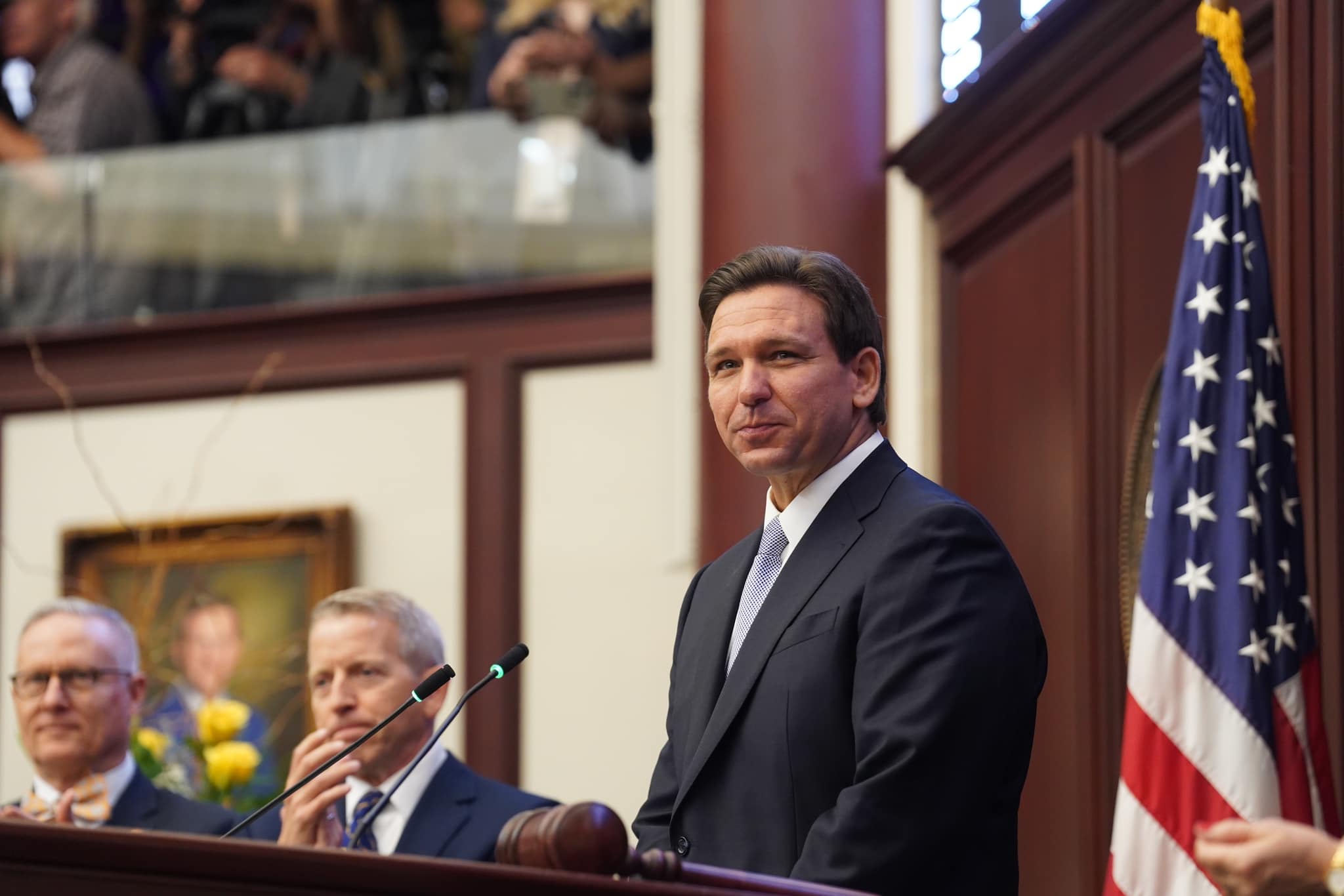
Florida’s Republican Gov. Ron DeSantis is aiming to expand the state’s controversial “Don’t Say Gay” law, officially known as the Parental Rights in Education Act, such that it would apply to public school classrooms from pre-K through grade 12.
The existing law, which was enacted last year, prohibits discussion or classroom instruction on sexual orientation and gender identity for public school students from kindergarten through third grade.
The Orlando Sentinel first reported the proposal to expand the statute, which was made at the behest of Florida’s DeSantis appointed and avowedly anti-LGBTQ Education Commissioner Manny Diaz Jr.
Exemptions are carved out in cases where otherwise prohibited materials are included in existing state standards or constitute part of reproductive health instruction, provided that parents or students are able to opt-out.
Asked for a reaction to DeSantis’s proposed expansion of the “Don’t Say Gay” law during a press briefing Wednesday, White House Press Secretary Karine Jean-Pierre spoke out against the move by the Florida Governor:
“Yeah. It’s wrong. It’s completely, utterly wrong. And we’ve been crystal clear about that, when it comes to the ‘Don’t Say Gay’ bill and other — other actions that this governor has taken in the state of Florida.”
But make no mistake, this is a part of a disturbing and dangerous trend that we’re seeing across the country of legislations that are anti-LGBTQI+, anti-trans, anti the community in a way that we have not seen it in some time. And so — and it’s not just the LGBTQI+ community. We’re talking about students. We’re talking about educators. We’re talking about, just, individuals.”
The President has been very clear, this administration has been very clear: We will continue to fight for the dignity of — of Americans, for the dignity and respect of the community, of opportunity that should be given to students and families in Florida and across the country.”
So, again, this is just plain wrong, and we’re going to continue to speak against — speak out against it,” Jean-Pierre said.
Brandon Wolf, Press Secretary for Equality Florida, the largest state-wide LGBTQ+ equality rights and advocacy organization, released the following statement:
“After a year’s worth of gaslighting and assurances that the Don’t Say LGBTQ law was narrowly focused, the DeSantis Administration is now saying the quiet part out loud: they believe that it is never appropriate to acknowledge the existence of LGBTQ people, or our contributions to society, in schools. This time, the governor is placing the crosshairs squarely on individual educators, threatening their professional licenses for making mention of the LGBTQ community in any grade level.
The Board of Education’s proposed rule would see more books with LGBTQ characters ripped from school shelves, more discussion of diverse families muzzled, and further character assassination of hardworking teachers in Florida. Free states don’t ban books. Free states don’t censor communities out of classrooms. Free states don’t copy/paste their political agendas from the likes of Vladimir Putin.”
This proposed rule is yet more government power being perverted to serve Ron DeSantis’ desperation to run for President. And its consequences will weigh most heavily on those who have already been forced to bear the brunt of his insatiable lust for power.“
Equality Florida also noted that while the DeSantis Administration has rejected requests to clarify the law’s vague, unconstitutional language, its proposal would add legal liability for individual educators, threatening their professional licenses for violations. The proposed rule is scheduled for a vote by the State Board of Education at their meeting on April 19 in Tallahassee.
DeSantis is considering a run for the presidency and has made culture war issues the forefront of his administration’s policies.
Former openly gay Florida Democratic State Rep. Carlos Guillermo Smith tweeted: “It was never, ever, ever, ever about kindergarten thru 3rd grade. It was always about demonizing us and censoring LGBTQ people out of existence in our schools.”




Florida
For LGBTQ youth starting with nothing, Pride House in Florida offers help
Many residents aged out of foster care or were kicked out by parents
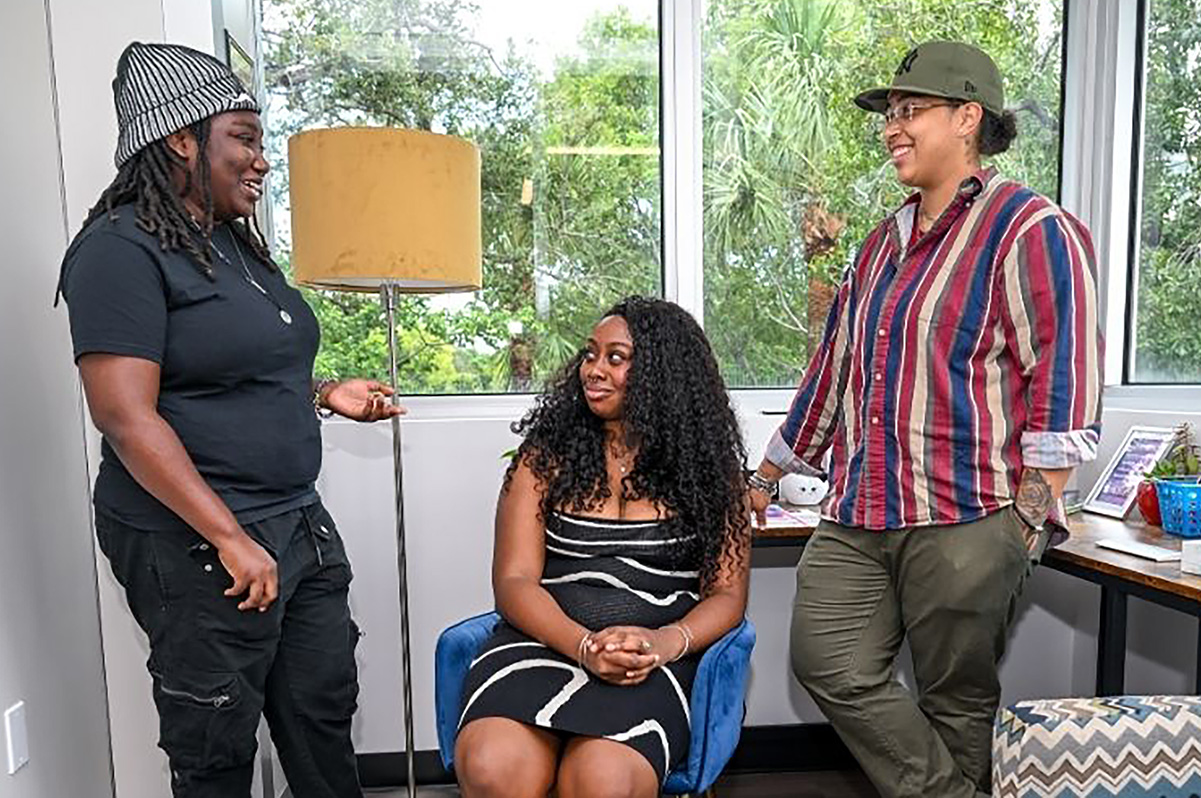
Economic mobility usually assumes a starting line: a bedroom to return to, a parent to call, a place to regroup after things go wrong. For many LGBTQ young adults in South Florida, that starting line never existed.
That’s why Our Fund Foundation, SunServe, and Sunshine Cathedral partnered to build Sunshine Pride House, a 12-bed transitional home helping LGBTQ young adults stabilize, find work, and prepare for independence.
For the residents who live there, that support shows up in small, ordinary ways.
In the evenings, the house settles into a rhythm: dinner prep, shared chores, quiet conversations at the kitchen counter. As house mother, Martha Acevedo anchors the day-to-day life of Sunshine Pride House, creating a sense of consistency many residents have never known. A few nights a week, she cooks home-prepared meals, often inviting residents to join her in the kitchen — chopping, stirring, learning by doing.
For some, the meal itself is the moment that lands hardest.
“Some of them tell me they haven’t had a cooked meal in such a long time,” Acevedo said. “When I serve the food and they say ‘thank you,’ you can see it. They’re kids. They just needed a home.”
Acevedo says the reactions still catch her off guard. What feels routine to her — cooking, setting plates, sitting down together — can feel extraordinary to young people who have spent months or years without a consistent place to eat.
“When I cook, I do it proudly,” she said. “I give a lot of love.”
According to research from The Trevor Project, 28% of LGBTQ youth have experienced homelessness or housing instability at some point in their lives. Data from True Colors United underscores the scale of the disparity — LGBTQ youth are 2.2 times more likely to experience homelessness than non-LGBTQ youth.
“So these kids are coming to the house because they’ve either aged out of foster care or they’ve been kicked out of their homes because they’re LGBTQ,” said Tony Lima, CEO of SunServe. “You kind of have to start from zero. That’s the common theme of all of these youth.”
Those experiences carry lasting consequences: LGBTQ youth who have been unhoused report significantly higher rates of depression, anxiety, and other mental health challenges than their housed peers.
“In order to have proper mental health, that’s conducive to living a full life, you need to have a home,” Lima said. “You need to have a place to be able to rest your head.”
That reality isn’t unique to LGBTQ youth, though queer young people are far more likely to experience it — and far less likely to have family support to fall back on.
Elijah Manley’s experience with homelessness began during the 2008 financial crisis, when he was about 9 years old. After his single mother lost her job, his family was evicted and spent years cycling through instability — living in their car, rotating between friends’ homes, staying in an overcrowded apartment with relatives, and at one point sleeping in a storage unit in Lauderhill. Each morning, Manley and his siblings woke before dawn to shower at beach facilities before heading to school, trying to maintain a sense of normalcy without a permanent home.
Manley, who is now 27, was not yet out as queer during this period, and his homelessness was driven by economic collapse rather than family rejection. Still, he says the experience shows how early housing instability — regardless of cause — can derail childhood, education, and long-term opportunity. His family’s situation improved only gradually, and he credits a mix of early work, community connections, and “a little luck” for eventually finding stability — a path he notes many others never get.
Today, Manley points to LGBTQ nonprofits like SunServe as essential lifelines — especially for young people who face both economic instability and identity-based rejection.
“They’re very vital and lifesaving. Without them, a lot of people would be in a much worse situation,” he said. “They keep our communities housed and fed and connected to the social services and healthcare they need. They’re filling a void the government hasn’t filled.”
Manley, who has run for public office several times and is currently running for Congress to represent Florida’s 20th district in West Broward, argues that relying on private charity to fill that void leaves too many people behind.
“These are services the government should be providing or supporting,” he said. “Charity should not be public policy. It should be provided to everybody, regardless of their income, and not dependent on somebody else’s charity.”
Housing is Just The Starting Point
For now, Sunshine Pride House exists largely because private donors stepped in where public dollars did not. While public agencies can and do fund programs that reach LGBTQ people, government funding is often constrained by nondiscrimination and open-access requirements that make it difficult to support services explicitly limited to a single identity group.
The home is owned by Sunshine Cathedral, while SunServe runs the day-to-day programming and services inside. With no state or federal grants tied to the house itself, its roughly $250,000 annual operating budget is raised through individual donors and philanthropic partners, coordinated in large part through Our Fund Foundation.
“There’s no way to do this work without being clear about the population we’re serving — and that cuts off a lot of funding possibilities,” said David Jobin, CEO of Our Fund.
The funding covers housing, staffing, life coaching, and wraparound support — allowing the program to exist in a policy environment where targeting services to LGBTQ youth often disqualifies programs from public dollars altogether.
The idea for Sunshine Pride House began not as a programmatic expansion, but as a personal intervention. More than five years ago, philanthropist Michael Kalb approached Our Fund Foundation with a simple question: what would it take to create a safe, stable home for LGBTQ young people who had nowhere else to go?
Kalb had been deeply affected after witnessing unhoused youth being mocked in public spaces, and he believed housing could change the entire trajectory of a young person’s life. Working closely with Jobin, that initial conversation grew into a multi-year effort to design a model tailored specifically to South Florida’s LGBTQ youth.
“People hear ‘housing’ and think that’s the solution, but housing is just the starting point,” Jobin said.
Kalb ultimately invested more than $600,000 into the project, joined by fellow donor Terry Merlin, while Our Fund helped assemble the partnerships needed to make it work. Sunshine Cathedral agreed to purchase and own the property, drawing on its decades of experience managing community housing, while SunServe took on day-to-day operations and services inside the home. What opened first as a pilot in a rented house evolved into the current 12-bed facility — now fully owned, privately funded, and operating as one of the only LGBTQ-specific transitional housing programs in the region.
“If we want to continue to bring these services to life, that requires funding — and we’re really going to need help to do that,” said John Marler, Communications Director of SunServe. “Government funding has been harder and harder to come by, and foundation funding and corporate sponsorships are becoming more competitive.”
Kalb, who died unexpectedly in December, often said a safe place allows young people to “finally exhale,” and Sunshine Pride House stands as a direct reflection of that belief.
The structure of Sunshine Pride House reflects that focus on stability first, mobility second. The home is designed as short-term transitional housing rather than a permanent shelter.
They Have Nowhere Elsewhere to Go
For Mario DePedro, who helps oversee the program, the work often means stepping into roles most parents fill by default.
“We have youth who are just leaving home for the first time and their parents don’t support them. They have nowhere else to go. Now it’s up to us to take the place of what the parent should be,” he said.
Inside the house, residents share bedrooms and follow a structured daily routine. They are required to work or attend school, participate in therapy, and meet regularly with life coaches who help them set goals.
“We call it a future plan. We’re helping them with the goals they want to reach, so they can be successful in their life,” he said.
That plan can include finishing high school, enrolling in college, securing steady employment, learning financial literacy, or preparing for independent housing.
Many residents arrive carrying layers of trauma that extend far beyond the moment they lost housing.
“They’re coming from a lot of trauma,” DePedro said. “Being kicked out at 18 usually isn’t the first trauma — there’s often a cycle of abuse that leads up to that moment.”
For residents who began adulthood without savings, family support, or stable housing, that planning process can be the difference between cycling back into crisis and building a path toward long-term economic stability.
“They need jobs. They need mental health care. And they need community — they want to feel like they’re not alone in it,” he said.
The needs are immediate and interconnected. That’s why the house is built around flexibility rather than rigid benchmarks.
“This is absolutely not one-size-fits-all. Everything we do is client-centered and client-led,” DePedro said. “The reality is that we’re saving kids’ lives in this house. These are people who have nowhere else to go.”
Because of safety concerns, the location of Sunshine Pride House is not publicly disclosed, and residents are not identified.
“We’re really putting young people on a path for success that they might not otherwise achieve in their life without this lift,” said Jobin. “You hear the words ‘Pride House’ and you think it’s just a roof. But it’s the wraparound services that put young people on trajectories for successful lives.”
Instead of starting a new nonprofit, Jobin said the foundation focused on partnering with organizations already doing the work — bringing together SunServe, Sunshine Cathedral, and others to build a model that could move quickly and last.
Sunshine Pride House doesn’t promise transformation or guarantee success. What it offers is something far more basic — time, safety, and a place to rest their head. For young people who started adulthood with nothing, that pause can be enough to change what comes next.
(Editor’s note: This article is part of a national initiative exploring how geography, policy, and local conditions influence access to opportunity. Find more stories at economicopportunitylab.com.)
Florida
Gay Fla. Democrat Elijah Manley sees opportunity in Trump’s second term
State’s 20th Congressional District’s includes Broward, Palm Beach Counties
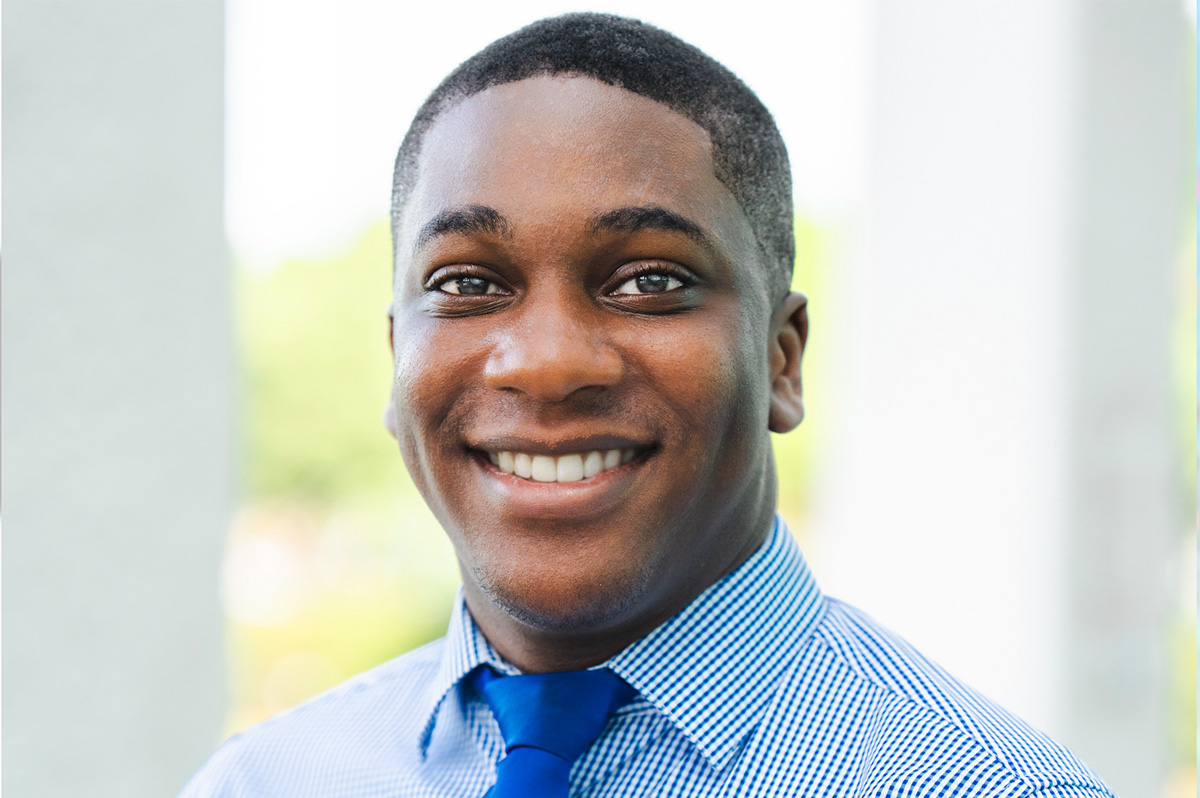
Just over two and a half miles from President Donald Trump’s primary residence lies one of Florida’s most reliably Democratic congressional districts. There, a 27-year-old progressive is mounting a campaign centered on resisting what he calls the Trump-Vance administration’s attacks on civil rights, immigrants, and LGBTQ Americans.
Elijah Manley, an openly gay Democrat, sat down with the Washington Blade to discuss why he is running for Florida’s 20th Congressional District, why he believes this moment calls for a new generation of leadership, and what he hopes to accomplish if elected to Congress.
Born and raised in Fort Lauderdale’s historic Sistrunk neighborhood — the city’s oldest African American community — Manley was raised by a single mother who struggled to make ends meet. His family experienced housing insecurity and, at one point, homelessness, experiences he says continue to shape both his politics and his policy priorities.
For Manley, those experiences are precisely what he believes Congress is missing.
“I think now the country is in need of somebody like me, with my story, my lived experience, the struggles I’ve been through in my life. We’re going through a really dark time in the country with the Trump administration coming for our civil rights and an economy that is not working for everybody. In a time where we have MAGA fascism, we need progressive leadership, and we need people who are really going to do the work of fighting back and resisting and obstructing Donald Trump and MAGA Republicans’ agenda in Congress.”
Manley said his campaign is also about ensuring people from marginalized communities — those without wealth, political connections, or institutional backing — have a voice in Congress.
“I think my story sets me aside from everyone else. I’m the only one in this race who has a story to tell voters that lines up with their lived experiences and their struggles. Growing up in poverty and experiencing homelessness was instrumental in developing my worldview and how I fight for people, and I think that’s something that’s absent on Capitol Hill.”
He argues that lived experience offers a perspective often missing on Capitol Hill.
“There are too many lawyers and people coming from professional and political backgrounds. Then you have somebody like me who is rooted in the story of this district. That’s what sets me apart from everyone else in this race.”
According to his campaign website, Manley’s interest in public service dates back to childhood. He cites the election of President Barack Obama as a defining moment that inspired him to pursue politics.
“He was inspired by Barack Obama’s historic election, igniting his passion for public service. He began writing to elected officials, speaking at school board and city council meetings, and advocating for issues affecting his community,” the website states. It goes on to describe his involvement in criminal justice and law magnet programs, Navy JROTC, and hundreds of hours of volunteer service while in high school.
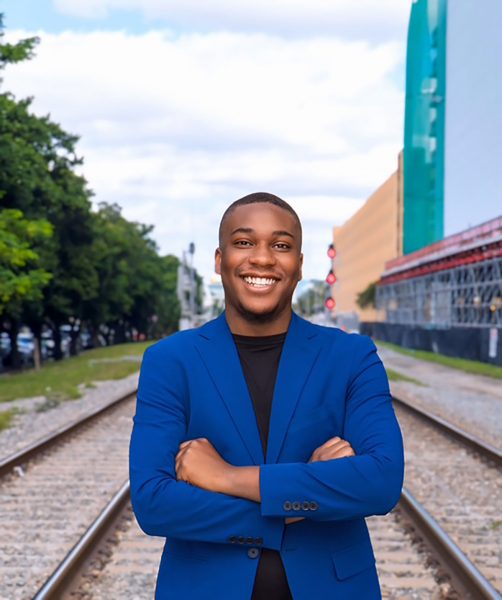
As an openly gay candidate running during Trump’s second administration, Manley said Congress must take a far more aggressive approach to protecting LGBTQ Americans, particularly as Republican-led states continue passing restrictions targeting transgender people.
“I think we need to bring the hammer down on some of these states. I’m not one of these states’ rights people — Congress has the power to preempt laws that states pass through the Supremacy Clause. There’s never been a more important time in our history when we’re seeing fascism, we’re seeing an administration out of control, and we need Congress to act.”
His campaign has also drawn criticism from both Republicans and establishment Democrats for his positions on Gaza, immigration, and his call to abolish U.S. Immigration and Customs Enforcement.
Manley said abolishing ICE does not mean eliminating immigration enforcement altogether.
“I’m not saying there should be no immigration laws. We want laws around immigration, but we want dignity. We don’t need a hypermilitarized, paramilitary group chasing people through the streets, terrorizing communities, churches, schools, and families.”
His personal experiences also inform his healthcare agenda.
“When we talk about healthcare, my experience growing up on Medicaid is seeing the failure of the government to expand Medicaid here in Florida, and now we’re seeing cuts from the Trump administration. I’m not just looking at statistics or numbers on paper — this is based on lived experience. I know how the people in this district are going to be hurt by these policies because I’ve lived it.”
California Democratic Congressman Ro Khanna, who has generated early buzz as a potential 2028 presidential contender for his “progressive capitalist” approach to governing, has endorsed Manley’s campaign, giving the first-time congressional candidate one of his highest-profile endorsements.
Manley faces six other Democrats in the primary, including U.S. Rep. Debbie Wasserman Schultz and former U.S. Rep. Sheila Cherfilus-McCormick, along with four Republican candidates in the general election field. Cherfilus-McCormick resigned from Congress ahead of a potential expulsion and is running again while facing federal criminal charges.
Despite running as the youngest candidate in the field, Manley said he hopes voters leave the race remembering one thing above all else.
“I want people to remember bold and authentic leadership. I want them to know I’m running because I’ve been through what people are going through right now — and it’s not that I’ve been through it, I’m actually still going through it. We need bold people who are going to fight for everybody and stand up for what’s right, and that’s what I hope voters see when they go to the polls.”
Florida
Former Fla. gubernatorial candidate Andrew Gillum arrested on drug charges
Democrat narrowly lost to DeSantis in 2018, later came out as bisexual
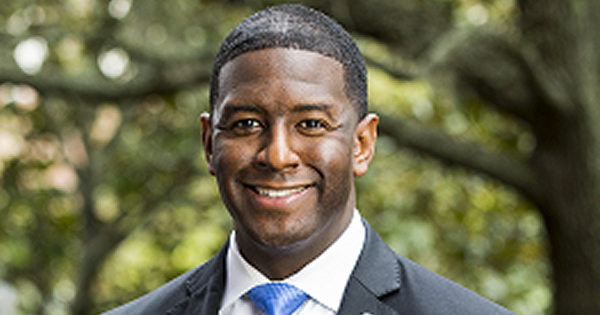
Andrew Gillum, the former Democratic nominee for governor of Florida and former mayor of Tallahassee, was arrested on drug possession charges in Alabama last week.
Police in Daphne, Ala., said they pulled Gillum over for erratic driving and found marijuana and methamphetamine in his vehicle. He was charged with possession of marijuana and unlawful possession of a controlled substance, according to the Daphne Police Department. Jail records show he was arrested on July 2 and released on July 3, the Associated Press reports.
Gillum, the first Black nominee of a major political party for governor in Florida, lost the 2018 election to current Republican Gov. Ron DeSantis in a highly contentious race.
Once considered a rising star in national politics, Gillum served in Tallahassee’s local government, first as a city commissioner and then as mayor of Florida’s capital from 2014- 2018.
The Daphne Police Department said officers stopped Gillum’s vehicle around 10:45 p.m. and initiated a probable cause search after one officer noticed a glass pipe on the center console.
During the search, officers found several rolled marijuana cigarettes and three packages containing a substance that tested positive for methamphetamine, police said.
The day after his arrest he was charged with possession of dangerous drugs, use or possession of drug paraphernalia, and possession of marijuana.
In 2020, Gillum was involved in a similar incident when he was found in a Miami Beach, Fla., hotel room with a man identified as an escort who had apparently overdosed on drugs. Police also found three bags of suspected crystal methamphetamine in the room. The man survived, and no one was ever charged with a crime.
Later that year, Gillum came out as bisexual during an appearance on “The Tamron Hall Show,” where he discussed his struggles with drug and alcohol addiction and his decision to seek treatment following the 2020 incident.
In the same interview he shed light onto this, saying his substance use was a byproduct of the emotional struggles he experienced after losing the 2018 gubernatorial race to DeSantis.
This is not the first time Gillum has faced legal scrutiny.
During his 2014 mayoral campaign, he faced allegations of misconduct after hiring private equity investor Adam Corey as his campaign treasurer, raising questions about a potential conflict of interest. However, the FBI ultimately concluded there was no conflict of interest.

Annie Andrews denounces trans athletes after Trump targets her

On Republican Long Island, gay Democrat Chris Gallant bets on public service over politics

Report: LGBTQ exclusion costs Japanese economy billions a year

Center for Black Equity honors leaders, activists at BE. Gala

In ‘The Lost Brontë,’ a complicated lie can lead to danger

U.S. int’l trade negotiator, consultant James Bedore dies at 82

Campaign urges Virginia High School League to reverse stance on trans athletes

Calif. GOP gubernatorial candidate ad ‘disgusting attempt to exploit lesbian intimacy’

Center Arts Gallery celebrates 10 years with reception, auction

Trump, Netanyahu, and Putin are all war criminals
-

 Obituary4 days ago
U.S. int’l trade negotiator, consultant James Bedore dies at 82
-
Virginia4 days ago
Campaign urges Virginia High School League to reverse stance on trans athletes
-
California4 days ago
Calif. GOP gubernatorial candidate ad ‘disgusting attempt to exploit lesbian intimacy’
-
Commentary4 days ago
Center Arts Gallery celebrates 10 years with reception, auction