District of Columbia
Here comes the Pride: Freddie Lutz, Johnny Cervantes to wed during WorldPride Parade
‘Love is good for business’
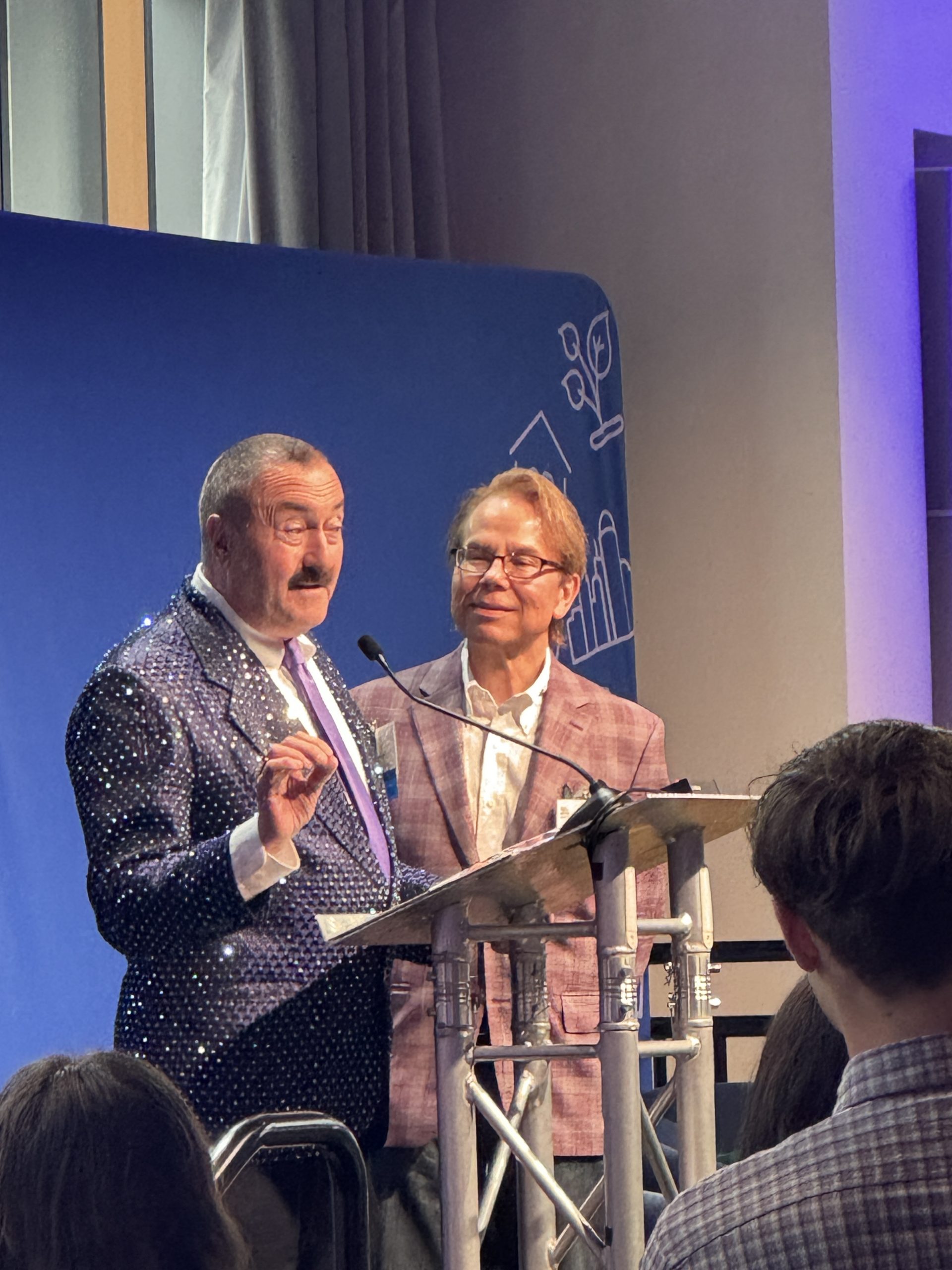
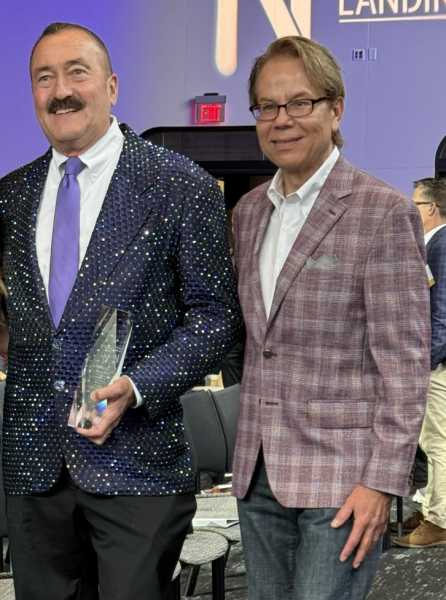
For 28 years, Freddie Lutz and Johnny Cervantes have been through nearly everything together. From starting one of the most successful and well-known LGBTQ bars in the DMV — Freddie’s Beach Bar and later opening a second location in Rehoboth — to navigating a pandemic and even overcoming death threats for supporting the LGBTQ community, the pair has been through a lot.
So it only makes sense for them to take advantage of a once-in-a-lifetime opportunity and get married in the middle of the WorldPride parade as it makes its way down 14th Street.
For the longest time, the couple had contemplated getting married, but according to Lutz, none of those times felt quite right.
“When they passed gay marriage in Virginia, I asked him if he wanted to get married the following day,” Lutz told the Blade. “And [Cervantes] said, ‘No, but you can take me to Tiffany’s.’”
Cervantes shared that although the thought had crossed his mind, he had seen the two as committed long before the courts deemed them worthy.
“I don’t think it was until about 2009 that we really considered marriage,” Cervantes said. “We had gone to some fundraiser where Gavin Newsom was speaking — he was such an advocate for gay rights and gay marriage, that that’s what kind of got us both thinking. Like any other marginalized group, you learn to feel that you’re not worthy, that you’re not entitled to certain rights. However, his speech at that time got us realizing that we were worthy and were entitled to marriage.”
“We still hadn’t taken advantage of marriage because it’s like—we have our daily lives together, both in Arlington and in Rehoboth,” Cervantes added. “I think spiritually, we have been committed as if we were married to each other. Going through a ceremony wouldn’t change things.”
Another—and seemingly bigger—concern the pair had about throwing a wedding was who would make the guest list—and which one of their friends would have to sit out due to the nature of hosting such an event.
“We’ve thought about getting married a few times over the past 28 years, but we know so many people that I said to him, ‘Oh my gosh, where would we cut off the invitation list?’ I’d have a lot of pissed off people at me. This way, we’re literally inviting the entire world,” Lutz said.
And invite the world they have. As their home becomes the center of the gay universe this week with WorldPride coming to Washington, the pair decided to get married with some special help and support from the Equality Chamber of Commerce DC (ECCDC).
“If you know Freddie, the idea of his wedding being in the middle of a Pride parade embodies the joy of who he is and his whole spirit,” said Kat Dean, director of the Equality Chamber Foundation. “It was this perfect alignment of continuing to lift up queer economic empowerment and give the spotlight back onto him. I mean, this is what we do as a chamber. Our whole purpose is to continue to uplift businesses—and this is a great way for us to uplift a cornerstone of queer businesses in the area. He’s brought a lot of joy and community into a lot of people’s lives. This is our way of kind of thanking him for the work that he’s done by serving the community.”
When asked what has been the most exciting part of making this idea a reality, Dean—one of the float’s original concept creators and one of the people responsible for the Pride Parade wedding idea—was ready with an answer.
“To watch the design that’s being built by this incredible designer, and seeing that concept start to come to life—it’s been, honestly, a lot of joy when a project like this unfolds,” she said. “The float designer is scenic designer August Henney; Kevin Fenton of Walla Design helped us with the concept and branding. … We’ve received some donated material as well and some support from the community. But really, it’s less about the organizations that have been helping, and more about the individuals who are helping to build the float, to get it up there. There’s some people from our board, some volunteers from our community—a bunch of people coming together to help make this super duper fun.”
This project has been in the works since February, according to Dean, and was inspired by her own recent path to marriage.
“We knew that we, ECCDC, were going to have a float in the parade. We got approved at the beginning of the year that we were actually able to have a float,” Dean said. “I believe it was because of our February Chamber Connect [the monthly networking series], that was conveniently at Freddie’s. But that was not the correlation at the time. It was at Freddie’s in Arlington, but no direct tie-in at all that it had come out.”
“My partner and I had just decided to get engaged and get married,” she added. “The chamber was still coming up with what the idea was for the float, and one conversation led to the next, and the topic of gay marriage came up. The day after the Chamber Connect, I sent out an email—I think at like 6:30 in the morning—to a couple people that I started talking to, including our executive director, and said, ‘Hey, here’s a rough idea following our conversation from last night,’ and everyone just jumped on it.”
As discussions of logistics continued, Dean and her wife took some time to get married ahead of the chaos of WorldPride. This led them to a mini-honeymoon in Rehoboth, where they met Lutz.
“We connected with Freddie and we were talking to him about our wedding. My wife and I were actually in Rehoboth, and we were having a little ‘mini-moon’ there after we just got married. We were telling him about the wedding and the decision of why we wanted to get married sooner rather than later.”
“He told me that he had had similar thoughts with his partner of 28 years, and they were deciding to do the same thing. And after a couple orange crushes, I turned and looked at him, and I said, ‘Hey, how about you do this in the middle of the Pride parade? We’ve got a chapel already being built.’ It was fate! This was almost identical to the idea that he and Johnny wanted to have, and there was just no better choice for us than having somebody who’s been an incredible member of the DMV queer community and an awesome chamber member for many years.”
Lutz explained that this organic conversation between the two sparked an unexpected but perfect alignment of dreams and opportunity.
“I have a second Freddie’s location in Rehoboth Beach, and I’m literally down there two weeks ago, and I’m chatting this girl up at the bar, and she says, ‘I’m with the Equality Chamber of Washington. We are doing a wedding chapel float in the WorldPride Parade,’” Lutz said. “And I said, ‘Wait, what? That’s my all-time dream—to get married on a Pride float with Johnny.’ I couldn’t believe it. I’ve been actually thinking about doing a wedding float with Freddie’s for years—I’ve been talking about it for years. So she says to me, ‘We’re going to be marrying several couples on the float. Would you like to be one of them?’ And I said, ‘No, but if you’ll do just us and let me put Freddie’s signage on the float, I’ll do it.’”
“I do think I probably owe that couple [Dean and her wife] a nice wedding gift,” Lutz added, laughing.
“I know that this is something that he always wanted,” Cervantes said. “Freddie and I are like yin and yang. We’re almost exact opposites of each other. And I like to think I bring the voice of reason to the relationship and he brings creativity and excitement.”
The meeting of Dean and Lutz in an LGBTQ bar—which ultimately led to the wedding coming to fruition—closely mirrors how the soon-to-be-wed grooms first met.
The couple met in another of Washington’s best-known LGBTQ institutions—JR.’s.
“I was actually meeting with a group of people, and we were celebrating my birthday and my friend Dylan’s birthday,” Lutz said. “We all met for a drink at JR.’s, and then went to dinner at Trumpets. Johnny was sitting way down at the end of the table, and I kept looking at him, and that’s how we met.”
The opportunity Lutz and Cervantes had to meet—specifically at an LGBTQ-run business—is exactly the message Dean hopes to highlight with the float and with ECCDC overall.
“We keep going with this tagline—‘Love is good for business,’” Dean said. “Support of queer economic power. But it’s also to remind you guys that we’re here to support you and support our community in whatever it is that they’re doing. We’re just really excited to share in the joy and share in Pride with everyone.”
“I’m so excited,” Lutz said. “I can’t believe that this dropped in my lap just two weeks ago. I mean, we just agreed to do it six days ago.”
“It’s going to be fun,” Cervantes said. “I’ve ridden with Fred in the Pride Parade—just what to expect from the crowd and the number of people there—and it’s always very friendly and celebratory, and I think that’s going to just make our event even more special.”
As the parade rolls through the heart of D.C., the float will transform into the ultimate queer altar, giving the couple the chance to say “I do” while the world celebrates love, visibility, and acceptance around them.
The Little Gay Chapel will be decorated to the nines—with floral arrangements, music, signage, and surprise elements—making it a rolling celebration of queer joy. The float will travel down the increasingly queer 14th Street, pass through Thomas Circle, and head toward Pennsylvania Avenue, where the celebration will culminate at the annual Tea Dance Party overlooking the U.S. Capitol.
When asked if there was anything special about the float—besides the fact that a whole wedding would be taking place as the Little Gay Chapel travels down 14th Street—Lutz said to keep an eye out for the outfits and party invitations.
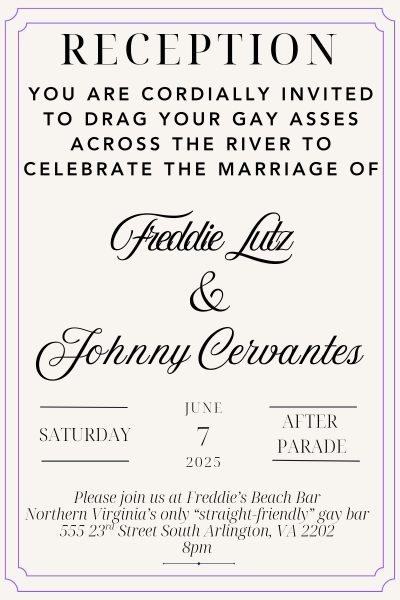
“I asked them to build a little box for Johnny, because he’s shorter than I, and he will be in black tails with a top hat, and I’ll be in white tails with a white bow tie and a white dress under it,” Lutz said, beaming while showing the Blade inspirational images of the outfits. “And the wedding reception invitation that will be passed out along the parade route says, ‘You are cordially invited to drag your gay asses across the river to celebrate the marriage of Freddie Lutz and Johnny Cervantes at Freddie’s Beach Bar, the only straight-friendly gay bar in Northern Virginia.’”



District of Columbia
Bet Mishpachah participates in D.C. Oct. 7 commemoration ceremony
Wednesday marked three years since Hamas attacked Israel
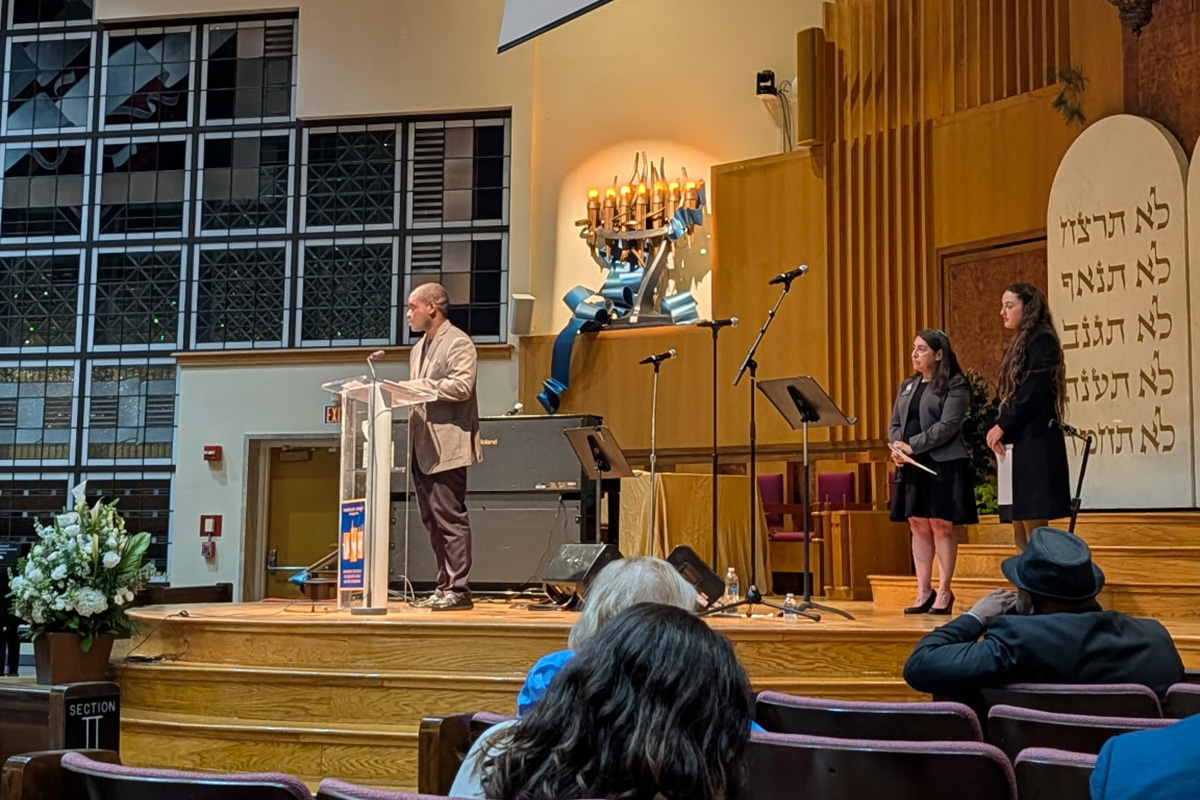
Bet Mishpachah Executive Director Joshua Maxey on Wednesday was among those who spoke at a ceremony in D.C. that marked the third anniversary of the Oct. 7 attack in Israel.
The Jewish Federation of Greater Washington hosted the ceremony that took place at the Washington Hebrew Congregation in Northwest D.C. Bet Mishpachah is the city’s LGBTQ synagogue.
“It was a deeply moving evening, especially hearing the stories of people who knew those who were murdered and those who survived and experiencing music that gave a voice to grief and hope,” Maxey told the Washington Blade.
Hamas militants on Oct. 7, 2023, killed roughly 1,200 people, including upwards of 360 partygoers at the Nova Music Festival near Re’im, a kibbutz that is a couple miles from the Gaza Strip, when it launched its surprise attack on Israel. The militants also kidnapped more than 200 people.
The Hamas-controlled Gaza Health Ministry says Israeli forces have killed more than 74,000 people in the enclave since Oct. 7.
The International Criminal Court in 2024 issued arrest warrants for Israeli Prime Minister Benjamin Netanyahu; former Israeli Defense Minister Yoav Gallant; former Hamas leader Yahya Sinwar; Mohamed Diab Ibrahim al-Masri, the head of Hamas’s military wing known as the Qassam Brigades; and Ismail Haniyeh, chair of the Hamas Political Bureau, after it accused them of committing war crimes and crimes against humanity in Gaza and Israel.
The Israeli government has strongly denied it has committed genocide in Gaza.
An Israeli airstrike on a compound in Khan Younis, a city in southern Gaza, on July 13, 2024, killed killed Deif, one of the alleged Oct. 7 masterminds. Israel less than three weeks later assassinated Haniyah in Tehran, the Iranian capital. Israel Defense Forces soldiers on Oct. 16, 2024, killed Sinwar in Rafah, a city in southern Gaza.
Hamas last October released the remaining hostages in Gaza as part of a ceasefire agreement that President Donald Trump helped broker. Israel has continued to conduct airstrikes and other military operations in Gaza since the official suspension of hostilities took effect.
“For Bet Mishpachah, it was especially meaningful to lift up the names of LGBTQ+ people, those whose identities we know and those whose stories may never be fully known, who were murdered, and to honor the LGBTQ+ survivors whose resilience continues to inspire us,” said Maxey, referring to his participation in Wednesday’s ceremony. “Emily Damari’s story is particularly poignant: while held hostage, she had to hide the fact that she was gay because she feared that revealing her identity to her captors could put her life at even more risk. Yet, she survived.”
“Her story, like so many others, reminds us of the extraordinary courage it takes simply to remain human in the face of hatred,” he added. “May we continue to remember and to mourn, to honor, and to work toward a future rooted in peace and hope.”
District of Columbia
D.C.’s LGBTQ homeless facilities face possible hit from Trump funding cuts
38 percent of homeless youth identify as LGBTQ, up from 2025
(Editor’s note: This article is part of our 2026 contribution to the D.C. Homeless Crisis Reporting Project in collaboration with other local newsrooms. The collective works will be published throughout the week at bit.ly/DCHCRP.)
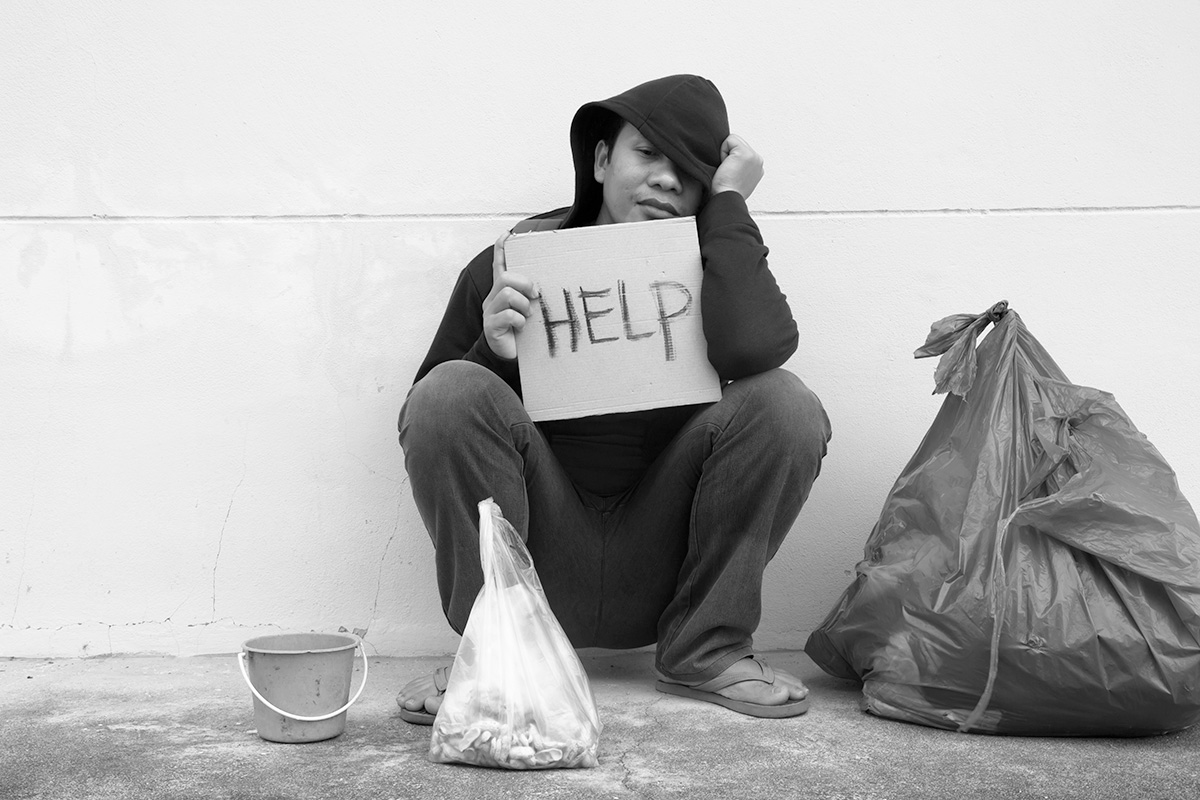
A decision by President Trump’s administration to eliminate most federal funding for community-based programs to place homeless people in permanent subsidized housing could have a severe adverse impact on LGBTQ people facing homelessness in D.C., according to local advocates.
Officials with organizations that provide services for homeless people in the D.C. area and nationally have pointed to an executive order issued by Trump last year that calls for ending federal support for so-called “Housing First” programs that arrange for permanent subsidized housing for homeless people. The officials note that Trump’s proposed fiscal year 2027 budget calls for eliminating funding for the Housing First programs.
Advocates for programs providing support for homeless people note that ending federal funding for permanent housing for homeless people will — and in some cases already has — resulted in occupants of homeless shelters and short-term transitional housing facilities remaining in those facilities far longer than in the past, preventing openings for others who need housing.
A lawsuit filed by several states and homeless advocacy organizations, including the D.C.-based National Alliance To End Homelessness, to block the Trump efforts to cut off those funds has temporarily delayed some of the funding cuts. A decision in August by a federal judge in Rhode Island declared the Trump action a violation of a federal law for failing to open the proposal for the funding cuts to public comment before putting it in place.
Court records show the U.S. Department of Housing and Urban Development (HUD), which provides the federal funding for homeless related programs, appealed the lower court ruling and an appeals court reversed the ruling pending further appeal by the parties that filed the lawsuit.
At least two of the five D.C. organizations that provide housing for homeless LGBTQ youth have said their funding so far has not been cut due to the Trump actions.
Cesar Toledo, executive director of the Wanda Alston Foundation, which currently provides transitional housing for 20 LGBTQ homeless youth, said his organization receives local D.C. government funding but no federal funding so his group has so far not been impacted by the Trump action.
Debby Shore, executive director of the Sasha Bruce Youthwork organization that provides housing for young people ages 18-24, including some LGBTQ youth, said her organization also had not yet been impacted but it could be impacted soon.
“We have not had that funding cut,” she told the Washington Blade. “What we understand is if HUD is allowed to go through with those changes, then we will,” she said. “Because we have one of our programs that’s funded directly by HUD,” which she said could be considered the type of “long term” housing that HUD wants to cut.
A spokesperson for the local LGBTQ youth advocacy organization SMYAL, which currently provides housing for 55 homeless LGBTQ youth according to its website, didn’t immediately respond to a Blade inquiry into whether they have been impacted by the Trump actions. Toledo of the Alston Foundation said he understood that SMYAL has received federal funding for its homeless program.
At least two other D.C. organizations that provide housing for homeless youth, including some LGBTQ youth – Covenant House and the Latin American Youth Center – also couldn’t immediately be reached for comment on whether they have been impacted by the Trump funding cuts.
The city’s only shelter for homeless LGBTQ adults, which is operated by the D.C. Department of Human Services and is D.C. funded, has not been immediately impacted by the Trump funding cuts, according to a DHS statement sent to the Washington Blade in response to a Blade inquiry. Called Living Life Alternative, the low-barrier shelter accommodates 40 individuals, the statement says.
It says DHS receives federal funding for its homeless services programs, and it was awaiting HUD approval for its annual federal funding grant for the city’s Permanent Supportive Housing program for homeless residents. It says the current funding for that program expires Jan. 31, 2027.
According to the statement, a separate federal grant DHS receives from HUD for homeless assistance services was approved for next year but included “a slight reduction in funding of $22,808.”
The annual 2026 Point-In-Time (PIT) count of homeless people in D.C., conducted in January, recorded a total of 5,363 people who were homeless, a 4 percent increase over the previous year.
The PIT count report shows 424 adults, or 12 percent of the adults counted, identified as members of the LGBTQ community, a slight increase over the 11.7 percent of homeless LGBTQ people counted in 2025. It shows that 38 percent of “Transition Age Youth” ages 18-24 identified as LGBTQ, an increase of one percent over the 37 percent of LGBTQ youth counted in 2025.
The Trump administration through HUD has said it supports housing for homeless people that lasts no more than two years and participants should be required to get treatment for the mental illness and substance use disorders such as drug addiction and alcoholism that many homeless people suffer from.
The Washington Post has cited studies showing that up to two-thirds of homeless people have a mental illness and two in five have a substance use disorder.
“Housing First has failed our most vulnerable and enabled addiction,” the Post quoted HUD saying in an email message. “HUD’s proposed reforms seek to address the root cause of homelessness and advance recovery, self-sufficiency, and competition that drives accountability,” the Post quoted the HUD statement as saying.
Shore, director of Sasha Bruce Youthwork, disputes that assessment, saying treatment for disorders should not be a replacement for longer term housing programs, which she said improves the outcome of treatments for disorders.
“I think the idea of putting more services in place – I don’t have any problem with that,” she said. “But suggesting that you do that in exchange for longer term supports for people does not seem to be the right way to go.”
District of Columbia
Bowser, Office of LGBTQ Affairs announce LGBTQ+ History Month events
High Heel Race to take place Oct. 27
D.C. Mayor Muriel Bowser and the D.C. Mayor’s Office of LGBTQ Affairs have announced they will join the local LGBTQ community in celebrating LGBTQ+ History Month throughout October.
An Oct. 2 joint statement from Bowser and the Office of LGBTQ Affairs says the celebration will include several events in partnership with D.C. LGBTQ organizations and LGBTQ businesses. It says among the events will be a “Birthday Bash” celebrating the 20th anniversary of the Office of LGBTQ Affairs.
“Throughout October, Washingtonians are invited to honor the people, places, movements, and milestones that have shaped the District’s LGBTQIA+ community and the community’s ongoing contributions to Washington, D.C.,” the statement says.
“LGBTQIA+ History Month is a reminder that our history is not simply something we look back on — it is something we continue to make,” Japer Bowles, director of the Office of LGBTQ Affairs said in the statement.
Bowles added that in celebrating the 20th anniversary of the Office of LGBTQ Affairs “we honor the generations of advocates, artists, organizers, businesses, and residents who built our community and continue to shape its future. This milestone is an opportunity to celebrate how far we have come while continuing to build a more welcoming, inclusive and connected Washington, D.C.”
Equality Forum, the Philadelphia-based group that initiated the nationwide annual LGBTQ+ History Month in October, has said it recognizes the history, achievements, and contributions of LGBTQ people and the organizations they have led to advance the rights of LGBTQ people.
The statement released by Bowser and the D.C. Mayor’s Office of LGBTQ Affairs says these are among the upcoming events planned for October:
The Relationship Lab: A Healthy Relationships Series
Join us for an engaging series exploring what makes relationships healthy and how to recognize the signs when they’re not. Facilitated by DC SAFE in partnership with MOLGBTQA (The Mayor’s Office of LGBTQ Affairs.)
- When: Tuesday, Oct. 6, 13, and 20, 6-7:30 p.m.
- Where: 899 North Capitol St. N.E.
- RSVP: The Relationship Lab
MOLGBTQA Birthday Bash
Join us for the 20th Anniversary Celebration! We will be hosting an upbeat gathering, highlighting community leaders, advocates, artists, and institutions who have advanced LGBTQIA+ progress in Washington, D.C. over the last two decades. This event will highlight key milestones and the contributions of LGBTQIA local community partners with live entertainment and free refreshments.
- When: Thursday, Oct. 15, 6-9 p.m.
- Where: Penn Social (801 E St. N.W.)
- RSVP: s.dc.gov/MOLGBTQABday
Mayor’s LGBTQ+ Advisory Committee
Come get to know the newest members of the Mayor’s LGBTQ+ Advisory Committee. This diverse group of leaders, business owners, and advocates advise the mayor and Director Bowles on issues relating to DC’s LGBTQIA+ community and the Office of LGBTQ Affairs.
- When: Monday, Oct. 19, 6-7 p.m.
- Where: DC LGBTQ+ Community Center (1827 Wiltberger St., N.W.)
- RSVP: s.dc.gov/LGBTQMACoct
39th Annual 17th Street High Heel Race
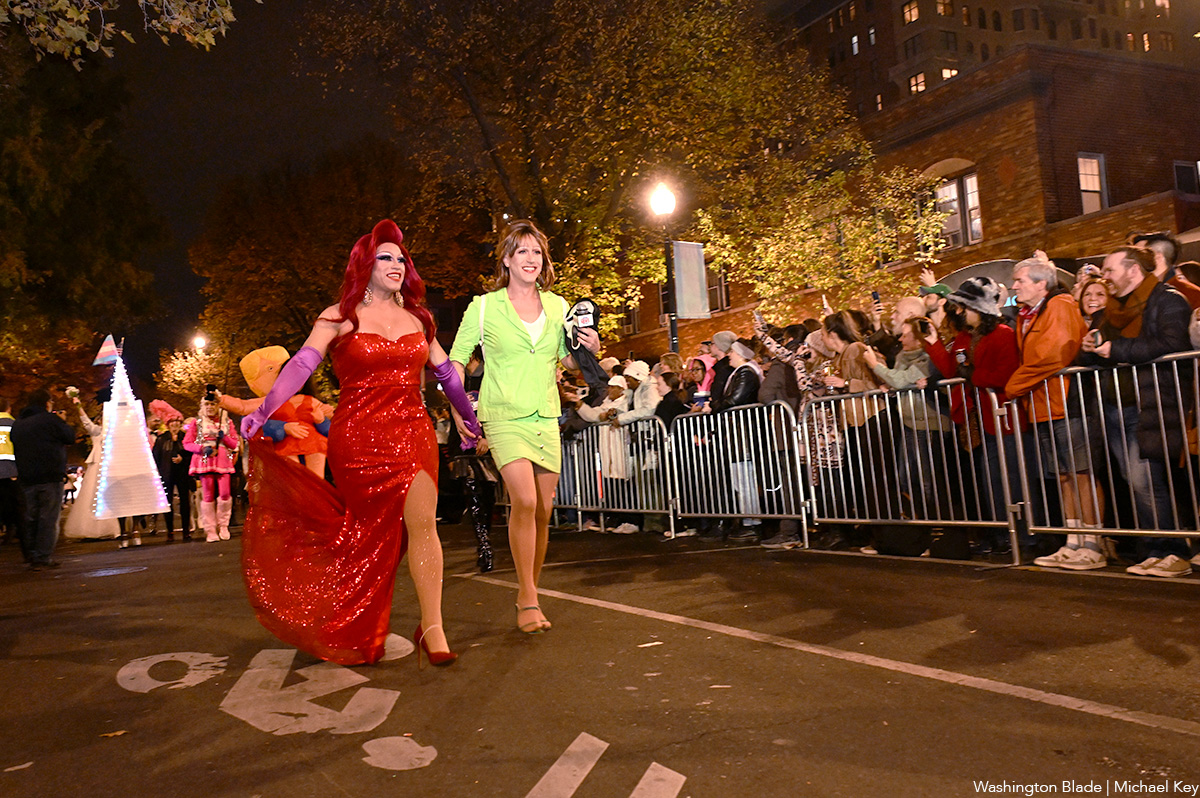
Join us for the High Heel Race, cheering the queens, kings, and our community members as they sprint down 17th Street in heels, creativity, and pure D.C. spirit. From lively drag performances to thousands of neighbors filling the street, don’t miss this D.C. night!
- When: Tuesday, Oct. 27, 6-10 p.m.
- Where: 17th Street between R and P Streets, N.W.
- RSVP: s.dc.gov/2026HHR
What appeared to be the first LGBTQ+ History Month-related event to take place in D.C., called PRIDEtoberfest, was held Saturday, Oct. 3 from noon to 11:30 p.m. at the city’s Wunder Garten outdoor beer garden and event facility at 1101 First St., N.E. A flyer announcing the event says the Capital Pride Alliance and the Mayor’s Office of LGBTQ Affairs were among the event’s participants.
“We proudly attended, tabled, and I gave remarks at the Pridetoberfest this weekend,” Japer Bowles, director of the LGBTQ Affairs Office told the Blade.”

Bet Mishpachah participates in D.C. Oct. 7 commemoration ceremony

Man charged in Mall of America shooting plot inspired by Pulse massacre: report

Bar Betsie, inviting and intimate, marks one-year anniversary

Trump, Netanyahu, and Putin are all war criminals

Center Arts Gallery celebrates 10 years with reception, auction

Eliot Glazer’s new book an engaging collection of essays

Equality Chamber hosts Pride in Business Expo and Profits & Pours

Learn more about Virginia’s queer history

‘Merrily’ is for Sondheim super fans, the uninitiated, and anyone in between

The financial realities facing LGBTQ+ first-time buyers
-

 Books5 days ago
Eliot Glazer’s new book an engaging collection of essays
-
Out & About5 days ago
Equality Chamber hosts Pride in Business Expo and Profits & Pours
-
Out & About5 days ago
Learn more about Virginia’s queer history
-
Theater5 days ago
‘Merrily’ is for Sondheim super fans, the uninitiated, and anyone in between