National
Paul latest to surge as Iowa caucuses approach
Romney, Gingrich remain at top of national polls

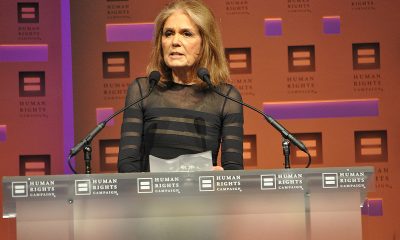
Republican presidential candidate Ron Paul (photo via wikimedia by R. DeYoung)
The GOP presidential race continues to twist and turn two weeks before the Iowa caucuses as libertarian Rep. Ron Paul surges and hopes to win the first in the series of contests that will determine who will take on President Obama in 2012.
Paul, who’s represented Texas in the U.S. House since 1997, has risen to the top of the pack in the most recent polls asking Iowa Republicans which candidate they prefer as the caucuses approach on Jan. 3.
According to an InsiderAdvantage/Majority Opinion Research poll published Sunday, Paul has support from 23.9 percent among Iowa Republicans who say they’ll vote in the caucuses. Former Massachusetts Gov. Mitt Romney comes in second with support from 18.2 percent, followed by Texas Gov. Rick Perry at 15.5 percent and former U.S. House Speaker Newt Gingrich at 12.9 percent.
A victory for Paul in Iowa could complicate matters for other Republican presidential candidates who are enjoying support nationwide. According to a national CNN/ORC International poll published on Monday, Romney and Gingrich are tied for the lead at 28 percent, while Paul comes in third at 14 percent.
Paul’s record is distinctive among other Republicans in the race as being more pro-LGBT than others.
The lawmaker voted on two separate occasions in 2004 and 2006 against a Federal Marriage Amendment that would have banned same-sex marriage throughout the country. Paul was among the five Republicans who voted for “Don’t Ask, Don’t Tell” repeal on the House floor in May even before the Pentagon released its report in November 2010.
Paul has also been unique among his fellow GOP candidates on the issue of same-sex marriage by saying the federal government should get out of the business of regulating marriage — in keeping with his libertarian views. He is one of a few who hasn’t signed the National Organization for Marriage’s pledge to oppose same-sex marriage as president — much to the consternation of the organization.
According to the Boston Globe, Paul articulated his thoughts on marriage on Wednesday while speaking to students at Straight A Academy, a small non-traditional private school in Manchester, N.H., in response to a question from the audience.
“Why should the government be telling you what marriage is all about?” Paul was quoted as saying. “You might have one definition. I have another definition.”
Paul reportedly said he personally believes marriage is between one man and one woman, but said regulations involving marriage should be up to the states. He then advocated creating a secular agreement for relationship recognition in which, “you can go to court to resolve the differences and the arguments over it.” A Paul spokesperson later clarified no federal benefits would be conferred as a result of these contracts such as tax benefits.
But Paul has expressed support for the Defense of Marriage Act and has been been critical of the Obama administration’s decision to no longer defend the anti-gay law in court. Paul issued a statement condemning the announcement when it was made in February.
“Today’s announcement that the Obama administration will abandon its obligation to enforce DOMA is truly disappointing and shows a profound lack of respect for the Constitution and the Rule of Law,” Paul said in a statement at the time.
The lawmaker has also voted against hate crimes protections legislation. Paul didn’t vote on a version of the Employment Non-Discrimination Act when it came to the House floor in 2007.
R. Clarke Cooper, executive director of the Log Cabin Republicans, said Paul’s positions on LGBT issues are “founded on his perspective of states’ rights.”
“For him, it’s more of the principle that people should be able to live their lives as they choose without the government impeding on that,” Cooper said.
But Jerame Davis, interim executive director of the National Stonewall Democrats, said Paul’s “constant refrain of states rights” is what is most troubling about his candidacy.
“States don’t have rights in and of themselves — they are just another division of government that derives their power from the people,” Davis said. “The states rights argument has been used to perpetrate some of the worst aspects of American history. It scares the hell out of me to hear someone running for president use this refrain, especially when you consider Ron Paul’s opposition to the Civil Rights Act was based, at least partially, on this notion.”
Anti-gay Iowa leader endorses Santorum
In related news, a leading anti-gay activist in Iowa threw his support behind Republican presidential candidate Rick Santorum in an endorsement on Tuesday — a decision that may give the trailing candidate a boost in the polls.
Bob Vander Plaats, CEO of FAMiLY LEADER, said during a news conference that Santorum could be “the Huckabee in this race,” referring to the former Arkansas governor and social conservative favorite Mike Huckabee who won the Iowa caucuses in 2008.
“I saw him as a champion for the family in the U.S. House, I saw him as a champion for the family in the U.S. Senate. I saw him as a champion for the family on the campaign trail,” Vander Plaats said. “So today, I, as an individual, am going to endorse Rick Santorum. I’m going to mobilize whatever resources that I have at my disposal to advocate for him.”
Vander Plaats, who ran unsuccessfully for Iowa governor in 2010, has been working against marriage rights for same-sex couples in Iowa since the State Supreme Court ruled in favor of such rights in 2009. The activist led the successful effort to unseat three justices who ruled in favor of marriage equality during a 2010 referendum.
Chuck Hurley, who heads the FAMiLY LEADER’s Iowa Family Policy Center, also endorsed Santorum. These endorsements are personal and not on behalf of FAMiLY LEADER, they both have said. During the news conference, Vander Plaats said the board “reached unanimity” that the organization wouldn’t endorse any particular candidate during the Iowa caucuses.
Troy Price, executive director of the pro-LGBT group One Iowa, said Vander Plaats’ endorsement of Santorum “comes as no surprise” and demonstrates he’s “out of touch” with what voters want.
“Both Santorum and Vander Plaats have built their careers attacking loving and committed gay and lesbian couples, and the fact is that Vander Plaats caved to the extreme social conservative agenda,” Price said. “With poll numbers lagging, it is clear Rick Santorum does not have a chance against President Obama in November, and Vander Plaats has endorsed a losing candidate.”
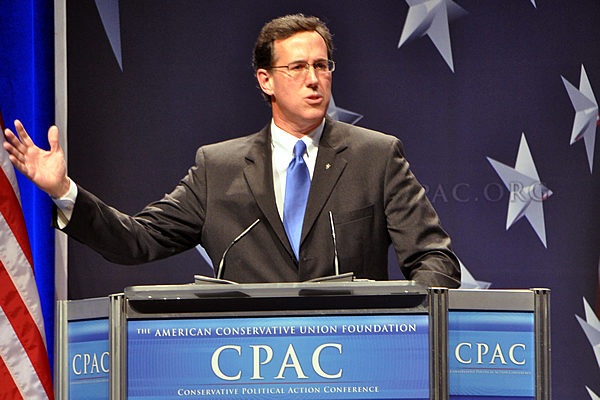
Republican presidential candidate Rick Santorum (Blade file photo by Michael Key)
According to the Des Moines Register, Santorum was eating a cinnamon roll in Pella, Iowa after a campaign stop when he found out about Vander Plaats’ and Hurley’s endorsement.
“There’s a lot of good people out here running, and I’m sure it was a tough decision. I think it shows that we’re the candidate right now that has the momentum, that has the message that’s resonating to the people of Iowa,” Santorum said.
Santorum has had a long history of anti-gay views and positions, even during the course of his time representing Pennsylvania in the Senate from 1995 to 2006. Santorum was one of the architects of the Federal Marriage Amendment. In an interview with the Associated Press, Santorum made notorious comments equating homosexuality to bestiality and pedophilia.
“In every society, the definition of marriage has not ever to my knowledge included homosexuality,” Santorum was quoted as saying. “That’s not to pick on homosexuality. It’s not, you know, man on child, man on dog, or whatever the case may be. It is one thing. And when you destroy that you have a dramatic impact on the quality.”
Following the remarks, Dan Savage, a Seattle-based gay activist, launched an effort to coin the word “santorum” as a sexual neologism. That definition remains the No. 1 result of “santorum” when the word in entered into Google.
Over the course of his campaign, Santorum has been emphasizing anti-gay views and his opposition to same-sex marriage perhaps more than any other presidential candidate. In addition to pledging to reinstate “Don’t Ask, Don’t Tell,” Santorum said “our country will fail” as a result of same-sex marriage. He also raised eyebrows in August when he said same-sex marriage is like “saying this glass of water is a glass of beer.”
Santorum is also among the candidates who has signed a pledge from the National Organization for Marriage committing himself to, among other things, backing the Federal Marriage Amendment and defending the Defense of Marriage Act in court.
Despite Vander Plaat’s endorsement, Santorum trails the other candidates. The CNN/ORC International poll revealed Santorum has support from just 4 percent of Republicans nationwide. The candidate is one of only a few candidates in the Republican field who hasn’t experienced a surge sometime over the course of his campaign.
The polling results are similar in Iowa, despite the strong presence of evangelical voters in the state. The InsiderAdvantage/Majority Opinion Research found that Santorum has support from just 3.8 percent of registered Republicans who are set to vote in the caucuses.


Georgia
Everton Blair makes history as first openly gay congressman from Ga.
Former Gwinnett County Board of Education member to serve remainder of David Scott’s term
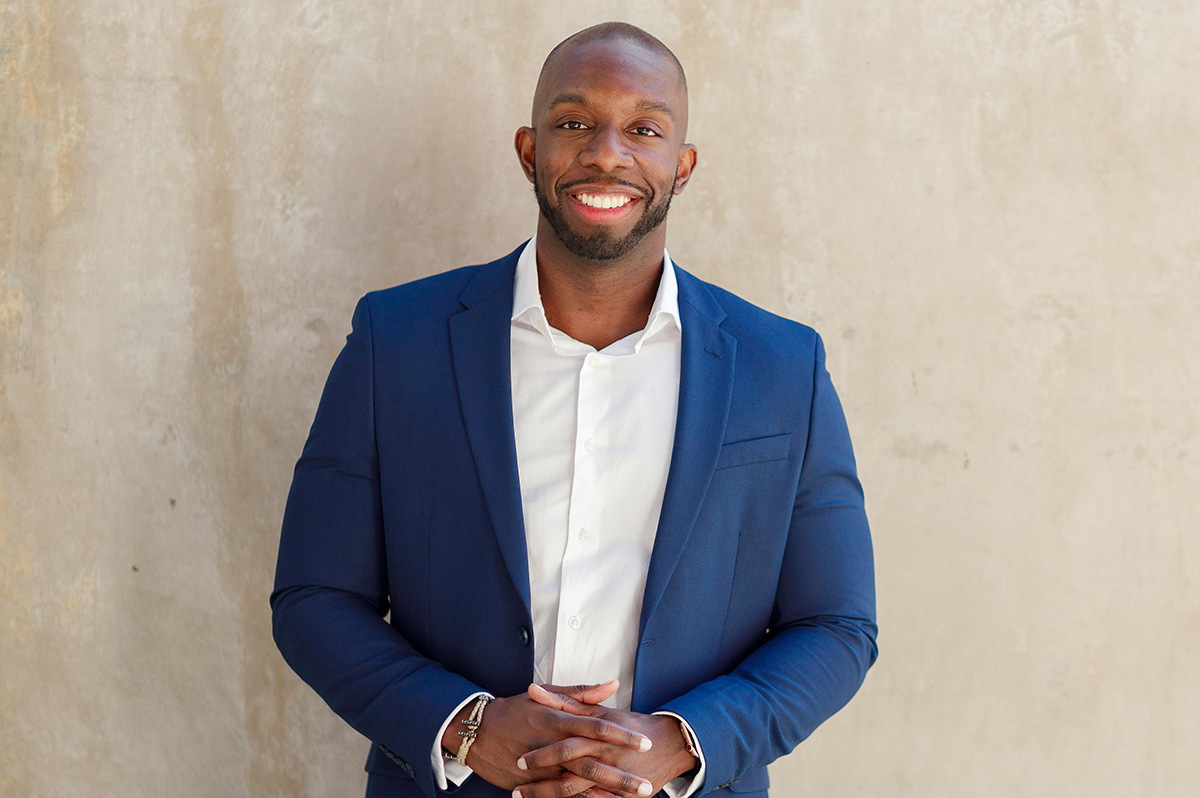
Georgia made history last week when Everton Blair, Jr., was sworn into the U.S. House of Representatives, becoming the state’s first openly LGBTQ member of Congress and the latest LGBTQ addition to the chamber.
Blair, who represents Georgia’s 13th Congressional District, was sworn in on Sept. 1 after winning a special election to fill the vacancy left by the late-Congressman David Scott. Blair defeated Marcye Scott, the late congressman’s daughter, in the Aug. 25 runoff, winning 53.2 percent of the vote to Scott’s 46.8 percent.
He will serve the remainder of Scott’s term through Jan. 3, 2027. Blair is not running in the November general election for a full term.
Blair brings a progressive platform to Congress.
The 34 year-old supports Medicare for All, a Green New Deal, raising the minimum wage, and universal gun background checks. His campaign platform also included positions on LGBTQ rights, reproductive freedom, workers’ rights, climate, and gun violence.
Since joining the House, Blair has joined the Congressional Black Caucus and Congressional Progressive Caucus. He is also a co-chair of the Congressional Equality Caucus.
Before joining the House, Blair served on the Gwinnett County Board of Education, where he became the first Black member and youngest-ever member elected to the board, as well as its first openly gay member. He was later unanimously selected as chair.
Blair also served as a fellow in President Barack Obama’s White House Initiative on Educational Excellence that focused on improving academic outcomes and expanding opportunities for minority students.
The son of Jamaican immigrants, Blair was born and raised in Georgia’s 13th Congressional District. He earned a bachelor’s degree in applied mathematics from Harvard University, a master’s degree in policy, organization, and leadership from Stanford University, and a Doctor of Education Leadership degree from Harvard.
Blair’s campaign received endorsements from a number of organizations, including the LGBTQ+ Victory Fund and progressive Democratic groups such as Future Democrats.
The Equality PAC, a political action committee dedicated to electing openly LGBTQ candidates to office, celebrated Blair’s victory and provided a statement to the Washington Blade about the historic nature of his election.
“This is a historic election for Georgia, the South, and our entire country,” Equality PAC said in an email. “Everton Blair brings a strong record of public service and a deep commitment to making government work for working families.”
The group said Blair would “fight to lower costs, expand access to quality health care, create economic opportunity, and ensure every community has a voice in Washington.”
“At the same time, Everton understands the importance of standing up for equality and defending the rights and freedoms of LGBTQ Americans and every community facing discrimination,” Equality PAC said. “His historic election as Georgia’s first openly LGBTQ Member of Congress and the first openly LGBTQ man elected from the South is a powerful reminder of how far our country has come — and how much work remains.”
Equality PAC said it was “proud to welcome Everton to the House” and looked forward to working with him.
U.S. Military/Pentagon
Pentagon expands testosterone screening as trans troops face hormone therapy restrictions
Defense Department says updated guidelines to be issued shortly

The Pentagon has announced that new clinical guidance will be released establishing mandatory testosterone deficiency screening for active-duty and reserve cisgender male service members ages 30 and older, advancing a policy that expands hormone-related care for cisgender troops.
The Defense Department said the existing clinical guidelines, which are not currently available on the Defense Health Agency’s website, are being updated and that the final guidance will be issued shortly.
The announcement comes amid a wave of anti-transgender policies from both the DoD and the Trump-Vance administration, which continue to prohibit trans men from receiving the same treatment.
Under the forthcoming guidance, men ages 30 and older will be forced to undergo testosterone blood tests as part of their medical care. Younger male service members will be tested if they request screening or if clinicians identify warning signs of low testosterone.
The new guidelines formalize a screening program Defense Secretary Pete Hegseth announced in July, when he said the Pentagon would begin testing service members to ensure that “you have the right testosterone levels to operate at your absolute best.”
“Taking care of your long-term health means ensuring you remain strong, resilient, and capable — not just for your next deployment, but for the rest of your life, so you can thrive long after you take off the uniform,” Hegseth said at the time.
The Defense Health Agency’s clinical guidance says the program is intended to address “hormonal and energy-availability issues.” Hegseth said in July that testosterone replacement therapy would remain voluntary for service members if treatment is recommended.
The Food and Drug Administration is also scheduled to hold a meeting later this month with experts to discuss the medical use of testosterone.
The Pentagon’s push to routinely test testosterone levels runs counter to current medical guidance, which generally recommends considering testosterone therapy only for men who have symptoms consistent with low testosterone and have documented low hormone levels on two separate blood tests.
Testosterone is a sex hormone naturally produced by people of all sexes. It plays a role in regulating muscle mass, bone density, and sex drive. Testosterone levels in men naturally decline with age and have been associated with symptoms including erectile dysfunction, low libido, mood changes and weight gain, although experts continue to debate when testosterone therapy is medically appropriate.
The policy has drawn scrutiny from LGBTQ advocates because the Pentagon and Hegseth have simultaneously cited hormone therapy as part of the rationale for removing trans service members from the military.
Under President Donald Trump’s 2025 executive order, “Prioritizing Military Excellence and Readiness,” the military has moved to bar trans people diagnosed with gender dysphoria from serving and has begun formal administrative separation proceedings against trans personnel.
The Pentagon continues to pursue implementation of the trans military ban as litigation over the policy proceeds. As a result, some trans service members have had their gender-affirming hormone therapy halted even as the Pentagon expands testosterone screening and potential treatment for cisgender service members.
SPARTA Pride, a nonpartisan nonprofit organization made up of trans service members, veterans and their allies, criticized the disparity to the Washington Blade when Hegseth first announced the screening program.
“If hormone therapy helps warfighters perform at their best, then it cannot simultaneously be used as evidence that transgender service members are unfit to serve,” said Kara Corcoran, executive director of SPARTA Pride. “The same class of evidence-based medical treatment cannot be characterized as readiness-enhancing for one group and readiness-destroying for another.”
On June 1, the U.S. Court of Appeals for the D.C. Circuit ruled that trans service members already serving in the military could continue to do so while allowing the armed services to continue refusing to enlist new trans recruits.
The Blade reached out to the Pentagon when the testosterone screening program was first announced in July, asking why cisgender service members could receive testosterone therapy while transgender service members could not. The Pentagon did not respond.
National
Lou Chibbaro Jr. documentary wins award from NLGJA
‘Lou’s Legacy’ produced by D.C.’s Mattachine Society

“Lou’s Legacy: a Reporter’s Life at the Washington Blade,” a documentary produced by The Mattachine Society of Washington, D.C., will receive an Excellence in Journalism Award from NLGJA, the Association of LGBTQ+ Journalists.
The film premiered on WETA PBS in D.C. and Maryland Public Television (MPT) in June of 2025. The documentary’s Emmy-nominated director and producer Patrick Sammon will accept the award for Excellence in Local Television on Sept. 11 at NLGJA’s National Convention in San Francisco.
“Lou’s Legacy” was produced in association with the Mattachine Society of Washington, D.C., a non-profit LGBTQ history society dedicated to conducting original archival research. Aside from Sammon, the NLGJA is recognizing other members of the film’s production team including Producer Julianne Donofrio, Editor Amir Jaffer, Executive Producer Charles Francis, and Executive Producer Pate Felts.
“Lou’s Legacy” tells the story of two D.C. icons — legendary Washington Blade reporter Lou Chibbaro Jr. and beloved drag performer Donnell Robinson, known to generations of Washington audiences as “Ella Fitzgerald.” Through Lou’s nearly five-decade career at the Blade and Ella’s return to the stage after a three-year hiatus following COVID, the 29-minute documentary explores the history of Washington’s LGBTQ community and today’s rising backlash against LGBTQ rights, including laws targeting drag performers.
“All students of journalism can learn a lot from the story of Lou Chibbaro, Jr. Lou has chronicled nearly five decades of LGBTQ+ life and the community’s struggle for equality in Washington, D.C. Lou’s work and the role of the queer press has been essential in covering stories the mainstream media would often ignore or erase,” said Ryan Levi, president of the D.C. chapter of the NLGJA.
“We are thrilled to receive this award from the NLGJA,” said the film’s director Patrick Sammon. “Lou Chibbaro’s nearly five decade career at the Washington Blade demonstrates the essential role LGBTQ journalism plays in telling our community’s stories and documenting its history. This recognition from journalists who follow in Lou’s footsteps is particularly meaningful to me and the rest of our production team.”

Everton Blair makes history as first openly gay congressman from Ga.

Mujer trans salvadoreña es encontrada sin vida

Iceland implements gender-neutral blood donor rules

Blade Foundation to host fundraiser in Rehoboth on Sept. 12

New book examines fashionista Audrey Smaltz’s fabulous life

Gloria Steinem dies at 92

Pentagon expands testosterone screening as trans troops face hormone therapy restrictions

Swiss government backs nationwide conversion therapy ban

Calendar: September 4-10