News
Durbin calls on Ill. lawmakers to approve marriage equality
No. 2 Senate Democrat says passage would end discrimination
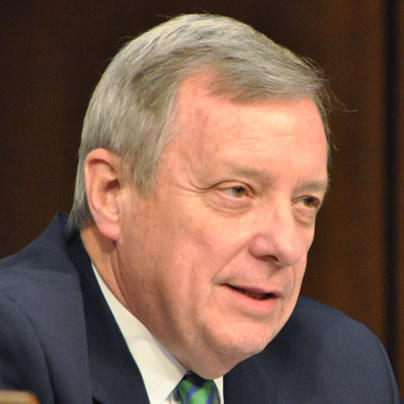
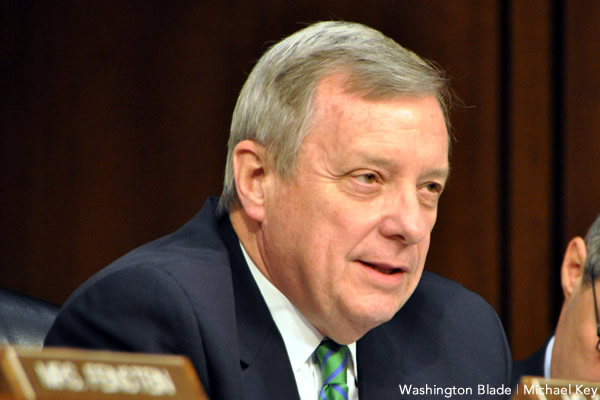
Sen. Dick Durbin is calling on Ill. lawmakers to pass marriage equality (D-Ill.) (Washington Blade file photo by Michael Key)
The No. 2 Democrat in the U.S. Senate is calling on legislators in his state to pass legislation that would make Illinois the 10th state in the country to legalize same-sex marriage.
In a letter dated Jan. 3 to state lawmakers, Senate Majority Whip Richard Durbin (D-Ill.) talks about his own evolution on the issue of marriage rights for gay couples, saying he’s concluded that “ending this discrimination” against them is “consistent with the evolution of civil rights in our democracy.”
“Every generation is given a chance to put an end to some form of discrimination in America,” Durbin writes. “As you consider this historic vote, I hope you will reflect on those you will meet after it is cast. An affirmative vote will give you a chance to look into the eyes of those who have faced discrimination throughout their lives and tell them that you voted to affirm their rights under the law.”
Durbin has previously expressed support for marriage equality and among the members of the Senate Judiciary Committee who voted to report out to the Senate legislation that would repeal the Defense of Marriage Act last year. As a U.S. House member in 1996, Durbin voted in favor of DOMA.
Supporters of same-sex marriage in Illinois were pushing to pass same-sex marriage legislation by the time the General Assembly adjourns on Jan. 8. According to the Windy City Times, the legislation won’t come to a vote this week and “repeated foibles” bring into question whether the bill will pass before the next session begins.
Durbin’s letter follows a statement issued by a White House spokesperson last week indicating President Obama also supports the Illinois marriage equality legislation and would vote in favor of it if he were a legislator in the state, which he was from 1997 to 2004.
The office of Sen. Mark Kirk (R-Ill.), the junior senator from Illinois, didn’t respond to the Washington Blade’s request to comment on the marriage equality legislation. Kirk had only Thursday returned to the Senate after recovering from a stroke.
Had Kirk come out in support of the legislation, he would be the first Republican member of the U.S. Senate to endorse marriage equality. Illinois State GOP Chair Pat Brady has called on Republicans in the state to support the bill, but said he was doing so in a personal capacity.



Delaware
Delaware fines Rehoboth bar $15,000 for discriminating against trans woman
Hideout told patron she had to use men’s room due to gender marker on driver’s license
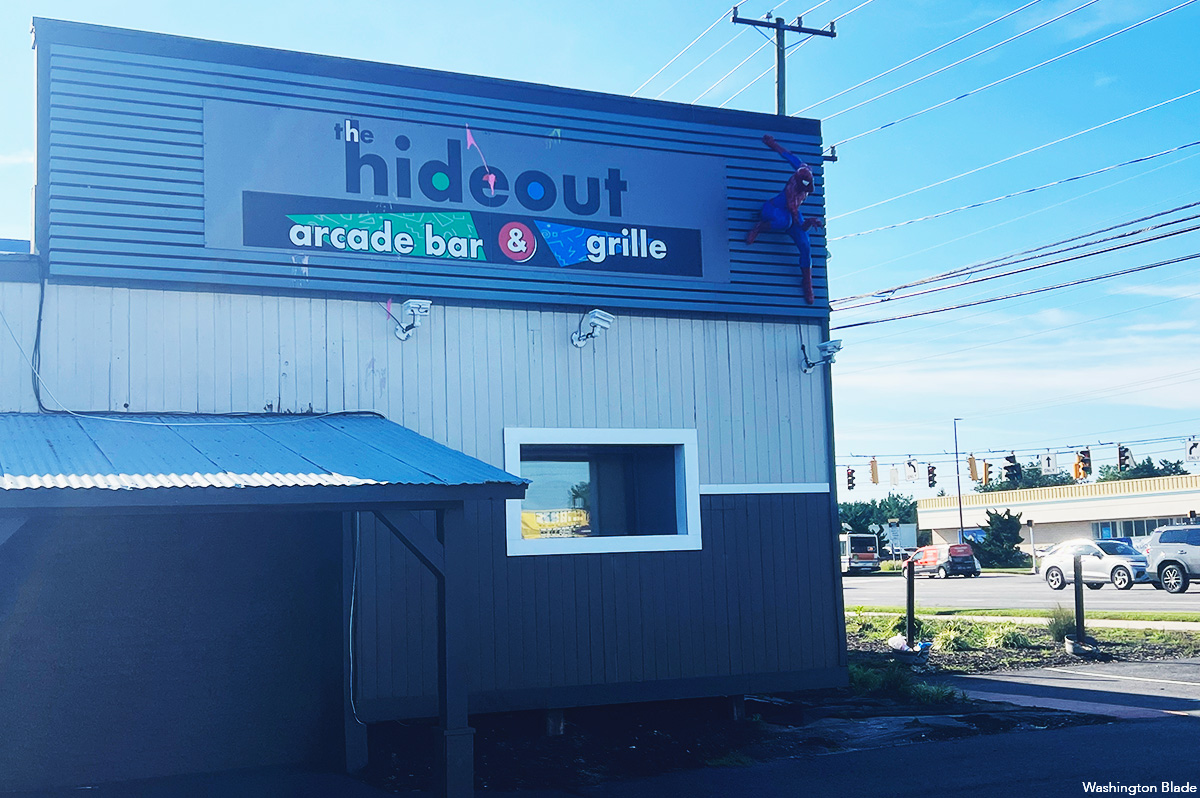
The Delaware Human and Civil Rights Commission voted to fine Hideout Arcade Bar & Grille $15,000 last month due to a discrimination complaint filed by a trans woman over her use of the bathroom.
Katie Sorber, a transgender woman, said that on April 5, 2023, she was stopped by employees and told she could only use the men’s bathroom due to the “male” gender marker on her driver’s license. This occurred after Sorber presented her ID upon entering the bar and ordering a drink.
Sorber took to Facebook to complain about her experience at the bar after she was told to use the men’s bathroom.
On April 12, 2023, Sorber returned to the Hideout but was barred from entering due to her post on social media.
Following Sorber’s post, Bryan Derrickson, the owner of Hideout Arcade Bar & Grille, allegedly began enforcing a policy in which patrons had to use the bathroom that corresponded to the gender marker on their ID.
Derrickson was ordered to pay $10,000 to Sorber, $5,000 to the Special Administration Fund, as well as conduct anti-discrimination training with employees, remove the ban on Sorber from the establishment, and revise the bar’s bathroom policy.
The commission ruled that the bar and Derrickson had wrongfully discriminated against Sorber on the basis of her gender.
Derrickson’s explanations for the denial included safety concerns, a third-party patron complaint, and a reference to the health code. The panel found this to be inconsistent and lacking factual support upon cross-examination.
The case was evaluated under the Delaware Equal Accommodations Law, which explicitly prohibits discrimination and retaliation in places of public accommodation based on gender identity.
This was the second time that the bar has been fined for discriminating against a transgender woman. The bar received a $2,000 penalty in September of last year for denying a transgender woman entry in 2023.
Half of the fine went to Kathy Carpenter Brown, the trans woman who experienced the discrimination. Brown is the founder of TransLiance, an LGBTQ+ advocacy group in Delaware.
Obituary
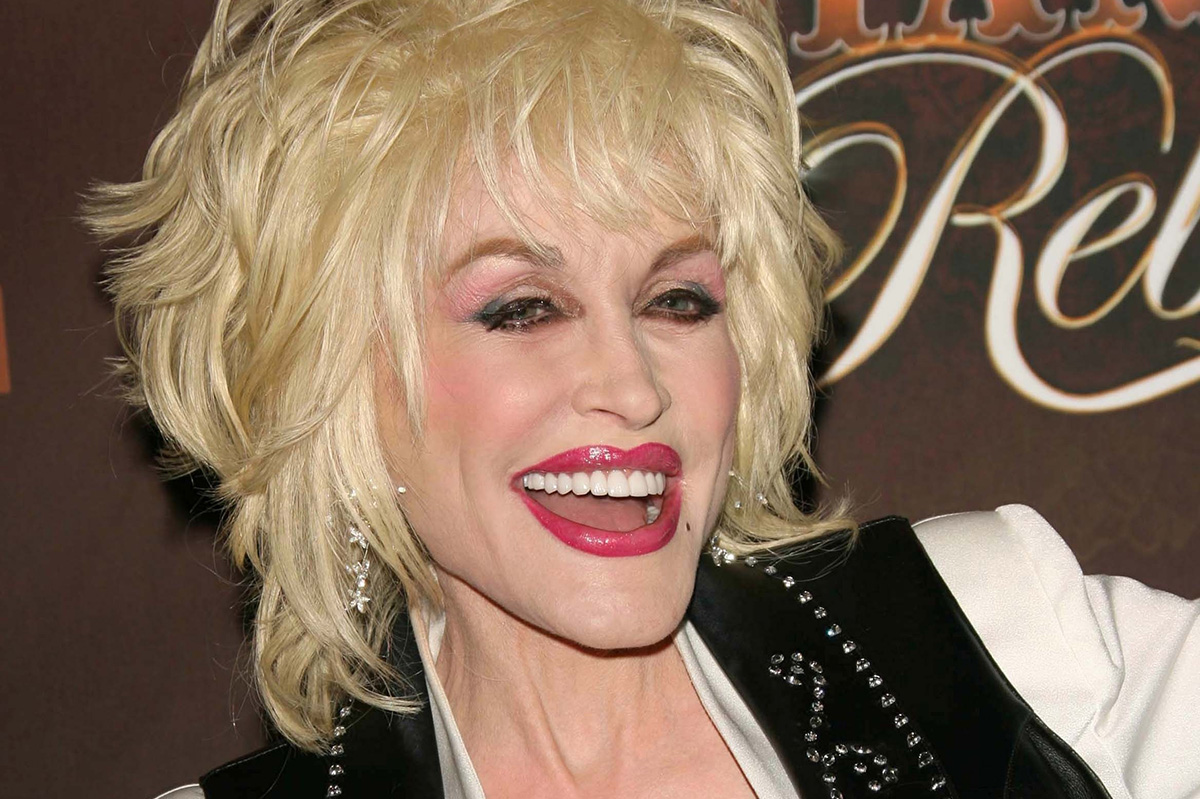
Music icon and dear LGBTQ friend Dolly Parton remembered
‘Queen of Country’ died on Tuesday in Nashville
I don’t want to say goodbye.
To be honest, my first impression of music icon Dolly Parton was similar to the scathing look the demur Jane Fonda gave the boss’s secretary in one of my favorite funny feminist films ever, “9 to 5.”
Fonda’s aghast up-and-down scrutiny was pure unspoken tsk tsk condescension toward this bubbly dumb-blond wigged white trash colleague — until she looked down at her own flat chest. For a moment, Fonda suggested a hint of envy, at which we laughed. I felt a sigh of relief at not having to carry around all the weight Dolly Parton’s boobs implied.
Those boobs, those big blond country-western wigs, and her seemingly irrepressible humor were as much a part of Dolly Parton’s brand as was her incomparable voice and the songs she wrote that moved generations. In 1974, I longed to love someone as much as Dolly loved the person for whom she wrote her goodbye, “I Will Always Love You.”
Surely, someone with that big a heart was bigger than the tight bodice society forced innovative go-getters like Dolly Parton to squeeze into.
In fact, Parton’s difficult backstory of childhood poverty in Sevierville, Tenn., living in a cabin with no running water and 11 siblings — and an ambition infused with a love-your-neighbor Christian upbringing — created a depth of character that used smarts, ingenuity and humor to thwart her stereotype-blinded detractors.
“Well, I graduated [high school] on a Friday night and headed out on a Saturday morning,” Parton told ABC News’s Robin Roberts in an extensive interview in advance of the 2019 CMA Awards. “As I make jokes about it with my matching luggage, those four paper bags from the same grocery store. I thought, well, I can’t be any poorer than I already am, and I’m a girl. I’ll find some boy that’ll take me to Shoney’s … I thought I’m not going to go hungry.”
Like Billie Jean King and other female professionals, Dolly Parton fought hard to get paid what she was worth.
“It’s not all about money,” she said. “I count my blessings more than I count my money, but I need to count my money, too.”
Tough times taught her how to be tough and funny. “Well, I don’t think people can live in this world without going through times like that,” Parton told Roberts. “People always look at me; they always say, ‘Oh, you just always seem to be so happy.’ I said, ‘That’s the Botox.’ No, but seriously, I’m a very sensitive person. I feel everything to the core.”
That’s what makes her famous 1977 interview with ABC’s Barbara Walters so compelling. Walters had become infamous for making her interview subjects cry after asking tough, prying, sometimes rude questions that she said her audience wanted answered.
“You don’t have to look like this; you’re very beautiful. You don’t have to wear the blonde wigs; you don’t have to wear the extreme clothes, right?” Walters asked the brightly dressed Parton.
Parton delivered a master class in grace and class.
“It’s certainly a choice,” Parton replied. “I don’t like to be like everybody else. I’ve often made the statement that I would never stoop so low as to be fashionable. That’s the easiest thing in the world to do.”
Chuckling yet? Parton wanted attention, then she could dazzle them with talent. “Once they got past the shock of the ridiculous way I looked, then they would see there’s parts of me to be appreciated. I’m very real where it counts … and that’s inside,” Dolly Parton told Barbara Walters. “Show business is a money-making joke, and I just always like telling jokes.”
Walters then asked Parton — the beloved star with 19 studio albums and a slew of awards won over a decade in the male-dominated music business: “Do you ever feel like you’re a joke, that people make fun of you?”
Parton was the personification of composure.
“I know they make fun of me. But actually, all these years people have thought the joke was on me, but it’s actually been on the public. I know exactly what I’m doing, and I can change it at any time. I make more jokes about myself than anybody,” Parton said.
“I am sure of myself as a person. I am sure of my talent. I’m sure of my love for life,” Parton said. “And I’m very content. I like the kind of person that I am. So I can afford to piddle around and do-diddle around with make-up and clothes and stuff. Because I am secure with myself.”
Game, set, match to Parton.
In another ABC interview in 2012, Parton expanded on that over-the-top signature style which she adopted after seeing the town tramp.
“There was this woman, we won’t call her names, but she was beautiful,” she told ABC News Nightline. “I had never seen anybody, you know, with the yellow hair all piled up and the red lipstick and the rouge and the high-heeled shoes, and I thought, ‘This is what I want to look like.’”
As the image implies, there were constant rumors that she was secretly involved with any male within inches — as well as a secret lesbian life with her oldest childhood pal, Judy Ogle. She denied the rumor — she was married to Carl Dean for 58 years. He died in March 2025.
Dolly Parton died peacefully on Tuesday, Aug. 25, 2026, at the age of 80 in Nashville after a “brief battle with cancer,” her team wrote in a statement to People.
“Our beloved Dolly Parton spent her life and career bringing joy, laughter, hope, and integrity into everything she touched. Her unmatched generosity reached the lives of countless people whom she would never meet, yet she was always there to offer a helping hand,” they wrote.
“Whether it be the hundreds of millions of books donated through her invaluable Imagination Library or funding research that helped create a lifesaving vaccine used around the world, Dolly’s unconditional love for all people was the guiding force for her lasting impact. After bravely facing a brief battle with cancer, Dolly departed her Earthly life today at the Vanderbilt-Ingram Cancer Center, surrounded by loved ones,” the statement concluded.
The music world is in mourning. And news outlets are overflowing with tributes. Few of them mention us. In fact, one note of criticism for some is a precise example of that “unconditional love for all people” her team talked about.
“The ’80s — a decade she kicked off in grand fashion with the working woman’s anthem ‘9 to 5’ — brought Parton some of her greatest mainstream success, but the climate of the times also conspired to reduce her to a punchline and a caricature: The self-made country-pop queen who had pulled herself up by her bra straps. She played along, as an act of self-preservation, but it is a consolation to know that she lived long enough for her reputation as a songwriter to rise considerably in the 21st century,” Lindsay Zoladz wrote in her “appraisal” of Dolly Parton, who “had the voice, and concerns, of an Earth Angel” for the New York Times.
Damn, bitch! Have you never even seen a Dolly Parton drag queen? There’s almost a cottage industry devoted to Dolly. And Dolly knew — and loved it! She even participated in a Dolly Parton drag contest at a gay LA bar — which she lost!
“They had a bunch of Chers and Dollys that year, so I just over-exaggerated — made my beauty mark bigger, the eyes bigger, the hair bigger, everything,” Parton laughingly told ABC News Nightline. “All these beautiful drag queens had worked for weeks and months getting their clothes. So I just got in the line, and I just walked across, and they just thought I was some little short gay guy … but I got the least applause.”
Dolly Parton lost the Dolly Parton look-alike contest in an LA gay bar! But she hasn’t lost the ineffable connection to her fans — whom she understood, felt, and fought for — including protecting “Gay Day” at Dollywood in Pigeon Forge, Tenn.
“When it first started, there were people giving us threats; I still get threats,” Parton told ABC News. “But like I said, I’m in business. I just don’t feel like I have to explain myself. I love everybody.”
That’s what I saw when Dolly Parton arrived and smiled through an onslaught of paparazzi and gay fanboys at an APLA Commitment to Life event.
Oddly though, as a reporter, my fixation was on Parton’s “date,” her gay manager Sandy Gallin, who seemed to rarely show up publicly with his supposed posse, controversially dubbed the “Velvet Gay Mafia.”
The late gay AIDS advocate Dana Miller, who was on the APLA board, wrote a piece for In Los Angeles Magazine about the Four Warriors of AIDS fundraising: David Geffen, Barry Diller, Sandy Gallin, and Jeffrey Katzenberg.
“It was the early ’90s, and we were in the second decade of AIDS with absolutely no hope in sight,” Miller wrote. “It was then I discovered the warriors, and it was amazing. Gay and straight, they were the ones who for almost a decade came together in living rooms and storefronts to provide what our government didn’t. My list of warriors is long, yet this is the tale of four particular individuals who, for years, I closely watched working behind the scenes to make a difference in the quality of life of men, women, and children they would never know.”
After Gallin died in 2017 at age 76, columnist Billy Masters wrote a tribute in the Los Angeles Blade that expanded on that theme – and included a section on Dolly Parton, with whom he formed Sandollar Productions in 1985. Sandollar Productions, with Howard Rosenman, produced the 1990 Oscar winning documentary “Common Threads: Stories from the Quilt” that raised global awareness about AIDS.
“While Gallin’s client list was vast and varied, he especially loved his divas. A special place in his heart was reserved solely for Dolly Parton. The two met after Dolly asked singer Mac Davis who should help with her career. Davis said, ‘You should talk to Sandy Gallin — he’s my manager.’ Sandy had one goal — to make Dolly a mainstream star. The first thing he did was set up a recording session for the song ‘Here You Come Again,’”Masters wrote.
“Dolly was hesitant. She said, ‘A monkey could sing this song and have a hit with it.’ She was very nervous that it would turn off the country market, which she was very loyal to.’ Gallin made a deal with her — if the song wasn’t No. 1 on the pop charts AND the country charts, he’d never get involved in her musical decisions again. Dolly took the deal — and lost,” Masters wrote. “From then on, she and Sandy were inseparable. They considered each other beyond best friends and almost soul mates. ‘My husband didn’t love to travel, and Sandy was gay, and he did,’ said Dolly.”
Dolly Parton also talked about Gallin in an interview with Apple Music Country’s Proud Radio: “Sandy and I just clicked like nobody’s business,” Parton told host Hunter Kelly. “He was like my best gay bud. … We [went to] Studio 54. We’d sit on the couch and watch all the craziness. But we were all involved in the fun of it, and it was great.”
“I really owe him so much,” Parton added.
But, contrary to what Dolly Parton sings in “9 to 5,” it’s not all taking and no giving. Dolly Parton told the KKK that she welcomes gay people to Dollywood. And in 1991, when gay men were dying of AIDS by the thousands, and some Southern Christian leaders said AIDS was God’s punishment for homosexuality, Dolly Parton wrote and sang one of the first country songs to include “gay” and Christianity: “Some are preachers, some are gay … But not a one is turned away when it’s family.”
She later got an Oscar nod for “Travelin’ Thru,” a song for the transgender film “Transamerica.”
In 2023, after her home state of Tennessee passed anti-trans and anti-drag laws, Parton said she knew how deeply it hurt LGBTQ people, including in her own family and life, to be attacked for who they are.
“I know and love them all, and I do not judge,” she said. “They cannot help that any more than I can help being Dolly Parton.”
By the end of “9 to 5,” I realized that I had been the judgmental one with stereotype-blinders. I enjoyed learning how to get bold things done while expressing yourself with authentic joy. But unfortunately the theme and song are still applicable today.
Thank you, Dolly Parton.
District of Columbia
Push to elect more LGBTQ ANC members yields results
31 of 43 known LGBTQ ANC members elected in 2024 seeking re-election
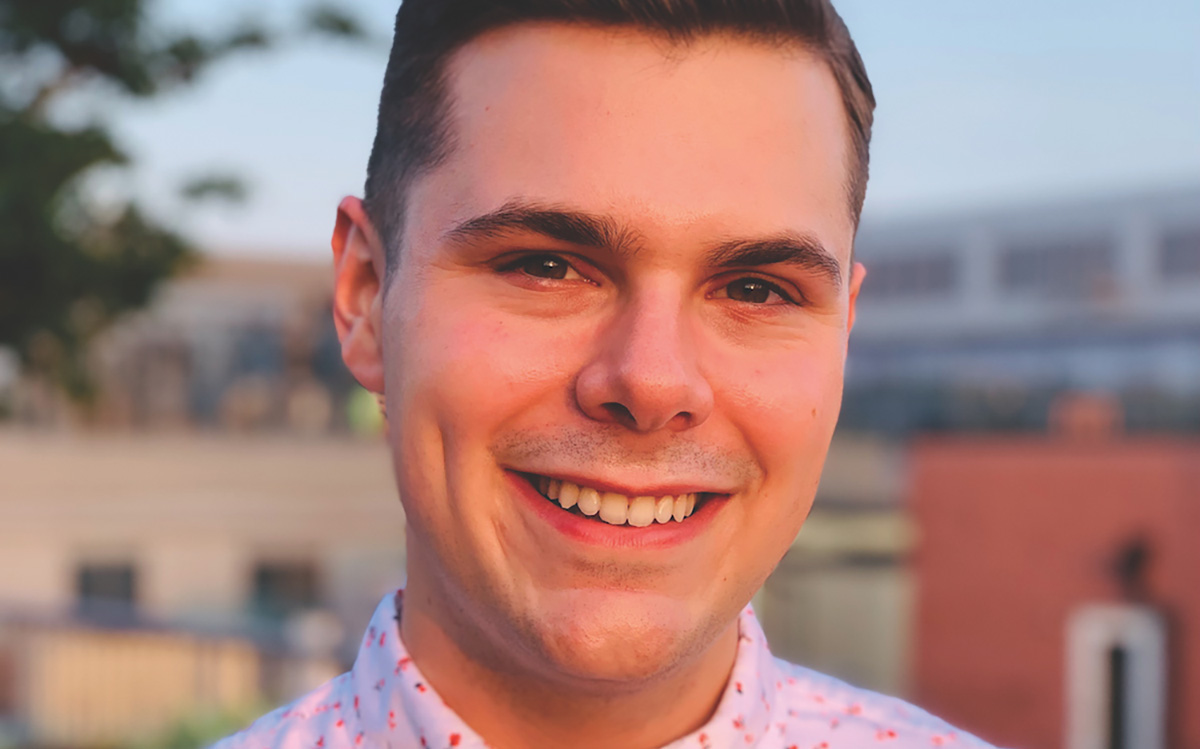
A 2026 list of candidates released by the D.C. Board of Elections shows that 31 of the 43 known LGBTQ candidates who won election in 2024 as Advisory Neighborhood Commissioners have filed the required petition signatures to be placed on the ballot this year to run for re-election.
The Washington Blade reported in 2024 that 43 known LGBTQ candidates won election to ANC seats that year in the November election
In a related development, the president of Capital Stonewall Democrats, D.C.’s largest local LGBTQ political group, said the group this year has recruited at least 39 LGBTQ candidates to run for Advisory Neighborhood Commission seats in the city’s Nov. 3 general election.
The group’s president, Stevie McCarty, an incumbent ANC member in the city’s Shaw neighborhood who is running for re-election, said the 39 candidates and possibly more responded to the group’s Queering ANCs campaign launched on July 7 that includes a website with detailed instructions for how best to run for an ANC seat.
“Since launching in early July, the site has drawn more than 20,000 views, and 39 candidates have used it to actually run,” McCarty said in a statement. He said he wasn’t sure if all the 39 candidates wanted to be identified as LGBTQ, and he was reviewing the list of incumbent LGBTQ ANC members who won election in 2024 to determine if any of the 39 candidates recruited were among those incumbents. He said he was not ready to release the names of the 39 candidates he said his group recruited to run for an ANC seat.
If none of the 39 candidates recruited by Capital Stonewall Democrats are among the 31 known LGBTQ ANC incumbents running for re-election, it would mean at least 70 LGBTQ ANC candidates will be on the city’s November election ballot.
McCarty said Capital Stonewall Democrats will send candidate questionnaires to the known LGBTQ ANC candidates as part of its process for endorsing candidates in the November election. He said he expects the group to help campaign for and provide financial support for the ANC candidates it endorses.
The D.C. local government is believed to be unique among U.S. cities in currently having 46 Advisory Neighborhood Commissions consisting of 345 single member districts in neighborhoods throughout the city in which unpaid Advisory Neighborhood Commissioners are elected for two-year terms.
The commissions are charged with considering a wide range of policies and programs impacting their neighborhoods, including traffic, parking, recreation, street improvements, zoning, liquor licenses, and economic development. Although ANCs do not have authority to set or reject policies or actions by city agencies, the agencies are required to give “great weight” to ANC recommendations, according to the law creating the ANCs.
“As an ANC member, I know firsthand how these seats shape our neighborhoods, from housing and public safety to sanitation,” McCarty said in the Capital Stonewall Democrats statement announcing the launch of the Queering ANCs campaign in July. “I’m proud to lead this effort to ensure more LGBTQ+ Washingtonians see themselves as leaders in their communities,” he said.
Some local LGBTQ activists, who asked not to be identified, said they were not aware of a significant boost in new LGBTQ ANC candidates from the Queering ANCs campaign. However, they praised the effort to recruit more LGBTQ ANC candidates and said the campaign could have yielded more candidates if it had started sooner than less than a month before the deadline for becoming a candidate.
McCarty said Capital Stonewall Democrats will continue to recruit LGBTQ D.C. residents to run as write-in candidates for ANC seats, especially in the 45 single member districts in which no candidate will be on the ballot. The Board of Elections candidate list shows many ANC single member districts that have just one candidate running without an opponent.
Following is a list of 33 known LGBTQ ANC candidates running in D.C.’s November 2026 election and the single member districts and neighborhoods in which they are running. All but two – Vita Rangel and J. Swiderski – are incumbents running for re-election. The Washington Blade will update this list if and when more LGBTQ ANC candidates become known.
1A04 – (Columbia Heights) Jeremy Sherman, he/him
1A10 – (Columbia Heights) Vita Rangel, she/ her [non-incumbent candidate]
1B03 – (Columbia Heights/U Street) J. Swiderski, they/he [non-incumbent candidate]
Jamie S. Sycamore, he/him
1B06 – (Columbia Heights/Meridian Hill) Miguel Trindade Deramo, he/him
1B07 – (U Street) Matthew Holden, he/him
1E01 – (Park View) Brad Howard, he/him
2B02 – (Dupont Circle) Jeffrey Rueckgauer, he/him
2B03 – (Dupont Circle) Vincent Slatt, he/him
2C01 – (Penn Quarter) Michael D. Shankle, he/him
2F05 – (Logan Circle) Christopher Dyer, he/him
2F07 – (Logan Circle) Kevin Cataldo, he/him
2G01 – (Shaw)Parker Griffin, he/him Howard Garrett, he/him
2G02 – (Shaw) Alexander ‘Alex’ Padro, he/him
2G04 – (Shaw) Steven McCarty, he/him
3B06 – (Wesley Heights) S. Robert Rodriquez, he/him
3F05 – (Van Ness/Cleveland Park) Adrian Jesus Iglesias, he/him
4B01 – (Takoma) Doug Payton, he/him
4B10 – (Lamond Riggs) Jinin Berry, she/her
4C06 – (Petworth) Christen Boss Hayes, they/them
4E02 – (16th Street Heights) Vince Micone, he/him
5B04 – (Brookland) Ra Amin, he/him
5B05 – (Brookland) Mónica Martínez López, she/her
5D05 – (Trinidad) Salvador Sauceda-Guzman, he/him
5F06 – (Eckington) Joe Bishop-Henchman, he/him
6B03 – (Capitol Hill) David Sobelsohn, he/him
6B09 – (Capitol Hill/Barney Circle) Karen Hughes, she/her
7C01 – (Deanwood) Brian Glover, he/him
7C03 – (Lincoln Heights) Carlos Richardson, he/him
7C04 (Deanwood) Anthony Lorenzo Green
7C08 – (Capitol View) Brandon M. Scott, he/him
8A01 – (Fairlawn) Tom Donohue, he, him
8B06 – (Garfield Heights) Marcus Thomas Hickman, he/him

Delaware fines Rehoboth bar $15,000 for discriminating against trans woman

Music icon and dear LGBTQ friend Dolly Parton remembered

Push to elect more LGBTQ ANC members yields results

Chris Van Hollen says the Democratic Party needs change. Is he the one to lead it?

New data shows record-high LGBTQ population amid Trump attacks

Exploring Renée Richards’s life through lens of a trans author

Why we need to protect ‘sacrilegious’ art

New GALA show about WWII spy full of conflict, intrigue

Proposed Indian foreign funding law overhaul could further pressure LGBTQ groups

Gay-owned pizzeria in Dupont Circle burglarized
-

 Books4 days ago
Exploring Renée Richards’s life through lens of a trans author
-
Opinions3 days ago
Why we need to protect ‘sacrilegious’ art
-
Theater3 days ago
New GALA show about WWII spy full of conflict, intrigue
-
India2 days ago
Proposed Indian foreign funding law overhaul could further pressure LGBTQ groups