Local
Dan Choi convicted in White House protest case
Former Army Lt. breaks down in courtroom, vows to appeal verdict
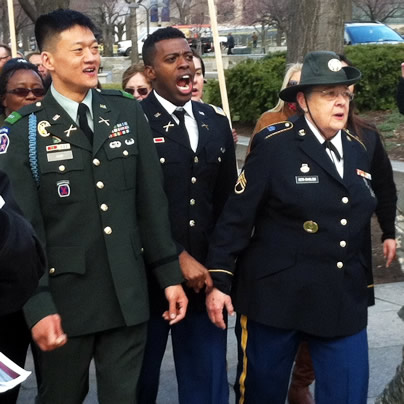
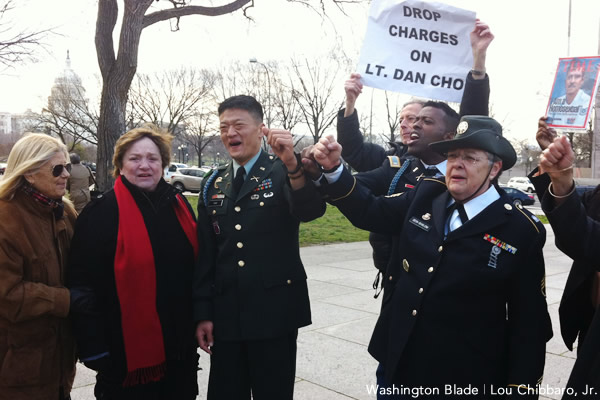
Choi supporters Diane Olson and Robin Tyler of Los Angeles (left) and Mariam Ben-Shalom of Milwaukee (front right) join Choi (center) in a rally outside the courthouse. Supporters, who packed the courtroom, gave Choi a standing ovation when the trial ended. (Washington Blade photo by Lou Chibbaro, Jr.)
A federal judge on Thursday found gay former Army Lt. Dan Choi guilty of a misdemeanor offense of disobeying a lawful order by police to disperse from the White House fence during a November 2010 protest against “Don’t Ask, Don’t Tell.”
U.S. District Court Magistrate Judge John Facciola issued his verdict and sentenced Choi to a $100 fine on the last day of a non-jury trial in a case that has dragged on for two-and-a-half years.
Choi and 12 others had handcuffed themselves to the White House fence at a time when the activists said President Obama and Congress weren’t doing enough to advance legislation to repeal the “Don’t Ask, Don’t Tell” law that barred gays from serving openly in the military.
The verdict and sentence came after an emotionally distraught Choi broke down and cried repeatedly during the five-hour court session on Thursday as more than 50 friends and supporters, many of whom came from throughout the country, looked on in a packed courtroom.
Choi began the day’s activities by leading a contingent of supporters to the White House, where they stood at the site of the White House fence before walking about a mile to the courthouse.
He and several of his supporters who are military veterans arrived at the courthouse wearing their military uniforms.
“I apologize for my emotions but I don’t apologize for my humanity,” Choi told Facciola as he represented himself without an attorney.
When Facciola pronounced Choi guilty beyond a reasonable doubt, Choi replied that he would appeal the verdict. When the judge announced the sentence would be limited to a $100 fine, which many of Choi’s supporters considered a rebuke to prosecutors, Choi shouted, “I refuse to pay it…Send me to jail.”
“You have a right to appeal,” Facciola said before adjourning the trial without responding to Choi’s assertion that he would not pay the fine.
“This trial began in August 2011 and was suspended, and what do you think Dan was doing for the next two years,” asked Choi’s friend, former Army Capt. James Pietrangelo, an attorney who provided Choi with legal help. “This case was basically crushing him to death. And you saw the result of his mental state in there today.”
Pietrangelo told supporters before the trial resumed on Thursday that Choi was struggling with a recurring bout of post-traumatic stress disorder. Choi has said in media interviews that the stress disorder stemmed from his combat duty in the Iraq war, where he served as an Arabic linguist and field engineer.
Choi emerged as a nationally recognized advocate for the repeal of DADT in 2009, when he came out as gay in an interview on the Rachel Maddow show while a member of the Army Reserves. Army authorities discharged him under “Don’t Ask, Don’t Tell” a short time later.
Pietrangelo and other supporters of Choi have rallied behind Choi’s decision to fight what he has said was an effort by prosecutors, at the behest of the White House, to single him out for a harsher prosecution because of his criticism of the Obama administration on the “Don’t Ask, Don’t Tell” issue.
Choi and his lawyers argued during the first week of the trial in August 2011 that prosecutors charged him and the other 12 protesters who handcuffed themselves to the White House fence under a federal rather than local D.C. regulation that carried a maximum sentence of six months in jail and $5,000 fine.
In nearly all previous civil disobedience arrests at the White House, protesters have been charged under a D.C. municipal regulation that carries no jail time and a small fine similar to a parking ticket, Choi’s attorneys argued.
Choi was the only one of the 13 people arrested in the November 2010 White House protest that did not agree to plead guilty to the charge in exchange for having the case dismissed if they weren’t arrested again at the White House within a four-month period.
Assistant United States Attorney Angela George, the lead prosecutor in the case, said during her closing arguments on Thursday that Choi’s political beliefs were irrelevant to the prosecution.
At an earlier stage of the trial she said prosecutors chose to charge Choi under the stricter federal regulation because he had two prior arrests at the White House related to protests against DADT, and the government has the discretion to adjust its charges for repeat offenders.
Observers of the early stage of Choi’s trial considered Facciola to be sympathetic to Choi’s contention that he was targeted for “selective” and “vindictive” prosecution because of his criticism of the Obama administration over DADT. In an important procedural ruling during the first week of the trial in August 2011, Facciola found that Choi and his lawyers presented sufficient evidence to move ahead with a vindictive prosecution defense.
But in a development considered highly unusual, prosecutor George filed a motion for a Writ of Mandamus to contest Facciola’s ruling. Following a special hearing on the issue, U.S. District Court Chief Judge Royce Lamberth overruled Facciola, ordering him not to allow Choi to pursue a vindictive or selective prosecution defense.
Choi and his attorneys responded by appealing Lamberth’s action to the U.S. Court of Appeals, putting in motion additional court hearings while the trial itself was put on hold.
After losing the appeal, Choi dismissed his lawyers, who had been providing pro bono representation, and announced he would represent himself going forward in an action known as pro se representation.
Over the past several months, Choi — with help from lawyers behind the scenes — introduced a flurry of procedural motions that Facciola denied. Choi also filed subpoenas to call 21 government and law enforcement officials, including Secret Service agents, to testify at the trial as defense witnesses. Facciola granted a series of motions by prosecutor George to quash the subpoenas for nearly all of the witnesses Choi sought to call.
At the trial on Thursday, Choi called just four witnesses, two U.S. Park Police officers who played a role in his arrest at the White House fence and two people who supported his defense – lesbian former Army Sgt. Mariam Ben-Shalom and Rev. C.T. Vivian, a nationally recognized civil rights leader and colleague of Rev. Martin Luther King Jr. during the 1960s civil rights movement.
Choi asked Vivian on the witness stand about his philosophy on civil rights and what he thought about Choi’s arrest at the White House. Vivian acknowledged that he was not present at the protest in which Choi was arrested and could not offer an opinion.
“As far as I’m concerned, you were there in my heart,” Choi told him.
Ben-Shalom, who was among the protesters arrested with Choi at the 2010 White House protest, testified that she supports Choi’s First Amendment right to participate in such a protest.
Choi questioned U.S. Park Police Lt. Robert LaChance and Park Police Sgt. Timothy Hodge, who he called as witnesses to discuss the procedures and actions surrounding Choi’s arrest at the White House protest. Both played a role in Choi’s arrest. In response to Choi’s questions, the two said they did not single out Choi for his political beliefs and had no knowledge of whether higher ups at the Park Police sought to target Choi or any of the other protesters for their political views related to DADT.
Choi also pressed the officers on what he has claimed all along – that the order by police directed the protesters to leave the sidewalk in front of the White House when Choi and some of the others were standing on a ledge to which the White House fence is attached. In what Choi and his supporters acknowledge is a technicality, Choi has argued that he could not be legally charged with disobeying an order to leave the sidewalk if he was not on the sidewalk when the order was issued.
Facciola, however, said when handing down his verdict that prosecutor George established sufficient evidence through police witnesses that the order called on Choi and the other protesters to leave the area of the fence, not just the sidewalk.
One of the most dramatic moments of Thursday’s trial session came when Choi played a video, while LaChance was on the witness stand, of the 2009 interview of Choi by Rachel Maddow, in which Choi came out as gay. He said the video would provide evidence helpful to his case.
But with the lights dimmed in the courtroom and the video playing on several screens, Choi began to sob uncontrollably before shouting to the judge, “The defense rests!” He then called on Facciola to immediately begin the closing arguments for the trial.
Facciola responded by calling a recess for lunch, prompting Choi to lie on the courtroom floor yelling and cursing. At Facciola’s orders, two U.S. Marshals lifted Choi from the floor, carried him out of the courtroom and into an elevator. It couldn’t immediately be determined where they took Choi.
But when the trial resumed about two hours later, Choi returned to the courtroom with Ben-Shalom helping him walk. After George delivered her closing argument, Choi delivered a 40-minute closing argument in which he discussed his views on civil rights, religion, the First Amendment, the Iraq war and strife between Iraq’s Shiite and Sunni Muslim factions, among other topics that Choi said touched on his theme of justice and equality.
At various times during the trial and in his closing argument Choi spoke in Arabic.
“The lesson we learned today is we need to start taking care of our activists who are willing to stand up and fight back against injustice,” Ben-Shalom said after the trial ended. “Today we have as pure an example as I can ever come up with about the toll it takes on a human being to stand up and fight back,“ she said.
In addition to Ben-Shalom and Pietrangelo, out-of-town activists who came to the courthouse to support Choi were Ian Finkenbinder of Seattle and Michael Bedwell of San Francisco, who were among those who were arrested with Choi at the 2010 White House protest; marriage equality activists Robin Tyler and Diane Olson of Los Angeles; and California activist Robin McGehee, co-founder of the national LGBT direct action group GetEqual.
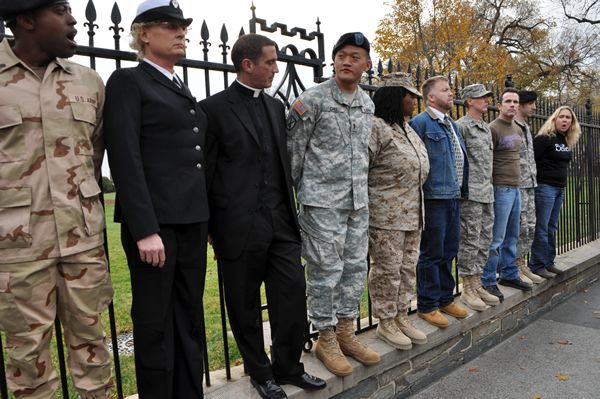
Dan Choi and other ‘Don’t Ask, Don’t Tell’ repeal activists handcuffed themselves to the White House fence in 2010. (Washington Blade file photo by Michael Key)




The Comings & Goings column is about sharing the professional successes of our community. We want to recognize those landing new jobs, new clients for their business, joining boards of organizations and other achievements. Please share your successes with us at [email protected].
The Comings & Goings column also invites LGBTQ+ college students to share their successes with us. If you have been elected to a student government position, landed an exciting internship, or are graduating and beginning your career with a new job, let us know so we can share your success.
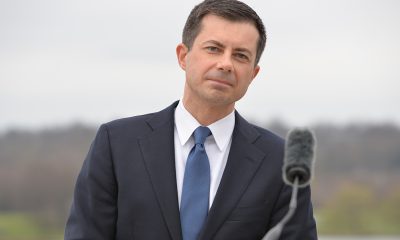
Congratulations to Jaime Christopher Pierce on their appointment to serve as a member of the Virginia Governor’s LGBTQ+ Advisory Board. Pierce was sworn in on Sept. 3 by Greg Parks, clerk of the Alexandria Circuit Court.
Pierce currently serves as vice chair of the Alexandria City LGBTQIA+ Task Force and as a member of the Alexandria Pride planning committee. They previously served on the board of directors of Equality Virginia.
Upon being sworn in, Pierce said, “Public service has been a central part of my life for more than 30 years, and this appointment gives me an opportunity to serve the Commonwealth in a different and very personal way. My career has allowed me to work with people and communities throughout Virginia, and I hope to bring that experience, along with my own lived experience and my involvement in the LGBTQ+ community, to the work of the Board.” They added, “Having Greg administer the oath makes the occasion even more meaningful because of his own historic role as Virginia’s first openly gay elected circuit court clerk.”
Pierce also serves as Circuit Court Services Manager for the Department of Judicial Services, at the Office of the Executive Secretary of the Supreme Court of Virginia. They began their career in Virginia’s judiciary in 1994 as a deputy clerk with the Virginia Beach Circuit Court and have since held several professional and leadership positions within the court system. Pierce is a member of the National Association for Court Management (NACM) and the Mid-Atlantic Association for Court Management. At the national level, Pierce participated in the workgroup that developed the National Association for Court Management’s Diversity, Equity, and Inclusion Guide, a resource designed to help court professionals advance inclusive practices and strengthen access, fairness and belonging within the justice system.
Pierce earned a degree in Criminal Justice from Liberty University, and a certificate in Paralegal Studies from Norfolk State University.
Maryland
Md. groups receive state grants to fight hate crimes
Pride Center of Maryland among recipients
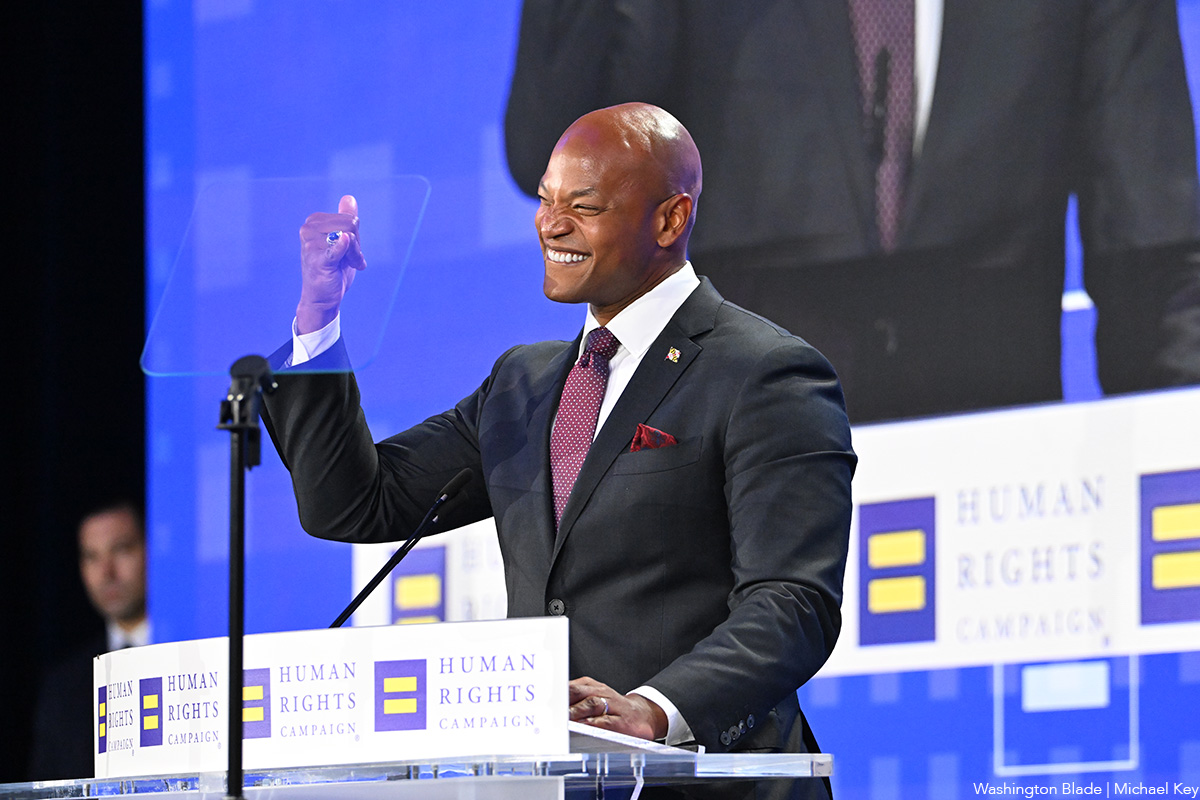
Maryland Gov. Wes Moore and the Governor’s Office of Crime Prevention and Policy are awarding a total of $10 million in grants in the 2027 fiscal year to nonprofit organizations that work to prevent hate crimes in the state.
The funds will be used to support those who feel targeted or discriminated against because of their race, religion, sexual orientation, gender identity, or disability status.
The Pride Center of Maryland is among the recipients. Churches, synagogues, mosques, and LGBTQ organizations are all eligible to receive grants
“The safety and security of all Marylanders is my top priority, so we are drawing a hard line because we have no tolerance for hate,” said Moore, according to media reports. “We are committed to protecting and ensuring safe and sacred spaces stay that way by investing in non-profit organizations, houses of worship, and community centers to protect and honor every community that makes our state so diverse and special.”
“Protection Against Hate Crime funding has strengthened the Pride Center of Maryland’s ability to protect, educate, and support the communities we serve … at a time of heightened concern associated with the Trump administration’s anti-LGBTQ/SGL (same-gender-loving) policies and pressures,” Pride Center of Maryland CEO Cleo Manago said. “PAHC funding helps us do more than improve physical security — it strengthens our community’s knowledge, preparedness, connection to resources, and ability to respond to hate with greater awareness and support.”
Maryland’s hate crimes law includes both sexual orientation and gender identity. The state’s nondiscrimination statute is also LGBTQ-inclusive.
District of Columbia
Blade welcomes fall intern
Alexis McLean is student at University of North Florida
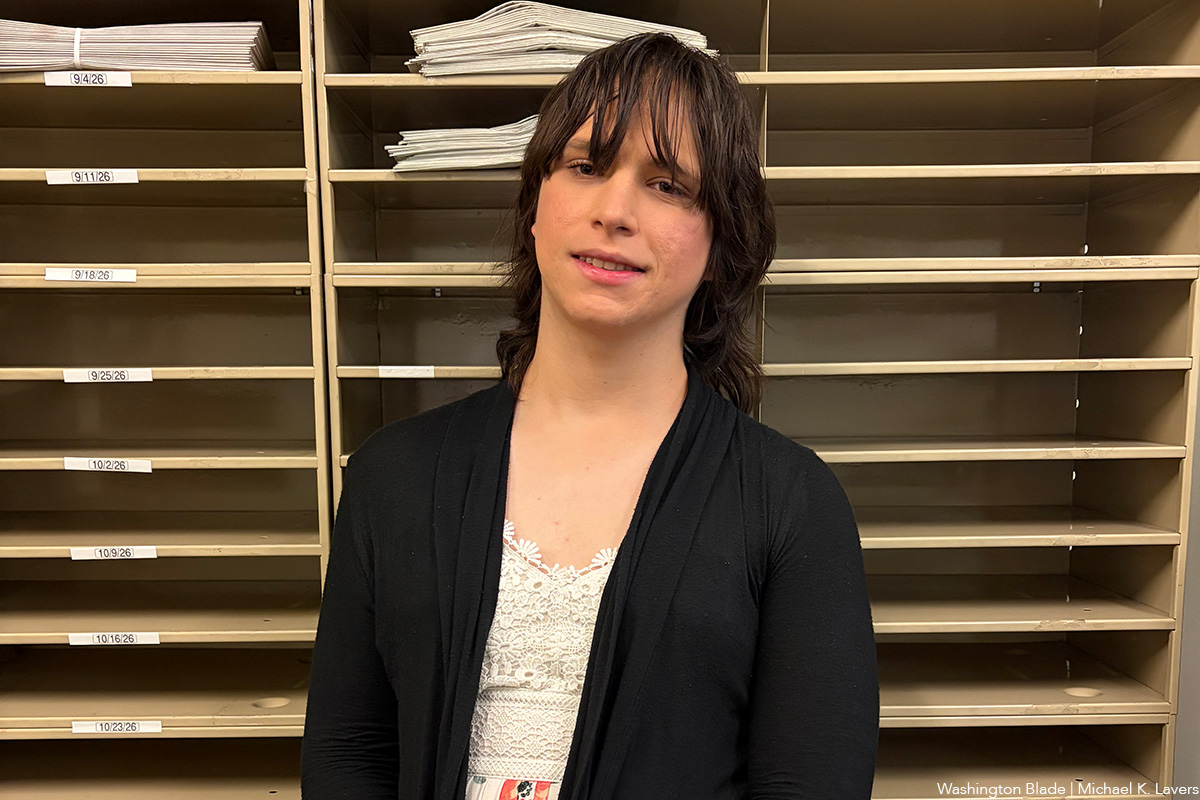
The Washington Blade this week welcomed Alexis McLean as its fall intern.
Alexis is studying political science at the University of North Florida in Jacksonville, Fla. She is interning with the Blade as part of a continued partnership with the Washington Center.
“I am looking forward to spending my time in the fall with the Washington Blade, as this is a new experience for me,” said Alexis. “I have not experienced any journalist jobs in the past so this would be my first time, and I am excited to better my writing and communications skills with this internship.”
Alexis’s internship with the Blade ends in early December.

‘Thelma and Louise’ remains landmark of unspoken queer rebellion

Comings & Goings

LGBTQ Military Happy Hour set for Sept. 15

Calendar: September 11-17

Multi-billion-dollar 9/11 Victim Compensation Fund to continue until 2090

Iceland implements gender-neutral blood donor rules

Anti-science, anti-LGBTQ movements go hand in hand

Everton Blair makes history as first openly gay congressman from Ga.

Chris Pappas wins NH Democratic Senate primary

Mujer trans salvadoreña es encontrada sin vida
-

 Iceland4 days ago
Iceland implements gender-neutral blood donor rules
-
Commentary4 days ago
Anti-science, anti-LGBTQ movements go hand in hand
-
Georgia4 days ago
Everton Blair makes history as first openly gay congressman from Ga.
-
2026 Midterm Elections4 days ago
Chris Pappas wins NH Democratic Senate primary