World
In-person Pride events to take place around the world
Activists have scheduled marches, galas, forums
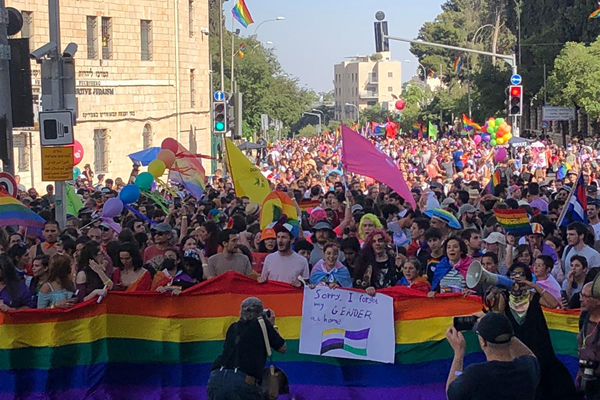
Activists around the world are planning to hold in-person Pride events this year.
Organizers of Tijuana GLBTI Pride in the Mexican border city say a decrease in coronavirus cases has allowed them to hold a march on June 19. Participants will be required to wear masks and socially distance. Tijuana GLBTI Pride organizers also plan to distribute condoms at a gay bar in downtown Tijuana.
“The GLBT community and owners of entertainment venues and establishments in the region have also suffered a blow with the arrival of the pandemic caused by the coronavirus a year ago,” wrote Tijuana GLBTI Pride Coordinator Lorenzo Herrera on his group’s website, noting the decrease in coronavirus cases in Mexico’s Baja California state has allowed businesses to reopen. “It allows for the reopening of establishments like bars and cantinas.”
“This new normality and opening of spaces allowed us to resume planning for the 2021 Pride march,” added Herrera.
The Organization for Refuge, Asylum and Migration, a Minnesota-based organization that works with LGBTQ migrants and refugees around the world, and Alight on June 13 will hold a digital Pride brunch on both sides of the Mexico-U.S. border with Jardín de las Mariposas, a shelter in Tijuana for LGBTQ migrants and asylum seekers. Frenchie Davis is among those who are scheduled to perform at ORAM’s #RefugeePride Gala on June 17.
Rainbow Sunrise Mapambazuko, an LGBTQ advocacy group in the Democratic Republic of the Congo, is scheduled to hold a Pride event in the city of Bukavu on June 26.
The Spanish Embassy in D.C. commissioned London Kaye, a Los Angeles-based artist, to create a crocheted mural that features Federico García Lorca, a gay Spanish poet and playwright who Spanish Nationalists executed in 1936 shortly after the country’s Civil War began. The mural is currently displayed above the entrance to the Spanish ambassador’s former home in Columbia Heights.
Tbilisi Pride on July 5 is scheduled to hold a march in the Georgian capital. The group on its Facebook page says the pandemic has had a disproportionate impact on LGBTQ Georgians.
“Lesbian, gay, bisexual, transgender and gay people experience oppression and discrimination on a daily basis,” it notes. “Hate groups are constantly trying to stir up hostility in society towards us. By weaponizing homophobia, these groups try to sow discord and divide society or social movements, to discredit various just demands. The state often leaves the criminal activities of violent groups and their leaders unpunished, thereby normalizing violence against (LGBTQ) people and, at the same time hinders development and justice-oriented social, political and economic change.”
“We need to make our voices heard by our family, friends, colleagues, fellow citizens and the state,” proclaimed Tbilisi Pride.
WorldPride 2021, which will take place in Copenhagen, Denmark, and Malmö, Sweden, from Aug. 12-22, will feature both virtual and in-person events. Uganda Pride will hold their Pride events in October, as opposed to this month, because the government has imposed a partial lockdown in response to an increase in COVID-19 cases.
Thousands attend Jerusalem Pride march
Israel is among the countries in which in-person Pride events have already taken place.
Thousands of people attended the annual Jerusalem March for Pride and Tolerance on June 3.
The in-person event took place less than two weeks after a cease fire between Israel and Hamas militants that govern the Gaza Strip took effect. The future of Israeli Prime Minister Benjamin Netanyahu and tensions over the eviction of several Palestinian families from their homes in East Jerusalem’s Sheikh Jarrah neighborhood also loomed large over the Jerusalem March for Pride and Tolerance.
Cuba’s National Center for Sexual Education last month held a series of virtual events that commemorated the International Day Against Homophobia, Biphobia and Transphobia.
CENESEX Director Mariela Castro, who is the daughter of former Cuban President Raúl Castro, during a May 4 press conference in Havana announced a bill that would amend the country’s family code will be introduced in Parliament in July. Tremenda Nota, the Washington Blade’s media partner in Cuba, reported Mariela Castro said this year’s IDAHOBiT events are part of the aforementioned effort and will help make Cubans more receptive to LGBTQ rights.
“I was able to appreciate that the majority of the population … is in favor of recognizing the rights of LGBTI+ people and especially the rights in the family sphere that include the possibility, the option, of marriage,” Mariela Castro told reporters on May 4.
U.S. embassies fly Pride flags
Secretary of State Antony Blinken and U.S. Agency for International Development Administrator Samantha Power are among the American officials who have publicly acknowledged Pride month.
Blinken in April said U.S. embassies and consulates can once again fly the Pride flag.
The U.S. Embassy in the Bahamas this month is flying the Pride flag for the first time. Alexus D’Marco, an activist who is a member of LGBTI Bahamas, a Bahamian advocacy group, on Monday referred to Eleanor Roosevelt when she discussed the impact the gesture has had on LGBTQ Bahamians.
“It’s not in protest,” D’Marco told the Blade. “It’s a lead by example effort that may be saying, yes we admit that we may have flaws as countries and in some cases former colonists, but we do this to dissuade you from making the same mistake of thinking that some are better than others. It’s an open invitation to join the changing world, for us the older generations to listen to the voice of the youth who are telling us very clearly and loudly that the future they envision is not one of stigma and discrimination, instead it is one with human rights and dignity for all in a land that is sustainable and full of that ‘the-ness.'”




Switzerland
Swiss government backs nationwide conversion therapy ban
Several cantons have already prohibited widely discredited practice
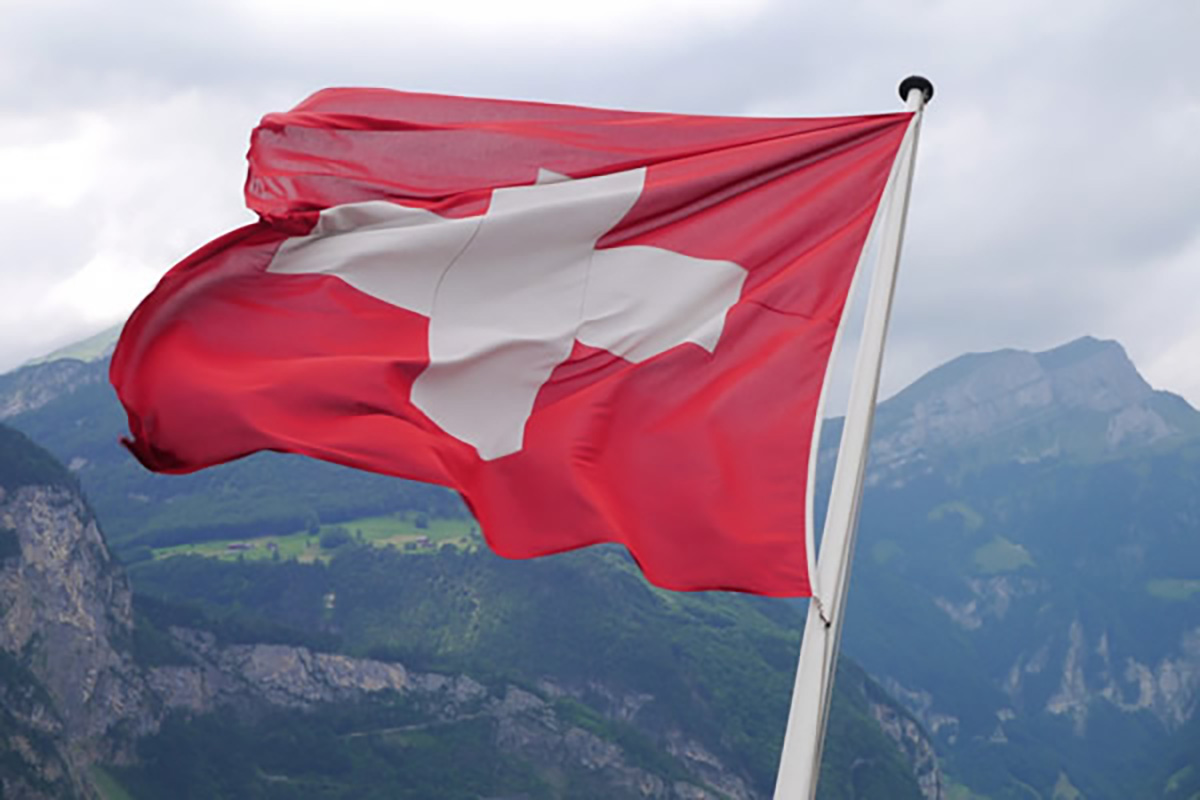
The Swiss government has said it supports a nationwide ban on so-called conversion therapy.
The Swiss Broadcasting Corporation on its website notes the government officially announced its position in a report it published on Wednesday.
Neuchâtel in 2023 became the first Swiss canton to ban conversion therapy.
Lawmakers in Valais and Vaud have also prohibited the widely discredited practice in their respective cantons. Bern and Geneva are among the other cantons in which lawmakers have considered similar prohibitions.
The European Commission earlier this year said all European Union countries should ban conversion therapy.
Switzerland is not a member of the EU, but lawmakers in neighboring Germany in 2020 passed a law that prohibits conversion therapy for minors and for adults who have not consented to undergoing the widely discredited practice.
Several EU countries — Belgium, Cyprus, France, Malta, Norway, Portugal, and Spain — have banned conversion therapy outright.
The Dutch Senate in June approved a bill that would ban conversion therapy in the Netherlands. The lower house of the country’s parliament approved the measure in September 2025.
Greece in 2022 banned conversion therapy for minors.
Bulgaria
Top Bulgarian court rules government must legally recognize trans people
Decision caps off decade-long legal fight

Bulgaria’s top court has ruled the country’s government must allow transgender people to legally change their name and gender on ID documents.
A trans woman from Bulgaria who moved to Italy, had tried to change her gender and name on her Bulgarian ID documents, but courts in the country denied her requests for nearly a decade.
The Bulgarian Supreme Court of Cassation in a 2023 ruling essentially banned trans people from legally changing their name and gender on ID documents.
The EU Court of Justice in Luxembourg, which is the European Union’s highest court, in March ruled in the “Shipova” case that member states must allow trans people to legally change their name and gender on ID documents. The lead plaintiff in the “Shipova” case is among the four litigants in the Bulgarian Supreme Court of Cassation case.
Two Bulgarian advocacy groups — Bilitis and Deystvie — along with TGEU – Trans Europe and Central Asia and ILGA-Europe in a joint statement they issued on Tuesday noted the Bulgarian Supreme Court of Cassation’s July 22 decision “aligns Bulgarian practice with the Court of Justice of the EU, enabling changes to gender markers, names, and personal identification numbers.”
“The judges also concluded that EU law requires Bulgaria to establish a legal procedure for legal gender recognition, which is necessary so that Bulgarian trans citizens can travel and reside freely inside the EU,” they added.
Bulgaria has been a member of the EU since 2007.
The country borders Romania, Serbia, North Macedonia, Greece, and Turkey.
“We are very glad to see that the judges of the Supreme Court clearly stated that it is actually a matter of rule of law for Bulgaria to respect the universal equality and the dignity of all human beings, including trans people for whom human rights-based legal gender recognition procedures are an indispensable element,” said Denitsa Lyubenova, co-chair of Deystvie who represented the four plaintiffs in the Bulgarian courts and the lead litigant in the “Shipova” case at the EU Court of Justice. “The government needs to act swiftly now to put in place an LGR procedure that is fully in line with European human rights case law, which means without any conditions requiring proof of medical, surgical or hormonal treatment.”
The groups also urged the Bulgarian government to codify the ruling into law.
“While lower courts are expected to follow this ruling directly, a court decision is not a substitute for law,” they said. “Bulgaria still needs a fast, transparent, and accessible legal gender recognition procedure written into legislation, not left to case-by-case court precedent. TGEU – Trans Europe and Central Asia, Bilitis, Deystvie, and ILGA-Europe call on the Bulgarian government to start that legislative process now, with meaningful involvement from civil society.”
France
Prominent French activist attacked outside Paris bar
Pierre Picavet hospitalized with internal bleeding, head injury

French prosecutors say a man shouted anti-gay slurs at a prominent activist before he attacked him in Paris on Saturday.
Media reports indicate Pierre Picavet, a police officer who is the president of FLAG!, a group within the French Justice and Interior Ministries that defends LGBTQ rights, was attacked as he left a bar in Paris’s Marais neighborhood.
The Marais since the 1980s has been center of the French capital’s LGBTQ community.
France 24 reported Picavet’s assailant struck him with a bottle. The attack left Picavet hospitalized with internal bleeding, a head wound, and other injuries.
“When I get better, when my wounds have healed, I will continue the fight,” Picavet told Radio France on Monday. “I am particularly shocked, but it tells me that there is still work to do.”
Paris Mayor Emmanuel Grégoire is among those who condemned the attack.
STOP Homophobia (STOP homophobie), a French group that fights against anti-LGBTQ violence, on its social media pages published a picture of Picavet in the hospital.
“As a long-standing partner of FLAG!, STOP Homophobia wishes to express its solidarity with Pierre Picavet, his loved ones, and the entire association,” said the group. “STOP Homophobia condemns this assault in the strongest possible terms and reiterates that anti-LGBT violence remains a reality — even in spaces where everyone should be able to move freely and live out their sexual orientation or gender identity without fear of attack.”
STOP Homophobia also praised a bystander who came to Picavet’s aid after the attack, and the first responders and law enforcement personnel who responded.
“STOP Homophobia extends its full support to Pierre, his family, his loved ones, and the entire FLAG! team, and wishes him a full recovery,” said the group.
Reports indicate the assailant, who was born in 2006, was scheduled to appear in a Paris court on Monday at 1:30 p.m. local time.

‘Here the Whole Time’ delivers queer coming-of-age comedy

Pentagon expands testosterone screening as trans troops face hormone therapy restrictions

Calendar: September 4-10

Swiss government backs nationwide conversion therapy ban

Gloria Steinem dies at 92

Beloved D.C. ‘Old Catholic’ Bishop Charles Braun dies at 86

Top Bulgarian court rules government must legally recognize trans people

Markey’s primary win deemed success for LGBTQ activists

Lou Chibbaro Jr. documentary wins award from NLGJA

The mastery of love
-

 Obituary5 days ago
Beloved D.C. ‘Old Catholic’ Bishop Charles Braun dies at 86
-
Bulgaria5 days ago
Top Bulgarian court rules government must legally recognize trans people
-
2026 Midterm Elections5 days ago
Markey’s primary win deemed success for LGBTQ activists
-
National5 days ago
Lou Chibbaro Jr. documentary wins award from NLGJA