National
Gay U.S. ambassador brings hope to Dominican advocates
James ‘Wally’ Brewster is ‘from our community’
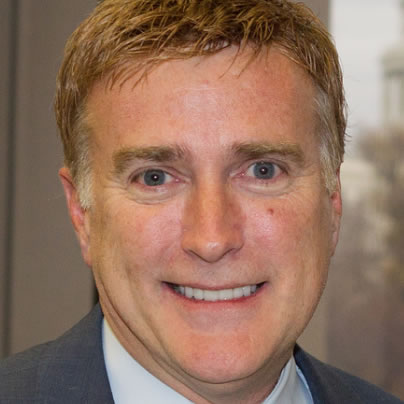
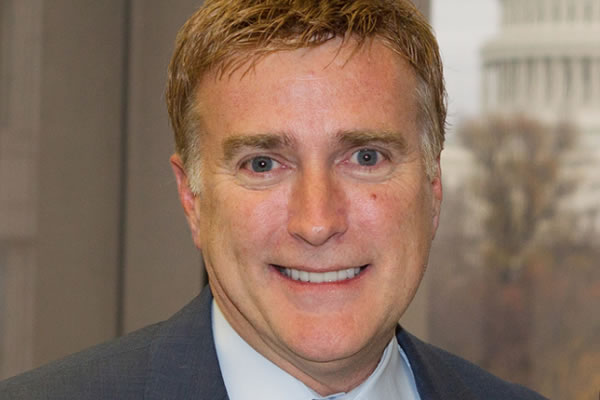
U.S. Ambassador to the Dominican Republic James “Wally” Brewster (Photo public domain)
SANTO DOMINGO, Dominican Republic – Dominican LGBT rights advocates remain hopeful that gay U.S. Ambassador to the Dominican Republic James “Wally” Brewster will continue to generate more visibility around their nascent movement in the Caribbean country.
“In reality the Dominican LGBT community is not a rather large community,” Cristian King of Trans Siempre Amigas told the Washington Blade on March 7 during a meeting with nearly a dozen Dominican LGBT rights advocates at the home of Deivis Ventura of the Amigos Siempre Amigos Network of Volunteers in the San Carlos neighborhood of the Dominican capital. “[Brewster] is a person from our community. It is a big impact.”
King spoke with the Blade alongside Amigos Siempre Amigos Executive Director Leonardo Sánchez, radio host Franklyn Sánchez, Edward Tavarez da Silva of the website Zona VIP, Lorena Espinosa of the Woman and Health Colective, Marinela Carvajal of Republika Libre, Anyi Fermin of the Metropolitan Community Church of Santo Domingo’s Women’s Ministry, Pedro Mercedes, Stephanía Hernández of Gente Activa y Participativa, Dominic Rincon of University Students for Diversity and Marta Arredondo of Amigos Siempre Amigos. Ventura is among the seven Latin American LGBT rights advocates who visited the U.S. earlier this year as part of the State Department’s International Visitor Leadership Program.
Espinosa told the Blade that Brewster “helps us a lot.” Carvajal added the gay U.S. ambassador has brought more visibility to the Dominican LGBT rights movement.
“There is more discussion of [LGBT] issues,” said Carvajal. “There has been an opportunity to highlight our issues.”
The U.S. Senate last November confirmed Brewster as ambassador to the Caribbean nation.
Brewster, who is a former member of the Human Rights Campaign board of directors, introduced his husband, Bob Satawake, in a video to the Dominican people shortly after his confirmation. The two men met with Carvajal, King and other Dominican LGBT rights advocates last month at the U.S. Embassy in Santo Domingo.
The State Department said Brewster was unavailable to speak with the Blade in Santo Domingo. He and Satawake gave an exclusive interview to Ritmo Social, a society magazine published by Listín Diario, a conservative Dominican newspaper, in January.
“I was chosen by President Obama to represent his government and the American people as a reflection of our country, its diversity and its mission. I am committed to serving this ideal,” said Brewster. “President Obama was aware of our understanding of the Dominican Republic and knew that we were going to work diligently to advance the extraordinary relationship between our two countries and people.”
Brewster continues to face criticism from Dominican religious figures who oppose his ambassadorship because of his sexual orientation.
Cardinal Nicolás de Jesús López Rodríguez of the Archdiocese of Santo Domingo last June referred to Brewster as a “maricón” or “faggot” in Spanish during a press conference. Rev. Luís Rosario of the Santo Domingo Youth Ministry last month said he feels the gay ambassador is a “bad example” for Dominican society and families.
Archbishop Jude Thaddeus Okolo, the Vatican’s envoy to the Dominican Republic, cited the country’s Constitution that defines marriage as between a man and a woman as the reason he declined to invite Satawake to a diplomatic reception with Dominican President Danilo Medina that was scheduled to take place in January. The event was cancelled after a number of ambassadors said they would not attend because Okolo did not invite Brewster’s husband.
Hernández noted to the Blade a group of Brewster’s opponents dress in black each Monday to protest “the homosexual ambassador.”
“We are defending a person who is homosexual, that is gay and has come to occupy his country’s public position in the Dominican Republic,” said Ventura. “We are defending the right that we have to occupy public positions equally as gay, lesbian, bisexual and trans people. This is why we are defending Wally.”
LGBT Dominicans becoming more visible
The activists with whom the Blade spoke in Santo Domingo insist the country has slowly become more open and accepting of LGBT people.
Parque Duarte in Santo Domingo’s Colonial City remains Santo Domingo’s de facto LGBT community center. Hundreds of LGBT people gather on weekend nights in spite of López and some neighbors’ efforts to ban them from the square that is across the street from a church.
Listín Diario, which announced on Saturday that López will have a weekly column in the newspaper, in 2010 published an article with the headline “Parque Duarte is a center of promiscuity” that outlined “homosexuals, prostitutes and drug users have invaded it.” The newspaper also ran a picture of two trans women kissing.
A number of young gender non-conforming Dominican men on a recent Saturday night were dancing at Fogoo Discotec, a gay nightclub in Santo Domingo’s Colonial City that is across the street from the gay-owned Adam Suites Hotel. Middle-class Dominicans and visitors typically frequent Esedeku and other nearby gay and lesbian bars and clubs.
Listín Diario and Ritmo Social earlier this month published pictures of Brewster and Satawake at an Elton John concert they attended at Altos de Chavón near Casa de Campo on Feb. 28. King told the Blade that Dominicans are increasingly aware of their advocacy efforts because newspapers and other media outlets reach out to them for comment on LGBT-specific issues.
“We are in the press,” he said. “With any gay problem that has to do with the community, the press reaches out to us. We are the community’s spokesperson.”
Serious problems persist for LGBT Dominicans in spite of increased visibility since Brewster assumed his post.
Espinosa and other advocates with whom the Blade spoke pointed out López and others with close ties to the Catholic Church continue to discriminate against LGBT Dominicans, Haitians and other marginalized groups in the country.
“The Catholic Church constantly rebukes us,” said Hernández. “If you are gay, you’re discriminated against. If you’re trans, you’re discriminated against. If you’re poor, you’re discriminated against.”
Hernández told the Blade that trans Dominicans continue to suffer violence from the police and a lack of access to health care. She noted staff at a clinic frequently treats her as though she is a man, even though her gender identity is female and she lives as a woman.
“They call me by the man’s name that is on my documents,” said Hernández. “I make a scene. I reclaim my rights. But there are others who do not reclaim their rights. These people that need to go to a health service. What do they do? The don’t seek the service.”
LGBT advocacy groups receive the bulk of their funds from the U.S. and Europe through HIV/AIDS prevention programs and human rights initiatives.
Hernández and others noted the Catholic Church continues to block any efforts to expand access to condoms and contraception in the country. Dominican lawmakers in 2009 approved a constitutional amendment banning abortion that then-President Leonel Fernández introduced with the church’s support.
“The Dominican government does not give one peso to any LGBT group,” Ventura told the Blade.
Ventura added wealthy gay Dominicans who own businesses in Miami and other cities have also not contributed to Dominican LGBT rights organizations. One gay man with whom the Blade spoke at Esedequ said he was not familiar with their work.
“They are not going to donate a peso to the community,” said Ventura.
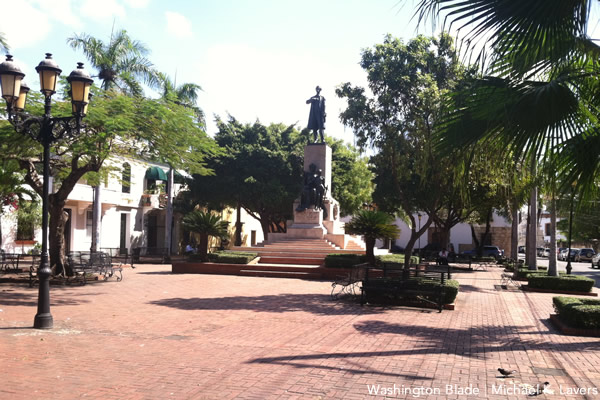
Parque Duarte in Santo Domingo’s Colonial City remains a de facto community center for the Dominican LGBT community in spite of efforts from the city’s homophobic Roman Catholic bishop and others to remove them. (Washington Blade photo by Michael K. Lavers)




U.S. Military/Pentagon
Federal appeals court rules White House illegally banned trans troops
Defense Secretary Pete Hegseth says Pentagon will appeal to SCOTUS

A panel of federal appeals court judges ruled that President Donald Trump’s policy banning transgender troops likely violates their constitutional rights.
The three-judge panel from the U.S. Court of Appeals for the District of Columbia Circuit ruled 2-1 that Trump’s Executive Order 14183, also known as “Prioritizing Military Excellence and Readiness,” was created with the intent to exclude people from the military based on their gender identity.
The policy argues that trans people are inherently incapable of meeting the military’s “high standards of readiness, lethality, cohesion, honesty, humility, uniformity, and integrity,” citing a history of or signs of gender dysphoria as the cause. According to the Defense Department, this creates “medical, surgical, and mental health constraints on [an] individual.”
The policy states that, regardless of the physical or intellectual capabilities of each applicant, it views trans military applicants as a monolith, considering them less qualified than their cisgender peers.
Despite the panel’s majority opinion issued on Monday, the first day of Pride Month, the ban remains in effect. The U.S. Supreme Court allowed the Pentagon to enforce the policy last year and will continue to allow it to remain in place as litigation proceeds.
The panel’s new ruling will prevent the military from discharging current service members named in the lawsuit, but it does not allow new transrecruits to join.
The policy “appears to be driven by the bare desire to harm a politically unpopular group: persons who identify as transgender,” Judge Robert Wilkins, a Democratic appointee of President Barack Obama wrote for the majority.
Judge Justin Walker, the author of the dissenting opinion and a Republican Trump appointee, argued that the authority to determine military policy does not rest with the courts. Instead, he wrote, the Constitution grants that power to Congress through legislation and to the president as commander in chief of the armed forces.
“We have neither the expertise nor the authority to decide whether the military can exclude the plaintiffs from its ranks. The Constitution assigns that authority to Congress and the commander-in-chief,” Walker wrote.
Defense Secretary Pete Hegseth indicated that an appeal is in the works, posting, “See you at SCOTUS” on X on Monday in response to the ruling.
Jennifer Levi, senior director of transgender and queer rights at GLAD Law, which has led the litigation since last November, applauded the decision.
“Today’s decision is a powerful vindication of the plaintiffs’ extraordinary courage and unwavering commitment to their country,” Levi said.
The Washington Blade spoke with Second Lt. Nicolas (Nic) Talbott of the U.S. Army, the lead plaintiff in the case, and Levi from GLAD Law back in November.
While discussing the case and his experiences as a trans service member, Talbott said his identity is an asset rather than a hindrance, particularly when it comes to identifying problems and finding solutions, regardless of what others may think or say.
“Being transgender is not some sad thing that people go through,” Talbott told the Blade. “This is something that has taken years and years and years of dedication and discipline and research and ups and downs to get to the point where I am today … my ability to transition was essential to getting me to that point where I am today.”
He also discussed the impact of removing qualified and dedicated service members from the military, arguing that the consequences will be felt long after Trump leaves office.
“When we’re losing thousands of those qualified, experienced individuals … those are seats that are not just going to be able to be filled by anybody,” he said. “[That’s] military training that’s not going to be able to be replaced for years and years to come.”
“Every person who puts on the uniform is expected to make a tremendous amount of sacrifice,” Talbott said. “Who I am under this uniform should have no bearing on that … We shouldn’t be picking and choosing which veterans are worthy of our thanks on that day.”
Levi characterized the policy as overtly cruel and legally indefensible to the Blade.
“This policy and its rollout is even more cruel than the first in a number of ways,” Levi explained. “For one, the policy itself says that transgender people are dishonest, untrustworthy and undisciplined, which is deeply offensive and degrading and demeaning.”
She also argued that the administration’s cost justification is flawed, saying that removing and replacing trans service members is more expensive than retaining them.
“There’s no legitimate justification relating to cost … it is far more expensive to both purge the military of people who are serving and also to replace people … than to provide the minuscule amount of costs for medications other service members routinely get.”
National
Results from key Tuesday primary races
State officials in California had not called the governor’s race as of Wednesday morning but Republican Steve Hilton and Democrat Xavier Becerra appear likely to advance to the general election.
The race for governor has been scrambled several times after Kamala Harris opted not to run, Rep. Eric Swalwell dropped out after sexual misconduct allegations surfaced, and Rep. Katie Porter’s campaign fizzled. Becerra would be the state’s first Latino governor since 1875 if elected. Hilton was endorsed by President Trump.
In the Los Angeles mayor’s race, the AP declared that incumbent Mayor Karen Bass will advance to the Nov. 3 runoff while former reality TV star Spencer Pratt and LA Council member Nithya Raman were competing for second place. California is notoriously slow in counting ballots and only about half of the results were available by Wednesday morning.
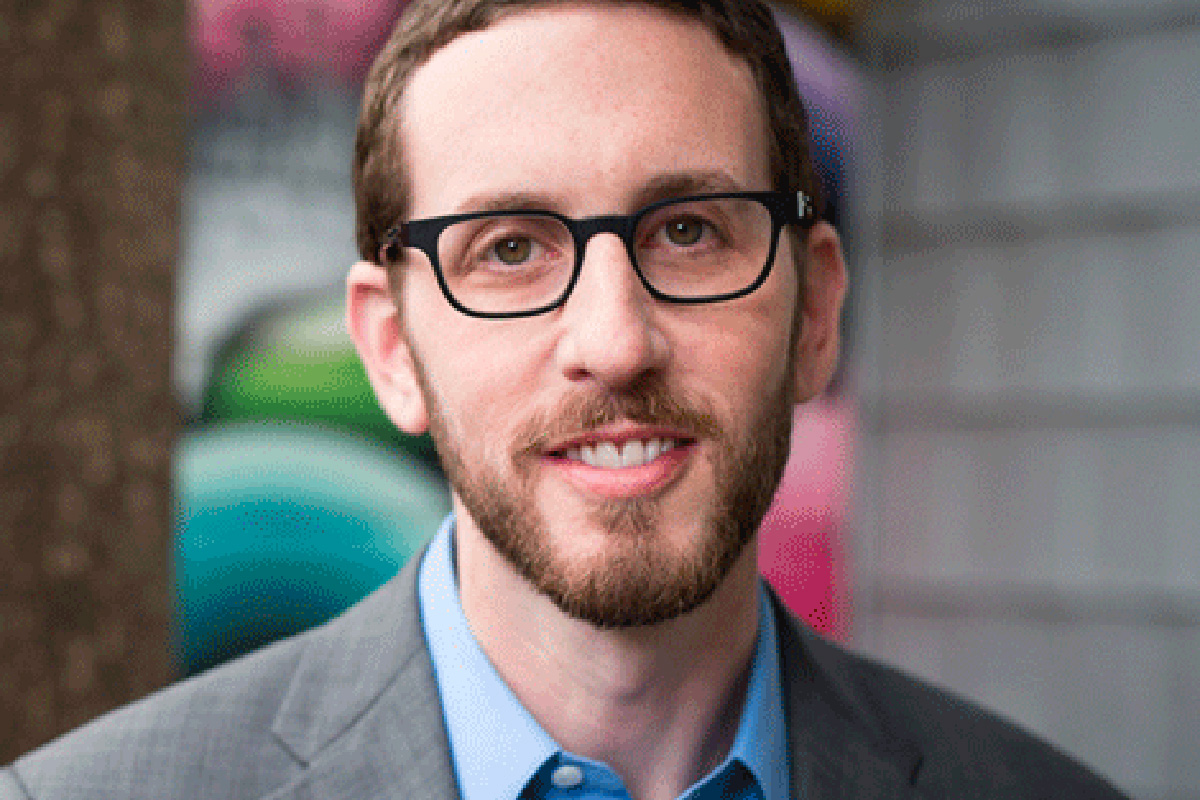
In San Francisco, Democratic State Sen. Scott Wiener advanced to the general election in November, besting Supervisor Connie Chan, who was endorsed by House Speaker Emerita Nancy Pelosi. Pelosi is retiring from Congress after nearly 40 years in the House.
In Iowa, Democratic state Rep. Josh Turek won the primary for an open U.S. Senate seat, defeating state Sen. Zach Wahls. Turek will face Rep. Ashley Hinson, who won the GOP primary with President Donald Trump’s endorsement, in the general election.
The Iowa seat is open because Sen. Joni Ernst (R) decided not to seek re-election. The primary was closely watched by LGBTQ advocates because Wahls rose to national prominence after a speech he made defending marriage equality went viral in 2011. Wahls was raised by a lesbian couple.
National
White House Correspondents’ Dinner rescheduled after shooting
‘We will not allow an act of violence to have the last word’

The White House Correspondents’ Association announced on Tuesday that it has rescheduled its annual dinner for July 24 after the April event was halted when gunshots rang out at the Washington Hilton.
Cole Allen, 31, is charged with the attempted assassination of President Trump, who was in the ballroom at the time of the incident. One Secret Service officer was wounded in the attack. Officers stopped Allen before he could enter the ballroom where 2,500 journalists and politicos were having dinner and waiting for Trump to speak. It was Trump’s first time attending as president.
“We will not allow an act of violence to have the last word, especially during a year when we are reflecting on the 250th anniversary of America and everything we stand for,” said WHCA President Weijia Jiang in a statement to members.
She did not announce further details, including venue and ticketing.
Washington Blade White House reporter Joe Reberkenny was in the audience when shots were fired and reported live on social media from the scene.
This post will be updated as more details are announced.

Federal appeals court rules White House illegally banned trans troops

Outright International honors Cyndi Lauper at annual NYC gala

Results from key Tuesday primary races

AIDS Healthcare Foundation announces 3 million people globally in its care

10 HIV/AIDS activists arrested on Capitol Hill

Time travelers from the AIDS era

Books for a pre-Pride celebration

Barney Frank’s powerful legacy for LGBTQ federal employees

Claudia López comes up short in Colombian presidential election