National
In 2012 election, are women the new gay?
GOP attacks on Planned Parenthood, contraception take center stage

National Organization for Women President Terry O'Neill (photo by NOW via wikimedia.org)
Move over gays. The dominant social issue heading into the 2012 election isn’t marriage or “Don’t Ask, Don’t Tell,” but a topic many thought was resolved decades ago: women’s rights.
Republican presidential candidates rail against Planned Parenthood; the Senate votes on allowing employers to opt out of providing birth control coverage; and Republicans derail legislation aimed at helping women who are victims of domestic violence. As a result, some are asking: Are women the new gay?
Terry O’Neill, president of the National Organization for Women, said women’s rights have become the No. 1 social issue — creating a “truly unprecedented war against women” — because of the Tea Party’s success in the 2010 elections.
“In addition to health care services, this war on women really includes repeated efforts by conservative lawmakers to slash social programs, like Head Start and after-school programs and family planning centers as well as Medicare and Medicaid and Social Security,” O’Neill said. “These are all programs that women disproportionately rely on.”
Rea Carey, executive director of the National Gay & Lesbian Task Force, said women’s issues are a prominent part of public discourse in 2012, but not in a way that separates them from LGBT rights or other social issues.
“There are many women who are lesbian, bisexual and transgender,” Carey said. “If you look at Planned Parenthood, we know that many members of the LGBT community rely on Planned Parenthood for health services, so even if we’re looking at the attacks on Planned Parenthood — these are not separate from the attacks on our own community.”
Republican presidential candidates have criticized President Obama for instituting a regulation requiring employers — even religious organizations — to provide birth control as part of insurance coverage to female employees. In February, the rule was amended so companies with a moral objection could opt out of such coverage, but in their stead, the private insurers with which the employers contracted would have to offer contraception.
Republican presidential candidate Rick Santorum has railed against the change as an affront to religious liberty and attacked contraception, saying it leads to the spread of sexually transmitted diseases and unplanned pregnancies.
Santorum articulated his views in an interview with a conservative blogger last fall before he became a strong contender in the presidential race.
“One of the things I will talk about that no president has talked about is, I think, the dangers of contraceptives in this country,” Santorum said. “The whole sexual libertine idea. Many in the Christian faith have said, ‘Contraception’s OK.’ It is not OK. It’s a license to do things in the sexual realm that is counter to how things are supposed to be.”
Romney, viewed as a more moderate candidate in the race, has also articulated his views on women’s issues, telling a local reporter in Missouri earlier this month that he would “get rid” of Planned Parenthood.
“Of course you get rid of Obamacare, that’s the easy one, but there are others,” Romney said. “Planned Parenthood, we’re going to get rid of that.”
Romney campaign strategist Eric Fehrnstrom later clarified the former Massachusetts governor was talking about cutting federal funding for the organization.
Conservative talk show host Rush Limbaugh has joined the attacks related to contraception. On Feb. 29, he called Georgetown University law student Sandra Fluke a “slut” after she gave congressional testimony in support of mandating health insurers to cover contraceptive costs.
“It makes her a slut, right?” Limbaugh said. “It makes her a prostitute. She wants to be paid to have sex. She’s having so much sex she can’t afford the contraception. She wants you and me and the taxpayers to pay her to have sex.”
Obama personally called Fluke to express solidarity with her after Limbaugh made the remarks. After advertisers began withdrawing from Limbaugh’s show, he apologized, saying his “insulting word choices” were meant to be “humorous.”
Planned Parenthood has taken the brunt of attacks as women’s issues have come to the forefront. In January, the Susan G. Komen organization, the largest breast cancer organization in the country, cut funding to Planned Parenthood after conservative Karen Handel was named senior vice president for public policy.
A public backlash ensued in which Planned Parenthood received nearly $1 million in donations — more than the $600,000 a year that Komen had contributed each year. The next month, Komen’s board of directors apologized, issuing a statement pledging, “to fund existing grants, including those of Planned Parenthood, and preserve their eligibility to apply for future grants.” Handel resigned a few days later.
The emphasis on women’s issues doesn’t mean Republican hopefuls haven’t addressed LGBT issues in their campaigns. Santorum and Romney back a Federal Marriage Amendment and have pledged to defend the Defense of Marriage Act in court.
Still, the discussion of LGBT rights this year hasn’t been as high profile or drawn as much media attention as women’s rights.
And it’s a far cry from 2004 when the issue of same-sex marriage was center stage in the presidential election. The legalization of same-sex marriage in Massachusetts and then-San Francisco Mayor Gavin Newsom’s decision to marry gay couples prompted both Democratic candidate John Kerry and former President George W. Bush to repeatedly declare their opposition to same-sex marriage. Bush made support for a Federal Marriage Amendment a cornerstone of his campaign.
Whether women’s issues will remain on the front-burner of the presidential campaign remains to be seen.
O’Neill said she thinks Republicans will drop women’s issues as a point of contention once they settle on Romney as their nominee.
“Mitt Romney is going to run to the center as hard as he can, and he’s going to run away as hard as he can from women’s issues because he gets that this war on women is a losing war for his party,” O’Neill said.
Moreover, LGBT rights might return to the forefront as voters in as many as five states — Minnesota, North Carolina, Maine, Washington and Maryland — take up the issue of same-sex marriage at the ballot.
Carey said she doesn’t want LGBT people to think they’re “off the hook” in the 2012 election because these issues will be coming up soon.
“I have no doubt that as the marriage amendments around the country start heating up, even more than they are now, we might have a similar conversation a few months from now saying, ‘Wow, the dominant conservation in the presidential election has become the marriage amendments,'” Carey said.
The emphasis on women’s issues isn’t just occurring in the national presidential contest; it can be seen at the state level as well.
In Virginia, Gov. Bob McDonnell signed legislation requiring women to have ultrasound exams before electing to have an abortion. The initial bill called for a vaginally invasive form of the examination, but was changed following protests.
At the same time, an anti-gay adoption bill that would allow private adoption agencies to discriminate in placements conflicting with their religious or moral beliefs, including on the basis of sexual orientation, is awaiting McDonnell’s signature.
In some instances, controversy over women’s rights issues has had a direct impact on LGBT issues.
On March 1, the Senate narrowly agreed by a vote of 51-48 to table a measure known as the “Blunt amendment.” Sponsored by Sen. Roy Blunt (R-Mo.), the measure was aimed at allowing not only religious groups but any employer with moral objections to opt out of contraception coverage for employees.
Retiring Sen. Olympia Snowe (R-Maine) was the only Republican to vote with Democrats to table the amendment. Other Republicans considered to be moderates — such as Sens. Scott Brown (R-Mass.), Susan Collins (R-Maine) and Lisa Murkowski (R-Alaska)— voted with their caucus. Democrats joining Republicans were Sens. Bob Casey (D-Pa.), Joe Manchin (D-W.Va.) and Ben Nelson (D-Neb.).
But the amendment was seen as having an impact on LGBT people because its broad language could have also affected the health care services LGBT people receive. According to the Task Force, the measure could have allowed an employer to deny a gay man treatment for HIV/AIDS, hormone therapy for a transgender person or in-vitro fertilization for a lesbian couple.
The same could be said for the Violence Against Women Act reauthorization, legislation before the Senate that would extend and strengthen programs working to combat domestic violence. A vote on the bill, which was reported out by the Senate Judiciary Committee in February, is being held up by Republicans.
On March 15, a group of mostly women senators took to the Senate floor to decry Republican obstructionism, saying its passage is necessary to fund programs to help women who are victims of violence or sexual assault. Sen. Barbara Mikuski (D-Md.) was among the lawmakers who spoke out.
“We’ve got to remember our communities and our families, and I think if you’re beaten and abused, you should be able to turn to your government to either be rescued and put you on the path, and also to have those very important programs early on to do prevention and intervention,” Mikulski said.
But the VAWA reauthorization also impacts the LGBT community because it has language extending protections to people in same-sex relationships who are victims of domestic violence.
The bill would make grants available for programs providing services to LGBT victims of domestic violence. Additionally, the bill contains non-discrimination language prohibiting VAWA grantees from discriminating against LGBT people.
These enumerated protections are among the reasons Republicans are blocking the bill from a Senate vote. During the committee markup of the bill, Sen. Charles Grassley (R-Iowa) voiced opposition to language protecting undocumented immigrants and expanding powers of Indian tribes as well as provisions for LGBT people.
“I agree that shelters and other grant recipients should provide services equally to everyone, but advocates of this provision haven’t produced data that shelters have refused to provide services for these reasons,” Grassley said. “The provision is a solution in search of a problem.”
Data exists showing that LGBT people are victims of domestic violence and suffer from discrimination when seeking help at shelters. According to a 2010 report from the National Coalition of Anti-Violence Programs, 44.6 percent of LGBT domestic violence survivors were turned away by a shelter and 54.4 percent of LGBT survivors seeking an order of protection were denied help.
Sen. Dianne Feinstein (D-Calif.) articulated the need for LGBT provisions in VAWA reauthorization during her speech, saying opponents refuse to support the bill because of these expanded protections.
“In my view, these are improvements,” Feinstein said. “Domestic violence is domestic violence. I ask my friends on the other side, if the victim is in a same-sex relationship, is the violence any less real? Is the danger any less real because you happen to be gay or lesbian? I don’t think so.”
On Wednesday, House Minority Leader Nancy Pelosi (D-Calif.), Rep. Gwen Moore (D-Wis.) and other House Democrats were set to introduce their version of VAWA reauthorization. Like the Senate bill, the House Democrats’ version of the legislation was slated to have enumerated LGBT protections.
The Task Force’s Carey said the joint impact of these measures on women and LGBT people demonstrates the interconnectedness of the two communities.
“What we know, and I think society has learned over the past 40 years is that LGBT people are part and parcel of every other community in this country,” Carey said. “The Blunt amendment and the Violence Against Women Act are two specific examples of where our fates are tied.”
Progressive activists say the takeaway is that the LGBT community and women’s rights advocates should work together in the 2012 election as part of a broader coalition to protect their interests.
Hilary Rosen, a lesbian D.C.-based Democratic activist, also said the new attention to women’s issues demonstrates the need for the progressive coalition to stand together in the election.
“I think it means there is a great alliance forming — more important than in any recent election — among women, LGBT, Latinos and others depending on continued social progress in this country,” Rosen said. “Romney has declared he is going to be the ‘Etch-a-Sketch’ candidate, which means he doubles down on oppositon to all of us.”
Carey emphasized the importance of all elements of the progressive community standing together with women.
“One, we have shared opponents and shared future, and two, we are women, too,” Carey said. “Two, speaking as a lesbian myself, it’s hard to discern if there’s an attack on women, I can’t just put away my lesbian self for the night.”




National
Blade reporters reflect on covering Pulse massacre 10 years ago
Orlando stepped up to comfort and support its LGBTQ community
Friday marks 10 years since a gunman killed 49 people inside the Pulse nightclub in Orlando, Fla.
The massacre, which, at the time was the deadliest mass shooting in modern U.S. history, left the LGBTQ community in this country and around the world reeling. It also prompted renewed calls for gun control.
The OnePulse Foundation, which Pulse owner Barbara Poma founded after the massacre, raised upwards of $20 million for a memorial that never materialized.
The city of Orlando in 2023 purchased the Pulse property for $2 million. Crews earlier this year demolished the former nightclub. The city of Orlando has pledged $12 million for a permanent memorial that is scheduled to open in 2027.
Washington Blade Editor Kevin Naff and International News Editor Michael K. Lavers reported from Orlando in the days after the massacre. Here are their reflections a decade later.
Describe the scene when you arrived in Orlando. Where did you go first?
NAFF: Most mainstream reporters headed for the Pulse nightclub, but it was already roped off with police keeping bystanders at least a full city block away. Instead, I hurried to The Center, Orlando’s LGBTQ community center, downtown. I expected to find it locked down with tight security but instead the doors were flung open and everyone inside was busy at work. No tears, just dedicated staff and volunteers working the phones to secure visas and free plane tickets for relatives of the victims. The director gave me a tour and in the back storage room were pallets and pallets of bottled water stacked to the ceiling. When I asked what all the water was for, he said the city had issued a call for blood donations and the lines to donate were 1,500 deep in 100-degree heat. So The Center drove around to all the sites to deliver water to all those standing in line.
That scene was so inspiring and a testament to the strength and resiliency of the LGBTQ community. We’d seen tragedy before and knew how to respond.
LAVERS: I arrived in Orlando about 14 hours after the massacre took place. The city was shellshocked.

Equality Florida, the state’s LGBTQ advocacy group, and other organizations held a press conference at The Center shortly after my flight from D.C. landed. I drove there from the airport. Terry DeCarlo, who was The Center’s executive director at the time, along with then-Equality Florida Executive Director Nadine Smith and others spoke on behalf of a community that was reeling. The Center at the press conference handed out business cards that read, “You matter.” I had it in my wallet when I drove to a makeshift memorial that was a block from Pulse — the police had cordoned off the area immediately around the nightclub. A local resident who I interviewed told me that she did not know if her friends who were at Pulse when the gunman opened fire survived. Another person with whom I spoke shared a similar story.
A torrential downpour began shortly after I arrived. The storm was an apt metaphor for the raw emotion of that horrific day.
What’s your most prominent memory of covering the Pulse massacre?
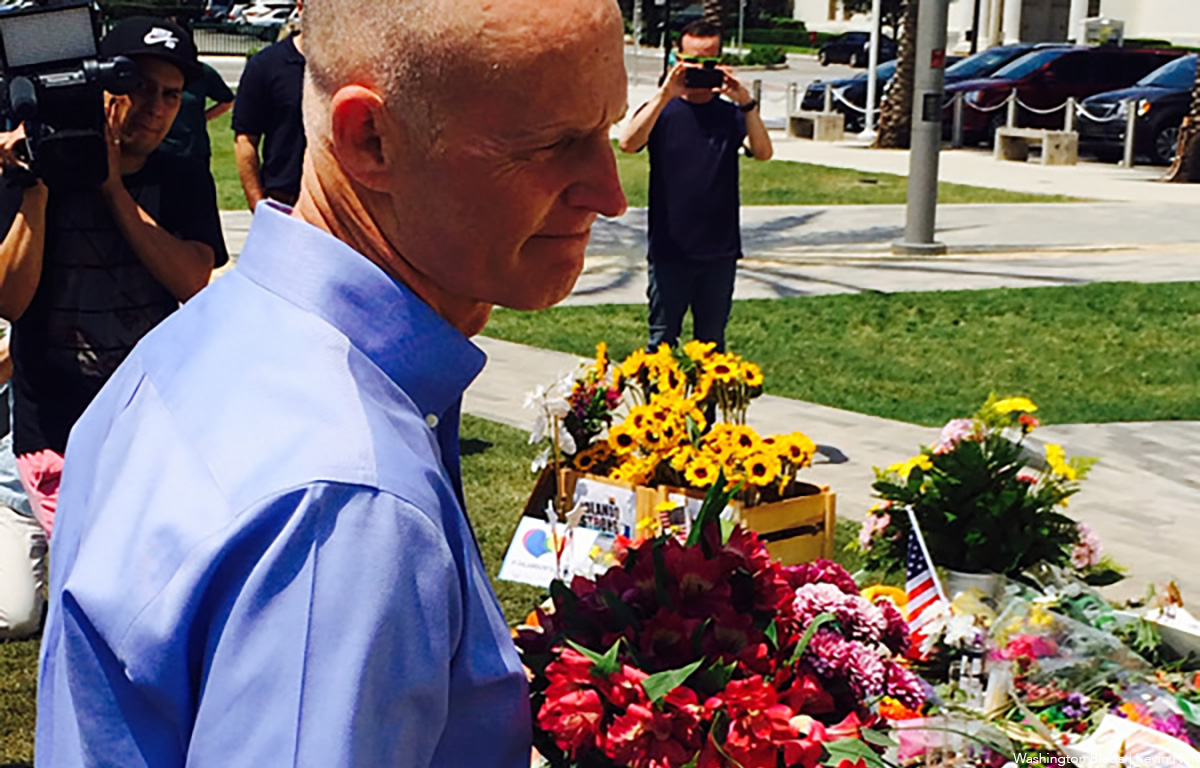
NAFF: I was covering a vigil in downtown Orlando when then-Florida Gov. Rick Scott’s motorcade arrived unannounced. To that point, he had not addressed the LGBTQ angle and seemed to be downplaying the fact that this was an attack on our community. I hurried to the front row as he held an impromptu news conference. To my dismay, he took only three short questions from TV reporters then rushed away. I grabbed his communications director and insisted that Scott take a question from the LGBTQ media. She agreed and told me to wait next to the SUV. When Scott approached, I asked him, “What is your message to LGBTQ Floridians?”
To my surprise, he sputtered, stammered, and broke into tears before telling me, “This was an attack, what else can you say? This was an attack against the gays, an attack against Hispanics, an attack against our country, our nation and it’s disgusting. The biggest thing we do now is ask how to make sure this doesn’t happen again.”
It was his first public acknowledgment that the LGBTQ community was the target of the attack.
LAVERS: Two moments stand out for me.
The first moment is when then-President Barack Obama and then-Vice President Joe Biden traveled to Orlando on June 16, four days after the massacre. I was one of the reporters who the White House asked to be part of the local press pool. I was about 50 feet away from Obama and Biden when they placed bouquets with 49 flowers — one for each of the victims — at a makeshift memorial between City Hall and the Dr. Phillips Center for the Performing Arts in downtown Orlando. Obama in remarks he made to the press pool mentioned one of the gay victims who had once said, “We cannot be afraid.” The emotions of the last four days simply became too much, and I broke down. Another reporter who was part of the press pool who was standing next to me realized I had broken down. She put her hand on my back to console me.
The second moment came a few weeks later when I was in Puerto Rico to cover the community’s response to the massacre and to interview victims’ relatives. Orlando has a very large Puerto Rican community, and nearly half of those who died at Pulse were of Puerto Rican descent.
I drove to Caguas, a city that is roughly 20 miles south of San Juan, the island’s capital, on July 7, and interviewed Aida Velázquez in her small apartment. Her son, Frankie “Jimmy” de Jesús, died at Pulse. Aida talked about her son, and she showed me pictures of him. Jimmy also danced Jíbaro, a Puerto Rican folk dance. The interview took place less than a month after the massacre — Jimmy’s funeral took place in Caguas less than two weeks earlier.
I sat in my car after the interview and sobbed uncontrollably for nearly five minutes. Nothing can possibly prepare you for interviewing a mother who had just lost her child in the most horrific way possible.
How did the local community respond and what about their response gave you hope or inspiration?
NAFF: In addition to the staff at The Center working to assist victims and their families, everyday Orlando residents stepped up to help however they could. At the downtown vigils, straight mothers and fathers carried signs offering hugs to anyone who needed them. I encountered a group of young teenage males who approached a group of law enforcement officers and appeared to perform for them. When they finished, I asked what they were doing and they told me that they were straight friends who lived in Orlando and wanted to do something to help so they composed an uplifting rap song and walked around performing it for anyone who needed cheering up.
LAVERS: The way that Orlando rallied around the LGBTQ community was simply inspiring.
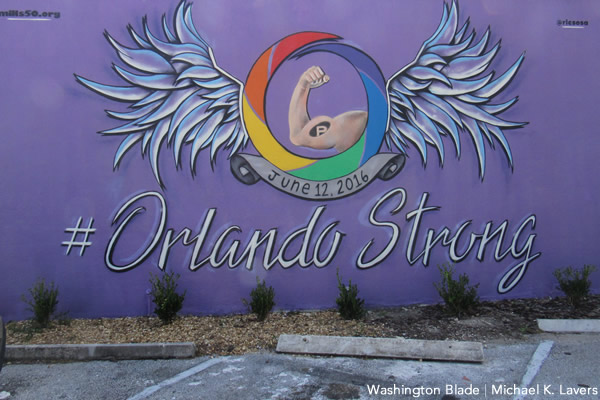
Imam Muhammad Musri, president of the Islamic Society of Central Florida, at a memorial service that took place at the Dr. Phillips Performing Arts Center on June 13 said his organization was “united as Americans when it comes to standing with the LGBT community and their rights to live freely and to practice their lives here.” This comment underscored the outpouring of support that Orlando showed its LGBTQ community after Pulse. It was also a call for the better angels among us to reject hate in all of its forms.
What surprised you most about the experience?
NAFF: I was most surprised — and moved — after talking to Rev. Debreita Taylor of Oasis Fellowship Ministries, an LGBTQ-affirming ministry.
“My message is love. Period. Love. Period. There’s nothing in the word of God that faith leaders can go to that teaches hate,” she told me. “Have faith and believe that evil and hate can be eradicated one person at a time. How do you treat someone? How do you embrace someone who treats you wrong? We all bleed, laugh, hope and have great victories and major defeats. And so, you know me, even if you don’t know my name — I’m you.”
LAVERS: It admittedly took me quite a while to fully process what I experienced in Orlando — I was focused on doing my job as a reporter, which was to cover the story, and, most importantly, show the human impact of what had happened. I suppose one surprising aspect of the time I spent in Orlando was that I found myself feeling more defiant against those who seek to destroy our community. They want us to live in fear, and I refuse to give them that satisfaction.
What, if anything, changed as a result of Pulse?

NAFF: In the immediate aftermath of the attack, queer spaces began rethinking their approach to security, which has served us well in the years since. Sadly, just a year later, Pulse was bumped to the No. 2 deadliest mass shooting in U.S. history when a gunman opened fire on the Route 91 Harvest music festival in Las Vegas, killing 60 people. Americans and their politicians never learn from these largely preventable tragedies. The carnage continues.
LAVERS: Gun violence remains a shameful scourge in this country. Our community remains vulnerable to violence and discrimination. President Donald Trump, Vice President JD Vance, and other politicians here in Washington, around the country, and overseas continue to use our community to advance an anti-equality agenda. The carnage continues, as my colleague correctly notes, but our community remains strong and defiant. That gives me hope.
National
Queen Jean is Tony’s first transgender winner
Designer/activist wins for work on ‘Cats: The Jellicle Ball’
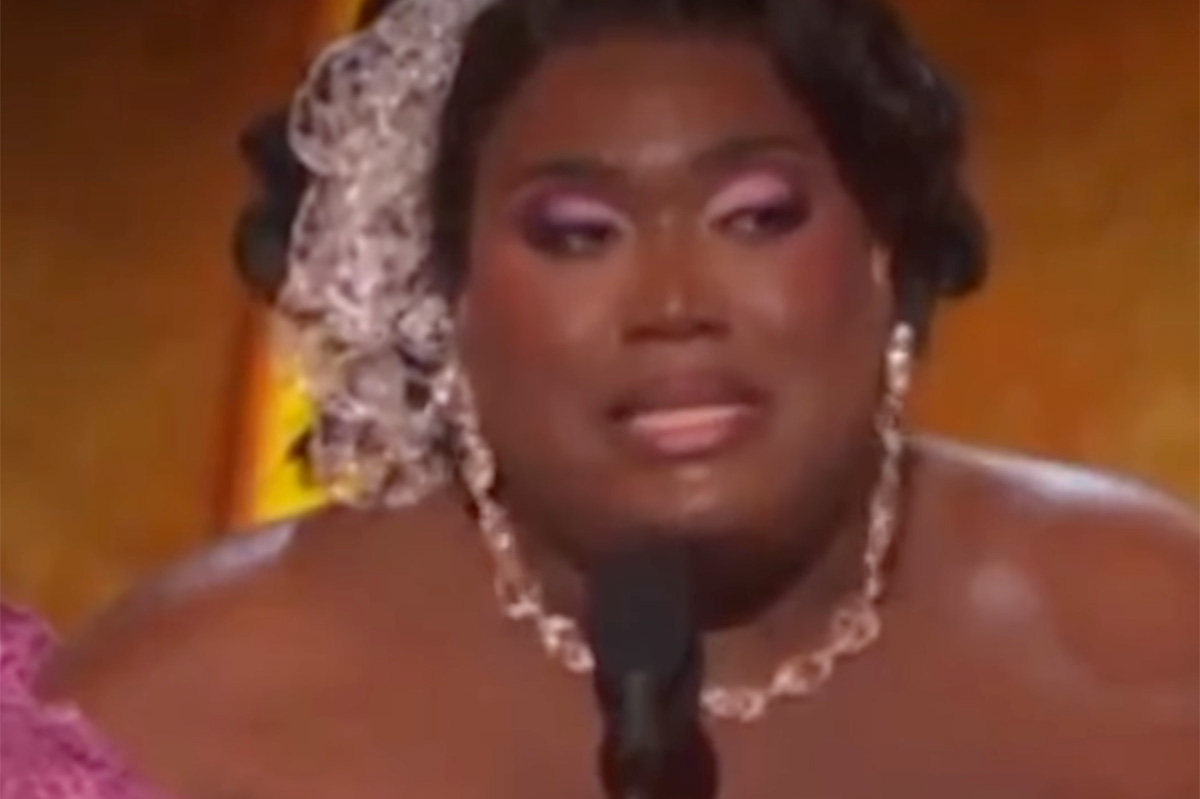
It was a historic night at the 79th annual Tony Awards on Sunday as Queen Jean won the award for Best Costume Design of a Musical, making her the first out transgender person to win a Tony.
“This experience has been monumental. We are here for the legacy of queer people, trans people,” she said. “We are taking up space in ways we have to take up space. We have to shift the paradigm. So I just want to say, thank you all so much for this incredible honor. The world right now is deeply, deeply combating so many ailments, and we know as a society that when we come together, we can make real, permanent change.”
She won the award for her work on “Cats: The Jellicle Ball” and was also nominated for best costume design of a play for “Liberation.”
In addition to her stage work, Queen Jean is the founder of Black Trans Liberation, an organization that supports trans and gender-nonconforming people in New York City.
National
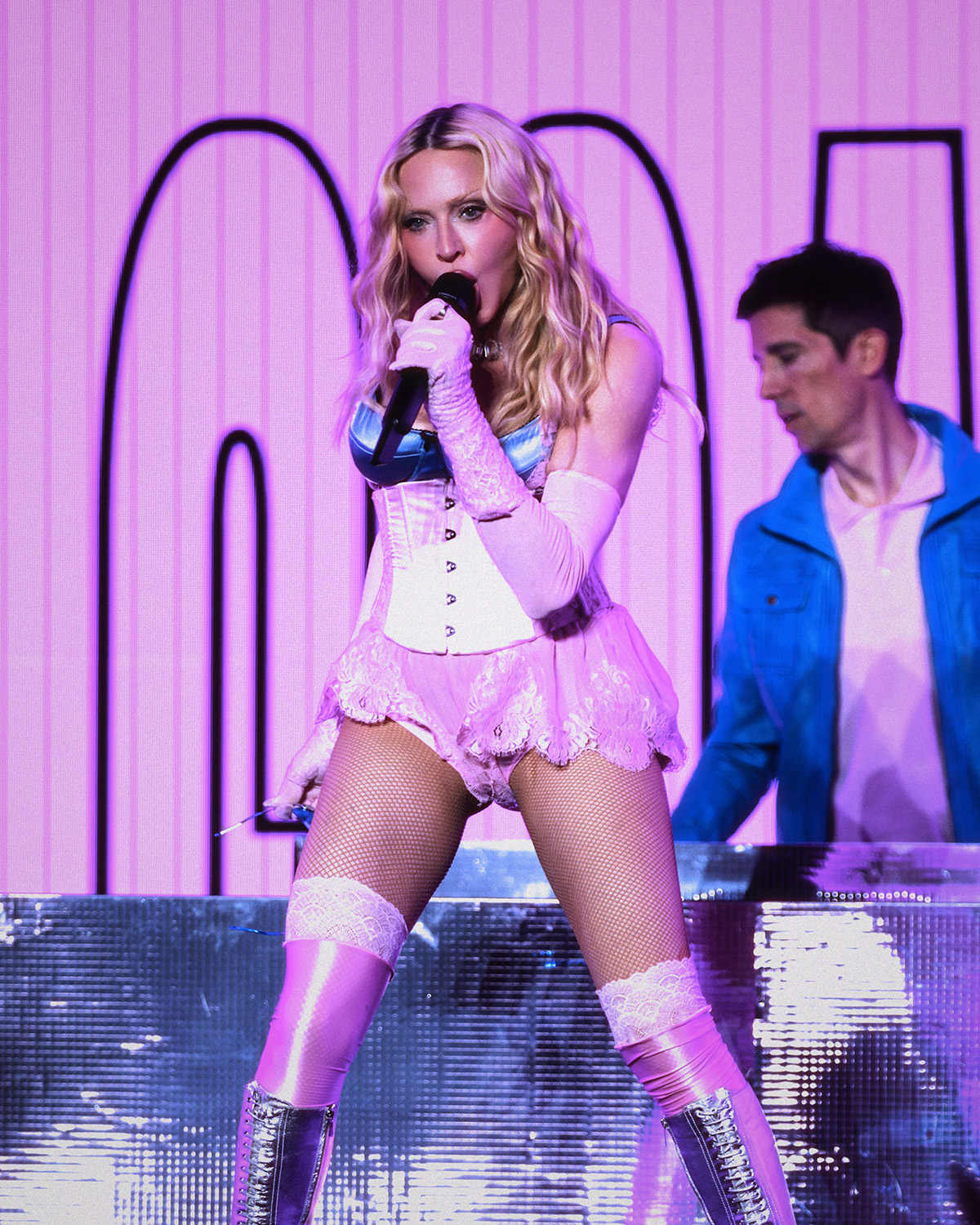
Madonna turns Times Square into massive dance floor
Pop icon celebrates Pride month with surprise performance
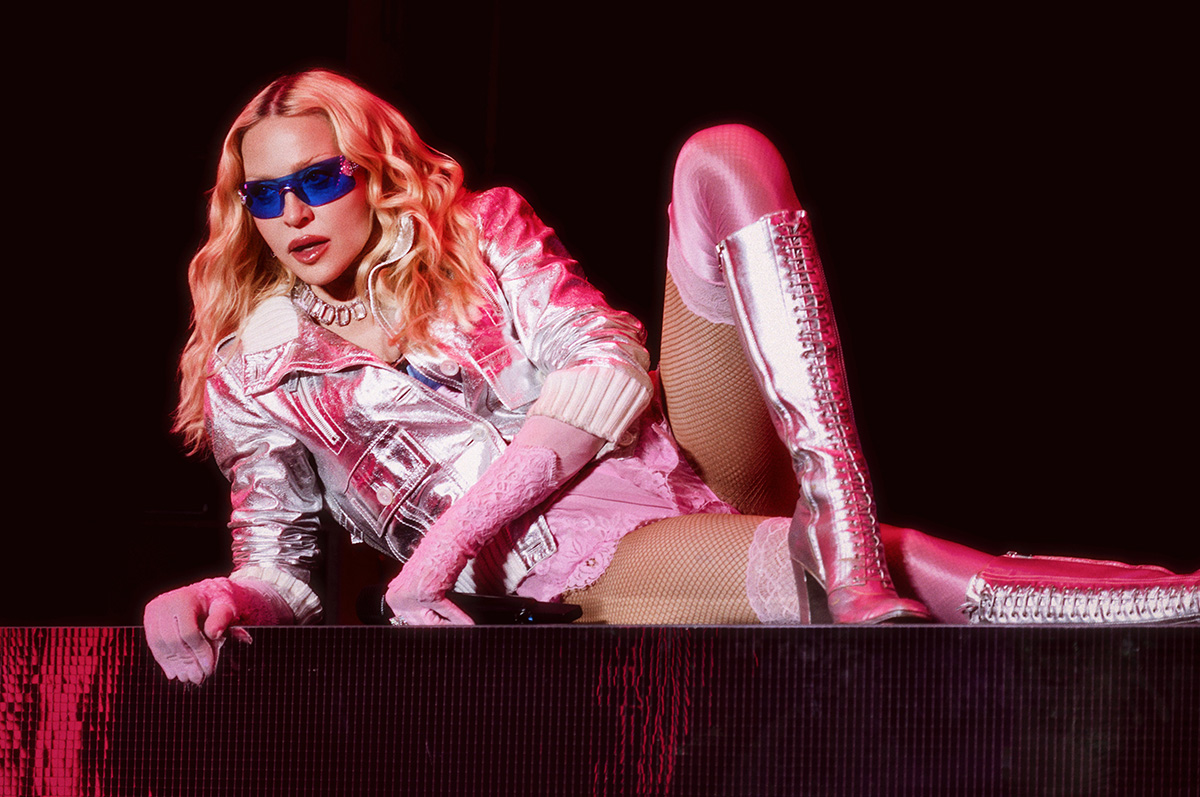
Pop icon Madonna celebrated Pride month with a pop-up performance in New York City’s Times Square on Thursday to the delight of 50,000 fans.
She performed for about 15 minutes high above street level, including several songs from her new album “Confessions II” due on July 3, along with a trio of songs from the first “Confessions on a Dance Floor.”
In addition to the brand new “Love Sensation,” she performed “I Feel So Free” and “Bring Your Love,” plus “Hung Up,” “Get Together” and “I Love New York.” She wished the crowd a happy Pride season; the event was shared with audiences through Grindr’s first-ever livestream.


Why I’m supporting Gary Goodweather for D.C. mayor

Don’t just vote for change — vote for Hope Solomon for mayor

Vote Kenyan McDuffie for D.C. mayor

Your queer D.C. voting guide

Blade reporters reflect on covering Pulse massacre 10 years ago

Timothy Nelson on the premiere of his opera ‘Song of Sakuntala’

Controversial ‘Blue Film’ pushes past taboos for gripping drama

PHOTOS: ‘Soul Divas’

‘Mighty Real’ explores history of LGBTQ music