Theater
Fierstein fired up for ‘Fiddler’
Anyone who tells me that I can’t play a part, I tell them ‘f-you’

Susan Cella (Golde) and Harvey Fierstein (Tevye) star in the National Theatre’s “Fiddler on the Roof.’ (Photo by Joan Marcus; courtesy of National Theatre)
If you missed him on Broadway, now’s your chance to see gay icon Harvey Fierstein in “Fiddler on the Roof.” Once again, Fierstein has grown out his grey beard and picked up his pail to play Tevye the milkman in the North American tour of the much-loved musical (at National Theatre through May 2).
Based on stories by Shalom Aleichem, “Fiddler” is the tale of religious Jew Tevye, his wife Golde, and their five daughters, grappling with family, tradition and hard times in Tsarist Russia. Tony Award-winning Fierstein brings humor, pathos and political edge to the legendary role: “It’s wonderful entertainment and means a lot to a lot of people including my family,” he explains. “But it’s important to remember that behind the familiar songs are some serious, relevant issues like ethnic cleansing. I keep that in mind.”
All good interviews require preparation. But when it comes to Fierstein, rules don’t apply. In his unmistakably gravelly voice, Fierstein says what needs to be said, scarcely pausing for a breath: “While many actors have played Tevye, the interpretation of the role hadn’t changed much since the show’s debut in 1964,” he explains. “Through the course of the show, I move Tevye away from the fundamentalist we meet when the curtain comes up. As he gets closer to leaving his little village for America, he becomes more open to the world. It’s good change. Fundamentalism is death.”
When it was announced that Fierstein would be replacing Alfred Molina as Tevye the milkman in the Broadway revival of “Fiddler on the Roof” in 2005, some skeptics were unsure about his taking on the role. How could the guy who’d recently won a Tony for his star turn as plus-sized, Baltimore housewife Edna Turnblad in the musical “Hairspray,” pull off an Orthodox Jewish patriarch living on the shtetl? The always direct Fierstein was, not surprisingly, undeterred: “Anyone who tells me that I can’t play a part, I tell them f-you.”
“Tevye is one of the seminal roles in the musical theater canon — he’s the male equivalent to Gypsy’s Mama Rose,” notes Fierstein, 57. “Before agreeing to take the part, I consulted a friend who advised, ‘You can either play Tevye, or spend the rest of your life telling everyone that you were once offered the part, but passed on it.’ Of course, I had to accept.”
Fierstein’s only trepidation was that “Fiddler’s” composers — Jerry Bock and Sheldon Harnick — might not approve of him singing their songs. In true bravura fashion, Fierstein arranged to sing the show’s entire score (including “Tradition,” “If I Were a Rich Man,” and “Do You Love Me?”) for the “boys,” as he endearingly calls the musical team. The boys liked what they heard and Fierstein never looked back. He famously tackled Tevye, bringing his colossal presence to the part and earning some darn good reviews in the process.
Born in Brooklyn, Fierstein made his acting debut in Andy Warhol’s only play, “Pork,” and rose to fame in 1982 with his semi-autobiographical work “Torch Song Trilogy” in which he played Arnold, a torch song Jewish drag queen in search of love and family. He also, among other things, wrote the libretto for the mega-successful musical “La Cage aux Folles.”
Despite being busy with other projects, Fierstein jumped at the opportunity to join the North American tour last October and reprise his performance. “What can I say? It’s a great part, and I’m enjoying touring with a big cast. I’d never done that before.”
What’s up next for the remarkable Fierstein? At the time of this interview, the “Fiddler” tour was on a three-week break prior to opening in D.C. Instead of resting at his home in Connecticut, Fierstein was working in New York City putting finishing touches on a Broadway revival of “La Cage” opening this month. He’s also currently working on the book for stage adaptation of Disney’s “Newsies,” and collaborating with Cyndi Lauper on an as yet undisclosed musical theater project. “I’m a longtime fan of Cyndi’s but never did I know she could morph into a Broadway composer. Believe me,” Fierstein loudly assures, “people are going to be bowled over.”
‘Fiddler on the Roof’
Through May 2
National Theatre
1321 Pennsylvania Ave, N.W.
Tickets start at $51.50
800-447-4700
nationaltheatre.org
Theater
Timothy Nelson on the premiere of his opera ‘Song of Sakuntala’
Story of love, loss, redemption unfolds amid Indian classical music
‘The Song of Sakuntala’
IN Series
In Washington and Baltimore
Atlas Performing Arts Center, 1333 H St., N.E.
(Selected dates June 6-14)
Baltimore Theatre Project, 45 W. Preston St., Baltimore
(June 19-21)
$25-35
Inseries.org
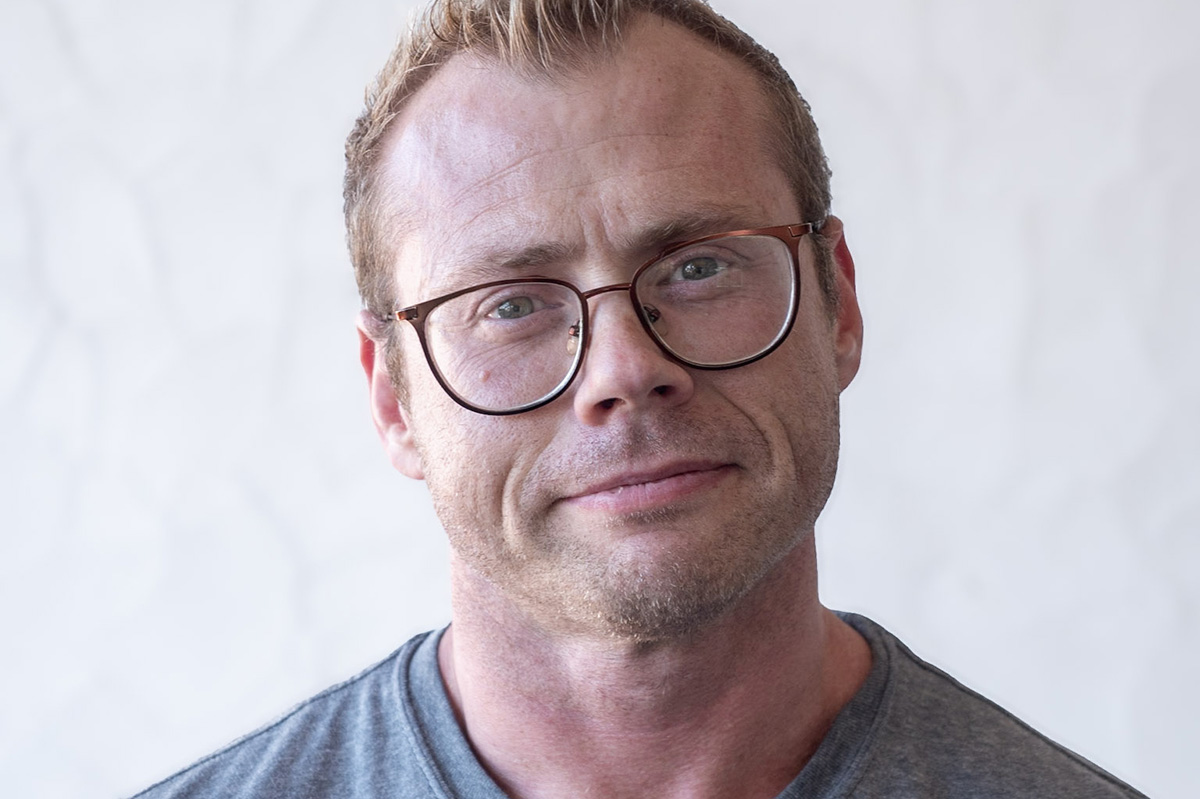
As the artistic director of IN Series, Timothy Nelson rarely blows his own horn, but for the world premiere of his own opera “The Song of Sakuntala,” he’ll make an exception.
During a recent interview squeezed in between afternoon and evenings rehearsals, Nelson took time to talk about his opera (while nearby his “blessing of a husband” prepared a giant dinner for the entire cast and crew).
As smart and gracious as ever, Nelson explains that he wrote the opera a decade ago at a low point in his life: He was divorcing and wanted to immerse himself into something musical, all-consuming, a project tantamount to writing a thick novel.
At the time, Nelson’s mentor, the influential American stage and opera director Peter Sellers, pushed him to write again. Nelson recalls, “I hadn’t composed for some time. I wanted to see if I could do it, and I wanted to revisit Indian classical music.”
He adds, “There was never any anticipation of it being produced. It was a way of processing and dealing with life in a healthy way.”
Adapted from Kālidāsa’s 5th-century dramatic masterpiece, “The Song of Sakuntala” brings together Western baroque and Indian classical musical traditions into a story of “love, loss, memory, and redemption.” His libretto, a reflection of South Asian storytelling, includes the words of the great Indian poets Tagore, Naidu, and Vidyapati.
The story follows “a prince and a woman of the forest who fall in love and wed in secret. He departs, and she later seeks him out, only to have him deny all recognition of her. She disappears in sorrow; he spends the rest of his life searching. At the end, in the same forest where they first met, they find each other again and are transfigured.”
At 90 minutes, the uninterrupted piece features three singers (Aryssa Leigh Burrs, Teresa Ferrara, Marvin Wayne Allen) accompanied by an instrumental ensemble led by acclaimed sitarist Rajib Karmakar, who specializes in bridging Indian and Western classical traditions, and conducted by Nelson who also joins the music making on drone and harmonium.
Burrs plays the prince. Originally written for a countertenor, Nelson imagined a man singing the role but ultimately cast a woman to play the part.
Because the piece is “fiendishly difficult in almost unnecessary ways,” Nelson explains with a wicked chuckle, he knew that Burrs had the talent and sharp brain required for the role.
The prince is cruel without explanation. Despite that, 40-something Nelson admits to relating to the opera’s prince: “In midlife, you reflect on your mistakes. At least for now that’s how I feel. I might have felt different earlier and it could change later on.”
Nelson lived in India for nine months, backpacking and studying in different places, absorbing different musical styles and playing pieces as varied and complex as any Western music.
And while based in D.C., IN Series performs in both Washington and Baltimore using various borrowed venues. “The Song of Sakuntala” is playing at both the Atlas Performing Center in D.C. (6/6-6/14) and Baltimore’s beloved Baltimore Theatre Project (6/19-6/21) with its terrific acoustics.
In a past conversation, Nelson who lives in Adams Morgan, shared that all audiences bring something specific to the table. Baltimore tends to attract more risk taking while D.C. audiences often lean into the intellectual side of what the company does.
At the helm of IN Series for eight years, Nelson has relished reimagining opera and musical theater, but only recently did he decide to program his latest work. The way in which “The Song of Sakuntala” blends Western and non-Western music is very much a part of the IN Series music brand, so it seemed the perfect selection to close the season.
“I do this humbly with great hesitancy. And I know it feels a little unseemly to cheer on your own work, but I will say, it’s a piece that is successful in sitting in both places (Western and South Asia) and the Indian musicians on board are responding to it.”
Theater
Cedric Neal on his juicy narrator role in ‘Pippin’
A rash of terrific reviews for a part he’s longed to play
‘Pippin’
Through July 26
Signature Theatre
4200 Campbell Ave.
Arlington, Va.
$47-$153
Sigtheatre.org
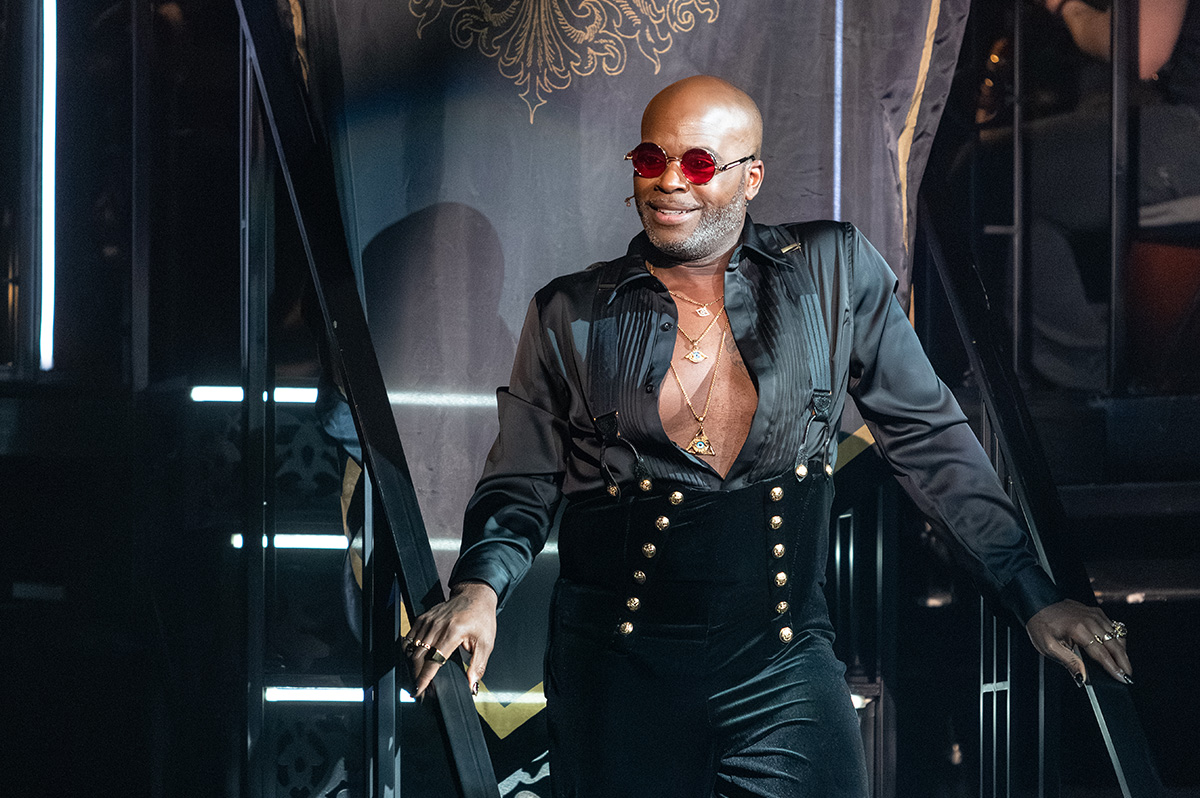
As Leading Player in Signature Theatre’s revival of “Pippin,” Cedric Neal portrays the manipulative narrator who guides the title character, a young medieval prince, on a quest for meaning. Neal is also receiving a rash of terrific reviews for a part he’s longed to play for some time.
Recently, after the first “Pippin” preview performance, Neal shared his thoughts. “Last night was exciting, mystic and exotic. It was magical. Words are overused, but it was all those things.”
With a powerful, rich tenor voice, Neal is best known as a charismatic West End and Broadway star (“Back to the Future,” “Hadestown,” “Guys & Dolls”) as well as for his memorable semifinalist win on the “The Voice UK” in 2019.
And now Stephen Shwartz’s “Pippin” marks Neal’s second show at Signature Theatre, a place he dearly loves. His first was as Jimmy Early in “Dreamgirls” in 2012, a raucous role that won him a Helen Hayes Award. During that production, Neal forged deep friendships with actor Nova Y. Payton and director Matthew Gardiner. What’s more, while rehearsing the show, he met his husband.
“He likes to say we met on Match.com but I remember it differently,” says Neal. “It was something called Adam4Adam. It might have been a hookup, but instead we met for coffee in Shirlington Village where we talked and talked for hours. Two years later we married.”
BLADE: Your triumphant return to town sounds pretty great.
NEAL: I’m having the time of my life. Takes me a half hour to come down after the show ends. It’s explosive.
BLADE: Is Leading Player a part you’ve wanted to do?
NEAL: Very much, and just this way. Rather than leaning on its circus troupe aspect, our director Matthew [Gardiner] explores the darkness of the story and the risk of falling prey to cultish ideology.
BLADE: Just how nefarious is Leading Player?
NEAL: I’m not judging my character. I believe at some point that Leading Player has good intentions. Somewhere along the line, ego becomes involved. The promise becomes warped.
BLADE: When doing “Pippin,” is it possible to separate the iconic Bob Fosse choreography and Ben Vereens’s sexy portrayal of Leading Player from the original production?
NEAL: Not entirely, but in our production Matthew [Gardiner] and Rachel Leigh Dolan have meticulously honored the choreography and storytelling of Fosse’s work without it being a carbon copy. I think it’s amazing.
BLADE: Was your participation in the “The Voice UK” a strategic career move?
NEAL: It was. At the time, I had just gotten a BIG NO on a West End show where the casting director told me the part should have been mine but using a then-unknown American would have created an uproar.
Then when “Voice UK” scouted me, my agent said this would be the perfect opportunity to boost my profile. Ultimately, I was given a global scale opportunity to go onstage and sing as Cedric.
BLADE: Your thrilling, original rendition of Stevie Wonder’s “Higher Ground” made the audience and judges like Jennifer Holliday and Sir Tom Jones just go crazy (in a good way). In musical theater, do you make beloved, well-known songs like “Join Us” and “Glory” in “Pippin,” your own in that same way?
NEAL: I couldn’t always, but I can now. When I talk to younger performers, I tell them about the song in “Gypsy” where the experienced strippers talk about getting a gimmick if you want to be a star.
I come from a gospel, R&B, and serious classical background and have always retained my gospel, soulful flair on things. When I entered the world of musical theater, I’d put my twist on a song and the musical director would ask that I tone it down.
Ten years into my career, I became known for putting my flair on musicals, and that became my gimmick. To “Cedricfy” a song is a legitimate term in musical theater. And you’ll see me bring that to “Pippin.”
BLADE: Reading about you, it seems you’ve made bold choices and surround yourself with supportive friends and family, blood and chosen.
NEAL: Yes, and it’s not an accident. I come from a bloodline of revolutionaries and pioneers whose shoulders I stand on. My ancestors are all fighters and refuse to let their fight be in vain. Also, I will always step up to the plate and represent all the marginalized communities that I’m a part of: Black, gay, biracial relationships, liberals.
BLADE: Are you and your husband still living in the windmill?
NEAL: We left the windmill but we’re still in the U.K. Try to imagine our story: A Black boy from the hood in Dallas, Texas, meets a fifth-generation cattle rancher from Alberta, Canada, and they move to the UK, adopt a labradoodle, and live in an actual windmill. Isn’t that the gayest shit you’ve ever heard?
BLADE: It’s like a fairytale.
NEAL: It was. It still is.
Theater
‘The Inheritance’ is most-nominated at this year’s Helen Hayes Awards
42nd annual celebration of excellence in local theater set for May 18
Helen Hayes Awards 2026
May 18, 2026
For tickets go to theatrewashington.org
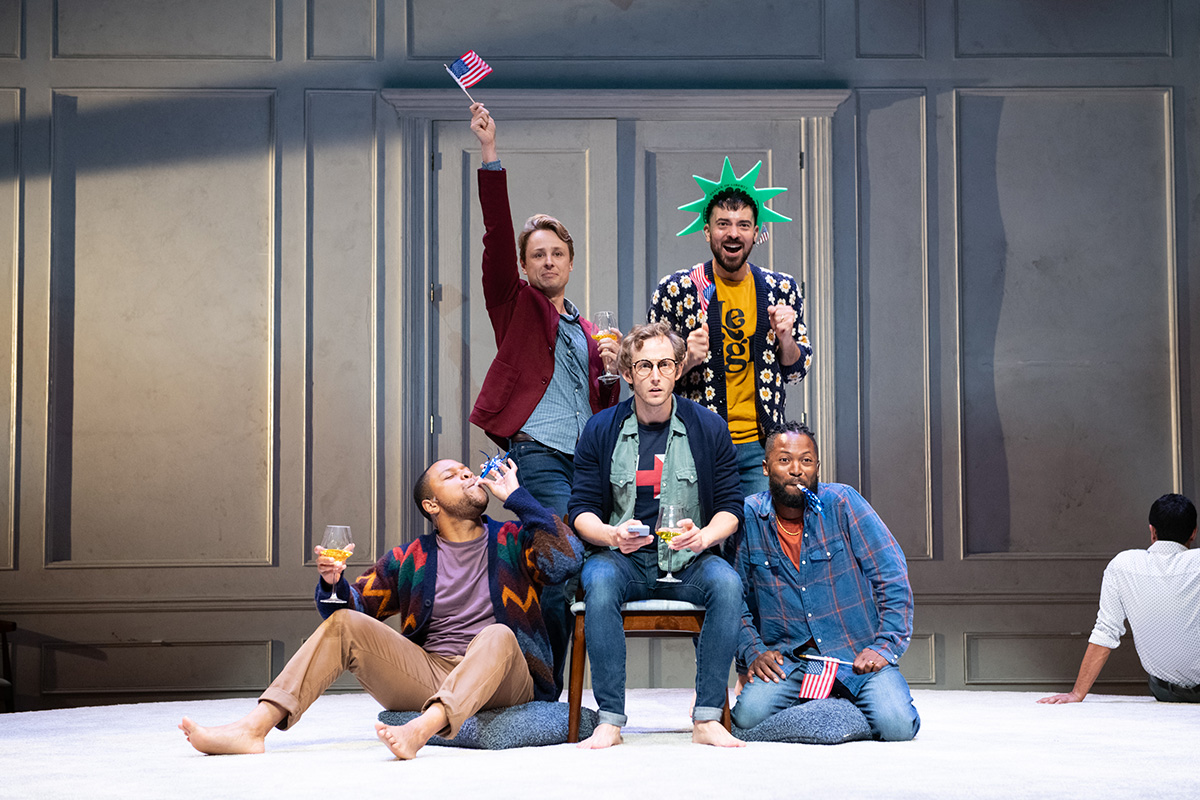
Last year, when out director Tom Story took on the daunting task of directing Round House Theatre’s production of “The Inheritance, Parts One and Two,” he knew that casting would be important, maybe even paramount, to the endeavor’s success. So, Story didn’t mess around.
Penned by queer playwright Matthew López, “The Inheritance” (inspired by E.M. Forster’s 1910 novel “Howards End”) is based on gay culture in the wake of the AIDS crisis.
Story looked at actors he knew, and some he didn’t. He wanted low drama and maybe players who could relate to the LGBTQ experience. In the end, the production’s 13-person cast was entirely queer except for brilliant local favorite Nancy Robinette as Margaret, the wise housekeeper.
Clearly, Story’s vision resonated with audiences. Round House’s production of “The Inheritance” is the most-nominated work of this year’s Helen Hayes Awards, earning 14 nominations. It’s also one of Round House’s highest grossing popular successes ever.
The queer cast members whose ages ranged from about 22 to 60, worked hard and enjoyed the process, and along the way garnered an Outstanding Ensemble in a Play (Hayes) nomination for their efforts.
The ensemble included Jamar Jones as Tristan, a brilliant doctor who leaves New York for Canada after deciding there’s no place for a gay, HIV-positive Black man in America. For the experienced actor, being part of “The Inheritance” was profound: “I think it was a divinely orchestrated production.”
He adds “I really feel that it’s so rare that you get to work on a show of that magnitude…size, time, where virtual strangers genuinely fell into rhythm. We became a cohort. I never felt a sense of unease, or reluctance to try things. I could be as big or bold as I wanted to be; or I could be small. Fail, mess up, try again. I didn’t feel judged.”
Jones considers Richmond his home, but says “I’m based where the work is.” Currently, he’s back at Round House rehearsing “Sally & Tom” (May 27-June28), a play within a play/meta exploration of the relationship between Thomas Jefferson and Sally Hemings by Suzan-Lori Parks.
Jones plays both a contemporary violinist and an enslaved fiddler, parts that have required him to learn to “air fiddle.” He’s all over it: “I want to represent the art and to be as precise as possible. Taught by an instructor, I’ve made strides with movement of the bow; next up is finger placement.”
Will he leave the play a violinist? “I’ll report back on closing night. Maybe I will have added something to the special skills list on my resume.”
For about a decade, Jones worked in living history, interpreting, performing, and writing pieces about the enslaved people of Colonial Virginia. Among the many historical characters he portrayed was Jupiter (Thomas Jefferson’s longtime enslaved manservant), an experience that’s proved a connection and preparation for his current role.
The 42nd Helen Hayes Awards celebration recognizing excellence in professional theater in the DMV will be held on Monday, May 18, 2026 at The Anthem on the District Wharf in Washington, D.C. Named for Helen Hayes, the legendary first lady of Broadway, the program consists of the awards presentation hosted by Felicia Curry, Awa Sal Secka, and Derrick Truby, followed by an after-party at nearby Whitlow’s.
With works selected from 149 eligible productions presented in the 2025 calendar year, nominations were made in 41 categories and grouped as either “Helen” (non-Equity/small Equity presence) or “Hayes” (Equity-heavy).
The many nominations are the result of 49 vetted judges considering 1,997 pieces of work, such as design, direction, choreography, performances, and more. The productions under consideration included 42 musicals, 107 plays, and 33 world premieres.
The following are more of this year’s queer nominees.
A past Helen Hayes Award recipient and nominee, Fran Tapia is competing against herself this year in the Outstanding Lead Performer in a Musical (Helen) category. Nominated for her memorable turn as the diva barkeep in GALA Theatre’s “Columbia Heights Bolero Bar,” an immersive musical centered on songs of longing and immigration set in a diverse neighborhood on the eve of a divisive presidential election
“It was a challenging time, because a lot of what was happening in the show was happening in the neighborhood,” says Tapia who lives in Columbia Heights just eight minutes from GALA.
Based in D.C. since 2019, Tapia says “Being recognized in a country that is not my homeland but where I’m building my artistic home, is deeply meaningful. And the variety of roles I have been able to play speaks to the richness of DC theater and the collaborators who trusted me with these roles.”
Her other individual nomination is for the title role in Spooky Action Theater’s “Professor Woland’s Black Magic Rock Show,” a passionately comedic political satire. She approached the mysterious central character as nonbinary.
Tapia (“Chilean, Latina, queer and proud immigrant”) says while very different, both performances involved particularly strong characters. She’s grateful audiences responded positively to her work.
Stanley Bahorek, who moved to D.C. with his husband four years ago, is best known as an accomplished actor with a long list of Broadway and regional credits (including playing Carl, the gay son in Studio Theatre’s recent production of “The Mother Play”). Now, he is nominated for Outstanding Music Direction (Helen) for his work on “A Strange Loop,” a production of D.C.’s Visionaries of the Creative Arts (VOCA) in collaboration with Deaf Austin Theatre. He shares this nomination with Walter “Bobby” McCoy.
Michael R. Jackson’s Tony and Pulitzer wining play “A Strange Loop,” is the story of Usher, a Black, queer theater usher trying to write a musical. VOCA’s take on the work is seen through a deaf BIPOC lens with a deaf Usher played by a deaf actor (out actor Gabriel Silva). Invited by director and longtime friend Alexandria Wailes (who is deaf), Bahorek (who is hearing) joined the creative team as a sort of hybrid associate director/ music supervisor.
“I’m fluent in conversational American Sign Language (ASL),” he says. “I sort of functioned as a sherpa between the hearing and deaf and hard-of-hearing creatives. It’s been a great thrill to be a part of VOCA’s biggest production to date.”
If he and McCoy take home the prize, who makes the acceptance speech? Bahorek takes a beat before replying “That’s something we still need to talk about. And soon.”
A full list of award recipients will be available at theatrewashington.org on Tuesday, May 19, 2026.

PHOTOS: The Audacity Brunch

D.C. Council approves expanded grant funding for Mayor’s Office of LGBTQ Affairs

Congressional Cemetery hosts Gays & Graves

Baltimore Pride is here

Calendar: June 12-18

Hundreds of thousands expected to attend D.C. Pride events

PHOTOS: Pride Run

Queen Jean is Tony’s first transgender winner

David Archuleta, Monroe Alise named D.C. Pride parade marshals