National
N.C. Legislature sends marriage amendment to voters
Measure will appear on ballot in May 2012
The North Carolina Legislature gave its final approval on Tuesday to an amendment that would make a ban on same-sex marriage part of the state constitution — sending the measure to the ballot in May 2012.
On Tuesday, the North Carolina State Senate passed the amendment by a vote of 30-16. The State House on Monday approved the measure by 75-42. A three-fifths vote was required in each chamber for passage.
Language in the measure moves the ballot date for the amendment from November 2012 to May 2012 — at the same time as the Republican presidential primary is taking place in the state. A majority vote among the electorate is required to make the amendment part of the state constitution.
Alex Miller, interim executive for Equality North Carolina, said the battle in the Legislature may be lost, but “the fight goes on.”
“While the proponents of this harmful, divisive, shameful legislation may have succeeded in throwing up a temporary barrier against the inevitable tide of acceptance and equality, our struggle continues and the campaign to defeat this amendment at the ballot box begins today,” Miller said.
State law in North Carolina already prohibits same-sex marriage, but the measure would make the ban part of the state constitution. If approved by voters, the State Legislature would be unable to legalize same-sex marriage and state courts wouldn’t be able rule in favor of same-sex marriage if the statutory ban were challenged in court.
The measure states that opposite-sex marriage is the “only domestic legal union” in North Carolina, although the amendment allows certain contractual rights between “private parties.” Opponents of this amendment say this language is unclear and could also prohibit civil unions or domestic partnerships in North Carolina.
Joe Solmonese, president of the Human Rights Campaign, spoke out against the amendment and its potential to harm same-sex couples.
“At a time when all North Carolina families are worrying about job losses and cuts in education, it is unconscionable that the legislature add additional stress to a segment of those families,” Solmonese said. “Neighbors are no longer willing to be pitted against one another over these issues. When ballots are cast in May 2012, we are confident North Carolinians will not be persuaded to limit the rights of their friends and family to such a degree.”
The measure is one of two marriage amendments that some voters are set to face in 2012. The Minnesota electorate will also vote on an amendment banning same-sex marriage in November 2012.
Marc Solomon, national campaign director for Freedom to Marry, called the legislative approval amendment in North Carolina “a tremendous blow to loving, committed same-sex couples” in the state.
“To try to preempt the conversations taking place across North Carolina about same-sex couples and why marriage matters by cementing discrimination into the constitution is unfair and wrong,” Solomon said. “And politically scheming to put such a cruel and discriminatory measure on a low-turnout Republican presidential primary ballot is a sham designed to circumvent the majority of North Carolina voters, who polls say, oppose this amendment and the injury it will inflict not just on families, but the state.”
Matt Comer of GOQnotes has a report on the debate that ensued in the Senate prior to the approval of the amendment.
According to GOQnotes, primary sponsor Sen. James Forrester said the amendment was intended to defend the “an institution in our society based upon the complementary male and female loin.”
“Moms and dads are not interchangeable,” Forrester was quoted as saying. “Two dads don’t make a mom. Two moms don’t make a dad. Children need both a father and a mother.”
Sen. Martin Nesbitt, who represents Asheville in the Senate, reportedly took aim at Forrester for previous comments made in a Gaston Gazette article. Forrester was quoted saying Asheville is “a cesspool of sin.”
“I’ve served with Sen. Forrester since he got here and I’ve always considered him a gentleman and a scholar,” Nesbitt was quoted as saying. “I appreciate my service with him and he drags this bill up and the next thing I’m reading is that he’s declared my community a cesspool of sin. I tell you what, mountain people are getting a little tired of people sitting down here throwing darts at them.”




Puerto Rico
LGBTQ ‘human rights crisis is unfolding in Puerto Rico’
Activist spoke at Congressional Hispanic Caucus briefing in D.C. on July 15
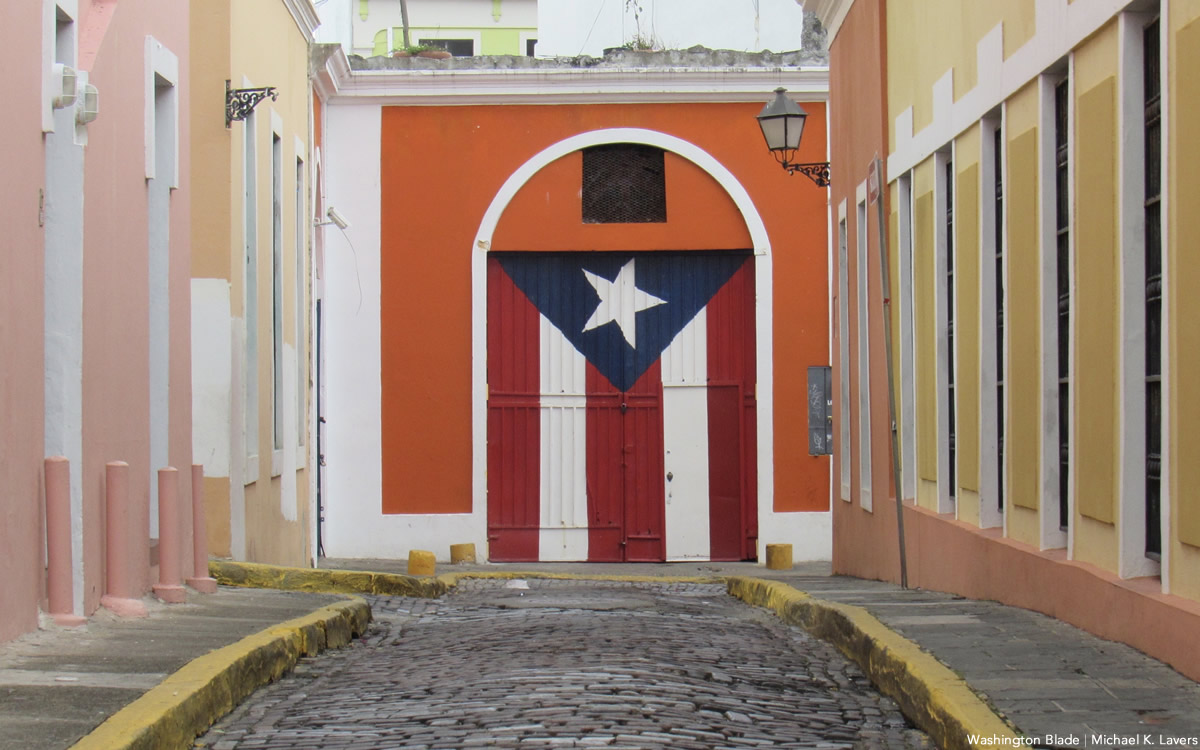
An activist from Puerto Rico who spoke at a Congressional Hispanic Caucus briefing last week in D.C. said anti-LGBTQ laws and policies have left the LGBTQ community in the U.S. commonwealth even more vulnerable.
“A human rights crisis is unfolding in Puerto Rico — one that disproportionately affects LGBT+ people, particularly transgender and nonbinary Puerto Ricans,” said True Self Foundation Executive Director Miguel Vázquez-Rivera.
The True Self Foundation and LatinoJustice PRLDEF participated in the briefing that took place on July 15.
Vázquez-Rivera during the briefing highlighted several anti-LGBTQ laws and policies that have been implemented since Gov. Jenniffer González took office in January 2025. These include Law 63-2025, which prohibits gender-affirming healthcare for anyone under 21, and Law 26-2026, which prohibits the University of Puerto Rico and other “government facilities” from installing “mixed or gender-neutral multi-occupancy restrooms.”
“The legislation aims to strengthen public safety standards while ensuring that no individual is subjected to unlawful discrimination,” noted the Puerto Rico Federal Affairs Administration on Feb. 25 in a press release after González signed it.
González, a Republican who is a member of the pro-statehood New Progressive Party, was Puerto Rico’s resident commissioner in the U.S. House of Representatives before she became governor. González supports President Donald Trump.
Vázquez-Rivera during the briefing highlighted anti-LGBTQ measures that have been introduced in the Puerto Rico Legislative Assembly. These include House Bill 164, which would prohibit transgender athletes from school sports teams that correspond with their gender identity, and House Bill 131, which would allow faith-based adoption agencies to deny services to same-sex couples.
“The overwhelming scientific evidence is clear: children raised by same-sex parents do just as well as those raised by different-sex parents,” said Vázquez-Rivera. “What matters is not the gender or the sexual orientation of the parents; but the presence of love, stability, and support.”
Trump upon taking office for a second time on Jan. 20, 2025, signed his “Defending Women from Gender Identity Extremism and Restoring Biological Truth to the Federal Government” executive order. Among its provisions is the federal government’s recognition of two genders: male and female.
Vázquez-Rivera noted “other proposals” in Puerto Rico “would recognize only ‘biological sex’ in government documents, prohibit inclusive language throughout public institutions, continue challenging recognition of nonbinary identities, and reverse protections for LGBT+ students previously adopted by the University of Puerto Rico.”
“The challenges facing LGBT+ Puerto Ricans cannot be viewed as isolated debates about healthcare, sports, bathrooms, or language,” said Vázquez-Rivera. “They are part of a much larger picture.”
“Puerto Rico is already confronting poverty, disaster recovery, healthcare shortages, and economic instability,” he added. “When discrimination is added to these realities, existing inequities become even deeper. Mental health worsens. Families are displaced. Communities become more vulnerable.”
Vázquez-Rivera further stressed “these issues are interconnected, and our response must be as well.” He also urged the LGBTQ rights movement to do more to support — and fund — advocacy efforts in Puerto Rico.
“Ultimately, this is not about granting special rights,” said Vázquez-Rivera. “It is about ensuring that more than three million American citizens living in Puerto Rico have the same opportunity to live healthy, safe, and dignified lives as every other American.”
The Puerto Rican government has not responded to the Washington Blade’s request for comment.
North Carolina
In the middle of the Bible Belt, a summer camp lets trans kids exhale
Adulthood feels possible at Transcending Adolescence
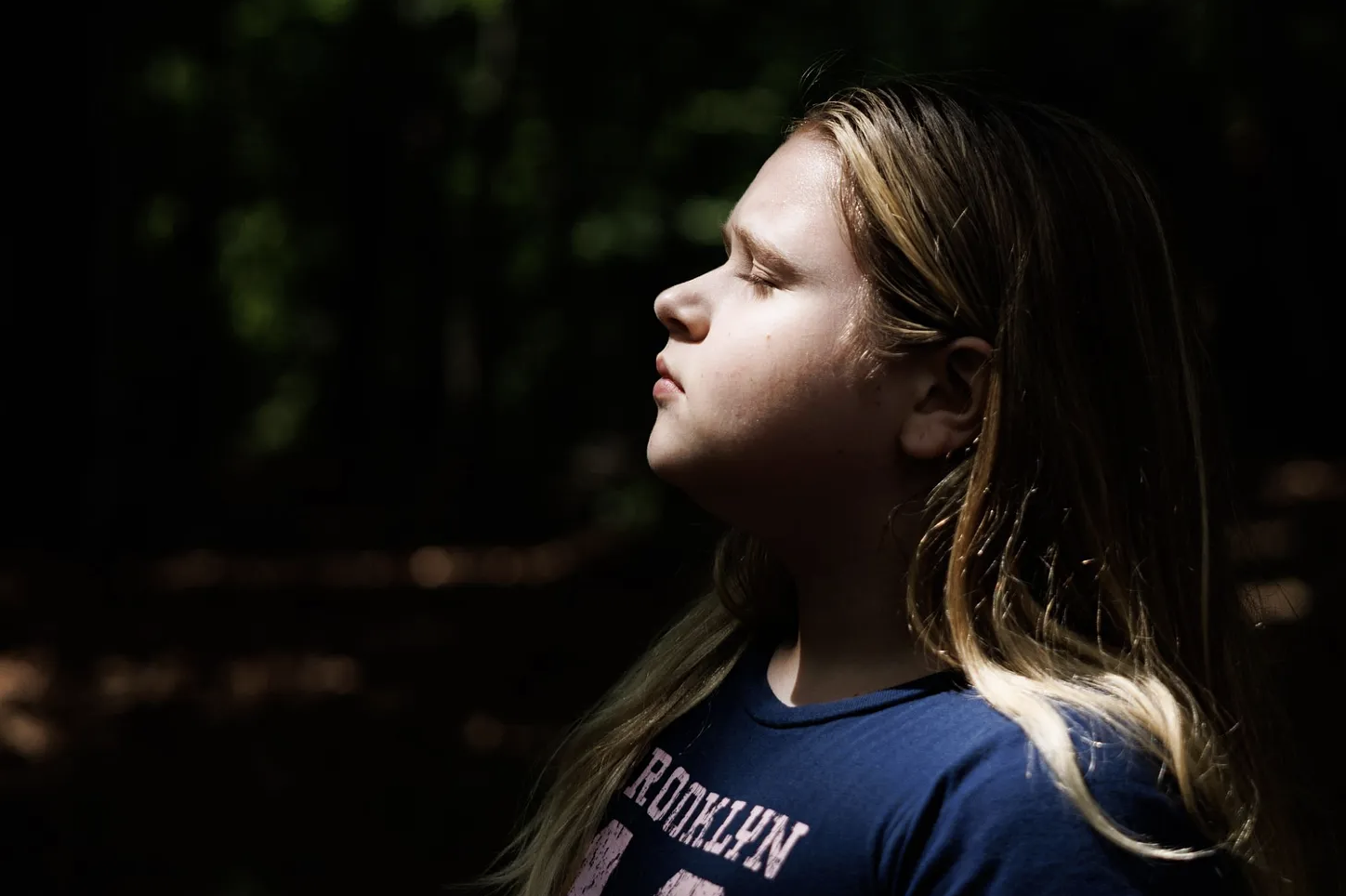
Uncloseted Media published this article on July 18.
By SAM DONNDELINGER | On a June night in rural North Carolina, dozens of campers sat around the fire as a counselor asked them to close their eyes.
“Picture a place where you feel completely safe,” they were told. “Think about what it looks like and how it feels, what you can hear, smell, and taste.”
When they were invited to share what they had imagined, one camper described sitting in a circle with other trans people. It was dark. Trees surrounded them. Mosquitoes buzzed.
“‘That place is here, and this is the place where I feel safe,’” Jacob Hofheimer, one of the camp’s founders, recalled the camper saying. “It got all of us.”
For many of the 8- to 17-year-olds who attend Transcending Adolescence, the weeklong summer camp offers a reprieve from the calculations they have to make in their day-to-day lives: Who knows they are trans? Who can be trusted? Which bathroom can they legally use?
At a time when 40 percent of transgender and nonbinary youth seriously considered attempting suicide in the past year, and 90 percent of LGBTQ youth reported that recent anti-LGBTQ laws, policies, and debates cause them stress or anxiety, those questions never disappear. But at this camp, young people are given space to ask them openly and to a community that understands why they need to.
“It really made me smile knowing that there’s a lot of people out there like me,” Ruby, a 12-year-old camper, told Uncloseted Media. “I’m putting myself out there, I’m being myself and no one judges me.”
Origins
Transcending Adolescence was founded in 2019 by Jacob and his wife Chrissy Hofheimer. The trans married couple wanted to create a camp for queer kids in America’s South, where affirming resources can be difficult to find.
Surrounded by thick woods and the backdrop of the Appalachian Mountains, campers swim, tie-dye shirts, complete ropes courses, roast marshmallows and perform in shows. They also gather for conversations about healthy relationships, medical care, legal rights, bathroom anxiety, coming out, misgendering, depression, substance use, and self-esteem.
“A huge part of it is that every single person there is trans or gender diverse, including the staff,” says Rory Sowers, a 19-year-old junior counselor from Florida. “That’s just something that you don’t get to experience a lot, especially as a young trans person.”
Sowers first attended Transcending Adolescence as a camper during its inaugural year in 2021. He returned three times before becoming a junior counselor.
“There’s so much that trans folks have to worry about just going about their day-to-day lives, especially living in the South,” Sowers says. “I was able to come into myself a lot more when I didn’t have all of those anxieties on my back.”
A place to be ‘just Ruby’
For 12-year-old Ruby, pre-camp anxiety was intense.
When she attended camp in June of last year, it was the first time traveling to another state without her parents.
“I was nervous about having someone there not really understanding me … and not really accepting me,” says Ruby, whose name has been changed to protect her privacy.
Outside camp, Ruby worries about how other people perceive her, according to her mom, Kate, whose name has also been changed. She says her daughter has to consider a litany of questions cis kids don’t have to worry about: “‘What if someone finds out? Are they looking at me? Do I look the part?’ … All these thoughts go through her head every single day.”
Before camp, Ruby had been struggling so intensely that her family had questioned whether it might feel easier for her “not to be who she was,” Kate says. Ruby had faced bullying in school, prompting her family to withdraw her and homeschool her for the remainder of fifth grade.
“I couldn’t really go anywhere without picking [at] myself because I was anxious,” Ruby says.
But when she arrived at camp, a lot of Ruby’s anxiety subsided. She didn’t have to introduce herself through the lens of being trans. She could just be herself: a funny, theatrical, outgoing 12-year-old who likes Beyoncé, improvises rap battles, and wants to be in the center of dance shows.
“She can just go there and just be [Ruby],” Kate says. “[Being trans] is only a little piece of her. There’s so much more to her, and she’s able to do that for the whole week. … It was completely life-changing for her.”
Research suggests that spaces like Transcending Adolescence can have powerful mental health effects.
Young people tend to fare better when they feel they belong and have access to peers and adults who understand them. In one small study from 2021, participants of a six-day LGBTQ summer camp reported increased resilience, self-esteem and quality of life. Focus groups indicated that transgender and nonbinary campers found an affirming environment that offered social opportunities they had been unable to find elsewhere.
Though this environment can be transformative, it’s intimidating at first for some. Jacob remembers asking one camper from Texas his pronouns during medical check-in, and the boy responding that he used “guy pronouns” because he “was a guy.”
Jacob recalled him being closed off and leery of the “hippie-dippy nonsense.”
But on the second-to-last night, Jacob overheard him speaking with a fellow camper.
“‘When I first came here, I thought that I was a disgusting, mutilated pig and an alien, and nobody would ever love me because I’m trans,’” Jacob recalls the camper saying. “‘And now I know that being trans doesn’t make me disgusting. It’s actually a beautiful thing.’”
He later texted Jacob to say the camp had given him confidence during the school year.
“‘Half the time, I forget that I’m trans,’” Jacob remembers him writing. “‘I’m just a guy. I’m just me.’”
“Finding places where you literally see yourself and can be seen by others for who you are is important during adolescence. It’s a human need,” Stephen Russell, professor of social and family dynamics at Arizona State University, told Uncloseted Media. “For trans youth, especially those who may not feel fully accepted at school, at home or in their faith communities, a camp where their identity isn’t something they have to navigate or defend, but is simply centered as part of who they are, can be transformative.”
Filling the gaps
The Hofheimers know that these spaces can transform the mental health of trans youth because they experienced it firsthand when they met while working as lifeguards at a summer camp for young queer people in New Hampshire.
The camp was doing important work, Jacob says, but many of its attendees came from privileged families in New England and other parts of the country where affirming programs were more accessible. Far fewer came from places such as Florida, Georgia, and Texas.
That’s why, for the location of the camp, they intentionally chose North Carolina, a state that has laws on the books that exclude trans girls from participating in sports, restrict the instruction of LGBTQ topics in schools and ban gender-affirming care for trans youth.
“Access is really, really important,” Chrissy says, adding that while the camp costs $1,975 for the week, they offer robust financial aid, including a $1,500 “no questions asked” subsidized rate for families who can’t afford it.
At the camp, the staff educates campers about anti-trans laws, coming out, and how to have conversations with their doctors about gender-affirming care.
“The kids want to talk about this stuff,” Jacob says. “That was the gap that we identified.”
For Chrissy, baking education into the camp’s programming is personal: When she was transitioning as a young adult, accessing informed medical care was difficult. During consultations, doctors either quoted prices she could not afford or refused to treat her. One told her that they did not “put boobs on men.”
Desperate to change her chest, Chrissy turned to a friend who had undergone illegal silicone injections without an apparent complication. She received what she believed were similar injections in Florida.
But the substance wasn’t silicone, she says, and it hardened and became intertwined with her breast tissue. Seventeen years later, Chrissy underwent a double mastectomy to fix the damage.
This experience became one of the driving forces behind the camp’s educational work.
“Accurate information might have changed the course of my life,” Chrissy says.
To provide information that breaks out of the TikTok and Reddit misinformation bubble many campers exist in at home, Chrissy and Jacob bring in experts and host nightly fireside chats.
Each night, campers gather around for structured conversations about the nuances of being trans. They talk about coping with misgendering, managing bathroom anxiety, identifying red and green flags in relationships, asking for help, and caring for their mental health.
Jacob, who is a certified nurse practitioner, helps answer questions about gender-affirming care. A trans attorney explains policies affecting campers in different states and separates the practical effects of those laws from incomplete information and political fearmongering.
“It made me think about the people who I tell I am trans to and what I have to do to make sure I feel comfortable telling them,” Ruby says. “It let me think about all these questions I had but didn’t really know how to ask.”
Building what comes next
Chrissy hopes the results from the camp’s program will eventually be replicated across the country.
For now, roughly 30 campers come together for one week each summer. Some arrive unhappy about being sent to camp. But by the final day, Sowers says, those same campers are often crying because they do not want to leave.
They return home to the same schools, states, and political climates where they have to decide when it is safe to disclose their identities and how to respond when someone does not understand them.
But at camp, Ruby, among the other campers, found a weeklong respite and saw trans adults who were not merely surviving but building careers, relationships, and communities.
“After the camp, I really haven’t been talking about how I feel insecure that I’m trans,” Ruby says. “I can’t wait to go back and see the people I met and [meet] new friends.”
National
Remembering Victoria Cruz, Stonewall veteran and beloved trans activist
A witness to history who would spend decades helping to shape it
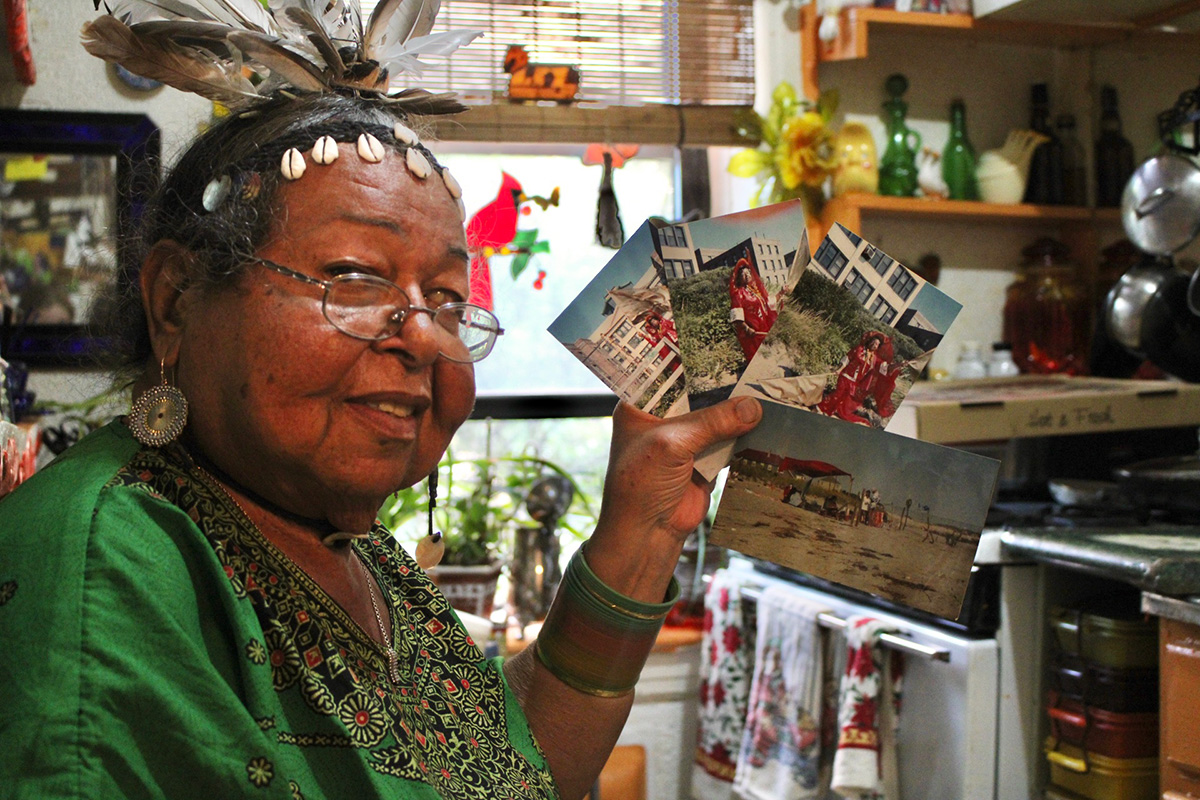
Victoria Cruz, a veteran of the 1969 Stonewall uprising and unwavering advocate for survivors of violence, died on June 25 from liver cancer at age 79. Fierce, generous, and unyielding, Cruz emerged from Stonewall as a witness to history who would spend more than five decades helping to shape it. She became a fixture of New York LGBTQ+ activism and in time, one of the community’s most beloved elders and mentors.
One of 11 children, Cruz arrived with her family in Red Hook, Brooklyn from Guánica, Puerto Rico as a young child. She occasionally quipped that she was “never in the closet” but “in the armoire,” and knew from an early age that she was a girl at a time when there was little language to describe her experience. She studied cosmetology and hairdressing at Metropolitan Vocational High School, before attending Brooklyn College where she earned a theater degree in 1982. She supported herself through beauty work, as a stripper, sex worker, and entertainer in the New York City nightlife scene, giving her first drag performance at the Grapevine in 1973 to a Billie Holiday song.
A regular at the Stonewall Inn, Cruz often arrived in what she described as “full drag and semi-drag.” In a 2025 interview she recounted details of the gay bar on Christopher Street – the lack of plumbing, except for the bathroom, and how she would only drink beer because the ice for mixed drinks was drawn from unsanitary garbage cans where glasses were rinsed.
“[The cops] used to come in and raid the place, and put the lights on. If you were two men together, you’d look for a lesbian to sit with or talk to.” If you had make-up on, she said, they’d make you wash it off with dirty water from the mop bucket. Officers also did what she called “the Robin Hood.”
“They used to take the bra straps in the back and pull them, you know, they were very heavy elastic, and let it go so it’ll hurt their back.”
Harassment was routine. But the night of Friday, June 27, 1969, was different. Maybe the cops weren’t given “the little brown bag pay off” or “enough money,” she speculated.
Cruz hadn’t planned to go that night. She had work the next day at a beauty parlor but her boyfriend, Frankie, was a bouncer at Stonewall — and “a cheat.”
“I went and stalked him.” When he asked her to go home, she said, “‘No, I’m going to wait up here, because tonight you’re going home with me.'”
It was close to midnight, and the air was hot and humid, she recalled. A full moon in the sky. Judy Garland had just been buried, and the atmosphere in the Village was solemn – “like the calm before the storm.” Standing near the steps next to the Stonewall, Cruz spotted Sylvia Rivera—who would also become a prominent trans rights figure—with her friends across the street by Sheridan Square Park.
The paddy wagons came. The bar got raided, yet again. But this time, a rebellion began to simmer.
“And then the crowd started getting a little bit rowdier outside, they started throwing pennies,” Cruz recalled. “They were calling them names, you know, ‘dirty copper.’ ” As cops started loading people into the paddy wagons, she “saw one queen got punched.” She thought it was Miss Major, who later publicly recounted taking a blow to the head and getting knocked unconscious.
Police brought a paddy wagon around and went back inside the bar. “And here comes a brick out of Sheridan Square Park, and it cracked the window, and they closed all the doors as a barricade. We were hearing noise from inside.”
Frankie came out to see whether she was still there. A Canadian in the country illegally, he wanted to leave. Cruz wanted to stay. “That’s serious when they started burning stuff – and then Frankie says, let’s get out of here.” She recalled the violence escalating. “First it was garbage pails. Then they started setting up fire on cars. And I said, no, no, no. That’s too crazy.”
After the raid, Frankie’s boss called him in “to clean out the basement and try to straighten up whatever the cops smashed up over there.” Frankie found one of three drink-price signs, and downstairs, the dog, Rusty, who guarded the liquor (“even though the liquor was watered down”). One of the owners let Frankie take him home. “I was so afraid of dogs, but I gave him food, and then he became my best friend and my protector.”
As for the sign, she kept it in her possession and shared that she hoped to return it to Stonewall along with photos of Frankie and Rusty. “They are part of our original history and they belong there.”
Those nights of chaos and violence are now widely regarded as the birth of the modern gay rights movement. One year later, Cruz joined thousands in what she called “the big first gay pride liberation march.”
“She was definitely one of our mothers in the movement,” says Shelby Chestnut, now executive director of Transgender Law Center, who worked with “Miss Vicky” at the New York City Anti-Violence Project (AVP) from 2010 to 2017. Cruz first came to AVP seeking support after being sexually assaulted by members of the nursing staff while working at Cobble Hill Health Center. She later volunteered at AVP and remained with the organization for 18 years, eventually coordinating the domestic violence project and serving as a senior counselor advocate.
Shay Huffman, a school social worker and former AVP Board Member, credits Cruz with being her lifeline while going through intimate partner violence. “By the time I got to AVP, I was 95 pounds,” says Huffman. “I seriously doubted I would survive. I had lost my appetite, wasn’t eating, and felt like my spirit was being sucked out of me.” Huffman says it was important to her that Cruz was a woman of color. “She heard me. She met me where I was. She validated me. She gave me hope and encouragement. She made me believe, ‘Maybe I can survive this.’ It was the first step from becoming a fighter and survivor to really thriving.”
Cruz’s impact extended beyond those she counseled. For many young trans people, the presence of an elder figure like “Miss Vicky” was not something to be taken lightly, Shelby Chestnut says.
“Especially at the time when she got into advocacy, in an ‘official’ way, there was a real expansion of trans justice organizations in New York City, and she would come to all of the events and be this big voice of reason. Even in the face of so much terribleness in the world right now—even at almost 80 years old—she was so clear and articulate: ‘We can’t back down. We’ve been here before. We can’t give people new ground in this moment to take our power and livelihood away.’ She imparted this to a new generation of organizers and leaders in a way that not many people could.”
“She came up in a post-Stonewall reality but also was clear that so much of our conditions didn’t change just because Stonewall birthed our movement.”
Her commitment to justice came to wider public attention with the release of the 2017 documentary “The Death and Life of Marsha P. Johnson.” The film documents her meticulous investigation into the 1992 death of her contemporary, Marsha P. Johnson, a Black trans woman whose death was ruled a suicide despite suspicious circumstances. Cruz’s probing not only helped expose the very real possibility that Johnson was murdered, but also underscored a broader reality: Many trans women of the era were treated as throwaways, their deaths denied the attention and justice they deserved.
Following Cruz’s death, the documentary’s director, David France, paid tribute to Cruz on Facebook:
“Throughout her life she embodied pure joy, something she learned from Marsha P. Johnson (whom she called “The Rosa Parks of the gay movement”), and fierce resistance, which she dedicated herself to in her last conversation with Sylvia Rivera on her death bed. She promised Sylvia she would ‘keep the community together.’ And she did that and more. She died on Pride Week, her highest of holy days. There never will be another like her.”
“Victoria loved the beach,” recalls Cruz’s sister, Heyde Cruz, 73. “She called it her sanctuary and as my children and my other siblings’ children were growing, she would take them to the beach and show them how beautiful it was, picking up seashells and other beach objects on the sand and they loved it.”
Indeed, Cruz was a popular presence at the People’s Beach at Jacob Riis Park in Queens, where she was often spotted beneath a sun tent in colorful attire and her signature headband with feathers and cowrie shells. She was considered royalty at this haven for queers near the former Neponsit Hospital — a building that fell into ruin over decades before ultimately being demolished, despite protests by a community that had laid claim to a landmark no one else seemed to want.
In a 2023 conversation, the “Queen of Riis” recounted tales of noble mischief dating back to the earliest days when she had first set foot on the sands in 1963. The facility had been running as a “Home for the Aged” and the gay folks delighted in helping elderly residents sneak out to frolic on the beach.
“We would tell them when the guys were coming so they could run back to the premises,” she said. She loved hearing the concerts from the facility’s gazebo, where patients would be taken out for lunch. “I loved to go on Sunday mornings because of the church services,” Cruz said. “They played the most wonderful American gospel I ever heard.”
Cruz had hoped that the building might be preserved and turned into a hospice, where “the sounds of the sea, the sun, the gulls [might] make them enjoy life more, especially in their last days.”
Last December, The Stonewall Inn Gives Back Initiative (SIGBI) honored Cruz with a Brick Award for Community Activism. Latina actor, model and trans activist Angelica Christina introduced Cruz, highlighting the elder’s fight for the LGBTQ+ community as “front and center,” noting she had “done so with courage, conviction and compassion.”
“From being a longtime leader at the Anti-Violence Project, to being a part of the documented history at Stonewall, Victoria has supported survivors of anti-LGBTQIA+ violence when few others would,” said Christina, herself a survivor of sexual assault and homelessness. “She fought for safety and accountability and dignity at a time when our stories – especially that of BIPOC trans women – were too often ignored… “
To a standing ovation, Cruz spoke to those who have long admired her spirit, as well as a new generation reaching for the torch amid a renewed political tempest intent on extinguishing the most marginalized:
“We resisted at Stonewall and we can resist now because they’re not going to erase us,” Cruz assured. “Today, it is better to be yourself. Life is much easier when you are you.”
“And I thank you for this prize, because like Sylvia [Rivera] said – and I promised her – that wherever I would go, I will try to keep the community together because we do have the numbers, and with our allies, we can defeat them anytime…
“We’re here from the beginning and we’re going to be here ’til the end.”

2026 International AIDS Conference to take place in Rio

Summer in D.C. brings sports, Restaurant Week, festivals, and more

Trump tries to scare Americans into not voting

No Pride without Disability Pride

House blocks effort to codify transgender servicemember ban into law

DOJ seeks to dismiss some claims in gay FBI employee’s bias lawsuit

PHOTOS: Vitamin C at JR.’s

Hot hatchbacks: Honda Civic, Subaru Impreza

PHOTOS: Rehoboth Beach Pride Festival