Local
Student wins national history contest with Stonewall riots as topic
Thousands view exhibit at ceremony at University of Maryland campus
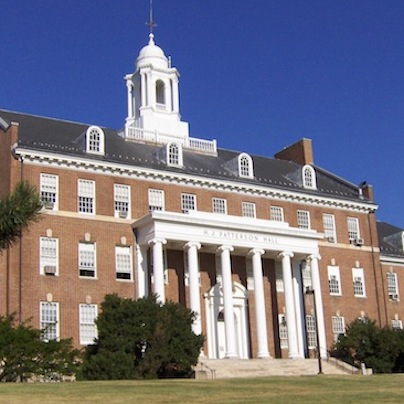
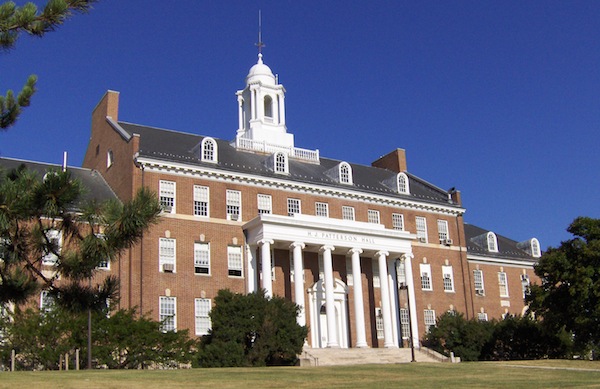
Nicholas Gupta won the national history contest on the University of Maryland College Park's campus with an exhibit about the Stonewall riots, which took place 43 years ago, June 28. (Public domain image)
Thousands of students, teachers, and parents attended a ceremony at the University of Maryland in College Park on Thursday, June 14, in which a 17-year-old high school student won the National History Day Contest award for an exhibit on the 1969 Stonewall riots.
Nicholas Gupta, a student at Pensacola High School in Florida, won the first-place award for a museum style exhibit he worked on for eleven months called “Out of the Closet and Into the Streets: The Stonewall Uprising of 1969.”
Gupta, who’s straight and just completed his junior year at Pensacola High, said he first learned about the Stonewall riots while searching for a topic for the contest. Organizers of the annual contest called on students to select a topic that fits into the theme of “revolution, reaction, and reform in history.”
“When I read about the Stonewall uprising it was something that really hit me,” Gupta told the Blade. “You know, wow, this is something that nobody really talks about. It’s kind of left out of the history books.”
The Stonewall riots took place in New York’s Greenwich Village in June 1969 after police raided a gay bar called the Stonewall Inn. Police said they raided the bar because it didn’t have a liquor license at a time when it was illegal to serve alcohol to homosexuals in New York City.
In what was believed to be a first of its kind development, the gay male, lesbian, and transgender patrons of the bar fought back, throwing bottles and rocks as police attempted the arrest them. The riots, which took place over several days, have been credited with triggering the modern LGBT rights movement.
More than half a million elementary and secondary school students participate in the National History Day Contest each year, according to a statement released by the National History Day organization, which is based on the University of Maryland campus in College Park, Md.
“Students choose historical topics related to a theme and conduct extensive primary and secondary research through libraries, archives, museums, oral history interviews and historic sites,” the statement says.
Gupta said that after pouring over articles, books, and newspaper reports on the Stonewall riots he traveled to New York City, where he conducted additional research at the New York Public Library. While in New York, he visited the Stonewall building, which is the current home of a gay bar bearing that name. He said he also interviewed gay author and historian David Carter, who wrote the 2004 book, “Stonewall: The Riots that Sparked the Gay Revolution,” considered the definitive work on the subject.
Gupta’s wining exhibit on the Stonewall riots is believed to represent just the second time a gay related subject has won a National History Day Contest award. The first such entry to win occurred last year in the form of a student documentary on the 1977 campaign by singer and Florida orange juice spokesperson Anita Bryant to repeal a gay rights ordinance passed in Dade County, Fla., which includes the city of Miami.
Gupta was among 152 winners in the national contest, in which first, second, and third place winners are chosen among individual and group categories of papers, exhibits, performances, documentaries, and websites.
The statement released by contest organizers says this year’s contest included 2,794 students and 1,691 entries, the largest number ever in the contest’s history.



The Comings & Goings column is about sharing the professional successes of our community. We want to recognize those landing new jobs, new clients for their business, joining boards of organizations and other achievements. Please share your successes with us at [email protected].
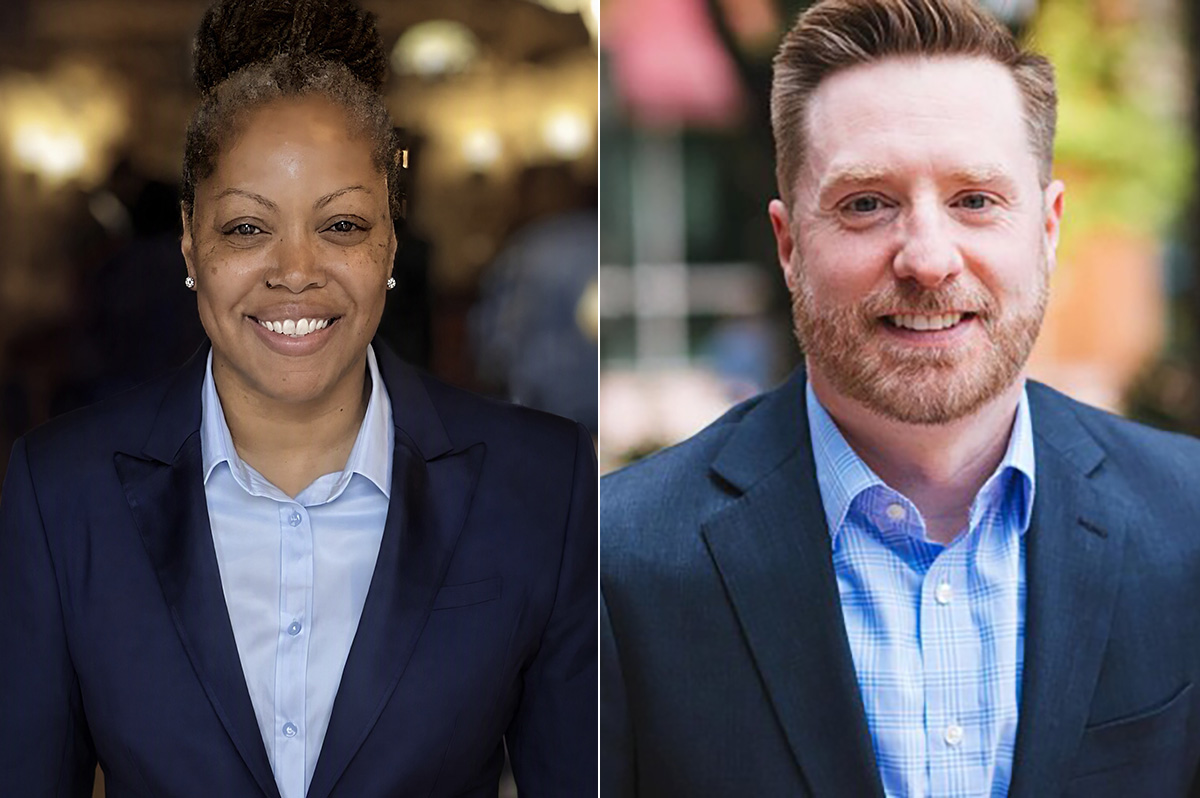
Congratulations to Carla Lester, LICSW on her new position as Chief Program Officer with SMYAL. Upon accepting the position she said, “SMYAL deeply aligns with my passion for honoring, protecting, and upholding the rights of all individuals, particularly LGBTQ+ youth and others who have been historically underserved, to belong to communities that affirm their identities, treat them with dignity and respect, and support their well-being. At this point in my career, I was ready to transition to an organization whose mission more closely reflected my values and was rooted in the community. SMYAL offered the opportunity to serve both an organization and a population whose mission not only resonates deeply with me but also intersects with my own multiple identities.”
Lester is a healthcare and human services executive with more than 20 years of experience in behavioral health, federal and state health insurance programs, housing, health care, education, and community-based services. She has held senior roles at Carelon Behavioral Health, Pathways to Housing and N Street Village, leading clinical programs, Housing First initiatives, homeless outreach, trauma-informed services, and integrated case management.
She earned master’s degrees in Social Work and Divinity, and maintains active clinical social work licenses in D.C. and Maryland.
Congratulations also to Tad Czyzewski on his new position as Chief Development Officer at SMYAL. On accepting the position, he said, “While I’ve spent much of my nonprofit career in the arts, the current social and political environments made me want to apply my skills and passion more directly toward supporting and strengthening our community. SMYAL and this role felt like the right place to do that.”
Czyzewski brings more than two decades of experience in nonprofit leadership and strategy, fundraising, and business development. Prior to joining SMYAL, he served for eight years as executive director of The Choral Arts Society of Washington, where he led fundraising, financial management, and community engagement. During his tenure, he helped raise more than $15 million in contributed revenue. He guided the organization through a major rebrand and the COVID-19 pandemic.
Prior to that Czyzewski served as Business and Development Director for Washington Revels, and held leadership and advisory roles with Chorus America, the DC Commission on the Arts and Humanities, and the National Endowment for the Arts. He began his career in the corporate sector, including at Capital One, where his work in product development and marketing contributed to new financial products and more than $2 billion in deposits.
Czyzewski is a lifelong musician, has performed professionally as a classical singer, including with the Washington National Opera and the National Symphony Orchestra.
District of Columbia
Gay ANC commissioner sues D.C. over police ‘failure’ to pay reward money
Lawsuit says information led to conviction in murder, armed robbery cases

Gay D.C. Advisory Neighborhood Commissioner Tom Donohue on Aug. 11 filed a lawsuit in D.C. Superior Court charging that D.C. police acted improperly and violated a local law by not paying him $30,000 in reward money for his role in helping police identify and arrest — and obtain the subsequent conviction — of one man charged with murder and another man charged with armed robbery in separate cases.
Although the lawsuit alleges improper action by D.C. police in carrying out the city’s Crime Solvers reward program, it names as defendants the District of Columbia and the Office of the Attorney General for D.C., which, among other things, defends the city against lawsuits.
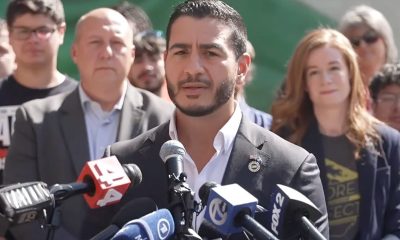
Donohue, who is a member of the city’s ANC Rainbow Caucus consisting of LGBTQ elected ANC members, held a news conference outside the D.C. Superior Court building on Aug. 11 to talk about the lawsuit before entering the courthouse to officially file it.
The lawsuit states that Donohue “provided key video evidence that led to the arrest and conviction” of a man initially charged with first degree murder for allegedly running over a bicyclist with his car after the two got into an argument.
The lawsuit states that police had offered a $25,000 reward for information leading to the arrest and conviction of the defendant in that case, but police “arbitrarily slashed the payment to $5,000 without prior notice or policy justification.”
Court records show that D.C. resident Eric Beasley was charged with first degree murder for killing David Farewell, 45, by hitting him with his car on Sept. 4, 2020, on the 2100 block of Young Street, S.E. The records show the evidence for the case was based in large part on video camera footage of the incident obtained by police. Donohoe has said he provided that video camera evidence.
The records show that during Beasley’s October 2023 trial a jury was unable to reach the required unanimous verdict, and the judge declared a mistrial.
According to the records, Beasley later agreed to an offer by prosecutors to plead guilty to a lesser charge of involuntary manslaughter and was sentenced in September 2024 to eight years in prison, a development that angered the victim’s family members who called it a “slap on the wrist,” according to a Fox 5 News report.
Donohue’s lawsuit says the second case in which he provided police with pivotal information involved a series of armed robberies known as the Fairlawn Serial Armed Robbery Spree that occurred in the Fairlawn neighborhood in Southeast D.C. in 2023 near where Donohue lives.
The lawsuit says evidence consisting of video surveillance footage provided by Donohue to police enabled police to determine they initially wrongfully arrested an 18-year-old male for the robberies. “Using Plaintiff’s security video, MPD identified, arrested, and convicted the actual robber, David Crocker, who was sentenced to 18 years in federal prison,” the lawsuit states.
It says one of the detectives investigating the case recommended a $10,000 reward for Donohue’s help in the case based on the police Crime Solvers reward program. The detective’s recommendation was approved by then-Assistant D.C. Police Chief Kyle Ramey on Aug. 4, 2025, according to the lawsuit.
But it adds, “Nevertheless, MPD improperly withheld payment.”
When contacted by the Washington Blade for comment on Donohue’s lawsuit allegations, a D.C. police spokesperson said “MPD does not comment on pending or ongoing litigation.”
Gabriel Shoglow-Rubenstein, who serves as press secretary for the D.C. Office of the Attorney General, which will be defending the city against the Donohue lawsuit, said he would look into obtaining a possible comment but said the office has a similar longstanding policy of not commenting on pending litigation.
“This action arises from the District of Columbia Metropolitan Police Department’s arbitrary, bad-faith, and legally unsupportable failure to honor its public reward promises and administrative obligations to Plaintiff,” the lawsuit states.
It says the MPD violated the city’s Freedom of Information Act or FOIA law by not responding to Donohue’s request for information and documents related to the decision not to pay him the full reward money.
“MPD’s reduction of Plaintiff’s homicide reward from $25,000 to $5,000, and its withholding of his approved $10,00 robbery reward, were undertaken completely devoid of written standards, making such decisions inherently arbitrary, capricious, and an abuse of administrative discretion,” it says.
It calls for Donohue to be awarded $30,000 in compensatory damages consisting of the $20,000 “unpaid balance” for the homicide case reward and $10,000 for the robbery case reward. It also calls for reimbursement for “reasonable” litigation costs and attorney’s fees. Donohue told the Washington Blade that at this time he is representing himself without an attorney.
Donohue told the Blade that the refusal by D.C. police to pay him the full reward money also limited his plans to donate some of that money to the family of murder victim David Farewell to help pay for a burial stone. He said that due to the family’s limited resources Farewell is buried in an unmarked grave
Delaware
New LGBTQ visitor center slated for Wilmington, Del.
The Collective to feature gift shop, queer museum, more

During Pride month this year, the Delaware Sexuality and Gender Collective (DSGC) announced plans for The Collective, which will become Delaware’s first LGBTQIA+ visitor center and Wilmington’s first dedicated LGBTQIA+ space in nearly 40 years.
“We’ve been talking about the concept of a brick-and-mortar space for a long time,” said Noah Duckett, co-founder of DSGC.
A licensed clinical social worker, Duckett co-founded DSGC with his mother, Julissa Coriano, in 2018. DSGC is an independent nonprofit organization that provides vital clinical and educational support, social programming and direct-need support to the LGBTQIA+ community.
Some of the programs DSGC offers include a free clothing closet for the trans community, meal support for people recovering from gender-affirming surgery, connections to pro bono legal services, a biannual Pride Market featuring over 100 LGBTQIA+-owned small businesses, and more.
“Our vision for The Collective is a place where our community can come to learn, create, work and be inspired,” said Coriano.
The Collective will feature a visitor center and gift shop highlighting LGBTQIA+-owned businesses in Delaware.
“I think that this is something that’s going to benefit our community so much,” said Duckett.
Some of the LGBTQIA+-owned businesses that DSGC has already partnered with include Stress Induced Art Attack, Moonbeam Art Collaborative, Voce Coffee, Groovy Gemini Co., Scout Cafe, Macaron Social and Huxley and Hiro.
“Specifically in Wilmington, we haven’t had an LGBTQIA+-dedicated space in almost 40 years,” said Duckett.
The Griffin Community Center, which operated from 1986 to 1990, was Delaware’s first LGBTQ+ community center. The Griffin was founded by Ivo Dominguez Jr. and James C. Welch and provided a range of community services during the height of the HIV/AIDS crisis, including AIDS hotlines, organizational offices and meeting space. The center ultimately closed because of a lack of financial support.
Duckett said DSGC hopes The Collective will carry on The Griffin’s legacy while building a sustainable space for the LGBTQIA+ community.
“I think now more than ever, there’s more and more spaces closing their doors. More and more spaces are losing funding, seeing reduced funding and reduced access, especially LGBTQ+ organizations and communities,” said Duckett.
The Collective will also feature Delaware’s first LGBTQ+ history museum, curated by LGBTQ+ historian Carolanne Deal.
“We don’t have any permanent displays in the state about Delaware’s queer history, and we want people to be able to access that history any day of the year, not just during Pride Month,” said Deal.
With a master’s degree in art history for museum professionals, Deal has more than seven years of experience in curatorial work and hands-on collections care.
“It’s mainly going to be a graphic display with photographs, articles and accessible text that draws people in and creates a story for the community,” said Deal.
Although the museum will not initially have an object collection, Deal said she hopes to add physical archival pieces in the future.
“Delaware has been at the forefront of a lot of queer civil rights, and it’ll be really amazing to have that enshrined in a permanent display that’s not only up for Pride Month,” said Deal.
Duckett said DSGC is currently raising funds with the goal of beginning construction this summer and opening by the end of the year.
Duckett told the Blade that fundraising efforts have reached just under $29,000 and that the organization is awaiting several major donations from community partner organizations.
However, he said DSGC continues to be denied many grants tied to federal or state funding because of restrictions on those funds being used for LGBTQ+-serving organizations.
“Private and corporate donations are absolutely vital,” said Duckett.
Anyone interested in supporting the construction and renovation of The Collective can donate online or contact [email protected] for more information.ose funds being used for LGBTQ-serving organizations.
“Private and corporate donations are absolutely vital,” said Duckett.
Anyone interested in supporting the construction of The Collective can donate online or contact [email protected] for more information.

Bros + romance + fantasy = ‘Bromantasy.’

National tour of ‘The Notebook’ retains its tearjerking power

Live music drag cabaret set for Shaw’s Tavern

Calendar: August 14-20

Comings & Goings

Todd Blanche’s record on LGBTQ issues comes under scrutiny as he takes over DOJ

2 former NBA players launch cheap anti-trans stunt to exploit WNBA rules

HISTORIC: Susan Stewart elected Rehoboth’s first out mayor

Same-sex couples challenges India income tax law

New LGBTQ visitor center slated for Wilmington, Del.
-

 Federal Government5 days ago
Todd Blanche’s record on LGBTQ issues comes under scrutiny as he takes over DOJ
-
Sports4 days ago
2 former NBA players launch cheap anti-trans stunt to exploit WNBA rules
-
Rehoboth Beach5 days ago
HISTORIC: Susan Stewart elected Rehoboth’s first out mayor
-
India5 days ago
Same-sex couples challenges India income tax law