National
Gay Sandy victims struggle to recover
Storm surge inundated the New York and New Jersey coastlines.


Superstorm Sandy’s surge destroyed homes along Cedar Grove Avenue in Staten Island, N.Y. (Washington Blade photo by Michael K. Lavers)
STATEN ISLAND, N.Y. –Allison Galdorisi and her wife Claire were inside their home on Hett Avenue in the New Dorp Beach section of Staten Island when Superstorm Sandy’s storm surge began inundating their neighborhood shortly after 7 p.m. on Oct. 29.
The couple opened their front door after they heard a noise and saw two feet of water outside their house. The surge had risen to four feet before Galdorisi and her wife left through a back window — they could not open the front door because of the water. The couple, who clipped their cell phones to their shirt collars and held a flashlight above the floodwaters as they waded through them, climbed over a neighbor’s fence before walking to nearby New Dorp Lane.
Galdorisi and her wife reached dry land at Hylan Boulevard, which runs the length of the South Shore of Staten Island.
“The water was so strong; the current,” Galdorisi told the Washington Blade from Staten Island on Monday afternoon. “There was so much debris.”
Nearly a month after Sandy devastated the New York and New Jersey coastlines, the storm’s aftermath remains clearly visible in the most affected areas.
A pile of debris that had once been a house remains on the corner of Cedar Grove Avenue and Maple Terrace in New Dorp Beach – a few blocks away from Galdorisi’s home and in the same area President Obama toured with New York Gov. Andrew Cuomo, local Congressman Michael Grimm and other officials on Nov. 15. Dozens of cars that had been submerged remain abandoned along the side of streets, while boats that came to rest on beaches and in adjacent marshes are visible from Hylan and Father Capodanno Boulevards.
Wayne Steinman took one final look at the water across the street from his townhouse on Father Capodanno Boulevard in the Midland Beach section of Staten Island before evacuating to his husband Sal Ianullo’s parents’ home in Brooklyn around 2 p.m. on Oct. 29. The tide was already high, but he told the Blade the water was “still contained on the beach where it belonged.”
Up to six feet of water inundated the couple’s home a few hours later — the water shattered three large windows at the front of the house as it flowed through the first floor. The surge also tore the shed and air conditioning unit from the outside wall — the latter has not been found.

Up to six feet of water inundated Wayne Steinman and Sal Ianullo’s Staten Island, N.Y., home during Superstorm Sandy. (Washington Blade photo by Michael K. Lavers)
The couple found some furniture that had been in their living room in their front yard when they returned the next day. Their deck looked like what Steinman described as “toothpicks scattered about.”
“The power of it was intense,” he said. “I do have some neighbors who lived through it and did not evacuate. And the best way to describe it is a tsunami. It wasn’t just water rising and then going away; it was a force of moving water.”
Nine of the more than 40 people who lost their lives during Sandy in New York City were in Midland Beach. This figure includes David Maxwell, a 64-year-old gay man who lived alone in his Mapleton Avenue home after his partner moved into a local nursing home after suffering a stroke.
A man and his 13-year-old daughter drowned when the surge washed away their Yetman Avenue home in the Tottenville section of Staten Island. The New York Daily News reported the family decided not to leave after someone broke into their home after the evacuated during Hurricane Irene that struck New York City in Aug. 2011.
On nearby Manhattan Street, Margie DelGesso and a group of other women were gutting her house that had up to six feet of water in it at the height of the storm. She is currently living with a friend in another part of Staten Island.
“They were talking about how bad it was going to be,” DelGesso told the Blade while talking with this reporter in front of her damaged house. “I would never think I was going to have six feet of water in my house. I didn’t even bring my furniture up, which I did last year. I brought a lot of furniture up for Irene. And this year I was like, ‘nah, I’m all right.’”
“Operation Chocolate Chip Cookie” offers food, coffee to storm victims
A group of women who call themselves “Operation Chocolate Chip Cookie” served pasta and meatballs, homemade turkey soup, potato and egg sandwiches, cookies, cupcakes and hot coffee they were able to brew with a generator the New York Police Department donated from a tent they set up at a nearby intersection as DelGesso and her neighbors gutted and repaired their damaged homes. They have volunteered in other storm-devastated Staten Island neighborhoods.
“We’re just hitting different parts of the island that have been impacted by this tragedy,” South River, N.J., resident Pam McClellan, who grew up on Staten Island, told the Blade before she and other volunteers offered this reporter pasta, bread and three boxes of cookies and cupcakes to bring back to D.C. “We find places to set up shop. We’ll get as many people as we can. We got a good group of girls, a good group of friends who are just willing to help out.”
Volunteers offering clothing, food and other donated items to storm survivors from makeshift distribution centers along the street remain a common sight throughout many Staten Island neighborhoods — several remain along Midland Avenue in Midland Beach. Members of a Brooklyn motorcycle club continue to distribute these items on Cedar Grove Avenue in New Dorp Beach. Galdorisi said they stopped a looter while on patrol a couple of weeks ago.
The Stephen Siller Tunnel to Towers Foundation, which was established in honor of firefighter Stephen Siller who died in the Sept. 11 terrorist attacks after he ran through the Brooklyn Battery Tunnel to join his New York Fire Department colleagues at the World Trade Center, has created a Sandy relief fund. The American Red Cross, which initially faced criticism from Staten Island Borough President James Molinaro in the days immediately after the storm, continues to have a visible presence in Staten Island.
The Federal Emergency Management Agency has six disaster recovery centers in the borough — DelGesso said FEMA deposited two months of rent assistance into her checking account after she applied.
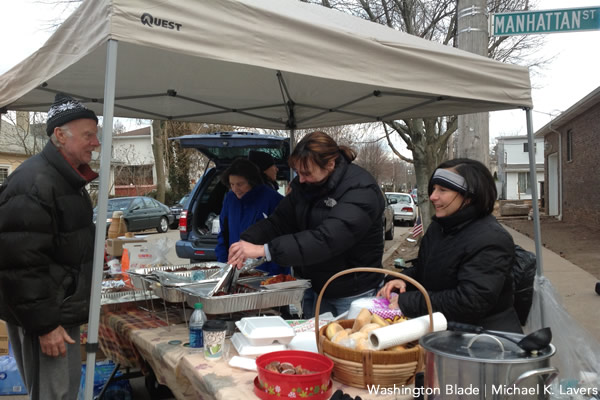
A group of women serve food and coffee in the Tottenville neighborhood of Staten Island, N.Y., on Nov. 25, 2012 (Washington Blade photo by Michael K. Lavers)
Gay Staten Islander coordinates Sandy relief efforts
Michele Karlsberg, who is lesbian comedian Kate Clinton’s publicist, raised $2,500 that she distributed to DelGesso, Galdorisi, Steinman and Iacullo and two other gay Staten Islanders she knew Sandy directly impacted. She directed up to $10,000 she helped raise to the Stephen Siller Tunnel to Towers Foundation.
Karlsberg, whose mother lost everything during the storm and the house in the borough’s Ocean Breeze neighborhood in which she grew up had eight feet of water inside of it after Sandy, continues to post recovery information to her Facebook page. She told the Blade she recently spoke with an NYPD lieutenant who wanted to know where he could send 100 cots and heaters.
Karlsberg directed him to a woman who set up a donation distribution center in New Dorp Beach.
“I sent the guy to her, so that was great,” she said.
As Staten Islanders begin to rebuild, those in other affected areas continue to recover from the storm.
Normal ferry service to Fire Island Pines and Cherry Grove on Fire Island, which saw widespread flooding and severe beach erosion, has resumed. The Long Island Power Authority has also restored electricity to the vast majority of homes in the gay resort communities.
A group of drag queens who perform in Cherry Grove took part in a fundraiser at the Stonewall Inn in Greenwich Village on Sunday night that raised money for the Red Cross and the fund that maintains the dunes to which many local residents point as the reason the hamlet suffered comparatively less damage from Sandy than other areas of Fire Island. Jay Pagano, president of the Fire Island Pines Property Owners Association, is scheduled to meet with local beach erosion control officials to discuss ways to rebuild his community’s dunes.
“Restoration of the dunes is a FIPPOA priority,” he wrote in a Nov. 20 e-mail to Pines residents.
Homeless LGBT youth drop-in center relocates
The Ali Forney Center’s drop-in center for homeless LGBT youth in Manhattan’s West Chelsea neighborhood that flooded during the storm has relocated to the nearby LGBT Community Center.
A fund established to help the organization raise money for a second drop-in center that is scheduled to open in Harlem early next year has thus far raised more than $250,000. Gay MSNBC anchor Thomas Roberts and his husband, Patrick Abner, were among those who attended post-Sandy fundraiser for the Ali Forney Center at a Manhattan bar earlier this month.
Carl Siciliano, the group’s executive director, told the Blade he expects it will cost more than $400,000 to recover what was lost in damaged drop-in center and to move into the new Harlem space.
“To have our drop-in center reduced, to have smaller spaces and all of that is difficult for the kids,” he said. “The basic needs are the same as they were right before the hurricane that they’re not being met. They’re like in a constant state of crisis. By virtue of our space being totally destroyed, in a lot of ways we became the focal point of how LGBT folks were understanding how our community had been hurt by Sandy, although we certainly weren’t the only ones who were badly hurt. Bailey House [an organization that offers housing for people with HIV/AIDS] was badly hurt as well, so in a way it generated a lot more support for us than normal, but the kids are in a constant state of crisis so there’s not nearly enough resources for them. It just escalates it.”
A group of Ali Forney clients and staff recently brought supplies to a group helping Sandy victims in Brooklyn’s hard-hit Red Hook neighborhood. Roberts, who emceed the Ali Forney Center’s annual fall fundraiser four days before Sandy made landfall near Atlantic City, N.J., helped cook Thanksgiving dinner with Abner, actress Ally Sheedy and another couple at a Brooklyn facility that has beds for 20 homeless LGBT youth.
“We live in Hell’s Kitchen and we were not affected at all,” Roberts, who reported from New Orleans after Hurricane Katrina’s storm surge inundated the city in 2005, told the Blade. “I walk to work so I didn’t have to worry about the subway. The lights never went off, so it’s been a real education to hear about and also to cover what everyone has been living through and the pictures really tell the tale of only a small part of it. I know for certain places like Staten Island or Seaside Heights in New Jersey the devastation is as far as the eye can see.”
Lynette Molnar of Provincetown for Women, who produces annual events for lesbian visitors to the resort town on Cape Cod, coordinated the collection of coats, blankets, toiletries, cell phone chargers and other items from local businesses and guesthouses to send to the Stephen Siller Tunnel to Towers Foundation. Her group sent close to 40 large boxes of donations to Staten Island with the Human Rights Campaign paying for the shipping.
“It feels so close to home and there are so many gay people too who live on Staten Island,” Molnar told the Blade. “People just really poured their hearts out. It was so wonderful to be able to see that kind of support.”
Staten Islanders struggle against lack of housing, rumors
Back on Staten Island, gay state Assemblyman Matt Titone said a lack of affordable housing and what he described as the “rumor mill” remain two of the most pressing issues for those recovering from the storm. Shoes, winter clothing and other donated supplies are readily available, but Karlsberg said replacing washing machines and other appliances has proven more of a challenge.
“So much stuff is out there, but people have no place to put it,” she said. “All these things came instantly, but when you get back in your house and you say ‘oh, I don’t have a toaster. You know oh, I don’t have plates.’ But you can’t get any of that stuff now.”
Galdorisi, who grew up in New Dorp Beach, is currently living with family on Staten Island. She hopes she and her wife will return in three months once they rebuild their now gutted house.
“Right now, a lot of people in my neighborhood are actually living in their houses because they are not lucky enough to have family that they can go stay with,” Galdorisi said. “I’m actually one of the lucky ones. Even though I lost my house, I have family that I can stay with. Some of them are still living there. They’re just getting electric back now.”






National
Man charged in Mall of America shooting plot inspired by Pulse massacre: report
Suspect exchanged hundreds of messages, pledged loyalty to ISIS
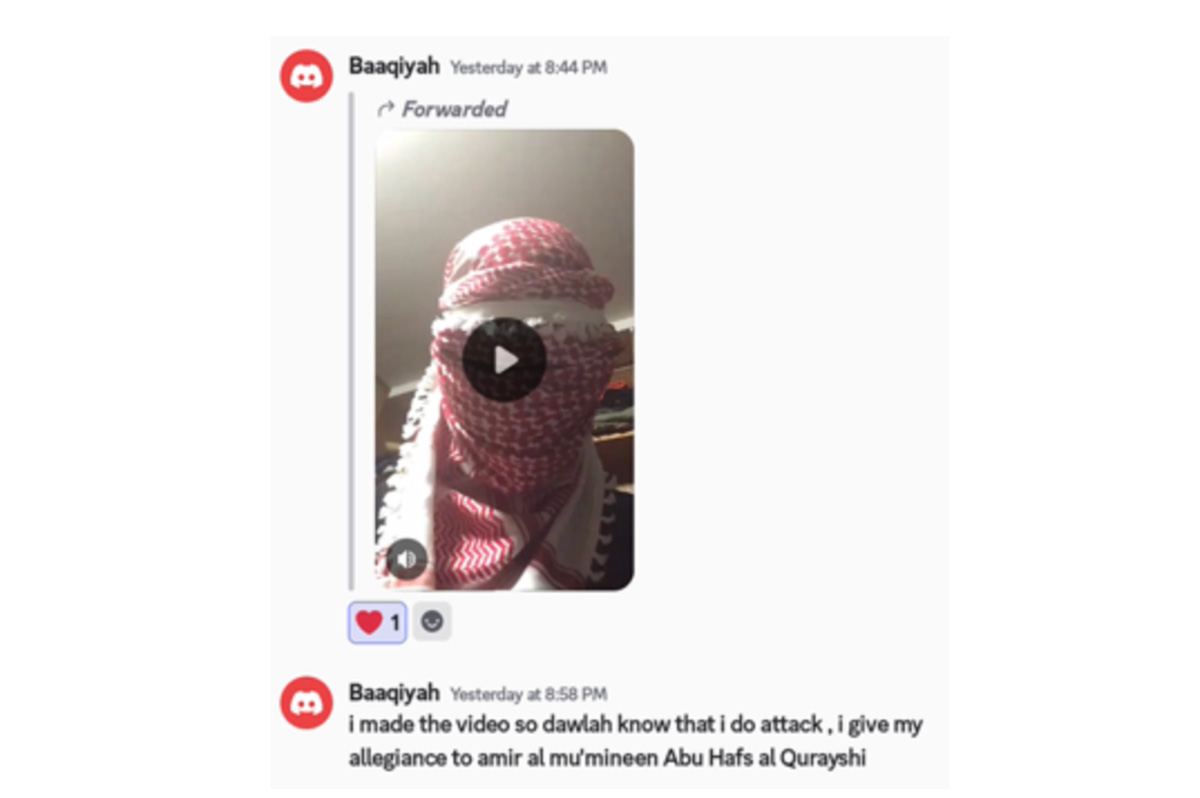
The U.S. Department of Justice charged Sheikhdoon Abdullahi Mohamud, 18, of Richfield, Minn., on Oct. 7 with one count of knowingly receiving a firearm and ammunition in order to commit a federal crime of terrorism. Mohamud allegedly planned to carry out a mass-casualty attack in support of ISIS, inspired in part by the Pulse nightclub massacre that took place on June 12, 2016 when then-29-year-old Omar Mateen murdered 49 people and wounded 58 – one of the deadliest mass shootings in U.S. history, and the deadliest targeting the LGBTQ+ community.
According to a DOJ statement release, Mohamud was arrested on Oct. 6 by the FBI, which had arranged to sell him an AK-47 assault rifle, magazines, and ammunition through an undercover FBI employee. Mohamud was arrested shortly after paying $600 in cash and taking possession of those items; he reaffirmed his intention to shoot people at the Mall of America during the transaction.
“Mohamud allegedly sought to carry out a mass-casualty shooting at the Mall of America, expressing a desire to emulate some of the most horrific ISIS-inspired attacks in the United States, including the atrocities at Pulse Nightclub and 2025 New Year’s Day attack in New Orleans,” said Assistant Attorney General for National Security John A. Eisenberg in the statement by the DOJ. “The National Security Division will continue to work closely with the FBI and Joint Terrorism Task Force to track down and prosecute ISIS-inspired terrorists in the United States.”
According to the complaint, beginning on or about December 2024, Mohamud had exchanged hundreds of messages through multiple social media and messaging apps with a confidential source, and expressed a desire to travel to Somalia to join a designated foreign terrorist organization to fight on their behalf.
The defendant stated many times that if he was unable to travel overseas because of a lack of funds, he planned to carry out a mass-casualty event in Minnesota in support of ISIS.
According to the DOJ, “In July 2026, Mohamud sent messages discussing his intent to carry out a mass-casualty shooting attack at the Mall of America because he claimed it was owned by Jews. He wrote that [he] wanted to kill 30 to 60 people so no one would go there.”
“During the course of his communications, Mohamud stated that he wanted to commit an attack similar to those of the Pulse Nightclub mass-shooting in Orlando, the Bondi Beach mass-shooting in Australia, and the New Year’s Day vehicle-ramming attack in New Orleans.”
This case is being prosecuted by Trial Attorney Ryan White of the National Security Division’s Counterterrorism Section and Assistant U.S. Attorney Benjamin Bejar for the District of Minnesota.
California
Calif. GOP gubernatorial candidate ad ‘disgusting attempt to exploit lesbian intimacy’
Activists, anti-LGBTQ religious leaders criticized Steve Hilton spot

Two women sit on a bed, a Pride flag hanging behind them. One is nervous; the other tells her to be calm and that she’ll do “all the work.” The music swells. The two hold hands and — fill out a ballot voting for Steve Hilton?
This is the new advertisement from the Hilton gubernatorial campaign that is drawing rebuke from both sides of the aisle, but for very different reasons.
Jorge Reyes Salinas, the communications director at Equality California, said the ad was an insult to the queer community.
“This ad is a disgusting attempt to exploit lesbian intimacy for political attention,” he said. The advertisement plays on media tropes that Salinas says “reduce lesbian and bisexual women … to sexual entertainment,” rather than showing them as well-rounded characters. “Any group of the LGBTQ+ community deserves the same dignity and respect as everyone else,” he said.
The ad is truly hyper-sexualized. It ends with one woman telling the other, “Now lick it.” The two pause and stare before she reveals an envelope to send the ballot, and large text pops up saying, “Just try it!”
Salinas characterized the ad as a desperate attempt to get attention from a candidate who is trailing far behind in the polls in heavily Democratic California. The Democratic candidate Xavier Becerra, who is endorsed by Equality California, holds a 25-point lead over Hilton according to recent polling by the UC Berkeley Institute of Governmental Studies.
Conservatives have also criticized the ad.
Influential evangelical Pastor Jack Hibbs thought the ad was distasteful and said, “lesbianism among college girls and some high school girls that right now is an actual pandemic of social ill.” Republican attorney general candidate Michael Gates said it undermines “the sanctity of the relationship between parents and their children.” This criticism is rather confusing because although the ad features two relatively young women, they both appear to be adults, not minors.
“The comments from Pastor Jack Hibbs should be criticized because there is nothing wrong with two women being attracted to each other,” Salinas said. “We’re calling out the ad’s stereotypes, while also rejecting the homophobia in the response to it … by other Republicans.”
The backlash from Hilton’s own party and supporters shows that an advertisement full of queer innuendo was ill-considered, considering the national GOP’s attacks on LGBTQ people in recent years. Hilton himself has been campaigning against transgender girls and women competing in school sports and using locker rooms that correspond with their gender identity. This context might be why Hilton’s political base responded to the ad just as poorly as the liberal voters he was attempting to court.
Hilton says the ad is part of a new series rolling out before Election Day, showing stereotypical California liberal archetypes voting for Hilton. He claims these ads are authentically filmed with real actors, as opposed to being A.I. generated, like many of his previous ads. One other advertisement has been released so far by the campaign showing a man at a spiritual retreat also being swayed to vote for Hilton, although it is notably absent of sexual innuendo.
Caleb Kaufman is a California Local News Fellow placed with the Los Angeles Blade. The California Local News Fellowship is a state-funded initiative to support and strengthen local news reporting. Learn more about it at fellowships.journalism.berkeley.edu/cafellows.
2026 Midterm Elections
Trump uses anti-trans slur against Democratic Senate candidate
President mocked Annie Andrews

President Donald Trump used an anti-trans slur against Democratic South Carolina Senate candidate Annie Andrews on Monday as he sought to rally support for Republicans in the state’s Senate race.
In a post on Truth Social, Trump attacked Andrews three times, referring to her as “trannie” while promoting U.S. Sen. Darline Graham (R-S.C.)’s campaign.
Andrews is running against Graham for a Senate seat in the solidly Republican state.
Earlier this year, Graham was specially appointed to the seat following the death of her brother, Lindsey Graham, who represented South Carolina in the Senate from 2003 to 2026.
Andrews, the Democratic nominee from the state, is a pediatrician that lives in Charleston with her three children. She told NBC News that she will “work with anyone to put South Carolina first.”
“As a mom and a pediatrician, I’m in this race to fight for my patients, my three kids, and South Carolina,” Andrews said, adding that “lowering costs and making life better for families across our state is going to take all of us working together.”
Andrews used the attention from the president’s attack to emphasize what she described as a focus on policy issues rather than the culture wars that have dominated much of the political debate.
“If you care more about your bills than the politics in Washington, this campaign is for you,” she added.
Trump’s remarks have drawn criticism from leaders on both sides of the aisle.
Senate Minority Leader Chuck Schumer (D-N.Y.) condemned Trump’s words Monday night on social media, calling his attacks on Andrews “despicable.”
“Annie Andrews is a mom and pediatrician who’s always put her community first — and she’s exactly who South Carolina needs representing them in the Senate,” Schumer said on X.
Former South Carolina Gov. David Beasley, a Republican, also criticized the president’s attack on Andrews, urging voters to “reject politics based on division and hate.”
“This is abhorrent. Elections don’t have to be about cruelty and lies. South Carolina deserves better,” Beasley wrote Monday night on X.
South Carolina has not elected a Democratic senator in nearly three decades.
Andrews’s campaign website does not mention her positions on LGBTQ issues.
The Washington Blade reached out to Andrews’s campaign for comment on Trump’s attack and her positions on transgender rights but did not hear back by time of publication.

Center for Black Equity honors leaders, activists at BE. Gala

In ‘The Lost Brontë,’ a complicated lie can lead to danger

CAMP Rehoboth Block Party returns Oct. 18

Essential queer horror classics for Halloween

Solidarity beyond the parade: the actual cost of Pride

Trump uses anti-trans slur against Democratic Senate candidate

U.S. int’l trade negotiator, consultant James Bedore dies at 82

Calif. GOP gubernatorial candidate ad ‘disgusting attempt to exploit lesbian intimacy’

Campaign urges Virginia High School League to reverse stance on trans athletes

Center Arts Gallery celebrates 10 years with reception, auction
-

 2026 Midterm Elections5 days ago
Trump uses anti-trans slur against Democratic Senate candidate
-
Obituary4 days ago
U.S. int’l trade negotiator, consultant James Bedore dies at 82
-
California4 days ago
Calif. GOP gubernatorial candidate ad ‘disgusting attempt to exploit lesbian intimacy’
-
Virginia4 days ago
Campaign urges Virginia High School League to reverse stance on trans athletes