National
Pennsylvania advocates differ on marriage strategy
Commonwealth among 29 states without LGBT-inclusive statewide anti-discrimination law
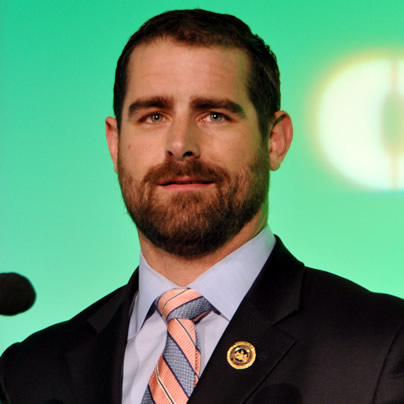
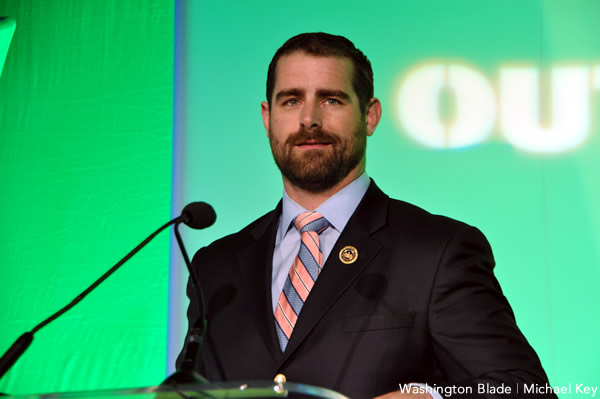
Gay Pennsylvania state Rep. Brian Sims (Washington Blade file photo by Michael Key)
Some Pennsylvania advocates have begun to differ on whether they should push for marriage rights for same-sex couples without first securing statewide anti-LGBT discrimination protections.
Sue Kerr, editor of Pittsburgh Lesbian Correspondents, told the Washington Blade on Tuesday that the recent announcement by state Reps. Brian Sims (D-Philadelphia) and Stephen McCarter (D-Montgomery County) that they plan to introduce a same-sex marriage bill in Harrisburg seems “a little bit like putting the cart before the horse.”
A Susquehanna Polling and Research survey in May found 72 percent of Pennsylvanians back two bills — House Bill 300 and Senate Bill 300 — in the state legislature that would ban discrimination based on sexual orientation and gender identity and expression in the state. A Franklin and Marshall College poll released during the same month found 54 percent of respondents support same-sex marriage.
“House Bill 300 helps everyone — every single person in our community,” Kerr said. “It’s not defined by our relationships. It’s defined by who we are as citizens, residents of the state.”
Pennsylvania is among the states without an LGBT-inclusive statewide non-discrimination law.
Neighboring New York, Maryland and Delaware are among the 11 states and D.C. in which same-sex couples are currently able to legally marry. A federal judge in Ohio on Monday ordered the state to recognize the marriage of a gay couple that tied the knot at Baltimore/Washington International Thurgood Marshall Airport on July 11.
The American Civil Liberties Union on July 9 filed a lawsuit against the Keystone State’s statutory same-sex marriage ban.
Pennsylvania Attorney General Kathleen Kane announced two days later she would not defend the law in court.
Josh Shapiro, chair of the Montgomery County Commissioners, on Tuesday announced the suburban Philadelphia county would issue a marriage license to a lesbian couple.
The women, whom the Times Herald newspaper identified as Loreen M. Bloodgood and Alicia A. Terrizzi of Pottstown, wed earlier on Wednesday. They are the first same-sex couple in Pennsylvania to receive a marriage license.
McCarter noted to the Blade that HB 300 has received roughly 20 additional co-sponsors since he and Sims announced the day after the U.S. Supreme Court ruled a portion of the Defense of Marriage Act unconstitutional that they plan to introduce a same-sex marriage bill. He said he hopes HB 300 will have 102 co-sponsors, which constitutes a majority, in the House of Representatives once it reconvenes on Sept. 23.
“We know there is no state so far that has passed marriage equality without having non-discrimination passed,” McCarter said. “Momentum is growing.”
Advocates across the state acknowledged the same-sex marriage bill is unlikely to pass, at least in the short term, because Republicans control both houses of the state legislature and Gov. Tom Corbett opposes nuptials for gays and lesbians.
“There’s a limited amount of resources [that] generally are better deployed in terms of those areas where the result can realistically be achieved,” said Malcolm Lazin, executive director of the Philadelphia-based Equality Forum.
Kathy Padilla, a transgender rights advocate in Philadelphia, noted 32 municipalities in Pennsylvania have passed LGBT-inclusive non-discrimination ordinances. Philadelphia adopted the state’s first gay-inclusive measure in the late 1970s, while the city of Harrisburg enacted Pennsylvania’s first trans-inclusive anti-discrimination resolution in 1983.
Philadelphia Mayor Michael Nutter in May signed a measure that many activists have described as one of the country’s most expansive anti-LGBT discrimination laws.
“As we don’t have a statewide non-discrimination bill, pursuing judicial relief here doesn’t close off legislative opportunities or split communities in the same way as other states at all,” Padilla told the Blade, referring to the ACLU’s same-sex marriage lawsuit. “It leaves us all working for these same goals at the same time in different venues — together.”
Ted Martin, executive director of Equality Pennsylvania, a statewide LGBT advocacy group, told the Blade that HB 300 remains a “top priority” for his organization.
He said a Pennsylvania hotel could still legally deny a same-sex couple a room on their wedding night. Martin noted a gay or lesbian Pennsylvanian could still be fired from their job if he or she places a picture of their husband or wife on their desk.
The commonwealth also lacks statewide protections for LGBT Pennsylvanians in housing.
“We have to look honestly at the complete picture,” Martin said. “The heat and conversation around marriage will really allow us to take a good look at how we treat LGBT Pennsylvanians.”

U.S. Supreme Court
Trump asks Supreme Court to allow restrictions on gender-affirming care in prisons
SCOTUS could further restrict rights of trans inmates
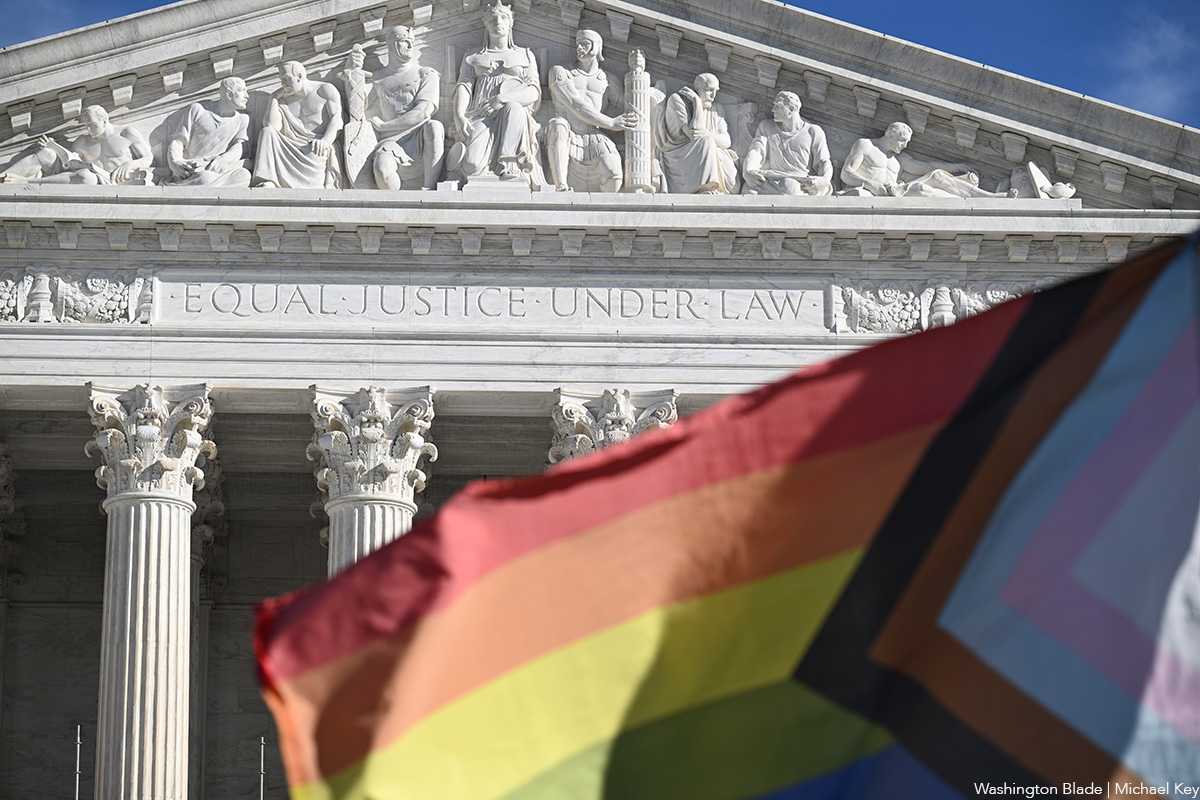
The Trump administration has asked the Supreme Court to allow its policy limiting gender-affirming treatment for federal inmates to take effect while a legal challenge plays out in court.
U.S. District Judge Royce Lamberth ordered the government to continue providing gender-affirming care, such as hormone therapy, which had become policy nearly a decade ago for inmates who were transitioning.
The Trump administration argues in its application that its policy restricting transgender rights was properly adopted and that the judge overstepped, posing nationwide “security and prison-administrative concerns.”
If allowed, the policy would halt surgeries, hormones and social accommodations such as wigs while allowing mental health therapy to continue as the legality of the policy reversal is litigated.
The government also argues in the application that the Bureau of Prisons had “determined that sex-trait-modification surgeries, hormone interventions in general, and social accommodations could no longer be justified as treatment for gender dysphoria.”
American Civil Liberties Union attorneys for the inmates said the policy is “a direct threat to the well-being of transgender people in federal custody and an open violation of their fundamental rights,” and said withholding necessary gender-affirming healthcare constitutes cruel and unusual punishment.
The Blade has covered the ongoing developments surrounding changes to Federal Bureau of Prisons transgender inmate policy that went into effect earlier in Trump’s term. The changes primarily focus on rolling back Biden-era protections for trans inmates.
Earlier this year, the Blade published a joint letter from multiple senators in response to the rollback of the policy. Multiple senators — including Edward Markey (D-Mass.), Jeffrey A. Merkley (D-Ore.) and Mazie K. Hirono (D-Hawaii) — sent a letter to Attorney General Todd Blanche and Federal Bureau of Prisons Director William Marshall III calling for them to reverse the policy change, saying it endangers inmates’ health and safety.
The senators described how the policy shift, along with President Trump’s Executive Order 14168, titled “Defending Women from Gender Ideology Extremism and Restoring Biological Truth to the Federal Government,” is forcing policy changes they argued are rooted more in political rhetoric than in medical research or evidence-based correctional practices.
Federal Bureau of Prisons responded to the Blade’s request for comment in May, declining to reconsider its transgender inmate policy.
The Blade reached out to the Federal Bureau of Prisons once again over the application to the Supreme Court, but did not hear back before publication.
Federal Government
Education Department rolls back protections for LGBTQ students under Title IX
The DoE policy rescinds Biden-era protections

The Department of Education rolled back a Biden-era Title IX interpretation on Monday that secured sex-based discrimination protections for students on the basis of sexual orientation and gender identity.
Title IX was established in 1972 as landmark civil rights law. It prohibits sex-based discrimination in any school or any other education program that receives funding from the federal government.
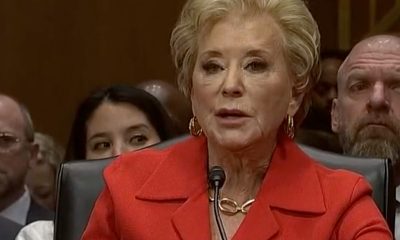
Education Secretary Linda McMahon spoke about the revision of the policy, claiming the decision would explicitly help “women and girls.”
“Thanks to today’s action, the published Title IX regulations faithfully reflect court orders and congressional intent — reducing confusion for parents, students, and educational institutions. We will continue to relentlessly champion equal opportunity for all Americans and hold accountable any school or college that violates the rights, privacy, or athletic opportunities of our women and girls,” McMahon said via press release.
Prior to her work under the Trump-Vance administration, McMahon was a World Wrestling Federation/World Wrestling Entertainment executive before resigning to pursue a career in politics. She was appointed to the Connecticut State Board of Education by then-Gov. Jodi Rell in January 2009, but resigned from her role shortly afterward to run what ultimately became two failed campaigns for Connecticut’s U.S. Senate seat in 2010 and 2012.
A “fact sheet” provided by the Department of Education also called the inclusive sexual assault and gender identity protections expanded under the Biden-Harris unlawful, saying, “This change is necessary to provide clarity in the Code of Federal Regulations so that institutions, administrations, students, and families can see the rules that are actually in force and to help eliminate public confusion about the Biden administration’s unlawful attempt to stretch Title IX’s legal protections to cover ‘sexual orientation’ and ‘gender identity.’”
This is not the first time this policy has faced judicial hurdles. While Biden was still in office, the plan was struck down in multiple courts in Republican states.
Opponents of the move say it will harm transgender athletes and weaken protections for sexual assault victims.
“Sexual harassment and assault continue to be pervasive in schools and, to the fullest extent possible, we should be working to enforce the laws that protect student survivors of sexual violence. Yet, Education Secretary Linda McMahon and the Trump administration have decided to ignore what survivors need, instead weaponizing Title IX to attack trans students,” said Shiwali Patel, senior director of education justice at the National Women’s Law Center.
This is a return to a first Trump term policy after Biden issued an executive order to attempt to curb discrimination for all — especially those with different sexual orientations and gender identities — that had been given a pass during Trump’s first term. Much of Title IX’s policy has a narrow vision of what sex protections look like that often and enthusiastically leave gender-diverse and non-heterosexual people out.
In March 2021, President Joe Biden signed Executive Order 14021, “Guaranteeing an Educational Environment Free From Discrimination on the Basis of Sex, Including Sexual Orientation or Gender Identity,” to attempt to undo some of the flagrantly anti-LGBTQ policy the Trump-Pence administration had set forth relating to Title IX protections for LGBTQ students and sexual assault survivors.
The secretary focused this “win” for the administration as one more step toward restricting transgender students from competing in women’s sports, but the 2020 rule, completed under former Education Secretary Betsy DeVos, didn’t explicitly ban trans students from participating on sports teams consistent with their gender identity. It did limit the types of sexual harassment and assault complaints that schools had to investigate and required live hearings so male students could respond to accusations.
McMahon didn’t discuss those aspects in her statement or in requests for comment. The 2020 rule drew praise from conservatives and intense opposition from advocates who said it downplayed sexual abuse and left victims unprotected.
In a statement, U.S. Rep. Tim Walberg (R-Mich.), who chairs the House Education Committee, said, “Returning to the 2020 regulations restores longstanding protections for women and girls that the Biden-Harris administration attempted to dismantle and realigns Title IX policy with court precedents.”
LGBTQ activists have called this decision a direct attack on LGBTQ safety — particularly for trans students who continue to face a barrage of legislative, executive, and judicial attacks in recent years from the Trump-Vance administration.
Kelley Robinson, president of the Human Rights Campaign, the largest LGBTQ advocacy group in the world, released a statement following the DoE’s announcement.
“Title IX is, quite simply, about protecting students and ensuring that they are safe from abuse, harassment, and discrimination while they pursue their education. But Donald Trump and his cronies aren’t interested in any of that,” Robinson said. “Donald Trump’s Department of Education has completely lost sight of that mission. Instead of enforcing protections for students, they’re rescinding them. They don’t care if sexual harassment and assault go unaddressed. And they’re happy to strip funding away from school districts and states that are actually trying to keep students safe.
“We know who will be hurt: women, girls, and others who are vulnerable to sexual harassment, assault and abuse — including LGBTQ+ students. The fact that they’re dropping this rule into place abruptly, without a comment period, denying families, educators, loved ones, and the students themselves a say in how they should be treated, shows how little they care about the safety of our students.
“This is a monstrous injustice, and it drives home how essential it is that we take action at the polls this November to start bringing some accountability to an administration that has turned its back on the very students Title IX was written to protect,” she added.
The Washington Blade reached out to the DoE for comment and questions on whether Title IX protections still included LGBTQ students, and received this email response from Education Spokesman Sabin Sidney:
“Your questions indicate you are clearly missing the entire point of this Final Rule. The Biden Administration illegally rewrote Title IX to include ‘sexual orientation’ and ‘gender identification’ in the definition of sex-based discrimination. The Trump Administration is rescinding this rule—only after every federal court that heard legal challenges rejected it as unlawful.
“Since January 2025, the Department has been enforcing Title IX consistent with the President’s Executive Order grounded in biological truth that there are only two sexes. The Trump Administration is restoring the original promise of Title IX and providing clarity to students, parents, and educational institutions. We will vigorously defend equal opportunity consistent with the law’s intended purpose.”
National
Dr. Fauci ‘honored to be part of’ LGBTQ history
Equality Forum presents pioneering AIDS researcher with Int’l Role Model Award
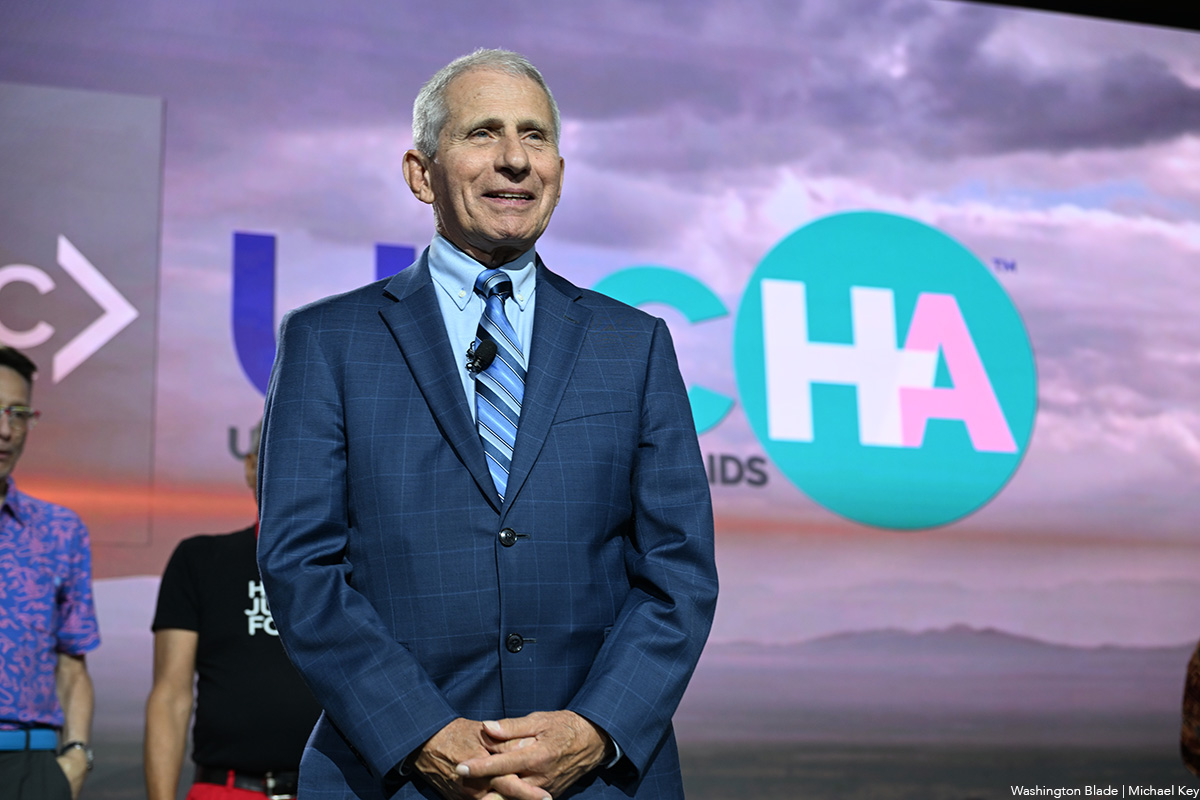
PHILADELPHIA — Dr. Anthony Fauci accepted an award from the Equality Forum on Sunday in which he told the audience that he is honored to be part of the LGBTQ community’s history.
“Over these many decades I have not simply admired the community — I have genuinely enjoyed being part of the conversation with it,” Fauci said. “I’ve enjoyed the arguments, debates, disagreements, the humor, the friendship and above all the extraordinary commitment to alleviate suffering and prevent premature death for persons living with HIV.”
Fauci continued, “I am grateful to the Equality Forum for this award. I am grateful to the LGBTQ community for allowing me throughout these many years to become part of your struggle and I am deeply honored to be part of your history.”
Fauci traveled to Philadelphia to accept the Equality Forum’s International Role Model Award. Longtime HIV/AIDS activist Peter Staley presented Fauci with the award, recalling the early days in the fight against the disease and that activists in the 1980s frequently clashed with Fauci, director of the National Institute of Allergy and Infectious Diseases at the time. In his remarks, Staley recalled the message on one sign from an ‘80s protest, “Fuck Fauci.” But activists warmed up to Fauci and he ultimately befriended his former gay critics, including Larry Kramer.
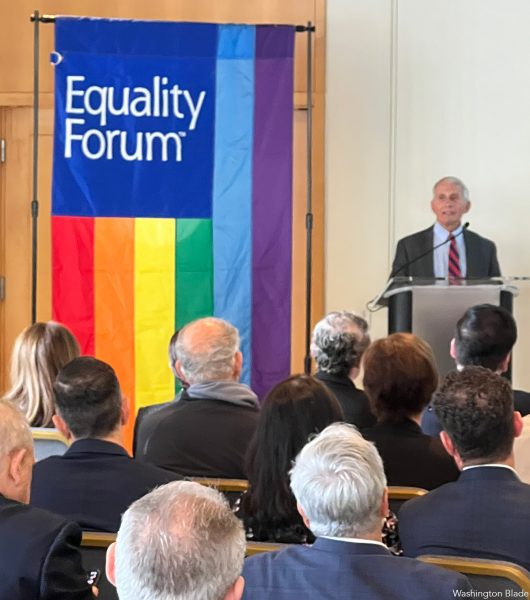
Also at Sunday’s event, the Equality Forum honored Erica Deuso, the first out transgender mayor in Pennsylvania; she was elected mayor of Downington, Pa., and sworn in last January. Ben Garcia, executive director of the American LGBTQ+ Museum in New York presented Deuso with the Frank Kameny Award.
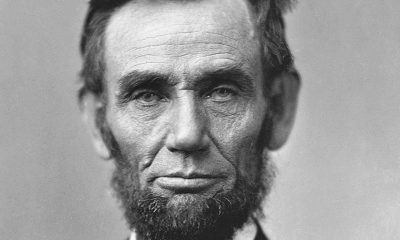
The event also served as the kickoff of LGBT History Month, which Equality Forum honors by naming 31 LGBT Icons, one per day in October. Visit equalityforum.org for a full list of its more than 600 queer Icons. This year’s honorees include designer Calvin Klein, Rep. Chris Pappas, and President Abe Lincoln.

Trump asks Supreme Court to allow restrictions on gender-affirming care in prisons

Education Department rolls back protections for LGBTQ students under Title IX

Debbie Allen shares on loss, love, and the power of speaking out

Baltimore’s oldest gay bar to reopen this week

Dr. Fauci ‘honored to be part of’ LGBTQ history

Colombia withdraws from Equal Rights Coalition

Writing a play about Lincoln leads down a rabbit hole to a closet

Trump-appointed judge restores White House TV pool access

Philadelphia event to launch 2026 LGBT History Month

Being a female firefighter comes with unique risks, and rewards
-

 Colombia5 days ago
Colombia withdraws from Equal Rights Coalition
-
a&e features4 days ago
Writing a play about Lincoln leads down a rabbit hole to a closet
-
White House4 days ago
Trump-appointed judge restores White House TV pool access
-
National4 days ago
Philadelphia event to launch 2026 LGBT History Month