Sports
Homophobia rampant in U.S. sports: study
Research shows more lesbian athletes out than gay men
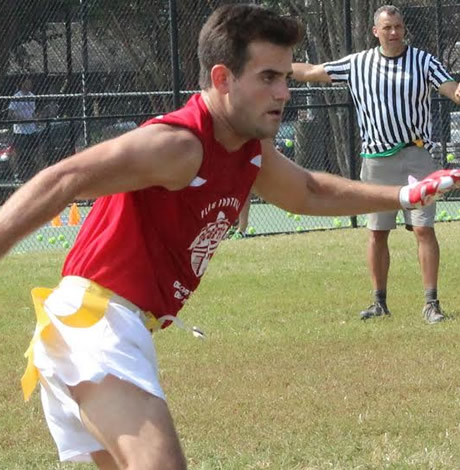
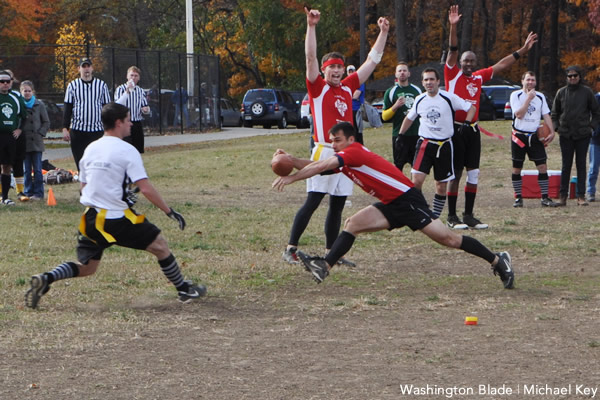
Being out on the field often opens gay and lesbian players to discrimination a new study finds. (Washington Blade file photo by Michael Key)
On the heels of Michael Sam being drafted into the NFL and subsequently cut from the league, Out on the Fields, a new study, has found the United States to be the most homophobic English-speaking country in sports.
Out on the Fields billed the study as the first international study focusing on homophobia in sports. People who participated in the online survey were from various sports backgrounds with about 25 percent of participants identifying as heterosexual. The study’s findings concluded that although LGBT issues have made great strides in the United States overall, there is still more work to be done on the field. The study also chose to only focus on lesbian, gay and bisexual issues and excluded examining trans issues in sports.
According to the study, spectator stands and school physical education classes were the two places that had the most rampant homophobia. The study found that 83 percent of participants believe an openly gay person would not be safe as a spectator at a sporting event. The study also states that 78 percent of those polled feel youth sports, for those under 22 years old, are not safe spaces for LGB people. Susan Rankin, a senior research associate at Pennsylvania State University, sat on Out of the Fields’ expert review panel and believes LGB children are most susceptible to encountering issues during physical education classes.
“You’re changing, you’re in the locker room,” Rankin says. “You’re a little more vulnerable there than you would be in English class.”
That vulnerability in athleticism is why those who participate in sports can feel trapped. The study states that 50 percent of gay men and 53 percent of lesbians feel personally targeted for their sexual orientation in sports. Rankin credits that statistic to gay men not being as out in sports as lesbians.
Gay men are less likely to come out to their team or coach while they are on a sports team. Meanwhile, lesbians are more likely to be out and identify themselves as queer publicly. The study says that 83 percent of gay men remain in the closet to all or some of their team while only 63 percent of lesbians report being in the closet to some or all of their team. American gay men were also more likely to fear discrimination from their coaches and officials than gay men in any other country surveyed.
Gay men’s fear of coming out versus lesbians being more open also means lesbians are more likely to be targeted because they’re more visible. Rankin says she knows it to be true that lesbians are targeted from her own personal experience.
“The label of lesbianism in sports is one that women would go to great lengths generations ago to not come across as gay so they wouldn’t get dropped,” she says.
Another large part of sports culture is the frequent use of homophobic language. Those who had experienced homophobia reported 89 percent of gay men and 82 percent of lesbians had heard homophobic slurs. Rankin says the reason homophobic language is used often is because of the way sports have been structured over the generations. That structure is going to take time to deconstruct.
“It’s an area where masculinity and femininity are highlighted,” Rankin says. “It’s around gender and what that looks like and not going outside of those roles and challenging them. It’s the last dash for us to move through.”





Sports
Jason Collins dies at 47
First openly gay man to actively play for major sports team battled brain cancer
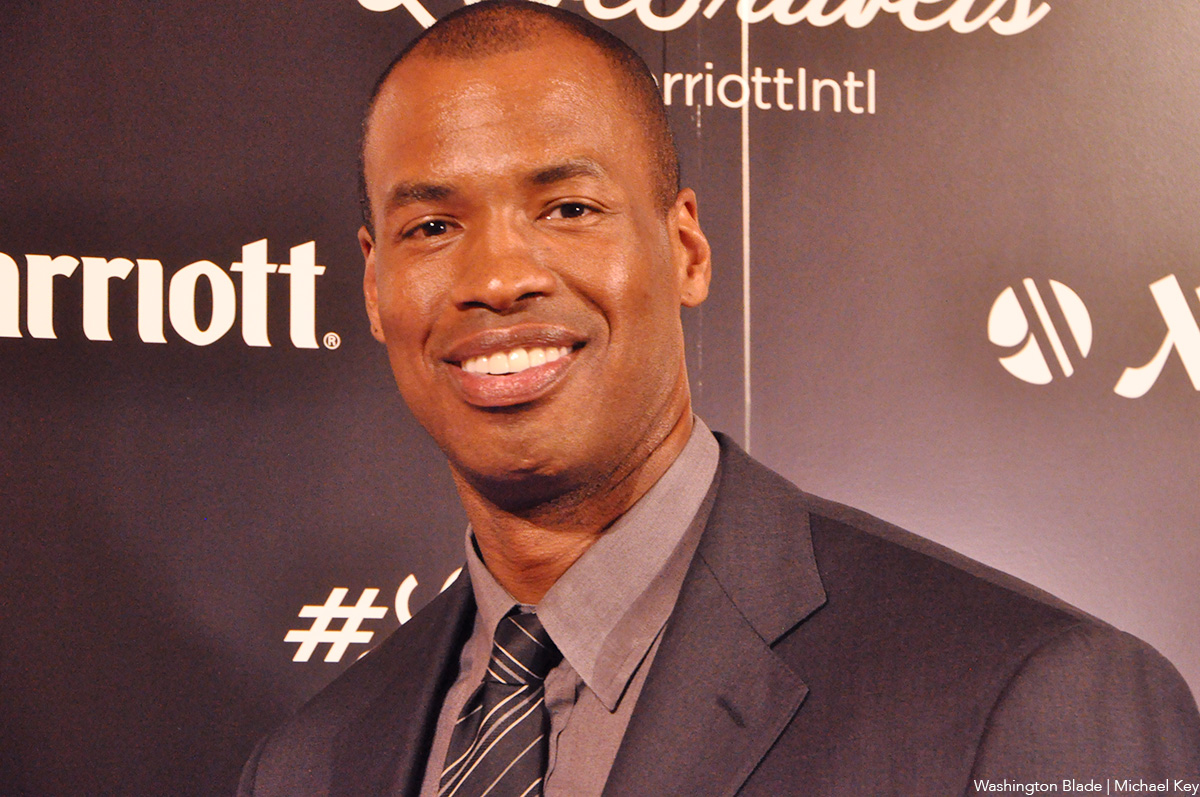
Jason Collins, the first openly gay man to actively play for a major professional sports team, died on Tuesday after a battle with brain cancer. He was 47.
The California native had briefly played for the Washington Wizards in 2013 before coming out in a Sports Illustrated op-ed.
Collins in 2014 became the first openly gay man to play in a game for a major American professional sports league when he played 11 minutes during a Brooklyn Nets game. He wore jersey number 98 in honor of Matthew Shepard, a gay college student murdered outside of Laramie, Wyo., in 1998.
Collins told the Washington Blade in 2014 that his life was “exponentially better” since he came out. Collins the same year retired from the National Basketball Association after 13 seasons.
Collins married his husband, Brunson Green, in May 2025.
The NBA last September announced Collins had begun treatment for a brain tumor. Collins on Dec. 11, 2025, announced he had Stage 4 glioblastoma.
“We are heartbroken to share that Jason Collins, our beloved husband, son, brother and uncle, has died after a valiant fight with glioblastoma,” said Collins’s family in a statement the NBA released. “Jason changed lives in unexpected ways and was an inspiration to all who knew him and to those who admired him from afar. We are grateful for the outpouring of love and prayers over the past eight months and for the exceptional medical care Jason received from his doctors and nurses. Our family will miss him dearly.”
NBA Commissioner Adam Silver said Collins’s “impact and influence extended far beyond basketball as he helped make the NBA, WNBA, and larger sports community more inclusive and welcoming for future generations.”
“He exemplified outstanding leadership and professionalism throughout his 13-year NBA career and in his dedicated work as an NBA Cares Ambassador,” said Silver. “Jason will be remembered not only for breaking barriers, but also for the kindness and humanity that defined his life and touched so many others.”
“To call Jason Collins a groundbreaking figure for our community is simply inadequate. We truly lost a giant today,” added Human Rights Campaign President Kelley Robinson in a statement. “He came out as gay — while still playing — at a time when men’s athletes simply did not do that. But as he powerfully demonstrated in his final years in the league and his post-NBA career, stepping forward as he did boldly changed the conversation.”
“He was and will always be a legend for the LGBTQ+ community, and we are heartbroken to hear of his passing at the young age of 47,” she said. “Our hearts go out to his family and loved ones. We will keep fighting on in his honor until the day everyone can be who they are on their terms.”
Sports
New IOC policy bans trans women from Olympics
New regulation to be in effect at 2028 summer games in Los Angeles
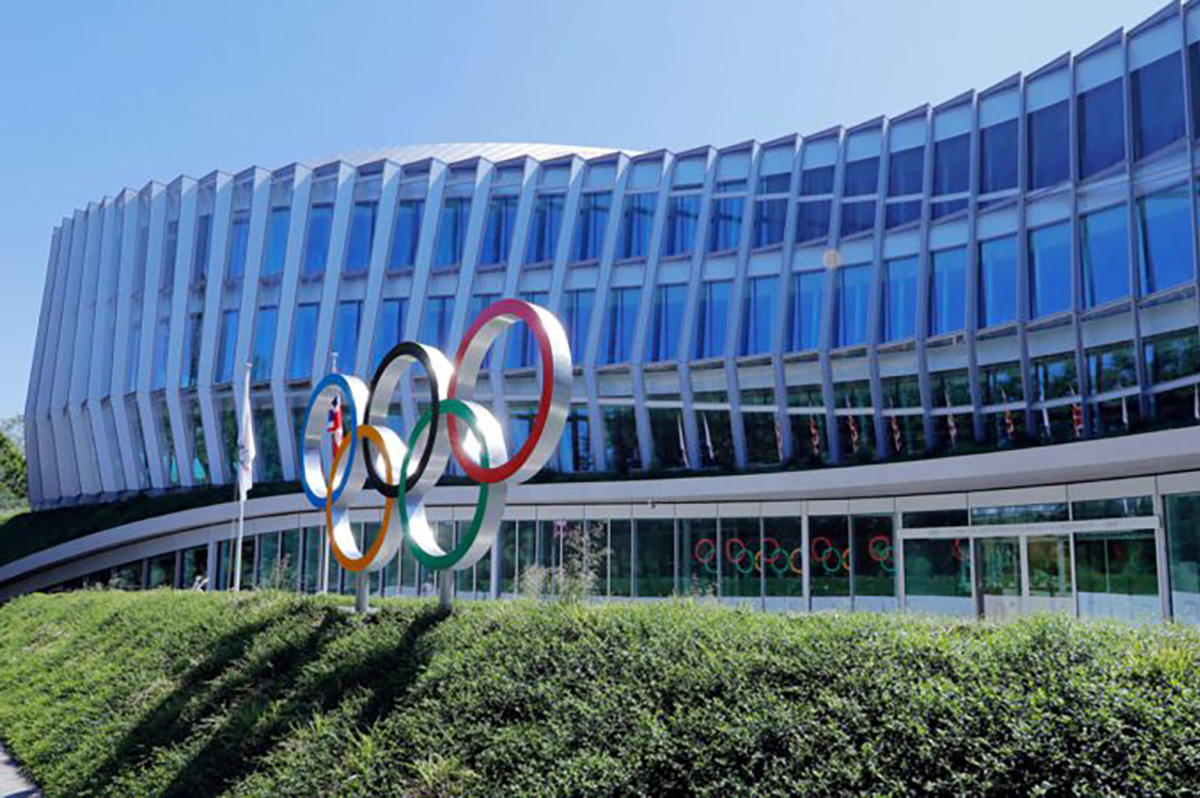
The International Olympic Committee on Thursday announced it will not allow transgender women from competing in female events at the Olympics.
“For all disciplines on the Sports Program of an IOC event, including individual and team sports, eligibility for any Female Category is limited to biological females,” reads the new policy.
The policy states “eligibility for the Female Category is to be determined in the first instance by SRY Gene screening to detect the absence or presence of the SRY Gene.”
“On the basis of the scientific evidence, the IOC considers that the SRY (sex-determining Region Y) Gene is fixed throughout life and represents highly accurate evidence that an athlete has experienced or will experience male sex development,” it reads. “Furthermore, the IOC considers that SRY Gene screening via saliva, cheek swab or blood sample is unintrusive compared to other possible methods. Athletes who screen negative for the SRY gene permanently satisfy this policy’s eligibility criteria for competition in the Female Category.”
The policy states the test “will be a once-in-a-lifetime test” unless “there is reason to believe a negative reading is in error.”
The new regulation will be in place for the 2028 Summer Olympics in Los Angeles.
“I understand that this a very sensitive topic,” said IOC President Kirsty Coventry on Thursday in a video. “As a former athlete, I passionately believe in the rights of all Olympians to take part in fair competition.”
“The policy that we have announced is based on science and it has been led by medical experts with the best interests of athletes at its heart. The scientific evidence is very clear: male chromosomes give performance advances in sport that rely on strength, power, or endurance,” she added. “At the Olympic Games, even the smallest margins can be the difference between victory and defeat. So, it is absolutely clear that it would not be fair for biological males to compete in the female category. In addition, in some sports it would simply not be safe.”
(Video courtesy of the IOC)
Laurel Hubbard, a weightlifter from New Zealand, in 2021 became the first trans woman to compete at the Olympics.
Imane Khelif, an Algerian boxer, won a gold medal at the 2024 Summer Olympics in Paris. Khelif later sued JK Rowling and Elon Musk for cyberstalking after they questioned her gender identity.
Ellis Lundholm, a mogul skier from Sweden, this year became the first openly trans athlete to compete in any Winter Olympics when he participated in Milan Cortina Winter Olympics in Italy.
President Donald Trump in February 2025 issued an executive order that bans trans women and girls from female sports teams in the U.S.
The U.S. Olympic and Paralympic Committee last July banned trans women from competing in female sporting events. Republican lawmakers have demanded the IOC ban trans athletes from women’s athletic competitions.
“I’m grateful the Olympics finally embraced the common sense policy that women’s sports are for women, not for men,” said U.S. Sen. Tom Cotton (R-Ark.) on X.
An IOC spokesperson on Thursday referred the Washington Blade to the press release that announced the new policy.
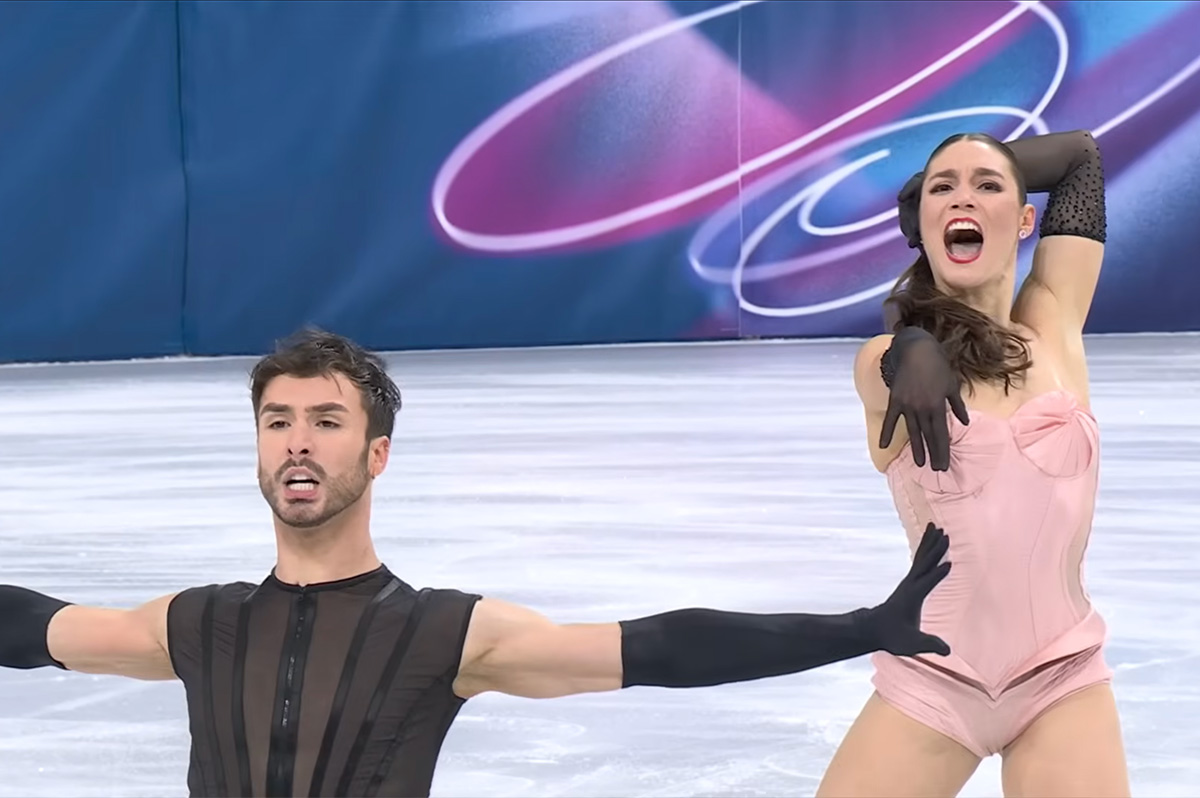
More than a dozen LGBTQ athletes won medals at the Milan Cortina Winter Olympics that ended on Sunday.
Cayla Barnes, Hilary Knight, and Alex Carpenter are LGBTQ members of the U.S. women’s hockey team that won a gold medal after they defeated Canada in overtime. Knight the day before the Feb. 19 match proposed to her girlfriend, Brittany Bowe, an Olympic speed skater.
French ice dancer Guillaume Cizeron, who is gay, and his partner Laurence Fournier Beaudry won gold. American alpine skier Breezy Johnson, who is bisexual, won gold in the women’s downhill. Amber Glenn, who identifies as bisexual and pansexual, was part of the American figure skating team that won gold in the team event.
Swiss freestyle skier Mathilde Gremaud, who is in a relationship with Vali Höll, an Austrian mountain biker, won gold in women’s freeski slopestyle.
Bruce Mouat, who is the captain of the British curling team that won a silver medal, is gay. Six members of the Canadian women’s hockey team — Emily Clark, Erin Ambrose, Emerance Maschmeyer, Brianne Jenner, Laura Stacey, and Marie-Philip Poulin — that won silver are LGBTQ.
Swedish freestyle skier Sandra Naeslund, who is a lesbian, won a bronze medal in ski cross.
Belgian speed skater Tineke den Dulk, who is bisexual, was part of her country’s mixed 2000-meter relay that won bronze. Canadian ice dancer Paul Poirier, who is gay, and his partner, Piper Gilles, won bronze.
Laura Zimmermann, who is queer, is a member of the Swiss women’s hockey team that won bronze when they defeated Sweden.
Outsports.com notes all of the LGBTQ Olympians who competed at the games and who medaled.

PHOTOS: Blade Summer Kickoff Party

PHOTOS: Taste of Point

Honey, have we been priced out of gay paradise?

Comings & Goings

IDAHOBiT a reminder we all must stand up against transphobia

UK government makes trans-inclusive conversion therapy ban a legislative priority

Bureau of Prisons declines to reconsider transgender inmate policy

Yes, chef!

What’s new in Rehoboth Beach for summer 2026

LGBTQ community must say NO to Janeese Lewis George
-

 United Kingdom4 days ago
UK government makes trans-inclusive conversion therapy ban a legislative priority
-
Federal Government5 days ago
Bureau of Prisons declines to reconsider transgender inmate policy
-
a&e features4 days ago
Yes, chef!
-
Rehoboth Beach4 days ago
What’s new in Rehoboth Beach for summer 2026