Opinions
Super PAC in D.C. politics raises questions
Bowser should back legislation to make practice illegal
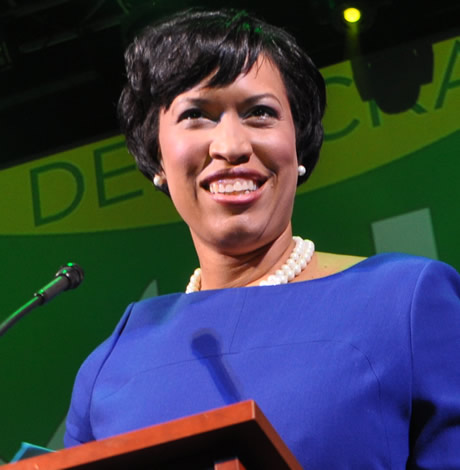
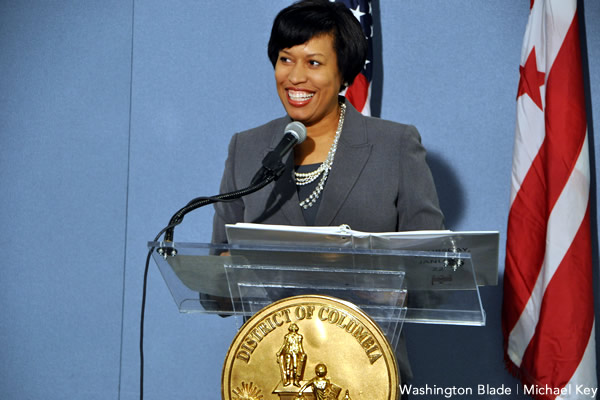
Mayor Muriel Bowser (Washington Blade photo by Michael Key)
It was with a mixed reaction I read the Washington Post column by Aaron Davis, “Big money for the White House and for Congress. Now for D.C. city hall, too?” It raised the issue of how supporters of Muriel Bowser are raising big money “the new political action committee that aims to raise $1 million this year to further her agenda, including re-electing favored council members.”
The founders of FreshPAC as they are calling it are using the loophole in D.C. election law that allows them to raise unlimited money in a non-election year. It is similar to federal Super PACS and it has been accepting unlimited contributions. Ben Soto, the treasurer of the PAC said, “We’re reaching out to folks who are happy with the mayor and who want to support her, and we’ve had a really good response.” That is not surprising as many people believe Muriel Bowser is doing a good job.
I believe her vision for the future of the District is the right one. She is trying to balance the need for city investment in new business and make doing business in the District easier while making investments in affordable housing, job training, education and public safety. Achieving the right balance is never easy and there will always be those thinking you are doing it wrong.
The question is whether the right answer to pushing the agenda forward is raising big money from those who have direct business interests in current city projects. One thing the PAC is doing right is releasing the names of all its donors so at a minimum people can see a donor’s connections to city government and the mayor.
As I read the names of donors it does appear the PAC shouldn’t have taken money from some of them. Some are lightning rods and remind residents of past questionable issues Bowser had to deal with; some have recently been appointed to a board or commission. The Post reported, “Three men that Bowser has appointed to powerful boards and commissions also have contributed $10,000 each before or after their position confirmations. A fourth has given $2,500, and a fifth is serving as the PAC’s attorney and is paid by the fund.” Taking major donations from those people only looks bad and those individuals might have been wise to keep their wallets closed to keep from making themselves or the mayor look bad.
Like many, I believe the Supreme Court decision in Citizens United was wrong and hurt our political system. I support Hillary Clinton who has said she will only nominate Supreme Court justices who agree with her that Citizens United needs to be overturned and if needed would support a constitutional amendment to overturn it. At the same time I don’t think she should unilaterally tie her hands in an election saying she won’t raise the money needed to win. I admire the ability of the Sanders campaign to raise big money from small donors, but in the general election even more money will be needed to level the playing field with Republicans.
In D.C., you could posit the same thing: We should end all ability to raise unlimited money but does a politician or his or her supporters unilaterally say they won’t raise it while it is legal to do so?
D.C. is in many ways still a small town and Congress has oversight of our budget and legislation. We have a huge divide between rich and poor and it’s getting bigger. We have a Council quickly changing with eight members serving fewer than four years. It is understandable the mayor wants to build a coalition on the Council to move her agenda forward. Nationally I would like to see a Democratic president with a Democratic Congress to move the president’s agenda forward.
Craig Holman from Public Citizen said about the PAC, “It’s exceedingly troubling. This is nurturing a lack of reasonable regulation to keep companies from trying to buy government contracts. I fully expect the city to run into similar scandals that we saw under the previous mayor: This is on the road to do so.” In response, the mayor’s chief of staff, John Falcicchio, who is not affiliated with the PAC said, “What you have here is an entity that was formed outside the government to promote and expand the mayor’s agenda, and everything they do is reported.”
It would help if Mayor Bowser stopped fundraising for the PAC and didn’t go to events where the PAC is soliciting donations and introduced legislation to make this illegal in the future.
Peter Rosenstein is a longtime Democratic Party and LGBT rights activist.

Opinions
Why I’m supporting Gary Goodweather for D.C. mayor
In a word, longtime local resident has the character for the job

Hey fellow LGBTQ+ Democrats, this is worth reading! Especially if you’re a voter in Washington, D.C. who’s planning to cast a ballot for the nomination of local candidates in the District of Columbia in 2026.
Because next Tuesday June 16 is a really Big Deal for D.C. Democrats. It’s the first time in two decades that the doors to filling the crucially important job of mayor are wide open because no incumbent is on the ballot.
That is, Mayor Muriel Bowser is not running for election. Instead she will — at last, and after three terms in office — symbolically ride off into the political sunset. And to considerable and well deserved applause. Because she’s been rightly lauded for many important accomplishments, including her well documented record of supporting the many diverse issues concerning the LGBTQ+ community.
But she’s been equally derided for her far too spineless a record recently, of (not) effectively opposing President Donald Trump and his outrageous stationing of outsider National Guard armed troops all across D.C. This despicably sad state of affairs has been a grim statement that Washington, D.C. (not being a state) is subject to the Donald’s feral instincts for nastily mean-spirited retributions. But she’s been meek and mild, and even actively complicit with Trump, when other mayors have told Trump to buzz off. And they succeeded.
But enough about Mayor Bowser. Her “sell by date” fast approaches. The old order changes. And a new day dawns.
Next Tuesday, two candidates of this old (and by now seriously outmoded) order seek to win the coveted Democratic nomination for mayor on June 16. First, there’s Janeese Lewis George, who’s a great first or second choice by any measure. And (ahem) then there’s Kenyan McDuffie.
But this is Ranked Choice Voting and it’s brand new. It’s not “either/or” binary, just like we now appreciate that sexual orientation and identity are also non-binary.
My first choice is clear because I know him. His name is Gary Goodweather. But so, who is this outsider candidate for mayor anyway?
It goes like this. First, together with his remarkable wife, successful D.C. Realtor Meredith Margolis, Gary and their two college age kids are all 20-year residents of Dupont Circle. I actually first met Gary and Meredith a year ago at a BBQ event, when he was a speaker at the historic, progressive, feminist Woman’s National Democratic Club.
So once again, who’s this Gary Goodweather? And why should you seriously consider him for your personal first or second or even third choice?
Here’s why. He’s new to politics in the conventional old paradigm of “politics.” But he knows Washington, D.C. forwards and backwards and inside and out. Because he’s been involved for many years in successful local private sector business investments, including the development of neighborhood-based BIDs, or Business Improvement Districts including the one in NoMa.
And his thinking is typically “out-of-the box.” For example, he’s currently an actual active advocate for establishing agriculture in our densely populated urban environment — through so-called “tiered gardens.” Yes, D.C., trust me, this is an actual thing. And yes, it requires street smarts to deal with challenging zoning issues; but it’s a real example of what fresh blood and new thinking and real imagination can bring to our hogtied and often over-regulated city.
Gary was in the U.S. Army and the National Guard for four years as a captain in the armored command. He earned his MBA in finance from Johns Hopkins University in night school.
If elected, Gary would be D.C.’s first Jewish mayor. (His is Reform Judaism. Repair the breach!)
He’s become my friend and I admire his intelligence and diligence and imagination and in a word his character.
Here’s what he said to me about what he calls his political North Star: “All D.C. residents should be protected, regardless of who they love. Love is love. Love who you want. Identify how you choose to be.”
Look, it’s always time for good weather in our city. Maybe it’s time for Gary Goodweather as mayor too. First choice or second choice. Then let’s all see what happens next.
David Hoffman is a freelance writer and retired federal government civil servant. He is a longtime resident of the H Street Northeast corridor. He is a member of both the Woman’s National Democratic Club and DSA, Democratic Socialists of America Metro DC chapter.
Opinions
Don’t just vote for change — vote for Hope Solomon for mayor
LGBTQ community isn’t separate from Washington’s story — it is our story
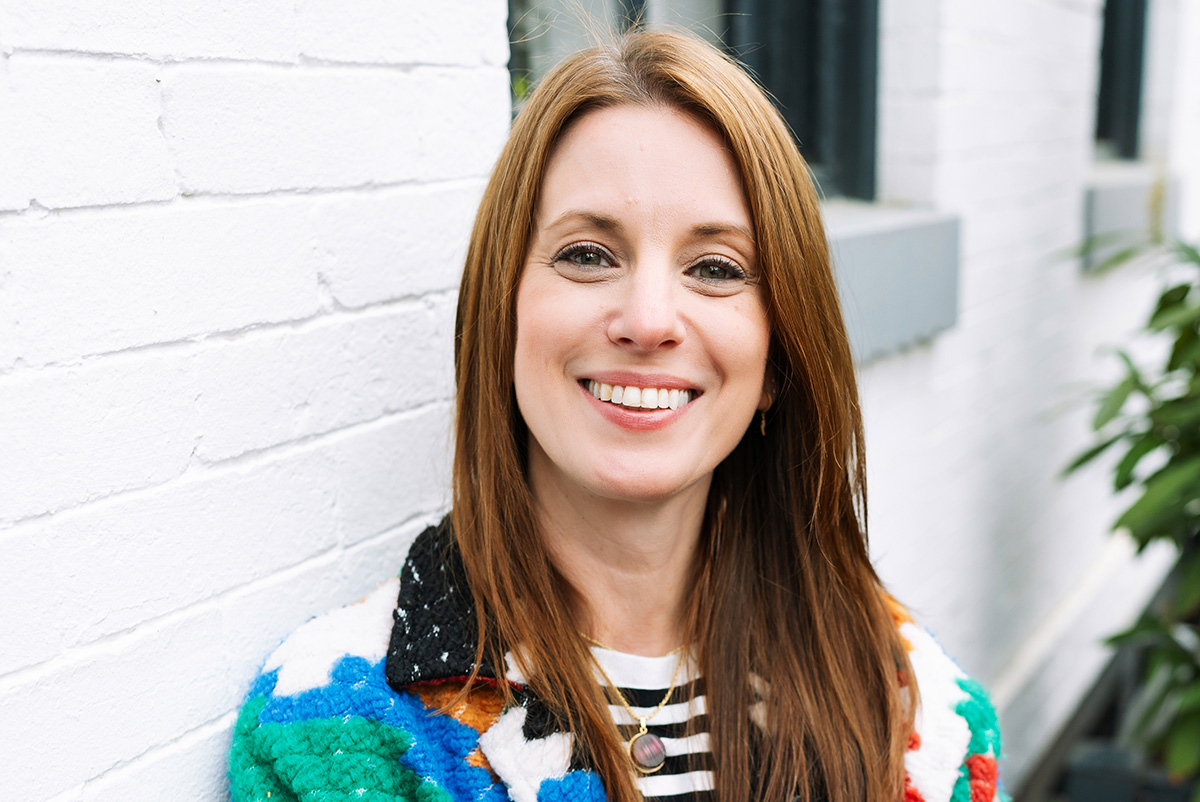
My name is Hope Solomon, and I’m running for mayor of Washington, D.C.
I’ve spent my entire life here. I attended D.C. Public Schools. I grew up working in my family’s small business here in D.C. I live in Dupont Circle. For 17 years, I worked in national security with the Department of Defense, FBI, and Department of Homeland Security. Then last July, I got DOGE’d by Elon Musk.
I don’t recommend it as a career strategy.
But it did give me something I hadn’t had in a long time: perspective.
For the first time in years, I had space to slow down and ask a simple question: Why does it feel like Washington is being run by the same small group of people playing musical chairs, while everyone else is just expected to live with the results?
That’s when I decided to run.
I wasn’t raised in Washington’s political circles. I was raised in Washington. There’s a difference.
Some of my earliest memories are going to see the AIDS Quilt on the National Mall with my mother. I didn’t fully understand it at the time, but I understood enough to know it mattered—because it made something the country had been trying not to see completely impossible to ignore.
My family’s version of a home-cooked meal has always been Annie’s or Mr. Henry’s. I grew up going to Pride, the High Heel Race, drag brunches, and drag shows. As a kid, I thought that was just what cities were like—sequins, show tunes, queens, neighbors, everything mixed together.
Turns out that wasn’t every city.
It was Washington.
The arts shaped me just as much as anything else. I started at Fillmore Arts Center, trained for years with the Washington School of Ballet, and performed across the city—from the Kennedy Center to Warner Theatre to Lisner Auditorium.
The arts taught me discipline and confidence. But more than that, they taught me something Washington has always understood: A city works when people are free to be exactly who they are.
Growing up here, LGBTQ+ Washingtonians were my neighbors, my teachers, fellow business owners, artists, friends, and family.
They helped build the Washington I know.
And that’s why this moment matters.
Washington is facing a budget crisis. Small businesses are struggling. The federal government is openly hostile toward our city. But what worries me most isn’t just policy—it’s whether we lose what makes Washington itself while trying to fix it.
Because the soul of this city is in places like Annie’s. It’s in neighborhood restaurants, small theaters, Pride celebrations, independent businesses, and the people who make this city feel like home.
As mayor, I’ll fight to protect that. I’ll stand up for LGBTQ+ rights, support LGBTQ+ youth, invest in the arts, strengthen public safety, and back the small businesses that keep our neighborhoods alive.
Most importantly, I’ll lead with the understanding that the LGBTQ+ community isn’t separate from Washington’s story.
It is Washington’s story.
If you want another career politician, you’ve got plenty of options.
If you want someone who was shaped by this city, believes in this city, and is ready to fight for this city, I’m asking for your vote.
Learn more at HopeForDC.com. On Election Day, don’t just vote for change. Vote for Hope.
Hope Solomon is a candidate for D.C. mayor.
Opinions
Vote Kenyan McDuffie for D.C. mayor
He will best protect D.C.’s interests amid federal meddling

Elections are always important, but this year in D.C. they will bring major changes. Because of that, your vote in the Democratic primary on June 16 is more important than ever. D.C. is so overwhelmingly Democratic it is a near certainty the winners in the Democratic primary will win the general election. So, I urge everyone eligible, take the time to vote.
D.C. makes it very easy. Every registered voter has received a ballot in the mail. I cast mine before I left for a vacation. When you read this don’t put your ballot in the mail, rather vote at an early voting location, or put your ballot in one of the drop boxes around the city, or vote in person on June 16. You can find the locations for these options nearest you by going to the DCBOE website.
This year for the first time D.C.is dealing with rank choice voting, and who you rank second, or third, can make a difference in the outcome. It is important to note that you don’t have to rank the candidates. You can bullet vote for the one you like, or rank up to five. If there is one or more you like, you can simply choose a #1 and #2. Again, there is no requirement that you rank more people. From what I am seeing, in most of the races, even if five, six, or more, are running and listed on the ballot, in most of those races it will come down to one or two who have any chance. The way the city handles giving out our public money, it will cost us a lot of taxpayer dollars for all those people with no chance at all to win. I hope after these elections the Council will take a close look at how we do our public financing, and reform it. I am all for public financing, just not at the rate D.C. does it. We must ensure anyone who gets city money, accounts for every penny of it. It should never be spent on personal items. If it is not all used, it needs to be refunded to the city.
I have not made endorsements in every race, but clearly the most important race this year in D.C. is for mayor. After 12 years of Muriel Bowser serving as our mayor, there will be someone new sitting in that office after Jan. 1, 2027. What people must remember when voting for mayor, is the person we elect, even if Democrats take back Congress, and I think we will, must continue dealing with the felon in the White House for the first two years of their term. We have seen doing that requires the skill to walk a tightrope. While fighting him on nearly all he is doing, it’s crucial the mayor understands they must not alienate him to the point where he goes all out to attack the city, and the residents here. Remember, home rule gives the felon in the White House, and Congress, enormous power over us. Congress gets to review all our legislation, and our budgets, before they become law. The president controls the D.C. National Guard, and the federal agencies that in many cases get involved, and impact the work of our city. That includes housing, parks, the MPD, and others. There is only one person on the ballot who fully understands that, and has shown, by word and action, they know how to deal with him in the way that will benefit all the people in our city. That person is Kenyan McDuffie. I urge your #1 vote for him. If you have decided to vote for one of the other candidates, I would hope you would list him on your ballot as #2.
Then for Democratic Council-at-large I urge you to consider a #1 vote for Kevin Chavous. Then Brian Schwalb for Attorney General, Phil Mendelson for Council Chair, and Brooke Pinto for delegate to Congress. For Ward 5 Council I recommend Zachary Parker. For Democratic Party slots, I urge a vote for all those running on the Democrats United for a Free D.C. slate.
Then for the Independent Council-at-Large seat I urge a vote for Jacque Patterson or if you vote for Doni Crawford, rank Jacque #2.
Again, the results of this election will determine the future of the District of Columbia. It is the most important election here in years. I urge everyone who can vote in the primary to do so. Your vote can make a difference to you, and all your neighbors.
Peter Rosenstein is a longtime LGBTQ rights and Democratic Party activist.

Why I’m supporting Gary Goodweather for D.C. mayor

Don’t just vote for change — vote for Hope Solomon for mayor

Vote Kenyan McDuffie for D.C. mayor

Your queer D.C. voting guide

Blade reporters reflect on covering Pulse massacre 10 years ago

Timothy Nelson on the premiere of his opera ‘Song of Sakuntala’

Controversial ‘Blue Film’ pushes past taboos for gripping drama

PHOTOS: ‘Soul Divas’

‘Mighty Real’ explores history of LGBTQ music