News
John F. Aloi dies at 78
Floral designer serviced celebrity clients
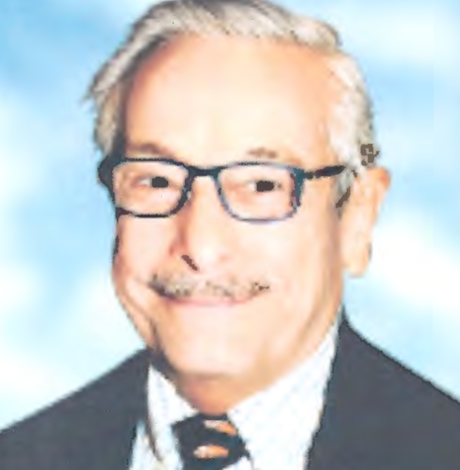
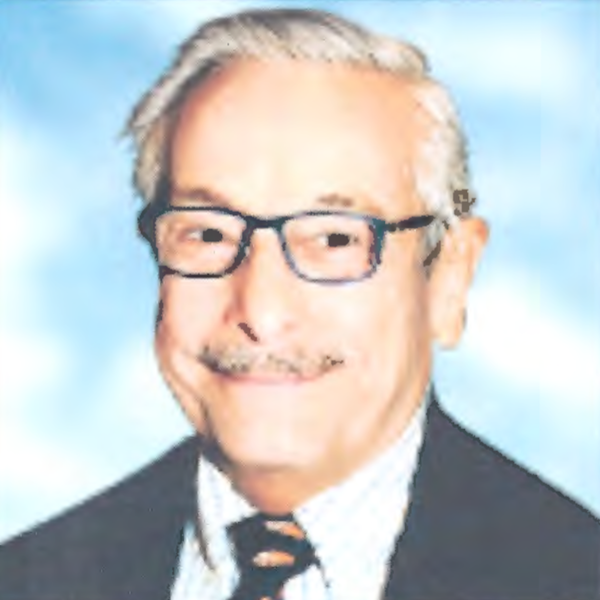
John F. Aloi (submitted photo)
Anthony John F. Aloi, a longtime Washington-area floral designer, died at the Williams House hospice of the Washington Home on June 9 of kidney failure and complications from prostate cancer, according to his partner, John Bekeny. He was 78.
Aloi, born Feb. 20, 1938, was a native Washingtonian and lifelong resident, having been born at the old Providence Hospital. In floral design, he worked for the Kelsey, Dove, Palace, Friendship, York and Caruso flower shops. His plant maintenance business serviced clients including the National Football League Players Association, the National Catholic Educational Association, the Council for Advancement and Support of Education, and the Mathematical Association of America.
Prior to entering the floral design industry, he worked for Mitchell Construction on the D.C. Stadium and Central Intelligence Agency headquarters building projects. When he learned the next project was to be the Rayburn Office Building, he decided that he didn’t want to work construction during another winter and answered an ad for a florist trainee. In the years that followed, he did the flowers for the weddings of scores of Washingtonians and also did flowers for prominent residents of the time, including Elizabeth Taylor and Lynda Carter.
He volunteered his floral design services for many years, first at St. Matthew’s Cathedral and for the past 15 years at Immaculate Conception Church. Years earlier, he volunteered floral design services to help decorate the White House for the holidays.
In January 2014, he received an official apostolic blessing from Pope Francis. Recently he was honored to be selected by the Order of Malta to journey to the prominent Catholic pilgrimage site of Lourdes, France, from which he returned in May 2016.
He was a veteran of the U.S. Marines.
Aloi was a member of Alcoholics Anonymous, where he provided continuing support to others in the fellowship. He celebrated his 31st anniversary of sobriety on June 3, 2016, while in Williams House.
He is survived by his partner of 31 years, John Bekeny of Washington, his brother Ross Trimarchi of Navarre, Fla., and sisters Victoria Hull of Ft. Walton Beach, Fla., and Jean Winchester of Bowie, Md., as well as four nieces, two nephews, and 17 cousins.
A funeral was held in June.





Cuba
Cuba marks IDAHOBiT amid heightened tensions with U.S.
Energy crisis, fears of military intervention overshadow events
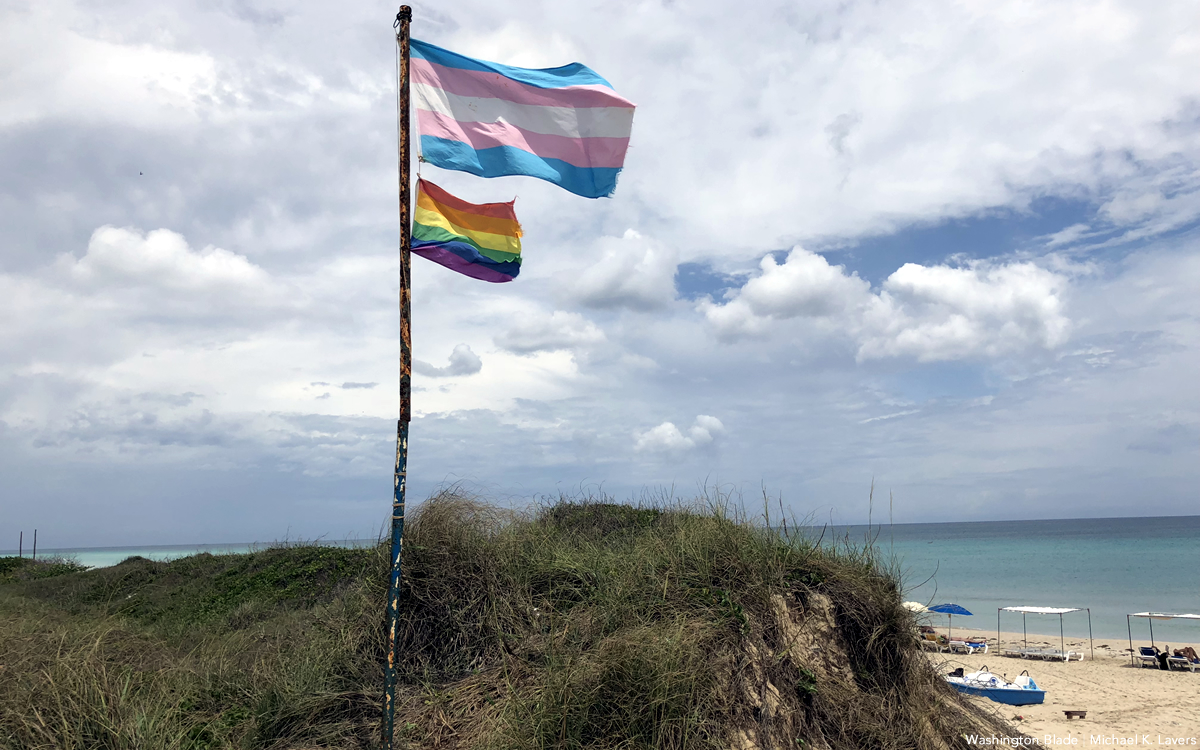
International Day Against Homophobia, Transphobia, and Biphobia commemorations took place in Cuba against the backdrop of increased tensions between the country and the U.S.
Mariela Castro, the daughter of former Cuban President Raúl Castro who is the director of the country’s National Center for Sexual Education, spoke at a Havana press conference on May 13. Mariela Castro, who is a member of Cuba’s National Assembly, also participated in an IDAHOBiT gala that took place in the Cuban capital on May 14.
CENESEX organized an IDAHOBiT event in Havana on Sunday. The group this month also put together panels and other gatherings.
‘Love is law’
IDAHOBiT commemorates the World Health Organization’s declassification of homosexuality as a mental disorder on May 17, 1990.
This year’s IDAHOBiT theme was “At the Heart of Democracy.” CENESEX-organized IDAHOBiT events took place under the “Love is Law” banner.
“On this day we remember diversity is wealth and equality is a right that does not allow exceptions,” said Cuba’s National Office of Statistics and Information on Sunday. “To say ‘no’ to homophobia, transphobia, and biphobia is to affirm Cuba is being built around the inclusion, the dignity, and the recognition of all people.”
Mariela Castro’s uncle, Fidel Castro, in the years after the 1959 Cuban revolution sent thousands of gay men and others deemed unfit for military service to labor camps known as Military Units to Aid Production.
His government forcibly quarantined people living with HIV/AIDS in state-run sanitaria until 1993. Fidel Castro in 2010 formally apologized for the labor camps, which are known by the Spanish acronym UMAP.
His brother, Raúl Castro, succeeded him as Cuba’s president in 2008. Fidel Castro died in 2016.
The Cuban constitution bans discrimination based on sexual orientation and gender identity, among other factors. Authorities, however, routinely harass and detain activists who publicly criticize the government. (The Cuban government in 2019 detained this reporter for several hours at Havana’s José Martí International Airport after he tried to enter the country to cover IDAHOBIT events. Officials then allowed him to board a flight back to the U.S.)
Same-sex couples have been able to marry on the island since 2022.
Cuba’s national health care system has offered free sex-reassignment surgeries since 2008. Activists who are critical of Mariela Castro and/or CENESEX have previously told the Washington Blade that access to these procedures is limited.
Lawmakers in 2025 amended Cuba’s Civil Registry Law to allow transgender people to legally change the gender marker on their ID documents without surgery.
Federal prosecutors to reportedly indict former Cuban president
American forces on Jan. 3 seized now former Venezuelan President Nicolás Maduro and his wife, Cilia Flores, at their home in Caracas, the Venezuelan capital, during an overnight operation.
Venezuela after Maduro’s ouster stopped oil shipments to Cuba. That, combined with a U.S. energy blockade, has caused widespread blackouts and a severe fuel shortage that has paralyzed the country.
Federal prosecutors are reportedly planning to indict Raúl Castro over his alleged role in the 1996 shooting down of four planes that Brothers to the Rescue, a Miami-based Cuban exile group, operated over the Florida Straits that separate Cuba and the Florida Keys. The Associated Press notes Raúl Castro, who is 94, was Cuba’s defense minister when the incident took place.
CIA Director John Ratcliffe on May 14 met with Raúl Castro’s grandson, Raúl Guillermo Rodríguez Castro, and other Cuban officials in Havana.
Axios on Sunday reported Cuba “has acquired” more than 300 drones and is preparing to use them to attack Guantánamo Bay, a U.S. naval base on the island’s southern coast, and other targets that include Key West, Fla., which is less than 100 miles north of the Communist country. Cuban President Miguel Díaz-Canel said Cuba is “not a threat, nor does it have aggressive plans or intentions against any country.”
“Cuba, which is already suffering from a multidimensional aggression by the U.S., does indeed have the absolute and legitimate right to defend itself against a military onslaught. This cannot, however, be logically or honestly be wielded as an excuse to wage war against the noble Cuban people.”
Las amenazas de agresión militar contra #Cuba de la mayor potencia del planeta son conocidas.
Ya la amenaza constituye un crimen internacional. De materializarse, provocará un baño de sangre de consecuencias incalculables, más el impacto destructivo para la paz y la estabilidad…
— Miguel Díaz-Canel Bermúdez (@DiazCanelB) May 18, 2026
The Comings & Goings column is about sharing the professional successes of our community. We want to recognize those landing new jobs, new clients for their business, joining boards of organizations and other achievements. Please share your successes with us at [email protected].
The Comings & Goings column also invites LGBTQ college students to share their successes with us. If you have been elected to a student government position, gotten an exciting internship, or are graduating and beginning your career with a great job, let us know so we can share your success.
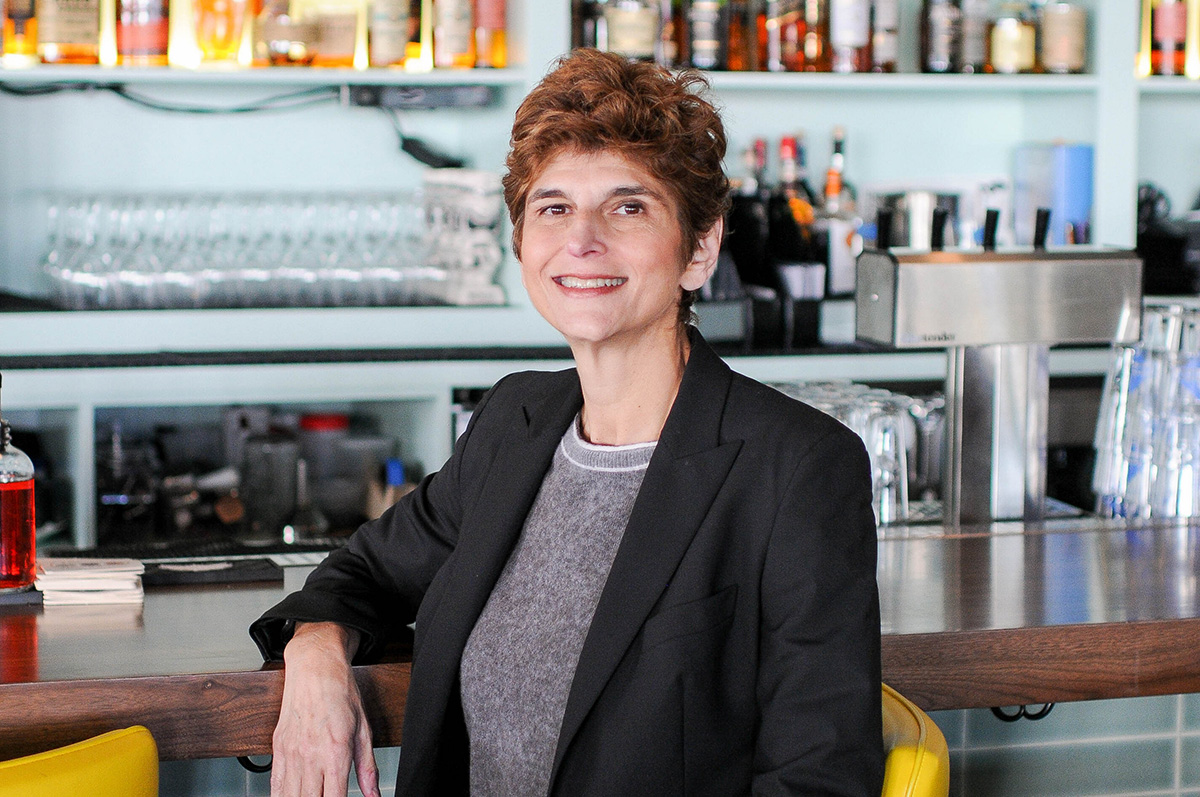
Congratulations to Jamie Leeds, chef extraordinaire, and owner of Hank’s Oyster Bars, as she ventures into some new areas. Leeds is an award-winning Washington, D.C.–area chef, restaurateur, and entrepreneur with more than three decades of experience shaping the region’s dining scene.
Her first new venture is a restaurant opening in Alexandria this week. It will be called Hank’s Pasta Bar, bringing a personalized twist to classic Italian dining with a hiddenrestaurant-inside-a-restaurant in Old Town, Alexandria. The new trattoria is above Hank’s Oyster Bar, and will feature a build-your-own menu, marking a new direction for Leeds in partnership with chef Darren Norris. Norris brings more than three decades of experience to Hank’s Pasta Bar, with a foundation grounded in Italian cooking. The grand opening was scheduled for May 14. The elevated casual eatery blends an inventive chef-driven menu with an easy-going, sit-down dining experience that puts guests in charge. Hank’s Pasta Bar bridges the gap between elevated fast casual, like Norris’s Shibuya, and full-service dining, like Leeds’s Hank’s Oyster Bar. Diners order electronically at the table, but unlike fast casuals, food and beverages are delivered on plate ware, and a server is on site at all times.
The restaurant-inside-a-restaurant, welcomes guests to dine in with a full bar, including Italian wines and craft cocktails, maintaining its focus on traditional Italian fare with contemporary touches, including a build-your-own pasta bowl experience starting at $16. Create your own pasta bowl from seven artisanal pastas (including gluten-free), nine made-in-house sauces, proteins, vegetables, and toppings. Leeds said, “It’s the kind of place you’d find down a side street in a Tuscan hill town, after being tipped off by a friend who says, ‘trust me.’ If you know, you know.”
The restaurant will continue Hank’s community partnerships, including with Real Food for Kids, supporting programs that improve school food and nutrition equity.
In addition to this you should try Jaimie’s other new venture. Back Door Taco at Hank’s in Dupont Circle. You walk down the alley from 17th Street to the back door of Hank’s, and enter a small patio to partake of great tacos and interesting cocktails.
District of Columbia
HIV Vaccine Awareness Day set for May 18
Whitman-Walker joins nationwide recognition of efforts to develop vaccine
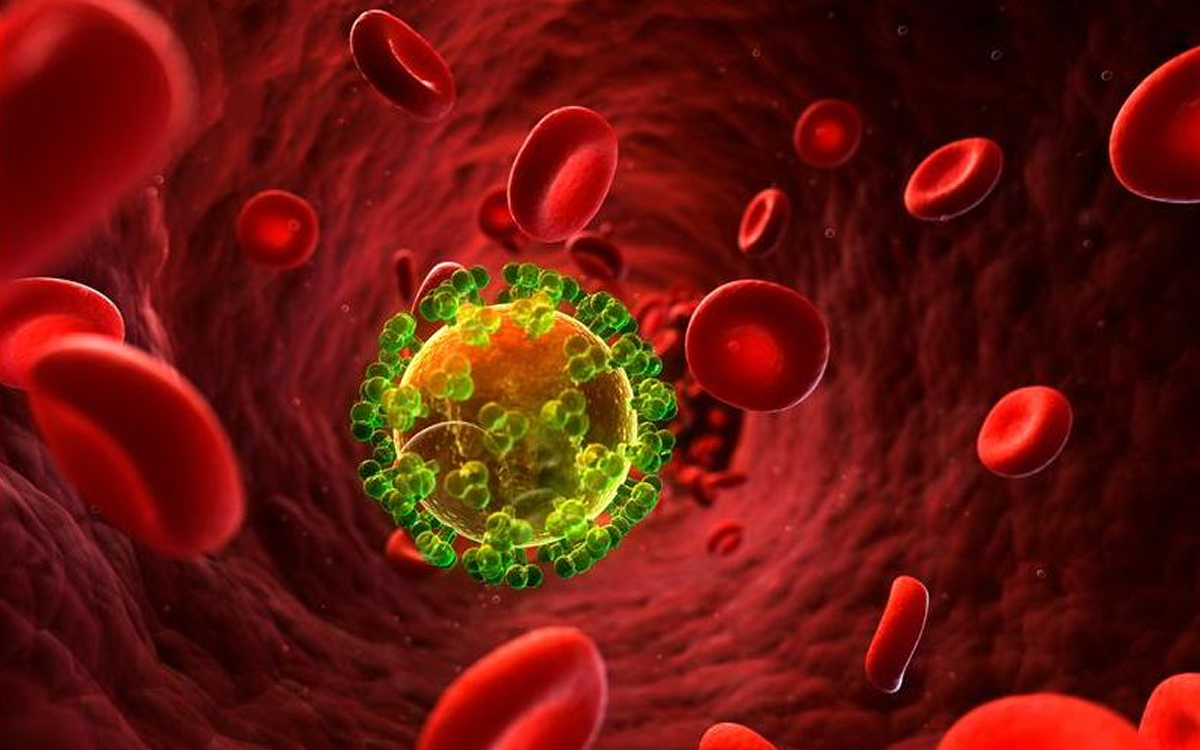
Whitman-Walker Health, the D.C.-based community healthcare center that specializes in HIV/AIDS and LGBTQ-related health services, will join health care advocates from across the country to support efforts to develop an HIV vaccine on HIV Vaccine Awareness Day on May 18.
“HIV Awareness Day, observed annually on May 18, was established to recognize and thank the volunteers, scientists, health professionals, and community members working toward a safe and effective prevention HIV vaccine,” Whitman-Walker said in a statement.
“Led by the National Institutes of Health’s National Institute of Allergy and Infectious Diseases (NIAID), the day is also an opportunity to educate communities about the critical importance of preventive HIV vaccine research,” the statement says.
It adds, “The reality is that any new vaccine discovery must be built community by community, institution by institution, and then it must reach everyone – especially the communities who have carried the heaviest burden of this epidemic.”
On its own website, the National Institutes of Health says HIV Vaccine Awareness Day also highlights its longstanding efforts, coordinated by its Office of AIDS Research, to support researchers’ efforts to develop an HIV vaccine.
“Researchers are making promising headway in efforts to develop a safe, effective HIV vaccine,” it says in a statement on its website.
A Whitman-Walker spokesperson said Whitman-Walker was not holding a specific event to observe HIV Vaccine Awareness Day, but it will recognize the day as a way of encouragement for its ongoing work to address the AIDS epidemic and support for vaccine research.
“Today, no one has to die from HIV,” said Whitman-Walker’s Health System division’s CEO, Dr. Heather Aaron in the Whitman-Walker statement. “We have the treatments, the technology, and the research to change outcomes, and yet people in our community are still dying from HIV//AIDS,” she said in the statement.
“That is unacceptable, and it is exactly why our work continues,” she added. “Here in D.C. with more focus on Southeast D.C., the Whitman-Walker Health System remains committed to making a difference through cutting-edge research, policy advocacy, and philanthropy, because fair access to life-saving treatment is not a privilege. It is a right.”

Cuba marks IDAHOBiT amid heightened tensions with U.S.

PHOTOS: Blade Summer Kickoff Party

PHOTOS: Taste of Point

Honey, have we been priced out of gay paradise?

Comings & Goings

UK government makes trans-inclusive conversion therapy ban a legislative priority

Yes, chef!

Bureau of Prisons declines to reconsider transgender inmate policy

What’s new in Rehoboth Beach for summer 2026

LGBTQ community must say NO to Janeese Lewis George
-

 United Kingdom4 days ago
UK government makes trans-inclusive conversion therapy ban a legislative priority
-
a&e features5 days ago
Yes, chef!
-
Federal Government5 days ago
Bureau of Prisons declines to reconsider transgender inmate policy
-
Rehoboth Beach5 days ago
What’s new in Rehoboth Beach for summer 2026