Books
‘Transparent’ creator shares journey in compelling new memoir
New book works despite sometimes alienating references to privileged life
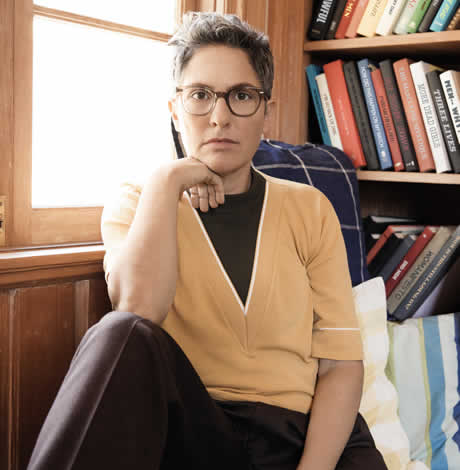
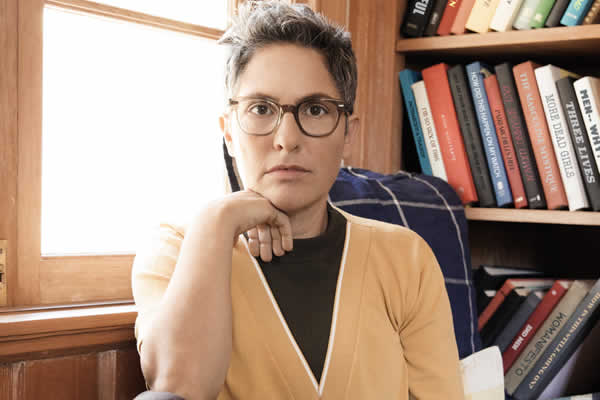
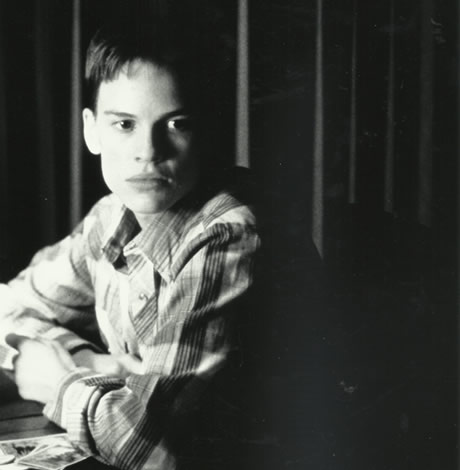
Author Jill Soloway shares their rocky road to personal acceptance in a new memoir. (Photo courtesy Crown Archtype)
‘She Wants It: Desire, Power, and Toppling the Patriarchy’
By Jill Soloway
Crown Archtype
$27
256 pages
Sometimes, coming-out memoirs are so predictable, you can recount them in your sleep. Especially, if show business, queerness and gender are involved.
This isn’t the case with “She Wants It,” the new memoir by Jill Soloway, the Emmy- and Golden Globe Award-winning creator of “Transparent.” Even Hollywood couldn’t have predicted Soloway’s account of personal and professional transformation and the way they’ve turned the complex mosaic of their life into art (Soloway identifies as non-binary and prefers the third-person plural pronoun).
“She Wants It” is an account of coming out, gender shifting and making art. Soloway’s story begins on a Sunday a few years ago. Soloway, then identifying as straight and married to her husband Bruce, is sitting at the kitchen table with their 3-year-old son Felix. Soloway’s father calls and comes out as trans over the phone.
This revelation was a catalyst for Soloway. Before their father came out, Soloway had been successful in show business as a writer and producer for “Six Feet Under,” “United States of Tara” and other TV shows. In the 1990s with their sister Faith, Soloway created “The Real Live Brady Bunch,” a loving spoof of the beloved 1970s show that developed a cult following and ran in Chicago, L.A. and in the Village in New York.
Yet Soloway felt that they’d spent too much time developing empty story ideas and being enmeshed in hetereo relationship drama.
“So much wasted energy, all of those stories and plots, poofed into the ether, belonging to any man who came through — that’s mostly what I was doing instead of making art,” Soloway writes.
After the shocking Sunday afternoon phone call, Soloway began to get in touch with their body and their creativity, falling in love with a woman, identifying as queer, then, non-binary and creating art.
“Now that I have a queer parent, getting my body in line with my mind was no longer just a flight of fancy,” Soloway writes.
“She Wants It” takes you along on Soloway’s journey from identifying as straight to non-binary to working to create a safe space to make art and to fight for social change. Soloway cuts off her long hair, stops wearing make-up and undergoes breast reduction surgery. Along the way, Soloway lets you in on how intricately art and their life are intertwined.
Soloway, never one to feel relaxed when not working, gets through emotional crises by plunging into work.
“There was only one way to get through this. … I pulled out my laptop and began working on ‘Transparent,’” Soloway writes, “The script came out so easily, like a slippery baby.”
“Transparent” was based on the author’s family experience of their father coming out as trans. Things became even more meta when Ali, a character on the show based on Jill Soloway, falls in love with Leslie, a professor, based on queer poet Eileen Myles. In a twist stranger than fiction, Soloway meets Myles when they’re on a panel. You guessed it: they fell in love.
“This is what’s wrong with writing a TV show about people who are all fragments of you,” Soloway writes. “You can never tell what comes first, the fiction or the reality.”
The vibes of gender studies and privilege in “She Wants It” are a bit much. Even if you’re a card-carrying feminist, the name checks of queer, feminist intellectuals and writers from Susan Sontag to Maggie Nelson in this memoir can be tiresome. At times, Soloway’s life seems overstuffed with perks, from having an always-sensitive therapist to going to Paris for Christmas, unattainable by lesser mortals.
Don’t be put off by this. Soloway, who grew up in an upper-middle class family in Chicago, is aware of how privileged their life is. The memoir candidly addresses issues raised when Jeffrey Tambor (a cis man) was cast as Maura in “Transparent” and, later, fired for incidents of sexual harassment. To increase Hollywood’s representation of queer people, people of color and other marginalized groups, Soloway co-founded 50/50 by 2020 Time’s Up’s activist arm.
With the Trump Administration attempting to take away the civil rights of transgender people, it’s easy to despair. “She Wants It” gives you hope that human dignity will prevail.

Books
Curl up with a good book this fall
New releases include mysteries, biographies, religion, and more
The fall books season offers lots of options so curl up and get ready to read.
FICTION
For the mystery fan who likes a sprinkle of thriller, look for “The Longest Death” by Kevin Jagernauth (Soho Crime, December). Richard Cobson hates his small town, he’s bored and desperate to get away. Stealing from his employer is the only thing that makes life bearable. That all changes when Marlon Montgomery comes to town and the two fall in love because if one guy can steal so easily, what can two do?
If you like graphic novels, try the “Tripping Over You” trilogy by Suzana Harcum and Owena White. Milo and Liam are finally able to be open about their relationship, no more hiding their love. They’re living together now, but can it last? “Tripping Over You Book 3” (First Second Books) is in stores in early November.
Also try “Diana: The Punk Singer Who Ripped Through Time” by Nate Powell (Abrams ComicArts, October). It’s about a young woman who’s trying desperately to escape her past, until a mysterious murder sidetracks her plans.
So you say you’re a romantic at heart? Then look for “Unspeakable Things: A Novel” by Elizabeth Hand (Little, Brown & Company, October). It’s a story set in the 1920s, when two young women arrive in the English Countryside to a dark and ancient manor. But, of course, nothing in a Gothic novel is easy, right? And you’ll love this tale.
NONFICTION
So this upcoming year is going to be one of exploration, right? Then look for “Free Love: Adventures in Marriage and Polyamory” by Michelle Tea (HarperOne, November). It’s a well-researched, personal, and interesting look at the lives of polyamorous couples and what it’s like to live what used to be called an “alternative” lifestyle.
If “fall” says “biography” to you, then look for “Showbiz! My Life as a Middle-Aged Man” by Murray Hill (Gallery Books, October). For decades, Hill has been making audiences laugh with his signature humor, but getting laughs hides his past all too well. He grew up in an abusive family and learning to hone his talents took some ingenuity. If you’re not a Hill fan yet, you will be, once you read this book.
For the reader who’s searching for a spiritual place, “Reading the Bible Through Queer Eyes: Good News for LGBTQ+ People from Genesis to Revelation” by podcasters Brian G. Murphy and Shannon T.L. Kearns (HarperOne, December) might help. Here, the authors look deeply at Scripture to find the queerness that’s there, proving to readers that the Word is not always what it seems.
Young readers may want to check out “Bitter Pill: Randy Shilts and the Dawn of the HIV/AIDS Epidemic” by Clement Xavier, illustrated by Heloise Cochois, foreword by Michael Lee (Abrams ComicArts, November). It’s a highly researched true story of activist Shilts, but also of Harvey Milk, and the earliest days of the AIDS crisis, when gay men needed a loud voice to advocate for them.
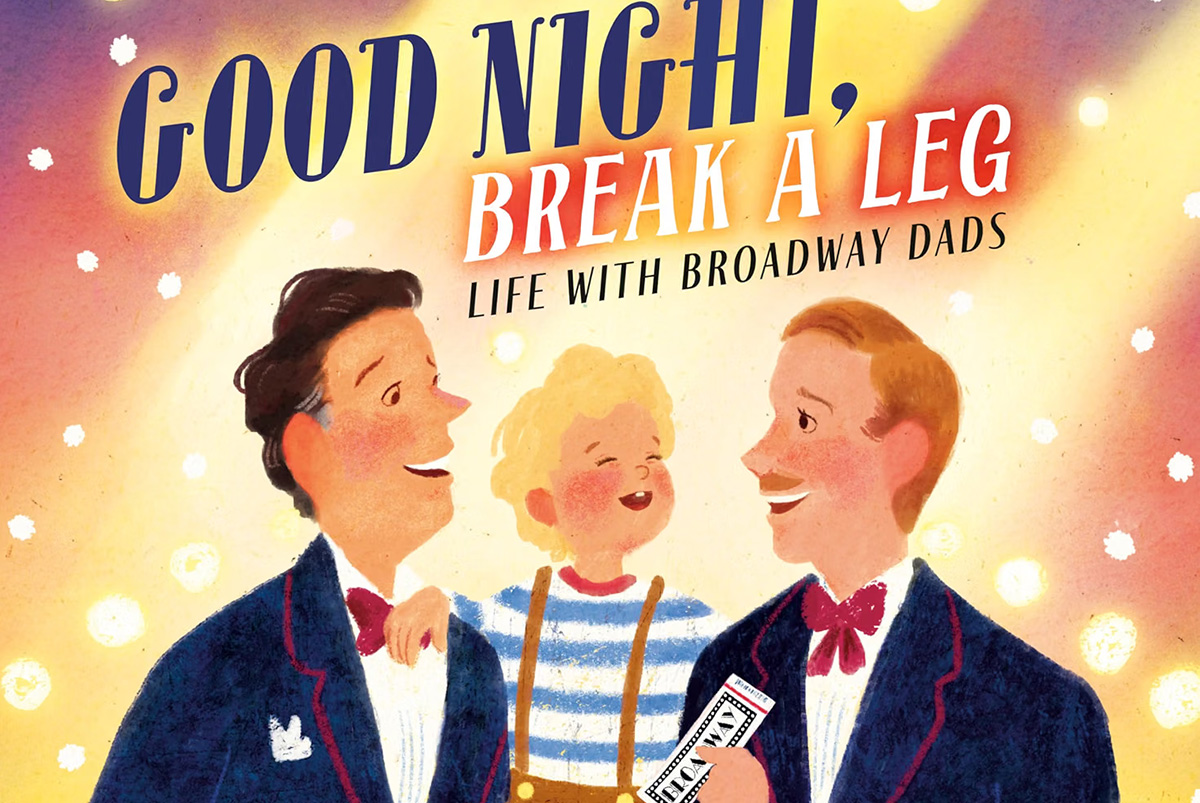
And finally, if you want a fun book for your kids or a child you love, look for “Good Night, Break a Leg: Life with Broadway Dads” by Bret Shuford, illustrated by Elena Hager (Penguin Workshop). What do parents do when they go to work? A little boy learns that his dads have very special jobs by day – and by night! It’s a cute book for kids, but a special tale for lovers of Broadway.
Be aware that publication dates change, titles change, books can be canceled, and your librarian or favorite bookseller can help you find what you need. Season’s readings!
Books
Dolly Parton biography puts her hardships into context
‘Ain’t Nobody’s Fool’ a highly researched tome not to be missed
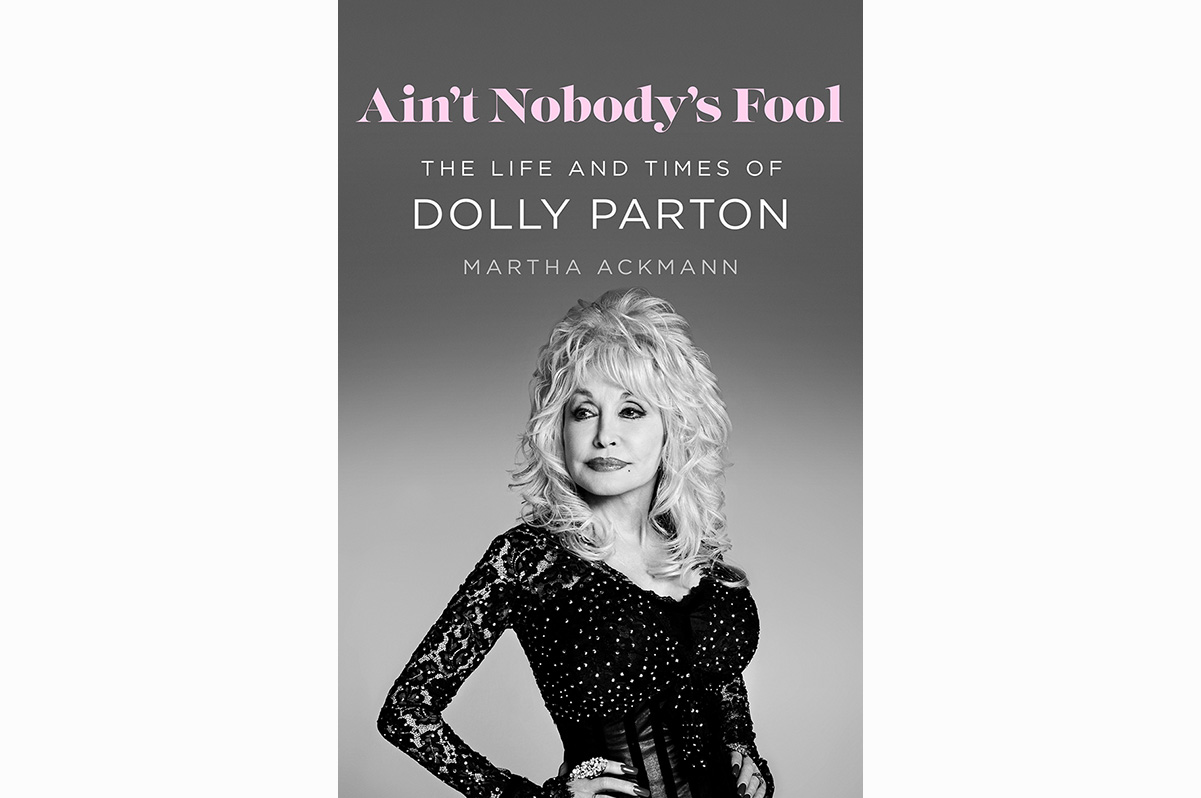
‘Ain’t Nobody’s Fool: The Life and Times of Dolly Parton’
By Martha Ackmann
c.2026, St. Martin’s Press
$30/304 pages
Not too bright.
That’s what people once thought about you. Your language didn’t conform, you had your own sense of style, and you were ignorant about modern things and places and foods. But you were no dummy. You were different, and you had a secret: as in the new biography, “Ain’t Nobody’s Fool: The Life and Times of Dolly Parton” by Martha Ackmann, you knew exactly where you were going.

When Avie Lee Owens and Lee Parton first married, they had the very basics: “two knives, two forks, two spoons, a skillet, a butcher knife, and an old iron kettle.” He was 17; she was 15. Babies came quick. The fourth one was named Dolly, after two great-aunts.
Almost from the time she could walk, Dolly sang. Before she was old enough to attend school, she wrote poetry, and she’d begun to notice rhythms and beats she could make with her fingers. As a schoolchild, she created her own musical instruments out of scraps, and she was eager to perform whenever anyone asked her – and they asked often, because Dolly Parton was a nice girl, and her sense of humor conveyed a warmth that drew people in.
Growing up in the Tennessee mountains, Parton was independent, shunning marriage and child-raising, instead focusing on a dream of being a star. By the time she was in high school, she’d had a regular gig on local television but she recognized that there were few opportunities for fame in the mountains, so she left for Nashville the day after high school graduation, with the snickers of naysayers ringing in her ears.
She stayed with an aunt and uncle there, and she beat the streets, dined on grocery store samples to get by, and missed her family and friends. And they worried about her, but they knew nothing would derail her plans. They knew Dolly would be fine.
As a friend said, “’She had her head on pretty good.’”
Chances are that if you’ve listened to music any time in the last 60 years, you’ve heard Dolly Parton through her words or her music or both. Now you need to learn more about her, and “Ain’t Nobody’s Fool” is where to do it.
Here’s a biography that grabs you on the first page with the tiniest bit of family tree, but not so much that you get bored with it. Author Martha Ackmann writes about Dolly Parton’s early life, putting hardships and experiences in context, both personally and historically. There are name-drops, but not overly so, as Ackmann takes you through Parton’s career, her heartbreaks, her marriage, and her years with Porter Wagoner, in detail but not dramatically embellished or outrageously told. It’s a biography that’s just right, sourced well and written with a fresh take that, like its subject, tells a good story.
Fans, of course, will want this highly researched book but music lovers of any age or type will eat it up. That means you, so use up that Christmas gift certificate. “Ain’t Nobody’s Fool” just shines.
The Blade may receive commissions from qualifying purchases made via this post.
Books
Historiography with heart
Pioneering author John D’Emilio continues to enlighten us in new book ‘Making Gay History’
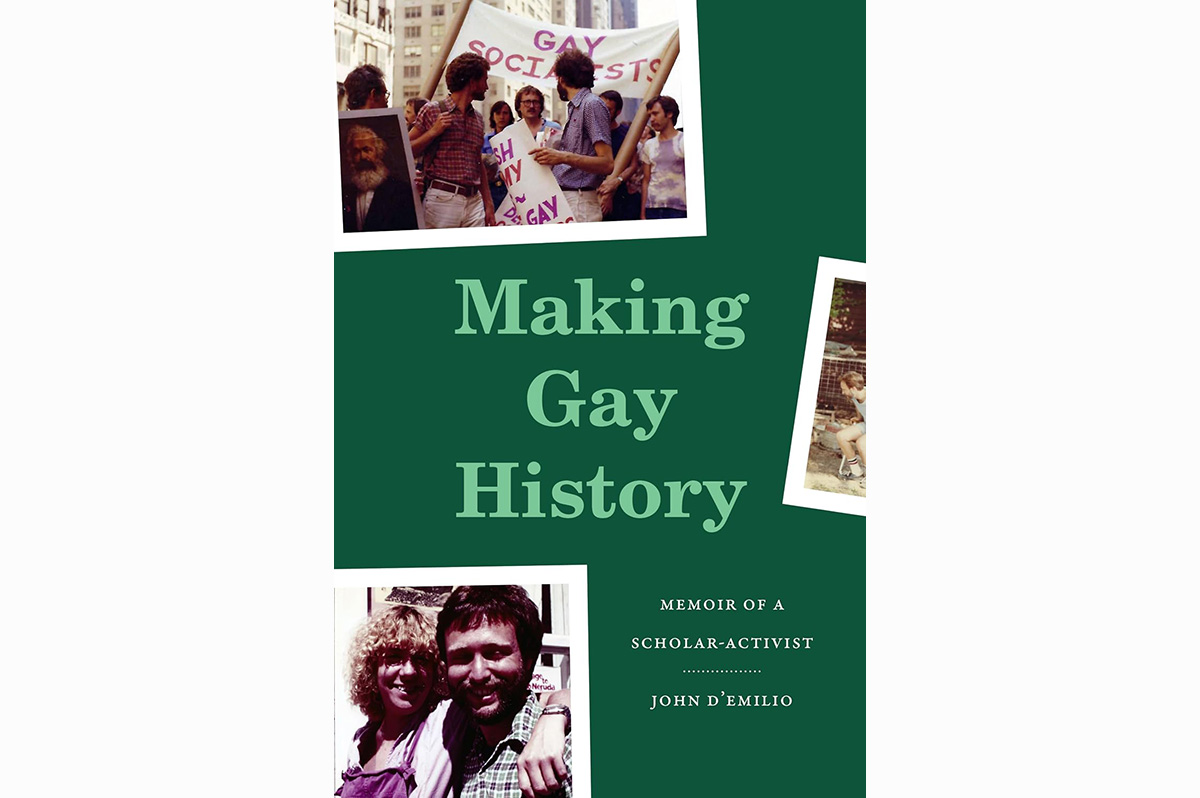
‘Making Gay History, Memoir of a Scholar-Activist’
By John D’Emilio
Dukeupress.edu/making-gay-history
“Dear Dr. Kameny,” wrote the earnest graduate history student almost 50 years ago. “As you know, the academic community only rarely deemed the lives of gay men and women to be worthy of serious scholarly study. To my knowledge, no American history faculty at a major university has yet sponsored a dissertation that deals with gays historically.”
That student was a young man from the Bronx who would change all that. His name is John D’Emilio.
“I must be able to uncover ‘manuscript’ sources, that is unpublished and unique historical materials,” he explained to D.C. gay civil rights pioneer Dr. Franklin E. Kameny who lived in a house stacked to the ceiling with “unique historical materials.” In reality, these were piles of correspondence with government officials and politicians, legal filings, mimeograph copies, gay newspapers, press releases, Mattachine Society brochures and picket signs. Frank Kameny, a self-described “pack rat,” invited D’Emilio into his private world of papers and memorabilia to begin uncovering an erased and forgotten pre-Stonewall history. This was one of many such research forays into “basements, garages and overcrowded living rooms” across America conducted by John D’Emilio. He was a young man on fire to complete a Ph.D. dissertation at the frontier of a distant galaxy — writing a scholarly gay and lesbian history backed by original research where there had been none, only a void.
Reading D’Emilio’s memoir “Making Gay History” (2026, Duke University Press) one has the sense of watching an emerging galaxy spinning around a galactic core of New York scholars and their mentors, young activists, and community historians throbbing with the New York City energy celebrated by Walt Whitman a century before in his epic poem “Mannahatta”. Spinning out of the ‘60s anti-Vietnam War activism; Marxist historical analysis, the Stonewall riots and gay liberation, we can see it coalescing around this one history student’s search for a dissertation topic and himself piecing together a new history that “no one had yet written about … a pioneering work in this newly emerging field.” D’Emilio pitches his idea for a dissertation that “spanned the length of U.S. history, moving from the religious teachings that shaped law and social attitudes … to how the federal government dealt with the increasing visibility of a homosexual world in the twentieth century.” With the blessings of Columbia’s Department of History, he completed his dissertation leading to the publication of his groundbreaking history: “Sexual Politics, Sexual Communities: The Making of a Homosexual Minority in the United States” (1983). When he received his first copy of the bound book in the mail, he “cradled the book in my arm holding it close to my chest….It was as if I had fathered a child.”
More so, D’Emilio fathered a new history. Historiography is the story of how history gets written, conducting original research, uncovering the data and creating the narrative(s) — often a snoozing read of academic process. But not this historiography. “Making Gay History” is a historiography with heart.
“Nothing was going to stop me from giving everything I had to this effort at making change in society and myself,” he declares while connecting with others who share his “boundless excitement for the collection of documents.” There were many others in this spiral with D’Emilio who are mentioned and play important roles. In the spiral were Jonathan Ned Katz (“Gay American History”, 1976); Allan Berube (“Coming Our Under Fire” 1990), Martin Duberman (“Hidden from History”, 1989); Daughters of Bilitis activists Del Martin and Barbara Gittings; Civil War historian Eric Foner and author/activist Larry Kramer. No libertarians among them. Well, maybe the divine Bette Midler who was well known for performing uptown at the Continental Baths who makes an appearance at a Washington Square rally.
He craved his parents’ approval. Among the most riveting scenes in the memoir are a series of family dinners in the Bronx with his old-school parents who go into near shock when he tells them he is gay. How to evade this any longer, especially now that his dissertation is going to be on homosexuality? It is a moving and hilarious sequence. After he says it out loud, “I am gay”: “No. No. No!” his father gasps. “This can’t be true. It can’t be.” D’Emilio thinks, “Oh my God, he’s going to die. I’ve killed my father.”
The D’Emilios — Vincent and Sophie — so resemble the wonderful Castorinis in “Moonstruck,” I am thinking “Oh my God, this is Cher coming out to her parents Cosmo and Rose.” The young graduate student survives the family dramatics even more certain that this was not just his success but “a gay liberation success.” From the family dinner table to the streets, he writes how he marched in the 1973 Pride parade beneath a banner held high: “Gay Socialists.” This man is a born scholar-activist.
D’Emilio does not seem able to pull back. There are passages that veer into autobiographical minutia, detail about the grind to earn a living from the University of North Carolina Greensboro to the University of Illinois Chicago. He writes, ”I would be living on less than half my usual salary for the year, but with the small amount of royalties that I got for my three books, plus some occasional speaking gigs and dipping into savings…”. Much of this is gray matter compared to the galaxy John D’Emilio helped energize that even now brightens our sky.
Charles Francis is president of The Mattachine Society of Washington, D.C. and author of “Archive Activism: Memoir of a ‘Uniquely Nasty’ Journey” (University of North Texas, 2023)

Trump asks Supreme Court to allow restrictions on gender-affirming care in prisons

Education Department rolls back protections for LGBTQ students under Title IX

Debbie Allen shares on loss, love, and the power of speaking out

Baltimore’s oldest gay bar to reopen this week

Dr. Fauci ‘honored to be part of’ LGBTQ history

Colombia withdraws from Equal Rights Coalition

Trump-appointed judge restores White House TV pool access

Writing a play about Lincoln leads down a rabbit hole to a closet

Philadelphia event to launch 2026 LGBT History Month

Being a female firefighter comes with unique risks, and rewards
-

 Colombia5 days ago
Colombia withdraws from Equal Rights Coalition
-
White House5 days ago
Trump-appointed judge restores White House TV pool access
-
a&e features4 days ago
Writing a play about Lincoln leads down a rabbit hole to a closet
-
National5 days ago
Philadelphia event to launch 2026 LGBT History Month