Arts & Entertainment
Calendar: Jan. 11-17
Parties, exhibits and meetings in the week to come
Friday, Jan. 11
D.C. Bear Crue hosts Bear Happy Hour at Uproar Lounge & Restaurant (639 Florida Ave., N.W.) today from 5-10 p.m. Drink specials are until 10 p.m. and include $5 rail cocktails and $5 draft pitchers. Free appetizers will be handed out throughout the night. For more details, visit facebook.com/bearhappyhour.
Trade (1410 14th St., N.W.) hosts a weekly viewing party for “RuPaul’s Drag Race All Stars 4” tonight at 8 p.m. Trade queens will host the night along with guest hosts. There will be games, prizes and more. Wessthedj will spin tracks before, during and after the episode.For more information, visit facebook.com/tradebardc.
Green Lantern (1335 Green Ct., N.W.) hosts Phucker, a hanky code party, tonight from 10 p.m.- 3 a.m. Let others know your kink with a hanky in your back pocket. Attendees will receive a free hanky upon entry. DJ Ryan DoubleYou will play music. No cover. For more details, visit greenlanterndc.com.
Gamma D.C., a support group for men in mixed-orientation relationships, meets at Luther Place Memorial Church (1226 Vermont Ave., N.W.) today from 7:30-9:30 p.m. The group is for men who are attracted to men but are currently, or were at one point, in relationships with women. For more information about the group, visit gammaindc.org.
Rock and Roll Hotel (1353 H St., N.W.) hosts Anna: Warhol Dance Party, a Andy Warhol party, tonight at 10 p.m. DJ Honey and Get Face will spin tracks. At midnight there will be performances from Creme Fatale, Washington Heights, Dee Dee Derèon, Venus Fastrada and Ariel Von Quinn.Admission is free with RSVP. There will also be an open bar and snacks from 10-11 p.m. For details, visit rockandrollhoteldc.com.
LezLink hosts its January happy hour at the Hawthorne (1336 U St., N.W.) tonight from 6-9 p.m. Lesbian, bi and queer women are invited for food, drinks and conversation. For more information, visit facebook.com/lezlinkevents.
Saturday, Jan. 12
Haute Dish: Camp, a drag brunch fundraiser for the Unite Foundation, is at 18th & U Duplex Diner (2004 18th St., N.W.) is today from 1-4 p.m. Anna G. O’Plasty, DivaD, Judy from HR, Kiana K’Naan, Mindy Nao and Tabeeda Deadhorse will perform. There will also be surprise performers from the Unite Foundation. Regyna Rubenstein hosts the show. Tickets are $50 and include one select brunch entree of your choice, one champagne cocktail or glass of Pinot Grigio and a donation to Unite. For more details, visit facebook.com/duplexdiner.
Green Lantern (1335 Green Ct., N.W.) hosts Freeballers today from 4 p.m.-3 a.m. Guests are invited to wear basketball shorts, sweat pants or anything that accentuates their lower physique. This is not a naked party. No cover. Drink specials run all night. For more information, visit greenlanterndc.com.
The D.C. Eagle (3701 Benning Rd., N.E.) hosts District: Steamwerq, a bathhouse-themed party, tonight from 10 p.m.-6 a.m. Guests can purchase a commemorative D.C. Eagle-branded towel to wear. DJ David Merrill will play music. Advance tickets are $15. Tickets at the door are $20. For more details, visit thedceagle.com.
Sunday, Jan. 13
Queer Girl Movie Night hosts a screening of “The L Word” season two at Slash Run (201 Upshur St., N.W.) today from 1-6 p.m. Episodes will run continuously through the day so stop by anytime. For more information, visit facebook.com/queergrrrlmovienight.
VisArts (155 Gibbs St., Rockville, Md.) hosts its Indie Wedding Expo today from 1-3 p.m. There will be artisans and small businesses available to help with creative and thrifty wedding ideas. Admission is free but RSVP is required. For more details, visit visartscenter.org/event/indie-wedding-expo.
The D.C. Eagle (3701 Benning Rd., N.E.) presents Sunday Cruise today from noon-2 a.m. Drink specials include $10 and $12 bottomless beer mugs, $3 off all whiskeys and bourbons and $5 Chivas Regal all day. $2 off all other drinks until 9 p.m. For more information, visit thedceagle.com.
Monday, Jan. 14
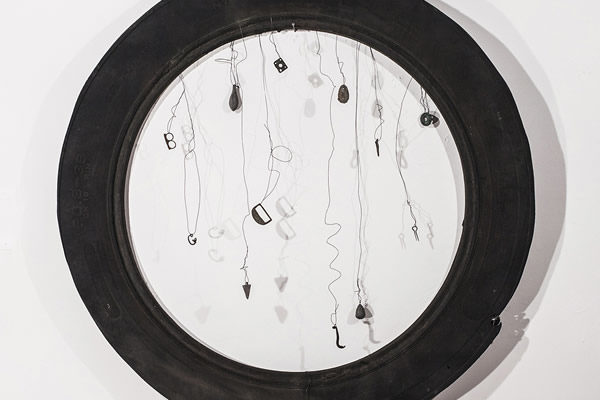
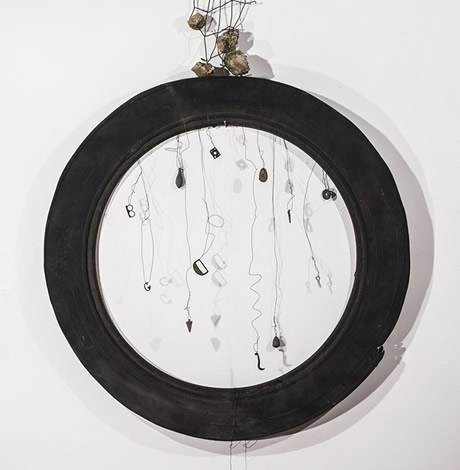
Touchstone Gallery (901 New York Ave., N.W.) presents its January exhibits today and throughout the month. Gallery A features the Touchstone Gallery Member Show. Gallery B and C will showcase “Hard Wired” by Tory Cowles. This interactive installation allows people to wear Cowles’ sculptures. For more details, visit touchstonegallery.com.
The D.C. Center (2000 14th St., N.W..) hosts coffee drop-in hours this morning from 10 a.m.-noon for the senior LGBT community. Older LGBT adults can come and enjoy complimentary coffee and conversation with other community members. For more information, visit thedccenter.org.
Tuesday, Jan. 15
The D.C. Center (2000 14th St., N.W.) hosts its Packing Party from 7-9 p.m. tonight. Volunteers will assemble safer sex kits to distribute to the LGBT community. For more details, visit thedccenter.org.
Wednesday, Jan. 16
XX+Crostino (1926 9th St., N.W.) and Taste host La Voz, a Latin karoke night, tonight from 8 p.m. midnight. Cuba Libres will be $8. No cover. For more details, visit facebook.com/xxcrostino.
Bookmen D.C., an informal gay men’s literature group, discusses David Plante’s diaries “Becoming a Londoner) at the D.C. Center (2000 14th St., N.W.) tonight at 7:30 p.m. All are welcome. For more information, visit bookmendc.blogspot.com.
Thursday, Jan. 17
Tagg Magazine hosts financial planning seminars for LGBTQ women at Human Rights Campaign (1640 Rhode Island Ave., N.W.) tonight from 6:30-8:30 p.m. Snacks and beverages will be provided. For more details, visit facebook.com/taggmagazine.
Daybreaker D.C. hosts an early morning dance party and yoga session at Renwick Gallery (1661 Pennsylvania Ave., N.W.) today from 6-9 a.m. Yoga is from 6-7 a.m. followed by the dance party from 7-9 a.m. There will be free kombucha and breakfast bites. FDVM will play music and Haile Supreme will serve as emcee. Dress code is sparkling white. Tickets for yoga and dance are $35. Tickets just for the dance are $25. For more information, visit daybreaker.com.
Movies
‘The Stranger’ queers an existentialist classic
‘Gay male gaze’ anchors film’s visual aesthetic
When Albert Camus published “L’etranger” (“The Stranger”) in 1942, he was living in Nazi-occupied France, so it’s no surprise that it became one of the most celebrated “existential” novels of all time. A fascist regime is great for inspiring thoughts of an indifferent and meaningless universe.
It wasn’t his first experience with authoritarianism. Born to a working-class white European family in then-French Algeria, he grew up observing the harsh treatment of the native North Africans by the colonists who governed them. It was this personal history, amplified by the spread of European fascism, that found its voice in “The Stranger.” Short, terse, and shrouded in a cloak of ennui, it was his first novel – novella, really – but its impact was seismic.
Naturally, its influence has run through the world of cinema, and, it has been translated to the screen three times — most recently by French filmmaker François Ozon, whose screen version won acclaim at last year’s Venice Film Festival, and is now available for on-demand streaming in the U.S.
Ozon’s vision is captured in gleaming black-and-white, blending the luster of modern-day faux-vintage fashion photography with the nostalgic flavor of classic era “arthouse” and European cinema, and it maintains a largely faithful connection to Camus’s novel, at least in terms of plot. It’s the story of Meursault (Benjamin Voisin), a French settler living in the capital city of Algiers, who receives word that his mother has died. He takes time off from work, traveling to the nursing home – where he had sent her three years before – in order to attend her funeral, but remains seemingly emotionless throughout, prompting members of the staff and other residents to mark his apparent lack of customary grief.
When he returns to Algiers, he encounters Marie (Rebecca Marder), a former co-worker, and after spending the day together, the two become romantically involved. Their relationship continues over the next few weeks, while they also associate with Meursault’s neighbor Raymond (Pierre Lottin) – a suspected pimp who, after beating his Arab mistress, is being followed and harassed by her brother (Abderrahmane Dehkani) and his friends. After a skirmish with the Arabs, Meursault encounters the brother alone during a walk on the beach, and shoots the young man dead with a pistol given to him for protection by Raymond. On trial for murder, he offers no defense and expresses no remorse. He is convicted and sentenced to death, facing it all with emotional detachment, and seeming to find liberation from the recognition that none of it matters, anyway.
Though it’s a tale that includes romance, murder, and courtroom drama, it feels like a story in which nothing really happens – which is, of course, the perfect effect to emphasize the point of Camus’s philosophical viewpoint; but while that might satisfy the kind of viewers who might be drawn to any film of a Camus novel, Ozon’s movie probably won’t hold much appeal for audiences seeking action, suspense, feel-good sentiment, or easy answers to the moral dilemmas that come hand-in-hand with being alive. Camus was interested in the opposite effect, a confrontation with existence which leaves no room for comfortable denials, and Ozon’s inflection on the original’s themes makes no effort to soften the blow.
What it does, however, is introduce – without having to adjust the narrative provided by Camus – an element of queerness that lends the whole story a new layer of subtext through what can only be described as the “gay male gaze” that anchors the film’s visual aesthetic.
It’s in the way the camera – aimed by Ozon and cinematographer Manu Dacosse – remains fixated on its star, the exquisitely beautiful Voisin, lingering on his face, his frame, or his body in swim trunks. There’s a sensuality in the way the director shows us female beauty, too, but it’s never framed as the “object” of desire; and in the narrative’s key scene – the killing by the sea – there’s an inescapable element of repressed homoeroticism, born perhaps by associations with mid-20th-century queer aesthetic of writers like Jean Genet or artists like George Quaintance, or pretentiously artsy commercials for high-end men’s cologne, or just from real-life memories of cruising on the beach. On the surface, Meursault gives no sign of queerness; but the emphasis that Ozon brings to the story – almost purely through visual suggestion – lends the character, already an outsider to the world of “normal” human experience in the first place, an even deeper sense of “otherness.”
As to that, Voisin’s performance is effective for reasons beyond his model-esque physical perfection; there’s a vast inner life happening under that pretty face, and the actor conveys it with a “less-is-more” approach that aligns perfectly with the character’s dissociation from conventional humanity. He’s compelling enough to engage us, and intelligent enough in his expression of Camus’ ideas to help us grasp them even as he makes us feel them – and frankly, that’s saying a lot.
The rest of the cast is effective, as well, though most of them serve primarily as a foil to reflect Voisin and his character. Marder brings a relatably savvy-yet-romantic presence as Marie, and Lottin gives Raymond a kind of louche charisma that evokes a certain brand of appealing-but-toxic masculinity. Swann Arlaud also stands out as the prison priest who attempts to convert Meursault on the eve of his execution, bearing the full brunt of Camus’ existentialist arguments in a scene that somehow taps into transgressive homoerotic fantasies even as its characters discuss impending death.
Camus, for his part, did not see himself as an existentialist; instead, he embraced and promoted a viewpoint in which human life is defined by its relationship with what he called “The Absurd” – the gap between reality and our assumed expectations about it, where our circumstances and behavior become obviously ridiculous – and believed that, in a meaningless universe, we are free to find our own meaning. An essay he published around the same time (“The Myth of Sisyphus”) posited that finding happiness in the struggle was perhaps the most logical response to facing an unfeeling world, and the Absurdist movement he helped to define used humor – albeit often the dark and sardonic variety – as a means to expose the madness of trying to impose sense on a nonsensical world. In the end, his writings reveal him as a deeply humanistic thinker, whose acceptance of objective reality served only to deepen his dedication to the ideal of a better mankind.
Whether or not any of that comes across in Ozon’s artful film, which emphasizes the immediacy of experience – the beach, the sea, the sun, the visceral responses we get from sex or violence – over the intellectual arguments that Camus would elucidate throughout his life, probably depends on one’s own grasp of Existentialist thinking and its offshoots. In any case, while Ozon’s “The Stranger” might fall short in the challenge to convey its philosophical arguments, it more than succeeds as a stylish piece of international art cinema, and it just might – hopefully – inspire audiences to go on a deeper dive into the mind of Albert Camus.
And even if it doesn’t, it’s still pretty to look at.
Theater
Cedric Neal on his juicy narrator role in ‘Pippin’
A rash of terrific reviews for a part he’s longed to play
‘Pippin’
Through July 26
Signature Theatre
4200 Campbell Ave.
Arlington, Va.
$47-$153
Sigtheatre.org
As Leading Player in Signature Theatre’s revival of “Pippin,” Cedric Neal portrays the manipulative narrator who guides the title character, a young medieval prince, on a quest for meaning. Neal is also receiving a rash of terrific reviews for a part he’s longed to play for some time.
Recently, after the first “Pippin” preview performance, Neal shared his thoughts. “Last night was exciting, mystic and exotic. It was magical. Words are overused, but it was all those things.”
With a powerful, rich tenor voice, Neal is best known as a charismatic West End and Broadway star (“Back to the Future,” “Hadestown,” “Guys & Dolls”) as well as for his memorable semifinalist win on the “The Voice UK” in 2019.
And now Stephen Shwartz’s “Pippin” marks Neal’s second show at Signature Theatre, a place he dearly loves. His first was as Jimmy Early in “Dreamgirls” in 2012, a raucous role that won him a Helen Hayes Award. During that production, Neal forged deep friendships with actor Nova Y. Payton and director Matthew Gardiner. What’s more, while rehearsing the show, he met his husband.
“He likes to say we met on Match.com but I remember it differently,” says Neal. “It was something called Adam4Adam. It might have been a hookup, but instead we met for coffee in Shirlington Village where we talked and talked for hours. Two years later we married.”
BLADE: Your triumphant return to town sounds pretty great.
NEAL: I’m having the time of my life. Takes me a half hour to come down after the show ends. It’s explosive.
BLADE: Is Leading Player a part you’ve wanted to do?
NEAL: Very much, and just this way. Rather than leaning on its circus troupe aspect, our director Matthew [Gardiner] explores the darkness of the story and the risk of falling prey to cultish ideology.
BLADE: Just how nefarious is Leading Player?
NEAL: I’m not judging my character. I believe at some point that Leading Player has good intentions. Somewhere along the line, ego becomes involved. The promise becomes warped.
BLADE: When doing “Pippin,” is it possible to separate the iconic Bob Fosse choreography and Ben Vereens’s sexy portrayal of Leading Player from the original production?
NEAL: Not entirely, but in our production Matthew [Gardiner] and Rachel Leigh Dolan have meticulously honored the choreography and storytelling of Fosse’s work without it being a carbon copy. I think it’s amazing.
BLADE: Was your participation in the “The Voice UK” a strategic career move?
NEAL: It was. At the time, I had just gotten a BIG NO on a West End show where the casting director told me the part should have been mine but using a then-unknown American would have created an uproar.
Then when “Voice UK” scouted me, my agent said this would be the perfect opportunity to boost my profile. Ultimately, I was given a global scale opportunity to go onstage and sing as Cedric.
BLADE: Your thrilling, original rendition of Stevie Wonder’s “Higher Ground” made the audience and judges like Jennifer Holliday and Sir Tom Jones just go crazy (in a good way). In musical theater, do you make beloved, well-known songs like “Join Us” and “Glory” in “Pippin,” your own in that same way?
NEAL: I couldn’t always, but I can now. When I talk to younger performers, I tell them about the song in “Gypsy” where the experienced strippers talk about getting a gimmick if you want to be a star.
I come from a gospel, R&B, and serious classical background and have always retained my gospel, soulful flair on things. When I entered the world of musical theater, I’d put my twist on a song and the musical director would ask that I tone it down.
Ten years into my career, I became known for putting my flair on musicals, and that became my gimmick. To “Cedricfy” a song is a legitimate term in musical theater. And you’ll see me bring that to “Pippin.”
BLADE: Reading about you, it seems you’ve made bold choices and surround yourself with supportive friends and family, blood and chosen.
NEAL: Yes, and it’s not an accident. I come from a bloodline of revolutionaries and pioneers whose shoulders I stand on. My ancestors are all fighters and refuse to let their fight be in vain. Also, I will always step up to the plate and represent all the marginalized communities that I’m a part of: Black, gay, biracial relationships, liberals.
BLADE: Are you and your husband still living in the windmill?
NEAL: We left the windmill but we’re still in the U.K. Try to imagine our story: A Black boy from the hood in Dallas, Texas, meets a fifth-generation cattle rancher from Alberta, Canada, and they move to the UK, adopt a labradoodle, and live in an actual windmill. Isn’t that the gayest shit you’ve ever heard?
BLADE: It’s like a fairytale.
NEAL: It was. It still is.
Out & About
‘How to Survive a Plague’ screens June 5
Commemorating 45th anniversary of first report of AIDS
June 5 marks the 45th anniversary of the first report of AIDS. To commemorate the occasion, Whitman-Walker Health is sponsoring a screening of the film “How to Survive a Plague” on June 5 at 5:30 p.m. at GWU Lisner Auditorium (730 21st St., N.W.).
The screening is free and you can register on Eventbrite. Other partners involved in the screening are the Center for Black Equity, Food & Friends, HIPS, and Us Helping Us.
After the film, attendees will head to Dupont Circle for a candlelight vigil at sunset.
The film reflects on lessons from the community-led response to the plague while honoring those lost to HIV and AIDS. It tells the story of activism and innovation about AIDS survival. Culled from a trove of archival footage, the film is epic and intimate, tracking a small group of people, most of them HIV-positive, in their nine-year-long battle to save their own lives, according to a statement from Whitman-Walker.
-
2026 Midterm Elections3 days agoBree Fram’s congressional campaign ends but her fight continues
-
Celebrity News3 days agoPeppermint made her mark on ‘Drag Race.’ Now, her advocacy is front and center
-
Opinions3 days agoWhy this Black Pride, I ranked Janeese Lewis George #1 for D.C. mayor
-
a&e features3 days agoFrom Media Matters to massive queer ragers: the rise of Tara Dikhof