Arts & Entertainment
‘Paris’ will ‘burn’ again, now with unseen footage
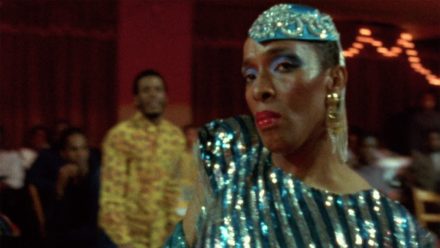
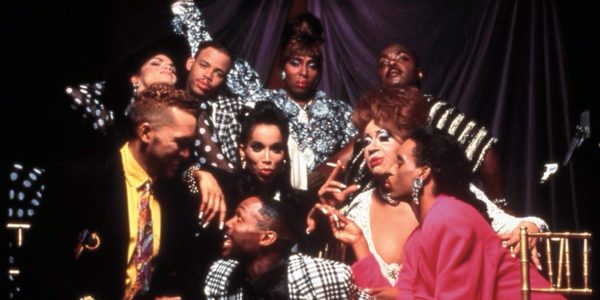
Fans of “Paris is Burning” are about to discover a whole new treasure trove of footage from the seminal 1990 documentary, thanks to Criterion.
The Criterion Collection, which focuses on licensing “important classic and contemporary films,” announced its roster of new releases for February 2020, and one of them will be none other than the now iconic documentary about New York’s underground ballroom culture. It will get the full Criterion treatment, which includes not only a restoration, but about an hour of previously unseen footage.
“Paris is Burning” chronicles the mid-to-late 1980s ball culture in New York City led by black and brown gay and transgender communities. The film includes extensive interviews from trans women such as Venus Xtravaganza – who was murdered before the film was finished – and Octavia St. Laurent. It also introduced now-familiar slang like “reading” and “shade” into the public consciousness, courtesy of Dorian Corey.
On the disc will be a new 2K digital restoration of the project, executed by the UCLA Film & Television Archive, the Sundance Institute, and Outfest UCLA Legacy Project and overseen by original director Jennie Livingston. This new version saw a limited release in theaters this past summer and is now set to hit Blu-ray in the new Criterion edition.
The newly-released footage is eagerly awaited by members of the ballroom community, who have long been pressuring Livingston to release it.
Besides the restoration and the previously unseen material, the disc will come with several other bonus features. An audio commentary will be included, as well as a conversation between Livingston, filmmaker Thomas Allen Harris, and ball community members Sol Pendavis and Freddie Pendavis – both of whom were featured in the original film.
A 1991 episode of “The Joan Rivers Show,” which featured Livingston and ball community members Corey, Pepper LaBeija, Freddie Pendavis, and Willi Ninja will also be included.
“Paris is Burning” was selected for preservation in the United States National Film Registry by the Library of Congress in 2016 for being “culturally, historically, or aesthetically significant”.
The new Criterion edition will be available February 25, 2020.




Out & About
Gay librarian to discuss new novel at Green Lantern
Gareth Carter to speak at ‘Cocktails, Chaos & Controversy’ fundraiser

Librarian, novelist, and advocate for intellectual freedom Gareth Carter will talk about his debut novel, “The Misadventures of Don Kee Dong & Phillip Mihol,” on Sunday, July 12 at 4 p.m. at Green Lantern Bar.

The event, titled “Cocktails, Chaos & Controversy” is a fundraiser for the DC LGBTQ+ Community Center Library and will celebrate queer storytelling, libraries, and Carter’s new novel.
The event will combine humor, conversation, and community. In addition to being on hand to sell and sign books, Carter will share his own journey from librarian to novelist, discuss the state of public libraries in an era of book banning, and his own challenges with one group, which served as the genesis for this novel, the first in his International Men of Mystery series.
For more details, visit Carter’s website.
The Blade may receive commissions from qualifying purchases made via this post.

Friday, July 10
Go Gay DC will host “LGBTQ+ Community Happy Hour” at 6 p.m. at Freddie’s. This is a chance to relax, make new friends, and enjoy happy hour specials at this classic retro venue. Attendance is free and more details are available on Eventbrite.
Women in their Twenties and Thirties will meet at 8 p.m. on Zoom. This is a social discussion group for queer women in the Washington, D.C. area. For more details, visit Facebook.
Saturday, July 11
Go Gay DC will host “LGBTQ+ Community Brunch” at 11 a.m. at Freddie’s Beach Bar & Restaurant. This fun weekly event brings the DMV area LGBTQ+ community, including allies, together for delicious food and conversation. Attendance is free and more details are available on Eventbrite.
“Reel Affirmations XTRA: Washington DC’s International LGBTQ+ Monthly Film Series” will present “Bookends” at 11:30 a.m. at the DC LGBTQ+ Community Center. “Bookends” is a touching love story, free popcorn, soft drinks, and conversation with your community. For more details, visit the DC Center’s website.
Sunday, July 12
“Duet: A Curated Sapphic Karaoke Dating Experience” will be at 5 p.m. at Muzette. This event is designed for single queer women and sapphics ages 35+ who are looking to meet potential romantic partners in a relaxed, low-pressure environment. For more details, visit Eventbrite.
Monday, July 13
“Center Aging: Monday Coffee Klatch” will be at 10 a.m. on Zoom. This is a social hour for older LGBTQ+ adults. Guests are encouraged to bring a beverage of choice. For more information, contact Adam ([email protected]).
Genderqueer DC will be at 7 p.m. on Zoom. This is a support group for people who identify outside of the gender binary, whether you’re bigender, agender, genderfluid, or just know that you’re not 100% cis. For more details, visit genderqueerdc.org or Facebook.
Tuesday, July 14
Coming Out Discussion Group will be at 7 p.m. on Zoom. This is a safe space to share experiences about coming out and discuss topics as it relates to doing so — by sharing struggles and victories the group allows those newly coming out and who have been out for a while to learn from others. For more details, visit the group’s Facebook.
Trans Discussion Group will be at 7 p.m. on Zoom. This event is intended to provide an emotionally and physically safe space for trans people and those who may be questioning their gender identity/expression to join together in community and learn from one another. For more details, email [email protected].
Wednesday, July 15
Job Club will be at 6 p.m. on Zoom upon request. This is a weekly job support program to help job entrants and seekers, including the long-term unemployed, improve self-confidence, motivation, resilience and productivity for effective job searches and networking — allowing participants to move away from being merely “applicants” toward being “candidates.” For more information, email [email protected] or visit thedccenter.org/careers.
Thursday, July 16
The DC Center’s Fresh Produce Program will be held all day at the DC LBTQ+ Community Center. People will be informed on Wednesday at 5:00 pm if they are picked to receive a produce box. No proof of residency or income is required. For more information, email [email protected] or call 202-682-2245.
Virtual Yoga Class will be at 7 p.m. on Zoom. This free weekly class is a combination of yoga, breathwork and meditation that allows LGBTQ+ community members to continue their healing journey with somatic and mindfulness practices. For more details, visit the DC Center’s website.
Movies
‘She’s the He’ brings gender-bending twist to teen comedy genre
Recreating raunchy nostalgia through a queer eye

No matter which generation you belong to, you have nostalgic memories of “teen comedy” movies from your adolescent years, even though you’re a little embarrassed about it today.
This is particularly true for the Gen X and Millennial crowd, who grew up with raunchy teen movies from “Fast Times at Ridgemont High” to “Porky’s” to “American Pie,” and have lived long enough to experience the shock of watching younger generations deploring them for the very raunchiness and toxic behavior that made them appealing to us in the first place.
These are exactly the type of films that are channelled in “She’s the He,” a SXSW hit and Independent Spirit Award nominee that hit VOD platforms on June 30, which strikes a nostalgic chord that conjures both the extreme “political incorrectness” and heartfelt sensitivity of the movies that inspired it – but updates the formula to add an edge that’s especially relevant in our current time.
In other words, it recreates the “raunchy teen comedy” genre through a queer eye (with a focus on the fine points of gender identity), and it’s every bit as messy, awkward, inappropriate, and “cringey” as you might hope it to be.
Written and directed by trans/nonbinary filmmaker Siobhan McCarthy, it’s a movie that might result in mixed feelings from many audiences over a story that centers on two cis-male high school seniors, Ethan (Misha Osherovich) and Alex (Nico Carney), who pretend to “come out” as trans together as a way to get close to girls.
Actually, it’s mostly Alex’s scheme to gain “access” to his crush, Sasha (Malia Pyles), and quell the rampant rumors that he and lifelong BFF Ethan are gay, reasoning that being “trans” would technically make them girls, too. It works, incredibly, in the beginning, but as a burgeoning friendship with nonbinary Forest (Tatiana Ringsby) distracts Alex from his rampant teen hormones, Ethan begins to realize that she really is trans, after all. What started out as a juvenile ploy suddenly becomes a complicated mess, and the two best friends must try to navigate their way out of it; unfortunately, Alex can’t stop scheming for sex and Ethan is struggling with the prospect of coming out to her transphobic mother (Suzanne Cryer), and needless to say, it puts a strain on their friendship. Meanwhile, there’s a whole locker room full of testosterone-charged jocks who want in on the scam themselves.
If all that sounds incredibly problematic to you, you’re not wrong – it definitely is. The entire premise, with all its nonconsensual shadiness and its hormone-driven gaslighting, seems like enough to trigger calls for “cancellation” from both sides of our divided social mediaverse; add to that the fact that the whole thing is played for laughs, as a crass and foul-mouthed sex farce about high school kids, and the movie opens itself up to an even greater level of pearl-clutching.
Like most of those teen raunch-fests of earlier generations, however, “She’s the He” is doing it all on purpose. McCarthy’s wildly “inappropriate” movie is not just some cheap sexploitation comedy, but a savagely campy assault on the attitudes and expectations of the very people that might be offended by it.
As McCarthy says in their director’s notes for the film, “By taking conservative talking points at face value and playing out their worst fears on screen, ‘She’s the He’ seeks to undermine and defang these harmful ideas while satirizing the very media that has fueled this fear-mongering.”
Among the most obvious “conservative talking points” their movie lampoons is the whole obsession around gender and bathrooms (it is, after all, a story about two cis males who essentially disguise themselves as trans so that they can get into the girl’s locker room), but there are a whole lot of others, too: the excessive concern over pronouns, the obsession over genitalia, the assumption that gender identity and sexuality are somehow synonymous, the sexed-up male fantasy of what happens between girls when they’re behind closed doors – all the typical exaggerated tropes are there, and exaggerated even further for full effect. In fact, it’s the film’s not-so-subtle subversion of the “male gaze” through a queer and feminist lens that might be its most satisfying flourish, underscoring the already absurd parody provided by Alex’s single-minded (and hilariously “incel”-ish) prioritization of his sex drive above all other considerations.
Yet what really raises “She’s the He” above the level of the crude humor it deploys has nothing to do with making fun of people, nor is it even about pushing against uptight social boundaries around sexual and/or gender expression; all the irreverent zaniness is wrapped around a deeper story about friendship, love, and growth, a journey of self-discovery and finding the courage to embrace who you really are. And at the center of it is a transgender nonbinary actor in the leading role – in itself a bold challenge to rigid expectations – with not just the talent, but the grace, nuance, and bravery to play it with full authenticity. Osherovich earned a well-deserved nomination for Best Breakthrough Performance at this year’s Independent Spirit Awards, and they’re the heart of the film.
In fact, it might be McCarthy’s deliberate choice to cast their film entirely with actors who identified in some way as queer that fuels its transgressive energy and keeps it feeling “real” even when it’s at its most ludicrously excessive. They make for a great ensemble of players, but naturally there are standouts: co-star Carney (who is also a successful standup comic, known for mining his own transmasculine experience for laughs) does a great job as Alex, endearingly unconcerned and frequently clueless about his shortcomings as he single-mindedly pursues the loss of his virginity, and his chemistry with Oserovich makes them a winning pair whenever they share the screen; Cryer brings a dose of needed maturity to the mix, while also conveying the struggle of a mom trying to navigate her child’s coming out; Pyles and Ringsby both bring the intelligence and depth to undercut our expectations of their characters; comedian Aparna Nancherla earns plenty of chuckles as a teacher haplessly trying to keep up with all the changing identities (and pronoun protocols) of her students; and knowing that the school’s entire male sports team is played by transmasculine actors adds a delicious flavor to the movie’s overall parody of conventional gender presentation that helps make its climactic “locker room showdown” scene all the more hilarious.
It’s worth noting that “She’s the He” is targeted mainly for Gen Z audiences – it’s their generation’s turn to put their stamp on the genre, after all – but older audiences needn’t feel left out; there’s plenty here that should feel universal enough for any age to enjoy; and if you’re afraid it will be too extreme, rest assured: the most shocking thing about it is that it might be the sweetest teen sex comedy you’ll ever see.
Considering they’ve been making them for decades, that’s saying a lot.

Campaign launched to elect more LGBTQ candidates to ANC seats

Gay librarian to discuss new novel at Green Lantern

Calendar: July 10-16

Gay Fla. Democrat Elijah Manley sees opportunity in Trump’s second term

Ron Singer, owner of popular Mount Vernon gay bar Leon’s, dies

‘My Favorite Sociopath’ debuts at Shepherdstown’s CATF

Under-the-radar Delaware beach towns smart buyers are targeting

In Trump’s divided America, Michael Weinstein’s AHF responds

Turkish authorities refuse to allow gay cruise to dock in country

When a church fears the rainbow
-

 Theater5 days ago
‘My Favorite Sociopath’ debuts at Shepherdstown’s CATF
-
Real Estate5 days ago
Under-the-radar Delaware beach towns smart buyers are targeting
-
Politics4 days ago
In Trump’s divided America, Michael Weinstein’s AHF responds
-
Turkey4 days ago
Turkish authorities refuse to allow gay cruise to dock in country