World
State Department launches new global LGBTQ rights fund
U.S., Sweden provided initial $5 million
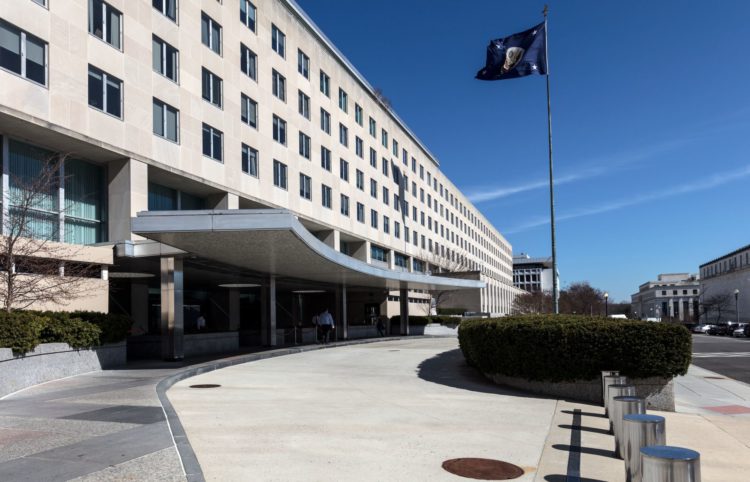
The State Department has launched a fund that seeks to bolster LGBTQ rights around the world.
A press release the State Department released on Friday says the Global LGBTQI+ Inclusive Democracy and Empowerment (GLIDE) Fund will “provide up to $5 million … to facilitate the participation and leadership of LGBTQI+ community members in democratic institutions.”
The GLIDE Fund is a program under the Global Equality Fund, a public-private partnership the U.S. helped launched in 2011 that seeks to promote LGBTQ rights around the world. A State Department spokesperson earlier this week told the Washington Blade the Swedish International Development Agency and the U.S. provided the GLIDE Fund’s initial funding.
Friday’s announcement coincides with International Human Rights Day, which commemorates the U.N. General Assembly’s ratification of the Universal Declaration of Human Rights on Dec. 10, 1948. It also took place on the last day of the White House’s Summit for Democracy.
Equal Rights Coalition reaffirms commitment to LGBTQ rights
The U.S. and other members of the Equal Rights Coalition, which seeks to promote LGBTQ rights around the world, on Friday issued a statement to “affirm that the revitalization of democracy within our own nations and around the world is essential to promoting and protecting human rights, especially for those in the most vulnerable situations including lesbian, gay, bisexual, transgender and intersex (LGBTI) persons.”
“Threats to the rule of law, rising levels of inequality, authoritarianism and corruption are eroding democracy in every region, with grave consequences for the LGBTI community, among others,” reads the statement. “Persistent criminalization of LGBTI status and ongoing violence and discrimination undermine the possibility of LGBTI persons to fully participate in democratic and political processes.”
Albania, Argentina, Australia, Belgium, Cabo Verde, Canada, Chile, Denmark, Estonia, Finland, Germany, Greece, Iceland, Italy, Lithuania, Luxembourg, Malta, Mexico, the Netherlands, New Zealand, North Macedonia, Norway, Portugal, Serbia, Sweden, the U.K. and Uruguay signed the Equal Rights Coalition statement alongside the U.S.
“Members of this coalition affirm our interest to work together over the coming year to support and empower the participation of LGBTI persons in the full range of democratic processes, including elections; political campaigns; civil society advocacy and oversight; journalism and independent reporting; and political leadership,” it reads.
The Biden administration in February issued a memorandum that committed the U.S. to promoting LGBTQ rights abroad.
The Council for Global Equality and F&M Global Barometers earlier this week released a series of report cards that rank countries on their LGBTQ rights records. The report cards indicate the U.S. continues to lag behind other countries in terms of protections based on sexual orientation and gender identity.



Kenya
Kenyan High Court issues landmark transgender rights ruling
Government ordered to allow trans people to amend ID documents
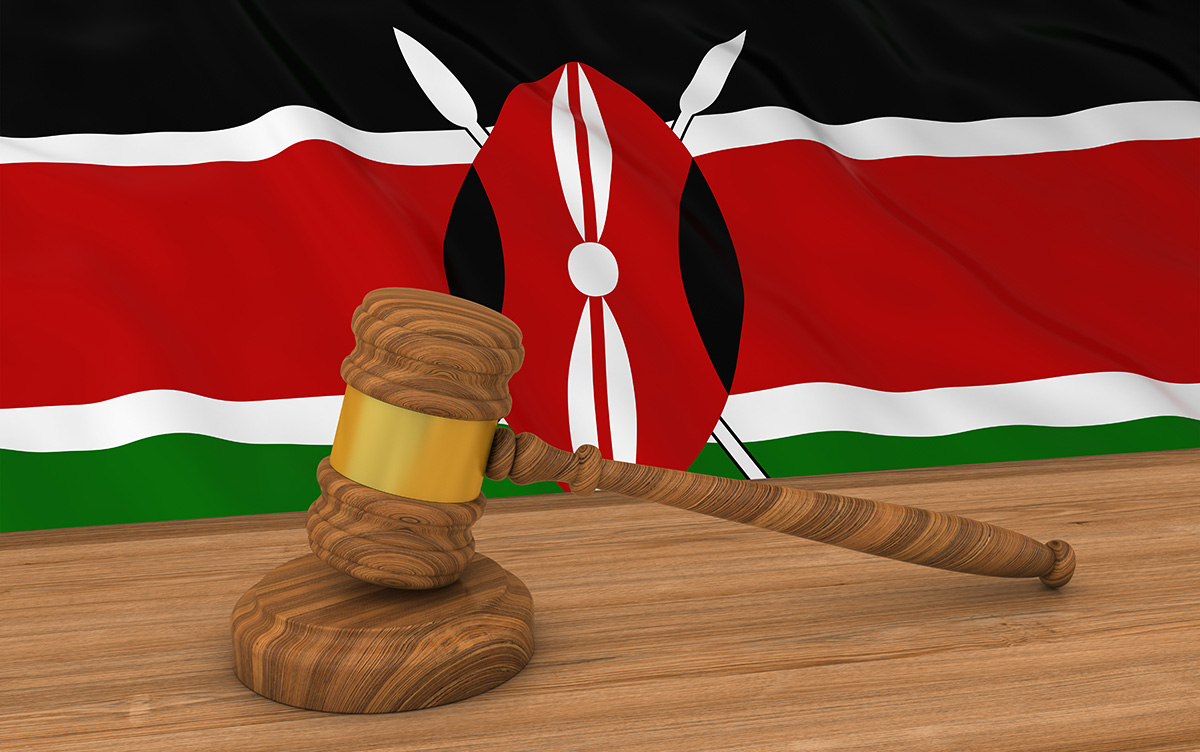
Kenya’s High Court has ruled the country’s government cannot refuse requests to amend gender markers on birth certificates and other ID documents.
Audrey Mbugua, a prominent transgender activist, and two other people in 2020 sued Attorney General Dorcas Oduor, the Registrar of Births and Deaths, the National Registration Bureau, and Immigration Services Director General Evelyn Cheluget after they did not receive amended birth certificates.
The Washington Blade previously reported the three plaintiffs argued documents that do not correspond with their gender identity “has denied them opportunities and rights.” Oduor, for her part, in response to the plaintiffs’ claims argued “a person’s gender is based on fact — not feelings — and the plaintiffs at birth were registered and named based on their gender status.”
High Court Justice Bahati Mwamuye ruled on May 20.
“The silence and delay cannot defeat rights,” ruled the court, according to the Daily Nation, a Kenyan newspaper. “Constitutional rights cannot be delayed over administrative convenience.”
The court in 2014 ordered the Kenya National Examinations Council to change Mbugua’s name on her academic diplomas and to remove the male gender marker from them.
Kenya’s intersex rights law took effect in 2022. The government in February 2025 announced intersex people can receive birth certificates with an “I” gender marker.
The Daily Nation notes Mwamuye ordered the Registrar of Deaths and Births and other government agencies to “begin receiving and considering applications for gender-marker changes within” 60 days.
“Access to legal identity documentation is not just a human rights issue; it is a foundational pillar of socio-economic inclusion,” said the Initiative for Equality and Non-Discrimination, a Kenyan advocacy group, in response to the ruling. Without accurate IDs or passports, individuals face severe barriers to employment, financial systems, global business travel, and participation in governance and democratic processes.”
“This ruling marks a critical step forward in reducing administrative discrimination and fostering an inclusive environment where every Kenyan citizen’s legal identity aligns with their dignity,” added INEND.
Outright International, a New York-based global LGBTQ and intersex advocacy group, in a statement described Mwamuye’s ruling as “a meaningful shift towards aligning Kenya’s legal framework with constitutional guarantees of equality, privacy, and human dignity. Outright International also applauded Mbugua and other activists who fought for this change.
“Today, we celebrate a milestone — one achieved through resilience, solidarity, and an unwavering belief in justice,” said the group. “Outright International stands with transgender and intersex Kenyans in honoring this victory and reaffirming our commitment to advancing rights, recognition, and equality for all.”
Cuba
When impunity meets history
Raúl Castro indicted for alleged role in shooting down Brothers to the Rescue aircraft
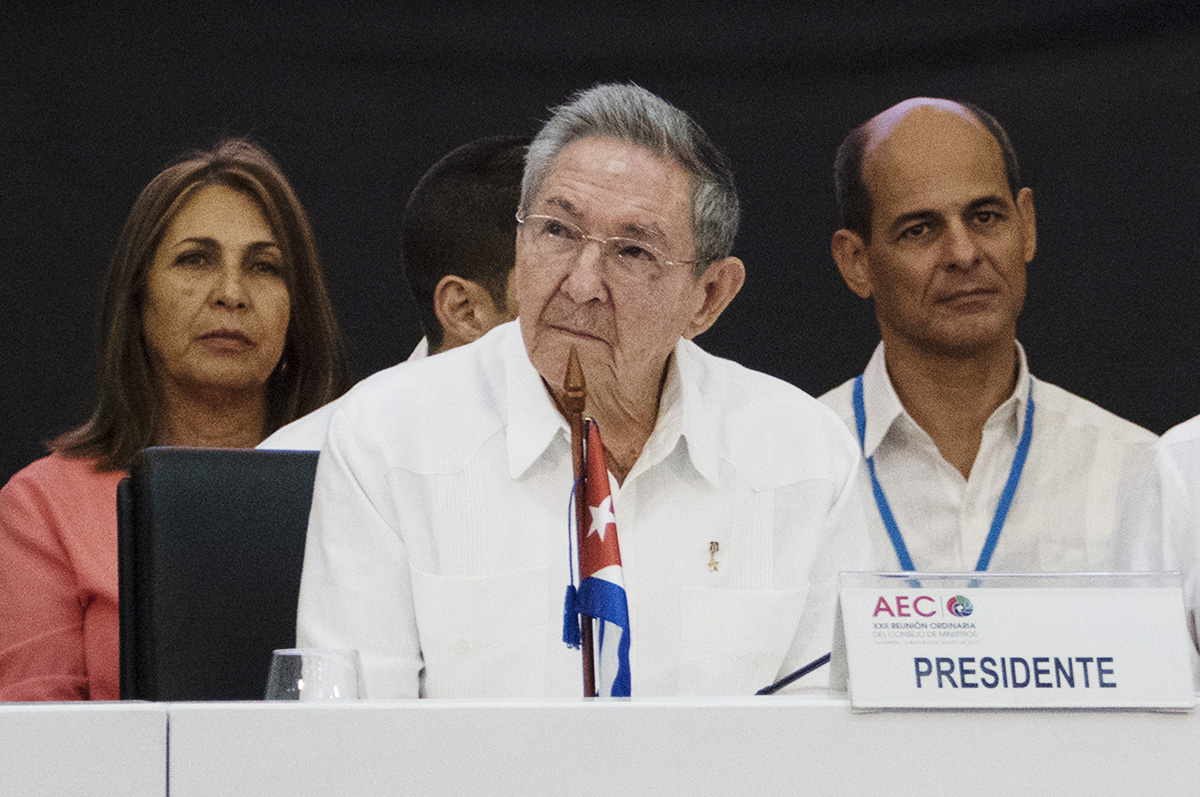
The scene would have seemed impossible only a few years ago.
The name of Raúl Castro Ruz appearing formally inside a United States federal criminal indictment. Cuba’s former general of the Army, for decades one of the most powerful figures inside the Havana regime, accused in connection with the shootdown of the Brothers to the Rescue aircraft and the deaths of American citizens in 1996. And all of it unfolding in Miami, inside the Freedom Tower, on May 20.
That detail matters.
Because this indictment arrives at one of the most fragile and politically tense moments in recent relations between Washington and Havana. It comes as Cuba faces deep economic collapse, growing political exhaustion, mass migration, blackouts, and increasing public frustration both inside and outside the island. It also arrives on a date carrying enormous symbolic weight for Cuban exiles — the anniversary of the founding of the Cuban Republic in 1902.
But the true significance of this moment goes far beyond symbolism.
What happened in Miami represents something much larger: the collapse of the idea that certain men would never face accountability.
For decades, Raúl Castro embodied the permanence of revolutionary power in Cuba. Defense minister. Military strategist. The man who oversaw the armed forces for generations. One of the central architects of the Cuban political and security apparatus built alongside Fidel Castro. A figure many believed would leave this world untouched by any court, shielded forever by power, time, and history itself.
Today the image is very different.
Today his name appears inside the language of American criminal prosecution.
And that changes the historical dimension of this case completely.
Because this is no longer simply a political accusation voiced by the Cuban exile community. It is now a formal federal criminal indictment publicly announced by the United States government against one of the highest-ranking figures in the history of the Cuban regime.
The setting itself carried enormous meaning.
The Freedom Tower is not just another building in Miami. For generations of Cuban exiles it represents memory, displacement, survival, and the beginning of a new life after fleeing Cuba. Thousands of Cubans passed through those doors after escaping the revolution. Families arrived carrying fear, uncertainty, grief, and hope all at once. Announcing these charges from that location transformed the moment into something far deeper than a legal proceeding.
And the people witnessing it were not only members of the exile community.
Among those present were relatives of the young men killed nearly 30 years ago. Families who spent decades waiting to hear words they feared might never come. Families who carried the weight of loss while believing the men responsible would never be formally accused by any court.
That emotional weight still surrounds this case.
On Feb. 24, 1996, two civilian aircraft operated by Brothers to the Rescue were shot down over the Florida Straits by Cuban military jets. Armando Alejandre Jr., Carlos Costa, Mario de la Peña, and Pablo Morales were killed. The flights were connected to humanitarian rescue efforts searching for Cubans attempting to flee the island during the migration crisis of the 1990s.
Those aircraft were not military bombers.
They were not attacking Cuba.
They were civilian planes associated with rescue operations involving Cubans risking their lives at sea.
That reality has always shaped how this tragedy lives inside the memory of the Cuban exile community.
For many, this was never viewed simply as a geopolitical conflict between hostile governments. It was seen as the use of military force against civilians connected to humanitarian missions during one of the darkest chapters in modern Cuban migration history.
But for many Cubans, the indictment reaches far beyond the Brothers to the Rescue case itself.
It touches decades of unresolved pain tied to one of the central figures behind Cuba’s military and political system.
It reaches mothers who buried sons lost in compulsory military service or in distant wars they never chose to fight. Families who spent years believing promises that were never fulfilled. Political prisoners who disappeared into silence. Relatives who watched loved ones die trying to flee the island.
And for many LGBTQ Cubans, the moment carries another layer of historical weight.
Long before official campaigns promoting tolerance and inclusion emerged from within the Cuban government, there were years of persecution, fear, forced silence, and humiliation carried out under the revolutionary system itself.
The UMAP labor camps remain one of the deepest scars in modern Cuban history. Gay men, pastors, religious believers, artists, and others considered incompatible with the revolutionary ideal were sent away under the language of “re-education” and forced labor.
In recent decades, public gestures toward LGBTQ inclusion promoted by figures close to the Cuban leadership attempted to project an image of progress and openness to the international community. But for many survivors, and for many Cuban LGBTQ people, those gestures never erased the trauma or the historical responsibility tied to the same structures of power that once persecuted them.
For many, acknowledgment without accountability still feels painfully incomplete.
That is why this indictment resonates so deeply today.
Because it arrives while Cuba once again faces profound national crisis. The island is losing entire generations through migration. Public frustration continues to grow. Economic collapse shapes daily life. And the revolutionary narrative that once projected permanence and control appears increasingly eroded by reality itself.
Against that backdrop, the image emerging from Miami becomes even more striking.
A man once viewed as untouchable by history now formally accused by the United States government and legally transformed into a fugitive wanted by American justice.
History moves slowly until suddenly it does not.
And for many Cubans, both on the island and throughout the diaspora, what happened today inside the Freedom Tower felt like witnessing something they once believed they would never live long enough to see.
As a Cuban, as an immigrant, and as someone who has lived close to that pain, one thought keeps returning tonight:
Justice takes time.
But when it finally arrives, it arrives with history behind it.
India
Iran war causes condom shortage in India
Trade disruptions have strained petrochemicals, lubricant supplies

About 80 days into the U.S.-Iran war, while much of the world struggles with oil supplies, India is confronting a different crisis: a widening condom shortage. Health activists warn the supply disruption could worsen HIV/AIDS risks in the world’s most populous country.
Disruptions in maritime trade through the Strait of Hormuz have strained supplies of petrochemicals and industrial lubricants used in condom manufacturing. The crisis has increased production costs across the sector and pushed retail prices sharply higher.
India’s condom manufacturing industry is valued at nearly $1 billion.
Production depends heavily on silicone oil and ammonia. Silicone oil, a key lubricant used in manufacturing, is in short supply. Ammonia, which stabilizes raw latex, is expected to see price increases of 40-50 percent. Rising packaging costs have added further pressure. Some manufacturers and retailers have reported condom prices increasing by as much as 50 percent.
India is home to an estimated 2.5 million people living with HIV, the world’s second-largest population of HIV-positive people, according to a 2024 report. The Health Ministry’s India HIV Estimation 2025 technical report said 5.4 percent of HIV cases in 2024-2025 were linked to transmission between men who have sex with men.
In 2024, India recorded an estimated 64,470 new HIV infections and 32,160 AIDS-related deaths nationwide. The figures marked declines of 48.69 percent and 81.42 percent, respectively, compared with 2010.
Ankit Bhuptani, an LGBTQ activist in India, told the Washington Blade that the country has made significant progress in reducing HIV infections over the past two decades. But, he said, that progress depended heavily on affordable condoms, targeted outreach programs and on-the-ground work by NGOs serving MSM and transgender people.
“Pull one thread and the whole thing loosens. What worries me about this particular shortage is that it arrives at exactly the moment when India’s LGBTQ community was beginning to access healthcare more openly after the Section 377 reading down,” said Bhuptani. “Young queer Indians in tier-two cities were just starting to trust government health systems enough to engage with them. A price spike that prices them out, or a shortage that sends them to substandard alternatives, could set that trust back by years.”
The Indian Supreme Court in 2018 struck down Section 377, a colonial-era law that criminalized consensual same-sex sexual relations.
In March, the Commerce and Industry Ministry acknowledged the difficulties faced by Indian exporters due to disruptions caused by the war in West Asia and launched a roughly $51.5 million Resilience and Logistics Intervention for Export Facilitation, or RELIEF, program. It provides credit insurance support for exporters whose shipments have been stranded because of the conflict.
“Price elasticity in sexual health products is brutal. When a condom pack goes from 20 rupees to 40, usage drops. It’s that simple,” said Bhuptani. “And when usage drops in populations with higher baseline HIV exposure, you don’t see the consequences for two or three years. Then the numbers arrive and everyone acts surprised.”
The situation has been further aggravated by the structure of India’s condom market, which operates on a high-volume, low-margin model designed to keep products affordable for a population of more than 1.4 billion people. Industry analysts say that model is now under growing pressure from rising raw material and shipping costs.
Reports in Indian media said supply constraints and price volatility involving PVC foil, aluminium foil, and packaging materials have disrupted production and complicated order fulfilment across parts of the condom manufacturing sector.
“Supply chain vulnerability assessments almost never include sexual health commodities. They should. India imports roughly 86 percent of its anhydrous ammonia from West Asian countries including Saudi Arabia, Qatar, and Oman, with that ammonia being essential for stabilizing the natural rubber latex used in domestic condom production,” said Bhuptani. “That is a documented strategic dependency that was never flagged as a risk. The Iran war converted it from a latent vulnerability into an active supply shock in a matter of weeks.”
The National AIDS Control Organization, or NACO, which oversees India’s HIV/AIDS programs, during the 2026-2027 fiscal year received an allocation of about $249 million, up from roughly $238 million the previous year. By comparison, the U.S. approved a $6 billion funding package in 2026 for global HIV/AIDS programs, according to the United Nations.
“The gay and trans community in India report high perceived HIV risk and adopted PrEP through non-profit and private channels, with cost and access remaining consistent concerns,” said Bhuptani. “The community organizations managing that risk perception are now operating in a tighter supply environment while simultaneously absorbing the downstream effects of USAID funding cuts. Health workers seeing increased anxiety among community members are observing the predictable consequence of removing redundancy from a system that had very little to begin with.”
The Washington Blade reached out to Indian condom manufacturer Manforce several times, but the company declined to comment.
Harish Iyer, an LGBTQ and equal rights activist in India, told the Blade that this is the time when the government needs to step in. Condoms, Iyer said, are not about pleasure, but about life.
“Not just in terms of HIV, it is also a source of contraception in a nation which is heavily populated. So, if there is a crisis in the condom industry, it has an adverse effect on the LGBTQ community,” said Iyer. “And eventually it has a compounding effect on the economy as well. Because if the cases of HIV wrecks to rise, if the population was to explode, it is going to have a straining effect on the economy as well. So, I think it is time that the government steps in, and condoms should be recorded as a necessity commodity rather than making it feel like any kind of commodity that some (privileged people) can afford.”
Iyer told the Blade that the government should provide condoms free of cost.
He pointed to the Nirodh Scheme, India’s long-running family planning and safe sex program launched by the government in 1968. Condoms, Iyer said, are a necessity, not a luxury product. He urged the government to classify them as essential items and either remove the Goods and Services Tax or reduce it to a minimum.
The Nirodh Scheme was launched by the Health and Family Welfare Ministry to promote contraception and prevent the spread of sexually transmitted infections, including HIV, through the nationwide distribution of subsidized and free condoms.

Man accused of threatening to shoot D.C. bar employee after making anti-gay slurs

Bree Fram’s congressional campaign ends but her fight continues

Rev. Peter Leland DeGroote dies at 86

Kenyan High Court issues landmark transgender rights ruling

Peppermint made her mark on ‘Drag Race.’ Now, her advocacy is front and center

Eight Democrats break with party as House advances ‘Don’t Say Trans’ bill

ROSENSTEIN: Marylanders should again reject Trone

Quest for fame becomes an obsession in entertaining ‘Lurker’

Here’s how to celebrate Black queer joy

When impunity meets history
-

 Congress4 days ago
Eight Democrats break with party as House advances ‘Don’t Say Trans’ bill
-
Opinions4 days ago
ROSENSTEIN: Marylanders should again reject Trone
-
Movies4 days ago
Quest for fame becomes an obsession in entertaining ‘Lurker’
-
Out & About4 days ago
Here’s how to celebrate Black queer joy