Opinions
Mandates, mandates, and more mandates
The time has come to require COVID vaccinations for all
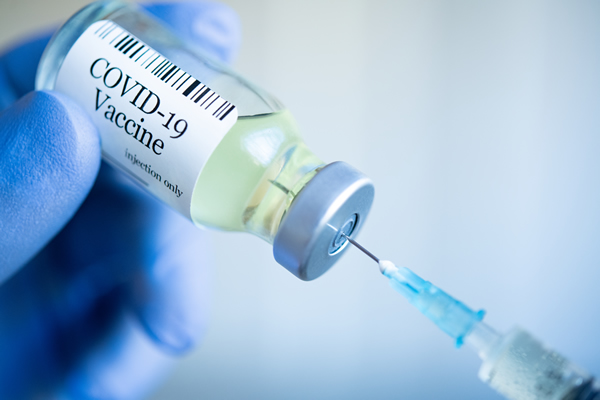
The time has come to mandate coronavirus vaccinations for everyone. People must get vaccinated and wear masks to protect themselves, their community, friends and loved ones. If they don’t have the respect for themselves and others to do this on their own it’s time to mandate they do. I was in Rehoboth Beach over New Year’s and it was sad to find servers in many restaurants and venues not wearing masks. One would think owners, out of respect, would want to protect their staff from COVID. At the same time, the Delaware governor declared a ‘State of Emergency’ so he could call on the National Guard to help overflowing hospitals.
This is a healthcare emergency! Government can and should act to protect the people. The Supreme Court agrees. The court “refused to block New York’s requirement that health care workers be vaccinated against the coronavirus even when they cite religious objections. In October the court refused to provide relief to health care workers in Maine who had made an essentially identical request in a challenge to a similar state requirement. They also rejected challenges to vaccination requirements at Indiana University, for personnel in New York City’s school system and for workers at a Massachusetts hospital. The court also rejected a challenge to a federal mandate requiring masks for air travel.” The court will hear the next challenge to government mandates on Jan. 7.
In a case filed by Oklahoma Gov. Kevin Stitt (R) regarding the National Guard, federal court Judge Stephen P. Friot “sided with Defense Secretary Lloyd Austin, who has said the mandate is needed to maintain a healthy force that is ready to act quickly.” In ruling “Friot also disagreed with Stitt’s assertion that the Pentagon was overstepping its constitutional authority, noting that Guard members are already required to receive nine immunizations.” He wrote, “Adding a tenth … vaccine to the list of nine that all service members are already required to take would hardly amount to ‘an enormous and transformative expansion [of the] regulatory authority’ the Secretary of Defense already possesses.”
Mandates are legal and we need to take this as far as possible. It’s incredible some of our highest-paid athletes, many looked up to by children in our community, say they won’t get vaccinated. Children listening to them may actually die because of them. D.C. Mayor Muriel Bowser recently took action mandating as of Jan. 15 anyone entering a restaurant, gym or entertainment venue in D.C. will have to have at least one dose of the vaccine and by Feb. 15 will have to have two doses. That finally got Wizards star Bradley Beal to get his vaccination. Guess what, not even multi-millionaire athletes are exempt from the order. It is outrageous the Wizards ever let him on the court without a vaccination. Why didn’t Ted Leonsis, who owns the team, sit him down until he got vaccinated? Why hasn’t Leonsis mandated every player and all staff on the teams his organization, Monument Sports, owns be vaccinated? Is it about money?
I grew up when polio vaccines were first available. There was no issue and all kids were vaccinated. We lined up in school for a shot or a sugar cube. Today, to attend school, children need to prove they are vaccinated for a host of diseases. Nearly fourteen diseases have been close to eliminated through vaccines. They include polio, smallpox, measles, tetanus, and rubella among others.
The fact is the coronavirus vaccine has become a political pawn and that’s tragic. Trumpism and Republicans have actually caused thousands of deaths with their rhetoric about and against vaccines and masks. It has gotten so when Trump himself now tells his supporters he was vaccinated and boosted, and suggests they do the same, they boo him.
The unvaccinated now account for most of those in hospital beds and those dying of COVID. Only 62.65% of Americans are fully vaccinated. Shameful when there is enough vaccine, at no cost, for every American five years and older to get vaccinated.
So back to the premise of this column. If people won’t act responsibly on their own, then government and businesses must act and insist, with mandates, that all Americans be vaccinated. COVID will not be the last pandemic in our lifetimes. Let us set the right protocols now for future ones making sure we will act responsibly. That means mandates for masks and vaccinations for everyone.
Peter Rosenstein is a longtime LGBTQ rights and Democratic Party activist. He writes regularly for the Blade.


Opinions
There is no Pride in detention
LGBTQ refugees, asylum seekers in detention struggle to survive

“There Is No Pride in Detention” is the name of a campaign led by Rainbow Migration, the British organization to which I contribute as part of an advisory panel.
The campaign, launched during Pride Month, highlights the fact that an unknown number of LGBTQ people are held in immigration detention in the UK. They are detained without courts or judges, in prison-like conditions, often for an unlimited amount of time.
Although detention is officially meant to be used only when someone is about to be removed from the UK, in practice most detainees are eventually released. Their detention serves no meaningful purpose other than isolation and trauma.
The campaign made me think about LGBTQ refugees in other Western countries, especially the U.S. Immigration enforcement there, particularly under Trump-era and broader MAGA-aligned politics, has become increasingly brutal toward LGBTQ refugees. The UK has its own problems, but still a very different and less problematic system in tone and practice from U.S. Immigration and Customs Enforcement.
British policing, for all its flaws, is generally far more restrained than many other systems I have encountered. UK police tend to be procedural, British policemen are generally polite, and reluctant to use force compared to what is common elsewhere. Most British policemen don’t even carry weapons if they are not dealing with a specific danger case. ICE, by contrast, has a well-documented record of brutality, aggressive attacks in detention settings and immigration facilities.
ICE does not meaningfully distinguish between queer refugees, asylum seekers, or people labelled in official rhetoric as “illegal aliens,” “drug dealers,” or “gang members.” In practice, they are all treated as deportable and faced the same level of brutality. Human rights organisations have documented widespread abuse, medical neglect, and high levels of physical and sexual violence in detention facilities, as well as verbal and physical abuse that was homophobic, transphobic, xenophobic, or racist in nature. Transgender detainees are especially vulnerable due to systemic transphobia and lack of protection.
There is a real risk that people like me — trans refugees — could end up in these systems. I am a refugee in the UK, having arrived in 2018, but the U.S. was originally the country I most wanted to reach. I have idealized the U.S. since I was a child. I was obsessed with American mass culture as a kid, followed American politics closely as a teen, and as a young adult had more American friends than local ones, and tried to understand post-Soviet politics through American diplomatic literature, including Henry Kissinger.
In 2018, I was invited to speak at a disability rights conference in the U.S. about queer autistic people in the post-USSR. At the time, I was under pressure from Russian authorities, and my hometown of Donetsk in Ukraine was already under occupation. So, of course, I intended to apply for asylum in the U.S.
Ironically, I am now grateful my visa was denied and I never made it to that conference. I was devastated at the time, but in hindsight it may have saved me from something far worse. There is an old joke: if you are late for a trip, don’t worry, you might just be late for the Titanic.
I don’t doubt I would have been able to adapt socially in the U.S. more than I adapt to Ukraine and Russia. But it doesn’t matter, because it doesn’t protect people from ICE. No one deserves the brutality reported in detention facilities, no matter how governments choose to frame them.
One example is Andry José Hernández Romero, a 31-year-old gay makeup artist who fled persecution in Venezuela. He was detained by ICE in March 2025 and deported to a maximum-security prison in El Salvador under allegations of gang affiliation. These claims were based largely on his nationality and the fact that he had tattoos, despite experts — from a criminology professor to a Venezuelan journalist who wrote a book about the gang — noting there is no reliable evidence that the Tren de Aragua gang uses identifiable tattoos. Hernández’s case seemed like something from a dark campy movie, because his “gang” tattoos were just ordinary tattoos on his hands that read “mom” and “dad.”
There’re too many other documented cases of abuse in U.S. immigration detention centers, including forced labor.
At the South Louisiana ICE Processing Center in Basile, La., detainees reported being recruited into work programs where they were paid as little as 1$ per day. Others describe harassment, sexual violence, physical abuse, and separation of same-sex families. In some cases, people attending legal asylum appointments were detained and placed into deportation proceedings.
While the UK remains comparatively more protective in some respects, recent political shifts that became obvious after the local elections in May, are deeply worrying. The rise of far-right politics, combined with increasingly restrictive immigration policies, suggests a broader global trend.
The UK Home Office has also introduced visa restrictions affecting certain countries, including Afghanistan. This has had a severe impact on Afghan women, including lesbians and bisexual women, for whom study or work visas were often the only realistic escape from Taliban rule.
This creates a situation where some of the most vulnerable people are blocked from safety pathways before they can even reach asylum systems.
Meanwhile, in both the UK and the U.S., Pride Month is increasingly marked by symbolic gestures: councils scaling back support for events, corporations quietly stepping away from visible engagement. But for LGBTQ refugees and asylum seekers, the reality is far darker.
For those in detention — or at risk of detention — Pride is not a celebration even if all corporate support and all pride parades were in place. For them, this month would be just another month to survive anyway, with or without rainbow flags on a street. And maybe we need to concentrate on their problems more than we’re concentrating on the lack of rainbow corporation logos.
Because there is no Pride in detention.
Opinions
Why I’m supporting Gary Goodweather for D.C. mayor
In a word, longtime local resident has the character for the job

Hey fellow LGBTQ+ Democrats, this is worth reading! Especially if you’re a voter in Washington, D.C. who’s planning to cast a ballot for the nomination of local candidates in the District of Columbia in 2026.
Because next Tuesday June 16 is a really Big Deal for D.C. Democrats. It’s the first time in two decades that the doors to filling the crucially important job of mayor are wide open because no incumbent is on the ballot.
That is, Mayor Muriel Bowser is not running for election. Instead she will — at last, and after three terms in office — symbolically ride off into the political sunset. And to considerable and well deserved applause. Because she’s been rightly lauded for many important accomplishments, including her well documented record of supporting the many diverse issues concerning the LGBTQ+ community.
But she’s been equally derided for her far too spineless a record recently, of (not) effectively opposing President Donald Trump and his outrageous stationing of outsider National Guard armed troops all across D.C. This despicably sad state of affairs has been a grim statement that Washington, D.C. (not being a state) is subject to the Donald’s feral instincts for nastily mean-spirited retributions. But she’s been meek and mild, and even actively complicit with Trump, when other mayors have told Trump to buzz off. And they succeeded.
But enough about Mayor Bowser. Her “sell by date” fast approaches. The old order changes. And a new day dawns.
Next Tuesday, two candidates of this old (and by now seriously outmoded) order seek to win the coveted Democratic nomination for mayor on June 16. First, there’s Janeese Lewis George, who’s a great first or second choice by any measure. And (ahem) then there’s Kenyan McDuffie.
But this is Ranked Choice Voting and it’s brand new. It’s not “either/or” binary, just like we now appreciate that sexual orientation and identity are also non-binary.
My first choice is clear because I know him. His name is Gary Goodweather. But so, who is this outsider candidate for mayor anyway?
It goes like this. First, together with his remarkable wife, successful D.C. Realtor Meredith Margolis, Gary and their two college age kids are all 20-year residents of Dupont Circle. I actually first met Gary and Meredith a year ago at a BBQ event, when he was a speaker at the historic, progressive, feminist Woman’s National Democratic Club.
So once again, who’s this Gary Goodweather? And why should you seriously consider him for your personal first or second or even third choice?
Here’s why. He’s new to politics in the conventional old paradigm of “politics.” But he knows Washington, D.C. forwards and backwards and inside and out. Because he’s been involved for many years in successful local private sector business investments, including the development of neighborhood-based BIDs, or Business Improvement Districts including the one in NoMa.
And his thinking is typically “out-of-the box.” For example, he’s currently an actual active advocate for establishing agriculture in our densely populated urban environment — through so-called “tiered gardens.” Yes, D.C., trust me, this is an actual thing. And yes, it requires street smarts to deal with challenging zoning issues; but it’s a real example of what fresh blood and new thinking and real imagination can bring to our hogtied and often over-regulated city.
Gary was in the U.S. Army and the National Guard for four years as a captain in the armored command. He earned his MBA in finance from Johns Hopkins University in night school.
If elected, Gary would be D.C.’s first Jewish mayor. (His is Reform Judaism. Repair the breach!)
He’s become my friend and I admire his intelligence and diligence and imagination and in a word his character.
Here’s what he said to me about what he calls his political North Star: “All D.C. residents should be protected, regardless of who they love. Love is love. Love who you want. Identify how you choose to be.”
Look, it’s always time for good weather in our city. Maybe it’s time for Gary Goodweather as mayor too. First choice or second choice. Then let’s all see what happens next.
David Hoffman is a freelance writer and retired federal government civil servant. He is a longtime resident of the H Street Northeast corridor. He is a member of both the Woman’s National Democratic Club and DSA, Democratic Socialists of America Metro DC chapter.
Opinions
Don’t just vote for change — vote for Hope Solomon for mayor
LGBTQ community isn’t separate from Washington’s story — it is our story
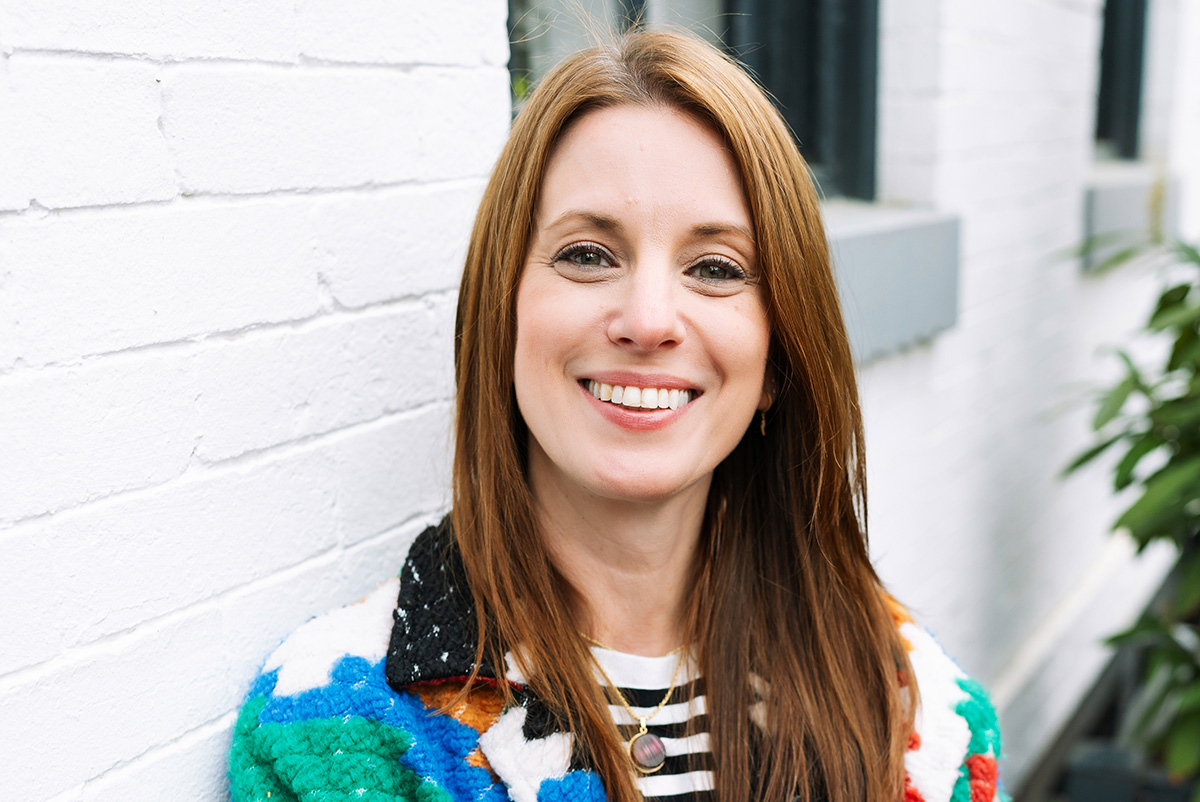
My name is Hope Solomon, and I’m running for mayor of Washington, D.C.
I’ve spent my entire life here. I attended D.C. Public Schools. I grew up working in my family’s small business here in D.C. I live in Dupont Circle. For 17 years, I worked in national security with the Department of Defense, FBI, and Department of Homeland Security. Then last July, I got DOGE’d by Elon Musk.
I don’t recommend it as a career strategy.
But it did give me something I hadn’t had in a long time: perspective.
For the first time in years, I had space to slow down and ask a simple question: Why does it feel like Washington is being run by the same small group of people playing musical chairs, while everyone else is just expected to live with the results?
That’s when I decided to run.
I wasn’t raised in Washington’s political circles. I was raised in Washington. There’s a difference.
Some of my earliest memories are going to see the AIDS Quilt on the National Mall with my mother. I didn’t fully understand it at the time, but I understood enough to know it mattered—because it made something the country had been trying not to see completely impossible to ignore.
My family’s version of a home-cooked meal has always been Annie’s or Mr. Henry’s. I grew up going to Pride, the High Heel Race, drag brunches, and drag shows. As a kid, I thought that was just what cities were like—sequins, show tunes, queens, neighbors, everything mixed together.
Turns out that wasn’t every city.
It was Washington.
The arts shaped me just as much as anything else. I started at Fillmore Arts Center, trained for years with the Washington School of Ballet, and performed across the city—from the Kennedy Center to Warner Theatre to Lisner Auditorium.
The arts taught me discipline and confidence. But more than that, they taught me something Washington has always understood: A city works when people are free to be exactly who they are.
Growing up here, LGBTQ+ Washingtonians were my neighbors, my teachers, fellow business owners, artists, friends, and family.
They helped build the Washington I know.
And that’s why this moment matters.
Washington is facing a budget crisis. Small businesses are struggling. The federal government is openly hostile toward our city. But what worries me most isn’t just policy—it’s whether we lose what makes Washington itself while trying to fix it.
Because the soul of this city is in places like Annie’s. It’s in neighborhood restaurants, small theaters, Pride celebrations, independent businesses, and the people who make this city feel like home.
As mayor, I’ll fight to protect that. I’ll stand up for LGBTQ+ rights, support LGBTQ+ youth, invest in the arts, strengthen public safety, and back the small businesses that keep our neighborhoods alive.
Most importantly, I’ll lead with the understanding that the LGBTQ+ community isn’t separate from Washington’s story.
It is Washington’s story.
If you want another career politician, you’ve got plenty of options.
If you want someone who was shaped by this city, believes in this city, and is ready to fight for this city, I’m asking for your vote.
Learn more at HopeForDC.com. On Election Day, don’t just vote for change. Vote for Hope.
Hope Solomon is a candidate for D.C. mayor.

Niger recriminalizes homosexuality

Gay San Diego mayor elected US Conference of Mayors president

Calif. governor’s race spotlights Becerra’s LGBTQ advocacy

UFC fighter says ‘Michelle Obama is a man’ at White House event

This John Waters interview has been edited for readability — but perhaps not human decency

Gay 1920s-era Hollywood star to be honored in Staunton, Va.

Blade reporters reflect on covering Pulse massacre 10 years ago

Vote Kenyan McDuffie for D.C. mayor

Your queer D.C. voting guide