Federal Government
Report details U.S. efforts to promote LGBTQ rights abroad
White House policy memo issued in 2021
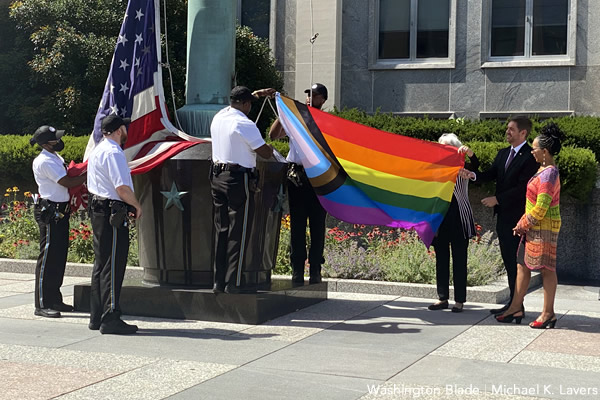
The State Department on Thursday released a report on the implementation of President Biden’s memo that committed the U.S. to the promotion of LGBTQ rights abroad.
The report notes last June’s appointment of Jessica Stern as the special U.S. envoy for the promotion of LGBTQ rights abroad and the issuance of passports with “X” gender markers that began on April 11.
Stern on Thursday told reporters during a conference call the State Department has created the Global LGBTQI+ Inclusive Democracy and Empowerment Initiative “that seeks to ensure democracies are inclusive of LGBTQI+ persons, representative of their communities and families and responsive to their needs and concerns.” Stern also noted roughly 60 percent of Peace Corp posts have implemented “specific LGBTQI+ equity practices within their operations.”
Stern highlighted the U.S. supported the inclusion of sexual orientation and gender identity in a resolution in support of “democratization and enhancing periodic and genuine elections” the U.N. General Assembly adopted last November. Stern also noted the U.S. Agency for International Development again tracks how its foreign assistance programs promote LGBTQ rights.
Chantale Wong, the U.S. director of the Asian Development Bank who is the first openly lesbian American ambassador, on Wednesday told the Washington Blade during an exclusive interview that she expects the U.S. government will endorse a proposed LGBTQ-specific safeguard for the ADB. Stern on Thursday noted the Department of Homeland Security has issued guidance to recognize informal same-sex marriages for the purposes of obtaining refugee or asylee status, even if they are not officially recognized by officials in countries of origin.”
The report also highlights how the Commerce, Defense, Justice, Labor, Treasury and Health and Human Services have implemented the memo that Biden issued in February 2021.
“This memorandum makes clear that promoting and protecting the human rights of LGBTQI+ persons is a U.S. foreign policy priority,” said Stern. “The report outlines how U.S. government agencies engaged abroad are working to become LGBTQI+ inclusive. It shows that many individual actions across the U.S. government taken as a whole create institutional change and improves the daily lives of LGBTQI+ persons.”
Secretary of State Antony Blinken in a statement echoed Stern.
“It remains vitally important that we address the violence and discrimination faced by LGBTQI+ persons while acknowledging the effects of the intersections of race and ethnicity, gender, disability, religion and national origin, to name a few,” said Blinken.
“As the report demonstrates, the U.S. government advances these priorities by supporting efforts to end the criminalization of LGBTQI+ status and conduct, seeking to protect vulnerable LGBTQI+ refugees and asylum seekers, providing foreign assistance to protect the human rights of LGBTQI+ persons and advancing non-discrimination protections, responding to human rights abuses of LGBTQI+ persons abroad, building coalitions of like-minded nations, and engaging international organizations in the fight against LGBTQI+ discrimination,” added Blinken. “Our collective efforts drive toward the goal of ending violence and discrimination on the basis of sexual orientation, gender identity or expression, and sex characteristics. Equality and equity build stronger societies for all.”
USAID Administrator Samantha Power on Thursday said the memo “was a call to action based on a simple premise: That all human beings should be treated with respect and dignity and should be able to live without fear, no matter who they are or whom they love.”
“Over the past year, as today’s report demonstrates, USAID has made important progress toward achieving these ambitions through a commitment to LGBTQI+ inclusive development in our policies and programs that reach millions of people around the world,” said Power.
The full report can be read here.






Federal Government
Texas Children’s Hospital reaches $10 million settlement with DOJ over gender-affirming care
Clinic specializing in detransition care will be established

The Justice Department announced May 15 that it has reached a settlement with Texas Children’s Hospital, one of the nation’s top pediatric hospitals.
Under the agreement, the hospital will pay more than $10 million in damages and civil penalties related to its provision of gender-affirming care and will establish a clinic specializing in detransition care.
The DOJ partnered with Texas Attorney General Ken Paxton’s office to resolve allegations that the hospital submitted false billings to public and private insurers to secure coverage for pediatric gender-affirming procedures. The department alleges the conduct violated the Federal Food, Drug, and Cosmetic Act, the False Claims Act, and federal fraud and conspiracy laws.
The settlement was reached out of court, meaning neither party formally admitted wrongdoing. Both the DOJ and Texas Children’s Hospital denied liability.
“The Justice Department will use every weapon at its disposal to end the destructive and discredited practice of so-called ‘gender-affirming care’ for children,” Acting Attorney General Todd Blanche said in a DOJ press release. “Today’s resolution protects vulnerable children, holds providers accountable, and ensures those harmed receive the care they need.”
The DOJ’s hardline stance on gender-affirming care sharply contrasts with the positions of major medical organizations, transgender healthcare advocates, and human rights groups, which broadly support gender-affirming care as an evidence-based treatment for gender dysphoria.
Adrian Shanker, former Deputy Assistant Secretary for Health Policy and Senior Advisor on LGBTQI+ Health Equity at the U.S. Department of Health and Human Services under during the Biden-Harris administration, told the Washington Blade the settlement could have sweeping consequences for trans youth and healthcare providers nationwide.
“The Trump administration’s framing of gender-affirming care is wildly inaccurate, scientifically implausible, and frankly, just mean-spirited,” Shanker told the Blade. “What’s really clear is that the science hasn’t changed, the evidence hasn’t changed — it’s only the politics that have changed. Unfortunately, the people that lose out the most with a settlement like this one are the patients that are denied access to care where they live.”
According to Shanker, the agreement also requires Texas Children’s Hospital to revoke privileges for physicians involved in providing gender-affirming care, potentially limiting their ability to practice elsewhere.
“This is a weaponized Department of Justice doing absurd investigations against providers that are providing care within the established standard of care,” he said. “They’ve come up with an absurd remedy in their settlement to require a so-called ‘detransition clinic’ to open at Texas Children’s. It’s harmful to science, it’s harmful to trans people, and it’s harmful to the medical profession.”
Shanker argued the case reflects a broader politicization of trans healthcare.
“Every American should be concerned about the weaponized Department of Justice and their obsession with trans people and their access to care,” he said. “These hospitals that provide gender-affirming care, the providers of gender-affirming care, have done nothing wrong. They followed the standards of care that are well established and followed the mountain of evidence.”
Karen Loewy, senior counsel and director of constitutional law practice at Lambda Legal, echoed those concerns.
“For Texas Children’s to capitulate to this pressure campaign of both Paxton and the Trump administration and end this care, and go after physicians who had been lawfully and faithfully taking care of their patients, it’s hard to see that as anything other than bending the knee in the face of political pressure,” Loewy told the Blade. “That’s not putting your mission above politics. Your mission is to provide health care for kids that need it.”
Loewy said the settlement reflects years of efforts by Paxton and the Trump-Vance administration to target gender-affirming care providers. Paxton has pursued investigations into providers across Texas since 2022 and supported a 2023 law banning gender-transition-related medical care for minors. Meanwhile, the Trump-Vance administration moved quickly in its second term to restrict trans healthcare access, including through Executive Order 14187, titled “Protecting Children from Chemical and Surgical Mutilation.”
“This is a perfect storm of Ken Paxton’s own mission to stigmatize and target trans young people and their healthcare in Texas with the Trump administration’s targeting of trans people and gender-affirming medical care,” Loewy said. “It is the two of them together. Without that, you wouldn’t have had this settlement.”
Loewy also emphasized that the settlement is part of a broader legal strategy targeting providers nationwide.
“You can’t view this one in isolation from all of the other administrative subpoenas that have been sent to hospitals or other kinds of medical providers that have provided gender-affirming medical care to trans adolescents,” she said. “It is all part and parcel of the same direct line from the executive orders that were issued in the first days of this Trump administration.”
“Every court that has considered those subpoenas has found them illegitimate and issued for an improper purpose, or at least narrowed them really dramatically,” she added. “Courts agree these hospitals didn’t do anything wrong. It’s the DOJ that has the problem here.”
Shanker also criticized the settlement’s requirement that the hospital establish a detransition clinic, arguing the move contradicts existing medical evidence.
“The irony shouldn’t be lost on anyone that the Trump administration is claiming that gender-affirming care lacks a scientific basis, and then is requiring the opening of a so-called detransition clinic, which certainly lacks a scientific basis,” Shanker said. “There’s less than a 1% regret rate when it comes to gender-affirming care. That’s lower than knee surgery, lower than bariatric surgery, lower than childbirth, lower than breast reconstruction, and lower than tattoos.”
Loewy was similarly blunt in her criticism.
“This is the most craven, political, ridiculous elevation of ideology over evidence,” she said. “They are creating a program built on an outcome that almost never happens. It is unprecedented and politically mandated rather than healthcare mandated.”
She said the settlement’s broader effect will be to intimidate providers and further marginalize trans people.
“The real effect here is to further stigmatize trans people and intimidate healthcare providers,” she said. “This is about sending a message nationwide that the DOJ is coming after the doctors. These are committed, faithful, law-abiding physicians and healthcare providers who just want to provide the healthcare their patients actually need.”
Both Loewy and Shanker warned that restricting access to gender-affirming care could deepen health disparities for trans people.
“We know that when transgender Americans lack the care that they need, we end up with higher rates of depression, higher rates of anxiety, higher rates of self-harm and suicidal ideation,” Shanker said. “We know that gender-affirming care is a medically appropriate, scientifically grounded form of care that resolves these challenges and leads us toward health equity. It’s unfortunate that the Trump administration has politicized not only transgender medicine, but the very basis of public health.”
Shanker said the restrictions are already prompting some trans people to relocate in search of care.
“We’re already seeing medical refugees leave states that have restricted access to care to move to states where it’s still available,” he said. “Frankly, we’ve already seen some trans people go to other countries to receive care or maintain access to care.”
Loewy said the DOJ’s recent subpoenas targeting hospitals, including those issued to NYU Langone Health in New York, suggest the administration is escalating its legal strategy.
“We’ve seen the DOJ escalate this by convening a grand jury and issuing grand jury subpoenas to hospitals,” she said. “That is going to be the next front in this fight.”
In addition to , there has been as large increase in anti-trans legislation in the past few years — with 126 federal pieces of legislation introduced this year and 26 state level policies passed across the country.
Still, Loewy pointed to recent court victories as evidence that challenges to these policies can succeed.
“Just yesterday, a state court in Kansas struck down that state’s ban on gender-affirming medical care in one of the most meticulous recognitions of the medical consensus and the harm of denying care to trans young people,” she said. “When courts actually look at the science and the impacts on trans people, they still can rule the right way.”
Asked whether there is any optimism to be found amid the ongoing legal battles, Loewy said she continues to draw hope from advocates, families, and community organizers fighting back.
“The solidarity of the community is really what brings hope,” she said. “There are incredible lawyers, advocates, families, and organizations fighting every day to protect these kids and their privacy and safety. It is that community strength and collaborative effort that continues to give me hope.”
Federal Government
Bureau of Prisons declines to reconsider transgender inmate policy
Democratic lawmakers raised concerns this week, lawsuit filed

Following a letter sent Monday by several Democratic senators raising concerns about the Federal Bureau of Prisons’ updated transgender inmate policy, the BOP responded to a request for comment from the Washington Blade, saying it does not plan to reverse the changes implemented earlier this year.
The policy was revised in 2025 to comply with President Donald Trump’s Executive Order 14168, titled “Defending Women from Gender Ideology Extremism and Restoring Biological Truth to the Federal Government.”
In a statement to the Blade, BOP spokesperson Donald Murphy said the updated policy is rooted in medical guidance and data-driven decision making.
“The BOP implemented the February 2025 policy to ensure that inmates with gender dysphoria are properly diagnosed and treated consistent with best medical practices,” he said. “Unlike the prior administration’s one-size-fits-all approach, the BOP’s new policy ensures individualized assessments and treatments. And while the previous administration’s policies on treating inmates with gender dysphoria was driven by radical ideology, the BOP’s current policy is based on medical studies, medical expert opinions, state correctional policies, caselaw, and penological concerns. Absent court order, there are no plans to reconsider or revisit the policy.”
U.S. Sens. Ed Markey (D-Mass.), Jeff Merkley (D-Ore.), and Mazie Hirono (D-Hawaii) signed the letter, arguing that the policy change fails to adequately prioritize the safety of trans inmates — protections they say are guaranteed under the Constitution.
This inquiry comes days after a federal lawsuit was filed against the Justice Department specifically on the concern that trans inmates are not receiving adequate care.
Earlier this month, the National Center for LGBTQ Rights, a legal organization focused on LGBTQ rights since 1977, filed a lawsuit in District Court of the District of Columbia against the Trump-Vance administration in collaboration with GLAD Law, Lowenstein Sandler LLP, and Wardenski P.C.
The suit, filed on May 6, alleges the administration is “ignoring federal protections” designed to prevent sexual abuse of incarcerated trans people.
“Transgender people in prison are sexually abused or assaulted at nearly 10x the rate of the general prison population,” the press release announcing the lawsuit states, adding that federal legislation was enacted to address those risks.
The plaintiff in the lawsuit, Paulina Poe, is a trans woman currently incarcerated in a men’s facility. According to the complaint, she has been “propositioned, groped, sexually harassed, and assaulted” by male inmates and subjected to strip searches by male officers — circumstances the Prison Rape Elimination Act regulations were intended to prevent.
The lawsuit also argues that the policy changes violate constitutional protections and deny trans inmates medically necessary care.
“The Eighth Amendment requires prisons and jails to provide ‘adequate medical care’ to incarcerated people which includes adequate treatment for people diagnosed with gender dysphoria,” says the Transgender Law Center. “‘Adequate medical care’ should be delivered according to accepted medical standards, such as WPATH’s Standards of Care. Some courts have said that in some circumstances ‘adequate medical care’ for gender dysphoria includes providing gender-appropriate clothing and grooming supplies, and the ability to present yourself consistent with your gender identity.”
GLAD Law Staff Attorney Sarah Austin also issued a statement when the lawsuit was announced, saying those responsible for the policy changes — and the rollback of protections under the Prison Rape Elimination Act — will be “held accountable for this egregious and lawless action.”
“The federal government’s unlawful attempt to roll back binding Prison Rape Elimination Act regulations is an especially dangerous step in its ongoing campaign to strip transgender people of legal protections,” Austin said. “The targeting of transgender incarcerated people is a deliberate choice to put vulnerable people in harm’s way simply because of who they are.”
The Justice Department has not responded to the Blade’s request for comment.
Federal Government
Senate Democrats press DOJ over anti-trans prison directives
Markey joins other lawmakers in demanding reversal of policies
U.S. Sen. Edward Markey (D-Mass.) is urging acting Attorney General Todd Blanche and William Marshall III, director of the Federal Bureau of Prisons, to reverse a policy affecting transgender inmates that lawmakers say is “endangering” their “health and safety.”
Markey, along with U.S. Sens. Jeffrey A. Merkley (D-Ore.) and Mazie K. Hirono (D-Hawaii), sent the letter that the Washington Blade verified on Monday.
The letter is a direct response to a change in prison policy that went into effect in February 2025, rolling back Biden-era protections for trans inmates. The senators described how President Trump’s Executive Order 14168, titled “Defending Women from Gender Ideology Extremism and Restoring Biological Truth to the Federal Government,” forced a policy shift they argue is rooted more in political rhetoric than in medical research or evidence-based correctional practices.
In the letter, the lawmakers wrote “On Feb. 21, 2025, the BOP issued a memo to implement President Trump’s EO, requiring BOP staff to ‘refer to individuals by their legal name or pronouns corresponding to their biological sex,’ banning the use of funds for any ‘items that align with transgender ideology,’ and suspending clothing accommodations, pat search accommodations, and support programs offered to transgender individuals.”
“In a second memo, issued one week later, the BOP banned the use of federal funds for ‘any medical procedure, treatment, or drug for the purpose of conforming an inmate’s appearance to that of the opposite sex.’ These changes have resulted in the denial — or threatened denial — of hormone treatment and gender-affirming accommodations for transgender individuals in BOP custody.”
“On Feb. 19, 2026, the BOP escalated its attacks, issuing a program statement titled, ‘Management of Inmates with Gender Dysphoria.’ It prohibits incarcerated people from receiving gender-affirming care, even if paid for with private funds. This practice forces incarcerated people to discontinue care, regardless of medical recommendations.”
The senators continued, “The agency has repeatedly enacted policies that strip transgender individuals of their gender identity and dignity. This includes requiring staff to refer to transgender individuals by pronouns that ‘align with their biological sex’ rather than gender identity and to confiscate gender-affirming items, such as undergarments, clothing, cosmetics, and wigs.”
“These policies risk triggering mental health crises, including increased suicidality, among incarcerated people with gender dysphoria. The BOP’s repeated guidance to roll back gender-affirming protections — despite a federal court order finding that the BOP’s actions to discontinue gender-affirming care are likely unlawful — generate confusion about the current state of regulations and convey the BOP’s indifference to court orders and the rule of law.”
“By stripping away appropriate medical and psychiatric care, safety protections, and measures to provide dignity, the BOP is exposing transgender individuals to significant harm.”
The Marshall Project, a nonprofit newsroom focused on the U.S. criminal justice system and immigration enforcement through data-driven reporting, also reported on the policy change. The outlet spoke with Shana Knizhnik, an attorney with the American Civil Liberties Union, about the impact of the changes.
“It’s clear that this new policy is a ban on gender affirming healthcare,” Knizhnik, who works for the nationwide chapter of the ACLU said. “This is a policy that disregards the medical needs of our plaintiffs.”
The letter also asked the BOP and the DOJ specific questions regarding why the policy went into effect, as lawmakers suggested the changes appear politically motivated rather than based on new medical evidence regarding treatment for trans inmates.
The senators requested answers to these trans policy-specific questions by May 21, including:
“Does the BOP plan to monitor and assess the impacts of recent policies that eliminate gender-affirming medical and psychiatric care?”
“Since January 20, 2025, how many transgender, nonbinary, intersex, and gender-diverse individuals have been transferred to a different facility to meet the EO’s goal of housing individuals ‘according to their biological sex?’”
“Given that the BOP has stopped enforcing Prison Rape Elimination Act regulations related to gender identity and collecting data on gender identity, how will the BOP protect the physical and emotional health and safety of incarcerated transgender individuals?”
“How does the BOP plan to monitor and assess the impact of eliminating protections against sexual violence for this population?”
“Does the BOP plan to institute a specific process by which transgender individuals may seek assistance or lodge complaints regarding harms they experience from the recent BOP policies and actions implementing President Trump’s EO?”
“Describe the specific criteria the BOP intends to use to determine whether it will allow a ‘social accommodation’ for gender dysphoria.”
Markey also included a personal statement to the Blade explaining why he is using his position on Capitol Hill to push for more information and advocate for reversing the policy.
“This administration continuously shows their contempt for trans people and a total disregard for their rights and humanity. As part of this cruel campaign, the Bureau of Prisons has systematically stripped health care access and basic protections from trans people, abandoning its duty to the people in its custody. I won’t stop fighting until this administration’s hateful anti-trans policies are reversed and trans people’s rights are secured.”
The Blade reached out to the DOJ and the BOP for comment but had not received a response at press time.

PHOTOS: Black Pride Opening Reception

PHOTOS: Black Pride Pageant and Unity Ball

PHOTOS: Helen Hayes Awards

A magical Mercedes

When impunity meets history

Vt. lawmaker equates transgender identity with bestiality

BREAKING NEWS: Barney Frank dies at 86

U.S. attorney nominee confirmed despite anti-LGBTQ history, no trial experience

Gay Men’s Chorus celebrates 45 years at annual gala

Intersex lives, constitutional freedom, and the dangerous future of Ghana’s Human Sexual Rights and Family Values Bill
-

 Vermont4 days ago
Vt. lawmaker equates transgender identity with bestiality
-
National5 days ago
BREAKING NEWS: Barney Frank dies at 86
-
Wyoming4 days ago
U.S. attorney nominee confirmed despite anti-LGBTQ history, no trial experience
-
a&e features5 days ago
Gay Men’s Chorus celebrates 45 years at annual gala