District of Columbia
Will D.C. host World Pride 2025 after Taiwan cancellation?
InterPride organizers mum on selection of new host city
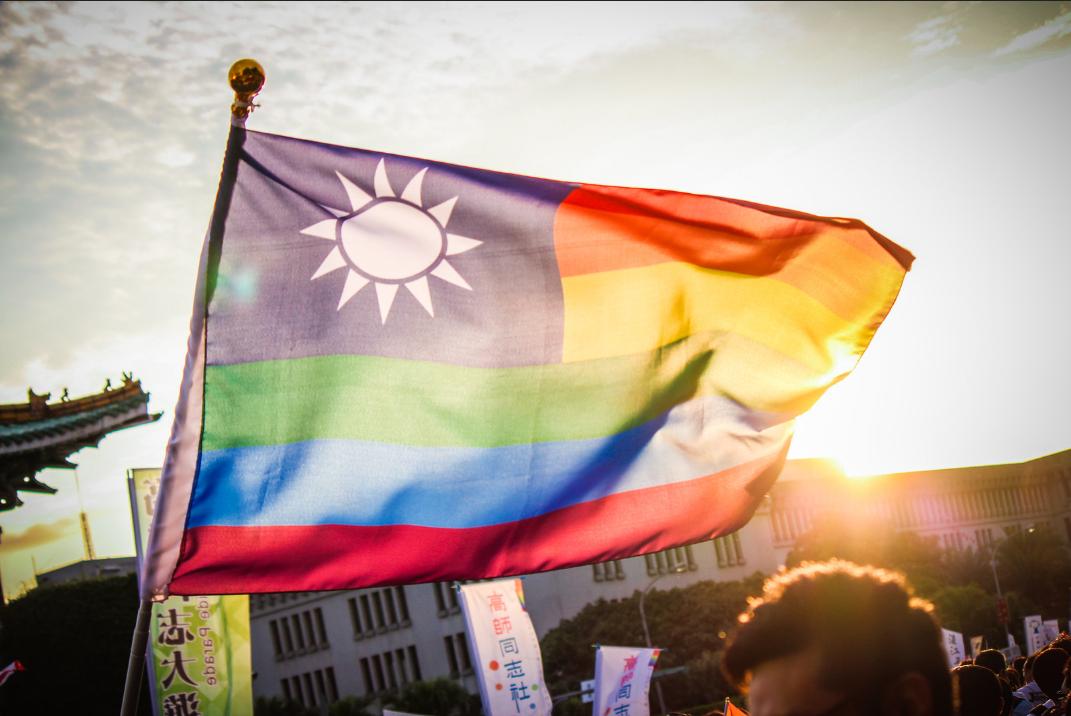
A surprise announcement last week by Taiwanese organizers of World Pride Taiwan 2025 that they have withdrawn their agreement to host the international Pride event has raised the immediate question of whether the event will be moved to Washington, D.C., which lost its bid to host the event to Taiwan.
Capital Pride Alliance, the group that organizes D.C.’s annual Pride events, submitted a bid for D.C. to become the host city last September with the support of D.C. Mayor Muriel Bowser and city agencies that help organize large events.
World Pride Taiwan 2025 is the group that won its 2021 bid to host World Pride 2025 in the Taiwanese port city of Kaohsiung. The group said in a statement that it decided to cancel its role as the host for World Pride following a dispute with InterPride, the U.S.-based international organization that founded and administers World Pride, and that selects the host city.
World Pride, an international event that takes place every two years, draws thousands of participants from throughout the world to the host city.
Although disagreements had surfaced over whether World Pride Taiwan had the economic capacity to host an international event like World Pride, the group said in its statement that the issue that prompted the cancellation was InterPride’s insistence that the name “Taiwan” could not be used in the title of the event and only the name World Pride Kaohsiung 2025 could be used.
According to the statement, the name “Taiwan Pride” has symbolic significance for the Taiwanese LGBTQ community, among other reasons, because all the island nation’s Pride events since 2003 have used the name Taiwan Pride.
In its own statement, InterPride said all past World Pride events have used the name of the host city rather than the country in which the city is located. In its statement, it said it offered a compromise allowing Taiwanese organizers to call the event “World Pride Kaohsiung, Taiwan,” a claim Taiwanese organizers dispute.
The Washington Blade couldn’t immediately reach an official or spokesperson for InterPride to determine whether it plans to reopen the bidding process to select another city to host World Pride 2025 or whether it would invite D.C.’s Capital Pride Alliance to host the event on behalf of D.C.
Capital Pride Alliance submitted what it said was a comprehensive bid last September calling on InterPride to select D.C. as the World Pride 2025 host. Capital Pride and the Taiwanese group were the only two organizations to submit a bid for World Pride 2025.
When InterPride announced last November that it had selected the Taiwanese city of Kaohsiung to host the international event, Capital Pride issued a statement congratulating Kaohsiung Pride and World Pride Taiwan 2025 for winning the bid.
Ryan Bos, the Capital Pride Alliance executive director, told the Blade on Wednesday that as of early this week InterPride had not contacted Capital Pride Alliance about the Taiwanese group’s decision to cancel the event. He said Capital Pride learned about the cancellation from news media reports.
Asked if Capital Pride plans to reactivate its bid to host World Pride 2025, Bos did not offer a direct answer.
“We definitely need to have conversations about it,” he said. “We definitely would be open to the conversation. Our team put in a lot of time and effort to put together a very comprehensive and strong bid,” Bos said. “D.C. is a worthy destination, and we can truly make a major impact on the world stage by hosting an event such as this,” Bos said. “So, we would be open to entertaining the conversation.”
Bos pointed to Capital Pride’s announcement at the time it submitted its bid to host World Pride 2025 last September that hosting the event in 2025 would come at a time when Capital Pride plans to commemorate the 50th anniversary of D.C.’s first LGBTQ Pride event in 1975, which began as a block party near Dupont Circle.
“So, though we were not selected last fall, we have been moving forward in organizing an international Pride event for 2025 on the world stage for our 50th anniversary,” Bos said. “So, regardless of what happens, we will be continuing down that path.”
Bos said Capital Pride Alliance officials will also be attending InterPride’s annual international conference this October in Guadalajara, Mexico, which is held each year in connection with InterPride’s role as an association of LGBTQ Pride organizations throughout the world. Bos said the issue of selecting a new host city for World Pride 2025 could emerge as a topic of discussion at that conference.
World Pride Taiwan 2025 organizers said in their statement that InterPride did not insist on leaving out the name Taiwan in the title of the event during the bidding process last year and at the time InterPride decided to select the Taiwanese group to host the event in Kaohsiung. The group also disputes InterPride’s claim that it offered a compromise to include the name Taiwan along with Kaohsiung in the event’s title.



District of Columbia
D.C. Council approves increased funding for Mayor’s Office of LGBTQ Affairs
Increase attached to 2027 budget bill

The D.C. Council on July 14 gave final approval for the city’s fiscal year 2027 budget that includes an amendment calling for increasing the number and size of funding grants that the Mayor’s Office of LGBTQ Affairs provides for local organizations providing services for the LGBTQ community.
The amendment, called the “LGBTQ Community Grant Amendment Act of 2026,” was introduced earlier this year by D.C. Council member Zachary Parker (D-Ward 5), the Council’s only gay member.
The D.C. LGBTQ Budget Coalition called the Parker amendment “a historic measure that establishes the District’s most sustainable model for a vehicle for investing in LGBTQ communities.”
The Council approved the version of the FY 2027 budget bill with the attached Parker amendment in its first of two required votes on June 9. Shortly after voting unanimously to give final approval of an earlier version of the two-part budget measure on July 7 that includes the Parker amendment, the Council sent the bill to Mayor Muriel Bowser for her signature.
Bowser has expressed strong opposition to several provisions in the $22 billion budget measure passed by the Council that are unrelated to the Parker amendment regarding the Office of LGBTQ Affairs. The mayor has yet to say whether she will sign, veto, or choose not to sign the bill.
The latter option would allow the bill to become law if Congress does not choose to overturn it during its required 30-day legislative review period for all D.C. bills. Political observers believe the Council will vote to override a veto if Bowser chooses to veto the bill.
When contacted by the Washington Blade on July 22 to determine where the mayor stands on the budget bill, mayoral spokesperson Daniel Gleick said only, there was “no update on the budget just yet.”
Among other things, the Parker amendment calls for the Mayor’s Office of LGBTQ Affairs to issue a $980,000 grant in FY 2027 to a private, nonprofit organization in partnership with the office “for the purpose of supporting programs that promote the welfare of the lesbian, gay, bisexual, transgender, and questioning community.”
It says the organization selected would also initiate its own fundraising effort to expand the amount of funds beyond the amount the office would provide, enabling it to provide larger grants to a greater number of local LGBTQ organizations.
“The legislation arrives at a critical moment, as LGBTQ-serving organizations face unprecedented uncertainty,” the D.C. Budget Coalition said in its comment on the Parker amendment. “Growing demand for services is colliding with shrinking resources, federal attacks on LGBTQ programs, and ongoing threats to local funding streams,” the coalition’s statement says.
In what some observers have called a highly controversial action; the budget bill approved by the Council reverses and restores millions of dollars in budget cuts proposed by Bowser in the budget she submitted to the Council earlier this year.
Among other things, the Council’s budget preserves the current level of funding for housing vouchers, childcare, paid family leave, and other programs slated to be cut in the mayor’s proposed budget, according to a report by the Washington Post.
Bowser points out that the Council approved budget bill calls for using $150 million from the city’s reserve fund, which she and others have said could put the city in jeopardy in future years. The mayor has said the cuts were needed to prevent a major funding shortfall brought about by the action by Republicans in Congress to cut the city’s budget by over a billion dollars.
District of Columbia
Is the Metro safe for riders?
WMATA says crime dropped 37 percent on system in 2025

I was inside Benning Road train station in April waiting for my train with two friends on the way to school. It usually took me 25-30 minutes to get from Benning Road Station to school at Congress Heights. As I waited for the train, I kept noticing that every train that got to five minutes away would disappear from the Metro screen before it got to my stop.
I found out from one of my friends that a Metro work vehicle had crashed into a train at Metro Center and that all trains were now delayed. While my friends were able to call their family to pick them up, I had no such luxury. The train was my only option. It took me more than an hour to get to school. I missed my first period because of it and had to make up my work later in the day. I was marked absent because when a student misses one class, they’re marked absent for the day and an email is sent to their parents. I felt irritated knowing that I had to deal with all of these problems that weren’t even my fault due to an incident that happened on a different side of town.
The incident at Metro Center isn’t the only incident that I have experienced on the subway. I have experienced kids fighting and almost pushing me on the tracks, massive delays because a woman was passed out on the train and Metro police pulling out their assault rifles and arresting someone in the station, which caused people to panic and start running.
I later learned the crash that led to me being late to school caused 11 injuries to people who were on the train, according to media reports. And the Metro has experienced other dangerous incidents this year. A man was beaten so badly on Cinco de Mayo that he needed staples in his head and another man was beaten to death by a stranger at the Addison Road station.
However, I’ve never experienced any incident that has led to me getting hurt, nor actually seen anyone get hurt.
So, is the Metro safe?
Metro experienced the lowest crime rate in its history in 2025, the Washington Metropolitan Area Transit Authority said. The crime rate decreased by 37 percent in 2025 compared to 2024.
Last year, the Metro Transit Police Department increased enforcement efforts department-wide by more than 25 percent, Metro said. WMATA said it is in the process of installing upgraded video systems on our 6000 and 7000-series rail cars, which make up most of the cars in the system. This new camera system allows for live video access to rail cars from Metro’s Integrated Command and Communications Center.
Asked if he felt unsafe using the Metro, Dr. Aruna Rajam, a teacher at Bard High School Early College DC and George Washington University, recalled being on the train with a man who was smoking weed and yelling.
“It didn’t turn physically violent, but it was alarming and made me feel like the situation could go sideways quickly,” said Rajam, who takes the train to both of his jobs, traveling day and night.
Incidents like these are what make Rajam feel unsafe occasionally when he is riding the subway at night: “Late at night — like my 8:45 ride from Foggy Bottom to Springfield — it’s a different atmosphere.”
Jayden Payne, a rising sophomore at Bard, worries even more.
“There was a man who seemed intoxicated, moving around his phone, pretending it was a gun-all up in ladies’ faces,” he said in an interview.
When asked if he would recommend the subway to others, he gave a firm “no” due to all of the incidents that he has heard about that have happened on the Metro.
Erin Bray, who graduated from Bard in June, recalled an incident when a man brought a gun on the train when she was on it. Asked if she felt safe on the subway, Bray said: “No, because there’s not enough security and people keep bringing [weapons] on there.”
Metro said it launched a Safety Risk Reduction Plan to improve riders’ safety and employs several other safety tactics, including Safe Passage patrols to help students in D.C. get to and from school safely.
While all of the people interviewed said that they saw or experienced an uncomfortable incident, Metro said it is increasing its security and safety protocols.
WMATA data coincides with what one of my interviewees said about his experience on Metro.
“I feel safer now than I felt riding the Metro today than I did 10 years ago,” Dr. Samuel Slattery, a social science teacher at Bard High School Early College, said.
He spoke of his experience with the Southeastern Pennsylvania Transportation Authority subway in Philadelphia in comparison: “… That’s what an unsafe train system feels like,” Slattery said.
The week before he was interviewed in May, Slattery said he was on SEPTA and there was a woman “eating beans off the floor of the train,” a homeless man “passed out in the middle of the train,” and a mentally ill woman yelling in his and other passengers’ faces that, “‘Jesus was watching her’ and the rest of us were in contact with demons.” This incident agitated Slattery so much that he said, “Screw this” to his friend and decided to pay extra for an Uber.
Metro riders who want to report an incident or safety concern can call Metro Transit Police (MTPD) at 202-961-2121 or text MYMTPD (696783). Metro also posts a daily Crime Blotter on its website where the public can see the calls MTPD responded to on a given day. The Crime Blotter can be found here: https://www.wmata.com/about/transit-police/crime-stats.cfm
Christian Jennings, a 2026 graduate of Bard High School Early College DC, is a rising freshman at North Carolina State University, where he plans to major in nuclear engineering. He worked with journalist-instructors at Youthcast Media Group on this article.
District of Columbia
Wanda Alston Foundation announces passing of founding executive director Brian Watson
D.C. activist praised as “passionate advocate” for homeless LGBTQ youth
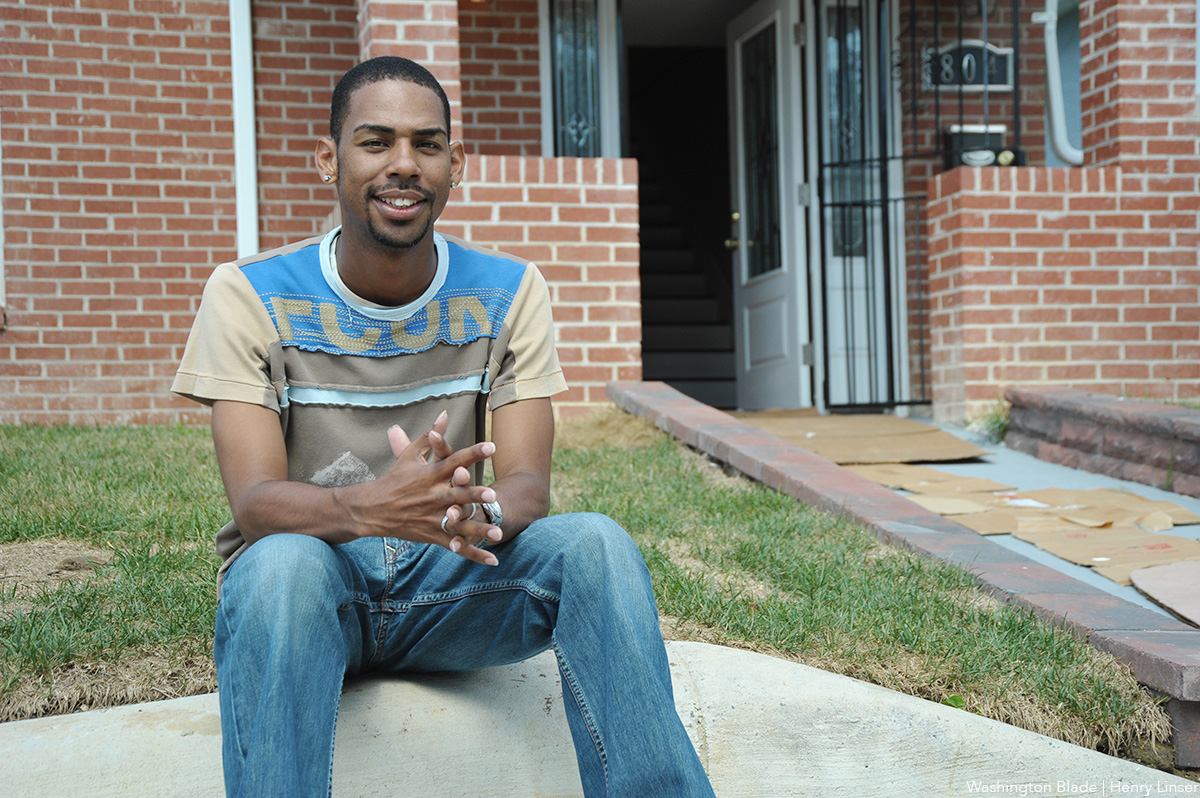
The Wanda Alston Foundation, which provides housing and support services for homeless LGBTQ youth in the D.C. metro area, announced on July 20 that its founding executive director, Brian Watson, has passed away.
In a statement the Alston Foundation called Watson “one of Washington, D.C.,’s most passionate advocates for LGBTQ+ youth experiencing homelessness.”
Neither the statement nor others who knew Watson have disclosed the cause of death or his age. Longtime LGBTQ community activist Rayceen Pendarvis said she heard only that Watson’s passing followed “a long time illness.”
“The origins of the Wanda Alston Foundation can be traced to a meeting convened by then-Mayor Anthony Williams at the request of Wanda Alston, the Mayor’s Director of LGBTQ Affairs,” the statement says.
“During that meeting, Brian spoke powerfully about the growing crisis of homelessness among LGBTQ+ youth in the District of Columbia and the urgent need for dedicated housing and support services,” it says. “His advocacy helped crystalize a vision that every young person deserves a safe place to call home.”
The statement points out that following Alston’s untimely death, Watson joined other community leaders “to transform that vision into reality by establishing the Wanda Alston Foundation in her memory.”
It says that today the Alston Foundation “proudly carries forward the mission Brian helped create by providing emergency and transitional housing, counseling, workforce development, life-skills training, and other supportive services that empower LGBTQ+ youth to achieve stability, independence, and hope for the future.”
Watson’s LinkedIn page says he served as executive director of the Alston Foundation from July 2013 to March 2014. The Washington Blade reported in April 2014 that the Alston Foundation announced in a March 11, 2014, statement that Watson had resigned to “pursue other opportunities.”
His LinkedIn page shows he worked for or with in a supporting role three local nonprofit organizations since leaving the Alston Foundation, including serving from February 2019 to November 2019 as a Methamphetamine Services Specialist for the D.C. group HIPS, which provides services for drug users and sex workers.
According to his LinkedIn page, from October 2014 to “present,” he also served as Chief Innovation Officer for the Propel Foundation, Inc., which he described as a “501c3 nonprofit organization founded in D.C. that works to strengthen nonprofit organizations through fiscal sponsorship and capacity building.”
A Facebook posting by his brother, Vidale Watson, says his family will be making arrangements for a memorial service and will share the date, time, and location once the details have been finalized.
“There are no words to describe the heartbreak our family is feeling,” Vidale Watson wrote. “While we are grateful for every prayer, kind word, and act of support we’ve received over the past week, this loss is still incredibly fresh.”

Winsome Earle-Sears launches campaign against Va. marriage equality amendment

Calendar: July 24-30

Pentagon says hormones make trans troops unfit but gives them to men

At Alliance Defending Freedom’s summit, church and state are one

2026 International AIDS Conference to take place in Rio

DOJ seeks to dismiss some claims in gay FBI employee’s bias lawsuit

PHOTOS: Vitamin C at JR.’s

LGBTQ community center opens in Leesburg, Va.

Sci-fi has long been at vanguard of LGBTQ representation