Africa
Kenyan court bars homophobic protests
Mombasa High Court to reconsider case on July 24
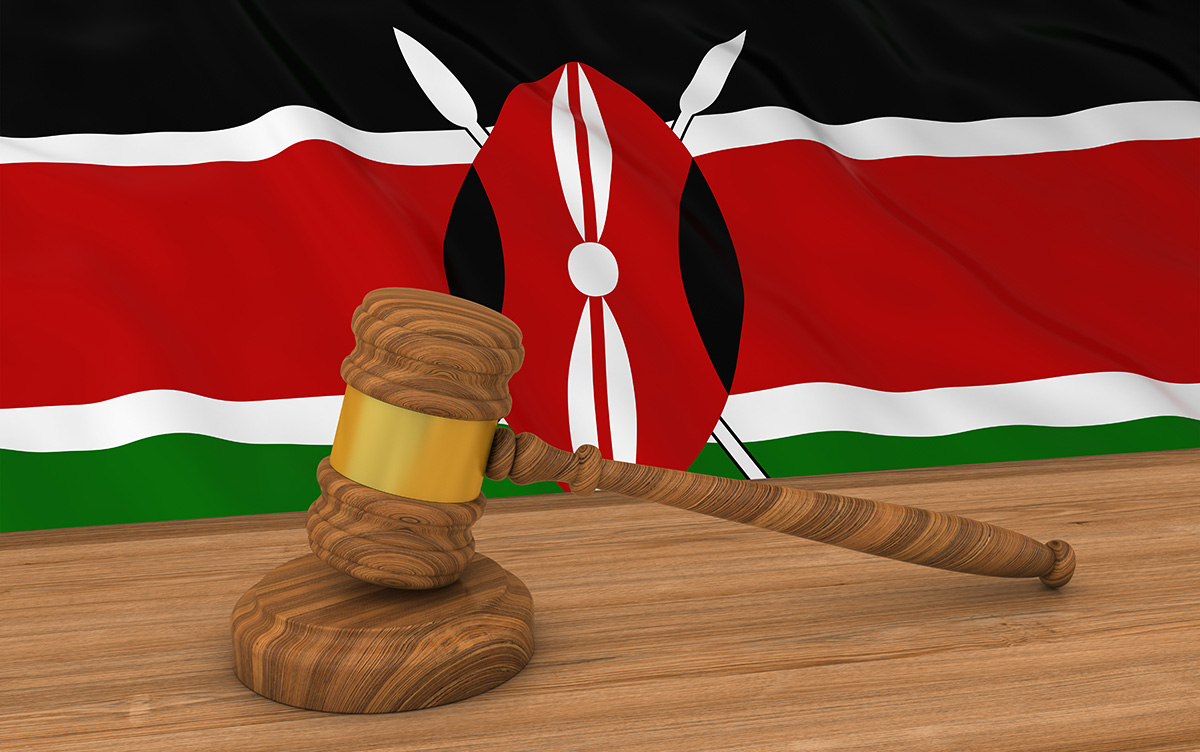
The queer community in Kenya can breathe a sigh of relief after a Mombasa court on Monday ruled clerics, politicians, and anti-LGBTQ groups cannot hold homophobic protests or engage in incitement.
The Mombasa High Court’s ruling, however, is temporary until July 24 when the court in Kenya’s second-largest city determines a petition on the issue.
Two petitioners — Mr. JM and the Center for Minority Rights and Strategic Litigation — last October sued Police Inspector General Japhet Koome for allowing religious leaders and lobby groups to hold homophobic protests whenever a court rules in favor of the LGBTQ community.
The petitioners’ effort to demand a ban on anti-LGBTQ protests in Kenya was in response to a series of homophobic demonstrations, particularly in Mombasa, after the Supreme Court last September affirmed an earlier decision that allowed the National Gay and Lesbian Rights Commission to register as an NGO.
Mombasa High Court Judge Olga Sewe in her Monday ruling also directed the petitioners and the respondents, who include Koome, two anti-LGBTQ activists and a national lobby group dubbed the “Anti-LGBTQ Movement” that organized protests, to file their witness lists and counter statements within 14 days of the July hearing.
“Pending the hearing and determination of this petition, this Honorable Court (does) hereby issue a conservatory order restraining the 2nd and 5th Respondents from calling on or inciting members of the public to carry out extra-judicial killing, lynching, punishing, stoning, forcible conversion, or any other means of harming LGBTQ+ identifying persons and their homes,” Sewe stated.
She also stopped the “Anti-LGBTQ movement,” Koome and any state agency from any attempted “expulsion from Kenya or any party of Kenya of LGBTQ+ identifying persons or closure of organizations serving LGBTQ+ identifying persons.”
The court’s directives come after the Center for Minority Rights and Strategic Litigation led a protest on April 11 against the “anti-LGBTQ Movement”‘s invasion of Mvita Clinic in Mombasa that “hateful misinformation” reportedly sparked because the facility also serves queer people.
“Mvita Clinic, like all healthcare providers, serves the entire community,” CMRSL stated. “Targeting them for LGBTQ+ inclusion is discriminatory and an attack on the basic right to health. Everyone deserves access to healthcare, and we urge an end to the spread of lies. Let’s promote inclusivity and ensure Mvita Clinic remains a safe space for all.”
CMRSL in response to Osewe’s ruling said it was a “major win for safety and equality in Kenya” because it allows the LGBTQ people to live with “greater peace of mind.”
The Initiative for Equality and Non-Discrimination, an LGBTQ rights group, meanwhile lauded the court’s decision as a reprieve to homophobic attacks on the queer community.
“There is some reprieve given the security incidents we witnessed during the protests on Sept. 15 last year,” INEND Communications Officer Melody Njuki told the Washington Blade.
“We had rescued LGBTQ+ folks in Mombasa, Kilifi, and Lamu, due to security incidents caused by the hatred the anti-LGBTQ movement mongered and the calling of violence towards people associated with the queer group and those identifying as members,” she added.
PEMA Kenya, a Mombasa-based gender and sexual minority organization, also applauded the court’s temporary injunction, describing them as timely in protecting the LGBTQ community against all forms of homophobic attacks.
“We welcome the ruling and we believe it will impact our members who for some time felt robbed of the freedom to express themselves,” PEMA Kenya director Ishmael Baraka told the Blade.
The Nature Network, a rights organization for refugees living in Kenya, also welcomed the Monday ruling which it termed “a positive step showing the courts’ commitment to upholding human rights for all.”
“Anti-LGBTQ Movement” Chair Salim Karama, however, declined to respond to the Blade’s questions about the ruling until determination of the petition’s status. He noted the organization is waiting for their lawyer to speak with them about the decision and the filing of counter statements that Sewe ordered.
As LGBTQ rights groups seek the queer community’s protection in Kenyan courts, parliament, on the other hand in is set to consider a petition that notes what it describes as the proliferation of homosexuality in the country.
National Assembly Speaker Moses Wetang’ula on Feb. 27 referred the petition to the relevant parliamentary committee for inquiry after MP Ali Mohamed, a member of the ruling party and a vocal LGBTQ rights opponent, presented it in the National Assembly, the lower house of the Kenyan parliament, on behalf of a group of more than 70 Kenyans and religious organizations opposed to homosexuality.



Egypt
Egyptian authorities refuse to allow gay cruise to dock in country
Scarlet Lady earlier this week blocked from visiting Turkey
Egyptian authorities have refused to allow a gay cruise to dock in the country.
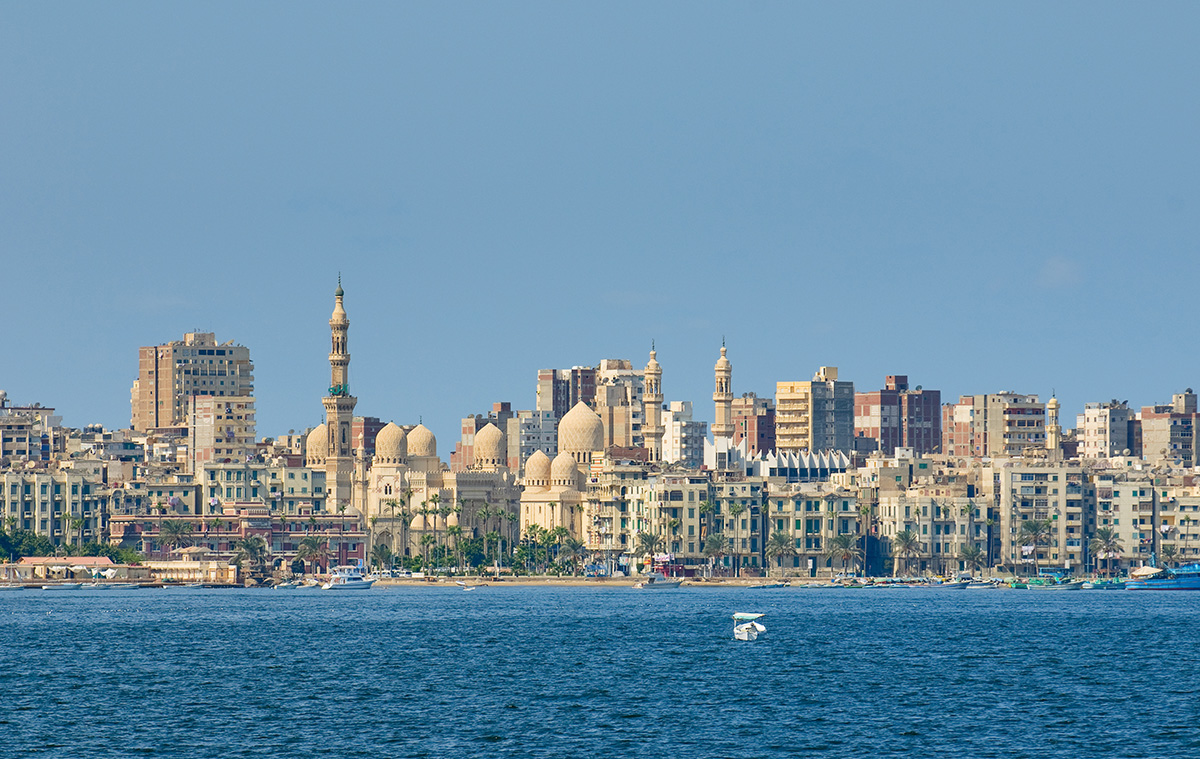
The Scarlet Lady, a Virgin Voyages ship that Atlantis Events chartered, was to have docked in Alexandria, a port city on the Mediterranean Sea. The Washington Blade obtained a letter that Atlantis Events President Rich Campbell sent to passengers on Thursday, hours before the cruise was to have arrived.
“Early this morning, we were informed that Scarlet Lady has been denied entry into Egyptian waters and, as a result, will no longer be able to call in Alexandria today,” he wrote.
“I know how much this visit meant to so many of you,” added Campbell. “We successfully sailed a similar itinerary last year, so we were surprised by this unfortunate decision.”
Campbell noted “both the Atlantis and Virgin Voyages teams worked tirelessly to make this call in Alexandria a possibility.”
“This news came as a surprise to all of us, and we’re just as disappointed as you are,” he said.
The 10-day cruise left Athens on July 5. It is scheduled to end in Trieste, Italy, on July 15.
The ship had been scheduled to dock in Kusadasi, a Turkish resort town on the Aegean Sea, and Istanbul earlier this week. Turkish authorities refused to allow it in the country.
Former Tempe, Ariz., Mayor Neil Giuliano, who is an LGBTQ+ Victory Institute board member, is among those on the cruise.
“Just a few hours before arriving in Alexandria, Egypt — a city founded by and named for one of the ancient world’s best-known homosexuals — government authorities rescinded permission for our ship of 2,000 gay men to enter Egypt,” wrote Steve May, who is also on the ship, on Thursday in a Facebook post.
Alexander the Great founded Alexandria in 331 B.C.
“As with Turkey, we have been sent away not because of what we did, but because of who we said we are,” said May. “‘I am what I am’ is too much liberty for some to bear. So it was in the United States as well not long ago, where even I ended up as a convicted homosexual after a military trial in 2001 for saying ‘I am gay.’ This is just a reminder that for all the progress we have made, our freedom is never secure — for any of us, regardless of who or how we love. Back to Europe!”
Discrimination and persecution based on sexual orientation and gender identity is commonplace in Egypt. The Egyptian Football Association, along with the Football Federation Islamic Republic of Iran, objected to playing in the World Cup’s “Pride Match” that took place in Seattle on June 26.

Iran and Egypt on Friday faced off during the World Cup’s “Pride Match” in Seattle.
Iran is among the handful of countries in which consensual same-sex sexual relations remain punishable by death. Discrimination and persecution based on sexual orientation and gender identity is commonplace in Egypt.
Friday’s match coincided with Pride weekend in Seattle. The Egyptian Football Association and the Football Federation Islamic Republic of Iran both objected to playing in the “Pride Match.”
Egypt and Iran tied 1-1.
FIFA, for its part, allowed Pride flags inside the stadium during the match.
“The FIFA World Cup 2026 is an inclusive event that welcomes people from all backgrounds,” a FIFA spokesperson told the Washington Blade in a statement. “Fans of all sexual orientations and gender identities are welcome at matches and events. General statements of human rights, including rainbow flags and other flags representing sexual orientation and gender identity, are permitted under the FIFA World Cup 2026™ Stadium Code of Conduct and may be displayed inside stadiums provided they are used in a manner consistent with the code.”
Human Rights Watch welcomed FIFA’s decision to allow Pride flags inside the stadium. Outright International, a global LGBTQ and intersex rights group, distributed Pride flags in Seattle on Friday, which was Pride Match Day.
“Visibility matters,” said Outright International Executive Director Maria Sjödin. “Pride is now being celebrated in more than 100 countries, including this weekend in Seattle. For many LGBTIQ people, seeing a Pride flag in public is a reminder that they are not alone, and that their rights and dignity are recognized.”
FIFA President Gianni Infantino earlier this year told Die Weltwoche, a Swiss magazine, that “there will be no ‘Pride Match’ at the (FIFA) World Cup.”
“There will be a FIFA World Cup match in Seattle, and on the same day, events organized by external organizations will be taking place in the city,” said Infantino. “But that has nothing to do with the match itself.”
Peter Tatchell, a long-time LGBTQ activist from the U.K. who is director of the Peter Tatchell Foundation, was among those who traveled to Seattle for Friday’s match. Tatchell accused FIFA of not vetting World Cup teams — specifically Iran, Egypt, Saudi Arabia, Ghana, Senegal, Qatar, Tunisia, Morocco, Iraq, Uzbekistan, and Algeria — over whether they would allow gay players.
“FIFA is protecting LGBT+ visibility in the stands while failing to protect LGBT+ players on the pitch,” said Tatchell.
South Africa
White House to end PEPFAR funding for South Africa
State Department says country failed to respond to 2025 executive order demands
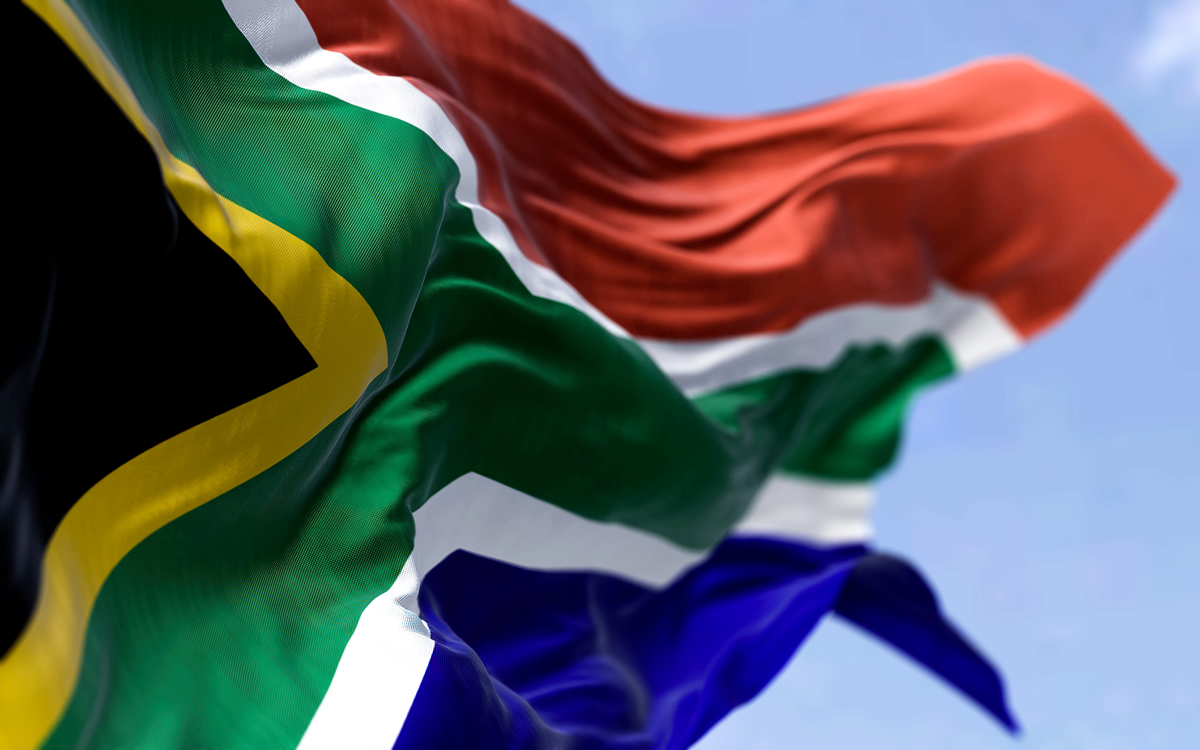
The Trump-Vance administration will end PEPFAR funding for South Africa.
A State Department spokesperson on Wednesday told the Washington Blade the State Department “will begin a phased drawdown of PEPFAR programming in South Africa, with most programs ending by Sept. 30, 2026, and critical personnel support continuing through March 31, 2027.”
Semafor last week reported South Africa has received more than $8 billion in PEPFAR funding since President George W. Bush created the program to combat the global HIV/AIDS pandemic in 2003.
President Donald Trump on Feb. 7, 2025, issued an executive order that addressed what it described as “egregious actions of the Republic of South Africa.” The State Department spokesperson with whom the Blade spoke noted the directive included five specific requests:
• South African government provides exemptions or alternatives for U.S. companies to Broad-Based Black Economic Empowerment laws and other race-based mandates.
• Senior government officials (e.g., president, deputy president, or minister of justice) unequivocally condemn all race-based incitement to violence, including the “Kill the Boer” song, more frequently.
• The South African government prevents the implementation of measures that would allow expropriation without fair compensation and due process under the Expropriation Act of 2024.
• South African Police Service designates rural crime a “priority crime” and increases resources dedicated to high-crime rural areas.
• South Africa refrains from actions that would significantly interfere with the implementation of the refugee program, within the confines of South African law.
“The United States communicated to the government of the Republic of South Africa multiple times at many levels that PEPFAR funding was likely to be terminated in the absence of progress on the five asks,” said the State Department spokesperson.
The State Department spokesperson further noted South Africa is “one of the largest economies in sub-Saharan Africa” and “has funded the vast majority of its own HIV response, estimated at 76 percent of the total, including procurement of all treatment commodities.”
“South Africa will continue to be supported by the Global Fund, including for the introduction and scale up of lenacapavir through Global Fund Resources,” the spokesperson told the Blade.
Lenacapavir is groundbreaking HIV prevention drug that users inject twice a year. Eswatini, which borders South Africa, is among the African countries that have received doses of the drug through PEPFAR.
HIV/AIDS service organizations in the U.S. and around the world have sharply criticized the Trump-Vance administration over plans to not fully fund PEPFAR and to cut domestic HIV/AIDS funding.
Secretary of State Marco Rubio shortly after the current White House took office issued a waiver that allowed PEPFAR and other “life-saving humanitarian assistance” programs to continue to operate during a freeze on nearly all U.S. foreign aid spending. HIV/AIDS service providers around the world with whom the Blade has spoken say PEPFAR cuts and the loss of funding from the U.S. Agency for International Development, which officially closed on July 1, 2025, has severely impacted their work.

New book reveals what we can learn from animal sex

Who might replace Lindsey Graham? The contenders and their LGBTQ records

PHOTOS: Westminster Pride

Un terremoto también se vive desde el exilio

PHOTOS: Emerald City Pride

Mr. Henry’s celebrates 60 years of proud inclusivity

It’s good to see some justices standing up to Trump

Egyptian authorities refuse to allow gay cruise to dock in country

Queer media dominates 2026 Emmy nominations