District of Columbia
Capital Pride announces 2024 Pride honorees
Nine LGBTQ leaders, Destination DC to be honored
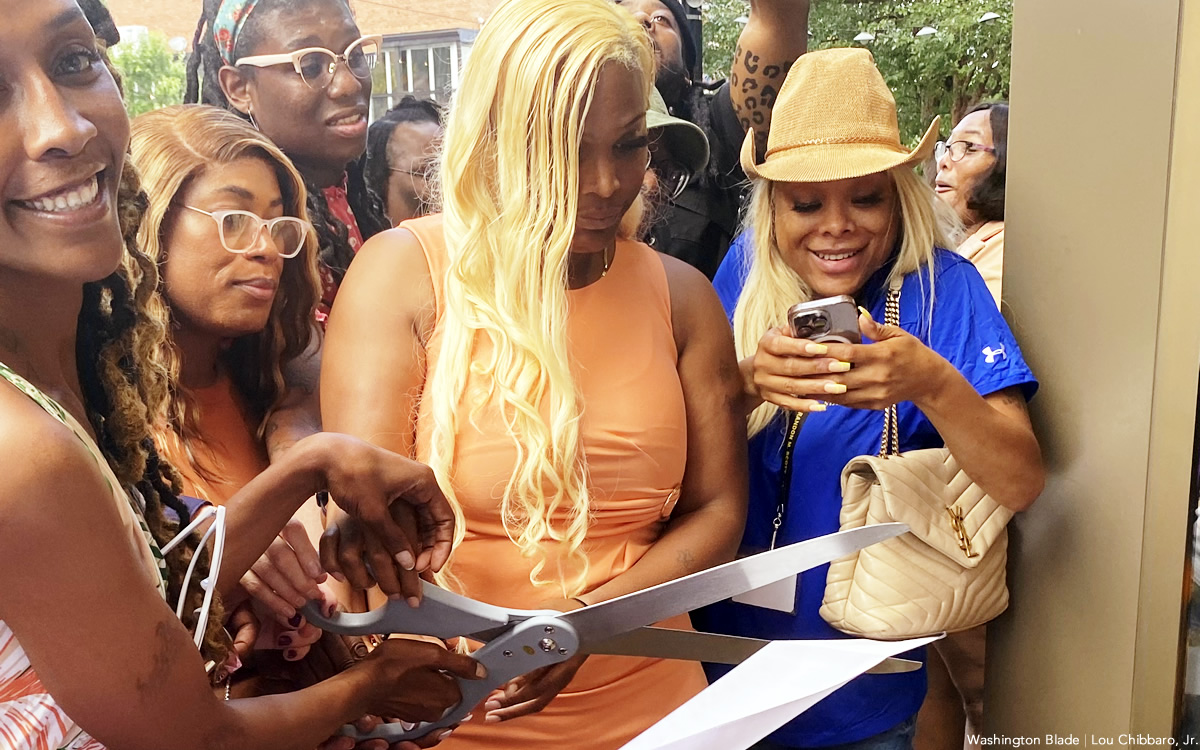
Capital Pride Alliance, the group that organizes D.C.’s annual LGBTQ Pride events, has announced its selection of nine individuals and one D.C. organization as recipients of its annual honors awards recognizing outstanding service for the LGBTQ community and the cause of LGBTQ equality.
“Each year, the Capital Pride Alliance honors outstanding individuals, leaders, and activists in the National Capital Region who have furthered causes important to the LGBTQ+ community,” the group said in a statement. The statement says the honorees chosen this year “tirelessly contribute to our collective advocacy, outreach, education, and programming in support of our intersectional community.”
The awards were scheduled to be presented to the recipients at a Capital Pride Honors ceremony on Friday, May 31 at the MGM National Harbor in Oxon Hill, Md. A statement released by Capital Pride says the event will be hosted by WUSA9 TV news reporter Lorenzo Hall, with entertainment by special guests, including singer-songwriter Crystal Waters, DJ Honey, and the Black Leaves Dance Company.
The award recipients as released by Capital Pride Alliance include the following:
Hero Award recognizing “individuals who have furthered the causes important to LGBTQ+ community in the national capital region” and “have brought about positive changes to our lives and our community.”
• Hope Gisselle, nationally recognized author, artist, and activist who advocates for LGBTQ rights through organizations she has been a part of, including her founding of a human resources organization called AllowMe and her current role as CEO and Executive Director of the National Trans Visibility March.
• Jamison Henninger, has served as leader of the D.C. Area Transmasculine Society, known as DCATS, a community-based organization that aids transmasculine individuals in the D.C. metro area, serves on the board of Trans Pride DC, and serves as a consultant for Gender Illumination, a nonprofit group.
• Kenya Hutton, a social justice, equity, HIV prevention, and sexual health advocate who has worked to address issues impacting communities affected by HIV and other health disparities for over 20 years. He currently serves as deputy director of the D.C.-based national LGBTQ organization Center for Black Equity and is set to become its acting CEO and executive director in August.
• Carol Jameson has worked for more than 35 years in Northern Virginia developing and administering programs that address health care disparities and provide access to health care services, including HIV/AIDS related services. She has served as executive director for NOVAM, a nonprofit group providing HIV prevention and HIV care for adolescents and young adults in Northern Virginia.
• Tula, an esthetician and hair stylist by day, has been a widely recognized drag performer for more than 30 years and host to D.C. cabaret shows. A former title holder and member of the Academy of Washington, D.C. drag organization, “she brings a plethora of stage experience to any show,” according to a Capital Pride writeup.
• Jose Alberto Ucles has been involved with a wide range of LGBTQ supportive events and projects both culturally and politically while working in his day job for the past 23 years as the Hispanic Outreach Spokesperson and Public Affairs Specialist for the U.S. National Highway Traffic Safety Administration. Some of his many involvements include past work with the Whitman-Walker Clinic, Capital Pride organizing in the 1990s, and currently a member of the Arts & Culture Committee for World Pride 2025 DC.
Breaking Barriers Community Impact Award recognizes individuals or organizations who have demonstrated significant impact on the LGBTQ+ community and helped eliminate barriers for social, personal or professional growth of the LGBTQ+ community.
• Iya Dammons, a widely recognized transgender and LGBTQ rights advocate is the founding Executive Director of DC Safe Haven and Maryland Safe Haven, the nonprofit organizations credited with providing support and services for LGBTQ people experiencing homelessness, substance use problems at risk of an overdose, and discrimination based on their gender identity or sexual orientation.
The Bill Miles Award for Outstanding Volunteer Service acknowledges exemplary contributions to the Capital Pride Alliance and its programs, initiatives or other Pride sponsored activities.
• Bryan Davis is an accomplished Sign Language interpreter trained at D.C.’s Gallaudet University who currently serves as Volunteer Chair with Capital Pride Alliance and previously has served as Executive Producer and Chair for Accessibility and Interpreter Coordinator for Capital Pride.
• William Hawkins has since 2017 been a committed volunteer for Capital Pride as part of its production team and as Executive Producer of Health and Safety and later as Health and Safety Chair. He is credited with helping to form alliances with G.W. Hospital, the D.C. Fire & Emergency Medical Services Department, and the D.C. Licensing Division.
Larry Stansbury Award for Exemplary Contributions to Pride recognizes outstanding efforts related to programs and initiatives of the annual Capital Pride Alliance or Pride movement.
• Destination DC, a private, nonprofit corporation, serves as the lead organization to successfully manage and market Washington, D.C. as a premier global convention, tourism, and special events destination, with a special emphasis on the arts, cultural and historical communities. It is credited with generating economic development for the city through visitor spending.
Further details about the Capital Pride honorees and the May 31 event, including availability of admission tickets, can be accessed at their website.



District of Columbia
SMYAL receives $25,000 award for ‘courageous acts’
D.C. group provides support services for LGBTQ youth
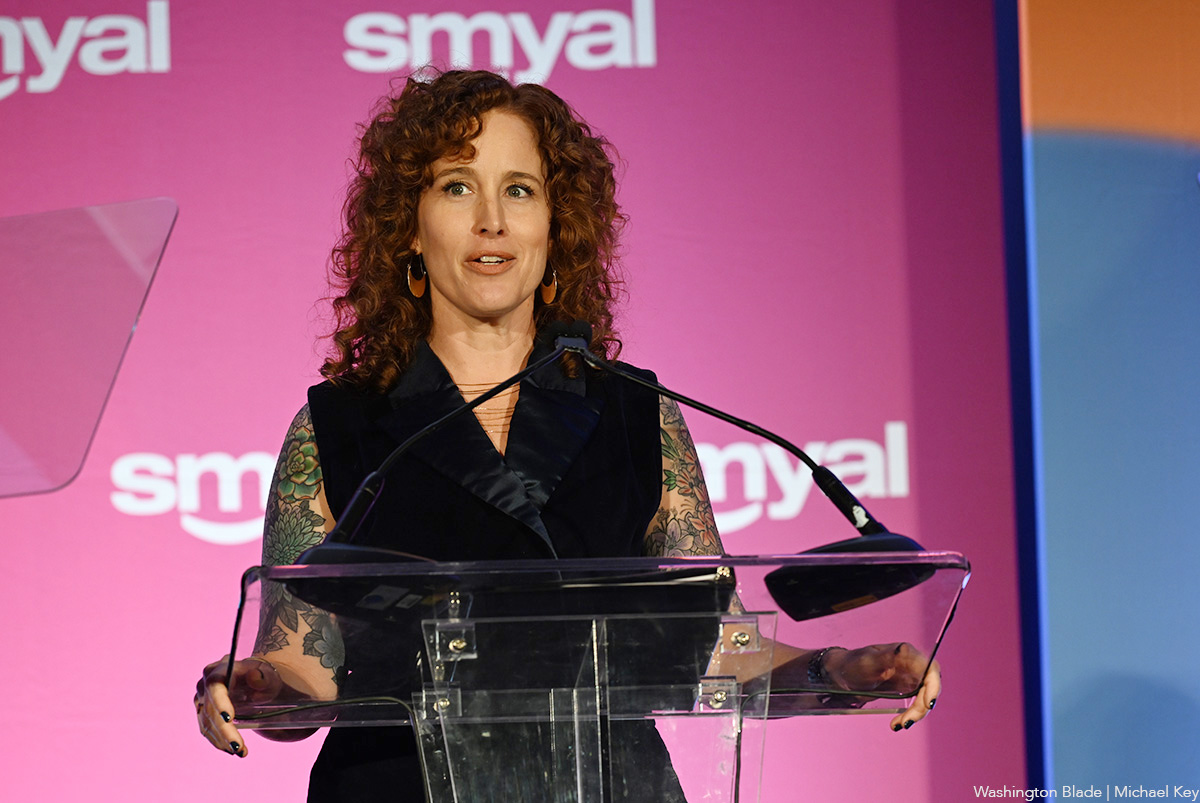
The D.C.-based organization SMYAL, which provides services for LGBTQ youth in the D.C. metro area, including housing for homeless LGBTQ youth, announced on June 30 that it received a $25,000 award for its “courageous acts” in support of the community it serves.
The award was a monetary grant from The Courage Project, which describes itself as a “national initiative investing in acts of courage and compassion that strengthens our communities and democracy.”
A statement on its website says it was launched in May 2025 and is funded and backed by leading national foundations in the U.S.
“At SMYAL, we are deeply grateful to receive support from The Courage Project and are inspired by their bold investment in LGBTQ+ youth at such a critical moment,” SMYAL CEO Erin Whelan said in a statement. “For queer and trans young people, simply showing up as themselves each day requires immense courage, and that courage is strengthened when organizations like The Courage Project stand behind them loudly, proudly, and without hesitation,” Whelan said.
In its statement announcing the award SMYAL says The Courage Project will recognize SMYAL and other awardees and their work on July 3 at the Washington National Cathedral as part of a special interfaith service marking the U.S. 250th anniversary.
“The Courage Project is a bold initiative honoring everyday acts of bravery – the quiet, often unseen acts of heroism that reflect the best of the American spirit and strengthen democracy at the community level,” the project states on its website.
District of Columbia
Longtime Blade staffer Stephen Rutgers steps down after 14 years
Plans to focus on running Crush Dance Bar, other ventures

Longtime Washington Blade employee Stephen Rutgers announced he is stepping down after 14 years to focus on other ventures, including his part ownership of the popular Crush Dance Bar.
Rutgers was hired by the Blade in 2012 to help plan Pride festivities and over the years was promoted to director of sales and marketing. In addition to his broad set of responsibilities, Rutgers planned the annual Pride on the Pier celebration at the Wharf, which has exploded in popularity over the seven years since its launch.
“Watching Pride on the Pier grow from a new community event into one of D.C.’s signature Pride celebrations has been incredibly rewarding,” Rutgers said. “Expanding Pride on the Pier into a two-day festival for WorldPride in 2025 was definitely a career highlight. Seeing thousands of people come together to celebrate our community while supporting the Blade’s mission is something I’ll always be proud of.”

Rutgers described his biggest challenge as navigating the changing media landscape.
“More than ever, we’ve had to remind our community that local journalism matters and that it needs their support,” he said.
He added that he’s most proud of helping to ensure the Washington Blade is positioned to thrive for the next 50 years.
“I was fortunate to be part of the Blade during its 50th anniversary — a milestone that reflects its incredible history and impact,” Rutgers said. “The Blade has been an important voice for the LGBTQ community for more than five decades, and knowing I played a small part in helping its future is most important to me.”
Blade Publisher Brian Pitts praised Rutgers for juggling multiple responsibilities.
“We wish Stephen all the best,” Pitts said. “For the past 14 years, Stephen has been a vital part of the Blade, handling many things — marketing and advertising, sponsorships, and Blade signature events. We will all miss him.”
Blade Editor Kevin Naff thanked Rutgers for his years of service to the community.
“After 14 years, it’s hard to imagine the Blade without Stephen and his boundless energy and creativity,” Naff said. “He’s one of the hardest working and most dedicated people I’ve ever known and he will be missed. But change is the only constant and I know Stephen will move on successfully to new challenges and the Blade will expand on Stephen’s important work.”
As for what’s next for Rutgers, he said he plans to focus on Crush as well as his real estate business.
“I’ve always been someone who likes to stay busy,” Rutgers said. “For the past 12 years, I’ve balanced my work at the Blade and in real estate. Two years ago when I opened Crush, I never realized just how much time and energy it would take. The passing of my father earlier this year also gave me a new perspective. It reminded me that life is short and that it’s important to make time for the people and experiences that matter most. Stepping away from the Blade will allow me to focus on those ventures while also creating more balance in my life. After 14 incredible years, it feels like the right time for a new chapter.”
Naff said that for now Rutgers’s responsibilities will be divided between existing staff along with several new freelance contractors.
“The Washington Blade plays a unique role in our community’s fight for equality,” Rutgers said. “It’s the only LGBTQ news organization with White House credentials, giving it direct access to the people and institutions shaping policies that affect our community. The Blade continues to hold elected officials accountable, report on the issues that matter most to LGBTQ people, and tell the stories that often go uncovered by mainstream media.
“The Blade has been my family for most of my adult life. For 14 years, it has been part of my daily routine, so it’s going to feel very strange waking up and not logging on each morning.”
District of Columbia
Nearly 6,000 turn out for Pride Night Out at the Nationals
Gay Men’s Chorus sings National Anthem

“Just shy of” 6,000 people purchased tickets for the Wednesday, June 24, 21st annual Pride Night Out at the Washington Nationals baseball stadium, which the Nationals said is the longest running LGBTQ Pride event in Major League Baseball, according to a Nationals spokesperson.
The event was organized with the Nationals by Team D.C., the local LGBTQ sports group that organizes similar Pride Nights for other professional D.C. area sports teams.
“It was a good time had by all as the Nationals celebrated the LGBTQ+ community during the Nationals 21st Pride Night Out, presented by Team D.C.” the Nationals said in a statement.
Nationals spokesperson Erica George said the overall game attendance was 27,200.
Similar to recent past years, the Gay Men’s Chorus of Washington sung the National Anthem at the start of the game, drawing loud cheers from people throughout the stadium.
The Nationals lost the game to the Philadelphia Phillies by a score of 5-4. Although most of the LGBTQ attendees of the event, held in the right-field mezzanine section of the stadium, were cheering for the Nationals, a sizeable number also cheered for the Phillies.
Miguel Ayala, one of Team D.C.’s lead organizers, said he noticed fans displaying Pride flags and recognized LGBTQ people in all parts of the stadium, indicating significantly more LGBTQ people and their supporters attended the game beyond the close to 6,000 or more who purchased the specific Pride Night Out tickets.
“It was a great excitement last night,” he told the Washington Blade on the day following the event. “I saw a lot of big crowds of our people, I saw everybody I can think of in the community. And it was really great to see the turnout.”
Also, like in previous years, Team D.C. along with the Nationals helped to organize a pre-game show on the large concourse platform area next to the stadium seating area involving a drag show led by local drag performer Shi-Queeta Lee.
“During pregame ceremonies, the Nationals Pride employee resource group was recognized on the field,” the statement released by the Nationals says. “Dr. Demetre Daskalakis, a physician and public health leader who has had a profound impact on the LGBTQ+ community and those living with or vulnerable to HIV, threw out the ceremonial first pitch as the guest of Team D.C.,” the statement says.
It adds that Team D.C.’s scholarship recipient Spencer Doll made the ceremonial call to “Play Ball.”
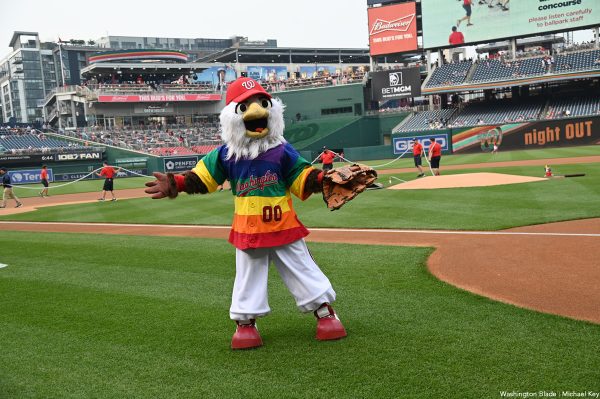
As if all that were not enough, a Nationals employee who entertains during the Nationals pre-game shows on the field dressed as a giant eagle named “Screech” wearing an eagle’s head mask appeared in the seating area where the Pride Night Out crowd was seated and mingled with the LGBTQ fans, many of whom posed for photos with Screech.

As Washington shifts right, Democratic Socialists gain ground

Susan Stewart could make history as Rehoboth’s first openly gay mayor

Silky Nutmeg Ganache talks sex and dating, gender, politics, weight loss journey

Madonna roundup: Reviews, sales, and love for ‘Danceteria’

Three overlooked court rulings limited White House anti-trans policies

‘Transcendent’ a tough but important read

Under-the-radar Delaware beach towns smart buyers are targeting

‘My Favorite Sociopath’ debuts at Shepherdstown’s CATF

In Trump’s divided America, Michael Weinstein’s AHF responds