Opinions
Progressive LGBTQ community should not throw conservative siblings under the bus
Queer people are not just Democrats

I have been an LGBTQ activist for almost 10 years, but I’ve never really felt like I’m a part of the LGBTQ community.
I remember how I was thinking about it when the idea of this article came to my mind: I was at a sex-positive queer event in a local library, at a book launch about neurodiversity and inclusion. It should be “my” topic: I’m a transgender autistic person after all. The event was amazing, wasn’t it? It was.
Only why did I feel so lonely, so out of place?
The folks around me felt like a community; most of them were so obviously gender non-conforming, obviously queer, and obviously leftists. They shared the same aesthetic, the same culture. But I was silently scrolling through my social media feeds, reading about the Chechen liberation movement’s history, weapons, and political news and my mind wandered. I was thinking about how I told my Chechen Salafi friend that I wanted to have a big family with eight kids and live in a village when I was a 4-year-old.
At four, I already knew that I’m not a girl, even if I didn’t have words for describing my condition. I have never heard about other trans* people. I was a trans* child without knowing it.
Then I became a trans* teenager in denial: A messy one, depressed, Christian fundamentalist teenager who compulsively read everything about the Cold War. An anti-leftist teenager who shared Henry Kissinger’s views on international politics and Ayn Rand’s view on the economy.
In my teenage years, I saw other trans* folks, but only on a TV screen. In mass culture, the trans* community is all about cross-dressing and drag queen parties in the worst case, and about being part of leftist social movement in the best. So, I couldn’t be trans*, couldn’t I? One of the reasons why it was so difficult for me to accept myself as a trans* was that I believed that if you are trans*, you should instinctively accept mainstream LGBTQ subculture.
I have changed a lot since then, and became an open LGBTQ activist, but when I read about Jessica Watkins, a transgender hardcore Donald Trump supporter who was arrested after the Washington riot on Jan. 6, I felt like she is the person I needed to hear about when I was younger.
I’m so not like her.
Watkins is an Afghanistan war veteran and a member of the far-right group Oath Keepers, and I’ve always, even in my childhood, hated the far-right, and have never supported the American invasion of Afghanistan. I do not think that I would like Trump populism and anti-intellectualism, even in my youth. But as a young transgender person, I desperately needed to see some proof that I could be trans* without falling into some social movement, that it is possible to be a transgender without having to fit into a long list of criteria from the mainstream LGBTQ community, and that transgender people could be different, just like everyone else.
This is why I felt outraged when some American LGBTQ people in social media supported a transphobic decision to put Jessica Watkins in a male prison.
On the eve of the 2024 presidential election, the situation worsened. The American LGBTQ community is taking a dangerous turn on excluding their politically “unreliable” siblings, and by doing it, helping anti-queer bigots to push their agenda of dehumanization of queer people in general.
Queer as a doctrine
Many homophobes believe the LGBTQ movement had some kind of ideology beside promoting equal rights. This myth existed for decades. In the Western conspiracy theories, homosexuality, and transgenderism are considered to be connected to leftist political schools of thought. During the McCarthyism era, LGBTQ people were discriminated against and sometimes even incarcerated partly because they were considered to be potential Soviet spies. It is a peculiar idea, because at the same time homosexual people in the Soviet Union were considered to be Western sympathizers. Or maybe it is less weird as it looks — people are often prone to be seen as a threat to someone who belongs to a minority they do not understand.
This is why many modern-day conservatives believe that if a child came out as queer, it means that this child was groomed by “cultural Marxism.”
But there is something else. The media — both progressive and conservatives — are to blame for this misconception.
The most common image of a queer person in the media is an image of a politically left, secular, eco-friendly, pro-choice person who likes to speak about their sexual kinks, has bright colored hair, and votes for Democrats. But if you would think twice, you would realize that all those things have nothing to do with being gay, bisexual, or trans*. It’s just some trends in LGBTQ community.
Some gay people are conservatives: Get over it
There are actually a lot of Republican LGBTQ. Some of them are quite prominent, like Richard Grenell, the former U.S. ambassador to Germany who was also the first acting director of National Intelligence during the Trump presidency, which made him the first openly gay Cabinet-level official. He is quite a controversial figure for an LGBTQ community because of his anti-trans* sentiments and for criticizing the Equality Act, but it doesn’t make him less “gayish.”
Gay conservatives often have a complicated relationship with their sexuality, struggle to accept themselves. Former Illinois Congressman Aaron Schock had a long history of fighting inner homophobia before he managed to come out as a gay man, but it is more likely going to change for Zoomer and Alpha generations.
The list of modern-day LGBTQ Republicans is quite big, and there are even groups like Log Cabin Republicans, or The Rainbow Pro-life Alliance.
LGBTQ Donald Trump supporters host their own MAGA events, “Trump UNITY,” and basically have their own “LGBTQ culture,” separated from a mainstream LGBTQ movement for quite clear reasons.
Of course, not all LGBTQ Republicans are pro-Trump, and even not all LGBTQ conservatives are Republicans.
The fact that LGBTQ conservatives exist nowerdays is nothing unusual or new. Even in the 70’s when being LGBTQ was something far away from the acceptable norm, there were some openly right-wing queers and queer rights supporters in America. Actually there is a big difference between being socially conservative authoritarian who sometimes even economically-left, and economically conservative libertarians, because those movements often hate each other.
American economic conservatives, libertarian-right politicians and thinkers, like Ralph Raico, speak up for LGBTQ rights, and this is the reason why some LGBTQ became libertarian-right.
As for a social conservative authoritarian right, there were gay people even among members of an openly Nazi organization, National Socialism League.
The times are changing, and there will be more conservative people, including Republicans, who would accept themselves like gay, trans* or bi.
As Neil J. Young, author of “Coming Out Republican: A History of the Gay Rights,” noted in one of his interviews, “the proliferation of more people who identify as LGBTQ will mean a growth of people who identify as gay Republicans.”
This is not just a Western trend.
Amir Ohana, a member of Israeli Prime Minister Benjamin Netanyahu’s conservative Likud party, for example, is the first openly gay Knesset speaker in Israeli history
Hence, even such an openly anti-gay movement as the so-called Islamic State somehow had gay people among their members — of course, those people have never openly said that they are gay because the risk of being executed, but it is known even in the authoritarian apocalyptic Islamist cult there were LGBTQ people. And while “ordinary” ISIS members were sometimes slaughtered for the accusation of being homosexual, high-ranking ISIS fighters like Abu Zayd Al-Jazrawi, a prominent Saudi fighter and commanders, who was accused of same-sex activity, was flogged or received a less serious sentence.
So, LGBTQ conservatives, including conservatives in quite extreme ways, are literally everywhere. Then why didn’t we notice them?
A self-fulfilling prophecy
Let’s put aside cases such as the possibly gay ISIS member, and think closer to home.
The reason why most visible LGBTQ Americans are progressive is not just about actual politics of Democrats and Republicans on queer issues, but partly is a self-fulfilling prophecy: After a gay, bi, or a trans* a young person became estranged to their conservative family, this person allied themselves with the mainstream LGBTQ community, who could reject him if it didn’t share their ideas.
So, LGBTQ youth have to make a choice that cis hetero kids don’t have to even imagine being forced to make. You could be literally anyone and be cis-hetero, but for being accepted as a queer person you are often forced to be part of a subculture.
By denying conservative LGBTQ people the right to be themselves, progressive media and LGBTQ activists made conservative anti-queer conspiracy about “cultural Marxism grooming” look more reliable, despite the fact that Karl Marx wasn’t particularly interested in sexuality and gender identity issues, and have nothing to do with modern minority rights movements.
But for conspiracists, gender identity and sexual orientation are seen not as part of human diversity, but something ideological.
Why do we need to change it?
The LGBTQ community is about gays, bisexuals, and trans* people. It is not about being left or right, Republicans or Democrats. The LGBTQ movement is a human rights movement at its very core; it is about the idea that you should have the same civil rights as anyone else. If we continue to deny politically “inconvenient” LGBTQ people those rights, we basically rob ourselves of a core idea of the LGBTQ movement. I strongly believe that Q-Anons and MAGA supporters in general are guilty of the deaths of some LGBTQ youth, especially trans* kids who died by suicide, because of the influence that Q-Anon’s “grooming” rhetoric has on the Republican mainstream nowadays, bringing back ideas from 80th Satanic panic and anti-queer conspiracy theories.
But if we would deny LGBTQ people who support Donald Trump their rights to be part of the LGBTQ community, we would be no better than the most hardcore MAGA supporters.
Civil rights have to be universal or they don’t work at all.
Even if we are speaking about rapist and a serial killer Jeffrey Dahmer, who also happened to be a gay man, it’s more than fine to say that he should be locked in prison for the rest of their lives, but in any we have no rights to discriminate against him because of his sexual orientation, or try to erase their homosexual identity to made gay community to look more “decent.”
LGBTQ people are human, and if we deny them a quality to make wrong choices or even different choices, we are denying them part of essential human traits. If we would go into gatekeeping, the core idea of LGBTQ activism lost its meaning.



Opinions
The facts about Victory Fund’s investigation and the path forward
Probe did not find legal or policy violations by Evan Low
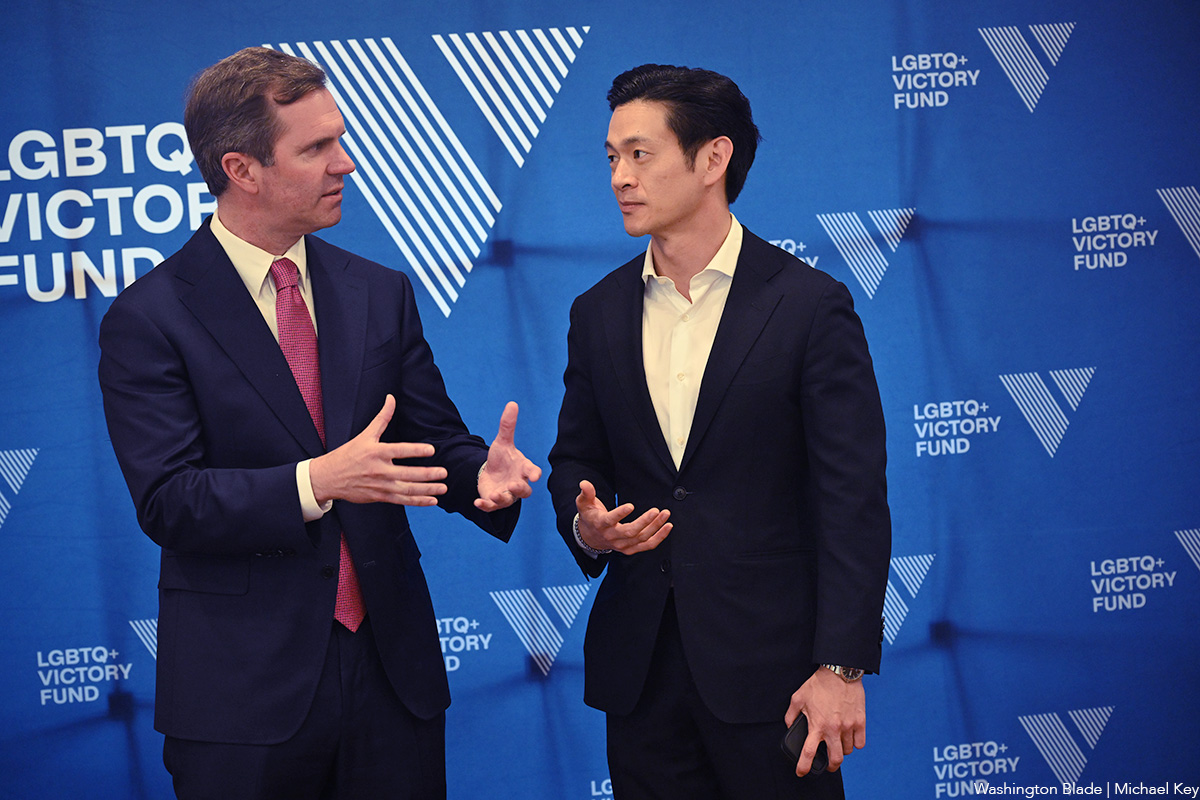
William Waybourn helped found an organization whose mission has never been more important, but his recent op-ed in the Washington Blade leaves readers with a fundamentally inaccurate impression about how the LGBTQ+ Victory Fund and Institute Boards responded to concerns raised about our organizations, their leadership, and our governance responsibilities.
The boards did not dismiss or minimize concerns. We did what responsible governing bodies should do: We took them seriously, retained experienced independent legal counsel, and authorized a thorough investigation to establish the facts.
The investigation proceeded without interference from the boards or organizational leadership, and the full boards were briefed on its eventual finding.
The conclusion matters: The investigation did not substantiate any legal or policy violations. After the briefing, the boards voted unanimously to accept the findings and close the investigation.
An independent investigation is meaningful only if we are prepared to respect its conclusions — whatever they may be. In this case, after reviewing the investigation and its findings, the boards continue to have confidence in President and CEO Evan Low.
That does not mean our work as governing bodies is finished or that any organization is beyond improvement. The boards will continue to work with staff strengthening Victory, including reviewing and updating policies to ensure they reflect best practices and support a strong working environment.
We can take matters raised seriously while also being clear about what an independent investigation did and did not find. Those are not contradictory positions. In fact, maintaining both is essential to treating everyone involved fairly.
Victory has endured for more than three decades because its mission is bigger than any one individual — a founder, board member, CEO, staff member, candidate, elected official, or donor. Generations of people have built Victory into an indispensable force for LGBTQ+ political representation, and those entrusted with governing it today take seriously our responsibility to protect that legacy and strengthen Victory for what comes next.
And what comes next could not be more consequential. Election Day is weeks away, LGBTQ+ candidates across the country are facing enormously important races, and our community continues to confront attacks on our rights and representation.
We will continue exercising the oversight expected of us, strengthening the Victory organizations, and focusing on the urgent work Victory was created to do: training and helping elect LGBTQ+ leaders, and ensuring our community has a voice wherever decisions about our lives are made.
Opinions
Evan Low is not the leader the Victory Fund needs at this moment
The board must recognize what is at stake and act before org’s legacy is lost
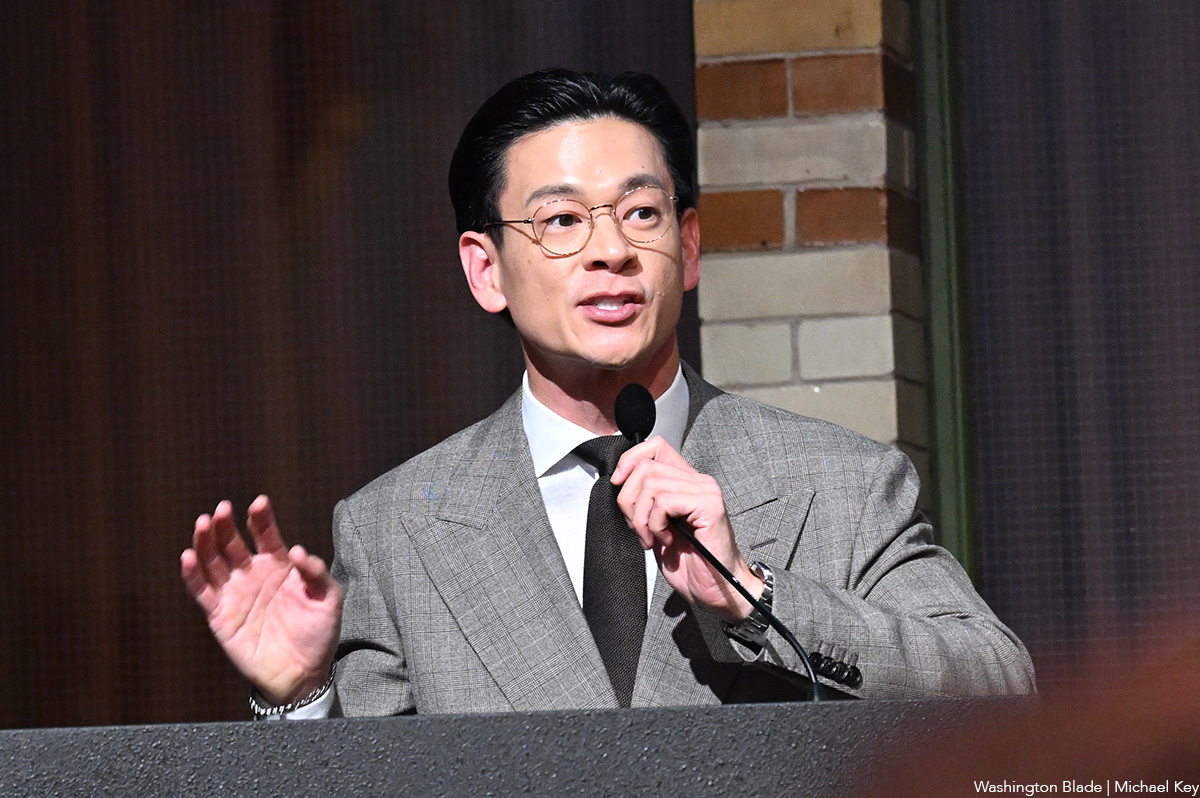
As co-founder and the first executive director of the Victory Fund and Victory Institute, I find the ongoing turmoil between a dozen or more employees and the organization’s new president, Evan Low, deeply distressing—particularly during such a critical election year.
The Victory Fund’s mission has always been clear and important: to elect and support qualified LGBTQ candidates for public office and, in doing so, secure a “seat at the table” from which LGBTQ issues can be advanced. That mission is too important to let internal turmoil diminish it.
I applaud the employees for going public with their concerns. When harassment allegations and other serious complaints threaten to derail an organization that was once so effective, where else are employees supposed to turn? The board of directors has a legal and fiduciary responsibility to the organization and to its donors.
I do not know Mr. Low, nor have I ever met him. Given my role as a founder, former executive director, and major donor, I found that somewhat remarkable. I was also surprised by the organization’s lack of contact with me at any level—whether to seek my financial support, ask for help with fundraising, or simply seek the perspective of someone involved in building the organization from its earliest days.
When Mr. Low was hired, members of the press contacted me about reports concerning his involvement in previous election-law matters. I declined to comment beyond saying that the board had hired an outside search firm to conduct the search and that I was in no position to assess any issues in Mr. Low’s past.
In hindsight, however, I have come to believe that Mr. Low is not the leader the Victory Fund needs at this particular moment. Ultimately, though, this is a matter for the board of directors to resolve. The board has an obligation to act decisively and independently before this internal conflict further damages an organization whose stature, effectiveness, and reputation were built over decades. The work of the founding board, subsequent boards of directors, and former leaders David Mixner, Brian Bond, Chuck Wolfe, and Annise Parker should not be so easily undone.
The Victory Fund once commanded the admiration, confidence, and financial support of countless people—including me. I hope the board recognizes what is at stake and acts before that legacy is lost.
(Correction: An earlier version of this op-ed called for the board to conduct an independent investigation of the allegations. The board did conduct such an investigation.)
William Waybourn is co-founder and the first executive director of the Victory Fund and Victory Institute.

For years, transgender Americans have been told that visibility is important. We should tell our stories, educate people, speak publicly about our experiences and show younger transgender people that a future is possible. I understand that argument because I have participated in that kind of visibility myself. Nearly a decade ago, I appeared in National Geographic’s “Gender Revolution,” in 2017, hosted by Katie Couric. I have written publicly about being transgender, participated in LGBTQ politics and spent years thinking about what it means to transition in America. My history is hardly a secret. But as I have gotten older, I have increasingly found myself wanting something considerably less dramatic: I want the right to be an ordinary man.
That does not mean I am ashamed of being transgender, nor does it mean that transgender activists should stop fighting for our rights. Many of the freedoms I enjoy exist because previous generations of LGBTQ people were willing to be conspicuous when visibility carried considerable personal risk. But equality cannot require permanent visibility. There is a strange expectation placed upon members of minority groups that our lives should contain some larger social meaning. A transgender person who overcomes adversity is called “brave.” Someone who talks openly about transition becomes “inspiring.” Someone who succeeds becomes an example of “trans resilience.” Sometimes those descriptions are deserved and sincerely appreciated. But sometimes I do not want to represent resilience. Sometimes I just want to walk my dogs, sit in a coffee shop with my laptop, complain about Northern Virginia traffic, go swimming, write books and figure out what I am having for dinner. I also want to be able to gossip with my friends in meaningless ways and do off kilter things that resemble fun: axe throwing, bowling, and karaoke.
When I was younger, being transgender occupied an enormous amount of psychological territory. Transition required decisions, explanations and difficult conversations. Other people had questions. My body seemed consequential in a way that other people’s bodies did not. There was always another milestone ahead of me, and for a while it was difficult to imagine reaching a point when gender would no longer dominate my thoughts. Eventually, however, something unexpected happened: life became life again. The questions that occupy me today are increasingly the same mundane questions that occupy millions of other adults. What kind of career do I want? Am I being a good friend? What should I write next? What kind of person do I want to become?
Most strangers who meet me today simply see a man. They do not know my medical history or what I looked like years ago. They don’t know that I looked like a skinny track star, and then was put into the resemblances of a meager nonbinary body. They do not know the chronology of my transition unless I decide to tell them. There is tremendous freedom in that, and I have come to think of it not as deception but as privacy. Nobody introduces himself by providing strangers with a complete inventory of his medical history, childhood insecurities and previous identities. Human beings reveal themselves gradually. Different people know different parts of us, and intimacy develops when we decide that somebody has earned access to more of our story.
Yet transgender people are frequently encouraged to regard disclosure as a measure of authenticity. I no longer believe that it is. There are circumstances in which being transgender matters enormously, and there are others in which it barely matters at all. When I am writing, I want somebody to care about the quality of the sentence. When I am working, I want somebody to care whether I did the job well. When I make a friend, I want that person to discover the complicated human being underneath the surface: my ambitions, flaws, anxieties, ridiculous stories and sense of humor. Being transgender may eventually become part of that conversation, but it does not have to be the first thing somebody knows about me.
That, to me, is one of the least discussed promises of equality. For decades, LGBTQ people fought for the right to be seen because invisibility was often enforced through shame and discrimination. Visibility therefore became a form of liberation. But perhaps successful visibility should eventually produce another freedom: the freedom to become unremarkable. A gay couple should be able to bore their neighbors with complaints about their mortgage. A lesbian should not have to become an ambassador for lesbianism whenever she enters a room. A transgender man should not have to turn his body into a public seminar about gender. He should occasionally be allowed to be some guy. Transgender people, in a sense, should also have the right to be flawed: sometimes we yell at our romantic counterparts, and other times we get fired from jobs for being obnoxious. But we are only human, just like you.
There are, of course, transgender people who cannot or do not want to disappear into ordinary life, and there are young transgender people desperately searching for evidence that adulthood is possible for them. Visible transgender people can provide that evidence. But there should be another story available to those young people as well: you can grow up, transition and eventually spend less time thinking about transition. You can become preoccupied with your career, fall in love, get divorced, write a terrible first draft and spend three days fixing it, worry about your parents, buy groceries and acquire all the wonderfully tedious problems of adulthood.
That might not sound revolutionary, but perhaps that is precisely what makes it meaningful. The ultimate promise of transgender equality should not be that every transgender person becomes visible, celebrated, courageous, or inspirational. It should include the possibility that a transgender man can walk into a room and nobody finds his gender history particularly interesting. He can simply be a man living his life. Increasingly, I think that ordinary freedom is what I wanted from transition all along.
Isaac Amend is a transgender man and writer based in D.C. In 2017, he starred in National Geographic’s ‘Gender Revolution’ documentary. He sits on the board of the LGBT Democrats of Virginia. His author’s portfolio is available at isaacamend.com, and you can catch him on Instagram at: @isaacamend.

Trump uses anti-trans slur against Democratic Senate candidate

D.C.’s LGBTQ homeless facilities face possible hit from Trump funding cuts

10 years later, we still can’t shake Barry Jenkins’s ‘Moonlight’

‘Some Like It Hot’ a wild ride at renovated Bernard Family Theatre

Bessent says Trump chose him for his qualifications, not his sexuality

Eliot Glazer’s new book an engaging collection of essays

Equality Chamber hosts Pride in Business Expo and Profits & Pours

Learn more about Virginia’s queer history

Lula, Flávio Bolsonaro to face off in second round of Brazilian presidential election

‘Merrily’ is for Sondheim super fans, the uninitiated, and anyone in between
-

 Books4 days ago
Eliot Glazer’s new book an engaging collection of essays
-
Out & About4 days ago
Equality Chamber hosts Pride in Business Expo and Profits & Pours
-
Out & About4 days ago
Learn more about Virginia’s queer history
-
Brazil3 days ago
Lula, Flávio Bolsonaro to face off in second round of Brazilian presidential election