Opinions
What’s next for the LGBTQ movement?
Trump’s win requires us to organize, focus on protecting trans community
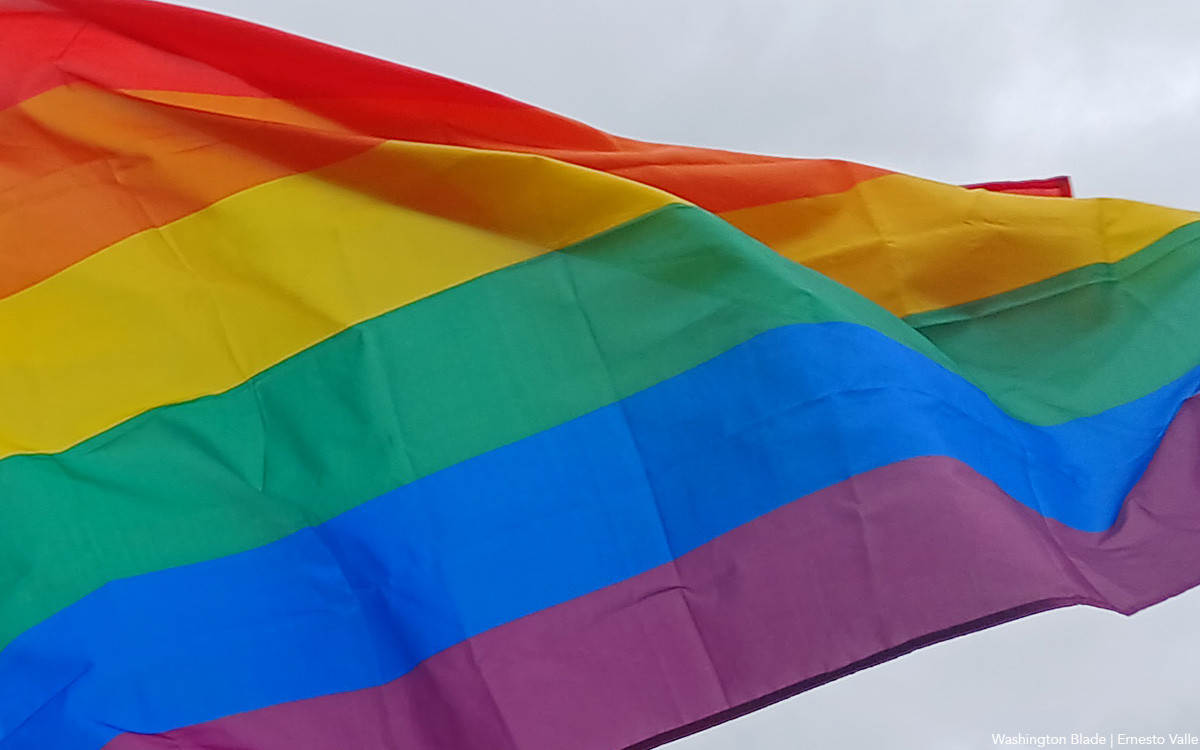
These are frightening times for those of us on the target list of Project 2025, the blueprint for Donald Trump’s second term that he secured in landslide fashion on Tuesday.
Many of us are wondering how this could happen again. Kamala Harris is one of the most qualified presidential candidates to run in our lifetime. She ran against a 34-times convicted felon who staged an insurrection against the government and who faces a sentencing hearing in just three weeks for his crimes. A man who was twice impeached, who courts Vladimir Putin’s attention and approval, and who was found liable for sexual assault. Despite that last fact — and Trump’s bragging about overturning Roe v. Wade — 44 percent of women voters supported him, far more than the polls and pundits predicted.
Those polls turned out to be pretty accurate and Harris was brought down by lingering concerns over the economy and the toll inflation has taken on lower and middle class Americans. Sure, sexism, and racism played a role in this, but too many of us live in a bubble, insulated from the everyday concerns of disaffected blue collar Americans. While many of us crowed about last week’s Wall Street Journal lead story on the booming U.S. economy being the envy of the world, voters in the former “Blue Wall” states were struggling to put food on the table. When you can’t feed your family, you’re not going to vote for the incumbent vice president.
So what’s next? We’ve seen this movie before. Trump will appoint a series of sycophants to run the government; he will undermine the federal workforce and try to fire as many longtime civil servants as he can. He will have a compliant GOP-majority Senate to rubberstamp his Cabinet and judicial appointees. He will probably ban transgender service members from the military on day one. The list goes on.
“The next conservative President must make the institutions of American civil society hard targets for woke culture warriors,” Project 2025 begins. “This starts with deleting the terms sexual orientation and gender identity, diversity, equity and inclusion, gender, gender equality, gender awareness, gender-sensitive … out of every federal rule, agency regulation, contracts, grant regulation, and piece of legislation that exists.”
Indeed, Project 2025 seeks to send us all back to the closet. But, as Harris rightly intoned throughout her short campaign: We are not going back.
The good news — and there is some — is that voters for the first time elected two Black women to the U.S. Senate to serve at the same time, Angela Alsobrooks in Maryland and Lisa Blunt Rochester in Delaware. Sarah McBride becomes our nation’s first out transgender member of Congress. She’s a formidable figure and will be an important voice for trans equality in the face of Trump’s inevitable attacks. At this writing, control of the House hasn’t been decided. If the Democrats can manage to flip it, Rep. Hakeem Jeffries, a capable strategist, becomes the face of our resistance.
We need our LGBTQ allies and advocacy groups more than ever. If you have the resources, donate to Lambda Legal and other legal groups gearing up for the many battles ahead, including over marriage equality. (Some more good news on that front, as California voters overwhelmingly approved Prop 3, which will enshrine marriage rights in the constitution of our largest state.) Volunteer your time with your local equality group, especially if you live in a state like Florida with draconian anti-LGBTQ laws on the books.
No one said being part of a social justice movement would be easy. Sometimes pioneers in these fights don’t live to see the end of the road. Now’s the time to double down on hard work, determination, and compassion, especially for the trans community, which sadly will take the brunt of the incoming attacks. Those of us who are a bit older need to reassure younger voters and activists that their efforts this time are not in vain. Harris’s meteoric ascent to the top of the Democratic ticket and the incredible campaign she ran will make it easier for the next woman to run. That final, ultimate glass ceiling will fall in our lifetime.
So for now, take a breath. Hug the dog. Take a walk in the woods, whatever you need to refocus. Four years is a blip and will fly by. The Democratic bench is deep. And the march toward full equality for our community is unstoppable. Setbacks are inevitable but we learned a long time ago that love wins. So fight on.
Kevin Naff is editor of the Washington Blade. Reach him at [email protected].




Opinions
Supreme Court ruling on trans athletes is a public health story
Justices label an entire group as ‘lesser’
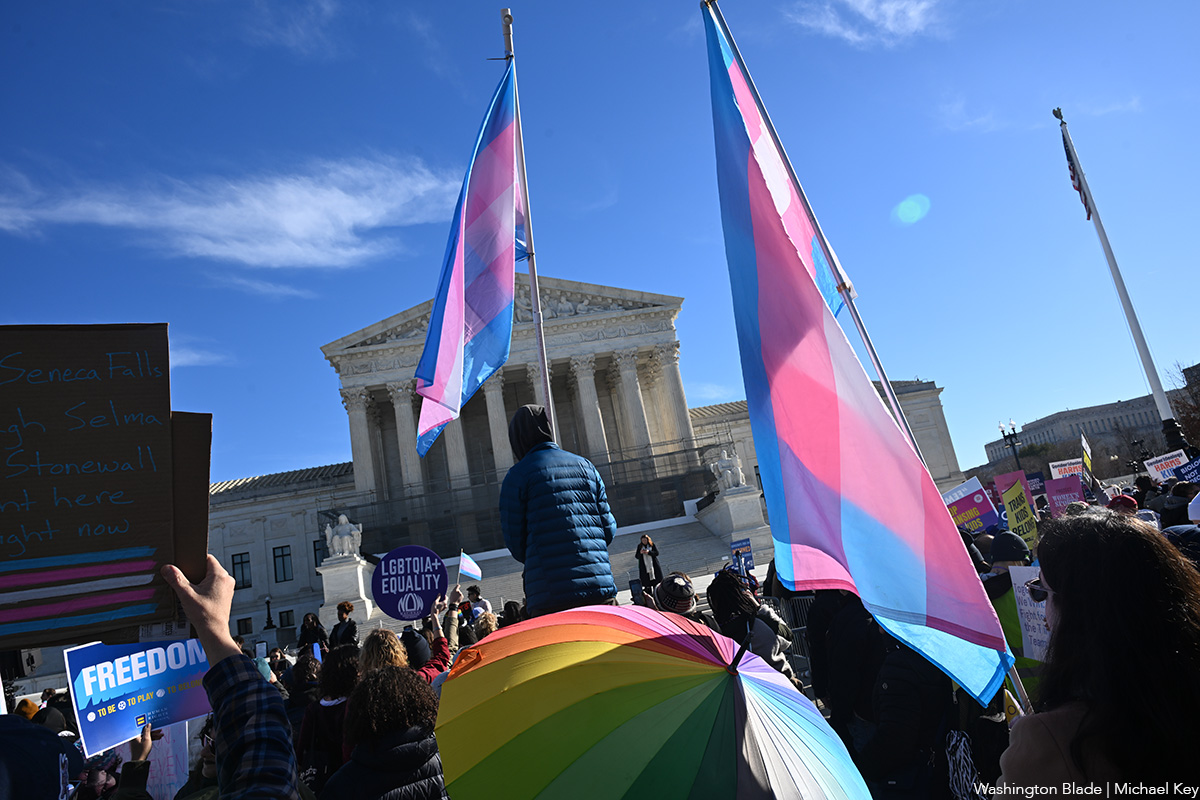
On June 30, the Supreme Court ruled, 6-3 that states may bar transgender girls and women from girls’ and women’s sports teams. Justice Brett Kavanaugh wrote that states may keep these teams for “biological females” and set eligibility by “biological sex.” The country will now spend days arguing about fairness on the field. We’ll debate race times, records, and who has earned a place on the roster.
I want to redirect this conversation, because I study something different and because the frame we’ve settled on misses the something important.
I’m a public health researcher. My work focuses on how the conditions people live under get into the body and influence health over a lifetime. I’m talking about conditions such as laws, policies, and the everyday climate of acceptance or rejection.
Two features of this ruling deserve more attention than the sports fight is giving them: the lifelong costs even a “narrow” decision sets in motion, and the question the Court declined to decide.
Start with how a ruling like this reaches the body, because that pathway is what makes this a public health story. My area of research has a name for what laws like this do: structural stigma. It’s the way statutes and court rulings can mark an entire group as lesser, and in doing so become a chronic stressor for every member of that group.
The overwhelming majority of transgender kids will never compete for a state title. They still learned, from the highest court in the country, that their belonging is conditional. The stress that follows from that lesson is associated with higher rates of depression, anxiety, and poorer health across LGBTQ populations. A consistent finding in this literature is that social acceptance can disrupt such harmful trajectories. But this ruling pushes the country the other way.
I want to emphasize that the question of fairness is important, and the girls and women who raise it deserve to be heard. But the ruling does not resolve this question. It flattens it.
The science on athletic performance and gender transition is truly complicated and individual. It varies by sport, by person, by age, and by life circumstance. The Court grounded its decision in biological sex and then declined to reckon with what biology shows. The West Virginia teenager at the center of the case has been on puberty blockers since before male puberty began. The advantage the law claims to police never developed in her. A rule that treats her like an adult athlete disregards biology.
Here is the part a policy-minded reader should pay attention to. For decades, the central legal question about transgender Americans has been this: When the government treats transgender people differently, how good does its reason have to be? Courts don’t judge all discrimination in the same way. If a law sorts people by race or sex, the state must provide a strong justification, and many such laws fail. But if a law tries to draw an ordinary distinction, like who qualifies for a license, judges tend to wave it through as long as there’s a reasonable purpose. Whether a law singling out transgender people gets the skeptical look (what lawyers call heightened scrutiny) or the easy pass has not been settled. And this ruling, despite its subject, still did not settle it.
How did the Court avoid the question its own case raised? Following last year’s decision in Skrmetti (the gender-affirming care case), the Court described these laws as drawing lines by biological sex, not transgender status. Courts endorsed sex-separated teams long ago; separate teams are the reason girls’ sports exist. So a law framed as a “sex” line lands on ground the courts have already approved, while a “transgender” line would have forced the choice between the skeptical look and the easy pass. The Court chose the frame that let it stay silent.
That silence creates exposure for transgender people – and I mean that word the way my field of public health uses it, for a condition that puts a whole population at risk. The same unanswered question now hangs over health care, employment, identification documents, public accommodations, and every domain where the level of scrutiny is the whole ballgame. And the Court read Title IX, the federal law banning sex discrimination in schools, through the same lens: “biological sex,” full stop. Advocates are right to see protections far beyond sports as newly vulnerable.
This is where my own research makes me most uneasy. I study LGBTQ adults in their 60s, 70s, and 80s, who came of age in a far more hostile America. Their lives show that the cost of stigma accumulates. Chronic stress works its way under the skin and surfaces years and decades later. Researchers see these deleterious outcomes in mental health, in physical health, and in emerging research like my own that explores the aging brain. So we should understand this decision for what it is: a long-term health decision the country is making on behalf of a generation of children.
Practically, the ruling compels no state to do anything. It tells the more than two dozen states that have passed these bans that they stand on solid ground, and it sends the rest of the fight back to statehouses and school boards, where trans youth and their families often hold little power. The ruling arrives just over a year after the Court let states ban the medical care many of these same young people depend on. Each law is a single stressor. Together they are a dangerous environment.
We know what protects these children. Acceptance, inclusion, and the dignity of being treated as though they belong. The Court made all three harder to offer, and left open the question that determines how much harder it can get. It is the children who needed those protections who will bear the cost, this sports season and for the rest of their lives.
Harry Barbee, Ph.D., is an assistant professor at the Johns Hopkins Bloomberg School of Public Health where they study LGBTQ health, aging, and public policy.
Opinions
It’s good to see some justices standing up to Trump
But expanding the court is necessary to save our democracy
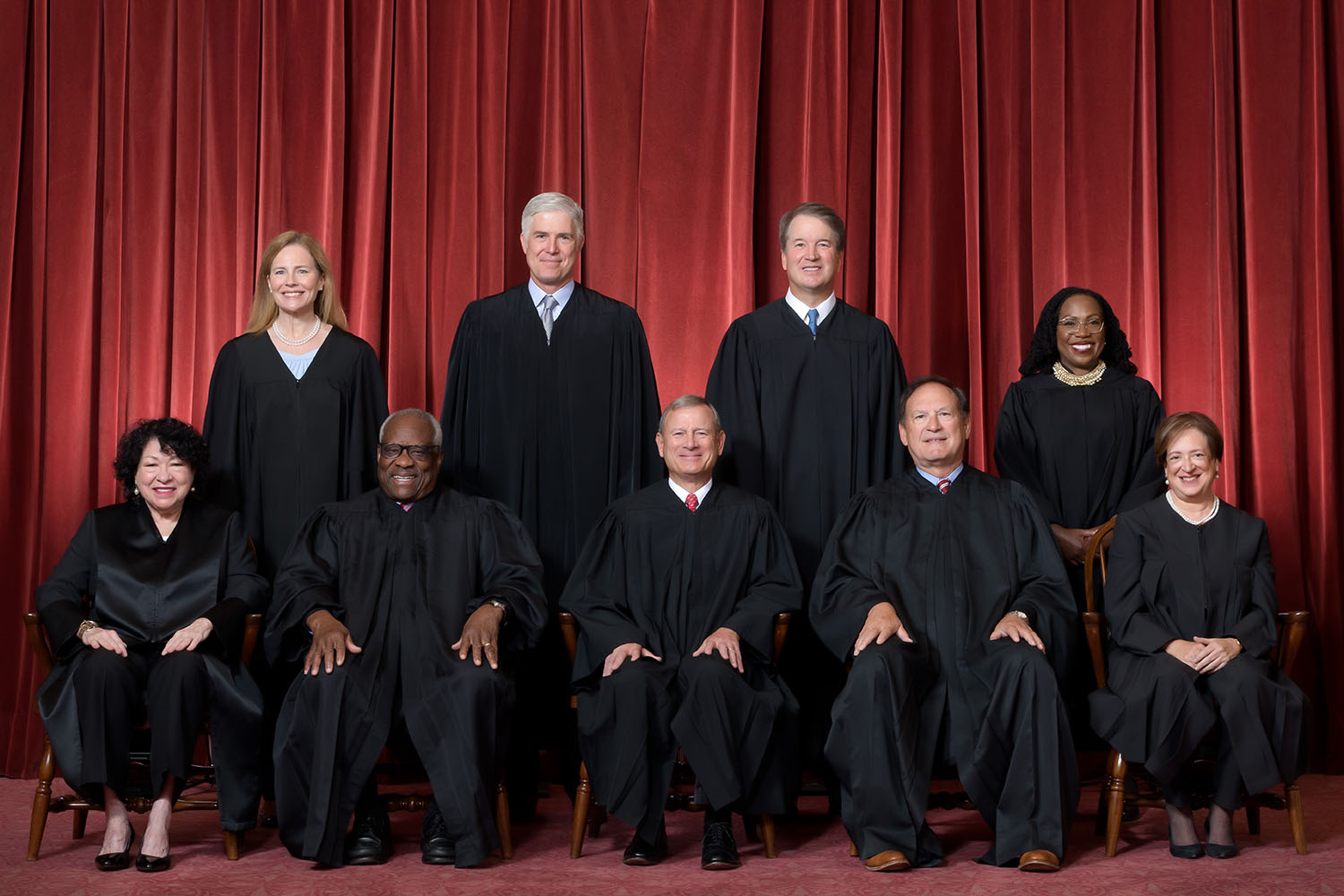
It was shocking to see some of the MAGA-loving majority on the Supreme Court actually voted against the felon in the White House a couple of times. Not surprisingly, Samuel Alito and Clarence Thomas were steadfast in their ultra-MAGA, outrageous views. They just want to help make Republican doctrine, which today means helping to make Project 2025 a reality, a success. They couldn’t care less about the Constitution. We can just imagine how they voted on the E. Jean Carroll case, where Trump has been trying to weasel out of his obligation to pay the woman he was convicted of committing sexual assault against. But we won’t know for sure since the Court simply denied hearing the case, so there was no recorded vote or dissent.
On what was a simple case, the constitutional principle of birthright citizenship, Chief Justice John Roberts, Amy Coney Barrett, and Brett Kavanaugh, actually voted to uphold the Constitution along with the three liberal justices, Sonia Sotomayor, Elena Kagan, and Ketanji Brown Jackson. But even then, Kavanaugh was only halfway there. But as could have been predicted, Alito and Thomas voted the other way, and this time were joined by Neil Gorsuch. Then on the question of trans women playing sports on a women’s team, the vote was 6-3 against, and you can figure out who the three were who went against the felon, and supported the women.
Interestingly, in the case of Mississippi and mail-in ballots, allowing those mail-in ballots to be counted up to five days after the election if they were postmarked by Election Day, Roberts and Coney Barrett went with the liberals. Once again, you knew before the vote where Alito and Thomas were, and in this case, they were joined by Kavanaugh and Gorsuch, trying to help Republicans steal the next election.
I have no love for Roberts, but it seems every so often he is trying to save his own reputation since all this is the Roberts court, as he is the chief justice. I have never known what to make of Coney Barrett, who has occasionally sided with the more liberal justices, to the consternation of Trump, who believed when he nominated her, she would always be with him. She mostly has, and he can be thankful she voted with the other slime bags, and granted him total immunity as president in the 2024 decision. In essence, placing him above the law. In so many ways the felon has acted using that immunity. We now see a blatant case of this with the release of his new financials, and his $2 billion windfall with crypto.
Roberts nearly always votes with the Trump judges, but if there is a decision that is so obviously a gift to the felon, Roberts every once in a while could go with the liberal wing of the court. We need to remember he was appointed by George W. Bush. But again, this court will always be known as the Roberts court, the one that bowed down to the felon in the White House, and his fascist aids like Stephen Miller, and the author of Project 2025, Russell Vought, at OMB.
So, what can we do to change this, and to fight back? The first thing is to elect a Democratic Congress in 2026, and then a Democratic president in 2028. Then those we elect will have to decide how to proceed. One answer to that question is simple. Vote to add more justices to the Supreme Court. That simply requires a bill to pass with a majority in both houses of Congress, and the president’s signature. To the surprise of many it has been done seven times since the court was created in 1789. There is no number of justices for the court stipulated in the Constitution. Yet it has remained at nine since 1869. Although that fix may sound easy if Democrats take over Congress and the White House, we must remember, Franklin Roosevelt tried in 1937 to expand the court by six justices to protect his New Deal programs. After a fight that lasted 168 days, the bill to do this was defeated. I fear any proposal to expand the court today, may actually have the same fate. There will be those who say it will divide the nation even further, and there will be a constant tit-for-tat on everything. The only way to win such a vote will be if enough people are convinced the felon and his gang of thieves, have so destroyed our democracy, that changing the court is a necessity if we are to save our democracy for the next 250 years.
Peter Rosenstein is a longtime LGBTQ rights and Democratic Party activist.
Commentary
When a church fears the rainbow
Puerto Rico pastor objected to Pride symbols outside congregation
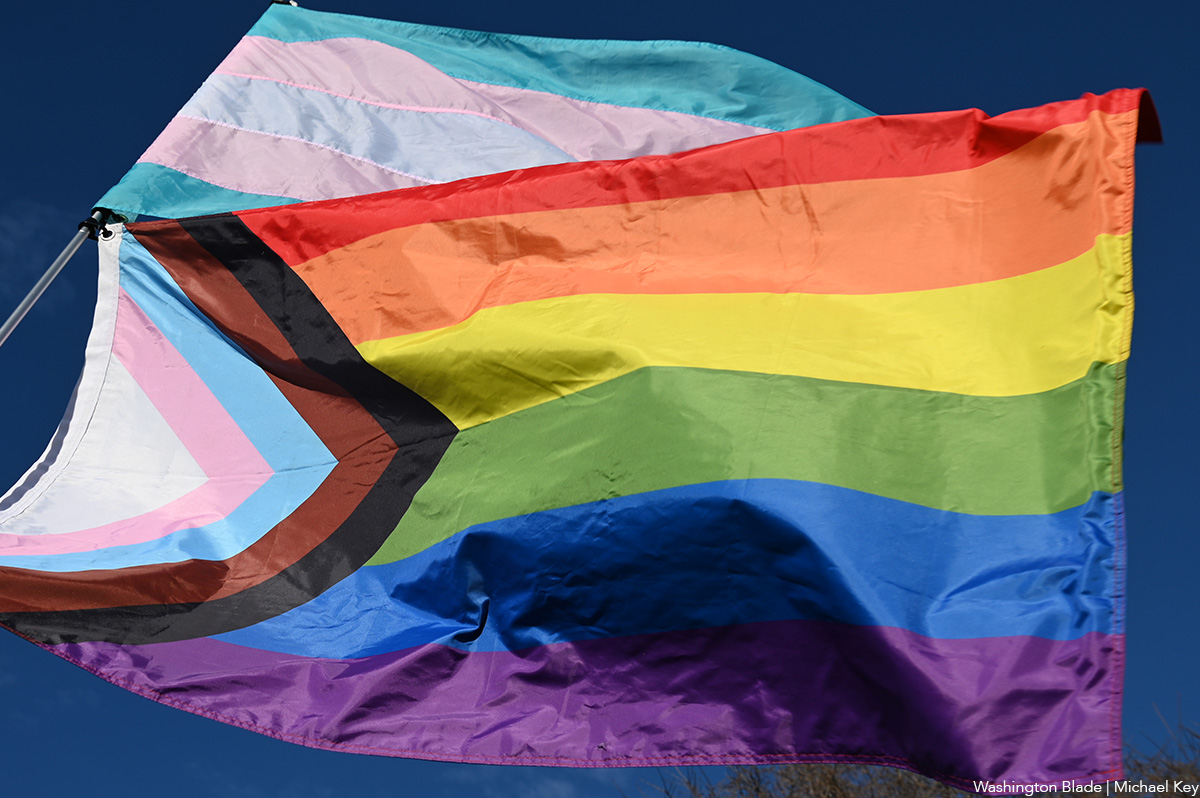
There are moments when an incident stops being merely a local story and begins to reveal something much deeper. What happened on June 28 outside One Church, in Comerío, Puerto Rico, belongs in that category.
I do not know who painted the rainbow colors on the asphalt and on a roadside guardrail. I do not know what motivated them, and it is not my place to justify their actions. If someone believes a law was broken, there are authorities and legal mechanisms to address that. That is not the point of this reflection.
The point is the words that followed.
Hours after those colors appeared, Pastor Jorge J. Santiago Reyes went live on social media. He said he felt threatened. He described what happened as a physical attack against his church. He appeared angry and disappointed. He called those who painted the rainbow “cowards” and “charlatans.” He expressed frustration with the support that, according to him, the municipal government of Comerío has shown toward the LGBTQ community, and with those who support posts related to that community. He repeated several times that the people responsible had “crossed the line.” He ended his message by saying, “These charlatans have to be stopped.”
As I listened to his words, I stopped thinking about the paint.
I began thinking about fear.
There is one phrase the pastor repeated again and again: “They crossed the line.” Yet he never explained what that line was. If he was referring to a possible violation of the law, that is for the authorities to determine. If he meant respect for property, there are also procedures to deal with that. But when that line remains undefined and the message begins to associate a rainbow with a threat, the question changes. It is no longer only about a guardrail or a road. It becomes a question about what boundary, in the pastor’s view, was actually crossed.
Paint can be erased.
A brush can cover the asphalt and return a guardrail to its original color.
What does not disappear so easily is the meaning of those colors.
And perhaps that is where the real conflict begins.
It is significant that this happened precisely on June 28, the day when the LGBTQ community remembers a history marked by exclusion, violence, and the struggle for dignity. What represents memory, hope, and the possibility of living without hiding for millions of people was presented by others as a threat.
I do not know why someone painted that rainbow. I do not need to know in order to ask whether those were the words society should expect from a pastor.
A religious leader may feel hurt, frustrated, or angry. What he cannot forget is the responsibility that comes with every public expression. His words do not end when a livestream ends. They move beyond the space of his church, reach people who may never share his faith, and help shape the way others see those who think differently. When a pastor calls other people “charlatans” and “cowards,” says they “have to be stopped,” and turns a rainbow into evidence of an attack, he is no longer speaking only from frustration. He begins to build a discourse that can feed rejection toward a community far larger than the people responsible for that act.
There was another moment in the livestream that caught my attention. The pastor reminded viewers how much he has served Comerío, how much he has accompanied his community, and how much he has worked for it. I have no reason to question that service. I am sure many people can testify to the good he has done.
That is precisely why it was difficult to hear.
Pastoral vocation is not about reminding a town of everything one has done for it when conflict appears. Service does not lose its value when it goes unrecognized; it loses something when it becomes an argument to claim a moral position from which to speak down to others. A person who serves does so because that is the nature of the calling, not because that service grants authority to discredit those who think differently.
As a pastor, that part of the message left me deeply uneasy. Not because I expect ministers of God to be perfect. We are not. But because our words carry weight, we are called to speak with greater responsibility. Some expressions build bridges. Others raise walls. Some words invite encounter. Others end up justifying rejection.
The paint will disappear. A brush will be enough to cover the asphalt and return the guardrail to its original color.
The words will not disappear as easily.
They will remain recorded in a video, shared again and again on social media, and remembered by those who heard them. They will remain long after the last trace of paint has been erased.
When this episode is remembered, it probably will not be because of the rainbow that appeared outside One Church, in Comerío, Puerto Rico.
It will be because of the words a pastor chose to use when speaking about it.
And that difference changes everything.

Campaign launched to elect more LGBTQ candidates to ANC seats

Gay librarian to discuss new novel at Green Lantern

Calendar: July 10-16

Gay Fla. Democrat Elijah Manley sees opportunity in Trump’s second term

Ron Singer, owner of popular Mount Vernon gay bar Leon’s, dies

In Trump’s divided America, Michael Weinstein’s AHF responds

Turkish authorities refuse to allow gay cruise to dock in country

When a church fears the rainbow

PHOTOS: Crush Dance Bar