News
D.C. businessman Ted Harris dies at 73
Served in Department of Transportation
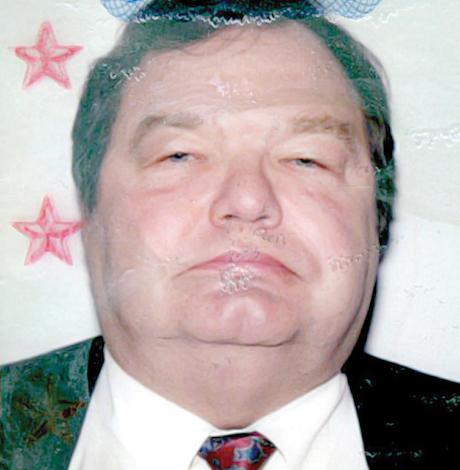
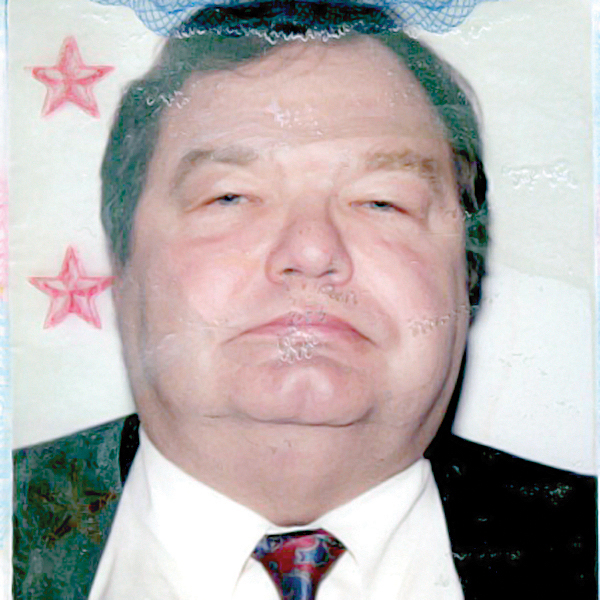
Harris, 73
Theodore P. “Ted” Harris Jr., a recognized expert in U.S. transportation policy and longtime airline industry consultant, died May 21 at Sibley Memorial Hospital in Washington, D.C. from complications associated with spinal fusion surgery. He was 73.
Prior to his retirement, Harris served as president of Airline Industry Resources, an airline industry consulting company he founded in the 1980s in McLean, Va.
William Kiely, a business associate and longtime friend, said Harris, a lifelong Democrat, served as an undersecretary at the Department of Transportation under the administration of President Gerald Ford in the 1970s where, among other things, he played a role in saving Pan American Airlines from closing its doors.
Although the airline giant eventually went out of business in 1991, the efforts by the government and airline industry advocates to keep it in business in the mid-1970s have been credited with saving thousands of airline industry jobs for more than 15 years.
Harris also played a role in helping the U.S. Postal Service expand and improve its Express Mail service in the 1980s and early ‘90s through a coordinated air transport system at a time when private mail and parcel carriers were cutting into the Postal Service’s revenue from business customers and consumers.
The Chicago Tribune reported in 1991 that under a Postal Service contract from 1988 through 1991, Harris’s Airline Industry Resources firm prepared a detailed report on air transport and postal delivery services for the Postal Service called “Air Transportation Management Strategy: 1990 and Beyond.”
In the 1980s, Harris also served as publisher of two magazines that reported on airline industry issues, Airline Executive and Commuter Air.
At the time, he emerged as an outspoken opponent of airline industry deregulation, writing newspaper commentaries and speaking on television news programs, including the Public Broadcasting System’s MacNeil-Lehrer Report, urging Congress to scrap an extensive deregulation proposal that it eventually approved.
A Dec. 30, 1984 story in the Washington Post reports that Harris personally filed a last-minute lawsuit to block the now-defunct Civil Aeronautics Board, which for years had regulated practices of U.S. airline companies, from ending anti-trust immunity for travel agents. Deregulation opponents argued that the immunity status for travel agents helped consumers by enabling travel agents to remain independent from airline companies and to search for the best possible fares for passengers.
In a December 1990 commentary in the Chicago Tribune called “Air Deregulation: Chaos Out of Order,” Harris and co-author Paul Steven Dempsey pointed out that, at that time, deregulation polices resulted in far fewer airline companies than there were prior to deregulation.
Kiely and others who knew Harris said that in addition to his airline industry work he served diligently as an informal counselor and mentor for people with alcohol and substance abuse problems in a volunteer capacity. Harris, who was open about his own alcoholism and his success in overcoming it through a 12-step program, often took the initiative to take under his wing others struggling with drinking or drug problems, including members of the LGBT community.
In one of many similar examples, Kiely said a neighbor from McLean, Va., who moved next door to Kiely’s home near Albuquerque, N.M., told him about a son who became addicted to drugs after completing his service in the military, where he performed air traffic control-related work.
“After he got out he got into drugs, but he was finally doing OK, was married and had a kid,” Kiely quoted the neighbor as saying. “To my amazement, he told me a guy named Ted Harris was instrumental in getting him off drugs and even got him a job as an air traffic controller at Washington National Airport,” Kiely said.
According to Harris’s sister, Rosemary Harris Abate, Harris was born in New York City, where he attended St. Raymond’s Elementary School and graduated from Xavier Military Prep High School in Manhattan. He received his undergraduate degree in business from New York’s Fordham University and received master’s degrees from both the University of Tennessee and the University of Maryland, Abate said in a family prepared obituary.
Kiely said Harris later taught business at the University of Maryland. Harris served on the board of directors of River Park Mutual Homes, a cooperative apartment and townhouse development in Southwest D.C. where Harris lived since the mid-1990s.
Friends said Harris’s friendly demeanor and support for their personal needs continued in recent years despite his own serious medical challenges. He had been under treatment for an auto immune disorder called Myasthenia Gravis for more than 10 years. In April, he underwent complicated and risky spinal fusion surgery at Georgetown University Hospital for a spinal condition that doctors told him could lead to paralysis if not corrected by surgery.
Following the surgery he spent nearly four weeks at two local rehabilitation centers undergoing physical therapy to help him recover from the spinal operation. He was taken to Sibley Memorial Hospital on May 21 after developing a urinary tract infection that doctors said appears to have triggered a heart attack or pulmonary embolism that took his life.
“He loved the outdoors, particularly sailing the Intra Coastal Waterway and the Chesapeake Bay,” Abate said.
“Ted was very fortunate in having amazingly kind friends to whom the family is extremely grateful,” Abate said. “If anyone wishes to remember Ted, please do so by doing something kind for someone else today.”
Harris is survived by his sisters Rosemary Abate and her husband Robert of Hopkinton, Mass., and Virginia Harris Bartot and husband Morris of Chicago, six nieces and nephews, and many friends in Washington, D.C. and across the nation.
A memorial gathering in honor of his life is scheduled for 1 p.m., Saturday, Aug. 6, in the upstairs room at Mr. Henry’s restaurant at 601 Pennsylvania Ave., S.E., Washington, D.C. A scattering of his ashes at the Chesapeake Bay is scheduled to take place shortly after the memorial.
Canada
Monument to LGBTQ Canadians officially unveiled
Thunderhead honors those who suffered government-sanctioned discrimination
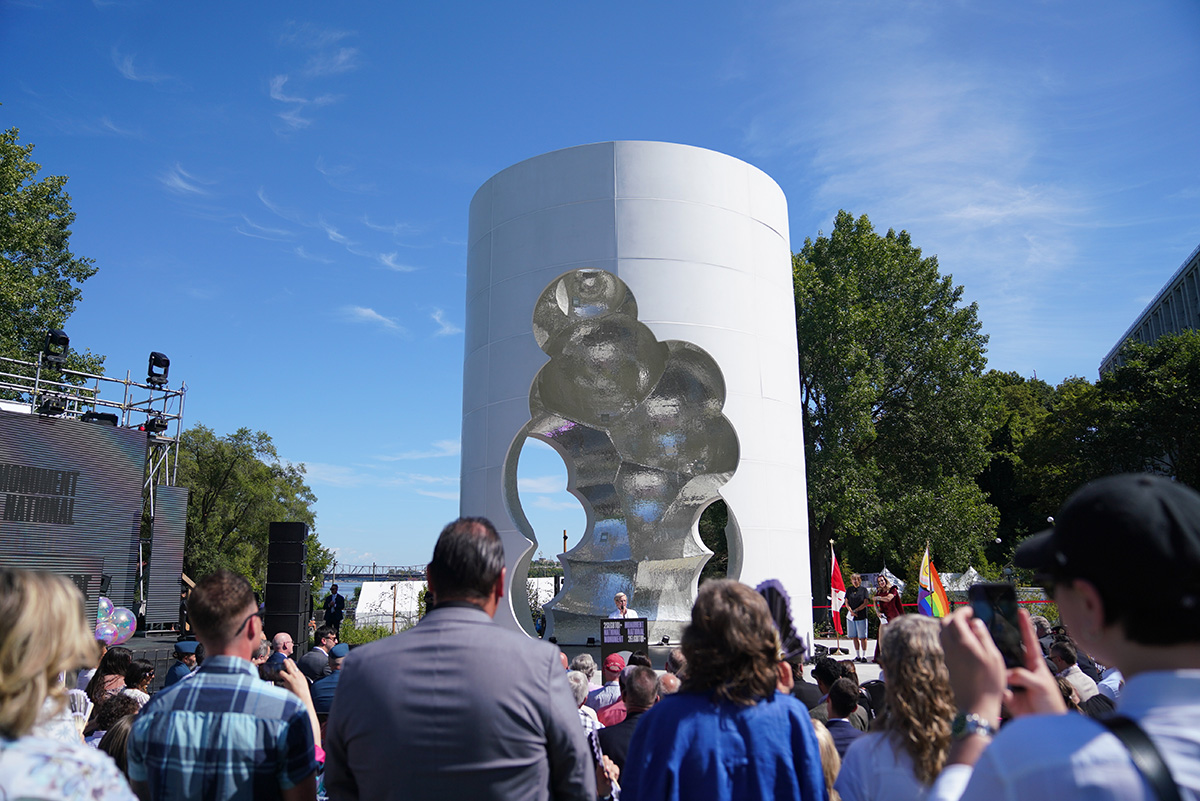
A monument that pays tribute to LGBTQ Canadians who suffered government-sanctioned persecution and discrimination officially opened in Ottawa on Aug. 21.
Former Prime Minister Justin Trudeau, Governor General Louise Arbour, and Women and Gender Equality Minister Rechie Valdez are among those who attended the ceremony.
A Canadian government press release notes Thunderhead, which is located on Parliament Hill, “recognizes the historic discrimination faced by 2SLGBTQI+ (two-spirit, lesbian, gay, bisexual, trans, queer, intersex, plus) people in Canada, including during the LGBT (lesbiennes, gaies, bisexuelles, trans) Purge.”
(French and English are Canada’s official languages.)
Trudeau in 2017 formally apologized to Canadians who suffered persecution and discrimination under the country’s anti-LGBTQ laws — including those convicted of “gross indecency” before Canada decriminalized consensual same-sex sexual relations — and policies. Trudeau also formally apologized to those who were fired from the Royal Canadian Mounted Police and the country’s military and civil service from the 1950s to the mid-1990s because of their sexual orientation or gender identity.
The Canadian government later settled a class action lawsuit that LGBT Purge victims filed.
The settlement funded the monument.
The Canadian government’s press release notes an “all Canadian team” from Winnipeg, Manitoba, designed it. The monument is also located on the Anishinabe Algonquin Nation’s traditional territory.
“It celebrates the resilience and achievements of those who fought for equality, educates visitors, and inspires the change still needed so that everyone can openly love who they love and express and identify themselves as they choose,” reads the press release.
“Thunderhead stands as a tribute to the lives, stories, and contributions of 2SLGBTQI+ people across Canada,” said Prime Minister Mark Carney on Facebook. “It’s reminder of the discrimination too many endured — and honors those who fought to build a country where everyone can live freely, safely, and with dignity.”
Baltimore
The fight to save one of Baltimore’s last gay bars
Leon’s closed in July after its owner’s death
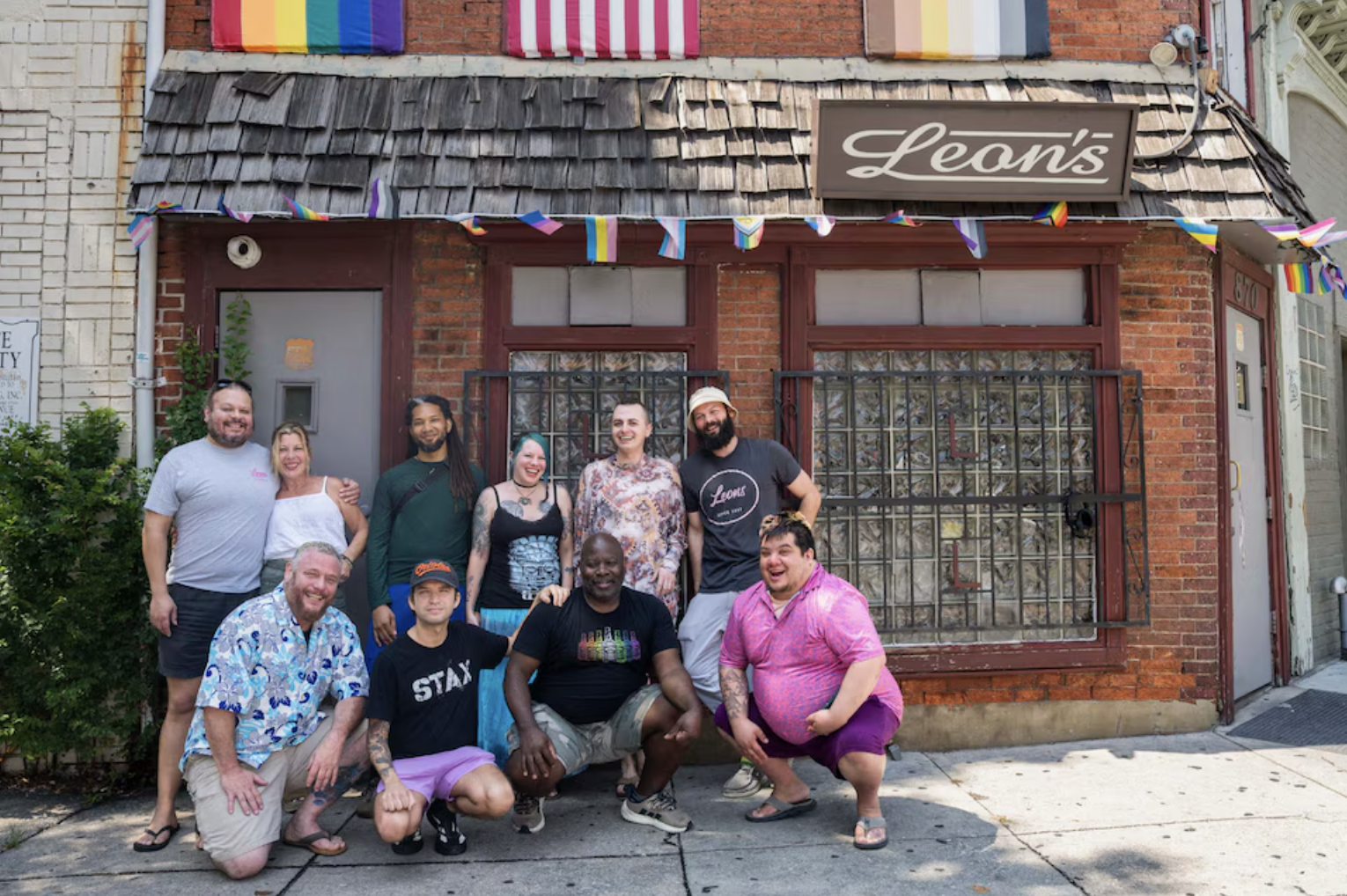
By JULIE SCHARPER and WESLEY CASE | Soon after Jim Becker came out as gay in 1967, he ducked into a Mount Vernon bar called Leon’s.
In the dark, smoky bar, men used pseudonyms for fear of being outed, as homosexual acts were illegal in Maryland. Bartenders, wary of vice squad raids, would blow a whistle if couples leaned in for a kiss.
But to Becker, arriving at Leon’s was a kind of homecoming. He could explore his identity, connect with other gay men and build community in the anxious years before the 1969 Stonewall uprising, a pivotal moment in the LGBTQ rights movement.
The rest of this article can be read on the Baltimore Banner’s website.
Africa
When home becomes a journey: migration, memory, and the African diaspora
People carry pieces of previous lives wherever they go
Sometimes I wonder whether home is a place or a feeling.
I have lived in places where I never imagined I would stay. I have crossed borders I never expected to cross and spent years in refugee communities where people wake up each morning wondering what the future will bring. I have known Kakuma Refugee Camp in Kenya, spent time in Zambia and South Africa, and now live in Gorom Refugee Settlement in South Sudan.
So, when I think about migration, I don’t think first about passports, borders, statistics, or immigration offices.
I think about people.
I think about the mother who leaves everything behind because she wants her children to survive. I think about the young person crossing a border with little more than a phone, a few clothes, and memories of a life that may no longer exist. I think about the refugee who has spent years waiting for a durable solution and still doesn’t know where they will eventually call home.
Migration is often described simply as movement from one place to another. But sometimes it is much more than that.
It can mean leaving behind a version of yourself.
Africa has always been moving
Africa’s migration story did not begin with modern refugee camps or today’s international borders.
People have moved across this continent for generations. They have followed trade routes, searched for pasture and water, moved for marriage, education and employment, escaped conflict, and built new communities elsewhere.
Migration has always been part of African life.
Today, people move for many different reasons. Some flee war and political instability. Others escape persecution or discrimination. Some leave because they cannot find work or see a future for themselves. Others migrate to study, find employment, start businesses, join family members or simply seek new opportunities. There is an important distinction here.
Not every African migrant is a refugee.
A refugee is someone forced to leave because returning home is unsafe. An asylum seeker is someone seeking protection and waiting for a decision on their claim. Exile can mean living away from one’s homeland, sometimes unwillingly. The diaspora is broader still: it includes people of African origin living outside their country or continent, whether they left by choice or were forced to leave.
These words matter because behind each one is a human story.
When leaving is not a choice
I know what it means when leaving is no longer a choice.
Forced displacement takes something from you that is difficult to explain. You may still have your memories, your language and perhaps a few possessions, but the ordinary things that once made life predictable can disappear.
You begin again.
Sometimes you begin again in another country. Sometimes you begin again in a refugee camp.
My experiences in Kakuma taught me that displacement does not necessarily end when you cross a border and reach somewhere safer. The uncertainty can continue for years.
Now, in Gorom Refugee Settlement, I see that uncertainty in the lives of people around me. Mothers worry about food and the health of their children. Young people wonder whether they will return to education. Others wait for resettlement or another safe pathway while trying to build a life with very limited resources. There is a strange feeling in waiting.
You are physically present somewhere, but mentally you may still be traveling towards a future you cannot see.

What happens to identity?
One of the hardest questions migration raises is: Who am I when I am no longer where I came from?
A person can cross a border in a few hours. Identity doesn’t move that quickly.
You carry your accent.
You carry your food.
You carry your mother’s stories.
You carry songs you heard as a child.
You carry the names of people who may never know where you ended up.
You carry memories.
And sometimes you carry pain.
I have met people who have lived in several countries and can no longer give a simple answer when asked where they are from. They may have been born in one country, grown up in another, lived in a refugee settlement somewhere else and now dream of resettling in a fourth.
Does that make them less African?
I don’t think so.
Perhaps it makes their identity larger.
Carrying Africa across borders
The African diaspora is sometimes discussed as though it were simply a population scattered around the world. I see it differently.
People carry pieces of home wherever they go.
An African family living in Australia, Canada, Britain, the United States, or elsewhere may still cook the food they grew up eating. They may speak their mother tongue at home, send money to relatives, listen to African music, support community projects and remain closely connected to events thousands of miles away. Migration doesn’t necessarily erase belonging.
Sometimes it creates several belongings at once.
The diaspora also contributes enormously to communities back home. Remittances help families pay school fees, buy food, build houses, access healthcare and start businesses. Migrants also carry knowledge, professional experience, ideas and connections that can benefit communities across borders.
A person may leave Africa physically and still spend much of their life contributing to Africa.
That matters.
The price of being a migrant
But migration has another side.
Not every new country means a new beginning.
For some migrants, the journey leads to racism, xenophobia, exploitation, or discrimination. People can be judged because of their nationality, accent, skin color, immigration status or refugee identity.
Others discover that qualifications earned at home are not recognized. A professional becomes a cleaner. A teacher struggles to find work. A skilled worker is told to start again.
There is nothing wrong with honest work. The problem begins when someone’s dignity is reduced because they are a migrant.
For refugees, bureaucracy can become another form of suffering. A person can become a case number, waiting months or years for interviews, decisions, relocation opportunities, or family reunification.
But life doesn’t stop while the paperwork continues.
Children grow older, parents become sick, people lose loved ones, birthdays come and go and still the waiting continues.
I sometimes wonder whether the people making decisions about migration fully understand how heavy that waiting can become for someone sitting on the other side of the process.
Women, children, and LGBTQ refugees
Migration does not affect everyone in the same way.
Women often carry enormous responsibilities after displacement. They may become the main providers for their children while dealing with their own trauma and uncertainty.
Children experience displacement differently. They may not fully understand why they had to leave home, but they understand the absence of familiar faces, schools and routines.
Young people face another difficult question: how do you plan a future when you don’t know which country you will be living in?
For LGBTQ refugees, the journey can be even more complicated. Some leave because the place where they were born no longer feels safe for them. They may have experienced rejection, threats, violence or discrimination before they ever reached a refugee settlement.
And yet, even in such circumstances, people create community.
In Gorom, LGBTQ refugees and asylum seekers come from different African countries and backgrounds. We don’t always agree on everything. But we understand something important: when the world has already made you feel unwanted, having people around you who understand your experience can mean everything.
Community can become another form of home.
Should borders decide our worth?
I understand why countries have borders. Countries have laws and responsibilities.
But I sometimes ask myself a simpler question: Should crossing a border change the value of a human life?
A child doesn’t become less deserving of food because they were born on the other side of a political boundary.
A mother doesn’t become less worthy of safety because she crossed without the right document.
A refugee doesn’t stop being a human being while waiting for an immigration decision.
From a Humanist perspective, this seems straightforward to me. Human dignity should not depend on nationality.
We can have immigration systems and still treat migrants with compassion.
We can protect borders without forgetting that the people standing behind those borders are human beings.
We can disagree about migration policy without dehumanizing migrants.
That balance isn’t easy. But perhaps that is exactly why we need more humanity in conversations about migration.
What does home mean now?
I have asked myself this question many times: Where is home?
Is it where I was born?
Where I first felt safe?
Where my memories live?
Or perhaps home isn’t always a geographical location.
Maybe home can be the people who stand beside you.
Maybe it is the language you speak when you are emotional.
Maybe it is the smell of food that takes you back to childhood.
Maybe, after so much has been taken away, home becomes something you slowly rebuild.
My birthday falls on Sept. 12. Birthdays usually invite us to think about another year of life. But for someone who has experienced displacement, another birthday can mean something deeper.
It means I made it through another year.
I am still here.
And I think about the many refugees who don’t know whether they will be safe long enough to celebrate their next birthday. I think about children growing up in camps who deserve to celebrate their birthdays in a home they can call their own.
That thought stays with me.
We are more than where we come from
Migration has taught me that people cannot be reduced to the countries printed on their passports.
We are our memories, our relationships, our struggles, our dreams, and our choices.
Africa’s diaspora is not simply a story of people leaving Africa. It is also a story of people carrying Africa with them.
And the refugee experience is not simply a story of loss. It is also a story of survival.
I don’t know where my own journey will eventually take me. Perhaps that is one of the things migration teaches us: we can make plans, but life sometimes writes a different story.
What I do know is that every person deserves the chance to live without fear, to love without persecution, to work with dignity, to raise children safely and to imagine a future.
Borders may separate countries.
They should never separate us from our humanity.
If migration has taught me anything, it is that home is not always the place we left behind. Sometimes home is the safe place we are still searching for.
And sometimes, while searching, we become one another’s home.

Dolly Parton dies at 80

Monument to LGBTQ Canadians officially unveiled

The fight to save one of Baltimore’s last gay bars

When home becomes a journey: migration, memory, and the African diaspora