Arts & Entertainment
QUEERY: Maj. Brian Dix
The former Marine Band director answers 20 gay questions


Maj. Brian Dix (Photo by Sgt. Bobby J. Yarbrough; used with permission from the United States Marine Corps)
Major Brian Dix came to Washington in May 1984 with the Marine Corps and at the end of last year, retired as director of the Commandant’s Own — United States Marine Drum & Bugle Corps. He was only the fourth director of the group since its 1934 founding.
During his 16 years directing the Corps, he wrote original compositions such as “Reveille,” a swing march dedicated to wounded warriors, “Birth of a Drum Corps” for the 75th anniversary of the Corps and “Corpsman Up,” a march dedicated to the Navy corpsman who served alongside the Marines.
He received many personal decorations for his work including the Navy-Marine Corps Commendation Medal, the Navy-Marine Corps Achievement Medal with gold star for heroic achievement and a Navy Certificate of Commendation for his volunteer work at the National Naval Medical Center.
The 54-year-old Newark, N.J., native also says it was a thrill to be in Washington for so many historical events.
“I was there when ‘Don’t Ask, Don’t Tell’ came into law and Paul and I were there when DADT was dissolved,” he says. “One day the Supreme Court said, ‘Hey guys, go get married.’ And we did.”
Dix and Paul Andrews were together six years prior to their September 2012 wedding. They’re taking their time traveling around the country in an SUV en route to their new home in San Diego where Dix plans to pursue “different avenues in music.”
Dix enjoys music, yard work and reading about world affairs in his free time.
How long have you been out and who was the hardest person to tell?
I don’t think I was ever “in.” I never hid my persona during a lifelong military career. When the nation steered toward a different course regarding relationships and marriage, it seems like a non-issue to come “out.” It was simple. Actually, it was very simple especially with Paul, a terrific partner along with friends and colleagues who never judged.
Who’s your LGBT hero?
The Supreme Court
What’s Washington’s best nightspot, past or present?
Probably during my younger years, Badlands was the place to be. Friday and Saturday nights was the best escape for a younger guy to dance the night away. Many times, my straight Marine buddies would tag along to dance and to meet girls. And they did meet some nice women. What a great place at the perfect time.
Describe your dream wedding.
Mission complete. My husband Paul and I were married in our community of Capitol Hill at the Hill Center. We both resided near Eastern Market for many years and knew this was the perfect venue. The Old Navy Hospital was the ideal location due to Paul being a nurse, and of course, my Navy-Marine Corps side. The Rev. Cara Spacarelli from Christ Church married us in front of a large group of family, friends and friendly professionals.
What non-LGBT issue are you most passionate about?
Hunger. Too many people within local communities go without daily meals. This is where people can make a difference through monetary or subsistent donations to local food banks. Feed your neighbors. This makes a huge difference.
What historical outcome would you change?
The Cuba embargo should have been lifted years ago. It’s a rewarding moment to see America back on the right track of good neighboring. This sets a good example for future generations.
What’s been the most memorable pop culture moment of your lifetime?
The last episode of “The Carol Burnett Show.” It was the great finale of an entertainment era.
On what do you insist?
No cell phones during a conversation.
What was your last Facebook post or Tweet?
My husband and I are currently traveling to San Diego via the rest of America in our retirement “victory lap.” The drive has brought us to places we have always wanted to visit where they are all clearly documented on Facebook. I have a terrific photo at Johnny Mercer’s gravesite, which should be up this week. For the non-gays who might read this, go look up Johnny Mercer.
If your life were a book, what would the title be?
“My Feet Have Wings”
If science discovered a way to change sexual orientation, what would you do?
Don’t alter a thing. People’s identities are what make this world spin. Nature is wonderful in this way.
What do you believe in beyond the physical world?
Music
What’s your advice for LGBT movement leaders?
Keep the momentum going and don’t stop.
What would you walk across hot coals for?
Paul
What LGBT stereotype annoys you most?
I spent the better part of my life supporting and defending people’s freedoms. Be yourself. Nothing really bothers me.
What’s your favorite LGBT movie?
“The Birdcage” of course. A laugh-out riot. I saw it in the theater with my straight Marine buds who fell on the floor laughing.
What’s the most overrated social custom?
Texting before a phone call.
What trophy or prize do you most covet?
Handwritten letters from my Marines.
What do you wish you’d known at 18?
That it all works out.
Why Washington?
Paul and I enjoyed every moment of our time in Washington, D.C. To personally witness its transformation toward its current gentrified state has been a pleasure. And, to be aboard our nation’s capital during so many moments of history starting from the Reagan era, every presidential inauguration, to births and memorials, all while history unfolded. Some of which, we were part of. What a great place during a great time.





Out & About
Blade Foundation to host fundraiser in Rehoboth on Sept. 12
Mayor-elect Stewart, state Rep. Snyder-Hall to give remarks
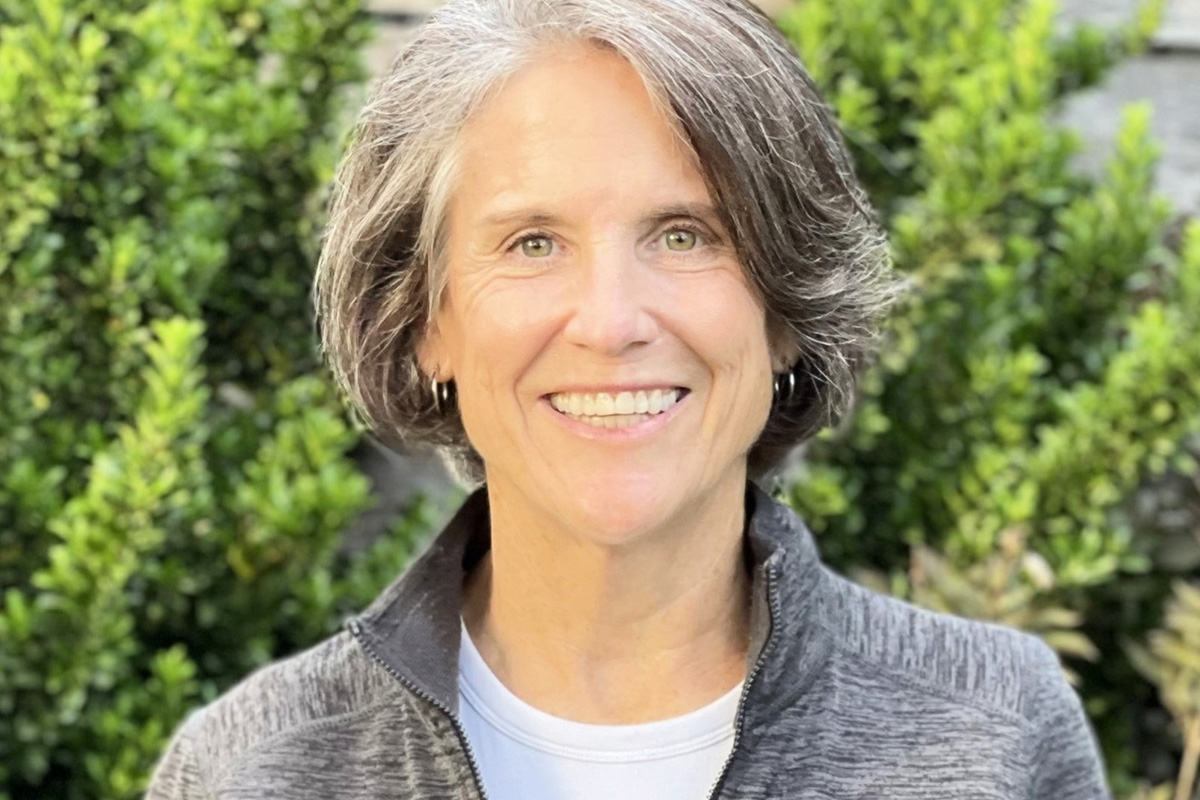
The Washington Blade Foundation will host a fundraiser on Saturday, Sept. 12 in Rehoboth Beach featuring remarks from Rehoboth’s Mayor-elect Susan Stewart and Delaware state Rep. Claire Snyder-Hall.
The Foundation funds fellowships for aspiring queer journalists and enterprise journalism projects.
The event will be held at a private home in Rehoboth. Tickets are $100 and include open bar from Diego’s, catered appetizers from the Blue Moon, entertainment, guest speakers, and an auction. Tickets are available here.
Books
New book examines fashionista Audrey Smaltz’s fabulous life
‘Every Inch a Lady’ reveals finding true love with another woman

‘Every Inch a Lady’
By Audrey Smaltz with Alina Mitchell
c.2026, Amistad
$27.99/256 pages
Snaps, zippers, buttons, ties.
Toss that garment on, pull it up, wrap it around, you know what you like and how to wear it. The color is perfect for your skin tone, the fabric enhances your form. Yep, you always look your best and, as in the new book “Every Inch a Lady” by Audrey Smaltz (with Alina Mitchell), that best is fabulous.

”Born, bred, toasted, buttered, jellied, and honeyed in Harlem” in 1937, Audrey Smaltz was a force to be reckoned with almost from the time she could walk. Her parents imbued confidence in her, they nurtured her creativity and sent her to charm school, but they never allowed her to create a stir.
“That,” says Smaltz, “is not what ladies did.”
By the time she was a teenager, Smaltz was modeling for New York City designers. Shortly thereafter, she started working for a married man with whom she had an affair, and whom she loved very much. She broke up with him, attended college, worked a series of jobs that taught her about fashion and jobs that didn’t seem to fit her. An ill-fated marriage took her to Chicago where she ultimately landed a position that sent her to work in Ebony magazine’s New York office.
Working at Ebony was a career-changer, in a way. Smaltz was able to travel the world and learn more about fashion, but she didn’t exactly get along with her boss.
Finally, seizing an opportunity, Smaltz decided to launch her own company, Audrey Smaltz, Inc., a “fashion production business,” but she couldn’t get any designers to take a chance on her. Undaunted, she reorganized, re-branded, hit the streets, and knocked on doors until she finally found one client, which led to many others.
Through it all, her personal life was a whirlwind. She dated “more men than you can shake a book at,” settling down occasionally, briefly. Fashion had always been her first love, but she accidentally found real love, “the love of a woman,” at a leadership course.
There’s an old saying that writers need to add lots of “color” into their stories. Read a little of “Every Inch a Lady,” and you’ll notice immediately that author Audrey Smaltz (with Alina Mitchell) quite literally takes that to heart by mentioning nearly every color of the spectrum here. Hmm.
That oddity aside, Smaltz is a wonderfully lively storyteller, speaking with the energy of a woman much younger to the heart of anyone who loves fashion. That glee extends to collectors of vintage clothing, who will be delighted to read about the industry long ago and the way things worked then. Smaltz says she experienced racism, which is not unusual for pre-Civil Rights America, but doors were surprisingly closed for other reasons that will astound anyone who’s savvy about the fashion industry, even today.
There’s quite a bit of name-dropping in this book but most of it belongs in the anecdotes, so you likely won’t mind. If you’re a fashionista, too, find “Every Inch a Lady,” and snap it up.
The Blade may receive commissions from qualifying purchases made via this post.
Theater
Actress takes on bisexual ‘Ma’ Rainey in new Round House production
Haskins relishes playing ‘impassioned Black woman who sticks to her guns’
‘Ma Rainey’s Black Bottom’
Sept. 9-Oct. 11
Round House Theatre
4545 East-West Highway
Bethesda, MD 20814
$50 and up
Roundhousetheatre.org
Among the Black blues women of the 1920s and 1930s, being “in the life” wasn’t uncommon. Self-supporting and often on the road, they followed the Great Northern Migration to places like Chicago and Harlem, where they lived independent lives, made music, enjoyed same-sex relationships, and partied with like-minded ladies.
Gertrude “Ma” Rainey, best known as the “mother of the blues,” fit the bill. A big star, Ma toured the country and sold hit records nationwide. She lived an openly bisexual life.
In 1925, hosting an “indecent” all-female party at a Chicago apartment, landed Ma in jail, but blues singer Bessie Smith, Ma’s protégée and erstwhile girlfriend, promptly bailed her out. Three years later, Ma released a popular track whose lyrics included “Went out last night with a crowd of my friends / They must’ve been women, ’cause I don’t like no men.”
She was also a woman who knew her value. Ma’s voice was a powerful passport.
Ma Rainey is the ultimate force of strength and resistance in August Wilson’s 1982 play, “Ma Rainey’s Black Bottom,” the first of the late playwright’s brilliant Century Cyle, a collection of mostly Pittsburgh-set plays that chronicle the 20th century African-American experience.
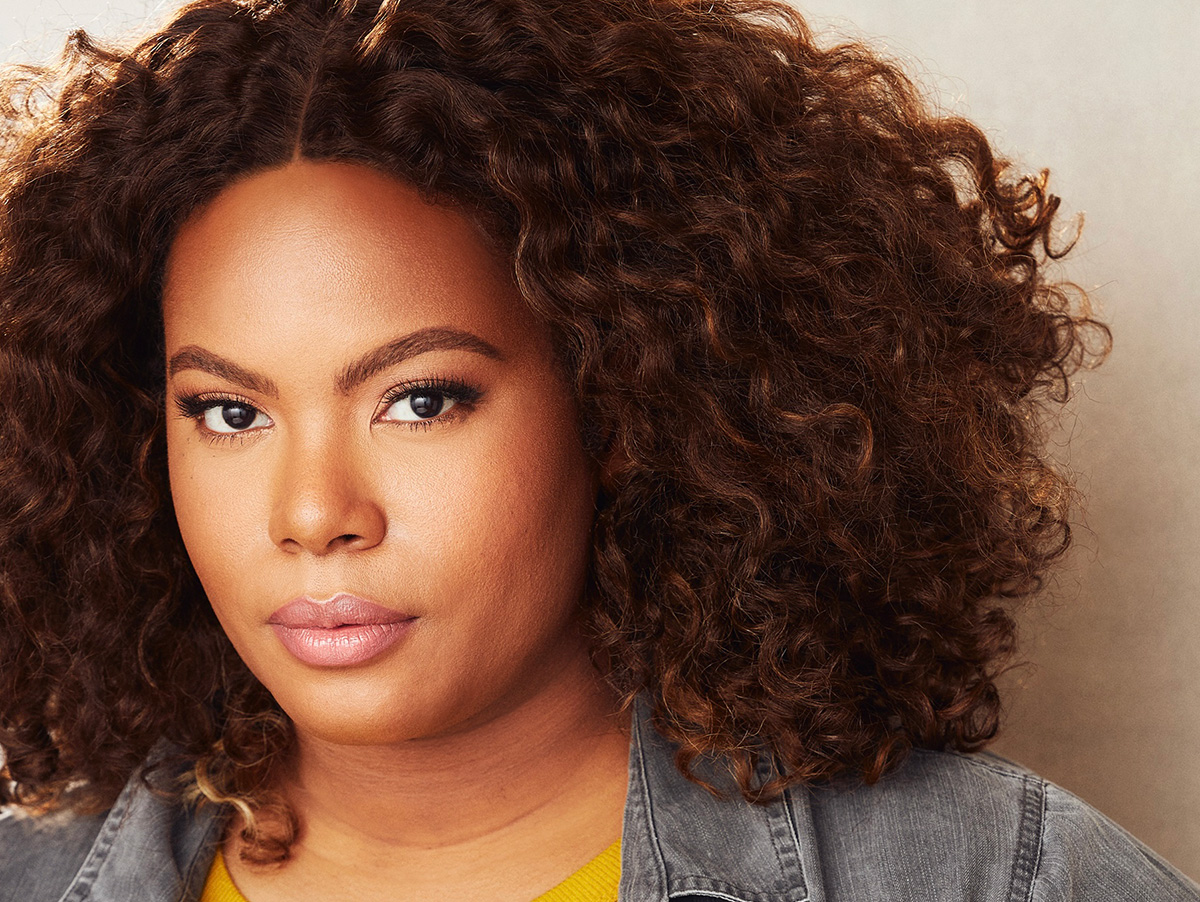
Poised to kick off a month-long run at Round House (Sept. 9-Oct. 11), the production (co-produced with Olney Theatre Center) is directed by Lili-Anne Brown and features out actor and powerhouse vocalist Nicole Michelle Haskins making her Round House debut as Ma Rainey.
Set in a Chicago recording studio in 1927, the drama follows Ma, her Black band members and white producers as they try to record a new album of her sons. Tensions over artistic control, racial exploitation, and personal ambitions come to the fore. Amid the difficulties and a fair bit of humor, arises a serious clash involving hotheaded young trumpet player Levee (Yao Dogbe) who wants to alter musical arrangements on the titular song.
Playing blues icon Ma Rainey wasn’t on Haskins’s radar. Because the bulk of her work is in musical theater, Haskins never foresaw being tapped to do a Wilson play.
“It’s kind of like Shakespeare. Not restrictive but respected; not everyone gets a ticket to the party. So, I figured that I just wouldn’t pursue that,” she says matter-of-factly.
However, fate would dictate differently. Haskins and director Brown are longtime friends and collaborators. They recently worked together on “The Color Purple” at Chicago’s prestigious Goodman Theatre where Haskins played Sofia, another powerful Black woman who, not unlike Ma, is navigating life in a patriarchal white world.
When the opportunity came up to play Ma at Round House, Brown encouraged Haskins to audition. She did and got the part. “I’m so grateful to be working with a wonderful director like Lili-Anne, especially during my introduction to Wilson’s work. He is a theater god, and I’m swept every day.”
And is it special to be queer and playing queer? “For me, it’s special to play any role where there is an impassioned Black woman who sticks to her guns and fights for the things she deserves. Her sexuality is the icing on the cake.”
The production adheres to Wilson’s text and the text describes a woman who is in a relationship with another woman. Though her sexuality is provocative, it’s not the only thing about her that’s compelling. She’s also portrayed as an artist, businesswoman, and a loving aunt.
Haskins, a New York-based actor who made her name on the Chicago theater scene, grew up in Detroit. At 12, she became involved with the Mosaic Youth Theatre of Detroit; after high school she went on to earn a BFA at Detroit’s Wayne State University. Detroit is also where Haskins learned storytelling: “It’s very natural for a Detroit native to greet people on the street. There’s an expectation to be open to someone else’s story and to share your own. I’ve done this many times.”
Queer characters are famously underrepresented in Wilson’s work. “I see that, but do we really know for sure? After the first day’s read through of the play, some of the actors, for different reasons, wondered if in addition to Ma, perhaps one or two of the other characters might be queer too. Now wouldn’t that be interesting? That’s something I’d like to see.”

Blade Foundation to host fundraiser in Rehoboth on Sept. 12

New book examines fashionista Audrey Smaltz’s fabulous life

Actress takes on bisexual ‘Ma’ Rainey in new Round House production

‘Here the Whole Time’ delivers queer coming-of-age comedy

Pentagon expands testosterone screening as trans troops face hormone therapy restrictions

The mastery of love

Enlarging the Supreme Court keeps making more sense

Gloria Steinem dies at 92

Trans people need a politics of ordinary life