World
Efforts to ban conversion therapy gain traction around the world
Global Equality Caucus lawmakers play prominent role
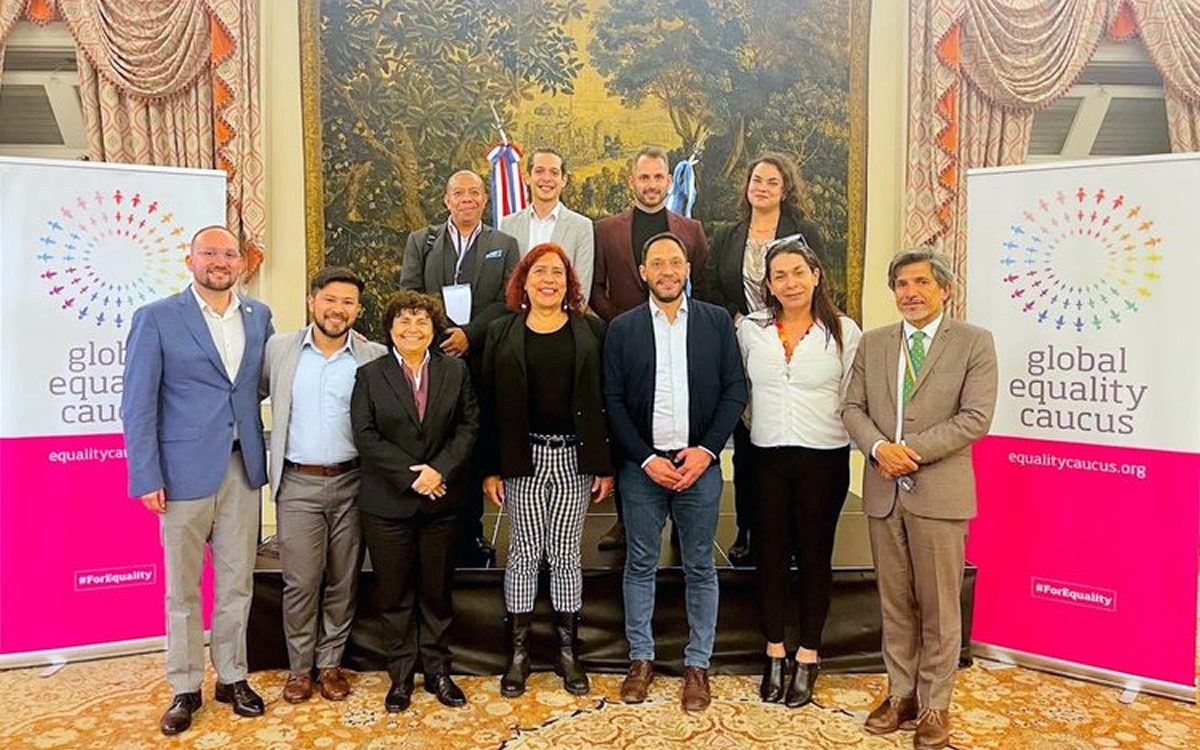
Efforts to ban so-called conversion therapy gained significant traction around the world in 2022.
Only four countries at the end of 2021 had explicit laws that banned the widely discredited practice. Numerous jurisdictions around the world in 2022 have enacted legislation or taken executive action. The Global Equality Caucus, an international network of lawmakers who have committed themselves to fight discrimination based on sexual orientation and/or gender identity, has driven many of these efforts.
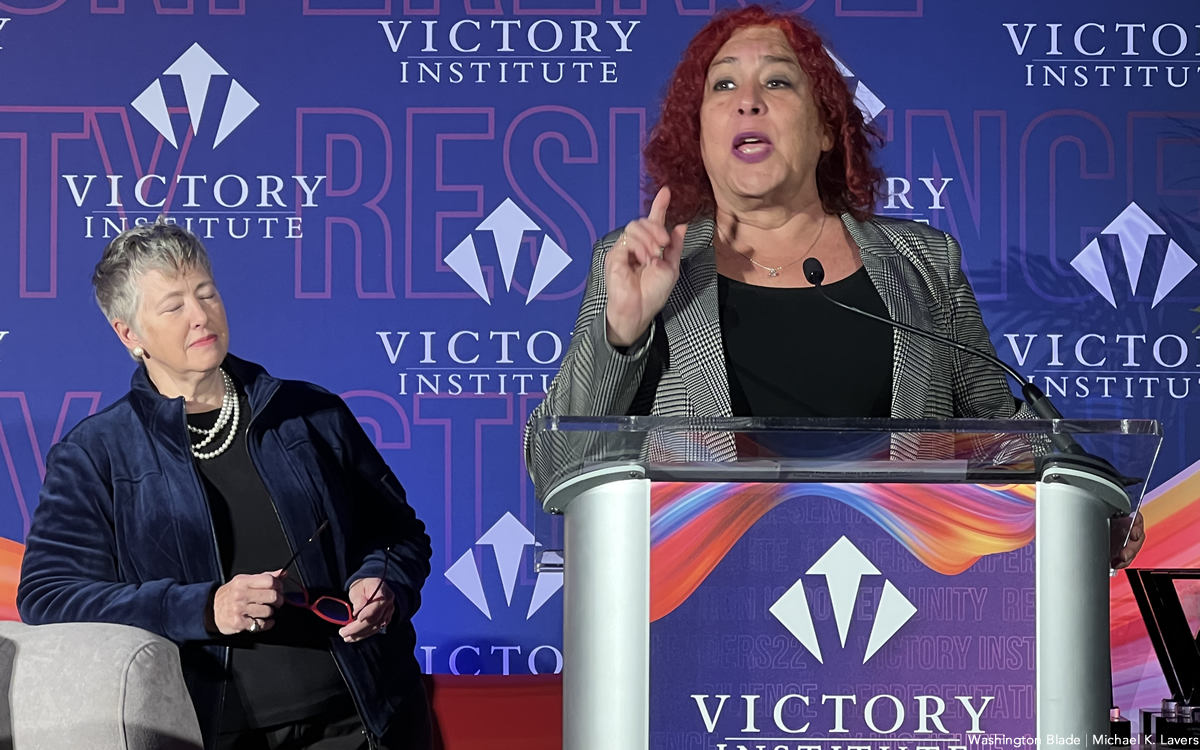
Global Equality Caucus Vice President Tamara Adrián, who is also the first openly transgender woman elected to the Venezuelan National Assembly, told Washington Blade that “any compulsive therapy to modify sexual orientation is contrary to human rights. Subjecting a person to conversion therapy will be unsuccessful and can create very serious mental health problems, as these therapies use invasive behavioral methods to try to modify sexual orientation.”
“The consequence is that no one modifies their sexual orientation but may become unable to have relationships with any person and that is the reality in this matter. They are a mechanism intended to erase LGBT people from the earth,” Adrián added.
Canada and France in January introduced LGBTQ-inclusive bills to ban conversion therapy for minors and adults, regardless of perceived “consent,” in clinical and religious settings. Anyone found guilty of offering or practicing conversion therapy is subject to a fine or jail time.
New Zealand in February passed the Conversion Practices Prohibition Act with the same breadth of protections as Canada and France. And in May 2022, following an amendment to the Health for All Act, lawmakers in Greece passed measures explicitly prohibiting conversion therapy for persons under 18 and “non-consenting” adults.
A law that lawmakers in the Australian state in Victoria passed in 2021 took effect in February. The law, first proposed in 2020, has been hailed as a model for legislation to ban conversion therapy and certainly inspired New Zealand’s ban.
Several Mexican states also banned conversion practices this year, following the nation’s first prohibition that Mexico City approved in 2020. Lawmakers in Jalisco, Baja California, Puebla, Hidalgo and Sonora states approved measures to ban them.
The British government’s decision to support a trans-exclusive bill to ban conversion therapy prompted advocacy groups to boycott an LGBTQ and intersex rights conference that was to have taken place in London during Pride Month. The conference was later cancelled.
Nick Herbert, a member of the British House of Lords who advised then-Prime Minister Boris Johnson on LGBTQ and intersex issues, is a member of the Global Equality Caucus.
Indirect conversion therapy bans are “when countries do not explicitly prohibit them through legislation, however, they are not allowed from a mental health standpoint,” Global Equality Caucus Membership and Programs Coordinator Erick Ortiz told the Blade.
Israel’s Health Ministry in February issued a directive that said medical professionals are prohibited from offering, advertising or performing conversion therapy, and those who violate the ban could face punishment. The Knesset in 2020 passed a conversion therapy ban bill, but lawmakers have yet to codify the directive.
India’s National Medical Commission the same month in a filing with the Madras High Court clarified that any licensed medical professional in the country who is found guilty of offering conversion therapy can face prosecution for professional misconduct. India, like Israel, does not explicitly ban the practice throughout the country, but the filing reaffirmed a 2021 court order that prohibits any attempt to “cure or change” the sexual orientation or gender identity of LGBTQ people.
Vietnam’s Health Ministry in 2021 issued guidance to clarify that homosexuality and transgender identities are not considered curable diseases, and that doctors should not engage in coercive treatments that attempt to change someone’s sexual orientation or gender identity.
Paraguay in November joined Argentina and Uruguay in becoming the third South American country to amend its mental health law to prohibit a mental health diagnosis on the basis of “sexual choice or identity.”
Lawmakers in several countries in 2022 introduced bills to ban conversion therapy; but they have not been passed because of legislative processes, timelines and elections.
Icelandic MP Hanna Katrin Fridriksson, a Global Equality Caucus member, in January introduced a bill in the Althing (Iceland’s Parliament,) but it has not yet progressed. Dutch Sen. Boris Dittrich, helped champion a bill in his country’s Parliament, but it was referred to committee. A bill in Cyprus also reached the committee stage and is likely to be passed in 2023.

Former Colombian Congressman Mauricio Toro introduced a bill, but it was not passed before the new Congress took office in July. A group of lawmakers from various political parties have reintroduced the bill.
Norwegian Equality Minister Anette Trettebergstuen introduced a bill proposing a total ban on conversion therapy, going beyond plans the previous government first announced in 2021. Lawmakers are currently reviewing the measure. The Belgian Cabinet has approved a similar proposal, but the lower house of the country’s Parliament has not given its final approval.
The Mexican Senate after nearly four years of stalemate approved a federal bill after consultations with Yaaj Mexico, an LGBTQ and intersex rights group, and talks at the Global Equality Council summit that took place in Mexico City earlier this year. The measure will take effect once the Mexican Chamber of Deputies approves it, which will likely take effect in 2023.
Several other countries have expressed they support conversion therapy bans, but their governments or congressmen have yet to submit a parliamentary bill. They include the Ireland, Sweden, Finland and some states in Australia.
Peruvian Congresswoman Susel Paredes will lead a bill to ban conversion therapies in her country
“Congresswoman Susel Paredes is waiting for the right moment to present the project due to the political problems Peru is facing,” Ortiz said.





Switzerland
Swiss government backs nationwide conversion therapy ban
Several cantons have already prohibited widely discredited practice
The Swiss government has said it supports a nationwide ban on so-called conversion therapy.
The Swiss Broadcasting Corporation on its website notes the government officially announced its position in a report it published on Wednesday.
Neuchâtel in 2023 became the first Swiss canton to ban conversion therapy.
Lawmakers in Valais and Vaud have also prohibited the widely discredited practice in their respective cantons. Bern and Geneva are among the other cantons in which lawmakers have considered similar prohibitions.
The European Commission earlier this year said all European Union countries should ban conversion therapy.
Switzerland is not a member of the EU, but lawmakers in neighboring Germany in 2020 passed a law that prohibits conversion therapy for minors and for adults who have not consented to undergoing the widely discredited practice.
Several EU countries — Belgium, Cyprus, France, Malta, Norway, Portugal, and Spain — have banned conversion therapy outright.
The Dutch Senate in June approved a bill that would ban conversion therapy in the Netherlands. The lower house of the country’s parliament approved the measure in September 2025.
Greece in 2022 banned conversion therapy for minors.
Bulgaria
Top Bulgarian court rules government must legally recognize trans people
Decision caps off decade-long legal fight

Bulgaria’s top court has ruled the country’s government must allow transgender people to legally change their name and gender on ID documents.
A trans woman from Bulgaria who moved to Italy, had tried to change her gender and name on her Bulgarian ID documents, but courts in the country denied her requests for nearly a decade.
The Bulgarian Supreme Court of Cassation in a 2023 ruling essentially banned trans people from legally changing their name and gender on ID documents.
The EU Court of Justice in Luxembourg, which is the European Union’s highest court, in March ruled in the “Shipova” case that member states must allow trans people to legally change their name and gender on ID documents. The lead plaintiff in the “Shipova” case is among the four litigants in the Bulgarian Supreme Court of Cassation case.
Two Bulgarian advocacy groups — Bilitis and Deystvie — along with TGEU – Trans Europe and Central Asia and ILGA-Europe in a joint statement they issued on Tuesday noted the Bulgarian Supreme Court of Cassation’s July 22 decision “aligns Bulgarian practice with the Court of Justice of the EU, enabling changes to gender markers, names, and personal identification numbers.”
“The judges also concluded that EU law requires Bulgaria to establish a legal procedure for legal gender recognition, which is necessary so that Bulgarian trans citizens can travel and reside freely inside the EU,” they added.
Bulgaria has been a member of the EU since 2007.
The country borders Romania, Serbia, North Macedonia, Greece, and Turkey.
“We are very glad to see that the judges of the Supreme Court clearly stated that it is actually a matter of rule of law for Bulgaria to respect the universal equality and the dignity of all human beings, including trans people for whom human rights-based legal gender recognition procedures are an indispensable element,” said Denitsa Lyubenova, co-chair of Deystvie who represented the four plaintiffs in the Bulgarian courts and the lead litigant in the “Shipova” case at the EU Court of Justice. “The government needs to act swiftly now to put in place an LGR procedure that is fully in line with European human rights case law, which means without any conditions requiring proof of medical, surgical or hormonal treatment.”
The groups also urged the Bulgarian government to codify the ruling into law.
“While lower courts are expected to follow this ruling directly, a court decision is not a substitute for law,” they said. “Bulgaria still needs a fast, transparent, and accessible legal gender recognition procedure written into legislation, not left to case-by-case court precedent. TGEU – Trans Europe and Central Asia, Bilitis, Deystvie, and ILGA-Europe call on the Bulgarian government to start that legislative process now, with meaningful involvement from civil society.”
France
Prominent French activist attacked outside Paris bar
Pierre Picavet hospitalized with internal bleeding, head injury

French prosecutors say a man shouted anti-gay slurs at a prominent activist before he attacked him in Paris on Saturday.
Media reports indicate Pierre Picavet, a police officer who is the president of FLAG!, a group within the French Justice and Interior Ministries that defends LGBTQ rights, was attacked as he left a bar in Paris’s Marais neighborhood.
The Marais since the 1980s has been center of the French capital’s LGBTQ community.
France 24 reported Picavet’s assailant struck him with a bottle. The attack left Picavet hospitalized with internal bleeding, a head wound, and other injuries.
“When I get better, when my wounds have healed, I will continue the fight,” Picavet told Radio France on Monday. “I am particularly shocked, but it tells me that there is still work to do.”
Paris Mayor Emmanuel Grégoire is among those who condemned the attack.
STOP Homophobia (STOP homophobie), a French group that fights against anti-LGBTQ violence, on its social media pages published a picture of Picavet in the hospital.
“As a long-standing partner of FLAG!, STOP Homophobia wishes to express its solidarity with Pierre Picavet, his loved ones, and the entire association,” said the group. “STOP Homophobia condemns this assault in the strongest possible terms and reiterates that anti-LGBT violence remains a reality — even in spaces where everyone should be able to move freely and live out their sexual orientation or gender identity without fear of attack.”
STOP Homophobia also praised a bystander who came to Picavet’s aid after the attack, and the first responders and law enforcement personnel who responded.
“STOP Homophobia extends its full support to Pierre, his family, his loved ones, and the entire FLAG! team, and wishes him a full recovery,” said the group.
Reports indicate the assailant, who was born in 2006, was scheduled to appear in a Paris court on Monday at 1:30 p.m. local time.

‘Here the Whole Time’ delivers queer coming-of-age comedy

Pentagon expands testosterone screening as trans troops face hormone therapy restrictions

Calendar: September 4-10

Swiss government backs nationwide conversion therapy ban

Gloria Steinem dies at 92

Beloved D.C. ‘Old Catholic’ Bishop Charles Braun dies at 86

Blade welcomes fall intern

Top Bulgarian court rules government must legally recognize trans people

Markey’s primary win deemed success for LGBTQ activists

Lou Chibbaro Jr. documentary wins award from NLGJA
-

 Obituary5 days ago
Beloved D.C. ‘Old Catholic’ Bishop Charles Braun dies at 86
-
District of Columbia5 days ago
Blade welcomes fall intern
-
Bulgaria5 days ago
Top Bulgarian court rules government must legally recognize trans people
-
2026 Midterm Elections4 days ago
Markey’s primary win deemed success for LGBTQ activists