Local
Gay Discovery hostage shares story
Former Blade staffer on how life has changed since terrifying standoff
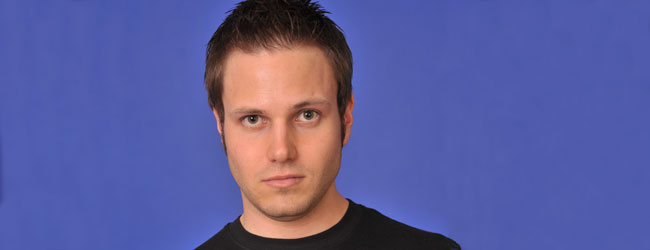
Chris Wood in a December, 2008 Blade staff photo outtake. (Blade file photo by Henry Linser)
A gay man who was one of three hostages held at the Discovery Channel headquarters in Silver Spring, Md., on Sept. 1 used hand signals to initiate his and a fellow hostage’s escape seconds before police shot and killed a gunman who threatened to blow up the building.
Christopher B. Wood, 25, a former Washington Blade employee who works as a marketing specialist with Discovery Communications, gave a harrowing account of his four-hour ordeal in captivity at the hands of a disturbed gunman that has attracted national media coverage.
Seconds after Wood and Discovery Channel producer Jim McNulty ran for the exit door in a plan orchestrated by hand signals between Wood, McNulty, and a security guard who was also held hostage, members of a police swat team shot and killed the gunman, James Lee.
Authorities described Lee as a disturbed “environmental extremist” who believed the Discovery Channel was broadcasting harmful programs that would worsen global warming and other environmental problems.
In an interview with the Blade, Wood explained how he was able to clandestinely respond to a text message that a co-worker sent him from outside the building. Wood said the text message came at a time when he believed he would likely die at the hands of the gunman, who had explosives strapped to his body.
“Please tell Mark I love him,” Wood told co-worker Carlos Gutierrez in a text message referring to Wood’s partner.
About two hours later, while thinking of his partner Mark and other loved ones while being forced to lie face down on a marble floor in the Discovery building’s lobby, Wood said his fright and anxiety began to change to anger.
“I started to think in my head…no, this is not the way this is going to end,” he told the Blade in discussing his thoughts of a plan to escape. “I’m not going to die here on the floor. I’m not going to let somebody take over my life and tell me when I’m going to die.”
According to Wood and accounts by authorities, both Wood and fellow hostage McNulty walked into the Discovery building lobby shortly after returning from their lunch break about 1 p.m. on Sept. 1. McNulty said he saw Lee pointing his gun at the building’s lobby security guard and initially thought the two were actors participating in the filming of a movie until Lee pointed the gun at him and ordered him to lie face down on the floor.
Wood said he first noticed McNulty lying on the floor when he entered the lobby minutes later and thought McNulty was ill and wondered why someone wasn’t helping him. Before he could take more than a few steps, Wood said Lee pointed the gun at him and ordered him to lie on the floor.
During their four hours in captivity, Lee forced Wood and McNulty to remain on the floor except for times when he ordered them to stand and answer his questions about the plight of the earth, Wood said. Wood said the security guard remained at a desk where there was a phone that police hostage negotiators used to talk to Lee on and off throughout his stay in the building’s lobby.
Wood said he sized up Lee’s state of mind after hearing him talk to the negotiators through a speakerphone, where both parties could be heard.
“[T]he negotiator was asking how the hostages were,” said Wood. “And he kept saying, ‘I don’t care about these hostages. I don’t care if they die. I don’t care about them. I just care about what I want…If I blow up it will take all of them with me.”
Wood said that Lee “ranted” at McNulty after asking McNulty if he had kids. When McNulty told him he had two children Lee shouted that having children contributes to overpopulation, which is destroying the natural environment, according to an account by McNulty in media interviews.
When Lee called Wood over to the guard’s desk to question him, Wood said he had determined he would try to say as little as possible to avoid antagonizing Lee.
“So the gunman [said], ‘Stand up, you stand up. Put your hands on the desk,’” Wood said. “I walked up over to the desk, put my hands on the desk. And he [said], ‘He looks fine. Look at him, young, healthy.’”
From that point on, Wood said, Lee allowed him and McNulty to remain standing. It was at that time that Wood noticed the guard making subtle gestures that Wood thought suggested that he and McNulty should attempt to “make a run for it.”
“I looked at the guard,” said Wood. “I finally got his attention and I mouthed the word ‘run.’ And he shook his head yes. And so I then turned my body trying to get Jim’s attention.”
After what seemed like an eternity, Wood said, McNulty looked toward him “and I mouthed the word ‘run.’ He shook his head yes.”
Wood said he then began counting down with his fingers to McNulty with his body turned so that Lee could not see his fingers counting down from three to one, when the two would bolt for the door.
“And as soon as the gunman looked down toward the negotiator [on a speaker phone] I dropped my arms and ran to the same door that I came in,” he said, noting that he heard the sound of a “pop.”
Although he did not witness it, Wood learned later the sound he heard was the first of several shots fired by the Montgomery County police swat team. Police said members of the swat team, who entered the building earlier and were ready to rush into the lobby, shot Lee several times, killing him instantly.
“I’m not sure what the next chapter holds,” Wood said. But I will say that I have a whole new perspective on life. I went from dying and thinking I was dead to making a decision to live, making the decision to be the one that got us out of there safely and ran and made the initial stand. And my life will never be the same.”
A transcript of the Blade’s interview with Wood follows:
Washington Blade: Can you describe how it happened that you walked into this hostage situation on Sept. 1 at the Discovery Channel headquarters in Silver Spring, Md.?
Chris Wood: I had my one o’clock and my noon [meetings] cancelled so I decided I was going to go out and grab a quick lunch. And I did right in downtown Silver Spring. I was walking back to the lobby taking my iPod headphones out of my ears, putting everything into my hands getting ready to walk into the lobby. I walked into the first door — it’s double doors. I opened the first door and started walking in and realized somebody was laying face first on the ground. And I looked to the left and I noticed a bag that I guess belonged to an individual and I recognized the bag was my co-worker Jim McNulty. And I looked back at the person laying face first on the ground and I put it together that it was Jim laying on the ground and that was his bag. By this point I’m reaching for the second door and basically looking up toward my left toward the reception desk trying to see why isn’t anyone helping him? What’s going on? And as I’m looking up to the left the gunman is wielding the gun at me saying, ‘Get on the ground, get on the ground.’ This was while I was walking into that second door. And I immediately switched everything from my left hand to my right hand — my iPod and my Blackberry and went down to the ground on the cold marble.
Blade: And this was in this very expansive lobby of the Discovery Channel headquarters?
Wood: Yes it is.
Blade: After that initial command, did the gunman say anything to you?
Wood: No. At this point he had gone back to the guard and he was continuing to assemble the device that was strapped to him. And as I was on the ground, I was looking up to the left looking at him and the guard and what was going on. Eventually, my phone kept going off in my right hand. I kept trying to answer it but I wasn’t looking at my phone. My head was to the left paying attention to the gunman and the other two hostages and I kept trying to answer it and answer it every time it rang or buzzed and eventually he asked Jim to get up. Jim got up and he was asking him questions.
The NBC reporter had called in that time [to the guard desk]. He was the first phone call in. The gunman eventually thought that that NBC reporter was a cop and ended up hanging up on him. But while he was asking Jim questions, Jim became in between the site of the gunman and I so the gunman could not look over and see me. I took my phone out of my right hand and switched it over to my left hand above my head while still lying on the floor. And the first thing I did was saw that my boss had called and I called the number back. Whoever was on the other end of that phone listened for two minutes and hung up.
And then I looked at my e-mail and saw that my boss wrote me an e-mail that said, “Are you O.K?” And I wrote back and said I’m a hostage with Jim McNulty and the guard in the lobby. And then I had two more text messages come in, one from a friend that works at Discovery. I texted him back and said I’m a hostage in the lobby. And my second text message to him was please tell Mark I love him. Mark is my partner.
… So I sent out the phone call and two text messages and at that point the gunman had finished his conversation with Jim and told Jim to get on the ground. And eventually he asked me to get up and walk over to the desk.
He asked me an array of questions. The first thing he said to me was you look like a strong man. And then he said, “What do you do here?” And I lied and I said I’m admin. And he said, “Admin, what is admin? What do you do?” And I said I file papers. Obviously, I lied. I didn’t want him to know what I did. I didn’t want him to know that I worked for a particular channel. I didn’t want him to know that I worked in the marketing department because of the way he was going on and ranting off and on with the negotiator and the NBC reporter that I heard earlier. And then he asked me, “Are you in the military?” I said no. He’s like, “Look me in the eyes when I talk to you. I looked at him twice and answered two of those questions. He said, “Do you plan on having kids?” I said no. And he’s like, “Can you promise me you’ll never have kids?”And I said yes. Basically just giving him any answer that would get him to leave me alone and satisfy what he was asking.
Blade: Did he ask you if you were married?
Wood: No he did not … Eventually by giving him one-word answers he’s like, “I’m bored with you. Go lay back down.” So I started to walk back towards my stuff. He’s like, “Right there on the ground.” I laid down first and he said, “Turn around the other way so I can see you.” So I laid down the other way and he asked Jim to get up at that point. It was about three o’clock. Jim stood up. He continued to have a lot of questions for Jim, asking him about his kids, about his family, about what he did and ranting back and forth with the negotiators. You know, getting really annoyed at the negotiators. So eventually I was laying there and my arms and hands started to fall asleep and went through a range of emotions when I went down to the ground for the second time. I was really upset when I laid back down. I was crying.
In my mind I was thinking this is the end, this is the end of my life. This is what my life has come to. I got really upset and started to get really mad. And the fact that somebody could take this power away from me and he’s going to decide when I lose my life. I started to thinking in my head. I’m like, “No this is not the way this is going to end. I’m not going to die here on the floor. I’m not going to let somebody take over my life and tell me when I’m going to die.” My arms at that time started to fall asleep on the cold marble floor. So I started moving my hands just trying to get them to wake up …
I guess I had been lying there for quite a while. And the gunman was on the phone with the negotiators and the negotiator was asking how the hostages were. And he kept saying “I don’t care about these hostages. I don’t care if they die. I don’t care about them. I just care about what I want. You have my demands. I want this done and I don’t care if they die. If I blow up it will take all of them with me.” And the guard said he hasn’t moved in a while and he pointed at me on the floor. So the gunman was like, “Stand up, you stand up. Put your hands on the desk.” I walked up over to the desk and put my hands on the desk. And he’s like, “He looks fine. Look at him, young, healthy.” And he went back to talking to the negotiators. I eventually let my hands slowly slip off the desk. We were able to move about freely quite a bit. My legs were hurting, my back was hurting.
Blade: You mean at that time he allowed you to walk around in the lobby?
Wood: Not walk around — we were staying in place but I could move my arms, I could fold my arms. I could scratch my face. He wasn’t restricting our movement in our place. So I started watching the guard standing behind the desk … the gunman was there talking on the speaker phone with the negotiators. The guard is behind the desk. Jim and I were off kind of in front of the desk but toward the right hand side. I looked at the guard and he’s making hand signals — not looking at me, making like taking two fingers and wiggling them like legs and I couldn’t figure it out and I finally just got it in my head that this is the opportunity to run, this is our chance to run. He’s on the phone with the negotiator. We can make it. We can do this. I looked at the guard. I finally got his attention and I mouthed the word “Run.”And he shook his head yes. And so I then turned my body trying to get Jim’s attention. Jim had no idea it was me until I stood up next to him that last and final time. It was about four o’clock. It was about an hour before the incident ended.
Blade: At the time you were thinking about making a run for it, were you and Jim both standing at that moment?
Wood: Yes. Jim, myself and the guard were standing.
Blade: How long were you standing?
Wood: For the last hour we were standing … So Jim finally looked over at me and I mouthed the word “Run.” He shook his head yes. I crossed my arms and took my left hand it tucked it underneath my right arm so that the gunman couldn’t see my fingers but Jim could. And I held up three fingers. And I started to put one down in a countdown but got nervous because the gunman looked at me. I put it back up and then he looked away and I started counting down again. I put one finger down and I put the next finger down and I put the final finger down and I froze. I looked at Jim, I looked at the gunman and the gunman was looking right at me. And as soon as the gunman looked down toward the negotiator I dropped my arms and ran to the same door that I came in. I hit that first door with my right palm. I hit the second door with my right hand palm. In between the first door and the second door I heard a pop. I didn’t know what it was. And I went out, straight out around a pole that was probably 10 feet wide or so or eight feet wide. And as I was rounding the corner there were like five police officers …
… I’m not sure what the next chapter holds. But I will say that I have a whole new perspective on life. I went from dying and thinking I was dead to making a decision to live, making the decision to be the one that got us out of there safely and ran and made the initial stand. And my life will never be the same.
Blade: Do you eventually think you will go back to work at the Discovery Channel?
Wood: I would like to. At this time I just don’t know when.
Blade: Are you on some form of leave from work?
Wood: They’re just providing assistance and providing everything to me —everything that I need. They have not — my job is there and that still stands. But other than that I really can’t comment on much of how they’re proceeding with everything.
Blade: What is your official title there and what have you being doing?
Wood: I’m a marketing specialist for TLC Strategic Marketing.
Blade: Can you remind me the time period you were with the Blade?
Wood: August 2009 was when I was laid off. And I came in December of 2007.
Blade: And were you also a marketing person?
Wood: Yes, I was marketing manager….
Blade: Was Lee, the hostage taker, interrogating Jim McNulty before you about things like his having kids and things like that?
Wood: Yes, he interrogated him first because Jim stood up first and then he laid him back down and got me up and interrogated me.
Blade: Did you have any thoughts about how he would react if he knew you were gay?
Wood: I didn’t know how he would react but I most certainly wasn’t going to antagonize him or bring it up if he didn’t bring it up.
Blade: Do you have any other thoughts that might be important that I didn’t ask about?
Wood: It’s just the support from the community, from friends, from the Discovery Channel — it’s all been amazing and overwhelming. It really makes me think about life and how not to take it for granted. A lot of people take life for granted and you just really can’t because you never know what’s going to happen.
Blade: Has the support come through calls, e-mails and on Facebook — things like that?
Wood: I kept myself very sheltered. The media was very overwhelming and so I didn’t have a phone for a week because it became part of the investigation. I had left it on the floor and didn’t have a phone for a week. And everybody was communicating through friends. I wouldn’t log onto Facebook. I wouldn’t go anywhere. Now it’s starting to become e-mail and phone but for about a week — a week and a half I wouldn’t communicate with anybody.
Blade: Have you had a chance to go out at all to the clubs or anywhere else?
Wood: I have not gone out at all.
Blade: You want to wait until you’re ready to do that?
Wood: I wanted to do the media because I want to explain the story a couple of times. I don’t want to explain it 3,000 times.

Rehoboth Beach
HISTORIC: Susan Stewart elected Rehoboth’s first out mayor
Thanks LGBTQ supporters and vows to protect city’s small town charm
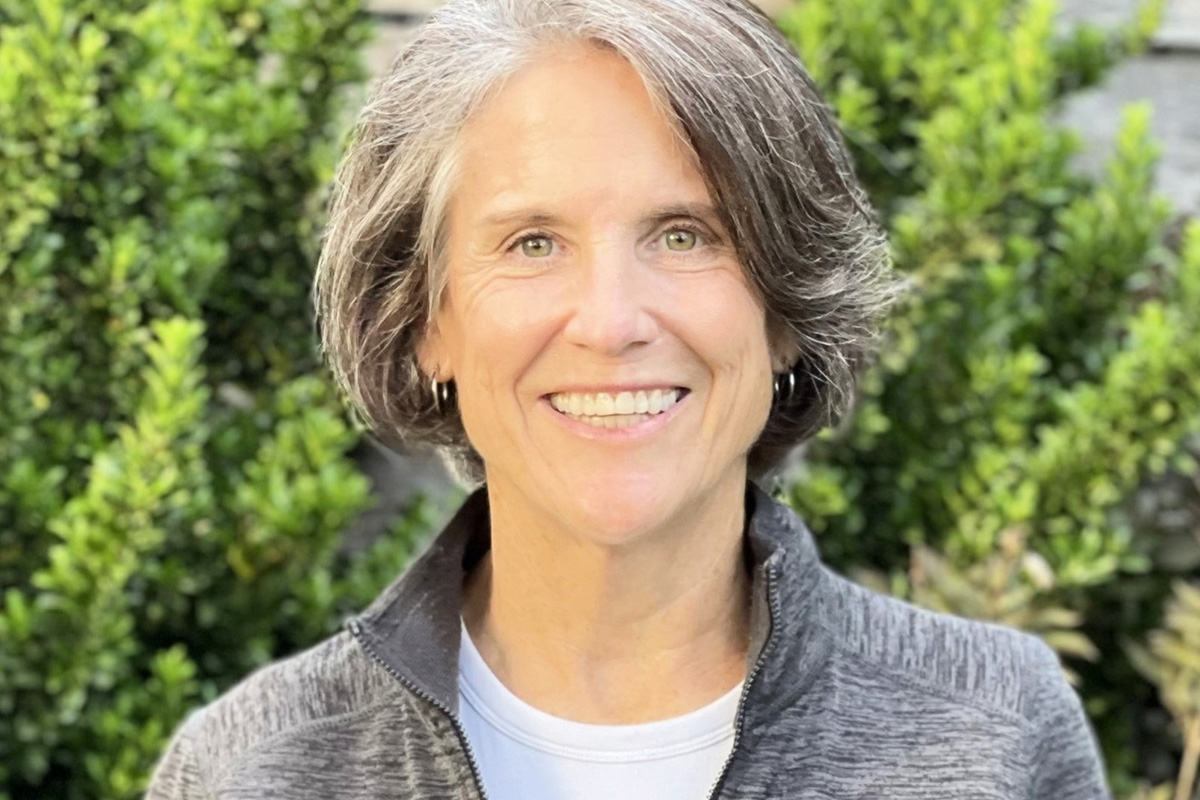
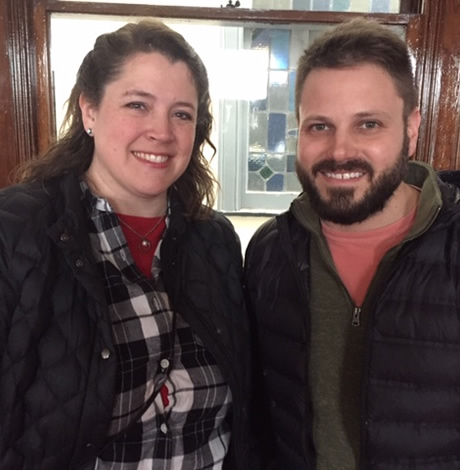
Residents of Rehoboth Beach elected City Commissioner Susan Stewart with 61% of the vote on Aug. 8, making her the city’s first openly gay mayor.
Stewart beat fellow commissioners Craig Their and Suzanne Goode in the race, as well as newcomer Jake Raak.
The final mayoral vote results were:
- Susan Stewart: 632
- Craig Their: 203
- Suzanne Goode: 177
- William “Jake” Raak: 23
“I’m very grateful because the LGBTQ+ community not only voted for me, but also supported me,” said Stewart.
Stewart said that she is particularly grateful for the support she received on social media from members of the LGBTQ+ community.
“I’ve had incredible support,” said Stewart.
Stewart said that her campaign showed her just how much residents of Rehoboth are engaged and care about the city.
“They really want to see what’s best for the community,” said Stewart.
Stewart spoke about the master planning initiative she has been working on as a commissioner, which she plans to continue as mayor.
“We’ve undertaken rewriting the commercial zoning code, and that’s foundational to the next step of the initiative,” said Stewart.
She said that she was proud of the results of charette week that was held last month where residents and business owners had the opportunity to speak with hired urban planners to give feedback for a zoning code update.
Stewart said that Rehoboth is at a tipping point as the city must find a way to balance the growth of the commercial district while improving the quality of life for residents.
“I don’t believe there needs to be tension between the business community and the residential experience,” said Stewart.
“I’m excited about a new master plan because we have a couple hotels coming, and we also have Clear Space Theatre looking for a new home, and we’re working with them,” said Stewart. “We want businesses to stay here.”
Stewart also said that she aims to embrace the concept of a ‘15-minute city,’ making the city much more accessible in terms of transportation in the downtown area for residents.
“The goal is to protect the small town charm and natural beauty of Rehoboth,” said Stewart. “I want to keep the momentum going.”
The Blade asked Stewart about any concerns she might have working with Commissioner Goode, whom she has criticized for sending inappropriate and offensive emails to city staff. Goode finished a distant third in the mayoral race and her husband fell short in his bid for a Commissioner’s seat. In that race, Jeffrey Goode received 239 votes; Patrick Gossett, who’s gay, received 813 votes and Mark Saunders 852. Saunders and Gossett will be sworn in next month.
“I’m really eager to move past this issue with Commissioner Goode,” said Stewart.
She said that she’s heard ‘loud and clear’ from the city that they want to move past this situation as best as they can while Goode remains in her seat as commissioner.
“There are no mechanisms for us to remove a sitting commissioner. Our laws don’t allow it,” said Stewart.
Stewart clarified that she has always focused on Goode’s behavior toward city staff.
“One thing I feel really passionate about is that the city employees have to know that they are heard. They are real people with real jobs, real professional reputations, and they’ve been harmed,” said Stewart.
The Blade also asked if Stewart had made a final decision on whom she plans to nominate to fill her Commissioner seat.
“I’m considering who to appoint and I have not made any final decisions,” said Stewart.
She noted that, as mayor, she only has the power to nominate a candidate and that the board of commissioners will have the final vote on whom to appoint to the board.
Stewart shared that she has received interest from a number of people and finds that to be a good sign.
“I think that’s a great sign because people want to serve. I’m eager to have someone in that seat who’s smart and has the best interests of the city,” said Stewart.
Stewart will be sworn in during the Board of Commissioners meeting on Sept. 18.
District of Columbia
D.C.’s Mary’s House For Older Adults names new executive director
Charlene Leach to succeed Imani Woody as leader of LGBTQ-supportive seniors home
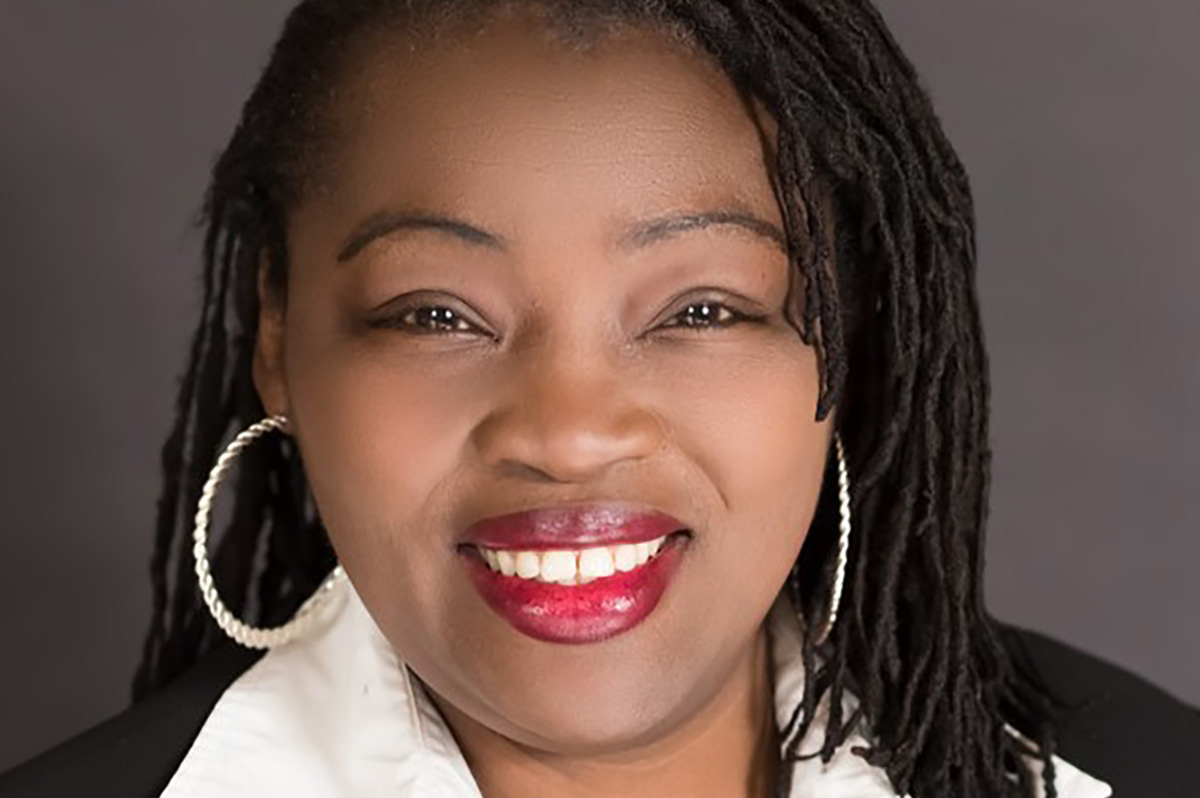
The board of directors of Mary’s House for Older Adults, the D.C.-based home dedicated to providing affordable housing for LGBTQ seniors, has announced it has named longtime nonprofit organization leader A. Charlene Leach as its new executive director.
Leach, who is now serving in the executive director’s position, is succeeding Dr. Imani Woody, the Mary’s House founding president and CEO, who announced her retirement from her official leadership role at Mary’s House on July 7.
Woody, who holds a PhD in Human Services, is credited with playing the lead role over many years in arranging both city and private funding needed to construct and operate the Mary’s House three-story building located at 401 Anacostia Road, S.E., in the city’s Fort DuPont neighborhood.
“With over three decades of nonprofit experience and 15 years serving as an executive director, Charlene brings a wealth of knowledge in organizational leadership, program development, and community engagement,” the Mary’s House board says in a statement.
“Her proven track record of building impactful programs and leading mission-driven organizations makes her uniquely suited to guide Mary’s House into its next phase of growth,” the statement continues. “Charlene is deeply aligned with the mission of Mary’s House and is committed to advancing its work to provide safe, inclusive housing and supportive services for LGBTQ+ older adults,” it says. “Under her leadership, the organization will continue to expand its impact while remaining grounded in the values that define our community.”
Leach’s LinkedIn page shows she has most recently served since 2022 as executive director of the African American AIDS Task Force in Minneapolis. Prior to that, it shows she served as executive director of the Fredericksburg Area Health and Support Services organization in Fredericksburg, Va., and before that as director of development for the D.C.-Baltimore area Women’s Collective.
Her LinkedIn page says she has been involved with Mary’s House as a volunteer and grant writer since 2016.
The newly built and enlarged Mary’s House, which opened in March 2025, with a grand opening ceremony held in May 2025 attended by D.C. Mayor Muriel Bowser, includes 15 single-occupancy residential apartments and more than 5,000 square feet of shared communal living space.
An earlier statement released by the Mary’s House board announcing Woody’s retirement said Woody would continue to be involved with the organization as a member of the board. The earlier statement and board’s more recent statement on July 29 announcing Leach’s appointment as executive director did not say whether the board plans to name someone else as president and CEO, the title that Woody held before her retirement. But the latest statement says Leach will be running Mary’s House’s day-to-day operations as Woody did.
Virginia
Doug Ollivant to face Eugene Vindman in Va. 7th Congressional District
Republican defeated challengers in Tuesday’s primary
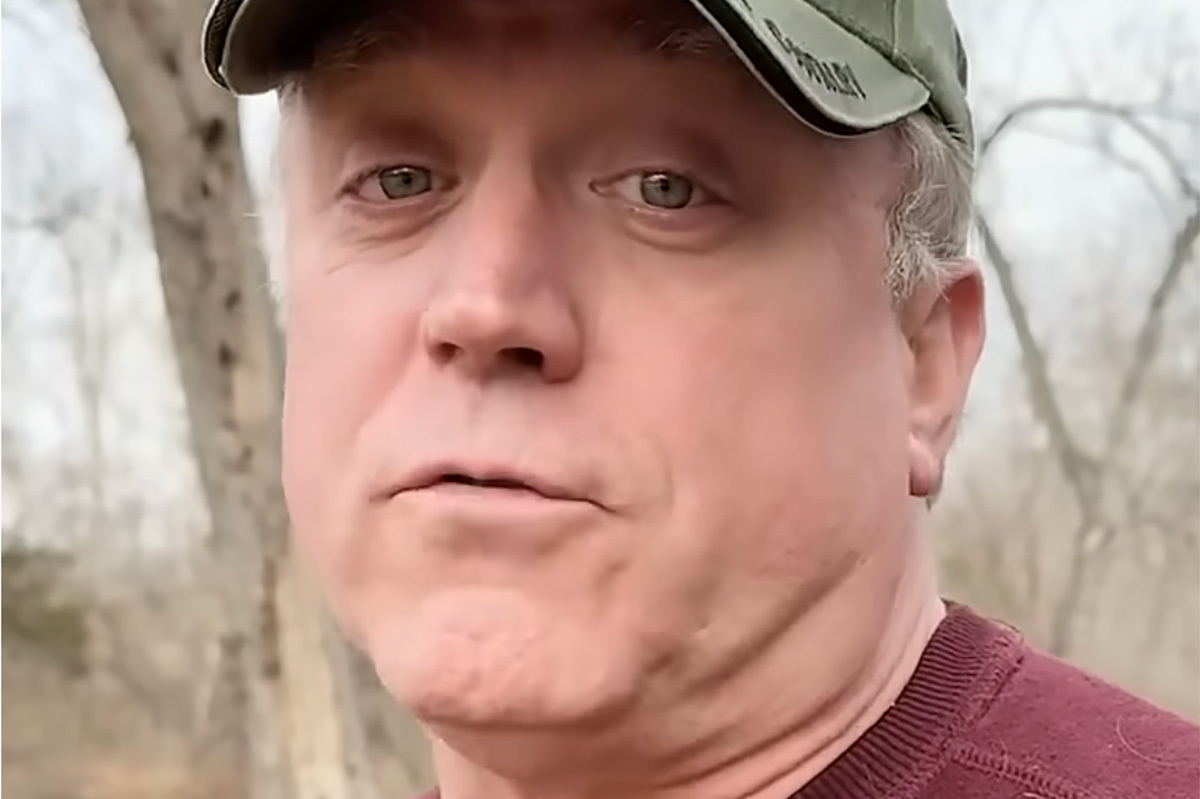
Republican Doug Ollivant will face off against incumbent U.S. Rep. Eugene Vindman (D-Va.) in Virginia’s 7th Congressional District.
Ollivant defeated his Republican opponents in Tuesday’s primary. Vindman ran unopposed.
Vindman in 2024 ran to succeed then-Congresswoman Abigail Spanberger in the U.S. House of Representatives after she ran for governor. Spanberger succeeded Republican Gov. Glenn Youngkin in 2025.
U.S. Sen. Mark Warner (D-Va.) on Tuesday easily won his primary. All other Democratic incumbent members of Congress from Northern Virginia also won their respective primaries.

2 former NBA players launch cheap anti-trans stunt to exploit WNBA rules

Same-sex couples challenges India income tax law

HISTORIC: Susan Stewart elected Rehoboth’s first out mayor

Todd Blanche’s record on LGBTQ issues comes under scrutiny as he takes over DOJ

Don’t miss summer productions at Clear Space in Rehoboth Beach

HRC files class action over federal ban on gender-affirming care coverage

Dutch PM: More needs to be done to defend trans rights

HRC condemns DoE removal of LGBTQ bullying data from federal survey

New book chronicles gay man’s life in hippie commune

PHOTOS: Daddy Issues at Kiki
-

 The White House5 days ago
HRC files class action over federal ban on gender-affirming care coverage
-
Netherlands5 days ago
Dutch PM: More needs to be done to defend trans rights
-
National5 days ago
HRC condemns DoE removal of LGBTQ bullying data from federal survey
-
Books4 days ago
New book chronicles gay man’s life in hippie commune